5 min read

Solomon Boasted Then the Daughters of Tzelofhad Came

Solomon swore he could gather wives and stay true. Moses swore hard cases were his. Heaven answered both with a case that would not bend.

Curated by Arthur · Told by Maggid ·
Table of Contents
  1. The Wisest Mouth Overreaches
  2. Moses Claims the Hard Case
  3. Two Crowns, One Error
  4. The Case That Would Not Yield
  5. What the Infinite Leaves Unfinished

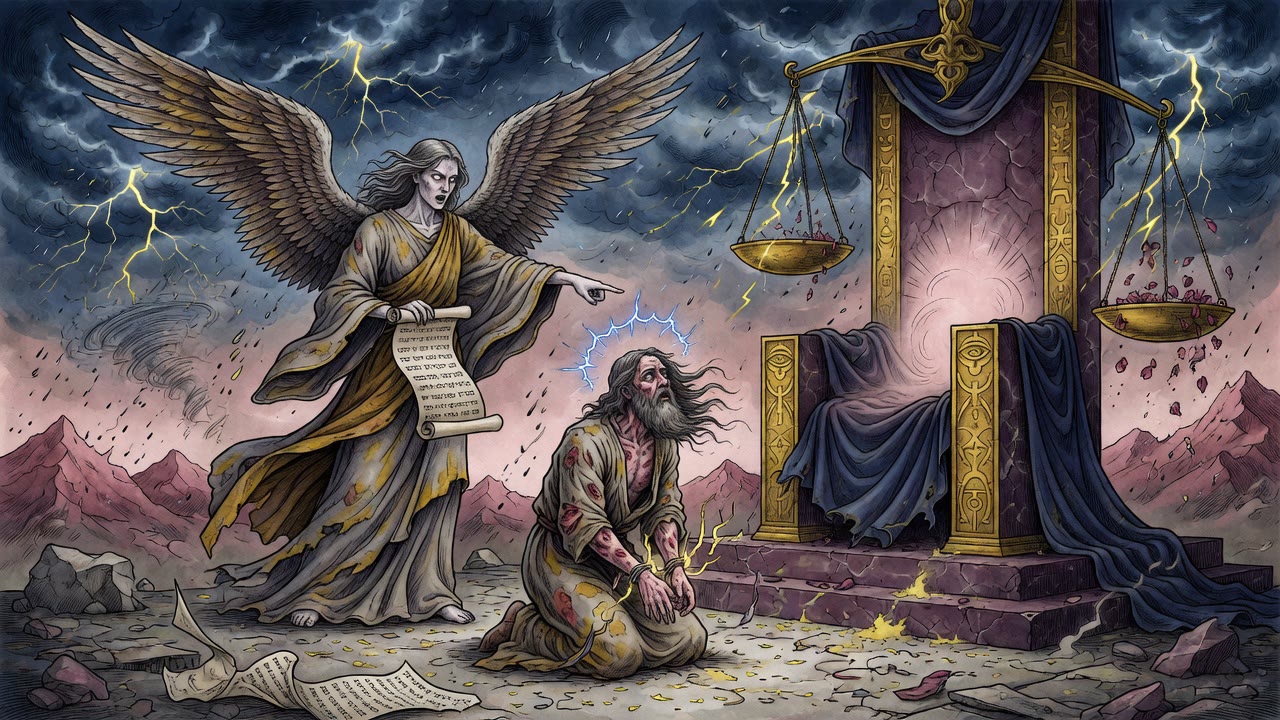
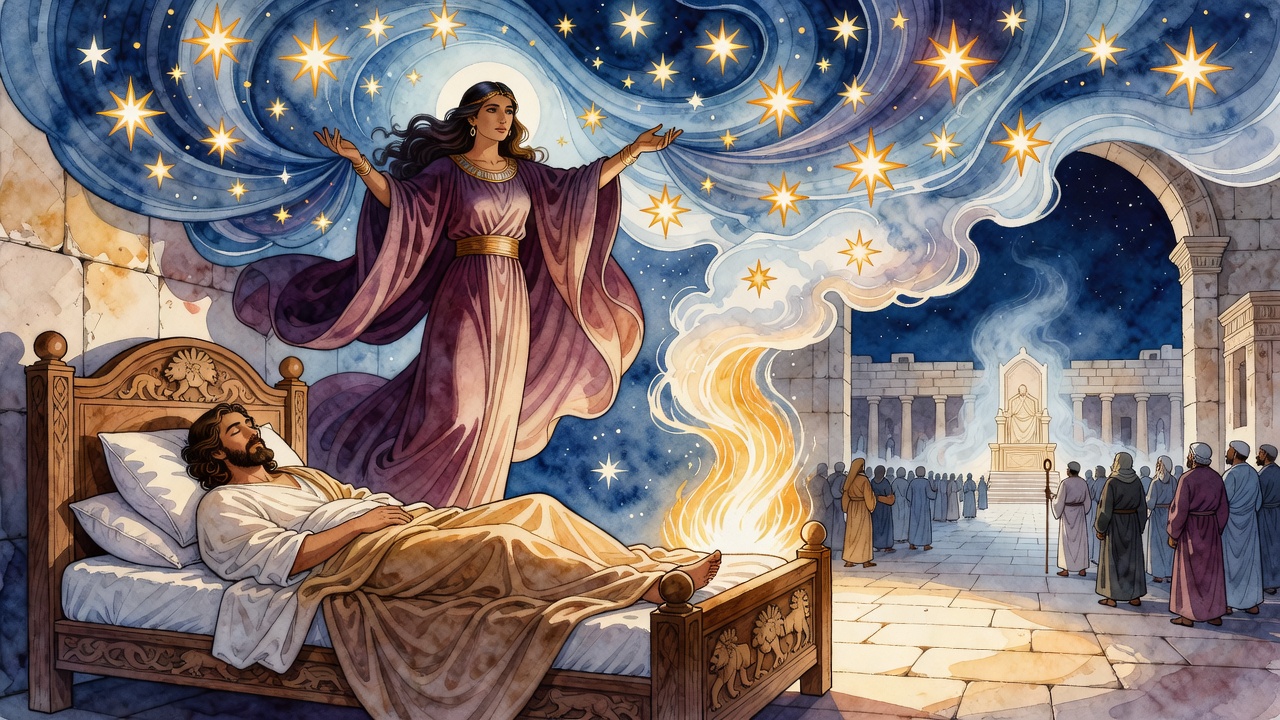
Solomon stood in the palace and said the thing out loud. He would take many wives. His heart would not stray. The warning in the book sat open like a blade on the table (Deuteronomy 17:17), and still he spoke as if the law were a suggestion meant for lesser men.
Solomon Boasted Then the Daughters of Tzelofhad Came Click for full size

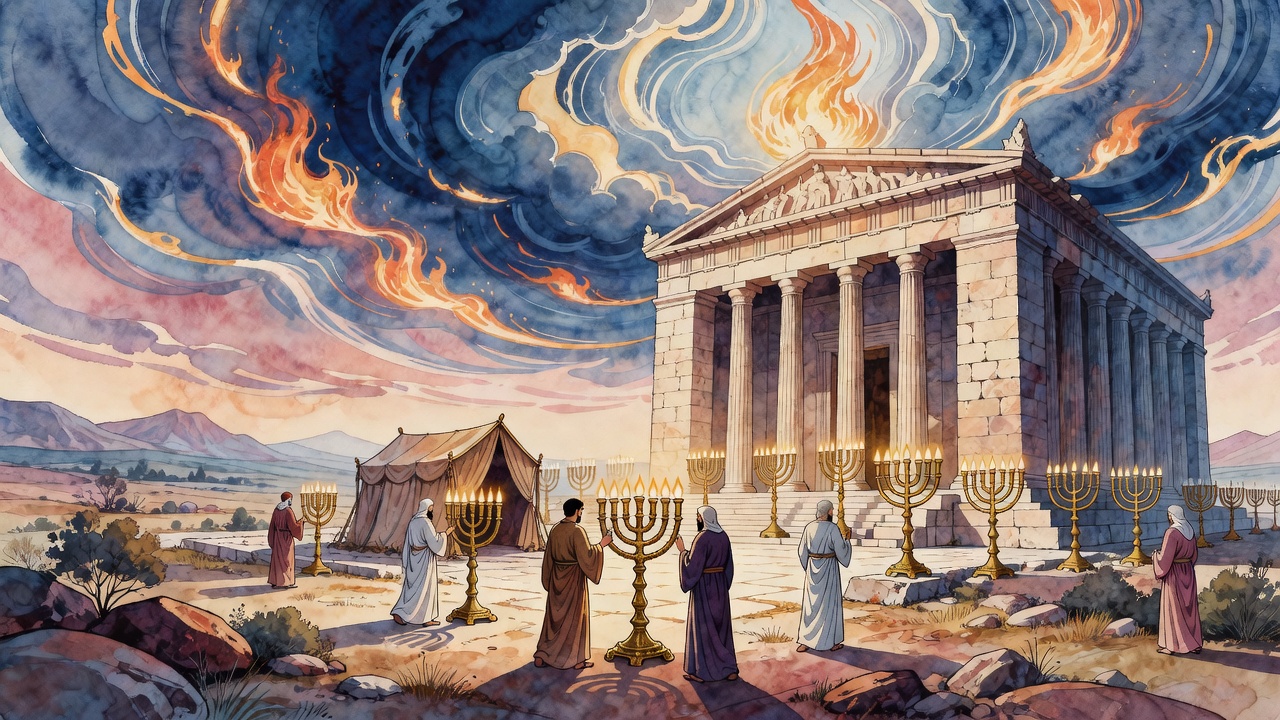
That day the crown felt light. The Temple stood finished. The nations sent gifts. Wisdom had already made his name a proverb from Egypt to the far islands. So he measured himself against the verse and decided the verse would yield.

The Wisest Mouth Overreaches

He did not argue with Heaven. He assumed. The wives would come for alliance and beauty and politics, and he would remain the man who had asked only for a listening heart. He told himself the commandment was written for kings who lacked his mind. The more he believed that, the quieter the commandment became.

The women entered the court in long processions. Incense changed. Foreign gods arrived in private rooms first as curiosity, then as furniture. Solomon still judged cases at the gate. He still wrote verses that still cut. But the heart that had once asked for understanding began to ask for room.

Kohelet would later write that a man toils to seek the work of God under the sun and still does not find it (Ecclesiastes 8:17). On the day of the boast, Solomon thought he had already found enough.

Moses Claims the Hard Case

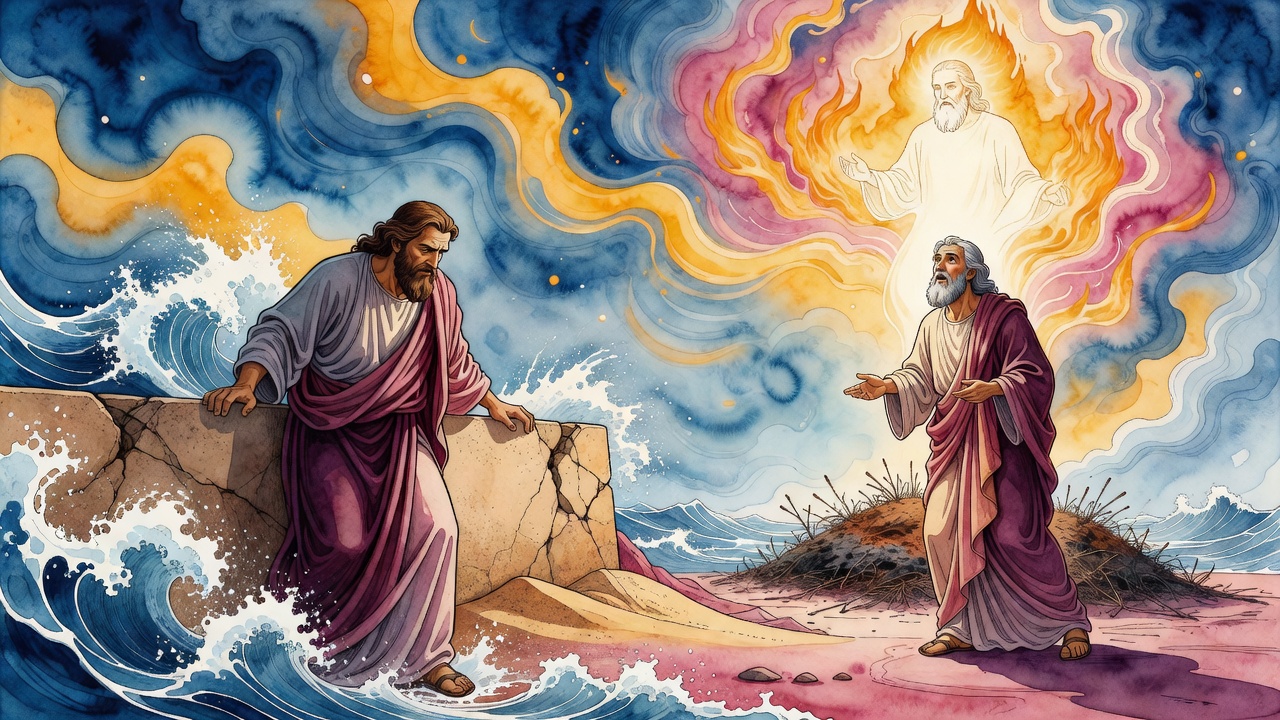
Generations earlier, Moses had made a different kind of boast. Standing before the people, he said the hard matter should be brought to him and he would hear it (Deuteronomy 1:17). He meant diligence. Heaven heard pride.

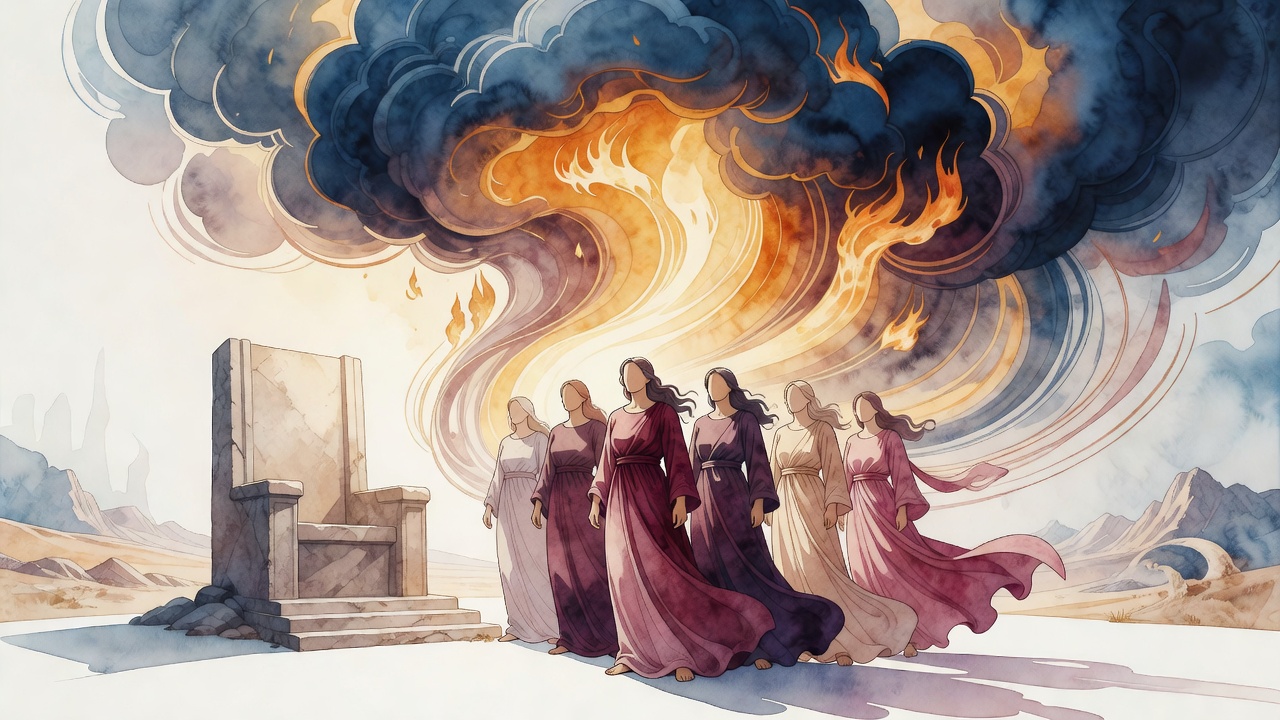
The Holy One answered without thunder. A case arrived that even a student of a student could have settled, and a woman could have judged, and Moses could not resolve it. The daughters of Tzelofhad stood in the camp with their dead father's name and no brothers. They wanted a share in the land. The law of inheritance as Moses had taught it had not prepared him for their claim.

He did not invent an answer to save face. He brought their words before the Lord. The ruling came from above, and Moses taught it as received, not invented. The man who had claimed the hard cases learned that some cases wait for Heaven on purpose.

Two Crowns, One Error

Solomon fell by claiming he could hold what the Torah said no king should hold. Moses stumbled by claiming he could hold what even a prophet must sometimes hand back. Different rooms. Same pressure. The finite mind meets an infinite law and decides, for one dangerous hour, that it is large enough.

In the wilderness the camp watched five sisters refuse silence. In Jerusalem the court watched foreign altars take root. Both stories turn on a mouth that spoke before it listened.

A sage who pours full light into an unready student burns the student. A king who pours full license into an unready heart burns the kingdom. Wisdom is not only knowing. Wisdom is knowing what cannot yet be carried.

The Case That Would Not Yield

The daughters of Tzelofhad did not come to humble Moses. They came because their father's name was about to vanish from the map. They spoke carefully. They named the man. They named the absence of sons. They asked for a holding in the midst of their father's brothers.

Moses felt the weight shift from his shoulders to the Tent. When the answer returned, it confirmed them. Their claim was just. The inheritance would pass through them under conditions that kept the tribe whole. The prophet who had said "bring it to me" became the prophet who said "wait while I ask."

Solomon never got that clean correction in time. His correction came as a split kingdom, as a son who lost ten tribes, as altars that would not leave the high places. The boast about wives became a ledger of straying hearts, and the wisest of men learned the verse had been written for him after all.

What the Infinite Leaves Unfinished

Rabbi Pinchas and Rabbi Yirmeya, citing Rabbi Hiyya bar Abba, said many have sought to complete and fathom the Torah and could not. The work under the sun is not a puzzle with a final piece. It is a river that keeps its depth even when a king wades in with both arms open.

Solomon wrote of weariness and of the wise man who still cannot find. Moses learned, at the edge of the land he would not enter, that leadership includes the cases you refuse to invent. The daughters walked away with a name restored. The king walked into a house of many doors and lost the one that led back to a single heart.

The law does not hate ambition. It hates the moment ambition stops listening. Two of Israel's brightest mouths found that moment and paid for it in public, so later mouths might pause before they claim the whole book for themselves.


← All myths
From the tradition

Sources

2 sources

The texts behind this telling. Some cards carry a translation of the source; others are our own retelling of it, and each card says which. Every card links out to the original.

Kohelet Rabbah 8:17Kohelet Rabbah

Retold in our words. Read the original at the link below.The Sefaria Midrash Rabbah, 2022 · CC-BY

The book of Ecclesiastes, or Kohelet, as it's known in Hebrew, grapples with this very feeling. "I saw all the work of God, as man is unable to discover the work that is performed under the sun," it says. "Although man toils to seek, he will not find; even if a wise man will wish to know, he will not be able to find" (Ecclesiastes 8:17). But what does it mean?

Kohelet Rabbah, a rabbinic commentary on Ecclesiastes, dives deeper. It interprets "all the work of God" as a reference to mitzvot – the commandments. The verse, according to this interpretation, suggests that we can never fully grasp the entirety of Torah and mitzvot. There's always more to learn, more to understand. It's a humbling thought.

Rabbi Pinchas and Rabbi Yirmeya, citing Rabbi Ḥiyya bar Abba, highlight the struggle: Many have sought to fully perform and fathom the Torah, but couldn't. Why? Because, as the verse says, "Although man toils to seek, he will not find.” It’s not for lack of trying, but inherent to the infinite nature of God’s wisdom. We're finite beings trying to grasp the infinite.

The commentary then brings in two fascinating examples of even the wisest figures stumbling when they overestimate their own understanding.

First, Solomon. Remember him? The wisest of all men? Well, even he wasn't immune to this limitation. Kohelet Rabbah suggests that Solomon, on the day he declared himself capable of amassing many wives without straying from God’s path, fell into this trap. He thought he could handle it, despite the explicit warning in Deuteronomy (17:17): “He shall not amass wives, and his heart will not stray.” Hubris, perhaps?

Then there's Moses. Rabbi Yehoshua of Sikhnin, quoting Rabbi Levi, references (Isaiah 40:23) ("Who renders princes into nothing") and applies it to Moses. Remember when Moses said, "The matter that is too difficult for you, bring to me and I will hear it" (Deuteronomy 1:17)? The Holy One, blessed be He, essentially responded: 'Oh, really, Moses? You judge the difficult cases? I’ll give you a case even a student of your student, even a woman, could judge, but you will be unable to resolve.'

And what was that case? The story of the daughters of Tzelofḥad. These women bravely approached Moses with a legal question about their inheritance rights. Moses, for all his wisdom, couldn't immediately answer.

Now, the Rabbis quickly clarify: God forbid we should think Moses was arrogant! Rather, he meant that if he had clear knowledge of the matter, he would judge it. If not, he would refer it to God. It wasn't about ego, but about recognizing the limits of human understanding.

So, what’s the takeaway? Are we doomed to forever misunderstand? I don't think so. The message isn't about futility, but about humility. It’s about recognizing that the pursuit of understanding is a lifelong journey, one that requires constant learning, questioning, and a willingness to admit that we don't have all the answers. Maybe the point isn't to find all the answers, but to find meaning in the seeking itself. And isn't there something beautiful and comforting in that?

Full source
Kalach Pitchei Chokhmah 32:20Kalach Pitchei Chokhmah

Retold in our words. Read the original at the link below.138 Openings of Wisdom, trans. Rabbi Avraham Greenbaum, Azamra Institute (2005) · CC-BY

That feeling, that initial taste of understanding, is actually a pretty good analogy for how wisdom itself works, according to Kalach Pitchei Chokhmah, a Kabbalistic text whose title literally means "A Wedding Hall of the Openings of Wisdom."

A brilliant sage, overflowing with knowledge. He wants to share his wisdom with a student. But what happens if the student isn’t ready to grasp the full scope, the intricate details, the sheer magnitude of what the sage knows? Does the teacher just give up? Of course not!

Instead, the sage distills his wisdom. He presents it in a way that the student can understand. A simplified version, perhaps, but still faithful to the truth. It’s a concise and comprehensible picture, a beginner's guide to something infinitely deeper.

You don't start by playing a concerto. You begin with scales, simple melodies, the basics. But those basics contain the seeds of everything that follows.

And here’s the beautiful part: that initial, simplified understanding isn’t just a stepping stone. It's a genuine experience of the wisdom itself. It's not a watered-down lie. It's a true, albeit partial, revelation.

The real magic happens later. As the student grows, as their understanding deepens, they can revisit that initial lesson. And then, they’ll see it in a whole new light. They'll discover hidden layers, nuances they never noticed before. The wisdom they initially grasped will blossom into something even richer and more profound than they could have imagined.

It's "like the superiority of the light that comes out of the darkness," as (Ecclesiastes 2:13) puts it. That initial spark of understanding, that small glimpse of wisdom, can illuminate the deepest recesses of our minds, revealing truths we never knew existed.

Embrace that initial understanding. Nurture it. Because within that seed lies the potential for a wisdom that can transform your world.

What if every "beginner's explanation" contains an entire universe waiting to be discovered? What if the simple stories are the most powerful ones?

Full source