The Star Curtain Above Solomon's Bed Hid Dawn
The morning lamb stood ready. Priests kept the fire. Israel waited in the court while the king slept under a sky someone had sewn.
Table of Contents
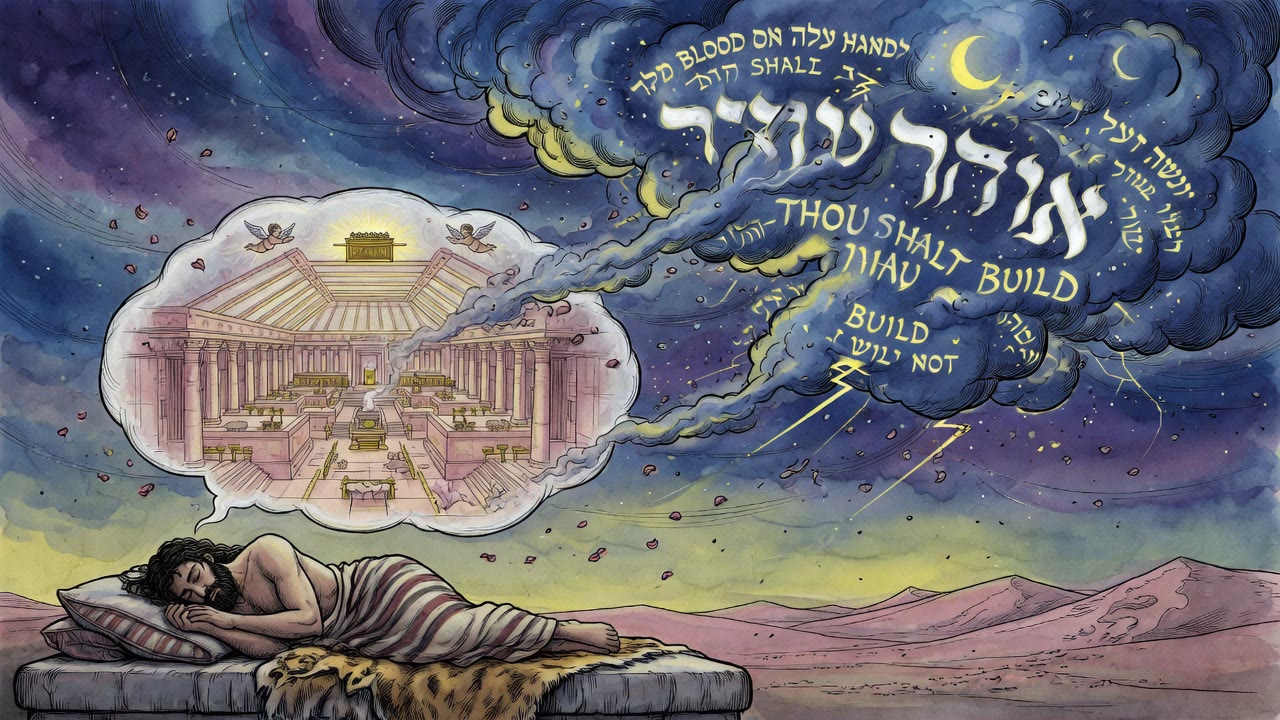
Solomon slept. The Temple was finished. Forty-six thousand workmen, seven years of labor, the vow of his father David fulfilled in cedar and gold. It was the night of the dedication, and all of Israel rejoiced.
 Click for full size
The princess of Egypt rejoiced louder.
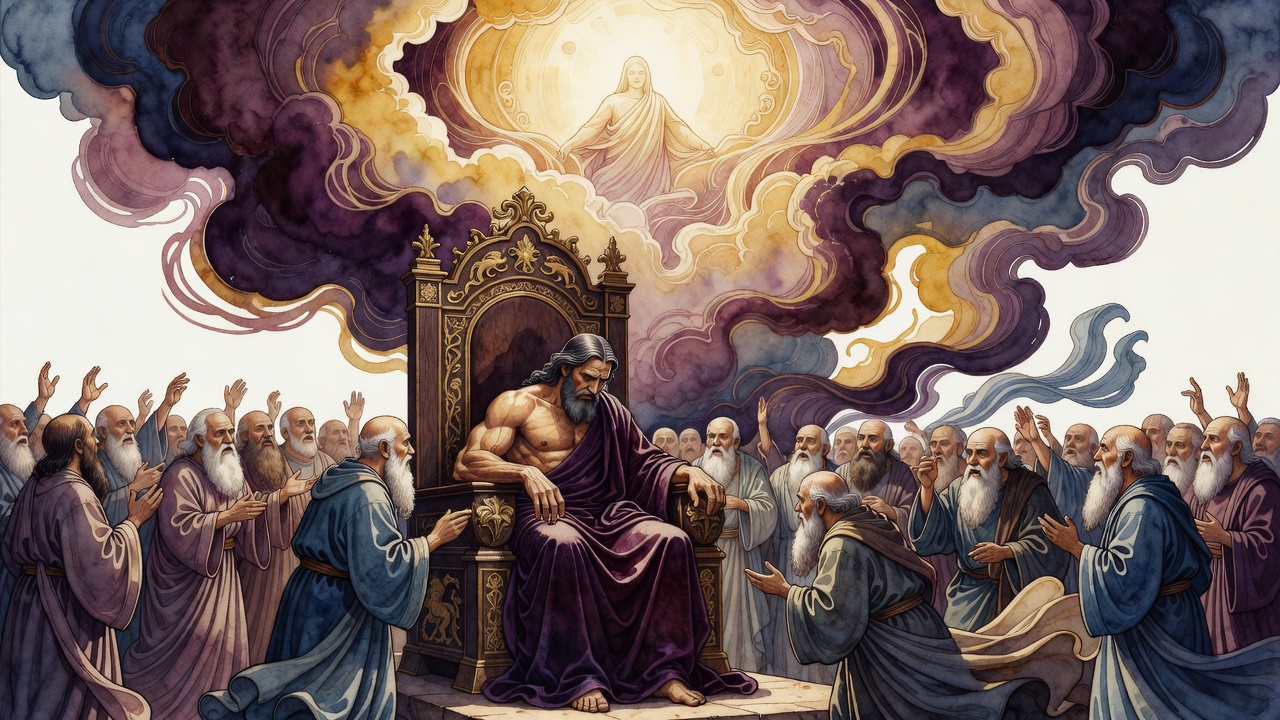
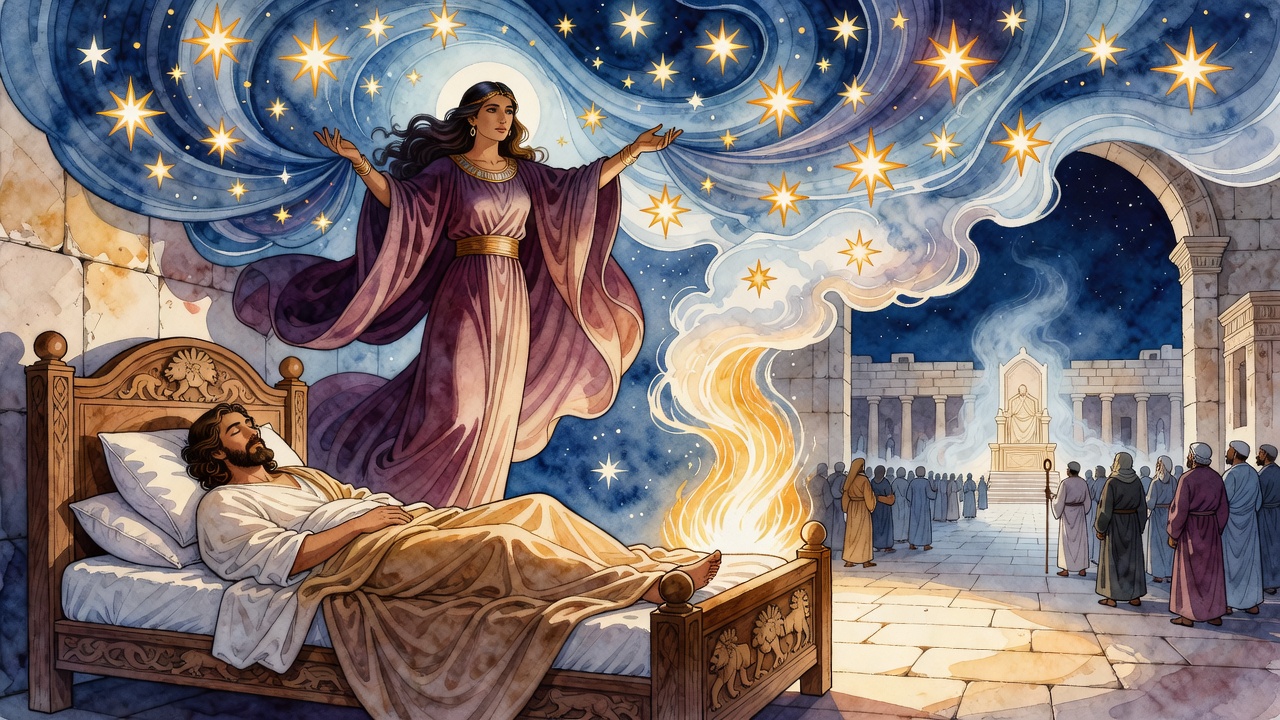
Pharaoh's daughter spread a canopy above the royal bed and sewed into its fabric the forms of stars and constellations, hundreds of them, stitched so close that when Solomon woke in the dark and looked up, he saw not the ceiling of his chamber but midnight. The sewn sky said sleep. Dawn is far. He closed his eyes and went under.
The Morning Offering Stood Waiting
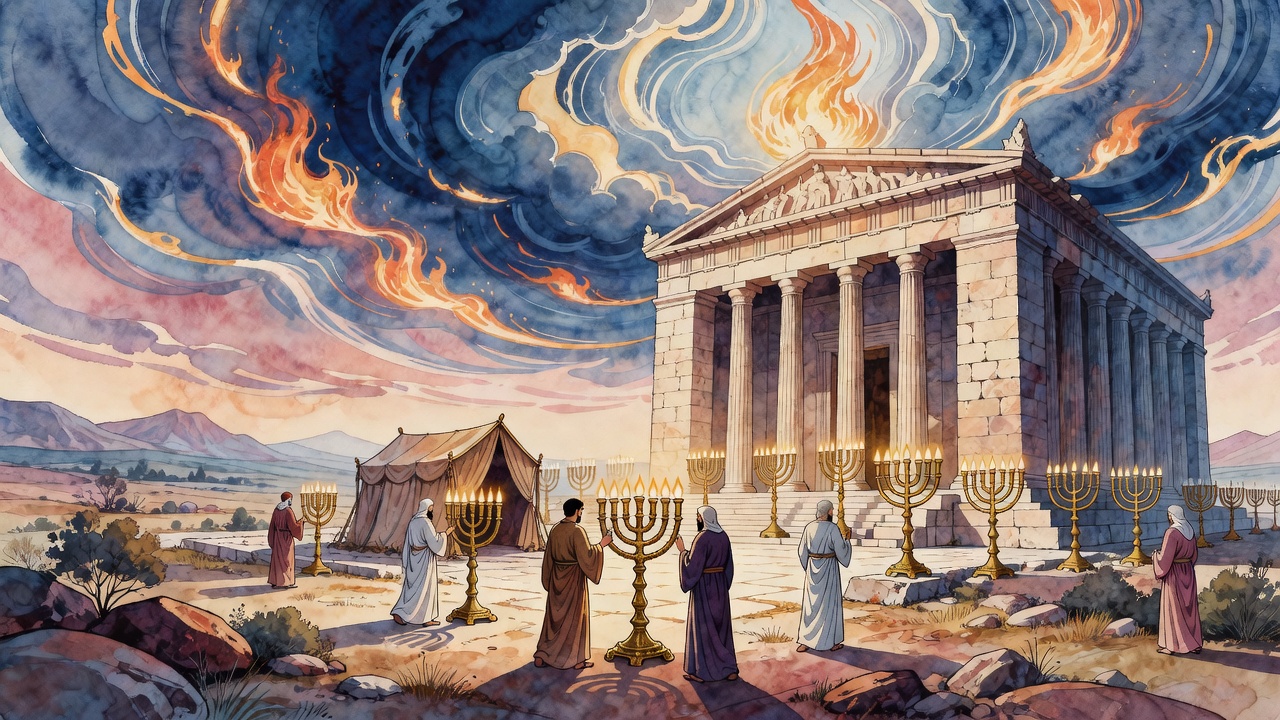
Outside, the priests held the Tamid, the daily morning offering. The lamb stood ready. The fire was dressed. The people of Israel had come to the Temple at first light, and now they stood in the courts and waited for their king, who did not come. An hour passed. Another. They shifted on their feet, looked at the palace doors, looked back. The priests held the lamb.
No one dared wake him. The man was king. The man was also the son of Bat-Sheva, and she was still alive.
She went in herself.
A Mother at the Foot of the Bed
She stood at the foot of the bed and spoke the words she had carried since he was born. "What, my son?" (Proverbs 31:2). The rebuke was old. She had vowed this child to God before he drew breath. She had watched him build the Temple. She had not watched him sleep through its first morning while a princess's curtain of false stars kept him in a pretend midnight.
She pulled him up. She named what he had done. Solomon rose. The morning sacrifice was offered. The hour it should have been offered was gone.
Three Thousand Proverbs and a Gap in the Scroll
No king of Israel before or after him spoke the way Solomon spoke. Proverbs came out of him like water from a spring under pressure, three thousand of them, each one branching, each branch able to lean on a verse (Proverbs 25:1). The Book of Proverbs, where that wisdom was gathered, holds only about nine hundred fifteen verses. The scroll was never large enough to hold him. What passed through the gate of ink was already more than any other man could produce in a lifetime. What did not make it through was still flowing somewhere, out of reach of parchment.
He had written of the faithful woman who feared God (Proverbs 31:30). He had praised the heart that knows its limits. He had, one night, stood in the Temple he built and spoken to God with his arms open and his knees on the pavement (1 Kings 8:54). He could hold the divine measure in language. He could not always hold it in the hour he was given.
The Title Heaven Would Not Echo
There was a title in Israel that stood above king and prophet and judge. It was given by God and it was not given freely. Abraham had used it first of himself, calling out from his tent when the three men passed: do not go on, he said, from your servant (Genesis 18:3). And God had used it back, speaking to Abraham's descendants: for the sake of Abraham my servant (Genesis 26:24). The word returned from heaven sealed.
Jacob carried it. Moses carried it (Numbers 12:7). David carried it (2 Samuel 7:5). When a man named himself servant of the Holy One and heaven echoed the name back, something was established between them that no army could break and no wedding canopy could hide.
Solomon called himself servant (1 Kings 8:28). The prayer was sincere. The hands were open. The Temple behind him was the proof of everything he meant.
Heaven did not echo it back.
Samuel reached for the same title and found it would not grip. Samson the same. Three men who named themselves servants and heard no answering name. Abraham had slept in a tent. Jacob had laid his head on a stone. Moses had died on a mountain with no one to bury him. They had been named servants because, at the moment it mattered, they had not chosen themselves.
Solomon chose himself. Once. On a night when the false stars said the morning was still far, when the music of Egypt rose higher than the music of the altar, when a king who had every reason to stay awake let a curtain of constellations tell him the real sky had not opened yet.
The Morning He Woke Into
Bat-Sheva's rebuke is the last thing Proverbs records about her. She said what she came to say, and then the book continues in Solomon's voice, as if he had taken the correction and kept moving. The Temple stood. The sacrifice was made. The kingdom continued for decades, and in those decades Solomon produced the proverbs and the songs that carried more than any scroll could hold.
The silence from heaven, the unanswered title, the hour lost to an embroidered sky, none of it erased the Temple. None of it could take back what had already been given. The merit of the fathers, zekhut avot (זכות אבות), had been accumulating since Abraham walked out of Ur. By the time it reached Solomon it was enormous, and Solomon was large enough to receive it. The chain had a direction. The merit moved forward. It was not for the inheritor to stand in those shadows and call himself their equal.
The shadow of Abraham stretched longer than the shadow of the king who stood in it. Three thousand proverbs were real, and the nine hundred sixteenth was still running somewhere downstream, past the edge of any page that has survived. The sewn stars had only stolen an hour. The hour was enough to leave a silence where an echo should have been.
← All myths