Moses Built a Holy of Holies Twice the Size of Solomon's
A portable tent in the desert held a sanctuary twice as large as the one Solomon built in Jerusalem. The rabbis argued about why for a thousand years.
Table of Contents
 Click for full size
The Two Houses and What Was Inside Them
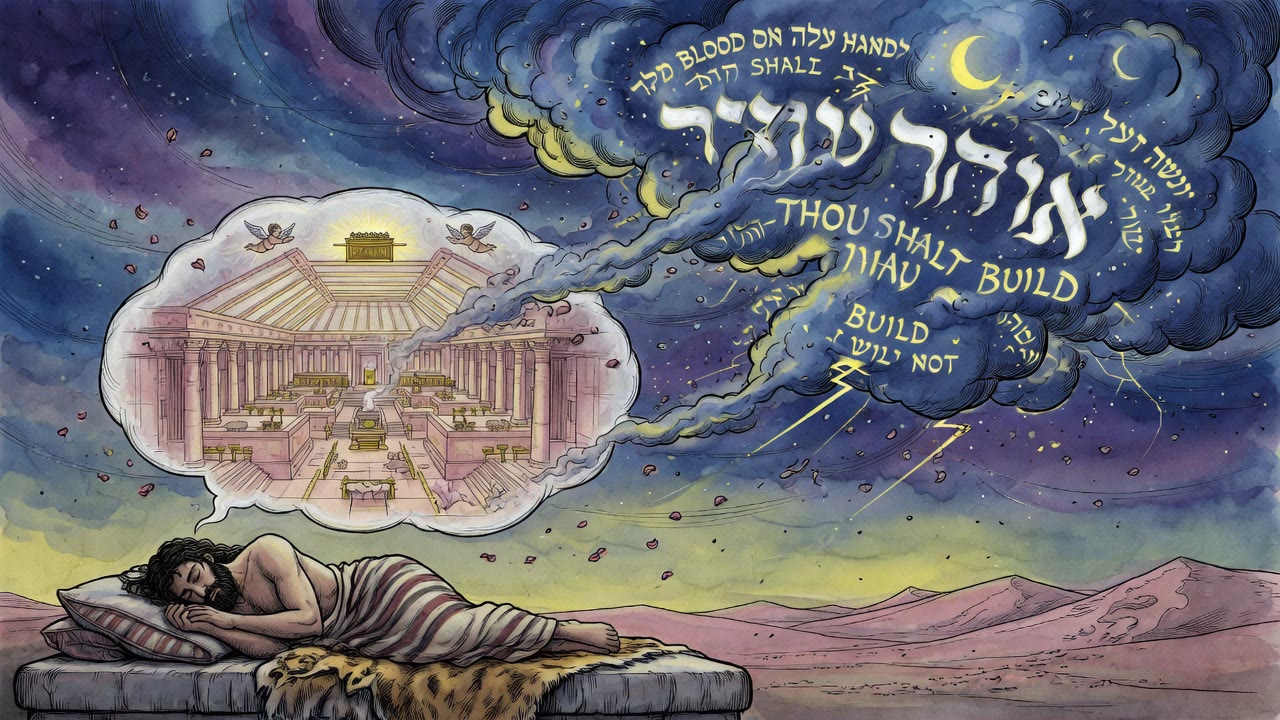
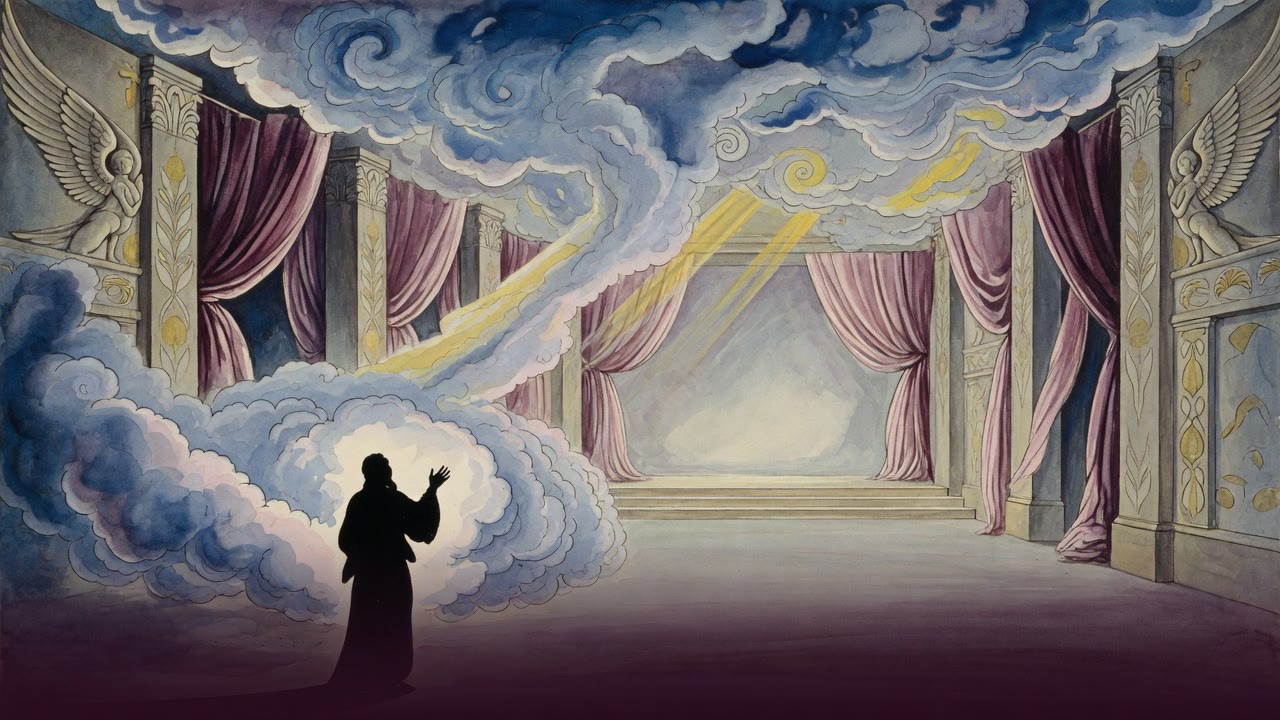
There is a number problem in the Torah that most readers pass over without stopping. Moses built the Tabernacle's innermost chamber at twenty cubits by twenty cubits. Solomon built the Temple's innermost chamber, the Holy of Holies where the Ark would rest in a permanent stone house in Jerusalem, at ten cubits by ten cubits.
A portable tent in the Sinai desert had a sacred inner room four times the floor area of the permanent Temple in Jerusalem. The wandering had a bigger heart than the settlement.
The rabbis who noticed this were not people who let numbers pass without interrogation. They sat with it for centuries.
Why the Smaller Room Was the Greater One
A third-century rabbi named Huna, whose saying was collected in the medieval Midrash Tehillim, gave an answer that sounds almost like it belongs to a different tradition entirely. He said that the Holy of Holies is not defined by its dimensions in the created world. It is the presence that enters it. A room of ten cubits filled with the Shekhinah (God's indwelling presence) is not a smaller room than a room of twenty cubits. The Shekhinah has no dimensions. It either fills a space or it does not.
Solomon's chamber was half the physical size, but that was not because Solomon's house was lesser. It was because Solomon's house was more complete. The presence that had spread into every corner of the Tabernacle, making even the outer courts charged with holiness, had condensed. Not diminished, but refined.
The Prophet and the King Who Both Went Up
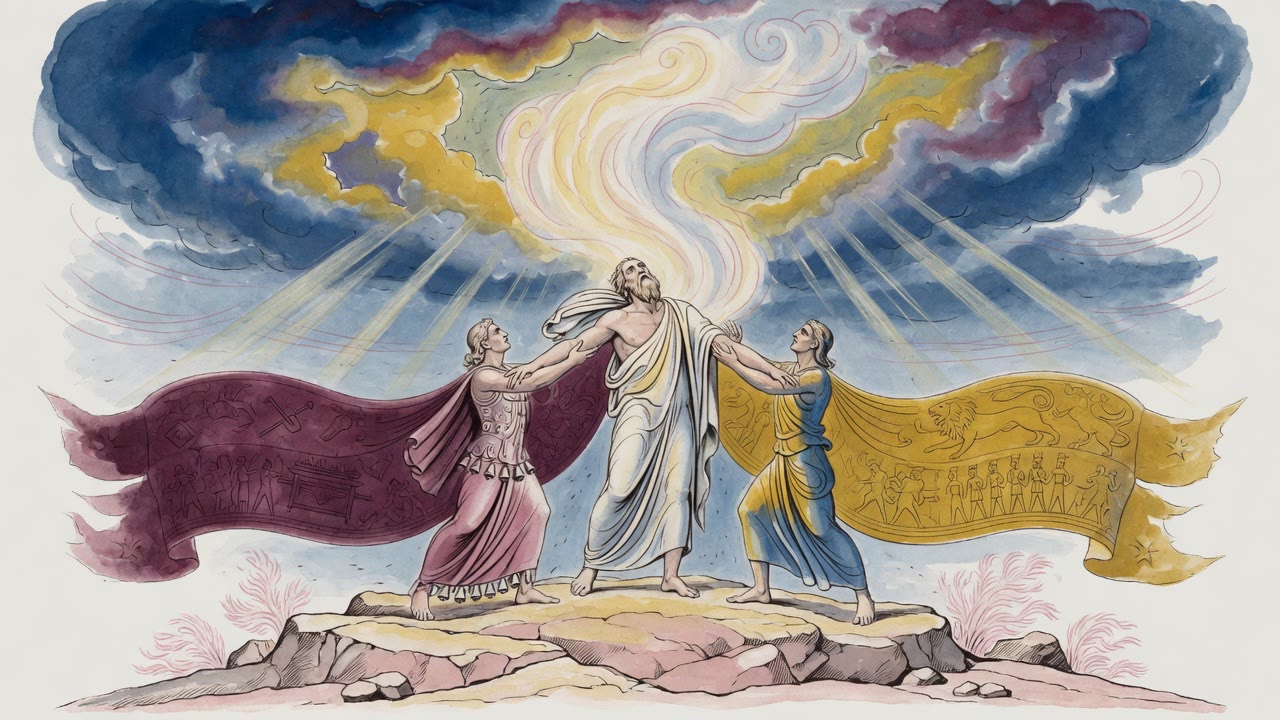
Midrash Tehillim also places Moses and Solomon in direct comparison as the two men who crossed the normal boundary between heaven and earth. Moses went up to receive the Torah. Solomon, the tradition says, had his own ascent, not on a mountain but in the mind, in the depth of wisdom, in the construction of the Temple itself as a kind of cosmological map.
The Song of Songs, which Solomon wrote, was read by the rabbis as a record of the encounter between Israel and God at Sinai, which placed Solomon's greatest poem in Moses's greatest moment. This was not coincidence, the midrash said. The two men had been reaching for the same thing from opposite ends of history.
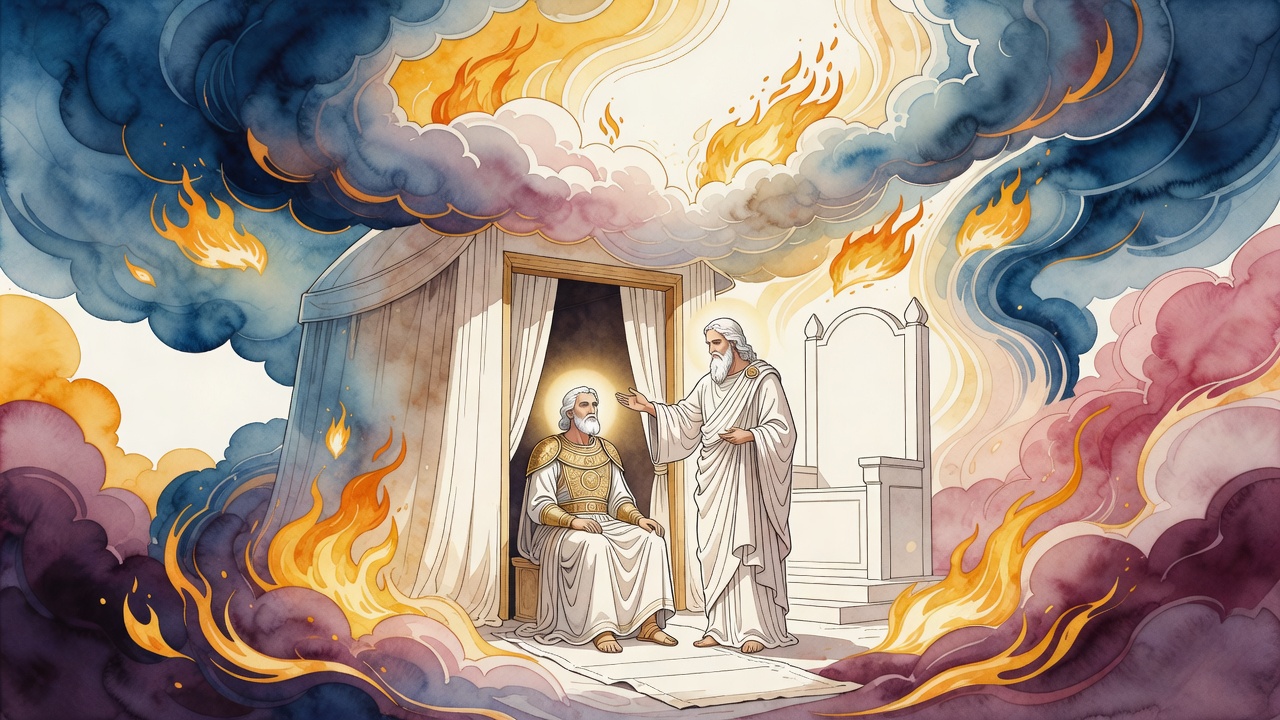
Moses had the larger room. Solomon had the more permanent one. Moses had the miraculous fire descending. Solomon had the cedar and the gold and the carved cherubim. Moses had the desert. Solomon had the city. Together, the rabbis said, they bracketed everything Israel was supposed to be.
The Census and the Ark
Shemot Rabbah, the rabbinic commentary on Exodus compiled in the ninth century CE, preserved a tradition that connected the half-shekel census to the dimensions of the Tabernacle. Every man counted contributed equally, because inside the Tabernacle there was no greater and lesser. The Ark held the Torah. The Torah was given to all of them at once. No piece of the camp was outside the domain of what had happened at Sinai.
Solomon built to scale and built for permanence. He built a house that would stand for four centuries before Babylon burned it. But the Tabernacle, which was just goat hair and acacia and brass fittings, could be folded up and carried on poles, and the presence had agreed to travel inside it. Solomon knew this. The speech he gave at the Temple's dedication acknowledges it plainly: "will God truly dwell on the earth? The heavens and the heavens of heavens cannot contain you. How much less this house which I have built."
The smaller room in Jerusalem was Solomon's honest acknowledgment that he was not Moses. The larger room in the desert was God's acknowledgment that Moses was moving.
← All myths