Parshat Chukat6 min read

Solomon Could Not Unlock the Red Heifer Law

Solomon read the death dates off a work crew Pharaoh sent him. Then he opened the law of the red heifer and could not get anywhere with it.

Curated by Arthur · Told by Maggid ·
Table of Contents
  1. The Shrouds Solomon Sent Back to Egypt
  2. Wiser Than Adam, Stopped by a Cow
  3. Moses Heard God Quote a Man Not Yet Born
  4. Let Your Ears Hear What Your Mouth Says
  5. What He Told His Students After the Man Left
Solomon Could Not Unlock the Red Heifer Law Click for full size

The Shrouds Solomon Sent Back to Egypt

The workmen arrived from Egypt in good health and Solomon took one look at them and knew every one of them would be dead inside the year.

He had written to Pharaoh Neco asking for skilled hands, at wages, for the building of the Temple. Pharaoh had called in his astrologers instead, and the astrologers had gone through the charts and picked out the men whose year was up, and those were the men who were sent. A crew of walking corpses, hired out at full price.

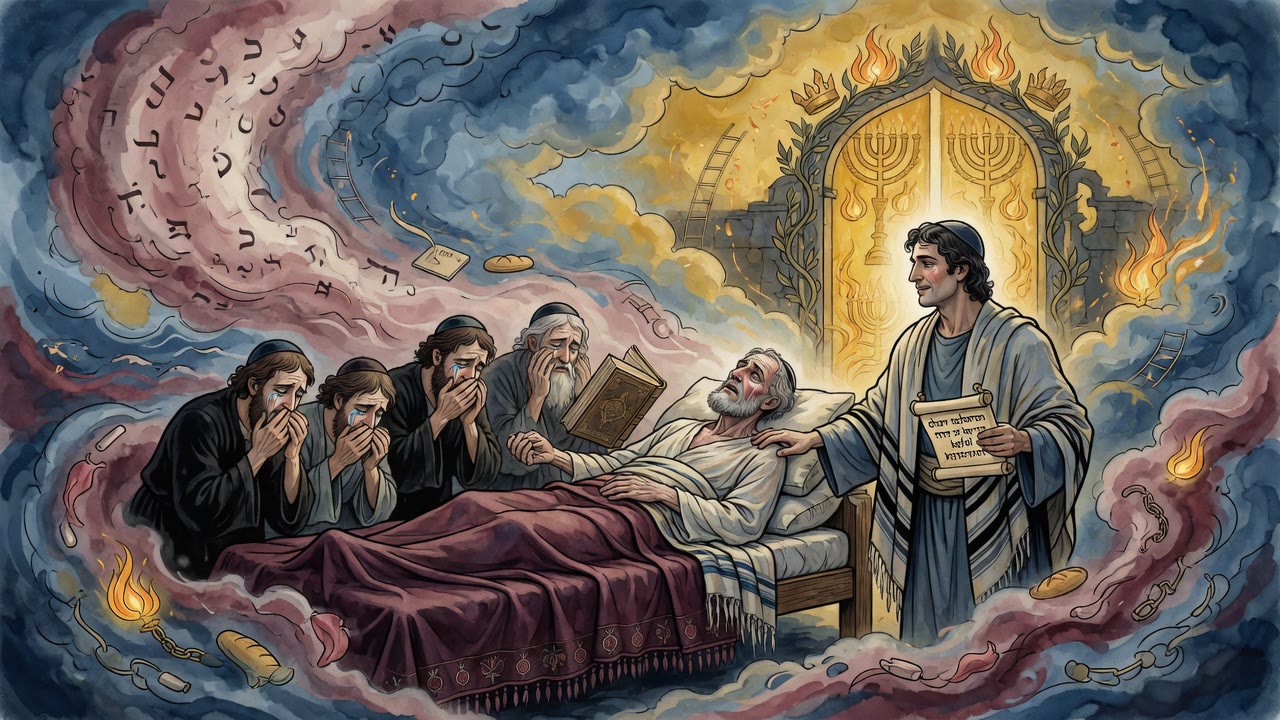
Solomon had them measured for burial. Then he sent them home with the linen folded under their arms and a note for Pharaoh.

Did you have no shrouds to bury your dead? Here they are, and here is their linen.

Wiser Than Adam, Stopped by a Cow

They said his wisdom was fenced in the way sand fences the sea. Whatever came at him broke on it.

He outran the sages of the east, who could read a star and were clever with birds. He outran Adam, who had stood in front of every animal God led past him and handed out names, horse, lion, camel, ox, eagle, donkey, while the angels who had been given the same test stood there with nothing to say. Adam had named himself too, out of the ground he came from, and then named God as the Lord over everything that lives. He outran Joseph, whose Egyptian masters threw seventy tablets in seventy languages at his feet to prove a slave could not rule them, and who read every one, and then spoke Hebrew at them, which none of them could follow.

Asked why a leper is cleansed with the tallest tree and the smallest bush, he had the answer ready. Raise a man up like a cedar and the disease finds him. Bring him down as low as the hyssop and the hyssop heals him.

Then he opened the section of the red heifer.

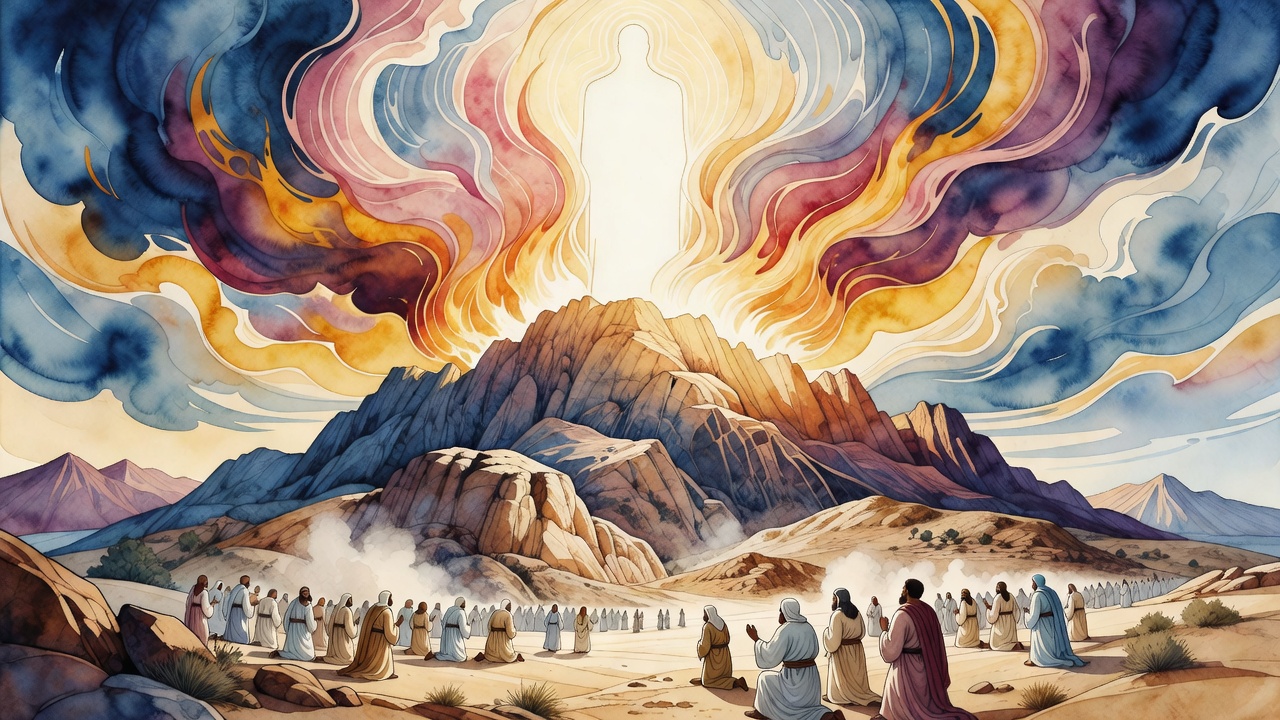
A cow without blemish, never yoked, burned whole outside the camp, cedar and hyssop and crimson thrown into the fire with her, the ashes stirred into spring water. Sprinkle it on a man who has touched a corpse and he is clean. Sprinkle it and the priest who does the sprinkling is unclean until evening.

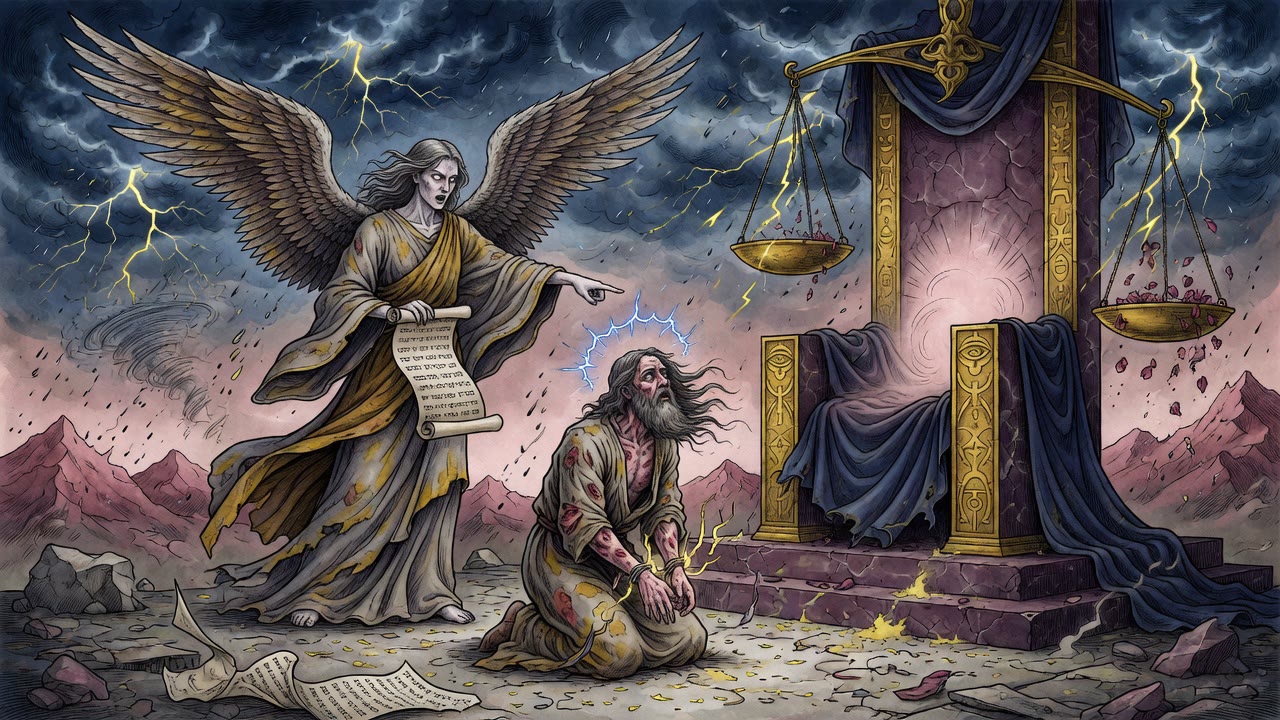
He worked at it and worked at it. He kept coming back to it and expounding it and digging under it, and it did not open.

I said I will be wise, he admitted at last, and it is far from me.

Moses Heard God Quote a Man Not Yet Born

Take unto you a red heifer, God had said to Moses, and the word was unto you. To you I am revealing why. For everyone else it stays a decree.

So Moses had the reason. What he did not have was the rest of it, and he found out about the rest of it by accident.

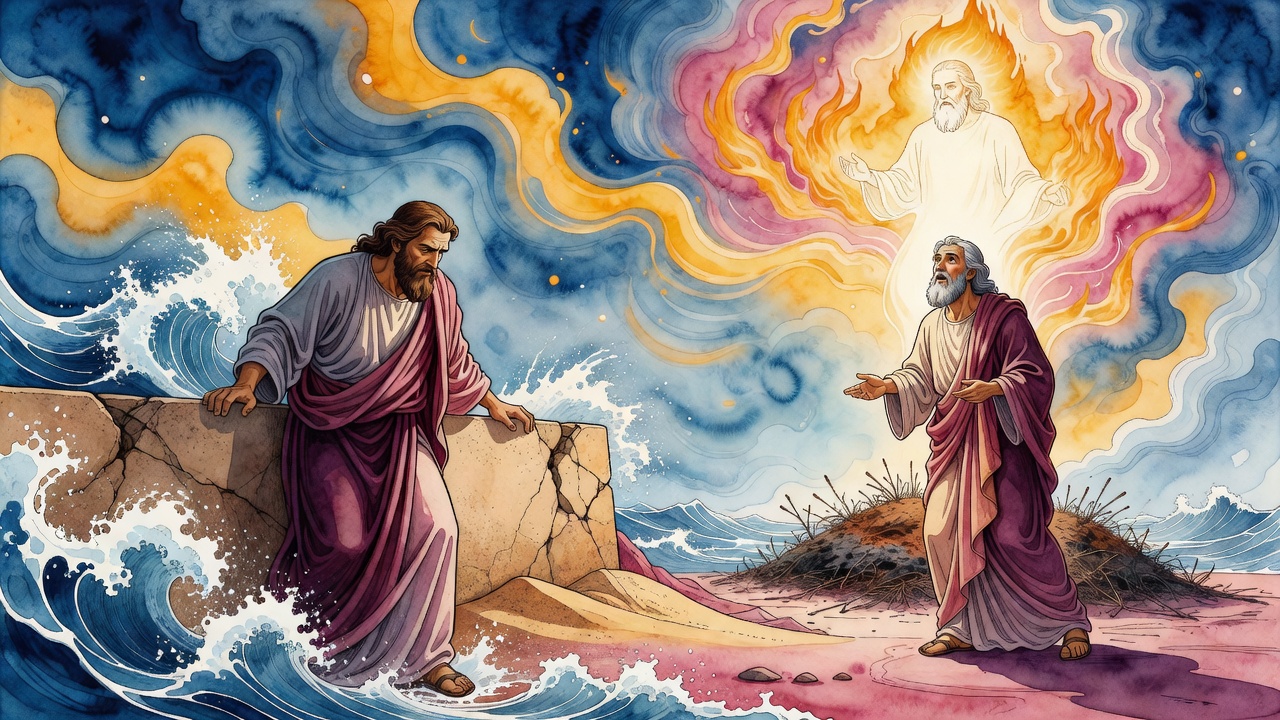
He was on high, and he heard a voice studying. It was God, sitting over the laws of the heifer, and God was citing a ruling by name. Rabbi Eliezer says: a calf is a year old and a heifer two.

Moses stopped where he stood.

"Master of the worlds, the worlds above and the worlds below are Yours. You sit here and quote a halakhah (Jewish law) in the name of flesh and blood?"

"A righteous man is going to stand up in My world," God said, "and he is going to open the section of the heifer before anyone else does. Rabbi Eliezer says: a calf a year old, a heifer two."

Moses did not ask what the man would teach. He asked for something else entirely.

"Master of the worlds. Let him come out of my own loins."

"By your life," God said. "He will come out of your loins."

Moses had a son already, and the son's name was Eliezer.

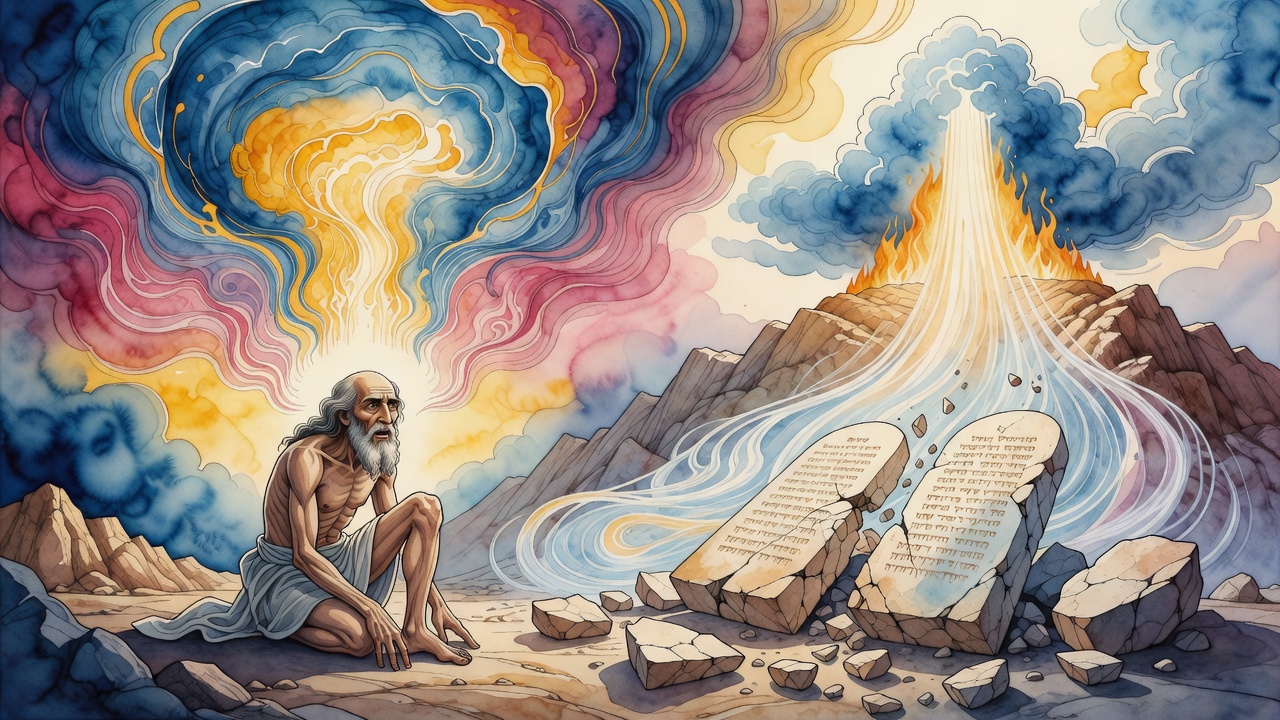
The rest of it Moses was not shown at all. Things that were never revealed on Sinai were revealed later to Rabbi Akiva and the men who studied beside him, and Job's line about the eye that saw every precious thing was said of Akiva. The heifer outlasted the man it had been explained to.

Let Your Ears Hear What Your Mouth Says

Generations on, a gentile came at Rabban Yochanan ben Zakkai with it, and he did not bother being polite.

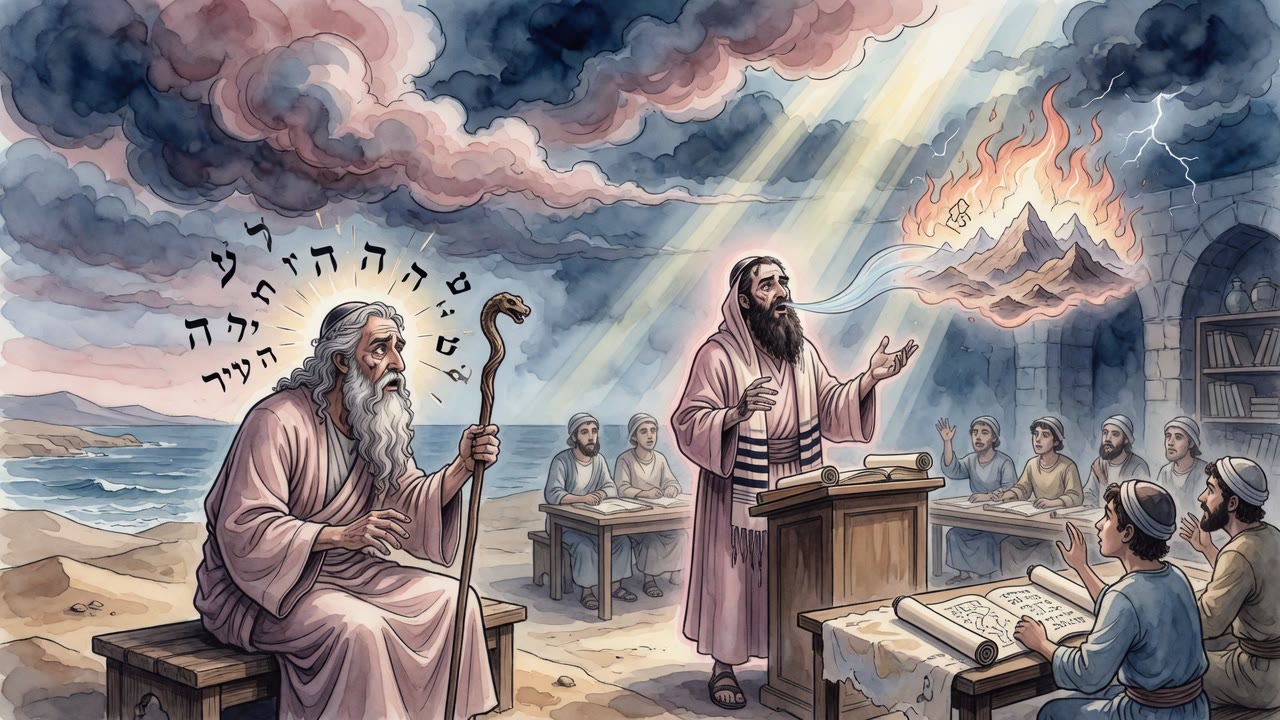
"What you people do looks like sorcery. You bring a cow. You slaughter it, you burn it, you grind it up, you keep the ash. Then somebody touches a dead body and you flick two or three drops of the stuff at him and tell him he is clean."

Yochanan asked him whether a restless spirit had ever gotten into him. Never. Had he ever seen it get into somebody else? Yes.

"And what do you do for that man?"

"We bring roots and burn them under him and throw water at it, and the thing runs."

"Let your ears hear what your mouth is saying."

The man had nothing to come back with, and he went out.

What He Told His Students After the Man Left

The students waited until the door shut.

"Rabbi. You pushed him off with a straw. What do you tell us?"

Yochanan looked at them.

"By your lives. The dead body does not defile. The water does not purify. It is a decree. A statute I have engraved, God says, a decree I have decreed, and you have no permission to cross it."

Solomon had gone at that same law with everything he owned. The throne, the three thousand proverbs, the ruling on the cedar and the hyssop, the work crew he sent back to Egypt carrying their own shrouds. A cow burned outside the camp beat all of it.


← All myths

From the tradition

Sources

2 sources

The texts behind this telling. Some cards carry a translation of the source; others are our own retelling of it, and each card says which. Every card links out to the original.

Pesikta DeRav Kahana 4:3Pesikta de-Rav Kahana

Translation of the source text.Pesikta de Rav Kahana according to an Oxford manuscript, Dov Mandelbaum ed., N.Y. 1987 · CC-BY

Rabbi Isaac opened: "All this I tested with wisdom; I said, I will be wise, but it was far from me" (Ecclesiastes 7:23). It is written, "And God gave Solomon wisdom and very great understanding" and so on (1 Kings 5:9). Rabbi Levi and the rabbis. The rabbis said: He gave him wisdom equal to all of Israel. Rabbi Levi said: Just as this sand is a fence for the sea, so was wisdom a fence for Solomon. He stated a matter: knowledge you have acquired, what do you lack? Knowledge you lack, what have you acquired? "A breached city without a wall" and so on (Proverbs 25:28): like a breached city that has no wall, so is a man who has no restraint over his spirit.

It is written, "And Solomon's wisdom exceeded the wisdom of all the people of the East" and so on (1 Kings 5:10). And what was the wisdom of the people of the East? That they were knowledgeable in the stars and clever with birds. Rabban Shimon ben Gamliel said: In three matters I praise the people of the East: they do not kiss on the mouth but on the hand, they do not bite into bread but cut it with a knife, and they take counsel only in an open place, as it is said of our father Jacob, "And Jacob sent and called Rachel and Leah to the field, to his flock" (Genesis 31:4), to an open place.

"And than all the wisdom of Egypt" (1 Kings 5:10). And what was the wisdom of the Egyptians? You find that when Solomon wished to build the Temple, he sent to Pharaoh Necho and said to him: Send me craftsmen for wages, for I wish to build the Temple. What did he do? He gathered all his astrologers, and they foresaw men who were destined to die that year, and he sent them to him. When they came to Solomon, he foresaw by the holy spirit that they were destined to die that year, and he gave them their shrouds and sent them back, and wrote to him: Did you have no shrouds to bury your dead? Here they are, and here are their shrouds.

"And he was wiser than all men" (1 Kings 5:11), this is the first Adam. And what was the wisdom of the first Adam? You find that when the Holy One, blessed be He, wished to create the first Adam, He took counsel with the ministering angels and said to them, "Let us make a human" (Genesis 1:26). They said before Him: Master of the worlds, "what is a human that You should remember him, and a son of man that You should be mindful of him?" (Psalms 8:5). He said to them: This human whom I wish to create in My world, his wisdom is greater than yours. What did He do? He gathered every beast and animal and bird and passed them before them and said to them: What are the names of these? And they did not know. Once He created the first Adam, He gathered every beast and animal and bird and passed them before him and said to him: What are the names of these? And he said: This one it is fitting to call horse, this one it is fitting to call lion, this one camel, this one ox, this one eagle, this one donkey, as it is written, "And the human gave names to all the cattle" and so on (Genesis 2:20). He said to him: And you, what is your name? He said to Him: Adam. He said: Why? Because I was created from the ground [adamah]. He said to him: And I, what is My name? He said to Him: the LORD. He said: Why? He said to Him: Because You are Lord [adon] over all Your creatures. Rabbi Aha said: The Holy One, blessed be He, said, "I am the LORD, that is My name" (Isaiah 42:8): it is My name that the first Adam called Me, it is My name that I stipulated between Myself and Myself, it is My name that I stipulated between Myself and the ministering angels.

"Ethan," this is our father Abraham, as it is written, "A maskil of Ethan the Ezrahite" (Psalms 89:1). "Heman" (1 Kings 5:11), this is Moses, "Not so My servant Moses" and so on (Numbers 12:7). "And Kalkol" (1 Kings 5:11), this is Joseph, "And Joseph sustained [vaykhalkel] his father" and so on (Genesis 47:12). The Egyptians said: Did this slave become king over us only by his wisdom? What did they do? They took seventy tablets and wrote on them seventy languages and would throw them before him, and he would read each one in its language; and moreover, he would speak in the holy tongue, which they could not understand, as it is written, "A testimony in Joseph He appointed it, when he went out over the land of Egypt" and so on (Psalms 81:6). "And Darda" (1 Kings 5:11), this is the generation of the wilderness; and why is it called Darda? Because they were all full of knowledge [de'ah]. "Sons of Mahol" (1 Kings 5:11), these are Israel, children whom the Divine Presence forgave [machal] for the deed of the calf.

"And he spoke three thousand parables" and so on (1 Kings 5:12). Rabbi Samuel son of Nahman said: We went through all of Scripture and did not find that Solomon prophesied more than close to eight hundred verses, yet you say three thousand parables? Rather, this teaches that every single verse he prophesied has in it two or three meanings, as you say, "A golden ring and an ornament of fine gold" (Proverbs 25:12). And the rabbis said: three thousand parables on each verse, and one thousand and five meanings on each parable; "And his song was" is not written, but rather "And his song [shiro] was" (1 Kings 5:12), the remainder [shiyuro] of the parable.

"And he spoke about the trees" (1 Kings 5:13). Is it possible for a person to speak about the trees, "from the cedar that is in Lebanon to the hyssop that comes out of the wall" (1 Kings 5:13)? Rather, Solomon said: Why is this leper purified by the highest of the high and the lowest of the low? Because if a person exalts himself like a cedar, he is stricken with leprosy, and once he lowers himself like hyssop, he is healed with hyssop. "And he spoke about the beasts and about the birds" (1 Kings 5:13). Is it possible for a person to speak about the beasts and the birds? Rather, Solomon said: Why is the beast permitted with two signs and the bird permitted with one sign? Because the beast was created from the dry land, while concerning the bird one verse says from the dry land and one verse says from the sea: one verse says from the dry land, "And the LORD God formed from the ground every beast of the field" and so on (Genesis 2:19); and one verse says from the sea, "And God said, let the waters swarm" and so on (Genesis 1:20). Bar Kappara said: the bird was created from the mud of the sea. Rabbi Abun in the name of Rabbi Samuel of Cappadocia: even so, the feet of the rooster resemble the scales of a fish.

"And about the creeping things" (1 Kings 5:13). Is it possible for a person to speak about the creeping things? Rather, Solomon said: Why is one who traps or wounds the eight creeping things stated in the Torah liable, while one who wounds the rest of the swarming and creeping things is exempt? Because these have hides. "And about the fish" (1 Kings 5:13). Is it possible for a person to speak about the fish? Rather, Solomon said: Why do beast and animal and bird require slaughter, while fish do not require slaughter? Jacob, a man of Kefar Gibboraya, ruled in Tyre that fish require slaughter. Rabbi Haggai heard and sent and brought him. He said to him: From where do you derive this? He said to him: From this, as it is written, "And God said, let the waters swarm with swarms of living creatures, and birds" (Genesis 1:20); just as the bird requires slaughter, so the fish require slaughter. He said: Stretch him out to be flogged. He said: A man who speaks a matter of Torah is flogged? He said to him: You did not derive it well. He said to him: What is it? He said to him: From this, as it is written, "Shall flocks and herds be slaughtered for them, and it suffice for them?" (Numbers 11:22); if it had said "shall all the fish of the sea be slaughtered for them," it would be as you say, but it says, "shall they be gathered for them, and it suffice for them" (Numbers 11:22). He said to him: Strike your blows well, for it is good in measure.

Jacob of Kefar Naboraya ruled in Tyre that the son of a non-Jewish woman may be circumcised on the Sabbath. Rabbi Haggai heard and sent and brought him. He said to him: From where do you derive this? He said to him: From this, as it is written, "And they declared their pedigrees by their families, by their fathers' houses" (Numbers 1:18), and it is written, "And at eight days old every male among you shall be circumcised" and so on (Genesis 17:12). He said: Stretch him out to be flogged. He said: A man who speaks a matter of Torah is flogged? He said to him: You did not derive it well. He said to him: From where? He said to him: Lie down and listen. He said to him: If a Gentile comes to you and says, I wish to become a Jew on condition that I be circumcised on the Sabbath day or on the fast day of the Day of Atonement, do we desecrate it for him? He said: We do not desecrate the Sabbath and the Day of Atonement except for the son of an Israelite alone. He said to him: From where? He said to him: From this, as it is written, "And now let us make a covenant with our God to put away all the wives and those born from them" and so on (Ezra 10:3). He said to him: And from the Writings you flog me? He said to him: It is written there, "And let it be done according to the Torah" (Ezra 10:3). He said to him: According to which Torah? He said to him: According to what Rabbi Yohanan said in the name of Rabbi Shimon ben Yohai, "You shall not intermarry with them, your daughter you shall not give to his son" and so on, "for he will turn away your son from following Me" and so on (Deuteronomy 7:3, 4); your son from an Israelite woman is called your son, your son from a Gentile woman is not called your son. He said to him: Strike your blows well, for it is good in measure.

Solomon said: All these I grasped, but this portion of the heifer, when I touched it, I expounded it and investigated it; I said, I will be wise, but it was far from me (Ecclesiastes 7:23).

Full source
Pesikta DeRav Kahana 4:7Pesikta de-Rav Kahana

Translation of the source text.Pesikta de Rav Kahana according to an Oxford manuscript, Dov Mandelbaum ed., N.Y. 1987 · CC-BY

"And they shall take to you a red heifer" (Numbers 19:2). Lulianus bar Tiberis in the name of Rabbi Yitzchak Katriko, and Rabbi Azaryah said it in the name of Rabbi Yitzchak and Rabbi Yose bar Chanina: The Holy One, blessed be He, said, "Moses, to you I reveal the reason of the heifer, but for others it is a decree." For Rabbi Chuna said: "When I take the appointed time, I will judge with fairness" (Psalms 75:3). "And it shall come to pass on that day, there shall not be light, but heaviness and congealing" (Zechariah 14:6) - it is written "they shall congeal" [the matters now hidden shall thicken and become clear]. Things that are concealed from you in this world are destined to be clear to you, like this clear crystal. This is what is written: "And I will lead the blind in a way they did not know, in paths" (Isaiah 42:16). It is not written "the things I will do," but rather "these I have done and have not forsaken them" (ibid.) - I have already done them for Rabbi Akiva and his colleagues. For Rabbi Acha said: Matters that were not revealed to Moses at Sinai were revealed to Rabbi Akiva and his colleagues, as it is written, "and his eye has seen every precious thing" (Job 28:10) - this is Rabbi Akiva.

Rabbi Yose bar Chanina said: He hinted to him that all the heifers would be voided, but yours would endure. Rabbi Acha in the name of Rabbi Yose bar Chanina: When Moses ascended to the heights of heaven he heard the voice of the Holy One, blessed be He, sitting and engaging with the portion of the heifer and saying a teaching in the name of one who taught it. Rabbi Eliezer says: a calf in its first year and a heifer of two years. Moses said before the Holy One, blessed be He, "Master of the worlds, the upper and lower worlds are in Your domain, and You sit and say a teaching in the name of flesh and blood?" The Holy One, blessed be He, said to him, "Moses, a righteous man is destined to arise in My world who will one day open with the portion of the heifer first - Rabbi Eliezer says: a calf in its first year and a heifer of two years." Moses said before Him, "Master of the worlds, may it be Your will that he come from my loins." He said to him, "By your life, he is from your loins!" This is what is written: "and the name of the one was Eliezer" (Exodus 18:4) - and the name of that singular one [is hinted as] Eliezer.

There we learned: Abba Shaul says, the ramp of the heifer the high priests made from their own funds, and not one of them would bring out his heifer on the ramp of his fellow, but would tear it down and rebuild it from his own. Rabbi Acha in the name of Rabbi Chanina: more than sixty myriads of talents of gold were spent on it, and all of them were proud of it. But did not the teaching say: Shimon the Righteous made two heifers, and it was not on the ramp by which he brought out the first that he brought out the second - can you say of that righteous one that he was proud? Rabbi Avun in the name of Rabbi Lazar: It was out of honor [literally esteem] for the heifer.

A certain gentile asked Rabban Yochanan ben Zakkai, saying to him, "These things you do appear like sorcery: you bring a heifer, slaughter it, burn it, pound it, take its ashes, and when one of you is defiled by a corpse they sprinkle on him two or three drops and say to him, you are purified!" He said to him, "Has a restless spirit never entered that man?" He said to him, "No." He said to him, "And have you not seen someone after a restless spirit entered him?" He said to him, "Yes." He said to him, "And what do you do?" He said to him, "We bring roots and make smoke beneath him and pour water upon it, and the spirit flees." He said to him, "Do your ears not hear what your mouth speaks? So too this spirit is a spirit of impurity, as it is written, 'and also the prophets and the spirit of impurity' (Zechariah 13:2)." When the gentile left, his disciples said to him, "Our master, this one you pushed off with a reed - what do you answer to us?" He said to them, "By your lives, it is not the corpse that defiles nor the water that purifies, but it is a decree of the Holy One, blessed be He. The Holy One, blessed be He, said, I have engraved a statute, I have decreed a decree, and you are not permitted to transgress My decree: 'This is the statute of the Torah' (Numbers 19:2)."

Full source