Solomon Starved for Wisdom and Moses Watched It Fly Away
For forty days the young king ate nothing, and wisdom came down to him. At Sinai it went the other way. The letters lifted off the broken stone.
Table of Contents
 Click for full size
The King Who Would Not Eat Until Wisdom Came
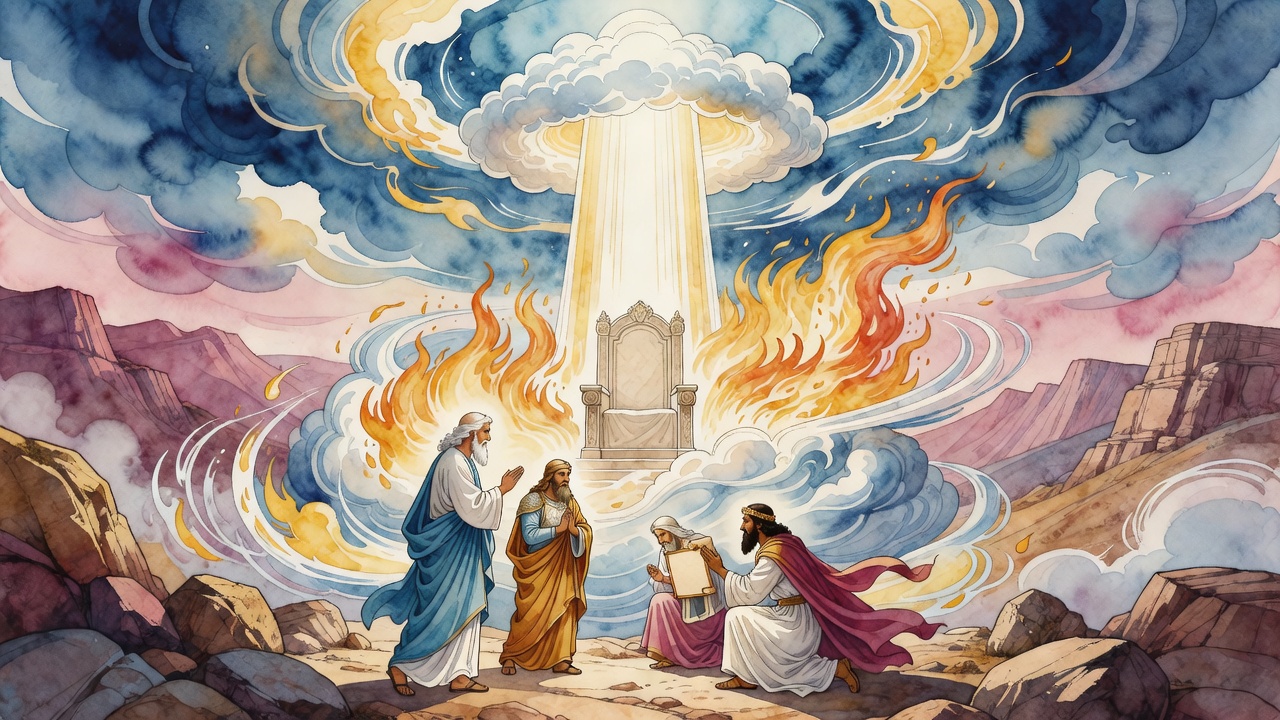
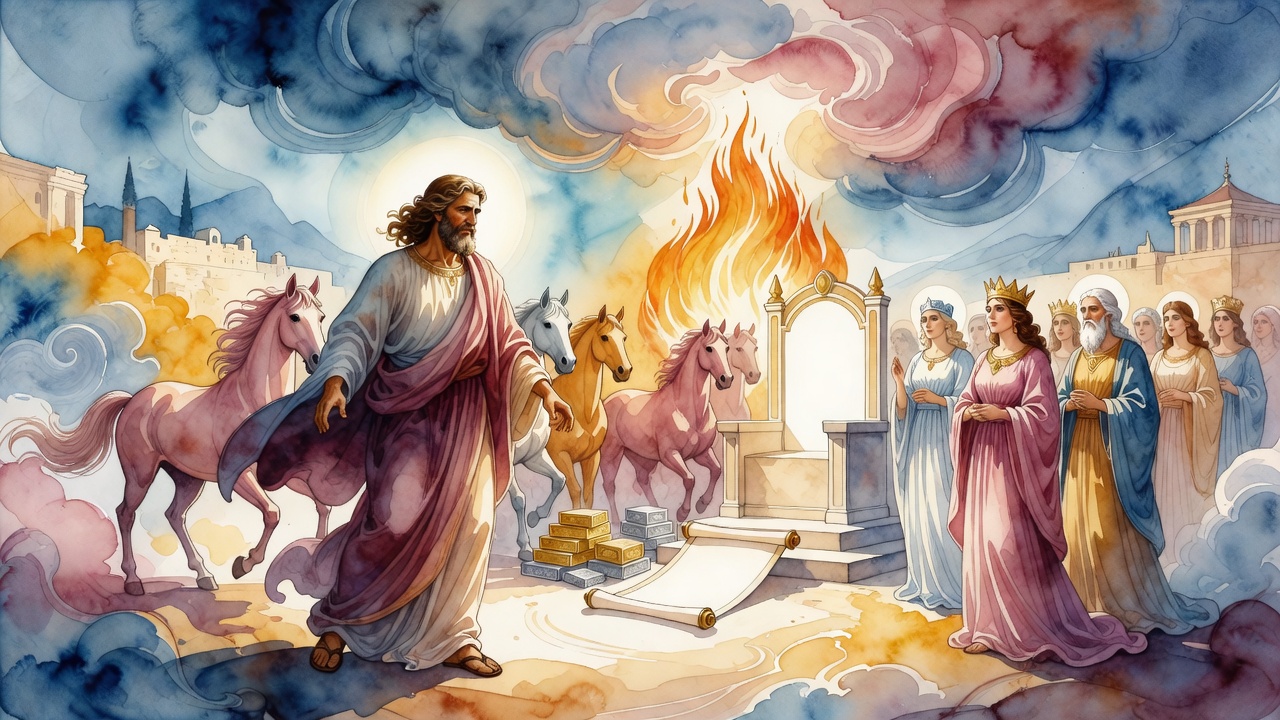
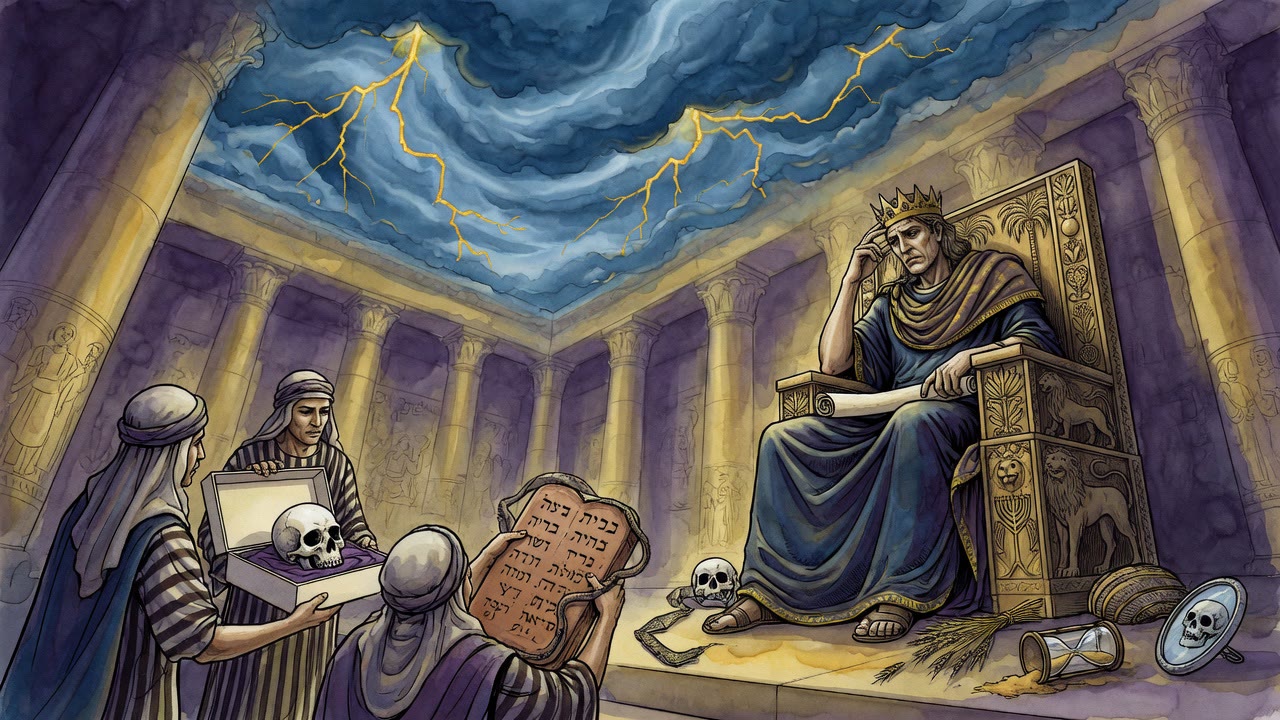
Solomon had everything a man in the ancient world could want: a throne already prepared, a father's name that filled the country with awe, a kingdom waiting for his first word of judgment. He was young enough to be afraid of the responsibility and wise enough to know that fear was the right response.
So he fasted.
Not for a day. Not in the formal, bounded way that ceremonies require. For forty days Solomon refused food, because he had decided that wisdom was worth more than bread and that the only prayer worth making was the one that acknowledged how empty he was without it. Forty days is not a decorative number in the memory of his people. Moses waited forty days on Sinai. The body begins to feel those days. They are long enough for something to change.
Wisdom came. It did not arrive as a feeling or a gradual improvement in judgment. In Midrash Mishlei, the rabbinic commentary on Proverbs, wisdom descends in response to a hunger that had become total. Solomon had made himself a vessel with nothing left inside except the request.
What Wisdom Looks Like When It Arrives
The midrash on Proverbs asks what wisdom is and where it can be found, and it does not answer with abstractions. It says wisdom has a location: with God. It says wisdom has a condition for its arrival: genuine emptiness, a willingness to stop filling the space with lesser things. Solomon's forty-day fast is the rabbis' image of that condition made visible. The king sat on his throne and chose to know nothing until wisdom chose him.
The gift that arrived was not a technique. It was a relationship. Torah, in the rabbinic imagination, is not information collected between two covers. It is the living form of divine wisdom, the same wisdom that preceded creation, the same pattern by which God looked at something before making it. When Solomon received wisdom, he received access to that pattern. His famous judgments, the two mothers and the sword, the queen of Sheba's riddles, the thousand proverbs, were not the performance of a gifted intellect. They were the visible edge of something he had paid forty days to receive.
The Writing That Could Leave the Stone
The second teaching runs darker. Israel stood at the foot of Sinai with the tablets of the covenant still fresh, the writing carved by divine fire into stone. Moses had been on the mountain forty days, and while he was gone, the people had melted gold into a calf and said: these are your gods, who brought you up from Egypt.
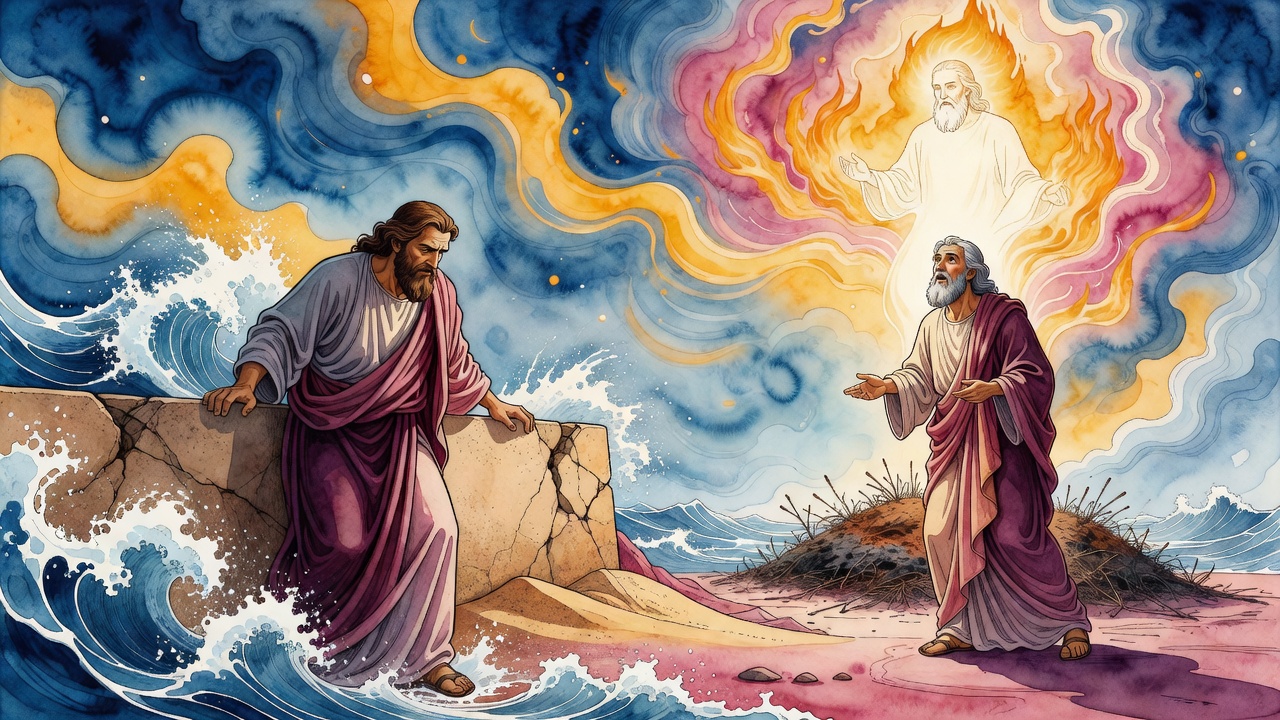
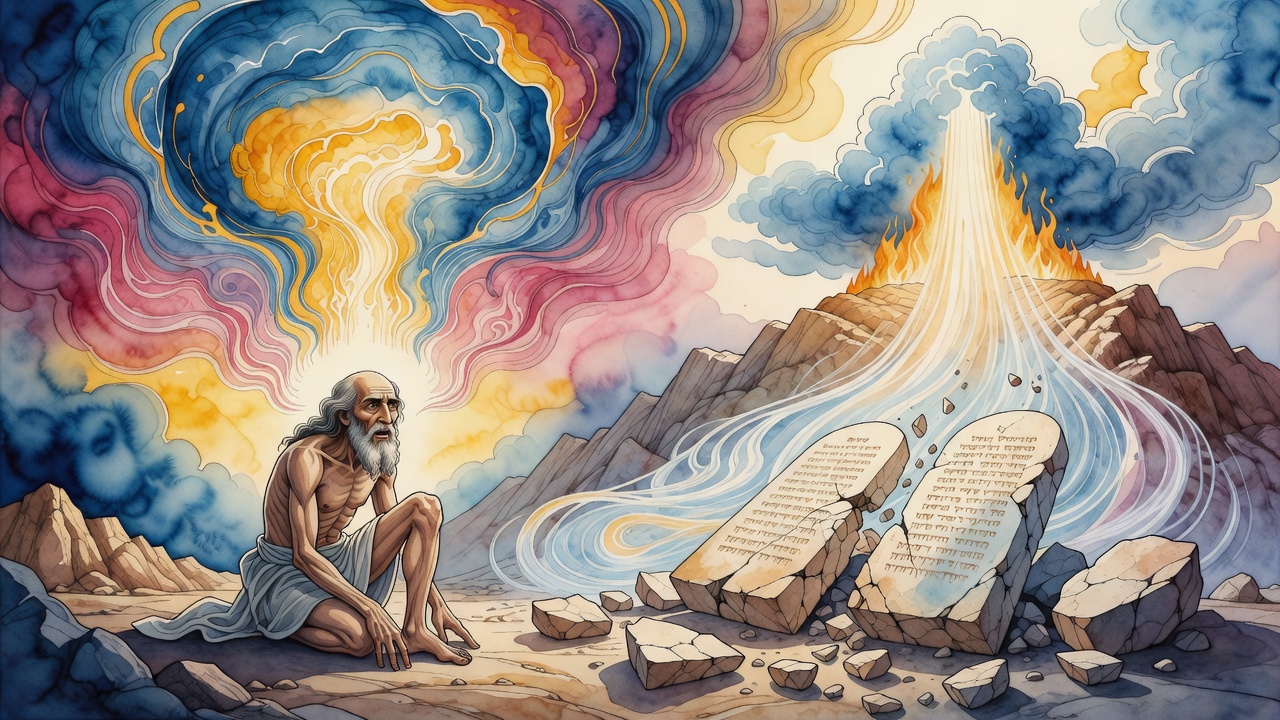
Moses came down with the tablets in his hands. He saw the dancing. He saw the fire and the gold and the people who had forgotten the sound of God's voice so quickly that forty days was enough to erase it. He threw the tablets down and they shattered.
Midrash Mishlei preserves what happened in the moment before they broke. The divine writing, the letters themselves, lifted off the stone. The words that had been carved there with fire rose upward, back toward the place they came from, because the covenant that had made their presence possible was broken. What returned to its place was not merely carved letters. It was the three treasures that heaven had given and earth had forfeited: wisdom, the alphabet of creation, and the divine writing on stone.
What Cannot Be Destroyed and What Can Be Lost
The two stories sit in Midrash Mishlei like mirror images. In one, a king empties himself and wisdom descends. In the other, a people fill themselves with a false god and wisdom ascends. In one, a human being makes himself a vessel. In the other, a human community makes itself an idol's audience.
The rabbis who preserved both stories understood something about the nature of Torah that a single triumphant account could not teach. Wisdom is a gift, not a possession. It comes when it is sought with the whole self and departs when the community turns away. Moses standing on the slope with shards of stone at his feet was not watching a catastrophe from outside. He was inside it, holding the absence of what had been given and given back.
Solomon's throne and Moses' mountain are not opposites in the rabbinic imagination. They are the same teaching from two directions. Wisdom chooses the empty vessel. Idolatry is what happens when Israel decides it already has enough inside itself and stops being empty.
← All myths