Israel Waited Two Days Before Sinai Spoke
Immersion would have been done by sundown. God still named tomorrow. In the tents that night a commandment lay between husband and wife.
Table of Contents
Moses came down from the upper speech with a clock in his mouth. "Go to the people and make them ready today and tomorrow" (Exodus 19:10).
 Click for full size
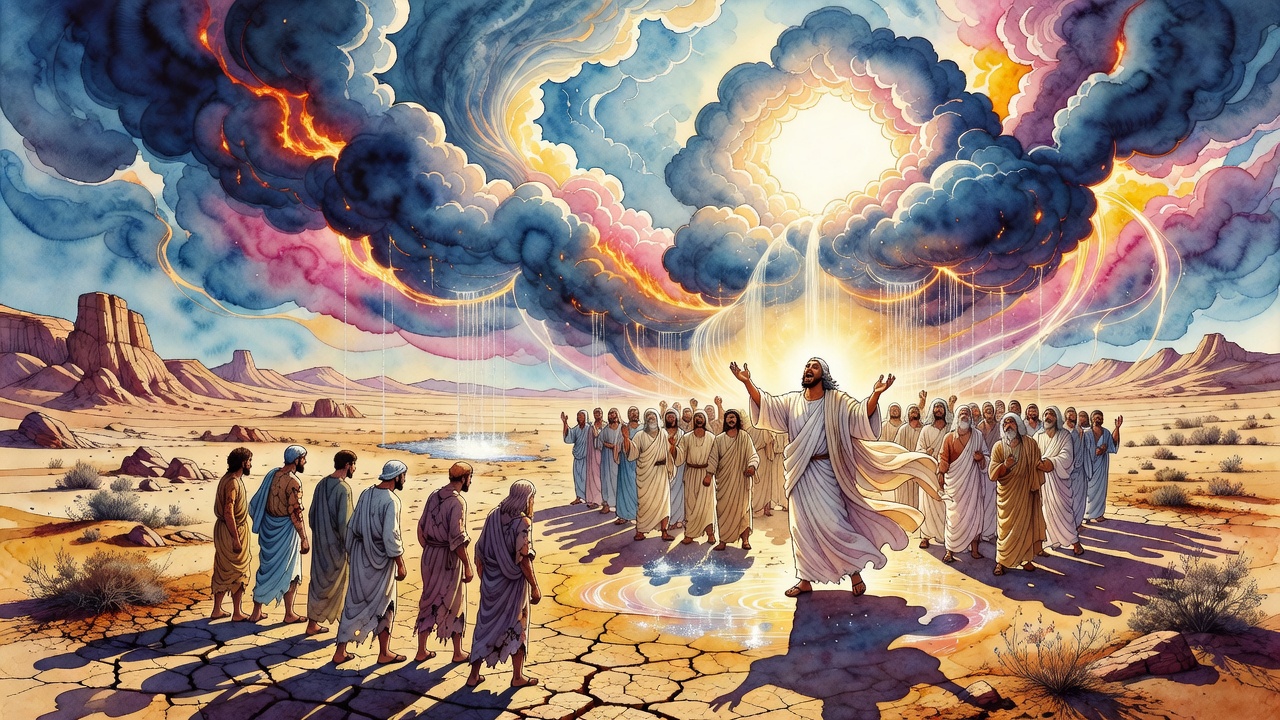
The camp stirred. Water was drawn. Bodies prepared for immersion. Some thought purity at sundown would be enough. A man who immerses is clean by evening of the same day. If that were all, "today" would have sufficed.
"Tomorrow" forced another kind of readiness.
A Line in the Tent Floor
Marital separation. Husbands and wives lay down with a commandment between them like a drawn line in the tent floor. Sinai would not meet a camp that treated the night before like any other night. The mountain required a pause that law could point to without shame.
Children felt the strangeness and asked why the adults spoke softly. No one had a full answer yet. Softness was part of the preparation, a weather change before thunder.
Moses walked the rows and sent the word into the married tents. "The people" in the command meant the couples. Go to them. Direct them to separate. Immersion could have been finished by sunset. The extra day was for the bed.
Not in a Dark Land
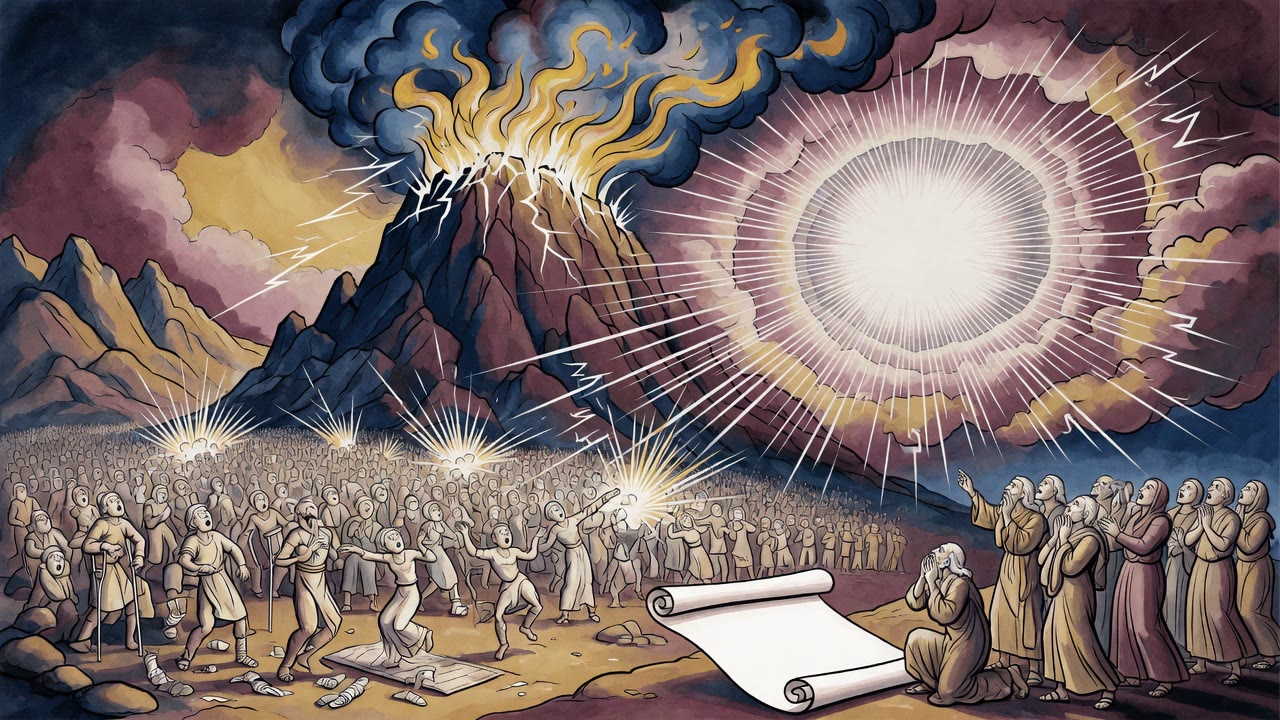
God did not give Torah in a locked room. "Not in secrecy did I speak, in a place of darkness" (Isaiah 45:19). The gift was not a whispered pledge meant to be yanked back. It was public, loud enough for a nation to tremble together. The two days of preparation were part of that publicity.
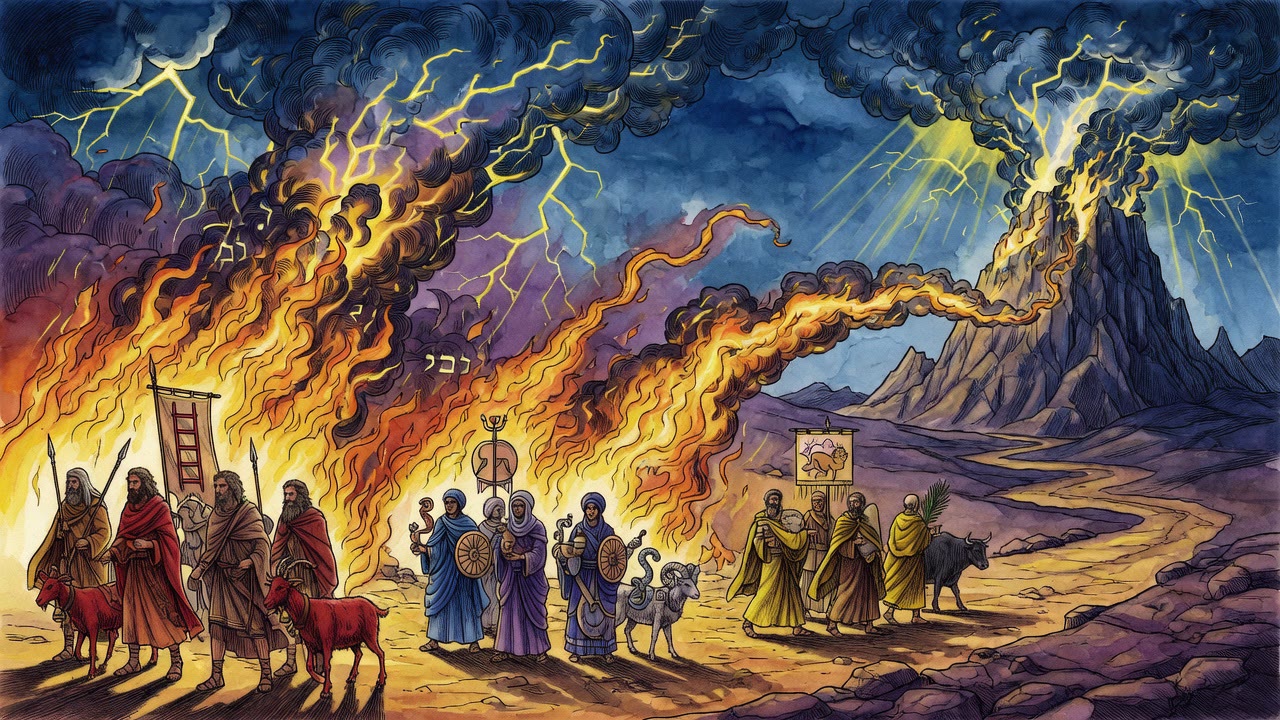
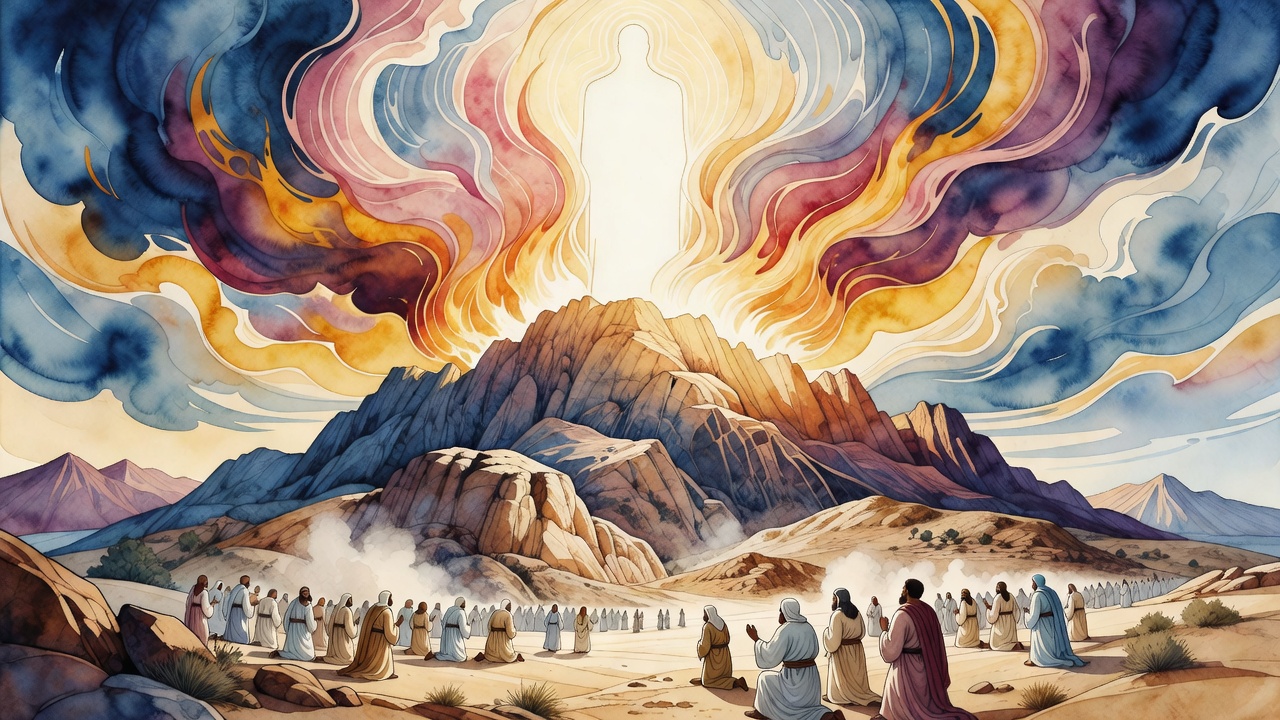
Smoke. Sound. A boundary around the mountain. Bodies clean. Beds set apart. Moses marked the days with the same care he once marked blood on doorposts. Time itself became a fence.
Elders walked the camp edge and turned back those who drifted too near the mountain early. The boundary was kindness dressed as severity. A people that rushes holiness can die of the rush.
He Rested Without Growing Tired
After six days of making, God "rested on the seventh day" (Exodus 20:11). Isaiah already said He does not tire and He does not weary. He gives strength to the weary. The heavens were made by the word of the Lord, speech without sweat. "Rested" was a model pressed into Torah for creatures who do tire. He wrote of Himself that He created in six and rested, as it were, so Israel would learn to stop.
The mountain demanded two days of human pause. The week demands one day of cosmic pause. Both teach that time can be set apart without heaven collapsing.
A woman in the camp who had never known a free day in Egypt felt the two-day wait as a strange luxury and a strange fear. Stopping can be harder than hauling bricks when stopping is commanded by a God she is about to hear.
The Morning After the Wait
When the two days ended, Israel stood under a sky that had never been ordinary. The camp smelled of water and dust and fear. Moses climbed again. The people did not rush the boundary.
They had practiced rest before the great rest of listening. Some wanted the word immediately, the way hungry people want bread. God refused haste. A covenant nation must wait in daylight where neighbors can see the waiting. That visibility is part of "not in secrecy."
When Shabbat later entered the weekly body of Israel, old women who remembered Sinai's two days nodded as if hearing an echo. Stopping is how a freed people proves it is no longer owned by endless brick quotas. God models the stop without needing it. Israel performs the stop because it needs it to stay human under command.
The mountain spoke. The people, having waited, could hear. Thunder was not the first teacher. The extra night in the tents was.
← All myths