Solomon's Flying Carpet and the Fall of 40,000 Men
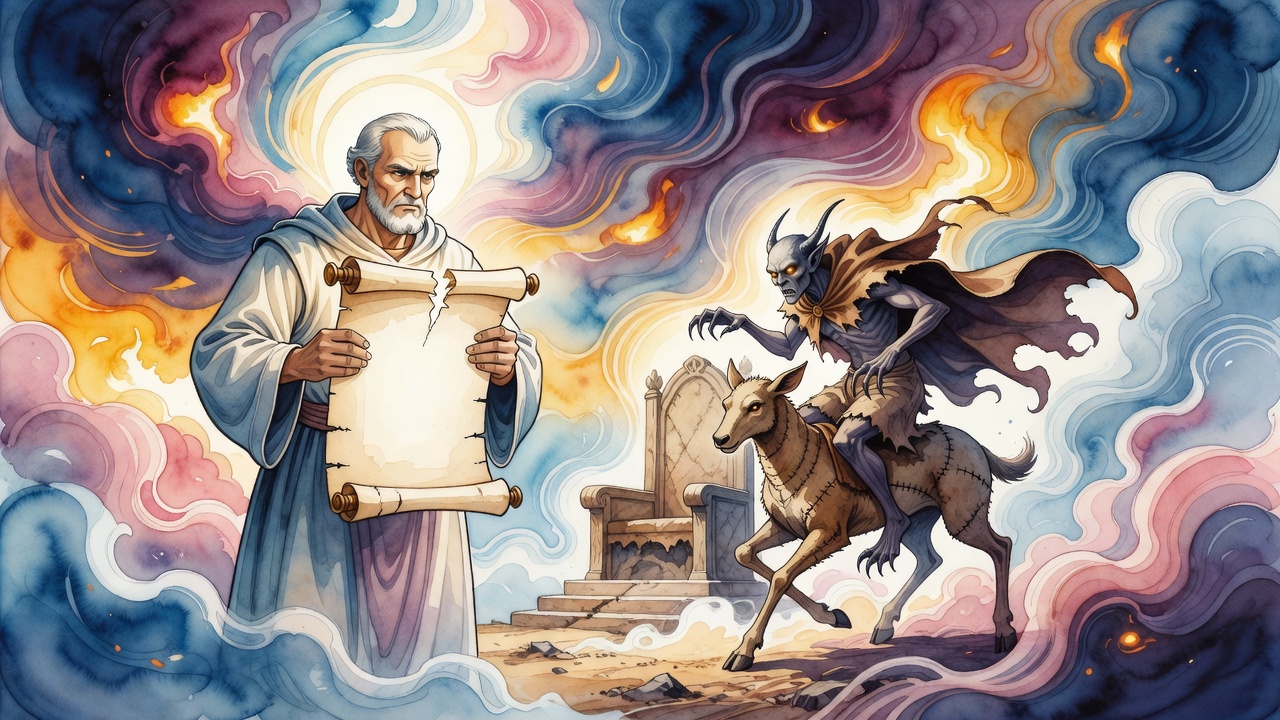
Forty thousand men left the carpet when the king said there was none like him. The wind would not lift them until he used the word on himself.
Table of Contents
The carpet was still under Solomon's feet when it ceased to be under theirs.
 Click for full size
The Carpet Held a Whole Court
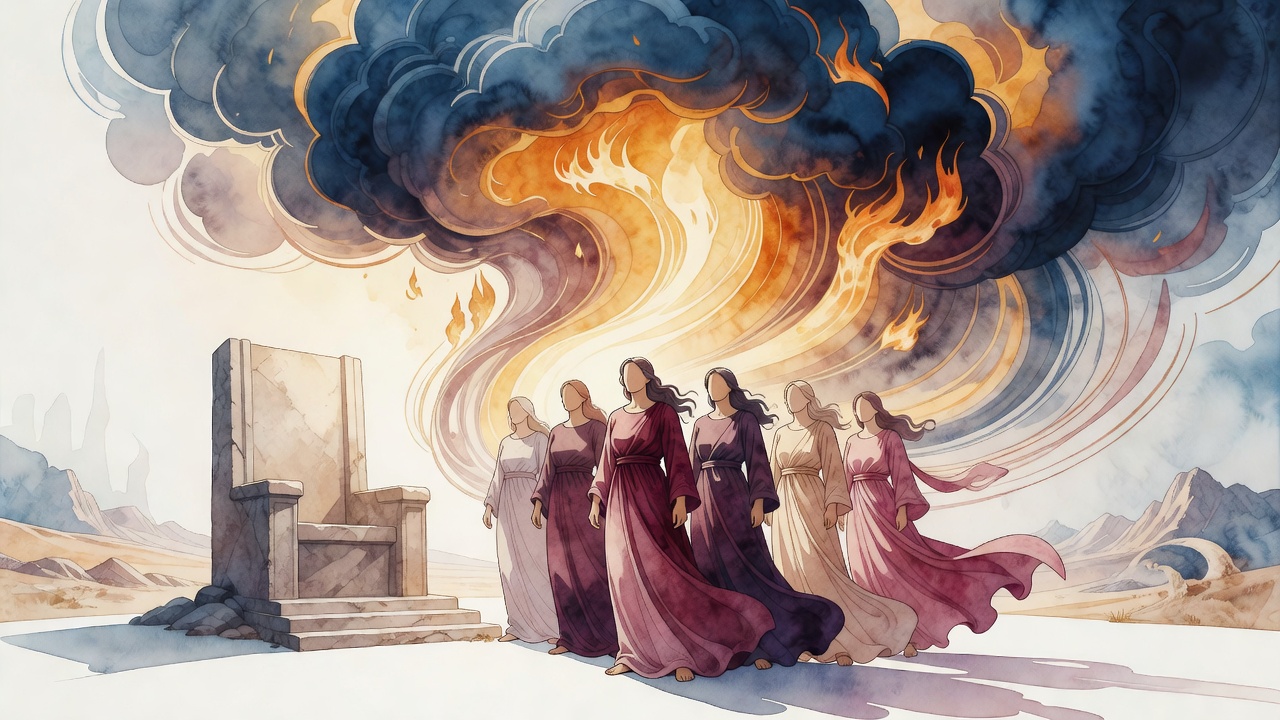
The flying carpet measured sixty miles by sixty miles, a piece of royal fabric stretched across the sky. 40,000 men stood on it with him. Damascus could serve him breakfast. Media could serve him supper. Between the two meals the earth flattened into scenery, and a king could look down and mistake flight for proof.
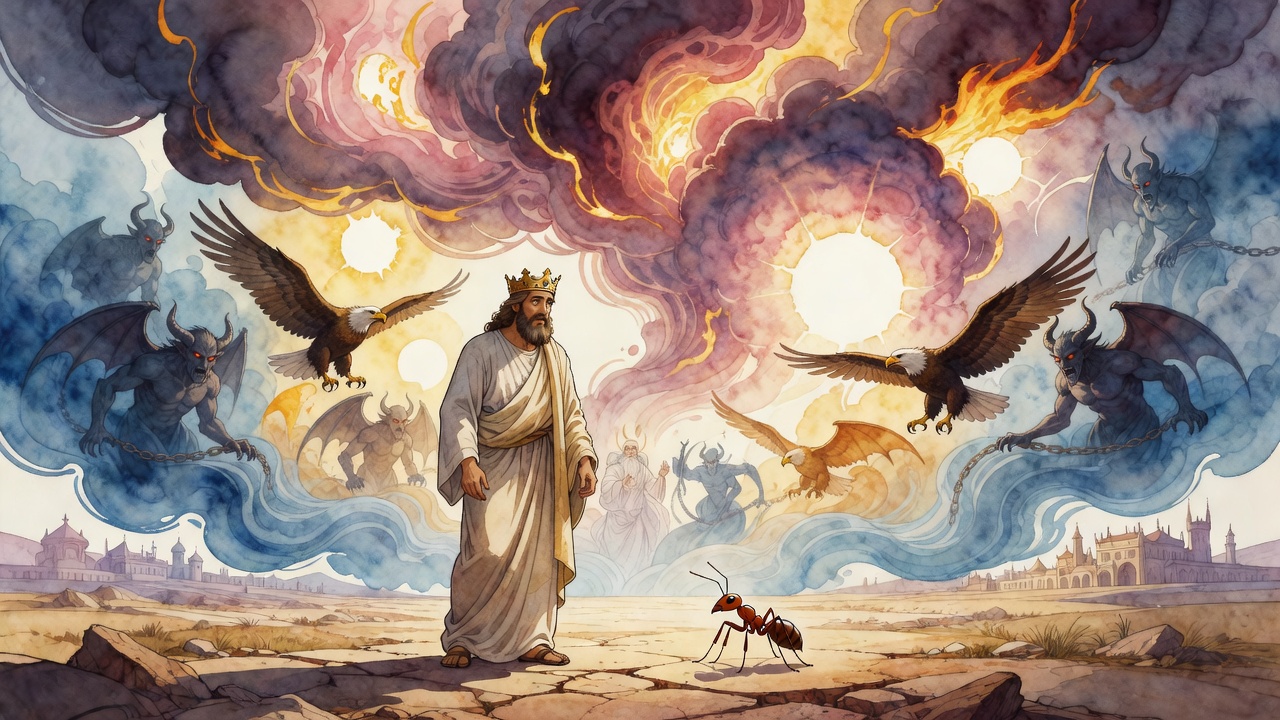
Asaph ben Berechiah served among the human attendants. Ramirat stood among the demons. A lion stood for the beasts of the earth. An eagle stood for the birds of the air. A whole court traveled with him, not only ministers and warriors but kinds of creature made obedient.
The wind bore them. Solomon did not need roads, gates, ferries, or treaties with the terrain. Mountains lowered themselves into backdrop. Rivers became silver threads. Cities were places to leave after bread and remember before wine.
No mud reached the robe. No petitioner grabbed the hem. He had judged demons, mastered riddles, built the Temple, gathered wealth, and commanded creatures that other kings feared in their sleep. Up there the danger was not ignorance. The danger was counting gifts as if counting them made them his.
He Said There Was None Like Him
Then Solomon spoke.
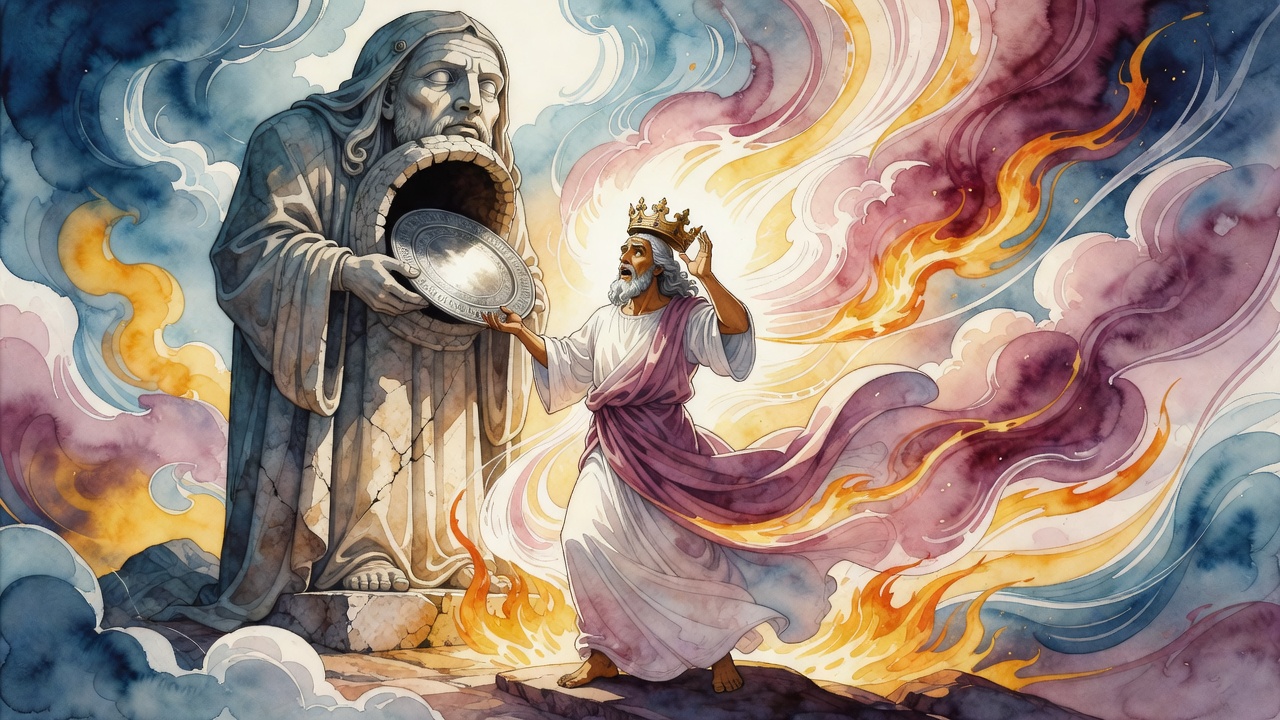
"There is none like me in the world," he said. God had given him sagacity, wisdom, intelligence, and knowledge. God had made him ruler over the world besides.
Each piece of the sentence was true. That made it worse. He had been given wisdom. He had been given rule. His court did stretch across human, animal, bird, and demonic realms. The lie hid in the shape of possession. Gift became inventory. Inventory became self.
Forty Thousand Left the Air
The wind stopped carrying forty thousand men.
One moment they belonged to the king's upward procession. The next, the carpet was no longer beneath them. Bodies dropped through open air. The sky that had honored Solomon's command became a place of falling.
A man near the edge reached for fabric that was no longer there. Another shouted and the shout fell with him. Solomon still stood. The lion still stood. The eagle still stood. Forty thousand did not.
He had not lifted a sword. He had opened his mouth.
The Wind Used His Own Word
Solomon ordered the wind to return them.
"Return." The word left the king's mouth as a command to creation, but creation sent it back sharpened. "If you return to God and subdue your pride," the wind answered, "then I will return them."
The wind did not argue theology. It did not flatter him. It took the king's own word and placed it against his chest. Return the men, Solomon said. Return yourself, the wind replied.
That was the whole judgment. Not a thunderbolt. Not a prophet at the edge of the carpet. The wind itself became the rebuke, because the wind had been carrying what Solomon was no longer carrying properly: dependence. Every breath that lifted the carpet had been borrowed. Every mile between Damascus and Media had been mercy in motion.
He Returned Before the Men Did
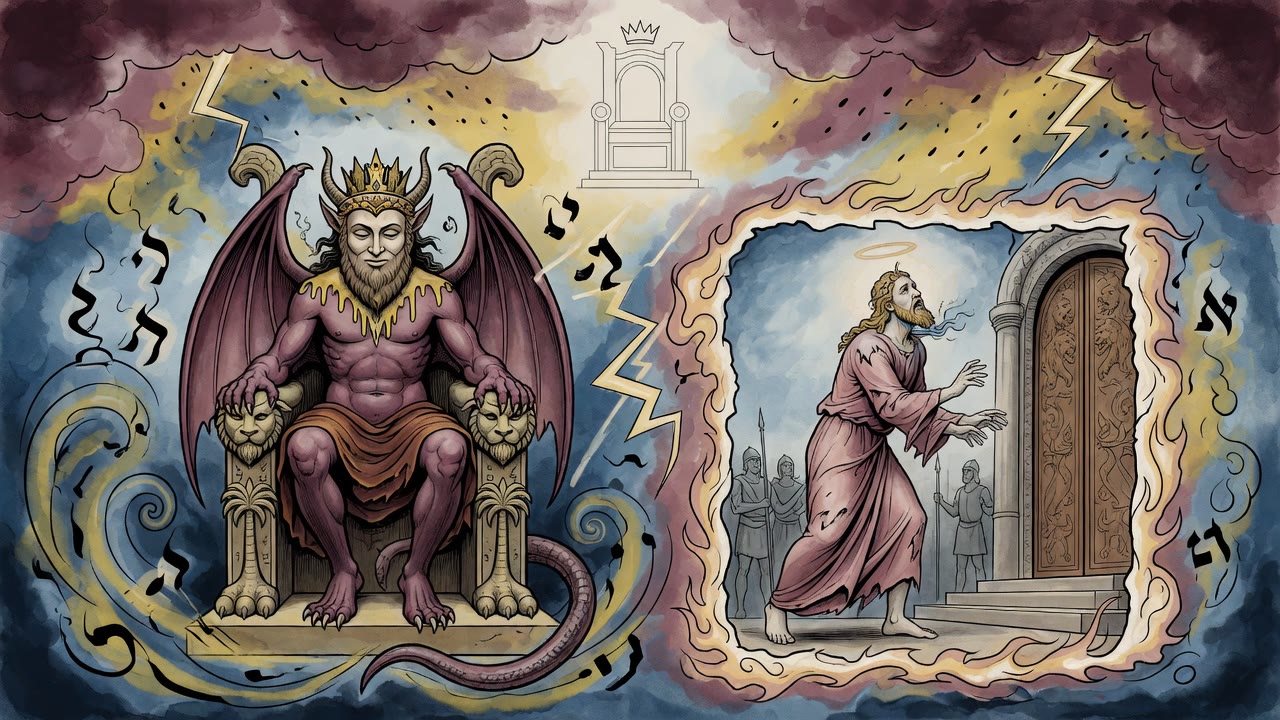
Repentance can stand near a man and still remain far from him. If he treats it as easy, it withdraws. If he treats it as impossible, he may never lift his hand. Solomon was hanging between both errors, high above the ground, with forty thousand lives turned into the measure of one royal sentence.
He had to return before the wind returned. The order mattered. A king who commands everything else first will ask repentance to join his procession. A king who has been stopped in the air must go first.
Solomon bowed inward. The pride lowered. The word returned to its proper place, used on himself. Then the wind gathered the fallen men back.
After that, the carpet could no longer be only a miracle of transport. It had become a scale. Every flight measured him. Every command to the wind carried a memory of the morning when the wind spoke back.
The king who could eat in Damascus and dine in Media had learned that speed is not mastery. The king who could list sagacity, wisdom, intelligence, knowledge, and dominion had learned that a list of gifts can become an accusation. The king who ruled demons, beasts, birds, and men had heard one invisible servant refuse him until he used the word on himself.
The carpet did not disappear. Solomon did not cease being wise. The lion, the eagle, the demon, and the minister did not leave the royal order. The wind could have dropped the king. It dropped his illusion instead.
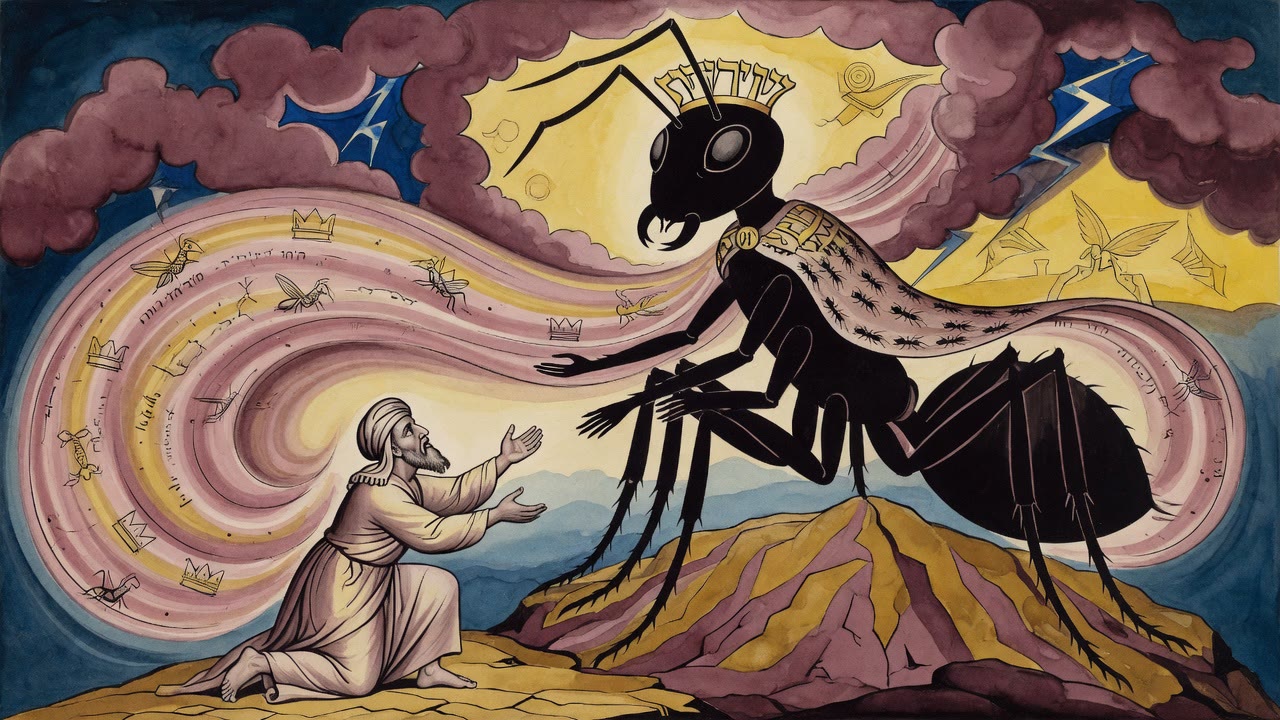
Later he would speak as Kohelet under the sun, testing the weight of human achievement and finding vapor where solid pride had stood. The man who once spoke from above the world learned to speak from under it. The sky was still open. It had a voice in it now, and forty thousand falling men inside every gust.
← All myths