5 min read

Solomon and the Dead King's Silver Warning

Solomon found a silver plate in a statue's throat, but its dead king's warning only made sense after his own crown was taken away.

Curated by Arthur · Told by Maggid ·
Table of Contents
  1. The Statue Called the Host
  2. The Crown Grew Heavy
  3. The King Begged at His Own Doors
  4. The Plate Spoke From a Throat
  5. Wisdom Returned With a Scar

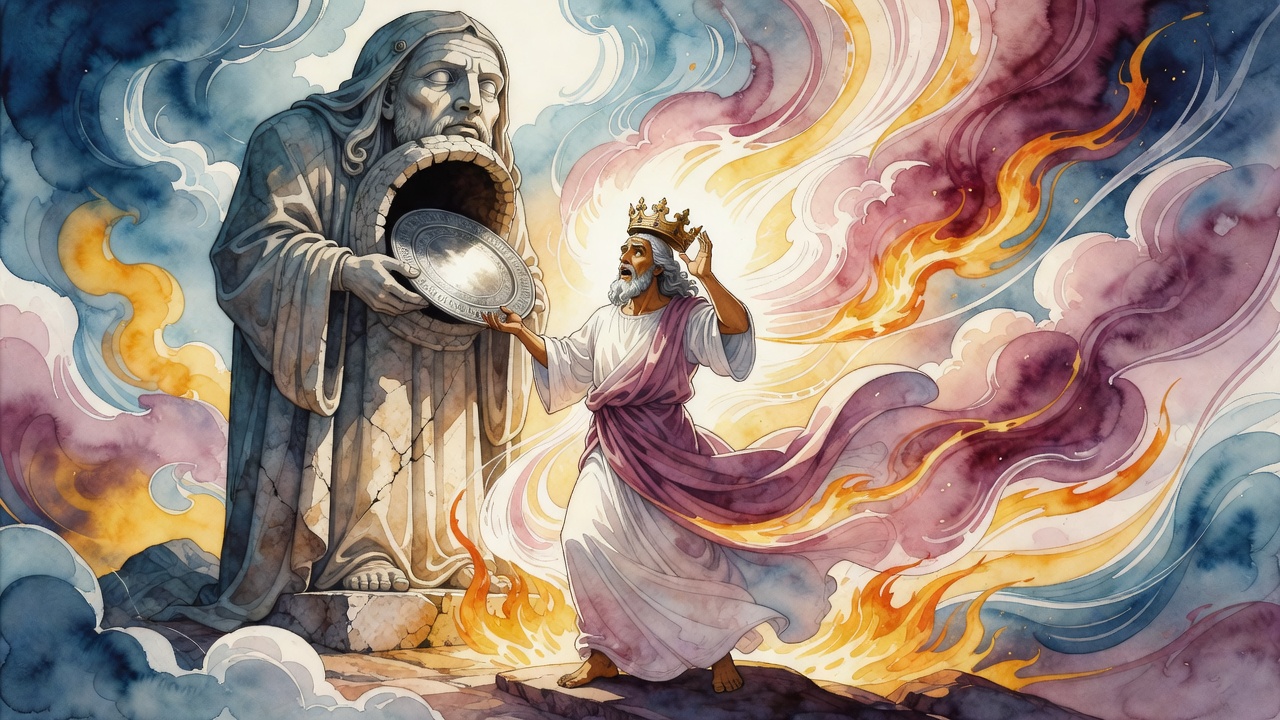
The statue opened its throat because Solomon came too close.
\n\n

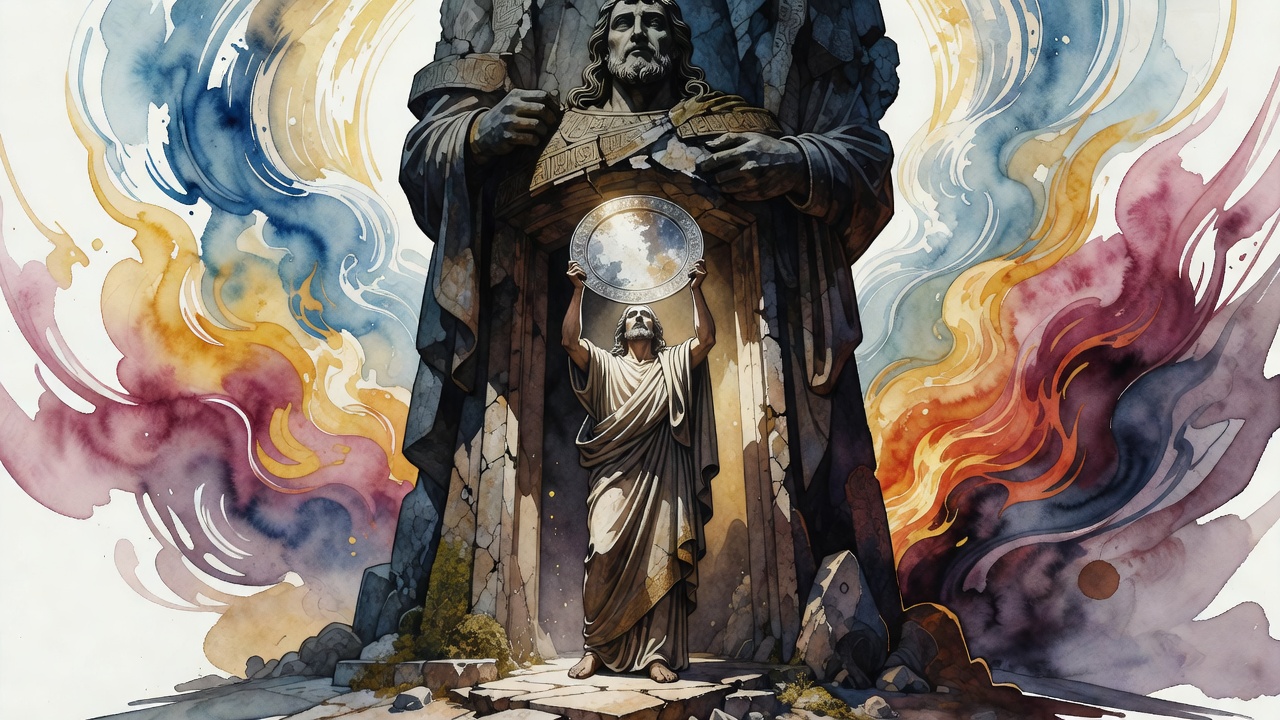
It stood among other figures in a hidden chamber, so lifelike that the king stopped before it as if another ruler had been waiting there in silence. Then the mouth moved. A voice broke out of the stone and called for the satans to gather, because Solomon had come to undo them.

\n\n

The Statue Called the Host

\n\n

The chamber answered with noise. Statues groaned. Hidden powers rushed through the room. Solomon did not run. He spoke the Name, and the tumult broke like a pot dropped on stone. The figures fell. The sons of the satans fled toward the sea, and the water swallowed them.

\n\n

When the room grew still, Solomon reached into the throat of the statue. His hand found silver. He pulled out a plate covered in letters he could not read, hard marks cut into metal by a dead hand. The wisest king in Jerusalem needed a desert youth to tell him what the plate said.

\n\n

The letters were Greek. The voice belonged to Shadad ben Ad.

\n\n

The Crown Grew Heavy

\n\n

Solomon had not always heard warnings as warnings. Once, in the night at Givon, he had asked God for an understanding heart. Wealth and honor came after wisdom, like servants carrying luggage behind the bride. The danger began when the luggage started looking like the bride.

\n\n

The Torah had fenced the king on three sides. Do not multiply wives. Do not multiply horses. Do not pile up silver and gold. Solomon crossed all three fences and told himself that wisdom would keep his feet clean. Wives filled his house. Horses filled his stables. Silver and gold lay in Jerusalem like stones too huge for thieves to move. Even the weights of the market glittered.

\n\n

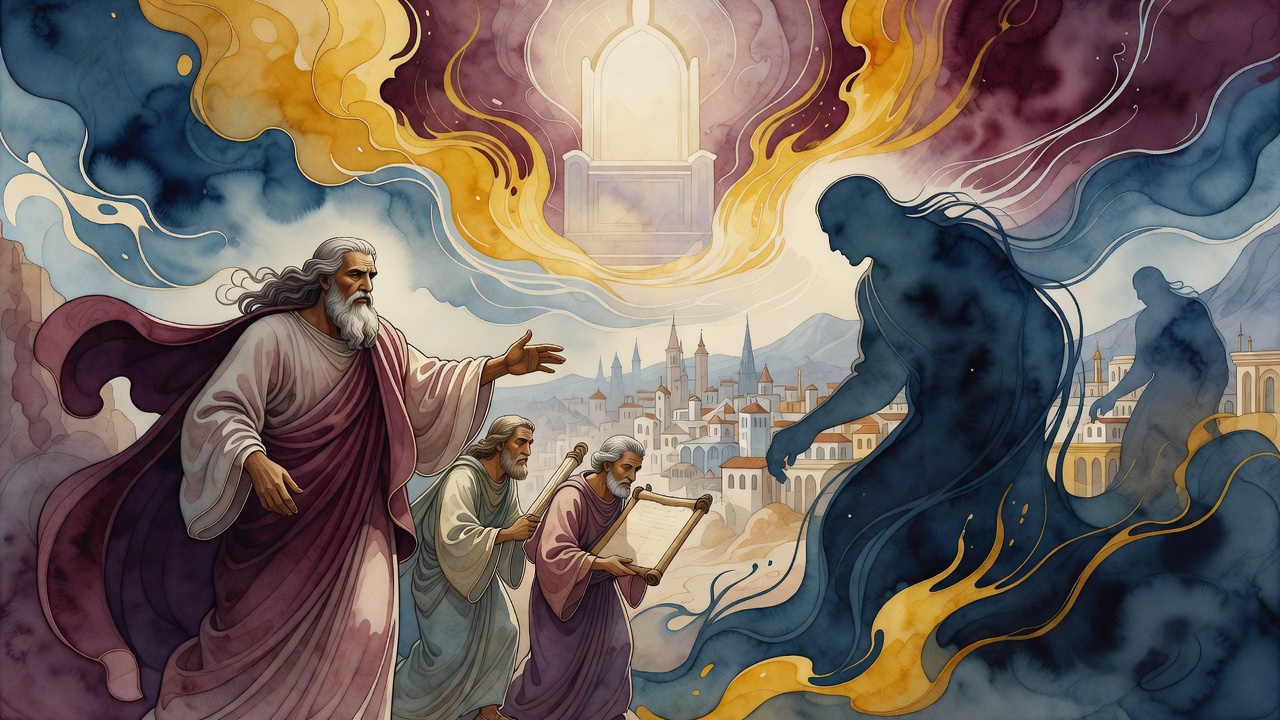
Justice rose in heaven and pointed at the crown. The answer came sharp. "What is that crown doing in your hands? Come down from My throne."

\n\n

An angel descended wearing Solomon's face.

\n\n

The King Begged at His Own Doors

\n\n

The angel sat where Solomon had sat. Courtiers bowed. Servants obeyed. A face can be a palace key when everyone has been trained to honor it.

\n\n

The real king stood outside with a staff in his hand. He went from synagogue to study hall, from the homes of leaders to the doors of people who had once trembled at his decrees. He said the only true thing left to him: "I am Kohelet. I was king in Jerusalem."

\n\n

They laughed because the throne was occupied. They struck him with reeds because madness is easier to believe than judgment. They put a bowl of grits before him as charity, not tribute. The man whose ships had brought gold now waited for someone to pity him with breakfast.

\n\n

Inside the palace, the false Solomon kept his feet hidden. The sages noticed. Bathsheba noticed. The women of the house noticed that the king's body had become a sealed door. Suspicion moved slowly, but it moved.

\n\n

The Plate Spoke From a Throat

\n\n

The silver plate waited for Solomon after pride had already stripped him once. The desert youth read the dead king's confession aloud.

\n\n

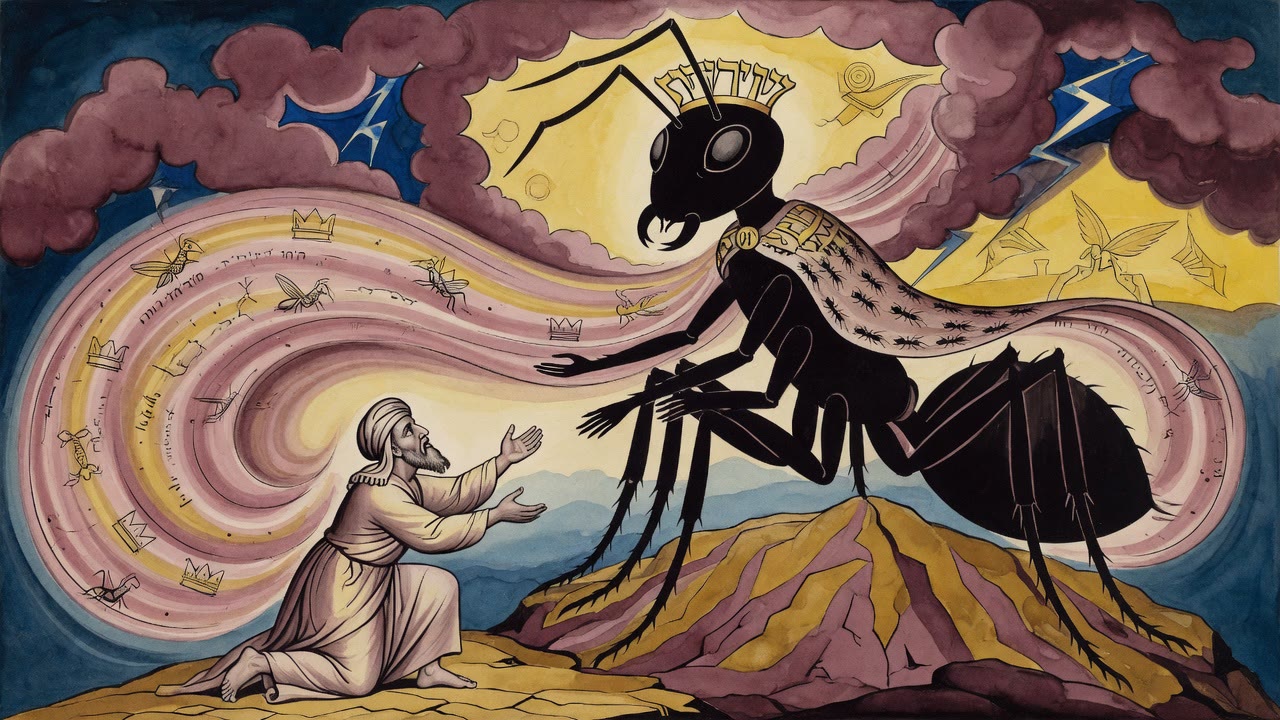
"I, Shadad ben Ad, ruled over a thousand thousand provinces. I rode on a thousand thousand horses. A thousand thousand kings stood beneath me. I killed a thousand thousand heroes. When the Angel of Death came near, I had no power."

\n\n

No courtier could soften those words. No musician could drown them. The plate did not ask Solomon to feel small. It made smallness visible. A ruler may stretch his name over provinces, horses, kings, and bodies, but the Angel of Death does not stop at borders and does not count armies before entering.

\n\n

Solomon had already lived the smaller version. A king can lose a throne while still breathing. A crown can be taken before a grave is opened.

\n\n

Wisdom Returned With a Scar

\n\n

When the truth returned to Jerusalem, it did not return him to innocence. Solomon could sit again, but he had eaten from the bowl placed before a beggar. He could judge again, but he had heard strangers call him mad. He could wear the crown again, but the words from the silver plate had crawled out of a dead king's throat and settled under it.

\n\n

Power had shown him its trick. It can make a man imagine that possession is the same as safety. It can make a palace feel heavier than death. It can make gold lie still in the streets while the soul goes unfed.

\n\n

So Solomon carried two inscriptions. One was visible, cut into silver and pulled from a statue. The other was invisible, beaten into him by reeds and hunger. When his hand rose to touch the crown, the dead king spoke again from the metal: "prepare food for the road while there is still daylight."

\n\n

← All myths

From the tradition

Sources

2 sources

The texts this telling draws on, in full. Open a card to read inline, or expand it for a wider, quieter read.

Legends of the Jews 5:128Legends of the Jews

The ancient wisdom tradition understands that feeling all too well. It reminds us, "O son of man, let not time deceive thee; thou must wither away, and leave thy place, to rest in the bosom of the earth." A sobering thought, isn't it?

It doesn't stop there. This relentless pursuit of… what, exactly? Is it worth the cost?

Instead, the tradition gently urges us, "Furnish thyself with food for the journey, prepare thy meal while daylight lasts, for thou wilt not remain on earth forever, and thou knowest not the day of thy death." In other words, prepare your soul. Nourish your spirit. The time we have is precious, and its end is unknown.

What does this have to do with King Solomon? Well, one fascinating legend, found in Legends of the Jews by Ginzberg, recounts a peculiar episode from his reign, an episode that touches on these very themes of mortality and the futility of earthly power.

Imagine Solomon, the wisest of men, exploring a series of mysterious chambers. Inside, he encounters a collection of statues, and one in particular seems almost alive. As he approaches, it emits a startling cry: "Hither, ye satans, Solomon has come to undo you!" Pandemonium erupts. A cacophony of noise and chaos fills the chamber.

Solomon, of course, is not easily intimidated. He pronounces the Ineffable Name of God – the Shem HaMeforesh – and immediately, silence descends. The statues crumble, and the offspring of these “satans” flee into the sea, where they perish.

From the throat of the lifelike statue, Solomon retrieves a silver plate covered in indecipherable characters. He seeks the wisdom of others, and a youth from the desert steps forward. "These letters are Greek," the youth explains, "and the words mean: 'I, Shadad ben Ad, ruled over a thousand thousand provinces, rode on a thousand thousand horses, had a thousand thousand kings under me, and slew a thousand thousand heroes, and when the Angel of Death approached me, I was powerless.'"

What a powerful statement! Shadad ben Ad, a king of immense power and dominion, ultimately brought low by the inevitable. It echoes the sentiments of the opening verses, doesn’t it? All that earthly glory, all that conquest, rendered meaningless in the face of mortality.

The story serves as a memento mori, a reminder of our own impermanence. Like Shadad ben Ad, we are all subject to the same fate. The legend of Solomon and the statue, steeped in ancient wisdom, encourages us to reflect on what truly matters. What are we building? What legacy are we leaving? And are we truly nourishing our souls for the ultimate journey?

Full source
Kohelet Rabbah 1:1Kohelet Rabbah

Like everyone else is contributing, and you're just... there? Our sages grappled with this feeling, and their stories, preserved in texts like Kohelet Rabbah, offer surprising comfort.

We begin with the familiar opening of Ecclesiastes: "The words of Kohelet, son of David, king in Jerusalem" (Ecclesiastes 1:1). Kohelet, of course, is traditionally understood to be King Solomon. But why this introduction? Why highlight his lineage and status? The text immediately connects this to a verse in Proverbs (22:29): "Have you seen a man diligent in his labor? He will stand before kings."

This brings us to the story of Rabbi Ḥanina ben Dosa. Everyone in his town was bringing vow offerings, nedarim, and gift offerings, ndavot, to Jerusalem. He felt left out. He wanted to contribute, but he didn't have much. So, he found a stone, broke it, chiseled it, polished it, and declared his intention to bring it to Jerusalem.

He sought laborers, offering five sela (a unit of currency) for the task. But he didn't have the money! The laborers left. Now what? This is where the story takes a turn. The Holy One, blessed be He, sent five angels disguised as men. They agreed to carry the stone for five sela, but with a catch: Rabbi Ḥanina had to help, even if only with a finger. He agreed, and instantly, they were in Jerusalem.

He went to pay them, but they were gone. He inquired about them at the Chamber of the Hewn Stone, Lishkat ha-Gazit – the seat of the Sanhedrin, the ancient Jewish high court. They told him, "It appears that ministering angels took your stone up to Jerusalem." And then, crucially, they quoted the verse: "Have you seen a man diligent in his labor? He will stand before kings [melakhim]." But they reinterpreted it: "Read, in his regard: 'He will stand before angels [malakhim].'" It wasn't about earthly kings; it was about divine recognition.

Rabbi Simon, in the name of Rabbi Shimon ben Ḥalafta, offers an analogy. Imagine a royal advisor. The king says, "Ask for anything!" The advisor thinks, "If I ask for silver, gold, or fine gems, he will give them. But if I ask for his daughter, I get everything with her." It's about asking for the source of all blessings.

Similarly, in Gibeon, God appeared to Solomon in a dream (I Kings 3:5), saying, "Ask, what shall I give you?" Solomon could have asked for wealth, but instead, he asked for wisdom, an understanding heart. As it says, "Grant your servant an understanding heart" (I Kings 3:9). God was pleased. Because Solomon sought wisdom above all else, he received not only wisdom and knowledge but also wealth, property, and glory.

Rabbi Yitzḥak adds that the dream was upheld. Solomon awoke and understood. He understood the language of birds and donkeys. He went to Jerusalem, sacrificed offerings, and made a feast. Rabbi Yitzḥak notes that this shows us we should make a feast when completing the Torah – because the Torah encompasses all wisdom. The Divine Spirit rested upon him, and he composed Proverbs, Song of Songs, and Ecclesiastes – the very words of Kohelet we began with.

So, what's the connection? What does Rabbi Ḥanina's stone have to do with Solomon's wisdom? Both stories emphasize the power of sincere effort and the wisdom of seeking the highest good. Rabbi Ḥanina, though lacking material wealth, contributed what he could with diligence. Solomon, given the opportunity to ask for anything, chose wisdom, the source of all blessings.

The Kohelet Rabbah suggests that true value isn't measured in material possessions or earthly power, but in the sincere effort to contribute, to seek wisdom, and to connect with the divine. It's a comforting thought, isn't it? That even a simple stone, offered with a pure heart, can elevate us to stand before angels. What "stone" can we offer today?

Full source