6 min read

At Gibeon, Solomon Asked God for an Understanding Heart

At Gibeon, God told the young king to ask for anything. Solomon could have named riches or long life. He asked for an understanding heart instead.

Curated by Arthur · Told by Maggid ·
Table of Contents
  1. The Voice in the Dream Offers Him Anything
  2. What the King Asks For Instead
  3. The Servant Who Asks for the Seal
  4. Heaven Answers by Exceeding the Request
  5. The Gold That Would Cost Him Later

The smoke from a thousand burnt offerings still hung over the high place at Gibeon when the young king lay down to sleep. His knees ached from the altar stones. His robes smelled of fat and char. Somewhere below the ridge his servants were banking the last of the fires, and the night came up cold and enormous over a throne that was barely his.
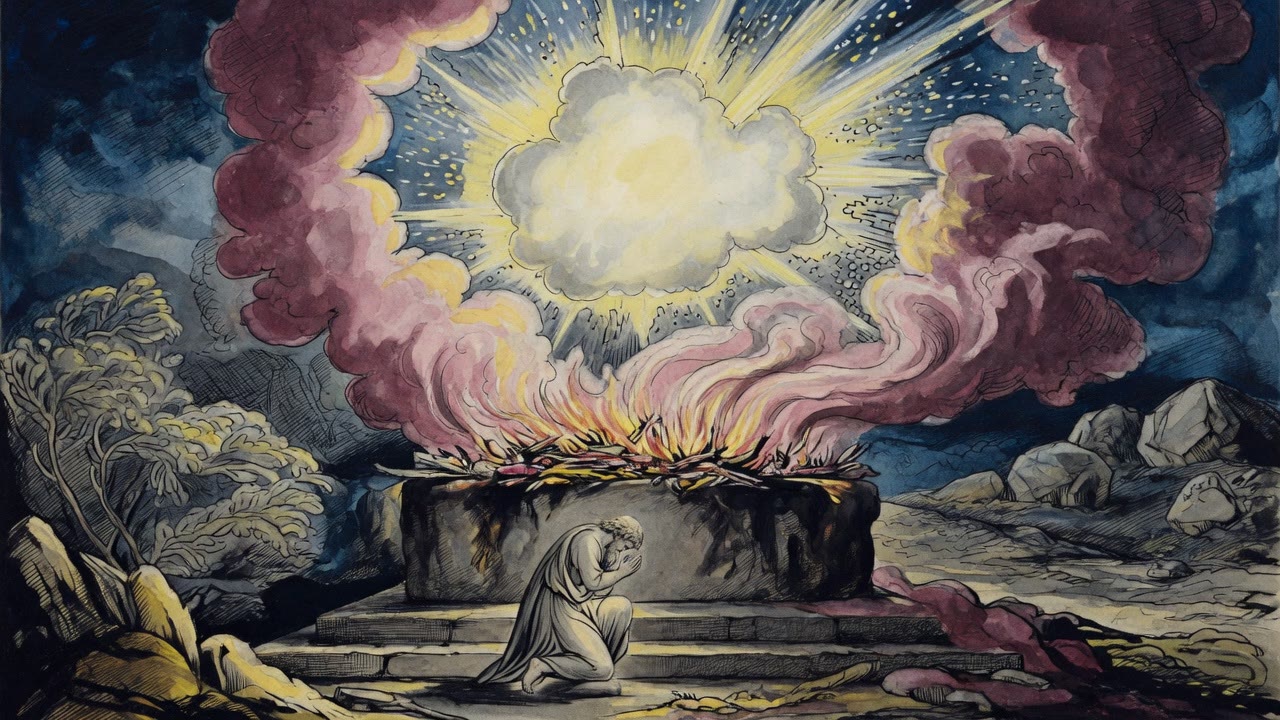
Solomon had inherited everything and earned almost none of it. The crown sat warm from his father's head. The kingdom stretched wider than any man could hold without dropping something. He had brothers who had wanted the seat, generals who remembered when he was a child, and a court full of men who smiled and counted. He closed his eyes on all of it, and in the dark a voice came that did not belong to any of his counselors.

The Voice in the Dream Offers Him Anything

Ask what I shall give you (1 Kings 3:5).

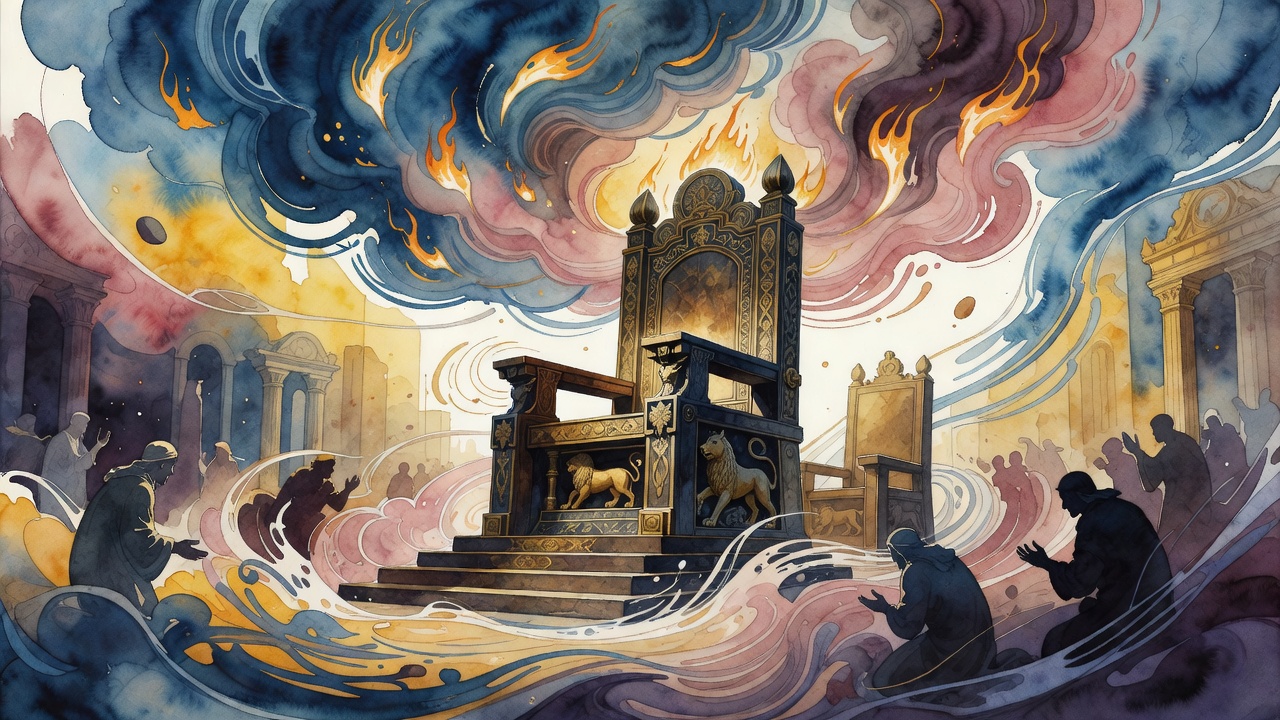
The words had no edges. They were the most dangerous thing a king can be handed, a blank request, the kind of offer that shows a man exactly what he is by what his mouth reaches for first. Solomon lay very still inside the dream. He could feel the shape of every answer waiting in his throat.

He could ask for long life, and outlive every enemy who whispered against him. He could ask for riches, and bury his rivals in silver. He could ask for the deaths of the men who hated him, and wake to a quiet kingdom and a clean sword. Each one was real. Each one was within reach of that voice.

But he was a king now, and he knew what kings actually do with their days. They do not feast. They sit. They divide a dead man's fields between sons who would happily kill each other over a wall. They hear a thief swear he is innocent with the stolen thing still warm in his house. They decide which of two weeping women is lying. They send other men's children to die on a border and call it wisdom.

What the King Asks For Instead

So he did not ask to feel clever. He asked for the one organ that could carry all of that without rotting. Give your servant an understanding heart to judge your people, that I may discern between good and evil (1 Kings 3:9).

It was not a soft request. An understanding heart is the thing that lets a judge look at a clever liar and not be fooled, and look at a guilty man and not enjoy the killing. Solomon was asking for the weight, not the ornament. He wanted the part of himself that would not lie to him when the lying would be easiest.

There is an old way the sages had of explaining why a man like this gets such a gift in the first place. They said heaven does not scatter wisdom like rain on dead ground. It falls only where something has already been cultivated to catch it. Solomon was wise before the dream, and the proof was simply this, that when the whole treasury of the world was opened to him, he knew which single thing to reach for.

The Servant Who Asks for the Seal

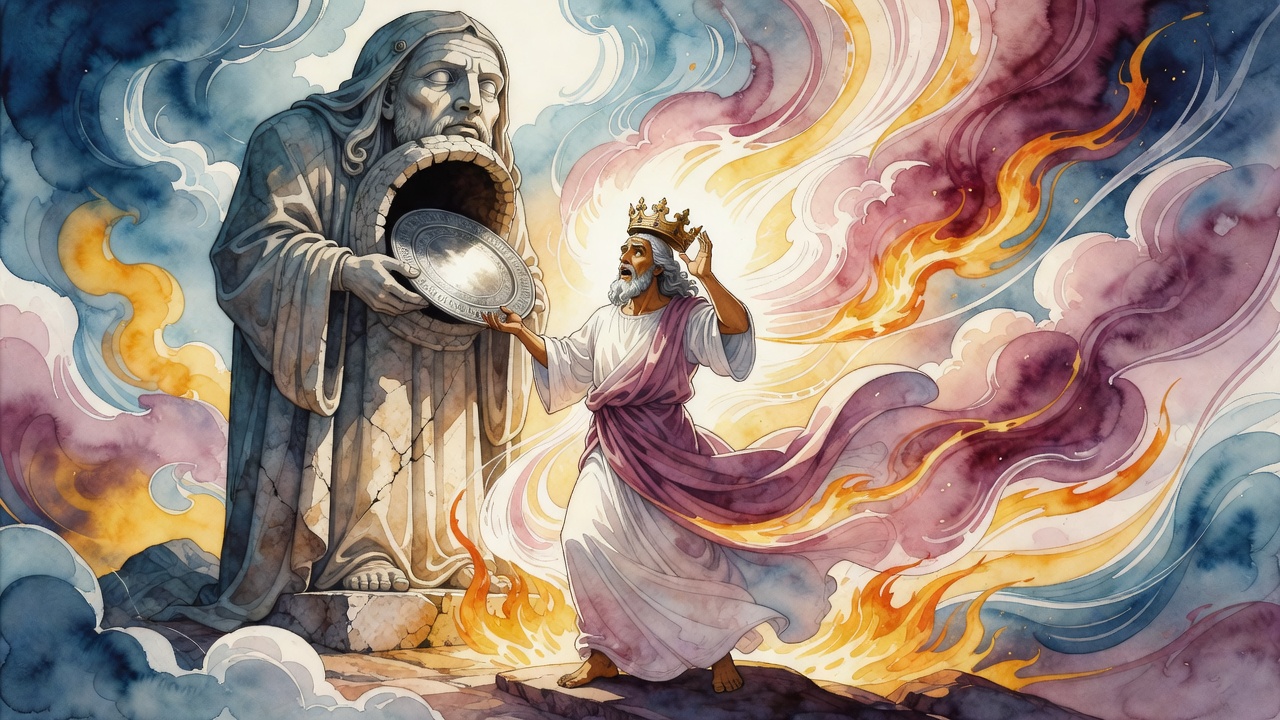
They told it as a small scene to make it plain. A king once loved one servant above the rest and told him to ask for any reward he wanted. A fool in that position asks for a fistful of coins, spends it, and stands empty by winter. This servant had spent years in the rooms where power actually moves. He did not ask for coins. He asked for the king's own seal ring, the ring that stamps every order, opens every door, and makes the whole machinery of the court answer to the hand that wears it.

The king was delighted, because only a wise man asks for the instrument and not the prize the instrument can buy. The coins run out. The seal makes coins.

Solomon's understanding heart was that seal. He had not asked for any single good thing. He had asked for the faculty that could win every good thing and judge whether it was good at all.

Heaven Answers by Exceeding the Request

The voice in the dream was pleased, and it said so. Because you have asked this thing, and have not asked for yourself long life, nor riches, nor the life of your enemies, but have asked for yourself understanding to discern judgment, I have given you a wise and understanding heart (1 Kings 3:11-12).

And then it gave him the things he had been wise enough not to name. I have also given you that which you have not asked, both riches and honor, so that there shall not be any among the kings like you (1 Kings 3:13). The dream had been an examination of appetite. A man who grabbed for gold would have gotten gold and nothing else. A man who reached for the burden was handed the burden and the gold both.

Solomon woke, and the smoke was gone, and the kingdom was exactly as wide and dangerous as it had been the night before. Only now he had the one thing equal to it.

The Gold That Would Cost Him Later

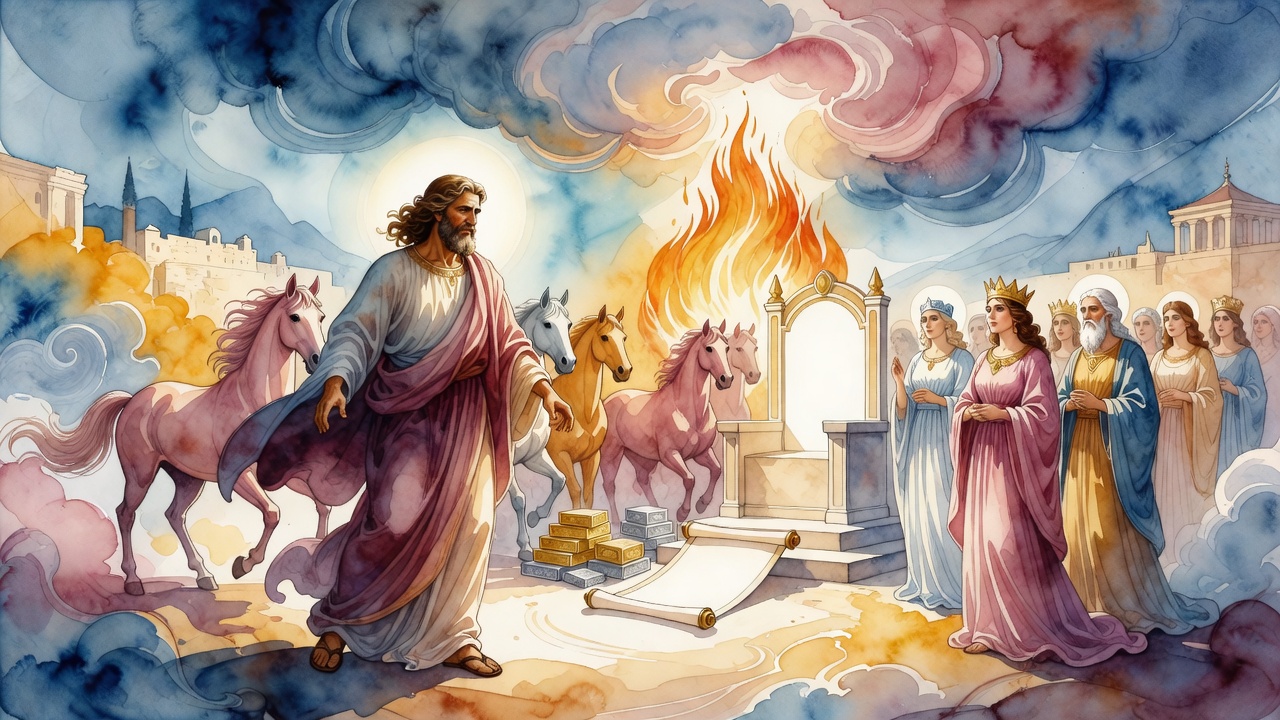
The wisdom and the wealth came as promised, and the wealth came so heavily that in his reign silver counted for nothing and men ate from gold as if from clay. That was the half he had not asked for, and it was the half that would bite. The same king who chose the seal over the coins would later drown in coins anyway, marrying foreign wives, hoarding the gold and the horses a king of Israel was warned never to gather, until the very abundance he had been wise enough to refuse became the thing he would have to atone for in pain.

He asked for an understanding heart so he would never lie to himself. The hardest cases his heart would ever judge turned out to be his own.


← All myths

From the tradition

Sources

5 sources

The texts this telling draws on, in full. Open a card to read inline, or expand it for a wider, quieter read.

Exempla of the Rabbis, No. 13Exempla of the Rabbis (Gaster, 1924)

The sages of Israel taught that God does not scatter wisdom like rain falling on barren ground. He gives wisdom only to those who already possess it, to those who have labored to cultivate understanding within themselves.

The Talmud in Berakhot (f. 57) records that King Solomon understood this principle better than anyone. When God appeared to Solomon in a dream at Gibeon and offered him anything he desired, Solomon did not ask for riches or long life. He asked for wisdom. And he asked for it precisely because he already had enough understanding to know that wisdom was the most valuable thing in existence.

The rabbis explained this with a parable. A king wished to reward his most faithful servant. He told the servant to ask for anything. The servant, who was already learned in the ways of the court, asked for the king's own seal ring, the symbol of authority and knowledge. The king was delighted, for only a wise man would have known to ask for such a thing. A fool would have asked for gold.

This teaching carried a warning as well. If a person neglected the Torah and let whatever small wisdom they possessed wither away, God would not replenish it. The vessel had to be kept open and ready. The Midrash on Exodus (Ki Tissa) adds that when Moses ascended Mount Sinai, he was already the humblest and most devoted of men. And so God filled him with a wisdom so vast that his face shone with light when he descended (Exodus 34:29).

Full source
Shemot Rabbah 30:16Shemot Rabbah

Shemot Rabbah turns to God's Justice Shows No Favoritism to Anyone.

Rabbi Natan, in Shemot Rabbah, makes a pretty strong statement: justice is fitting for God precisely because He upholds it without showing favor. It's a core attribute, right there alongside kindness and righteousness. As the prophet Jeremiah (9:23) puts it, God performs “kindness, justice and righteousness in the land.”

Think about Abraham, a foundational figure. According to the tradition, he faced ten major trials. But did God cut him any slack because of his faithfulness? Nope. Not even once.

Take the prophecy that Abraham's descendants would be strangers in a foreign land. (Genesis 15:13) spells it out: “Know, that your descendants will be strangers.” Some commentaries, like Nedarim 32a, even suggest that Abraham's own question – "How do I know that I will inherit it?" (Genesis 15:8) – led to the decree of enslavement. Even Abraham, the paragon of faith, wasn't exempt from the consequences of his actions. He still had the audacity to ask God to uphold justice, as we see in (Genesis 18:25): “Will the Judge of the earth not implement justice?”

And it doesn't stop there. Consider King Solomon, renowned for his wisdom. (Job 5:13) tells us that God “traps the wise with their craftiness.” Solomon, who conquered spirits and demons and dispensed justice to all, ultimately fell victim to his own hubris. The Midrash (rabbinic interpretive commentary) suggests he tried to outsmart the Torah by accumulating wives, horses, and wealth, justifying it by thinking he was above the law (see Sanhedrin 21b). In his old age, he began to fear the very spirits he once controlled. Remember the verse from (Song of Songs 3:8), "Each man, a sword on his thigh, from fear in the nights"? The tables had turned.

Shemot Rabbah emphasizes this point: there's no mitzvah, no commandment, that the Holy One doesn't emphasize the importance of. The consequences for violating them are always there, somewhere. For example, the Torah discusses selling a daughter into servitude (Exodus 21:7), and the implication is that mistreating others leads to negative outcomes.

The text continues with examples. "One who strikes a man and he dies" (Exodus 21:12). What causes this? Neglecting the Torah's teaching: "One who sheds the blood of man, by man shall his blood be shed" (Genesis 9:6). The Midrash compares it to defacing the king's statue and then ascending the judgment platform. Ignorance of the law isn't an excuse.

If someone kills an Israelite, it’s as if they’ve destroyed the image of the King, because humanity was created in the image of the ministering angels. Even if the killing is unintentional, God provides a place of refuge. But intentional murder? Even the High Priest isn't immune.

Think about Saul, a king anointed by God. Even he wasn't above the law. As II (Samuel 1:24) laments, “Daughters of Israel, weep over Saul.” Who exacted the blood vengeance for Saul's actions? Not even Israel itself, but the Gibeonites (II Samuel 21:6). The priests might have forgiven Saul for the massacre in Nov, but the Gibeonites didn't. II (Samuel 21:2) reminds us: "The Gibeonites were not of the children of Israel." David himself, in (Psalms 51:16), cries out: “Save me from bloodshed, God.”

What does this all mean? Maybe it's a reminder that no one is above the law, not even the most righteous or powerful. Justice, in the eyes of God, is impartial and unwavering. It’s a sobering thought, but perhaps also a comforting one. It suggests a universe where actions truly have consequences, and where fairness, however difficult to achieve, remains the ultimate standard.

Full source
Legends of the Jews 5:24Legends of the Jews

The story of Solomon, a king whose legendary wisdom was almost overshadowed by his transgressions.

Solomon for his wisdom, but let's be real: he wasn't perfect is familiar. He slipped up in a few key areas. For starters, he married a gentile woman, which, according to some interpretations, wasn't done for the purest of reasons. More than that, though, he broke some serious rules laid out in the Torah. He kept too many horses, something strictly forbidden for a Jewish king. And he hoarded gold and silver – another major no-no. The text makes it clear: "he amassed much silver and gold," and the law finds this abhorrent.

In Legends of the Jews, under Solomon, silver and gold became so common that people used them for everyday utensils! Imagine eating your breakfast with a golden spoon! But all this extravagance, all this flaunting of the rules…it came at a price. Solomon would have to atone for it later, and painfully so.

Let's not dwell only on the negative. Solomon's claim to fame, the thing that truly set him apart, was his legendary wisdom. Remember the story of God appearing to him in a dream in Gibeon? God offers him anything he wants. Now, only a few figures in Jewish tradition have had such an offer, like King Ahaz, and the promise of this opportunity for choosing will only be fulfilled by the Messiah in the future. What does Solomon choose? Not riches, not power, but wisdom. He understood that with wisdom, everything else would follow. Smart move. And boy, was he wise! The Scriptures tell us his wisdom was "greater than the wisdom of Ethan the Ezrahite, and Heman, and Calcol, and Darda, the three sons of Mahol." According to Ginzberg's retelling in Legends of the Jews, that means he was even wiser than figures like Abraham, Moses, and even Adam! isn't it?

Think about his proverbs. We only have about eight hundred of them today. But, as we find in Midrash Rabbah, each verse can be interpreted in multiple ways, effectively making it equal to three thousand! Solomon delved into the laws revealed to Moses, offering explanations for the rituals and ceremonies of the Torah. Without his insights, some of these practices might have seemed…well, a little strange.

The "forty-nine gates of wisdom," a concept familiar to both Moses and Solomon, were open to him. But Solomon, in his ambition, even tried to surpass Moses! He was so confident in his judgment that he considered dispensing justice without witnesses, if it wasn't for divine intervention. Can you imagine the potential for abuse of power?

So, what's the takeaway here? Solomon's story is a reminder that even the wisest among us are fallible. It's a story about the seductive nature of power and wealth, and the importance of staying true to one's principles. But it's also a evidence of the incredible power of wisdom, and its ability to illuminate the world around us. Solomon’s legacy isn’t just about his gold or his throne, but about the timeless wisdom he left behind, wisdom that continues to guide and inspire us today.

Full source
Kohelet Rabbah 1:1Kohelet Rabbah

Like everyone else is contributing, and you're just... there? Our sages grappled with this feeling, and their stories, preserved in texts like Kohelet Rabbah, offer surprising comfort.

We begin with the familiar opening of Ecclesiastes: "The words of Kohelet, son of David, king in Jerusalem" (Ecclesiastes 1:1). Kohelet, of course, is traditionally understood to be King Solomon. But why this introduction? Why highlight his lineage and status? The text immediately connects this to a verse in Proverbs (22:29): "Have you seen a man diligent in his labor? He will stand before kings."

This brings us to the story of Rabbi Ḥanina ben Dosa. Everyone in his town was bringing vow offerings, nedarim, and gift offerings, ndavot, to Jerusalem. He felt left out. He wanted to contribute, but he didn't have much. So, he found a stone, broke it, chiseled it, polished it, and declared his intention to bring it to Jerusalem.

He sought laborers, offering five sela (a unit of currency) for the task. But he didn't have the money! The laborers left. Now what? This is where the story takes a turn. The Holy One, blessed be He, sent five angels disguised as men. They agreed to carry the stone for five sela, but with a catch: Rabbi Ḥanina had to help, even if only with a finger. He agreed, and instantly, they were in Jerusalem.

He went to pay them, but they were gone. He inquired about them at the Chamber of the Hewn Stone, Lishkat ha-Gazit – the seat of the Sanhedrin, the ancient Jewish high court. They told him, "It appears that ministering angels took your stone up to Jerusalem." And then, crucially, they quoted the verse: "Have you seen a man diligent in his labor? He will stand before kings [melakhim]." But they reinterpreted it: "Read, in his regard: 'He will stand before angels [malakhim].'" It wasn't about earthly kings; it was about divine recognition.

Rabbi Simon, in the name of Rabbi Shimon ben Ḥalafta, offers an analogy. Imagine a royal advisor. The king says, "Ask for anything!" The advisor thinks, "If I ask for silver, gold, or fine gems, he will give them. But if I ask for his daughter, I get everything with her." It's about asking for the source of all blessings.

Similarly, in Gibeon, God appeared to Solomon in a dream (I Kings 3:5), saying, "Ask, what shall I give you?" Solomon could have asked for wealth, but instead, he asked for wisdom, an understanding heart. As it says, "Grant your servant an understanding heart" (I Kings 3:9). God was pleased. Because Solomon sought wisdom above all else, he received not only wisdom and knowledge but also wealth, property, and glory.

Rabbi Yitzḥak adds that the dream was upheld. Solomon awoke and understood. He understood the language of birds and donkeys. He went to Jerusalem, sacrificed offerings, and made a feast. Rabbi Yitzḥak notes that this shows us we should make a feast when completing the Torah – because the Torah encompasses all wisdom. The Divine Spirit rested upon him, and he composed Proverbs, Song of Songs, and Ecclesiastes – the very words of Kohelet we began with.

So, what's the connection? What does Rabbi Ḥanina's stone have to do with Solomon's wisdom? Both stories emphasize the power of sincere effort and the wisdom of seeking the highest good. Rabbi Ḥanina, though lacking material wealth, contributed what he could with diligence. Solomon, given the opportunity to ask for anything, chose wisdom, the source of all blessings.

The Kohelet Rabbah suggests that true value isn't measured in material possessions or earthly power, but in the sincere effort to contribute, to seek wisdom, and to connect with the divine. It's a comforting thought, isn't it? That even a simple stone, offered with a pure heart, can elevate us to stand before angels. What "stone" can we offer today?

Full source
Sifrei Devarim 162:5Sifrei Devarim

It all starts with King Solomon, the wisest of men.

The text quotes (1 (Kings 3:1)3), where God says to Solomon, "And also what you did not ask I have granted you, even riches and honor." R. Chanina b. Gamliel, a sage of the late first and early second century, uses this verse to make a powerful point. He basically says: if God can grant Solomon things he didn't even ask for – riches and honor beyond measure – surely God can also grant him what is written in the Torah, like length of days and prosperity!

Here's the catch.

It's not automatic. It's not just a handout. There's a condition.

R. Chanina continues, explaining that these blessings – the ones explicitly promised in the Torah – are given "only on condition that you observe the Torah." He then brings further verses from Kings, specifically (1 (Kings 3:1)4): "If you walk in My ways to keep My statutes and My mitzvot (commandments), as did your father David, then I shall prolong your days." And again, (1 Kings 9:4): "And as for you, if you walk before Me as your father David did, with wholeheartedness and uprightness, to do according to all that I have commanded you, to keep My statutes and My judgments, etc."

So, what does this mean for us?

It suggests that the blessings we seek, the ones promised for living a righteous life, aren't simply rewards dispensed at random. They are intrinsically linked to our actions, our commitment to living according to God's will. It’s not just about following the rules, but about walking in God's ways with "wholeheartedness" – with kavanah, intention – and "uprightness." It's about striving to emulate the integrity of King David.

We often think of blessings as something external, something we receive. But maybe, just maybe, the greatest blessing is the opportunity to walk in God’s ways, to become the kind of person who naturally attracts those blessings. Maybe the act of striving, the intention behind our actions, is itself the blessing.

It makes you wonder: what kind of blessings are we truly seeking, and what are we doing to create the conditions for them to flourish in our lives?

Full source