The Ant That Corrected Solomon the Wise King
Solomon closed his fist around a live ant and asked who in the world was greater. She answered that God had led the king to her hand.
Table of Contents
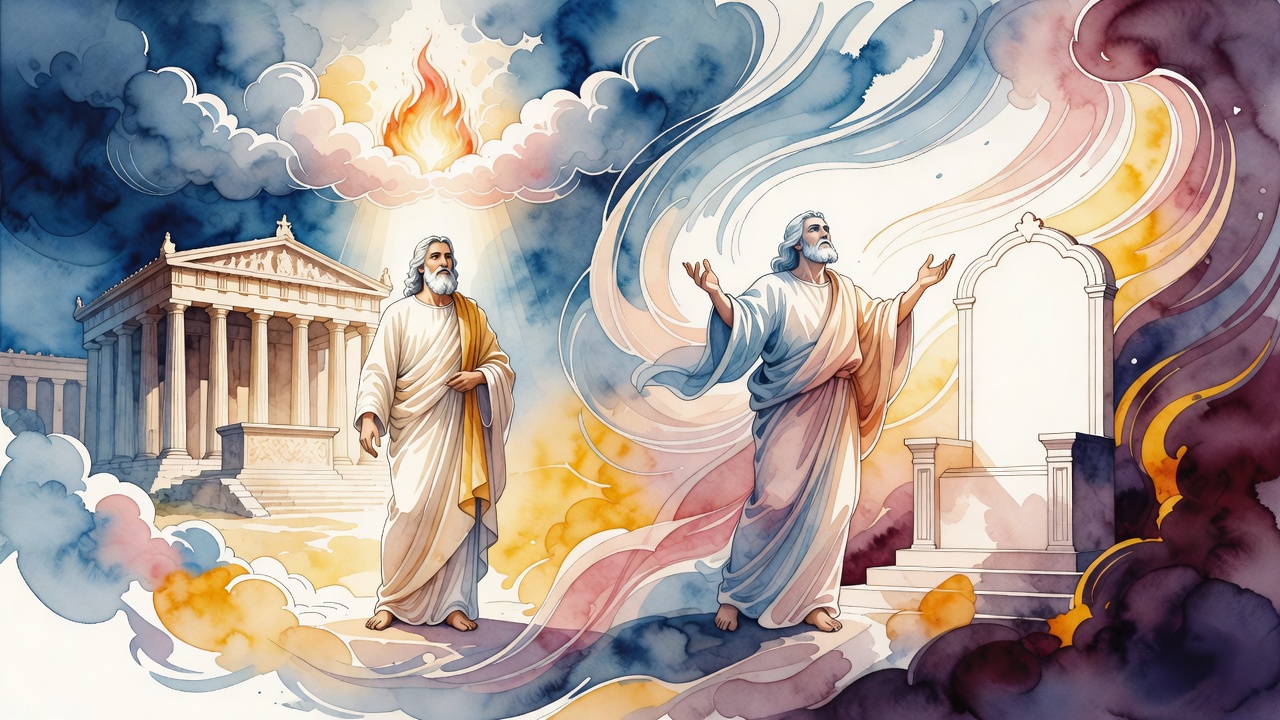
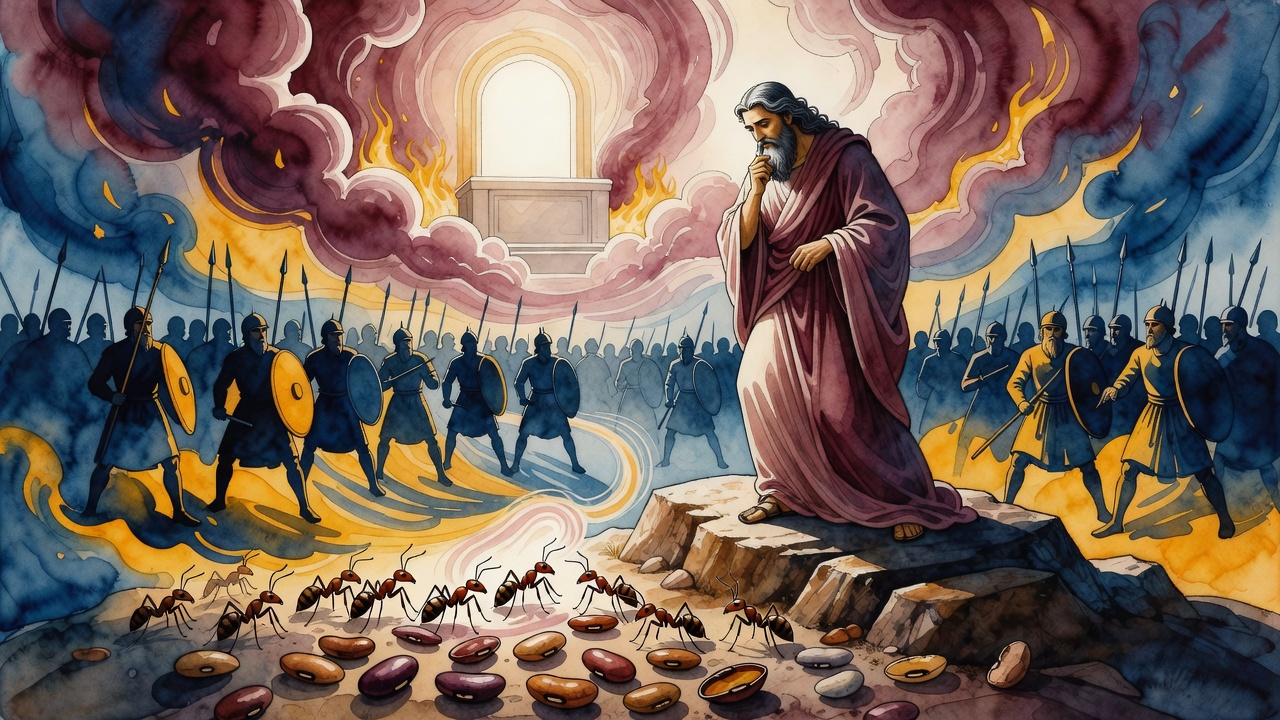
Solomon closed his fingers around a living ant and lifted her to the height of his eyes. The valley lay under him. Armies, storehouses, and the roads of his peace lay under him too. He felt large enough to ask a small creature a large question.
 Click for full size
"Is there anyone in the world greater than I?"
The ant did not hurry. "I am greater. Were I not greater than you, God would not have led you here to set me on your hand."
He Threw Her into the Dust
Heat rose in his face. He flung her down. Dust jumped around her legs and settled on his sandal.
"You know who I am? I am Solomon, son of David."
She was not cowed. She reminded him that he had come from a body, that his mother had labored, that the names he stacked on himself did not cancel the dust. Jedidiah, friend of God, was the name he had been given first. Shelomo, from shalom (שלום), peace, was the name the realm used because the borders had gone quiet. Ben, because he would build the Temple. Jakeh, because his rule ran to the ends of the map. Ithiel, because God was with him. Five names, each a claim. She treated them as weather.
For a breath he stood over her with his sandal raised. He could have ended the argument in the dirt. He set the foot down beside her instead and walked off abashed, a king corrected by a weight he could have crushed and had not been able to answer.
The Bone That Took Blood
He had not always needed to be the largest thing in the room. While David still sat on the throne, a boy Solomon had settled a case the court could not cut.
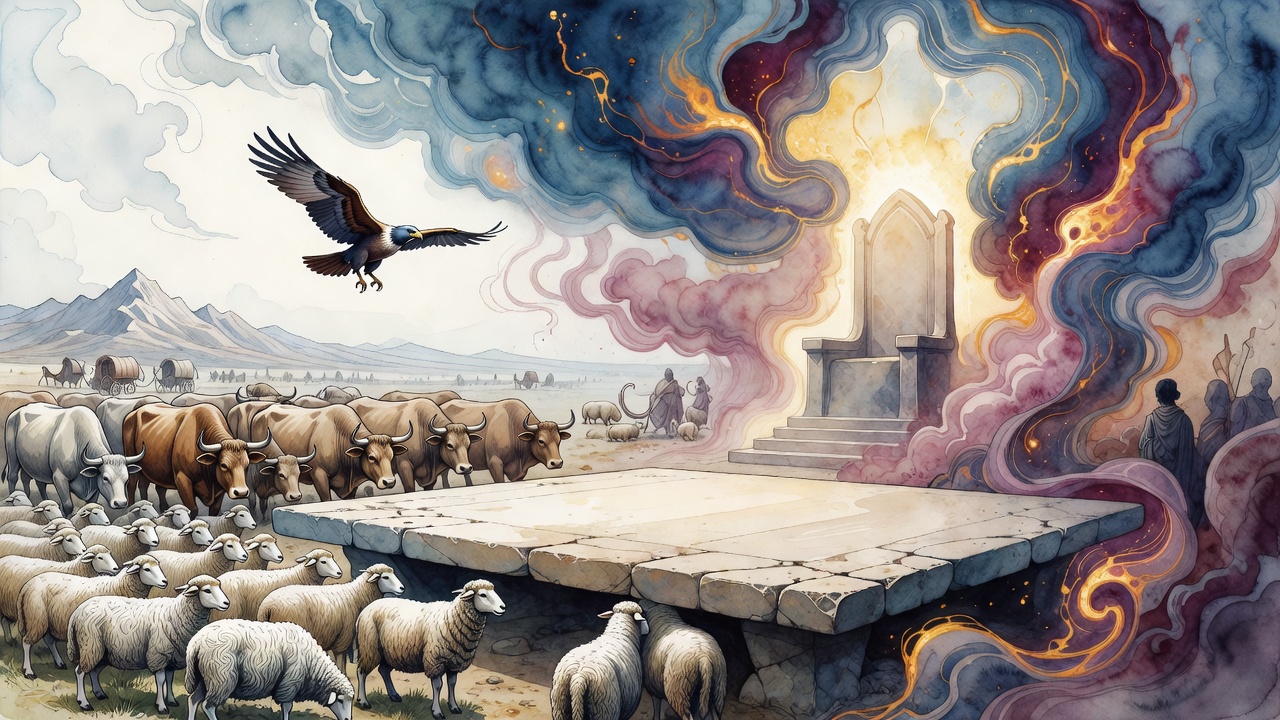
A rich man had sent his son to Africa with cargo. The son came home to a house already taken by a crafty slave. The slave had driven off the other servants and called himself the dead man's son. The true heir stood before David with no witnesses. David could not strip the slave without proof.
The child asked for the father's body. They opened the grave. Solomon took a bone and dyed it, first with the slave's blood, then with the heir's. The slave's blood sat on the surface and would not enter. The son's blood soaked in. The inheritance went back to the living boy, and the slave was led out of the house he had stolen.
That was a mind that could still let a small fact win. An ant was a smaller fact. Pride had grown in the years between the bone and the palm.
A Palace with No Door
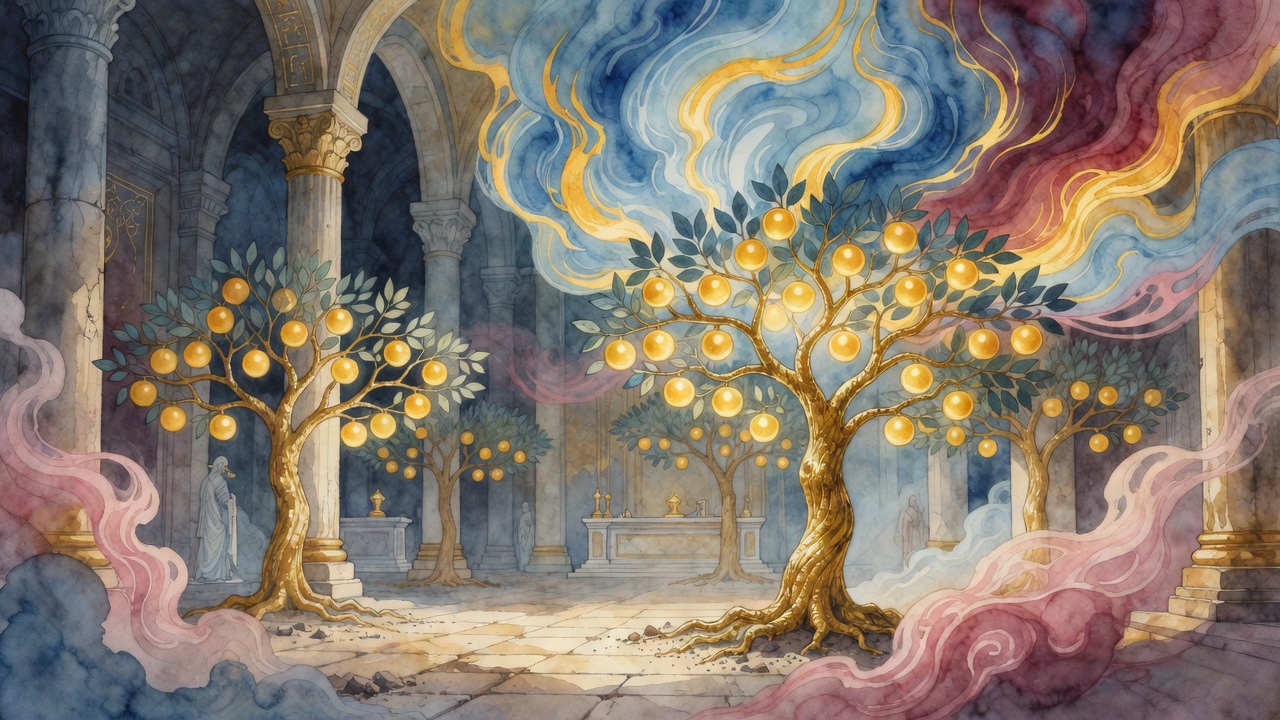
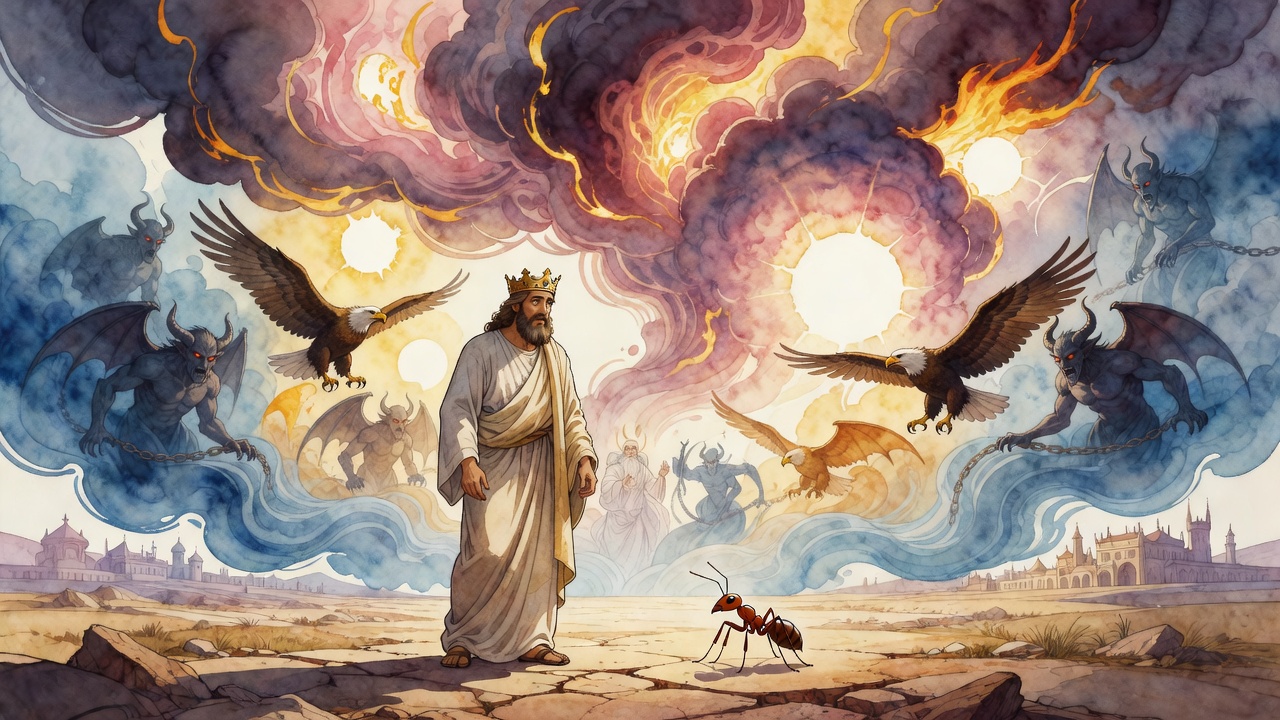
He came next to a building that would not let him in. Walls of pearl and precious stone, and no door he could find. He sent demons to search. They found an eagle seven hundred years old. The eagle sent them to a brother of nine hundred years, nested higher. That one sent them to a brother of thirteen hundred years. The oldest bird remembered his father's word. A door on the west side, buried under the dust of the years since anyone had used it.
They dug until iron showed. An old door, and an inscription. We who dwelt here lived in comfort a long time. Hunger came. We ground pearls into flour instead of wheat. It did not save us. We were about to die, so we left this palace to the eagles.
Solomon walked the rooms. Keys where the writing said they would be. Apartments of pearl. On the inner doors, three sayings about the vanity of what a hand can pile up, and a warning to stay small. The ant's sentence was already cut in iron, older than his reign. He ran a thumb along the letters and felt how little a title weighs against a locked house whose owners had eaten jewels and starved.
Gold That Could Not Follow Him
David had tried to teach him this while he still had breath. Gold, David said, would be cast into the streets on the day of wrath. Wealth would not profit. Torah would. Solomon heard it as a boy hears a father, then filled David's tomb with treasure anyway, a son's love stacked in metal.
Thirteen hundred years later the high priest Hyrcanus took a thousand talents from that store to buy Jerusalem free of a siege by Antiochus. Herod took more. The resting place of the kings stayed hidden, sunk so that thieves could not find the bones. The gold moved from crisis to crisis. The ant did not move. She had told the truth in one breath, and the palace of pearl had said the same with a locked door and flour that could not be eaten.
Solomon kept the names. He kept the throne. He did not keep the feeling of being large. That had gone into the dust with the ant's feet, and it did not come back when he called himself son of David.
← All myths