Parshat Balak5 min read

Bilam Fell on His Face and Sold Balak a Trap

Three times Balak paid for a curse and got a blessing read back to him. So Bilam stopped selling words and sold him a row of tents.

Curated by Arthur · Told by Maggid ·
Table of Contents
  1. The Seer Who Knew the Hour
  2. Seven Altars on Every Ridge
  3. Come, I Will Advise You
  4. Linen at the Edge of the Camp
  5. Israel Sat Down
Bilam Fell on His Face and Sold Balak a Trap Click for full size

The Seer Who Knew the Hour

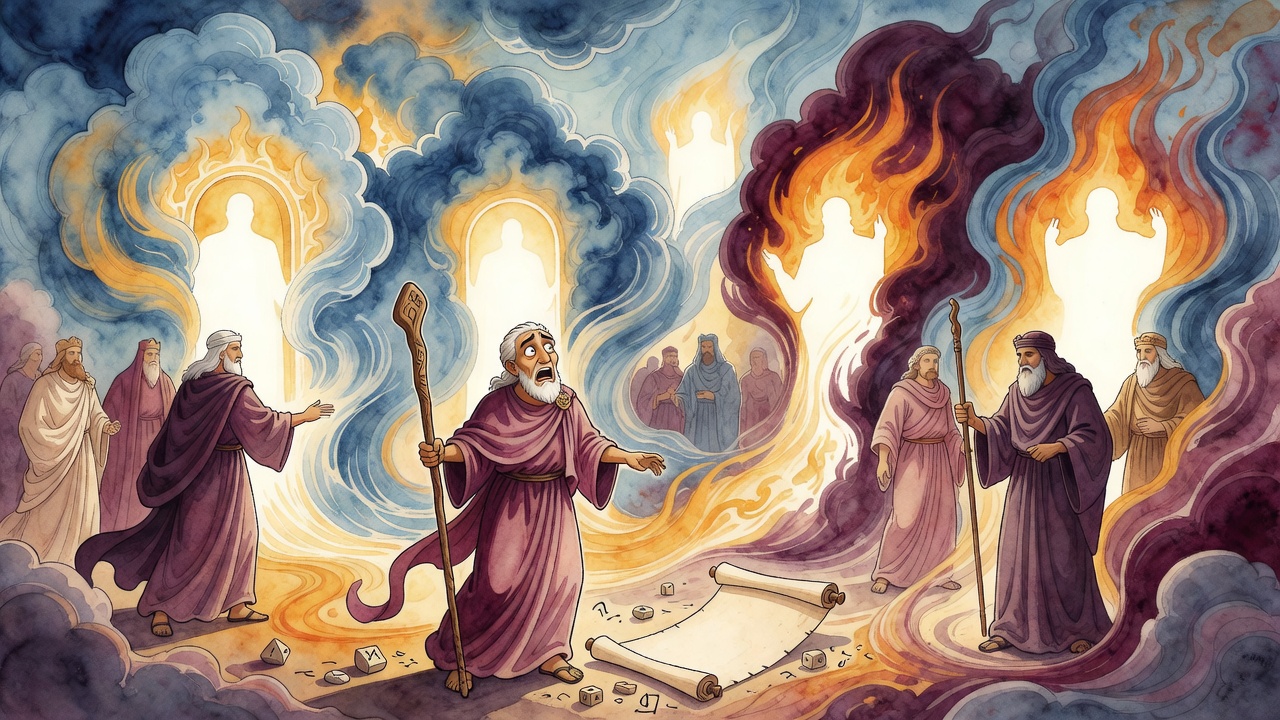
Bilam son of Beor went down on his face in the dirt, and the words came. That was how it worked for him. Face in the ground, eyes open, and the sayings of God arriving in figures and riddles that had to be untangled afterward like knots in a rope.
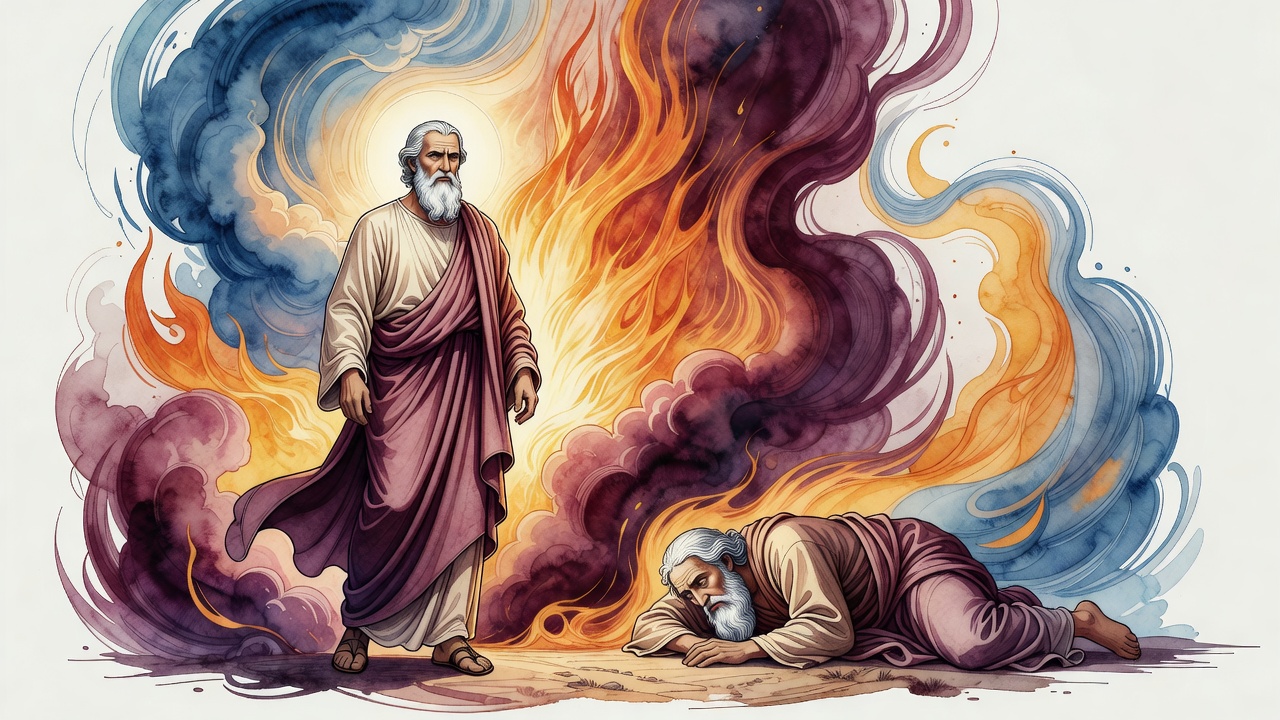
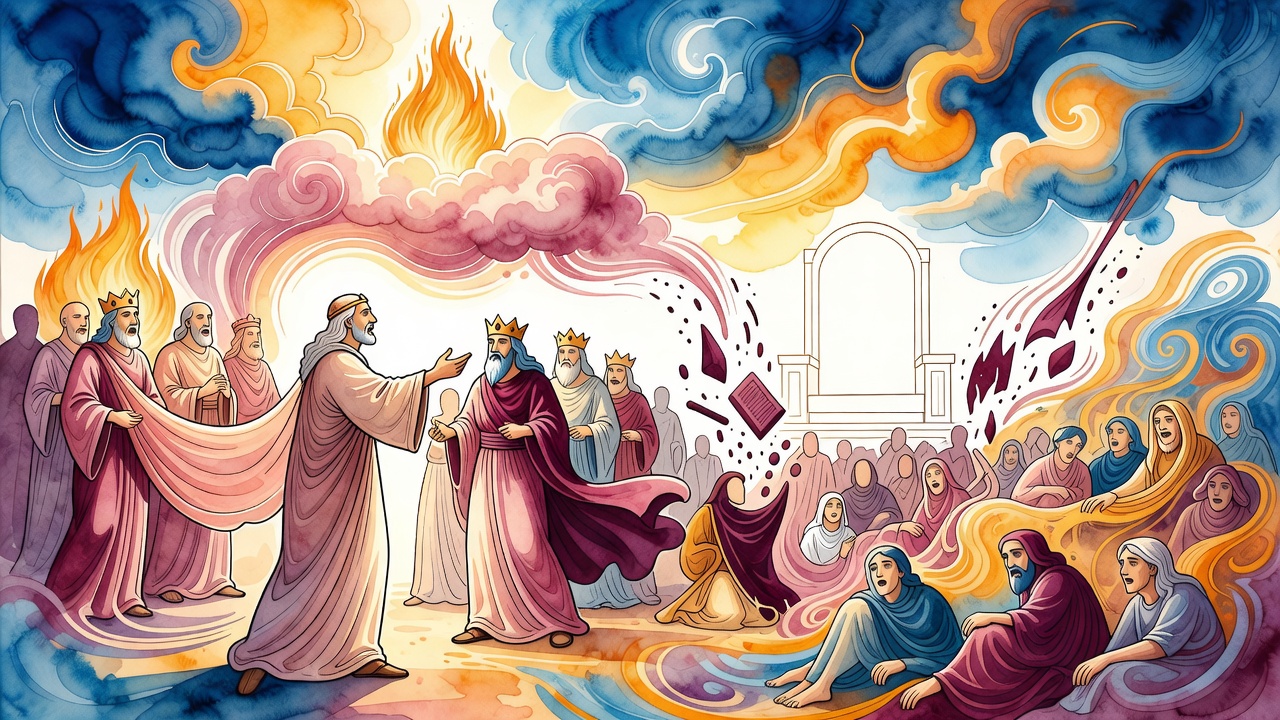
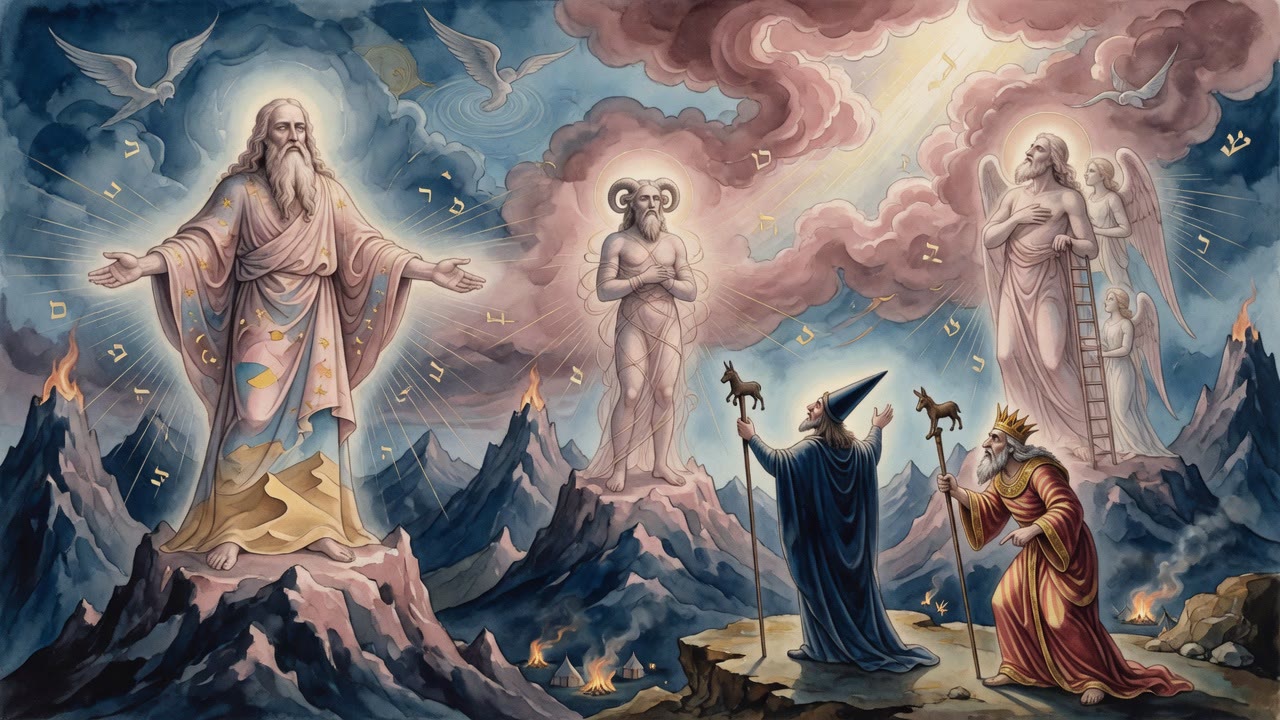
Moses stood when the Voice came. Mouth to mouth, plain as one man talking to a friend, and he never knew the hour in advance. The Voice met him inside the Tent when it chose to. Bilam knew who was speaking to him and knew when the speaking was due, and the rabbis compared him to the king's butcher, the man who knows before anyone else what will be carried to the palace table that night and what the king is spending on it. Insider knowledge, and a price attached.

Heaven had put a prophet of that size among the nations so that no nation could ever stand up and say it would have listened, if only someone like Moses had been sent to it.

Seven Altars on Every Ridge

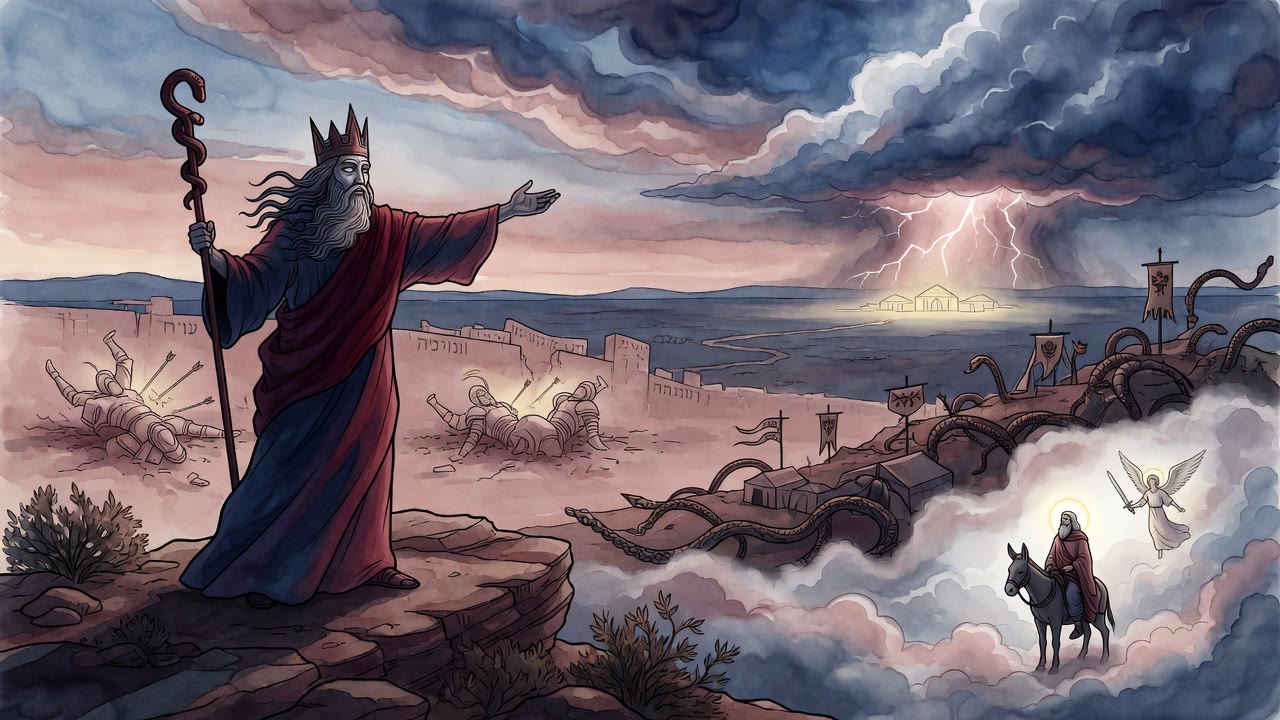
Balak king of Moab watched Israel come up across the plains the way a man watches an ox lick the grass down to bare ground, and he sent elders to Bilam with the fees for divination in their hands. Bilam saddled his donkey and rode. In a walled lane between two vineyards the animal shoved sideways and crushed his foot against the stone, because it could see the angel in the road with a drawn sword and its rider could not.

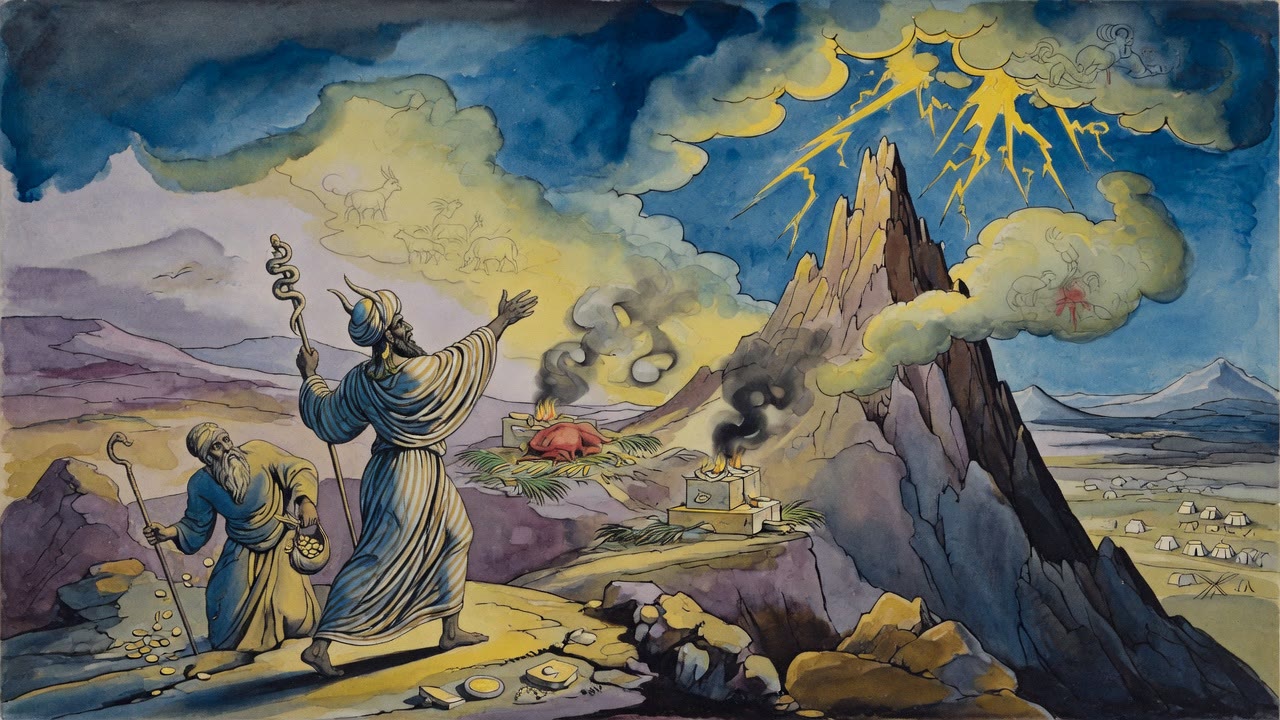
On the first height they built seven altars and Balak killed a bull and a ram on each of them. Bilam walked off alone to meet whatever would meet him, came back, opened his mouth, and blessed Israel. They tried a second ridge where only the edge of the camp showed. Blessing again. They climbed Peor, where the tents lay open below them rank by rank, and this time the blessing came out warm enough to call those tents beautiful.

Balak struck his hands together. "I called you to damn my enemies and you have blessed them three times running. Get back to your own place. The Lord has held you back from honor."

Come, I Will Advise You

Bilam did not leave empty. He turned back at the last moment with something that cost him nothing and required no prophecy at all. "Come," he said, "and I will advise you what this people will do to your people in the days to come."

The advice was four sentences long and every one of them was accurate. Their God hates harlotry. Those men are hungry for fine linen. Pitch tents along the road at the edge of their camp, and lay the cloth out where they can see it. Seat an old woman outside each tent with the goods in front of her, and a young girl inside.

Balak had spent bulls and rams and silver on a mouth. What he needed was a market.

Linen at the Edge of the Camp

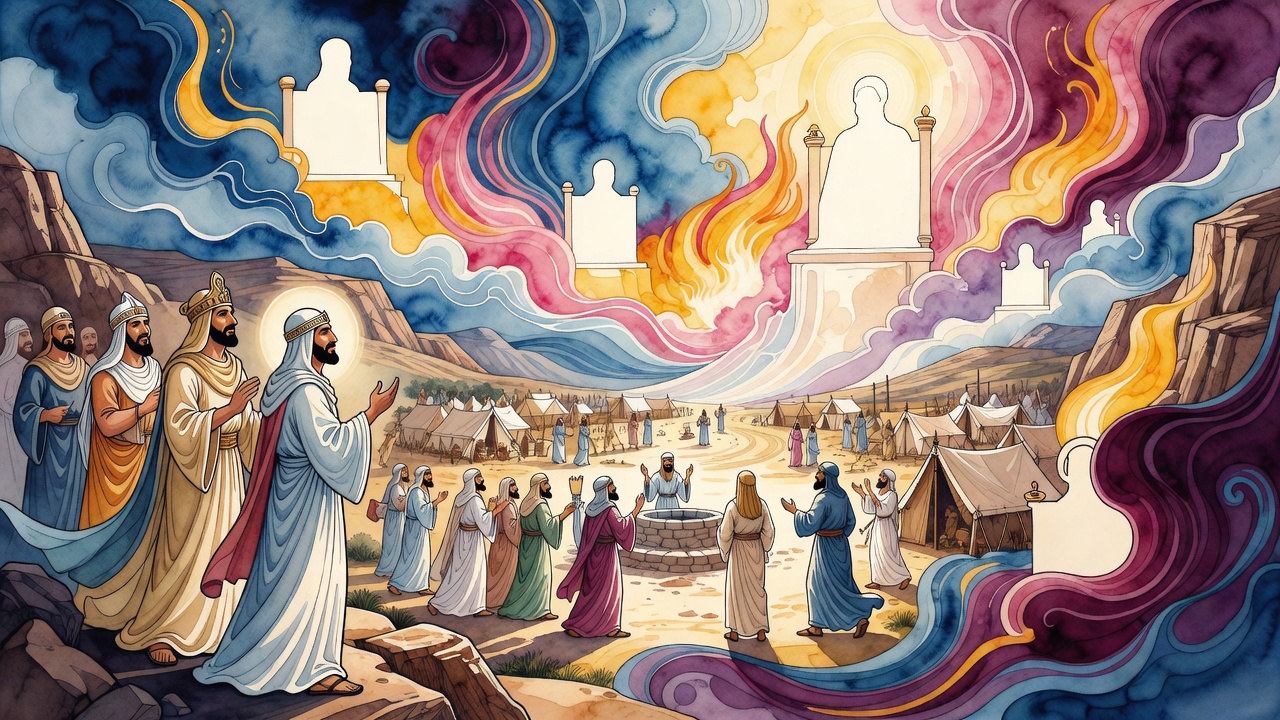
The tents went up along the road at Shittim, close enough that a man could stroll over between chores. The old woman outside had the garments spread on a cloth. A soldier stopped to handle the linen and price it, and she sent him in to the girl, and he went in.

Nobody had to be cursed. Nobody had to be fought. The whole strategy was a trade route running past the edge of a holy camp, and it did not need a single prophetic word to work.

Israel Sat Down

Sitting is the word that gives these collapses away. When Israel made the calf, the people sat down to eat and drink and then got up to play. When Joseph's brothers threw him into the pit, they sat down to eat bread with the boy calling to them from the hole. At Shittim, Israel sat.

They came for the linen and stayed for the meal, and the meal was a sacrifice, and the sacrifice belonged to Baal Peor, and men who had crossed the sea on dry ground bowed down in a Moabite tent with their mouths full. The plague went through the camp and took twenty-four thousand of them before Phinehas came down the lane with a spear in his fist and stopped it in one thrust.

Bilam's mouth had never once managed to injure them. His mouth was not the weapon he sold. He collected on the advice and went home, and when Israel turned on Midian afterward, the sword found him lying among the Midianite dead.


← All myths

From the tradition

Sources

2 sources

The texts behind this telling. Some cards carry a translation of the source; others are our own retelling of it, and each card says which. Every card links out to the original.

Bamidbar Rabbah 14:20Bamidbar Rabbah

Retold in our words. Read the original at the link below.The Sefaria Midrash Rabbah, 2022 · CC-BY

It uses the comparison between Moses and Bilam to highlight just how utterly unique Moses was. (Deuteronomy 34:10) tells us, “There has not arisen another prophet in Israel like Moses.” But the Midrash (rabbinic interpretive commentary) asks: was there anyone like Moses? The answer, surprisingly, is yes… and no.

The Bamidbar Rabbah suggests that among the nations of the world, there was someone comparable to Moses: Bilam, son of Beor. The idea is that God made sure that other nations had a prophet of similar stature, "so that there will not be recourse for the nations of the world to say: Had we had a prophet like Moses, we would have worshipped the Holy One blessed be He." It's like God saying, "Hey, everyone got a chance!"

This is a BIG but, the comparison only goes so far. The Midrash then meticulously breaks down the differences between their prophetic experiences.

Let's start with the ways Moses was superior. First, Moses spoke with God standing. Remember (Deuteronomy 5:28)? "But you, stand here with Me and I will speak to you…" Bilam, on the other hand, only received prophecy when he was “fallen, with open eyes,” as (Numbers 24:4) describes it. It paints a picture of a man prostrate, perhaps even in a trance.

Second, Moses spoke with God "mouth to mouth," as we find in (Numbers 12:8). Intimate. Direct. Bilam only "heard the sayings of God" (Numbers 24:4). He was a step removed.

Third, and perhaps most profoundly, Moses spoke with God "face to face" (Exodus 33:11). Clear. Unobstructed. Bilam received prophecies in parables (Numbers 23:7). Riddles. Hints. Not the same thing at all.

So, Moses wins. Well, hold on. The Bamidbar Rabbah throws a curveball. There were three qualities that Bilam possessed that Moses didn't.

First, Bilam knew who was speaking to him: "The utterance of one who hears the sayings of God, the vision of the Almighty he will see" (Numbers 24:4). Moses, apparently, didn't always have that clarity.

Second, Bilam knew when God would speak to him: "He knows the knowledge of the Most High" (Numbers 24:16). Moses didn't have an appointment calendar with the Divine.

The Midrash uses a fascinating parable to illustrate this. It compares Bilam to the king’s slaughterer, who knew what the king would offer on his table and how much he would spend. Bilam, in a sense, had insider information. He knew the Divine menu in advance.

Third, Bilam could access prophecy whenever he wished. Again, (Numbers 24:4), "Fallen with open eyes," suggests this immediacy. He'd fall on his face, and bam, revelation! Moses didn't have that kind of on-demand access.

Except… maybe he did? Rabbi Shimon chimes in, suggesting that Moses could speak with God whenever he wished. He points to the verse "And when Moses came into the Tent of Meeting to speak with Him," (Numbers 7:89) followed immediately by, "he heard the Voice speaking with him." The implication is that Moses simply had to enter the Tent of Meeting, and God would speak.

So, what does it all mean? It seems like the Bamidbar Rabbah isn't trying to diminish Moses. Instead, it's highlighting the paradox of prophecy. Moses had a uniquely intimate and direct relationship with God. He stood in God's presence. He spoke face-to-face. Yet, Bilam, in his own way, had a certain level of control and knowledge that Moses lacked.

Perhaps the message is that prophecy isn't a one-size-fits-all experience. Different prophets, different gifts, different limitations. But ultimately, it’s the character of the prophet, their intentions, and their actions that truly matter. Bilam, despite his prophetic abilities, ultimately used them for his own gain, cursing instead of blessing. Moses, despite any limitations, used his for the good of his people, leading them to freedom. And maybe that's the real difference that makes all the difference.

Full source
Sifrei Bamidbar 131:1Sifrei Bamidbar

Retold in our words. Read the original at the link below.Sifrei by Rabbi Shraga Silverstein · CC-BY

Our Sages noticed it too. They saw these juxtapositions as opportunities. Opportunities to dig deeper and find hidden connections.

" (Bamidbar 25:1). Now, the text points out that "sitting" in these contexts often implies a kind of moral subversion. When the Israelites made the Golden Calf, what were they doing? "The people sat down to eat and to drink" (Shemot 32:6). And when Joseph's brothers were plotting to sell him into slavery? "They sat down to eat bread" (Bereshit 37:25). Sitting, in these instances, isn't just relaxing; it's a prelude to something… not so good.

Rabbi Akiva, a towering figure in Jewish thought, teaches that whenever one section of the Torah is placed next to another, there's a reason. We're meant to learn something from the connection. So, what's the connection here?

Well, just before the verse about Israel’s "sitting" and straying, we have the story of Bilam. Remember him? The non-Jewish prophet hired to curse Israel? He couldn't curse them directly, so what did he do instead? He gave the Moabites a little… advice. As we read: "Come, I (Bilam) will counsel you" (Bamidbar 24:14). What was his counsel? He knew that the God of Israel hates harlotry. So, Bilam suggested using that weakness against them. He advised the Moabites to set up tents with enticing women selling flaxen garments. A trap, baited with temptation.

Rebbi takes a slightly different tack. He acknowledges that some adjacent sections seem worlds apart, "as far from each other as east from west." He then proceeds to give examples of verses that appear to have little to do with one another on the surface.

One example Rebbi brings is from Shemot (Exodus). We read, "Behold, the children of Israel have not listened to me..." (Shemot 6:12) followed immediately by "And the Lord spoke to Moses and to Aaron, and He commanded them unto the children of Israel" (Shemot 6:13). What's the connection? Why would God command them after the Israelites had already shown themselves to be unreceptive? Rebbi explains that God was reiterating his original instructions, reminding them of what He had already told them.

Rebbi continues with another example: Vayikra (Leviticus) 21:9 states, "And the daughter of a man who is a Cohein, if she profane herself by harlotry…" This is immediately followed by "And the Cohein who is exalted over his brothers…" (Vayikra 21:10). What do these two verses have to do with each other? Rebbi answers with a parable. A centurion fails to achieve a high office and flees. The king has him brought back and sentenced to death, but first shows him a pile of gold. If he had done his duty, he would have received the gold and lived. Now, he loses both. Similarly, the daughter of a Cohein, a priest, who engages in harlotry loses both her honor and the potential to give birth to a high priest. The juxtaposition highlights the immense loss resulting from her actions.

Rebbi offers another compelling comparison by way of a parable. Hoshea (Hosea) 1:9 declares, "You are not my people," immediately followed by Hoshea 2:1, "And the number of the people of Israel shall be as the sand of the sea…" How can these seemingly contradictory statements coexist? Rebbi likens it to a king who, in anger, orders a divorce to be written for his wife. Before the scribe arrives, the king reconciles with his wife and, to ensure the scribe does not leave empty-handed, instructs him to write that he is doubling her kethubah, her marriage contract. Thus, the apparent contradiction is resolved by divine reconciliation and renewed favor.

One final example Rebbi offers: Hoshea 14:1 states, "Shomron shall bear her guilt, for she has defied her G-d," while the very next verse (14:2) says, "Return, O Israel to the L-rd your G-d." How do we reconcile punishment with a call to return? Rebbi uses the parable of a rebellious province. The king sends a general to devastate it, but the wise general offers the province a chance to send a message of reconciliation to the king. The devastation can be avoided by returning to the king's favor.

So, what's the takeaway here? Maybe it's that nothing in the Torah is accidental. Every word, every verse, every juxtaposition is there for a reason. It's up to us to explore those connections, to wrestle with the text, and to find the deeper meaning within. Perhaps, like Bilam's strategy, our own temptations are often cleverly disguised, lurking just beneath the surface of seemingly innocent situations. And maybe, just maybe, by paying attention to these subtle connections, we can avoid falling into similar traps.

Full source