Parshat Balak5 min read

Balak Saw Israel's Coming Wars From the Ridge

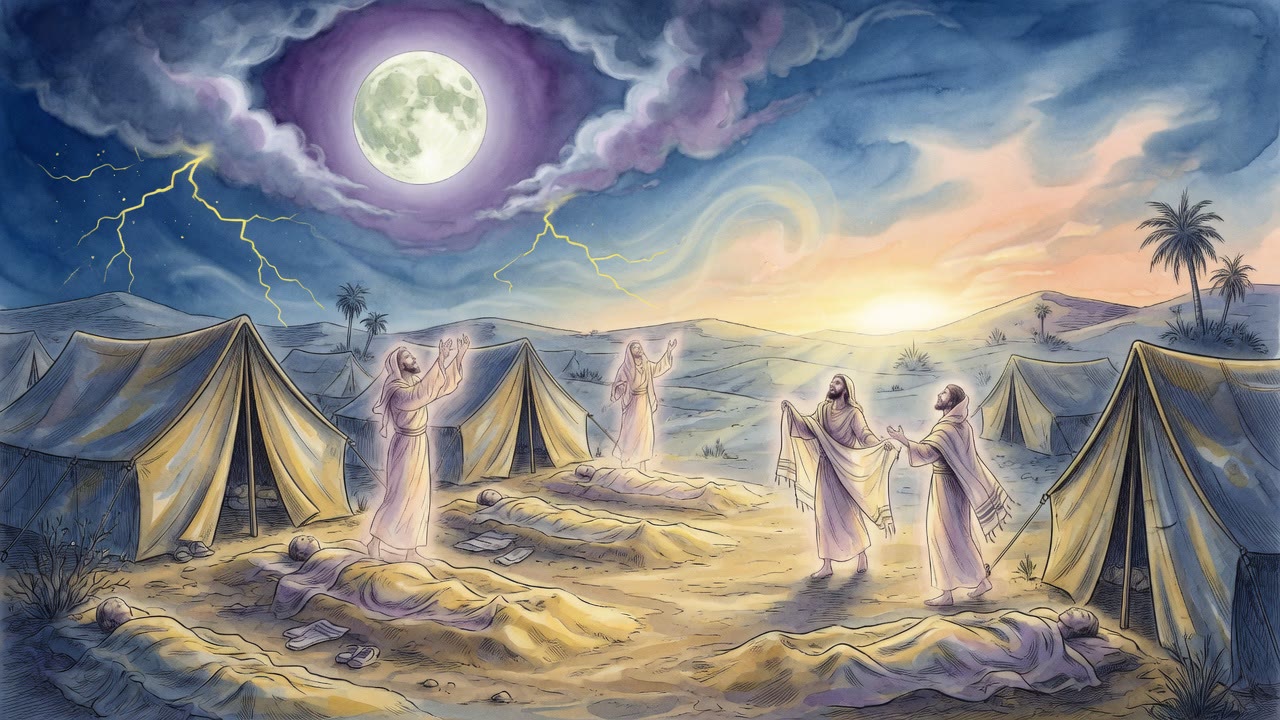
Below the ridge, children chased goats between tents and elders argued about grazing rights. None of them knew silver was already riding toward Bilam's house.

Curated by Arthur · Told by Maggid ·
Table of Contents
  1. What the Wicked Eye Drinks First
  2. The Guards Who Failed
  3. Messengers and the Word Please
  4. When Mercy Misses Its Target
Balak Saw Israel's Coming Wars From the Ridge Click for full size

What the Wicked Eye Drinks First

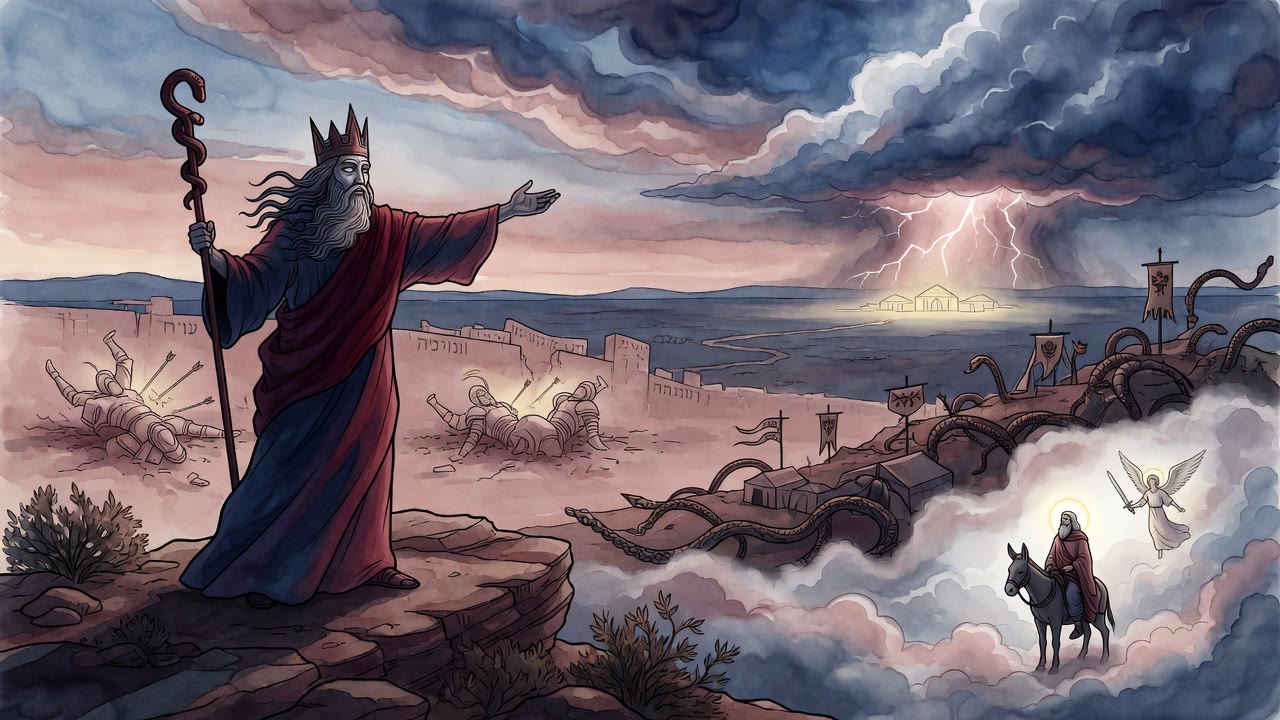
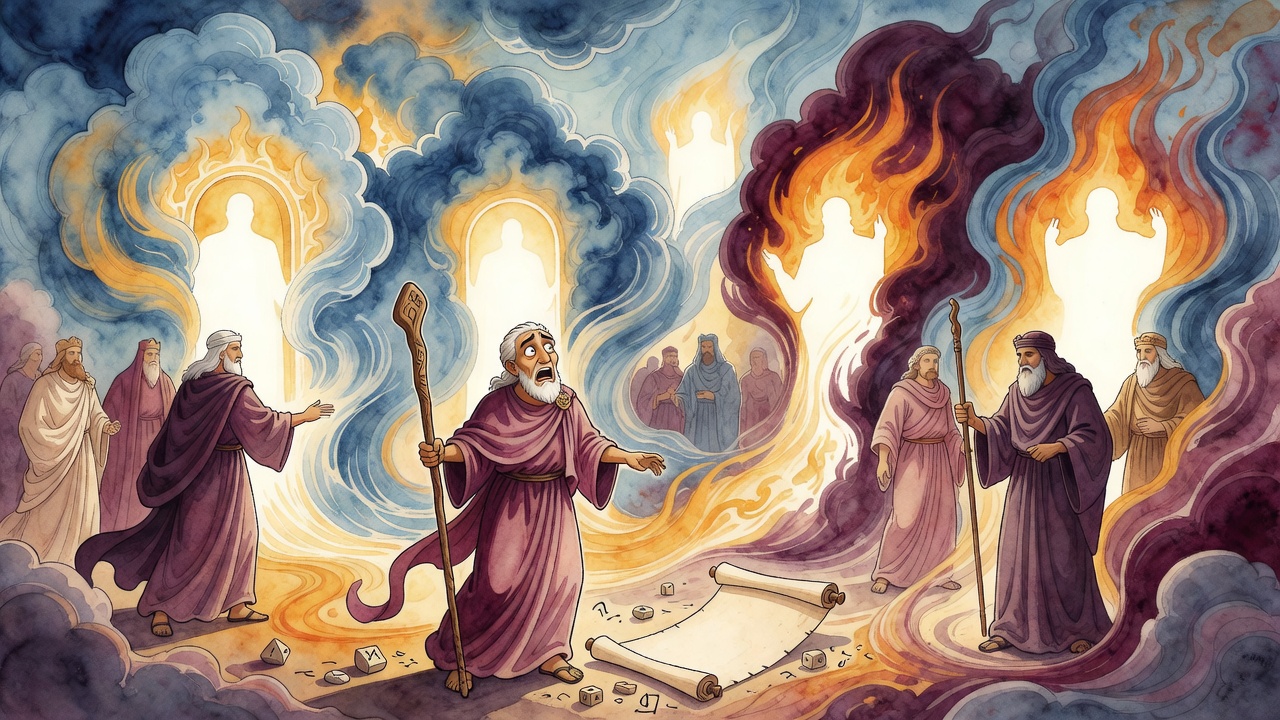
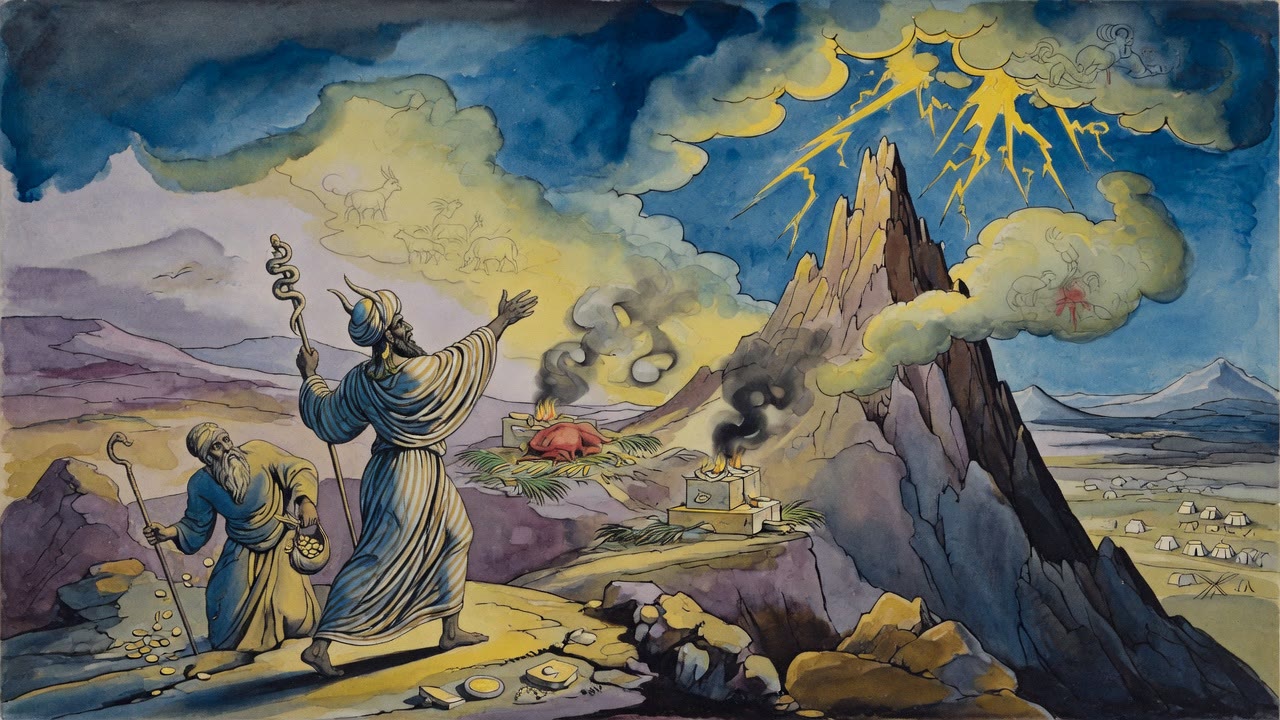
Balak stood on Moab's ridge and saw. Not a casual glance at tents. Sight that drank futures. He saw wars stacked against Israel, chains and exile, calamities the people would somehow endure. He also saw a man whose words could uproot a nation the way an army could not: Bilam.

The midrash does not celebrate that vision. It says it would have been better for the wicked to be blind, because their eyes bring evil into the world. The generation of the Flood saw and corrupted. Ham saw and cursed his line. Pharaoh's officers saw Sarah and set trouble in motion. Seeing is not neutral when the heart behind the eye is already a weapon.

Balak's eye opened, and Moab's policy became a curse-for-hire.

The Guards Who Failed

He had trusted walls of flesh. Siḥon and Og stood between Moab and the approaching camp the way hired guards stand before a king. Israel broke them. The king on the ridge watched his protectors fall and felt the dread that follows a failed contract. Ordinary force had been measured and found light.

He also saw the wonders at the Arnon ravine, the strange victories that did not look like standard campaigning. If mountains and rivers had already taken Israel's side, what could Moab field that would matter? Balak's fear was rational and poisonous at once. Rational because the map had changed. Poisonous because he answered fear with a tongue for rent.

Messengers and the Word Please

Israel, for its part, had sent messengers to Siḥon asking passage, even when the path of war had already been named. Peace is not a mitzvah (a commandment) that waits at the door like a nest one happens upon. Peace must be sought and pursued. The midrash hears an extra "please" in the tone of that diplomacy, the small humility of a people that still tries the gate before the sword.

Siḥon refused. The sword came. Balak watched the refusal's aftermath and drew the wrong lesson. He did not learn to open a road. He learned to buy a prophet.

When Mercy Misses Its Target

Later generations would argue over Midian, over when to offer peace and when the command is to assail. David's kindness to Ḥanun son of Naḥash became a parable of mercy aimed at the wrong house: half beards shaved, garments cut, war blooming from a gift refused. Kindness that violates a hard decree can birth more blood than firmness would have cost.

Balak stands at the other extreme. He offers no peace. He offers silver for a curse. Between reckless mercy and purchased hate, the ridge above Moab chooses the second, and the story of Bilam begins in an eye that saw too much and understood too little.

Bilam would later open a mouth that refused the script Balak paid for. That failure does not clean the ridge. The crime began when the eye turned futures into a purchase order. Moab's king had seen wars Israel would survive and still tried to hire a shorter ending. Vision without obedience is only a sharper kind of blindness.

Below the ridge, Israel still camped as a people learning how to walk between water and war. Children chased goats between tents. Elders argued about grazing rights and the next day's march. None of them could see the silver already riding toward a prophet's house. The danger of a wicked eye is that it acts while the camp still thinks the only threats are hunger and distance.

When the hire failed and blessings spilled instead of curses, the ridge still owned its first sin. Hiring hate is not made innocent by heaven's refusal to deliver the product. Balak's eye had already done its damage by opening the negotiation with a price for ruin.

Messengers of peace and messengers of silver leave different tracks in the dust. Israel had tried the first track with Siḥon and been refused. Balak chose the second track without trying the first. The midrash sets those choices beside each other so the ridge cannot claim it had no other language than curse.

On the ridge the wind kept moving after the messengers left. Balak watched dust trails and counted silver spent. Below, a woman stirred a pot and did not know her camp had been priced for destruction. The distance between a wicked eye and an ordinary supper is the whole drama of that hour.

When blessings later spilled from Bilam's mouth instead of curses, the ridge did not become innocent. Hiring hate is not cleansed by heaven's refusal to deliver the product. The eye that opened the purchase still owns the first wrong turn of the story of Moab's fear.

Messengers of peace leave different tracks than messengers of silver. Israel had tried peace with Siḥon and been refused. Balak skipped peace entirely. The midrash sets those choices side by side so the ridge cannot claim curse was its only language.


← All myths
From the tradition

Sources

3 sources

The texts behind this telling. Some cards carry a translation of the source; others are our own retelling of it, and each card says which. Every card links out to the original.

Bamidbar Rabbah 20:2Bamidbar Rabbah

Retold in our words. Read the original at the link below.The Sefaria Midrash Rabbah, 2022 · CC-BY

Not at all. It's a question that comes to the fore when we explore Bamidbar Rabbah, specifically chapter 20.

” Okay, but what exactly did he see?

Well, the Rabbis of the Midrash don't think it's just a casual observation. They believe Balak, king of Moab, saw the future, a future filled with calamity for the people of Israel at the hands of all their enemies. He saw wars and enslavement – all the things they were able to endure, paradoxically. But Balak also recognized something else. This Bilam, this prophet he was about to hire, he was a game-changer, a person who could essentially uproot an entire nation with his words!

Here’s the kicker. The Midrash suggests that it would have been "preferable for the wicked to be blind, as their eyes bring evil to the world." Wow. That’s a pretty strong statement. Why?

The Midrash then offers a series of examples. Remember the generation of the Flood? "The sons of the great saw" (Genesis 6:2) – and what they saw led to corruption and destruction. Then there’s Ham, the father of Canaan, who "saw" something he shouldn't have (Genesis 9:22), leading to a curse. And even Pharaoh's officials "saw" Sarah's beauty (Genesis 12:15), which caused its own set of problems. In each case, seeing led to wickedness. And here we have Balak, and "Balak saw."

Perhaps it's about intention, about the lens through which we view the world. A wicked person, driven by selfish desires, will only see opportunities for exploitation and harm.

The Midrash continues with an analogy. He trusts in their strength, but the enemy overwhelms them. The king, witnessing this failure, is filled with dread. Similarly, Balak saw what happened to Siḥon and Og, two powerful kings he was paying to protect him. They were defeated by the Israelites. He was terrified! And he also saw the miracles that occurred in the Arnon ravine, as we also learn in Bamidbar Rabbah 19:25 and 33. Balak understood that ordinary means wouldn't work against these people. He needed something more, something supernatural… something like Bilam.

It's not just about the act of seeing, but what we do with what we see. Are we using our vision to build bridges, to understand and empathize? Or are we using it to exploit, to divide, to sow seeds of fear? The story of Balak reminds us that the way we perceive the world shapes the world we create. And sometimes, perhaps, it's better to look inward than outward.

Full source
Bamidbar Rabbah 21:5Bamidbar Rabbah

Retold in our words. Read the original at the link below.The Sefaria Midrash Rabbah, 2022 · CC-BY

In Bamidbar Rabbah (Numbers Rabbah) 21, we encounter a fascinating tension. God commands the Israelites to "Assail the Midianites." Seems But then, the text throws us a curveball. Doesn't (Deuteronomy 20:10) tell us that "When you approach a city to wage war against it, you shall call to it for peace"? So, which is it? Offer peace, or attack?

The Rabbis address this apparent contradiction head-on. The command to offer peace, they explain, doesn't apply to everyone. Specifically, (Deuteronomy 23:7) states, "you shall not seek their peace or their welfare" when it comes to Moab and Ammon. It's a complex situation, demanding careful discernment.

Then, the story takes a personal turn. The text illustrates the danger of extending mercy indiscriminately through the story of King David.

David, in his compassion, decides to show kindness to Ḥanun, the son of Naḥash. "David said: I will act with kindness to Ḥanun son of Naḥash" (II Samuel 10:2). A noble gesture, it first appears. But, according to Bamidbar Rabbah, God wasn't so thrilled. The Holy One, blessed be He, essentially says to David: "Will you violate my directive? I wrote: 'You shall not seek their peace or their welfare,' and you perform acts of kindness with them? 'Do not be overly righteous' (Ecclesiastes 7:16) – so that a person will not relinquish the Torah."

the verse says, David’s kindness, though well-intentioned, flew in the face of a divine decree. He was being "overly righteous," to the point of disregarding God's specific instructions.

So, what happens? David's act of kindness backfires spectacularly. "Ḥanun took David’s servants, and he shaved half their beards, and he cut their garments in half, until their buttocks, and he sent them away" (II Samuel 10:4). Ouch. Talk about a diplomatic disaster!

The humiliation leads to war. As Bamidbar Rabbah tells it, David ends up in conflict with Aram Naharayim, the kings of Tzova, the kings of Maakha, and the children of Amon – four nations in total. "Yoav saw that the face of the battle was [before and behind him]" (II Samuel 10:9). David finds himself surrounded, embroiled in a conflict that, according to this interpretation, could have been avoided.

The text concludes that David's troubles stemmed directly from seeking the welfare of those regarding whom God had said, "You shall not seek their peace [or their welfare]." That's why it is written: "Assail the…"

This passage from Bamidbar Rabbah isn't just a historical anecdote. It's a powerful lesson about the complexities of judgment, mercy, and obedience. It raises profound questions: When do we extend compassion, and when do we hold back? How do we balance our own sense of righteousness with the directives we receive? Are there times when being "too kind" can actually lead to harm?

The ancient rabbis weren't afraid to wrestle with these difficult questions, and neither should we. As we navigate our own lives, let's remember the story of David and the Midianites. May we find the wisdom to discern when to offer peace and when to…well, you know.

Full source
Bamidbar Rabbah 19:27Bamidbar Rabbah

Retold in our words. Read the original at the link below.The Sefaria Midrash Rabbah, 2022 · CC-BY

A classic example surfaces in Bamidbar Rabbah 19 as it grapples with a seemingly simple verse: "Israel sent messengers to Siḥon, king of the Emorites, saying…" (Numbers 21:21).

The rabbis in Bamidbar Rabbah use this verse as a springboard to explore the nuances of seeking good versus pursuing peace. They begin by quoting (Psalms 37:3): “Trust in the Lord and perform good; dwell in the land and cultivate faith,” and (Psalms 34:15): “Turn away from evil and perform good; seek peace and pursue it.” Notice the difference? We are told to simply "perform good," but when it comes to peace, we must actively "seek" it and "pursue" it.

So, what’s the deal? Why the difference in emphasis?

The text explains that the Torah doesn’t necessarily demand that we chase after every single mitzvah, every good deed. “If a bird’s nest should happen before you” (Deuteronomy 22:6); “if you encounter your enemy’s ox” (Exodus 23:4); "if you see a donkey" (Exodus 23:5); “when you beat your olive tree” (Deuteronomy 24:20); “when you harvest your vineyard” (Deuteronomy 24:21); “when you enter another’s vineyard” (Deuteronomy 23:25). These are all opportunities that present themselves. If they arise, you’re commanded to act. But you're not obligated to go looking for them.

But peace? Peace is different. Peace, shalom, requires active engagement. "Seek peace" – in your immediate surroundings. "And pursue it" – even beyond your comfort zone.

And that’s precisely what Israel did in our opening verse. Even though God had instructed them to "Begin taking possession, and provoke war with him" regarding the land (Deuteronomy 2:24), they chose the path of peace. "Israel sent messengers to Siḥon… let me pass" (Numbers 21:21-22).

Now, here's a fascinating detail. The text notes that the verse as quoted in Bamidbar Rabbah includes the word "na," which means "please," in the message to Siḥon. That little word isn't actually in the original verse in Numbers. It does appear in (Judges 11:17), in a similar message sent to the king of Edom. What does this slight alteration suggest? Perhaps it highlights the extra effort, the added layer of humility, that seeking peace requires.

This passage reminds us that while opportunities for good deeds often present themselves in our daily lives, the pursuit of peace demands intentionality, effort, and sometimes, even a little "na" – a little extra supplication. It’s a powerful reminder that peace isn’t passive; it's an active choice, a continuous pursuit. What does pursuing peace look like in your life today?

Full source