Bilam Got a Truncated Call While Moses Got the Full Name
At night behind a curtain Bilam receives a clipped encounter, while Moses is called by day, and Israel learns which redemption ends shame.
Table of Contents
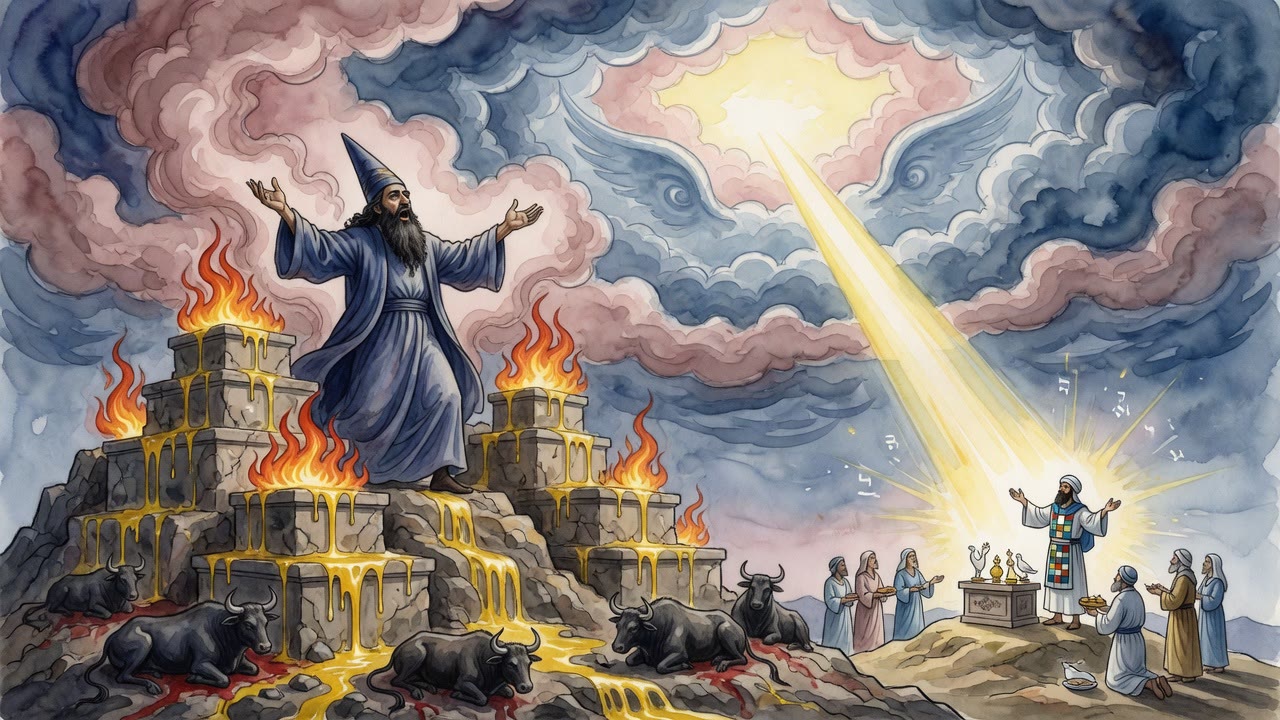
Night pressed on the hills of Moab like a held breath. Bilam waited for a word he could sell. When the encounter came it arrived as vayikar, a happening, a clipped brush of speech, not the open call that once found Moses at the Tent. The difference was not volume. It was nearness.
 Click for full size
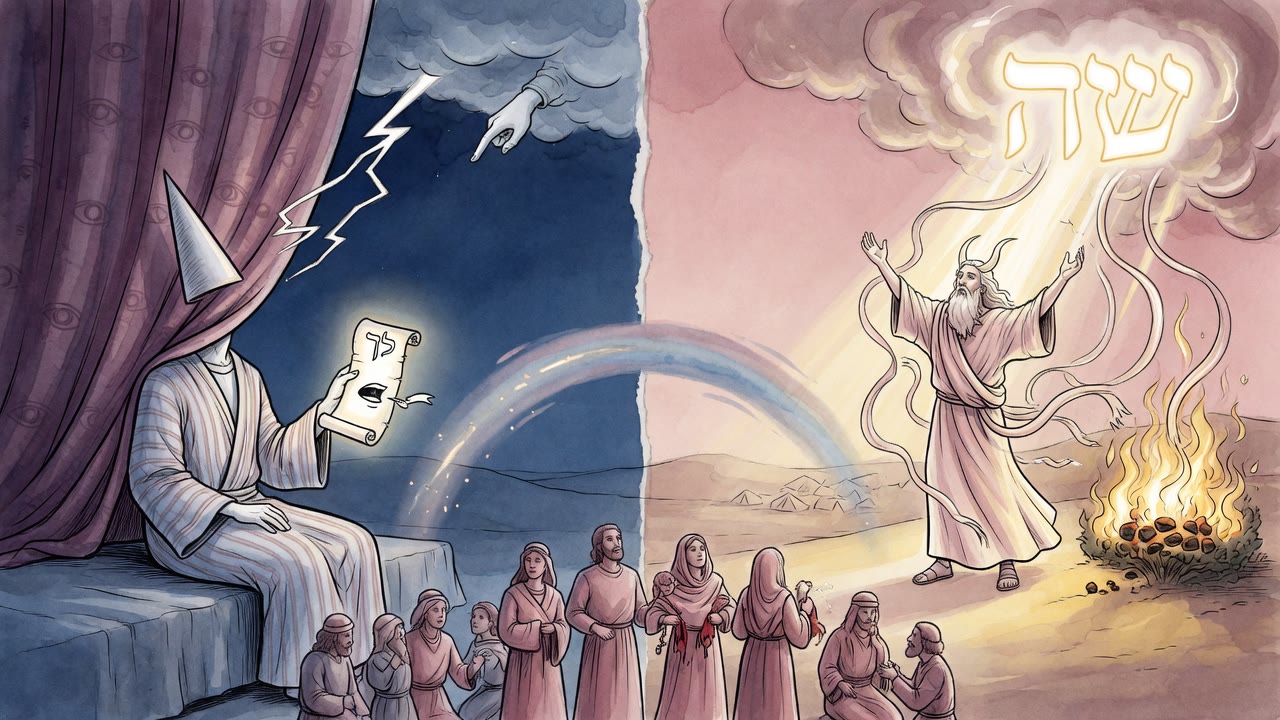
Curtain and heat of day
Rabbi Ḥama bar Ḥanina hears incomplete speech in that verb. Rabbi Yisakhar of Kefar Mandi hears impurity's shadow, the nocturnal mishap word sharing its root. Prophets of Israel receive vayikra, a calling that matches the angels' holy thrice-said cry. Rabbi Yosei adds time: to the nations God appears at night, when people are separated from one another. To Abraham the Lord appeared at the tent entrance in the heat of day. To Moses the speech lands on a day that can be dated.
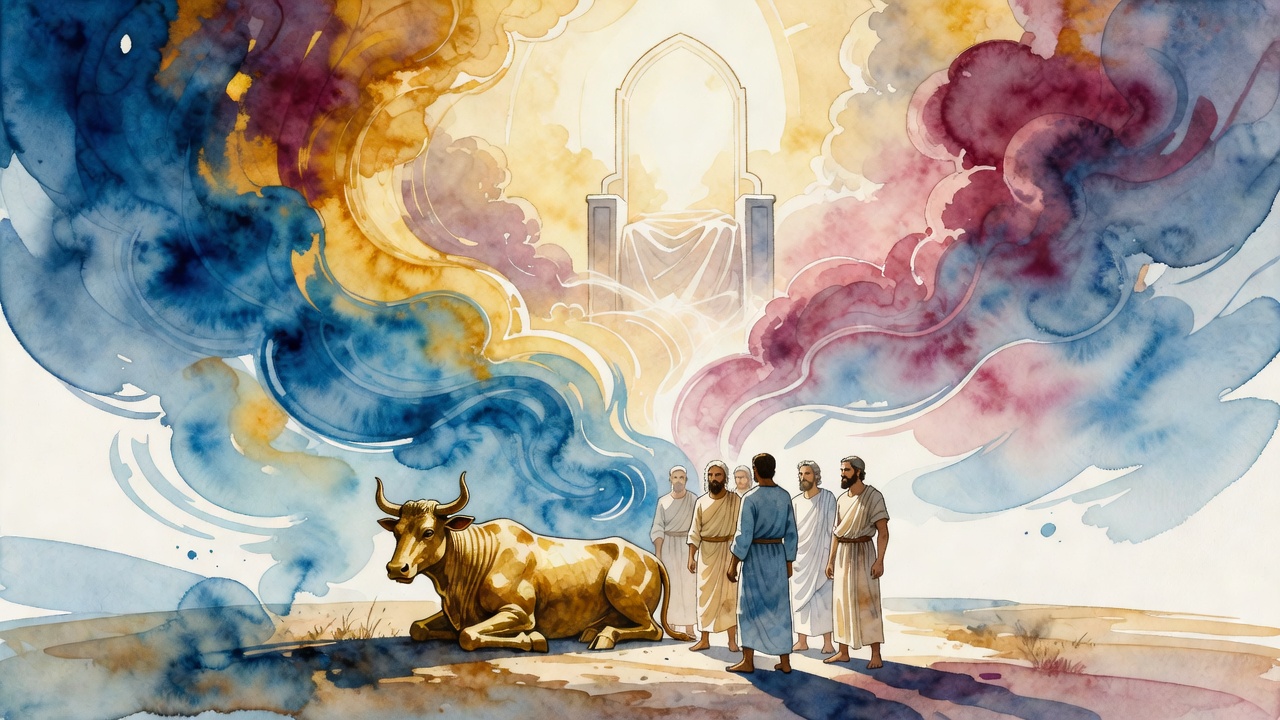
A king speaks to a stranger through a curtain and leaves the cloth hanging. With a friend he folds the fabric and meets the face. Another image: public visits for the wife, secret approaches for the lesser bond. The midrash is not coy. Clarity tracks covenant. Distance tracks a mouth hired against Israel.
Avimelekh, Laban, Bilam: dreams and midnights. Moses: called. The channel is not a prize for cleverness. It is the fruit of a people trained to listen without renting their tongue.
Shame that outlasts temporary saviors
Far from Moab, Israel speaks to God with a different complaint. "Every day that we are enslaved, we are ashamed." Redemption by human agents has come before. Moses led. Joshua led. Judges and kings rose and fell. "We are still subject to servitude, and we are ashamed as if we were never redeemed." Temporary rescue leaves a residue of humiliation, like a chain mark that never fully fades.
God answers with Isaiah's grammar of belonging. "I have redeemed you" leans into "I will redeem you." Past and future share one Speaker. "In the past your redemption was by human agents, but now it is by Me alone, for I am alive and will exist forever." That is why this salvation is called the salvation of the world, and why shame is promised an end that judges and kings could not finalize.
Two kinds of hearing
Bilam hears enough to bless when his curse is blocked, yet the word comes smuggled, as Job said of night visions, a matter slipped under the door. Moses hears mouth to mouth when the Presence is near. Israel in exile hears its own shame and asks for a rescue that does not require another mortal hero who will die and leave them waiting again.
The curtain image cuts both ways. A people can live as if God only happens to them in the dark, in crisis, in panic. Or they can stand in the heat of day, at the tent door, trained for a call that uses their full name. Bilam's truncated verb is a warning about rented prophecy. Moses' open call is a map of intimacy earned by carrying a people, not a fee.
When strength for shame runs out
There is a coda that stings. "When you were young, you had the strength to be ashamed, but now that you are old and do not have the strength, you shall not be ashamed or disgraced." Exhaustion itself becomes part of the plea. David understands the line from the psalm: in You I take refuge; let me never be put to shame. Refuge is not a night bargain on a Moabite ridge. It is the long wager that the One who called Moses still folds the curtain for Israel.
Bilam goes home with a mouth that failed to curse. Moses' call still structures how Israel tells the difference between a word that brushes past and a word that claims. Shame ends when redemption stops being outsourced to temporary arms.
Hired speech and carried people
Balak's silver could buy Bilam's travel. It could not buy the full call. The donkey saw what the prophet refused, and the night word that finally came was still a happening, not a friendship. Moses carried a stiff-necked people through thirst and complaint and still was called by name in the day. The contrast is almost unfair, and the midrash lets it be unfair. Covenant is not a neutral radio frequency.
Israel's shame in later ages is the long echo of incomplete rescues. A judge dies. A king fails. The chain mark remains. That is why the promise must be spoken by the One who does not die. Human agents remain precious; they are not final. Bilam's truncated encounter is the opposite lesson: even a true word forced through a wrong mouth arrives thinned. Moses' call is thick because the relationship is thick.
Stand between Moab's night and Sinai's day and choose how you listen. Panic and hire produce clipped verbs. Patience and covenant produce a calling you can date. The psalm's plea against shame is the voice of a people tired of partial dawn. They want the curtain folded, not forever twitched by strangers in the dark.
← All myths