Parshat Vayera5 min read

Three Angels Ate Bread Under Abraham's Tree

Three unborn guests ate with Abraham. Later blessings cast Israel's seed like angels, while God alone lights dark and clothes the bare.

Curated by Arthur · Told by Maggid ·
Table of Contents
  1. Riddles at the Edge of Story
  2. Seed Like the Angels of Presence
  3. Who in the Skies Compares
  4. Fire That Saves and Fire That Ends
  5. Bread, Blessing, Light

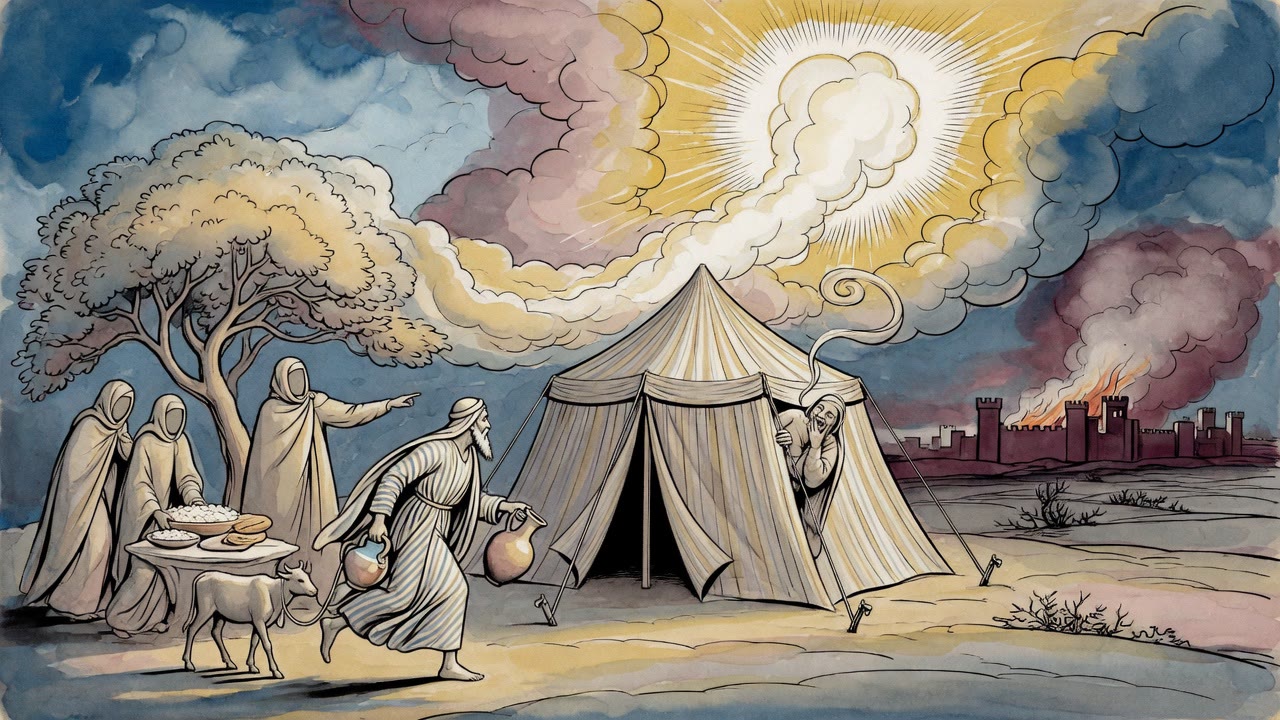
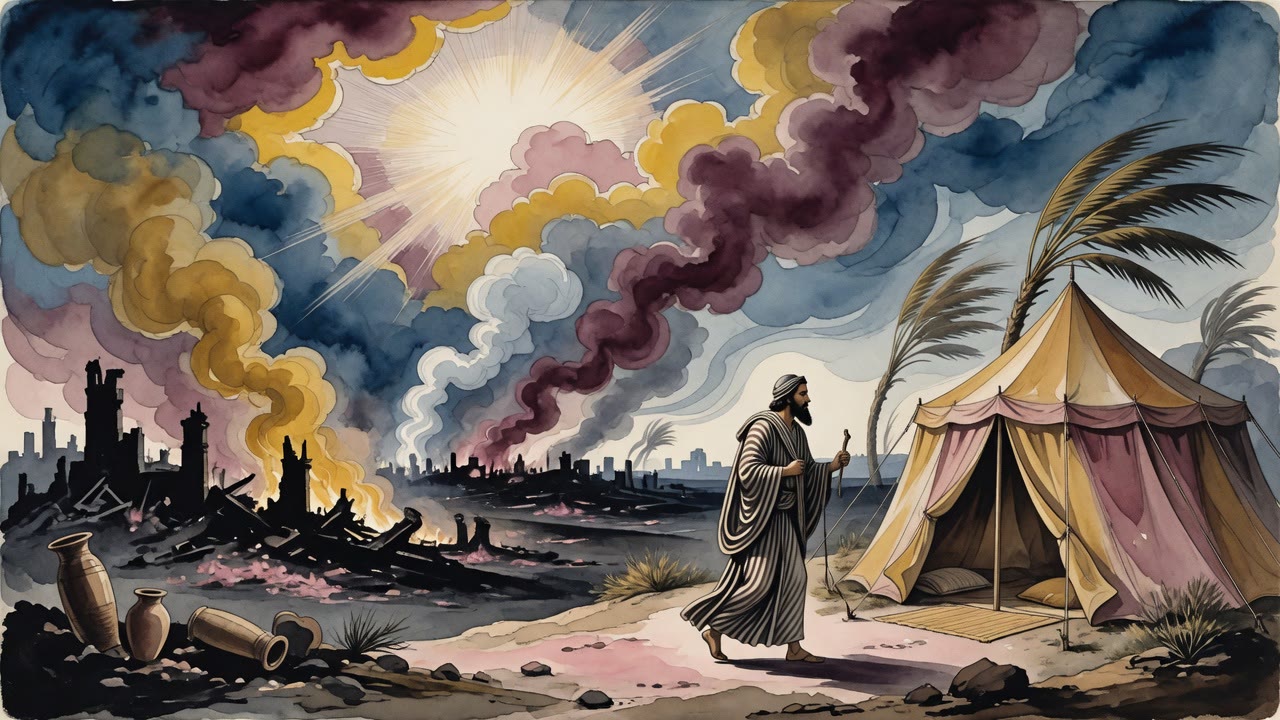
The three strangers sat in the shade and took bread into mouths that had never been born. Abraham ran. Sarah laughed behind the tent wall. The heat of Mamre pressed the afternoon flat, and still the guests ate as if hunger could visit heaven's messengers.
Three Angels Ate Bread Under Abraham's Tree Click for full size

Riddles at the Edge of Story

Later generations turned the scene into a riddle. Who were the three that ate and drank on earth and yet were not born of male and female? The three angels who visited Abraham. The answer is not a trick. It is a claim that divine will can wear human appetite long enough to keep a covenant promise moving.

Other riddles travel in the same pack. Four entered a place of death and came out alive: Daniel's companions from the furnace. Two entered a place of life and came out dead: Nadab and Abihu before strange fire. Who was born and did not die? Elijah, and the Messiah in the hope that refuses his grave. What was not born, yet life was given to it? The golden calf, dead metal fed living worship. A wick, another answer says, rises from the ground, is shaped by human hands, and eats the fruit of the ground as oil.

Each riddle is a small door. Abraham's door is the first and the warmest.

Seed Like the Angels of Presence

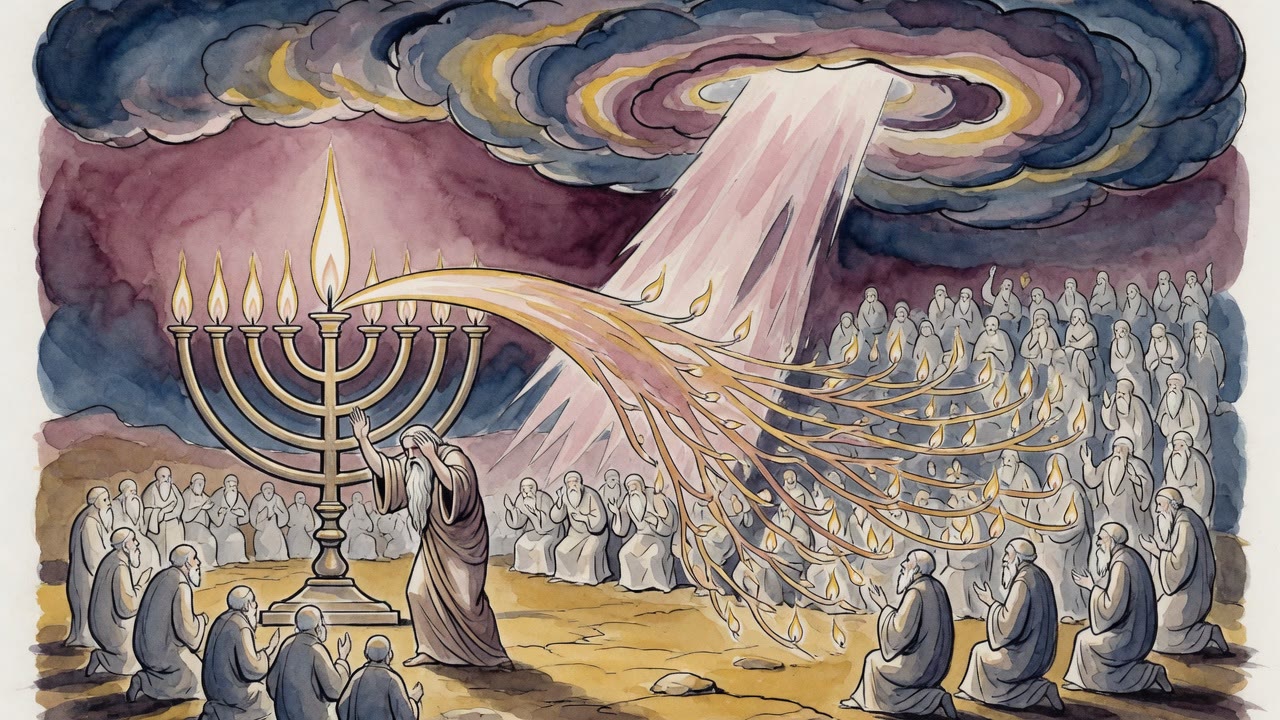
Jubilees sets a blessing over the line that will come from such tables. May the God of all, Lord of all the ages, bless you and your children through all the ages. May He give greatness and glory, and cause you and your seed to approach Him to serve in His sanctuary. Then the language climbs. As the angels of the presence and as the holy ones, so shall the seed of your sons be for glory and greatness and holiness. They will be princes and judges and chiefs among the sons of Jacob.

The blessing does not make humans into wings. It sets a trajectory: nearness, service, holiness that can be compared to the court above without erasing the difference. Abraham's guests ate bread. Abraham's children are told they may stand near the same Presence those guests serve.

Who in the Skies Compares

Psalm and midrash refuse to let the comparison run wild. Who in the skies can be compared to the Lord? Rabbi Avin the Levite turns the Hebrew root three ways. Compare. Set the lamps in order. Array a garment. Who lights the eyes of those who sit in darkness? Who clothes the naked and arranges covering for every bare body?

Angels ate under a tree. God alone, the midrash insists, is the lamplighter of heaven and the clothier of the shivering. Hospitality is Abraham's glory. Sovereignty remains undivided.

Fire That Saves and Fire That Ends

The riddle of the furnace and the strange fire keeps the meal from becoming soft. Nearness to holiness is not safety by itself. Intention matters. Daniel's friends walk out of death. Aaron's sons fall inside the sacred place. Abraham's angels leave behind a promise of a son and a warning about Sodom. The same heaven that can sit at a table can open a mouth in the earth elsewhere.

Blessing language in Jubilees wants seed like holy ones. The psalm still asks who compares to the Lord. Both can be true if the comparison is service and glory, not equality of essence.

Bread, Blessing, Light

Under the tree the bread broke. Across ages the blessing ran. In the midrash the lamps of heaven and the garments of the poor both answer to the same Name. Abraham ran because guests were waiting. Later teachers ran after riddles because memory wants handles. A child at a seder still leaves a cup for Elijah, the one who was born and, in the riddle's hope, did not die.

Three unborn eaters. A people told to approach like angels. A God no sky-being matches when light and clothing are the measure. The stories keep the table set and the throne unshared.

Sarah's laugh still hangs in the tent cloth while the men outside finish the meal. Promise and doubt share the same afternoon. The angels do not scold the laugh off the record. They revise it into a future birth announcement. Hospitality has already done its work: water, shade, bread, and the willingness to run when guests appear in the heat.

The riddle tradition keeps returning to edges of life and death because Abraham's table is an edge too. Heaven sits down. Earth feeds it. The difference between that meal and the golden calf is the direction of the gift. One is God receiving hospitality on the way to a promise. The other is Israel feeding a made thing and calling the feeding worship. The wick riddle, humble and domestic, sits nearby as a reminder that even ordinary fire depends on ground, hand, and oil in honest relation.

Jubilees' long blessing wants descendants who approach like holy ones without forgetting who lights the lamps. Rabbi Avin's triple reading of comparison keeps the throne from being auctioned to the sky-court. Abraham's seed may serve in glory. Only the Lord arrays light and clothing as the final measure of who has no peer among the heights.


← All myths
From the tradition

Sources

3 sources

The texts behind this telling. Some cards carry a translation of the source; others are our own retelling of it, and each card says which. Every card links out to the original.

Legends of the Jews 5:75Legends of the Jews

Retold in our words. Read the original at the link below.The Legends of the Jews by Louis Ginzberg (1909) · Public Domain

They loved a good riddle, a clever paradox, and a chance to explore the hidden depths of Jewish thought. to a few of these ancient brain-teasers, culled from the tradition of Jewish legend. These aren't just trivia questions; they're gateways to deeper understanding.

Okay, first up: "Who were the three that ate and drank on the earth, and yet were not born of male and female?"

Give up?

The answer: "The three angels who visited Abraham." These weren't ordinary guests. They were divine messengers, appearing in human form, sharing a meal with Abraham, as recounted in Genesis 18. The midrash – the rabbinic tradition of interpreting scripture – loves to highlight the miraculous nature of these encounters. These angels weren't "born" in the conventional sense; they were manifestations of God's will.

Next riddle: "Four entered a place of death and came forth alive, and two entered a place of life and came forth dead?" This one requires a bit of Biblical knowledge.

The answer: "The four were Daniel, Hananiah, Mishael, and Azariah, and the two were Nadab and Abihu." The "place of death" refers to the fiery furnace that Daniel's companions, Hananiah, Mishael, and Azariah (also known as Shadrach, Meshach, and Abednego), were thrown into for refusing to worship a golden idol (Daniel 3). They emerged unscathed, protected by divine intervention. Nadab and Abihu, on the other hand, were sons of Aaron who offered "strange fire" before the Lord (Leviticus 10) and were consumed by fire. They entered the sacred space of the Mishkan, the Tabernacle, but their actions led to their demise. It’s a powerful reminder that even proximity to holiness doesn't guarantee safety; intention and proper conduct matter.

Ready for another? "Who was he that was born and died not?"

This one's a classic.

The answer is: "Elijah and the Messiah." Elijah, of course, famously ascended to heaven in a chariot of fire (2 Kings 2). The Messiah, according to Jewish tradition, will usher in an era of peace and redemption and, in some interpretations, will not experience death. The idea that Elijah didn't die is huge in Jewish thought; we even leave a seat for him at the Passover Seder!

How about this: "What was that which was not born, yet life was given to it?"

Tricky. The answer: "The golden calf." As the Book of Exodus tells us, the Israelites, impatient for Moses' return from Mount Sinai, fashioned a golden calf to worship (Exodus 32). It was an inanimate object, created by human hands, yet the people attributed life and power to it. This answer highlights the dangers of idolatry and the human tendency to imbue objects with false significance.

One last riddle: "What is that which is produced from the ground, yet man produces it, while its food is the fruit of the ground?"

This is a bit more down-to-earth.

The answer: "A wick.": a wick is made from cotton or flax (produced from the ground), it's crafted by human hands, and it's fueled by oil (which comes from olives or other "fruit of the ground"). It’s a simple, everyday object that embodies a connection to the earth and human ingenuity.

What do these riddles tell us? They're more than just clever wordplay. They are a glimpse into the way our ancestors thought about the world, about God, and about our place in the grand scheme of things. They remind us to look beyond the surface, to question assumptions, and to seek deeper meaning in the everyday.

Full source
Book of Jubilees 31:21Book of Jubilees

Retold in our words. Read the original at the link below.Sefaria Community Translation · CC-BY

Book of Jubilees turns to May God Bless You Through All the Ages.

It begins with an invocation, a heartfelt plea: "May the God of all, the very Lord of all the ages, bless thee and thy children throughout all the ages." It's not just a blessing for the present, but a legacy of blessing extending through all time. It paints a picture of divine favor that resonates across lifetimes.

What does this blessing entail? "May the Lord give to thee and to thy seed greatness and great glory, and cause thee and thy seed, from among all flesh, to approach Him to serve in His sanctuary."

The idea here is elevation – not just in worldly terms, but in spiritual standing. To be brought closer to God, to serve in His sanctuary…it speaks to a profound intimacy and purpose. It's a call to sacred service, a life dedicated to something higher.

But it doesn't stop there. The blessing goes on to draw a powerful parallel: "as the angels of the presence and as the holy ones. (Even) as they, will the seed of thy sons be for glory and greatness and holiness, and may He make them great unto all the ages."

The descendants, the "seed," are envisioned as mirroring the angels, the malakhim, those celestial beings in God's presence. It's a staggering image of holiness, greatness, and glory passed down through generations. This isn't just about power or prestige; it's about embodying holiness.

And finally, the blessing culminates in a vision of leadership and justice: "And they will be princes and judges, and chiefs of all the seed of the sons of Jacob." The descendants are destined to be leaders, guiding and judging the people of Jacob.

What's so striking about this passage is its vision of intergenerational impact. It’s not just about individual blessing, but the ripple effect it has on future generations. It asks us to consider: what kind of legacy are we building? What blessings – and what responsibilities – are we passing on to those who come after us?

Full source
Midrash Tanchuma Buber, Bechukotai 6:2Midrash Tanchuma Buber, Bechukotai

Translation of the source text.Midrash Tanchuma (Buber), Public Domain, on Sefaria · CC-BY-SA

Another interpretation of "For who in the skies can be compared (yaʿarokh) to the Lord" (Psalms 89:7): Rabbi Avin the Levite, son of Rabbi, said: Who is like You, who lights up the eyes of those who sit in darkness?, as in the matter that is said, "He shall set in order (yaʿarokh) the lamps upon the pure lampstand" (Leviticus 24:4). Thus, "For who in the skies can be compared (yaʿarokh) to the Lord."

Rabbi Avin said: Who is like You, who clothes the naked?, as it is said, "And an array (ʿerekh) of garments and your sustenance" (Judges 17:10). Thus, "For who in the skies can be compared (yaʿarokh) to the Lord."

Full source