Retold in our words. Read the original at the link below.The Minor Tractates of the Talmud, trans. A. Cohen, Soncino Press (1965) · CC-BY
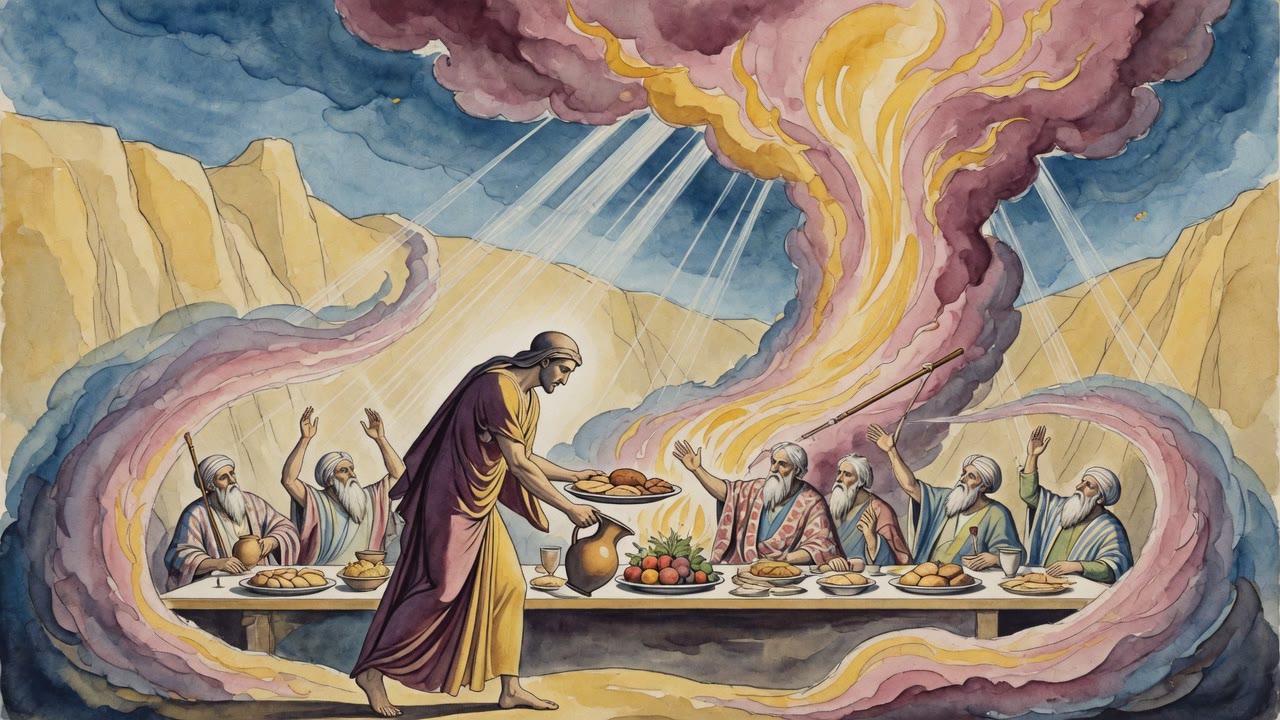
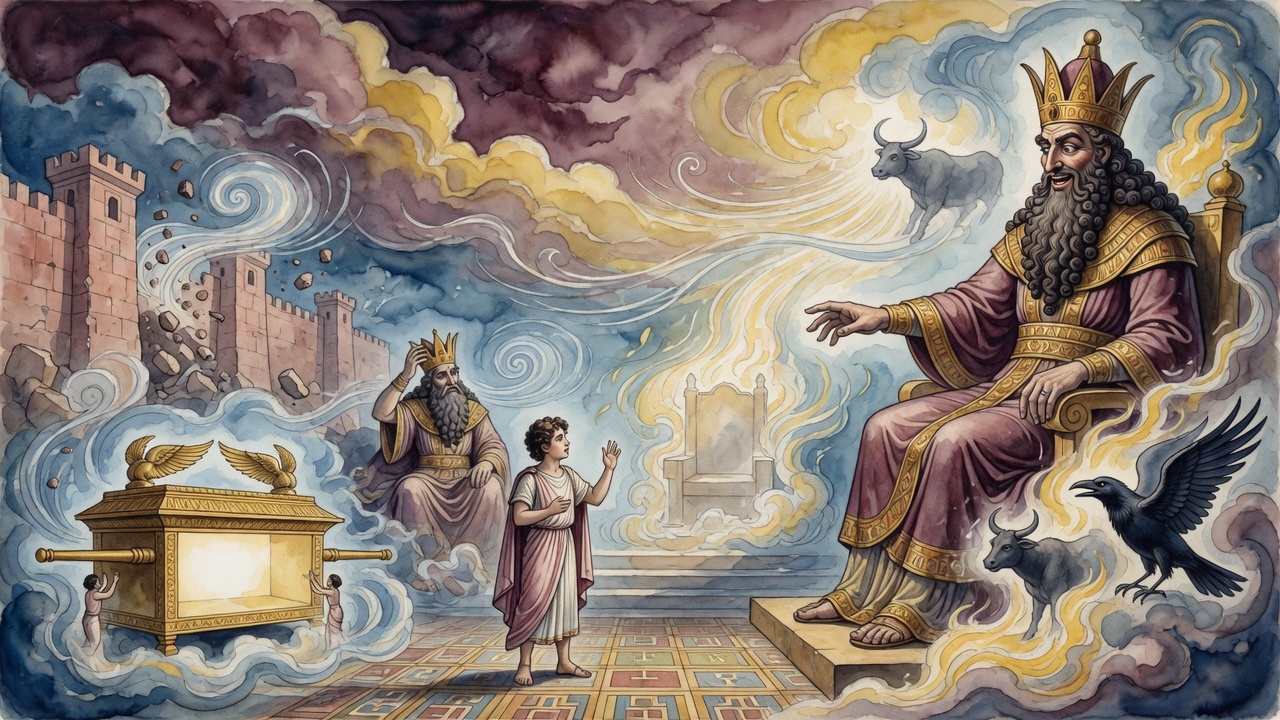
Ben ‘Azzai said: He whose mind is at ease because of his learning,1The knowledge which he acquired did not make him overbearing, but confirms him in his faith and helps him to live the good life. Cf. Tosif. Ber. III, 5. it is a good omen for him; and he whose mind is ill at ease because of his learning, it is a bad omen for him. He whose mind is at ease with his inclination,2i.e. his desires are not in constant conflict within him. A variant reading has ‘his Creator’ for ‘his inclination’. it is a good omen for him; and he whose mind is ill at ease with his inclination, it is a bad omen for him. Whoever holds the good opinion of the Sages at the hour of his death, it is a good omen for him; but whoever does not hold the good opinion of the Sages, it is a bad omen for him. Whoever [dies] with his face directed upwards3Indicating that he is prepared to meet his Maker with a clear conscience. Cf. on this passage, Keth. 103b (Sonc. ed. p. 661). it is a good omen; if it is turned downwards it is a bad omen. If his eyes look straight towards the people [about him] it is a good omen; if they do not look towards the people [about him] it is a bad omen. Whoever [dies] with a cheerful countenance it is a good omen; if with a frowning countenance it is a bad omen.When Rabban Joḥanan b. Zakkai was about to depart from this world,4Cf. Ber. 28b (Sonc. ed. p. 173). he wept aloud. His disciples said to him, ‘Master! Exalted pillar! Light of the world! Mighty hammer! Why do you weep?’ He replied, ‘Is it into the presence of a human king that I am going? If he be angry with me his anger endures only in this world; if he imprison me the imprisonment endures only in this world; and if he kill me my death is only in this world. Him I can appease with words and bribe with money. Behold, I am going into the Presence of the King of kings, the Holy One, blessed be He. If He be angry with me His anger endures in this world and in the world to come; and Him I cannot appease with words or bribe with money. Before me lie two ways, one leading to the Garden of Eden and the other to Gehinnom, and I know not whether I will be condemned to Gehinnom or conducted to the Garden of Eden; and concerning this5The day of his death. Scripture declares, All they that go down to the dust shall kneel before Him.6Ps. 22, 30. This verse is interpreted in Midrash Rabbah, Numbers, XIV, 22 (Sonc. ed. p. 640), as indicating that at death all are led into the Presence of God. Of Moses Scripture states, And he expired, and died, and was gathered to his people.7This verse is not found of Moses, but only of Abraham (Gen. 25, 8) and Isaac (ibid. XXXV, 29). The text is in disorder, and the verses which follow have but a slender connection with the theme of the passage (cf. GRA and Schechter’s notes ad loc.). The verse in the text suggests that the righteous are ‘gathered’ to God and are shown the reward which has been stored up for them. Cf. Midrash Rabbah, Gen. 62, 2 (Sonc. ed. p. 549). And it further states, And I will take away My hand.8Ex. 33, 23. This verse also suggests that at the hour of death God ‘takes away His hand’ and reveals their reward to the righteous. It also states, And He spread it before me, and it was written on its face and on its back9Ezek. 2, 10, E.V. written within and without. The scroll which was spread before the prophet apparently contained the doctrine of retribution; cf. ‘Erub. 21a (Sonc. ed. p. 147). face refers to this world and back to the world to come. According to another interpretation face refers to the suffering of the righteous on earth and the prosperity of the wicked in this world, and back to the reward of the righteous in the hereafter and the punishment of the wicked in Gehinnom. And there was written therein lamentations, and sweet music, and woe10ibid. E.V. lamentations, and moaning, and woe. lamentations [ḳinim] refers to the punishment of the wicked11In the parallel passage in ‘Erub. loc. cit. as well as in Rashi’s commentary on the verse of Ezek. lamentations refers to the sufferings of the righteous on earth. in this world, as it is stated, This is the lamentation [ḳinah] which shall be chanted; the daughters of the nations shall chant it.12ibid. XXXII, 16, E.V. lamentation wherewith they shall lament … shall lament therewith. This verse proves that the term ḳinah, the singular of ḳinim, signifies a dirge of misery and suffering. Sweet music [hegeh] refers to the reward of the righteous in the hereafter, as it is stated, With an instrument of ten strings, and with the psaltery; with sweet music [higgayon] upon the harp.13Ps. 92, 4, E.V. with a solemn sound. The words hegeh and higgayon are related in meaning, suggesting melodious song. Woe [he] refers to the punishment of the wicked in the world to come, as it is stated, Calamity [howah] shall come upon calamity, and rumour shall be upon rumour.14Ezek. 7, 26. The words הי and הוה are here brought together, each signifying ‘sorrow, woe’.[In his last utterance] he15viz. of Rabban Joḥanan b. Zakkai. said, ‘Remove all vessels from the house that they be not defiled, and prepare a throne for Hezekiah king of Judah’.16Who will accompany him into the next world. Rabban Joḥanan, like king Hezekiah, had acted zealously for the spread of Torah-study and the observance of the commandments; cf. Sanh. 94b (Sonc. ed. p. 637).
He used to say: He who dies in a tranquil frame of mind it is a good omen for him;17Because he is able to put his affairs in order with calmness and deliberation. if in a state of delirium it is a bad omen for him. [If he dies] while speaking it is a good omen; if while silent it is a bad omen. If while conversing about the Torah it is a good omen, about business affairs it is a bad omen; if while engaged upon a religious act it is a good omen, upon a worthless pursuit it is a bad omen. [If he dies] in the midst of a joyous atmosphere it is a good omen, amidst sadness it is a bad omen; [if he dies] smiling it is a good omen, if weeping it is a bad omen. Should a man die on the Sabbath-eve it is a good omen,18He will enter immediately into rest. if at the termination of the Sabbath it is a bad omen. If he dies on the eve of the Day of Atonement it is a bad omen,19He dies with his sins unexpiated. if at the termination of the Day of Atonement it is a good omen.
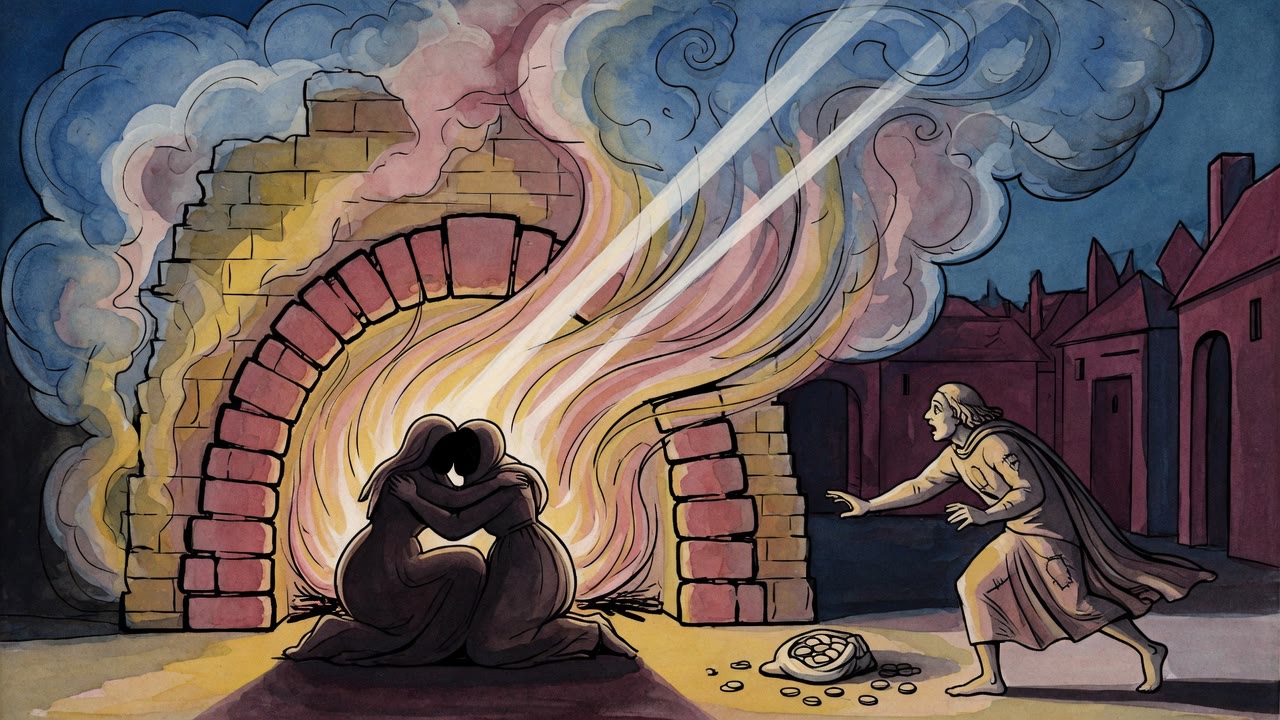
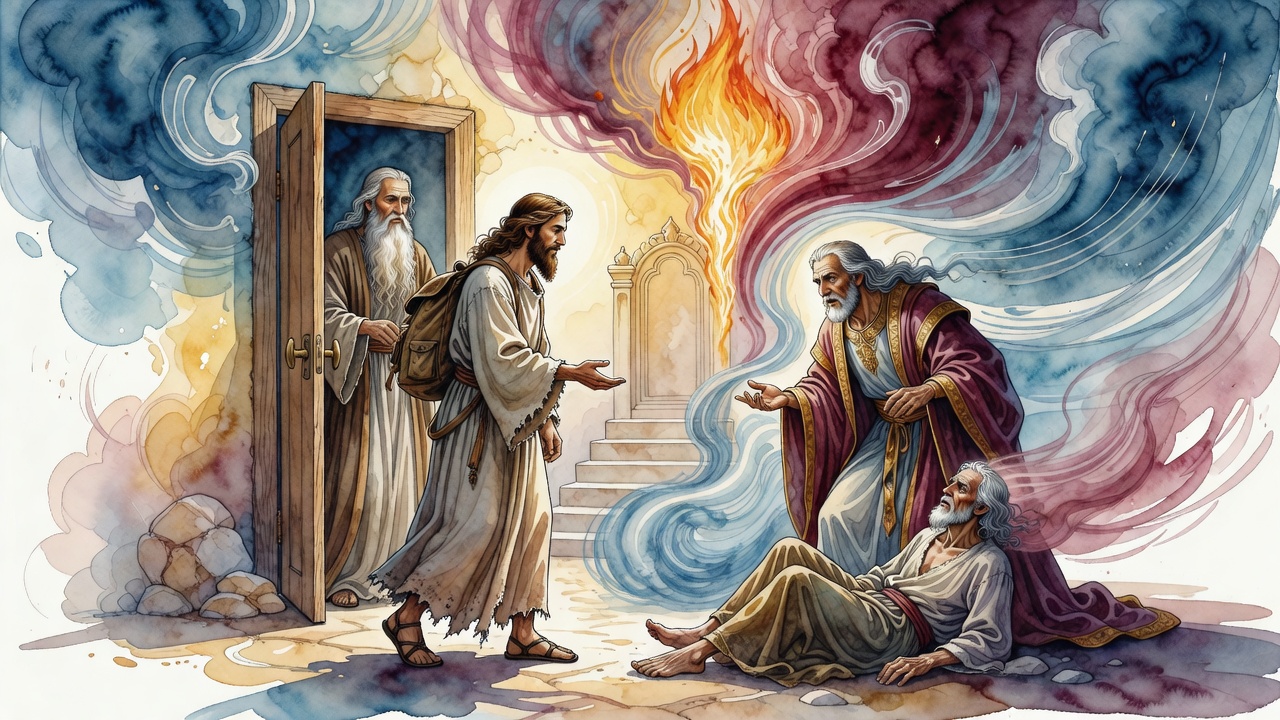
The day when R. Eliezer fell ill was, according to tradition, the Sabbath-eve. R. ‘Aḳiba and his colleagues came to visit him, and he was sitting in his canopied four-poster20So according to a variant reading and the parallel passage in Sanh. 68a (Sonc. ed. p. 461). V. reads: ‘he was sleeping in his room’. while they waited in an anteroom. His son Hyrḳanos went in to remove his father’s tefillin (leather phylacteries worn during prayer),21Which are not worn on the Sabbath. but he would not allow him to do so. Hyrḳanos came out weeping and said to the Sages, ‘My masters, it seems that my father’s mind is deranged’. [Thereupon R. Eliezer] called out, ‘My son, it is not my mind that is deranged but yours, because you put off kindling the Sabbath lamp for which you incur the penalty of death at the hand22To light the Sabbath lamp after the Sabbath had begun constitutes a profanation of the holy day involving the death penalty. of Heaven and occupied yourself with the tefillin for which you incur only the penalty of transgressing a Rabbinic precept concerning the Sabbath rest’.23Wearing the tefillin on the Sabbath is comparable to the wearing of an adornment, which is forbidden only by Rabbinic law. When the Sages perceived that his mind was clear, they entered, sat at a distance of four cubits away from him,24R. Eliezer had been placed under the ban of excommunication (cf. B.M. 59b, Sonc. ed. p. 353) and all intercourse with him by his colleagues was carried out at a distance of four cubits. and enquired of him, ‘Master, if a round cushion, a ball, a shoe-last, an amulet or a phylactery were torn, can they contract uncleanness?’25On the questions and the ritualistic principles involved, cf. above XIX, 4 (p. 108, n. 6). He replied, ‘They can, and [if they are unclean] they may be immersed as they are. Be careful about these laws, because they are important laws which were communicated to Moses at Sinai’. They continued to question him on matters concerning cleanness and uncleanness and the regulations of ritual immersion. They said to him, ‘Master, what is the law in this case?’ and he answered, ‘It is unclean’. ‘And what is the law in that case?’ and he answered, ‘It is clean’. Throughout he pronounced the unclean to be unclean and the clean to be clean. After that R. Eliezer said to the Sages, ‘I am concerned about the disciples of the present generation lest they be punished with death at the hand of Heaven’. They asked him, ‘Master, what is the reason?’ He replied, ‘Because they did not come and attend upon me’.26On account of the ban imposed upon him, the scholars had not sought his instruction. He then said to ‘Aḳiba b. Joseph, ‘ ‘Aḳiba, why did you not come and attend upon me?’ He replied, ‘Master, I had no leisure’. He retorted, ‘I wonder whether you will die a natural death’. Some say that R. Eliezer did not make that rejoinder, but as R. Eliezer spoke to his disciples in this manner, R. ‘Aḳiba at once felt his blood melt within him and exclaimed, ‘Master, what will my death be?’ and he replied, ‘Yours will be the most cruel of all’.R. ‘Aḳiba then approached, sat down before him and said, ‘Master teach me now’. He began and taught him three hundred halakoth on the subject of ‘the bright spot’.27A symptom, as well as a type, of leprosy; cf. Lev. 13. At that time R. Eliezer raised his two arms and, laying them upon his breast, exclaimed, ‘Alas for these two arms of mine, [the equal of] two scrolls of the Torah, which must leave this world! For though all the seas were ink, all reeds quills and all men scribes, they could not set down all the Scripture which I read, all the Mishnah (the earliest code of rabbinic law) which I studied, and all that I had gained by attending upon the scholars at their sessions. And I took from my teachers no more than a man takes of the sea when he dips his finger in it; and my disciples took no more from me than a paint-stick takes of the paint in the tube.28The text is evidently faulty and the translation follows the emendation of GRA which accords with the parallel passage in Sanh. 68a (Sonc. ed. p. 462). V is lit. ‘I withheld not of all that my eyes desired only to the extent of a man dipping his finger in the sea, and I no more lost of my learning than a paint-stick removes paint from a tube’. I can recite three hundred (another version: three thousand) halakoth on the prohibition, Thou shalt not suffer a sorceress to live,29Ex. 22, 17. yet no one ever questioned me about them except ‘Aḳiba b. Joseph. For on one occasion he said to me, “Master, teach me how cucumbers are planted”30The reference to the planting and uprooting of cucumbers has a magical connotation; cf. Sanh. loc. cit. V adds in brackets, ‘and how they are uprooted’. So I pronounced a word and the entire field [about us] was filled with cucumbers. He then said to me, “You have taught me how they are planted, now teach me how to uproot them”. I again pronounced a word and all the cucumbers were gathered in one place’.R. Eleazar b. Azariah enquired of him, ‘Master, what is the law if the shoe is still on the shoemaker’s last?’31Since the shoe is still on the last, it could be regarded as unfinished, and consequently should not contract defilement. He answered, ‘It is clean’. He made reply [to many questions] declaring the unclean to be unclean and the clean to be clean until with the word ‘clean’ [on his lips] his soul departed. At once R. Eleazar b. Azariah rent his clothes and wept. He went out to the Sages and said, ‘Come, my masters, and behold R. Eliezer who is clean for the world to come, because his soul departed with the word “clean” [upon his lips]’. After the Sabbath, R. ‘Aḳiba set out and encountered [his master’s] bier as it proceeded from Caesarea to Lydda. Forthwith he rent his garments and plucked his hair, and [beat his breast until] his blood flowed to the ground. He wept and cried, ‘Woe is me! I grieve for you, my master! Woe is me! I mourn for you, my teacher who left his whole generation orphaned!’ As they stood in a row32Which was formed around the bier. he began his funeral oration and said, ‘My father, my father, the chariots of Israel and the horsemen thereof.332 Kings 2, 12. I have many coins, but there is no money-changer to exchange them’.34Many difficult questions of law will now be left unanswered because none but R. Eliezer, with his vast accumulation of traditional rulings, could have solved them. [27b]
BEN ‘AZZAI SAID: RUN TO FULFIL EVEN A LIGHT PRECEPT.35[This passage is discussed in Büchler, Studies in Sin and Atonement, pp. 311f.] He used to say: If you have performed a precept and have no regrets with regard to it, it will in the end draw many precepts in its train. And if one has committed a transgression and has no regrets about it, it will in the end draw many transgressions in its train; FOR ONE PRECEPT LEADS TO ANOTHER PRECEPT, AND ONE TRANSGRESSION TO ANOTHER TRANSGRESSION; FOR THE REWARD OF A PRECEPT IS ANOTHER PRECEPT, AND THE REWARD OF A TRANSGRESSION IS ANOTHER TRANSGRESSION.He used to say: Desist36From committing a transgression (Emden). Alternatively: ‘Allocate charity of your own accord’ (B.Y.), or ‘Keep silent of your own accord and wait not for others to silence you’ (Meiri). of your own accord and you will reap the reward for desisting; but let not others make you desist, because they will then reap the reward for making you desist.He used to say: Step down from your place two or three degrees and sit there, because it is better for you to be told to ascend than to be told to descend; as it is stated, For better is it that it be said unto thee: Come up hither, than that thou shouldest be put lower in the presence of the prince, whom thine eyes have seen.37Prov. 25, 7.
There are three whose life is not worth living, and they are: He who must look to the table of another [for sustenance], he who lives in an attic, and whoever is dominated by his wife. Others add: he whose body is afflicted with sufferings.38Cf. Beẓah 32b (Sonc. ed. p. 165). [Cf. also Bacher, Ag. d. Tannaiten, I, p. 414, n. 4.]He used to say: It is easier to rule over the whole world than to sit and teach39Or, ‘to study in the presence of’. people who are wrapped in linen robes.40A term for hypocrites, who wrap themselves in a mantle of piety but inwardly are of evil mind. Cf. Midrash Tehillim on XVIII, 44. [Buber, ad loc. defines the phrase as ‘judges’. Bacher, op. cit. n. 1, holds the meaning to be doubtful. He quotes Midrash Rabbah, Ecclesiastes, to I, 7 (Sonc. ed. p. 24) where it refers to two Sages who were humble men.]

 Click for full size