5 min read

Job's Goats Killed Wolves, and His Coins Ended Begging

Before the trials, Job's luck filled even his goats. A coin from his hand ended begging, and later towns still hunted that luck in pennies.

Curated by Arthur · Told by Maggid ·
Table of Contents
  1. Before the Ash Heap
  2. A Penny in Kraków
  3. The Debt God Forgets
  4. When Luck Breaks
  5. What Leaves the Hand
Job's Goats Killed Wolves, and His Coins Ended Begging Click for full size

Before the Ash Heap

Before the messengers came running, Job was the luckiest man the storytellers could name. Not lucky as in idle fortune. Lucky as in a house so open that blessing seemed to stick to whatever left it.

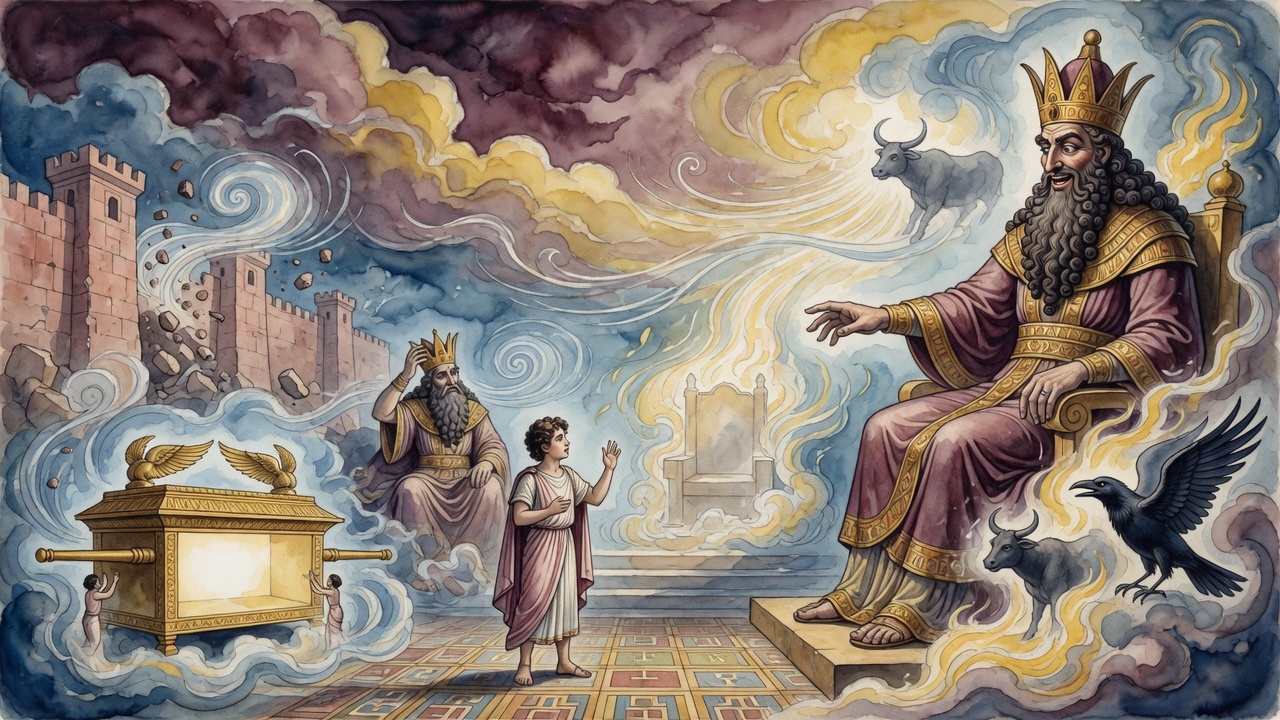
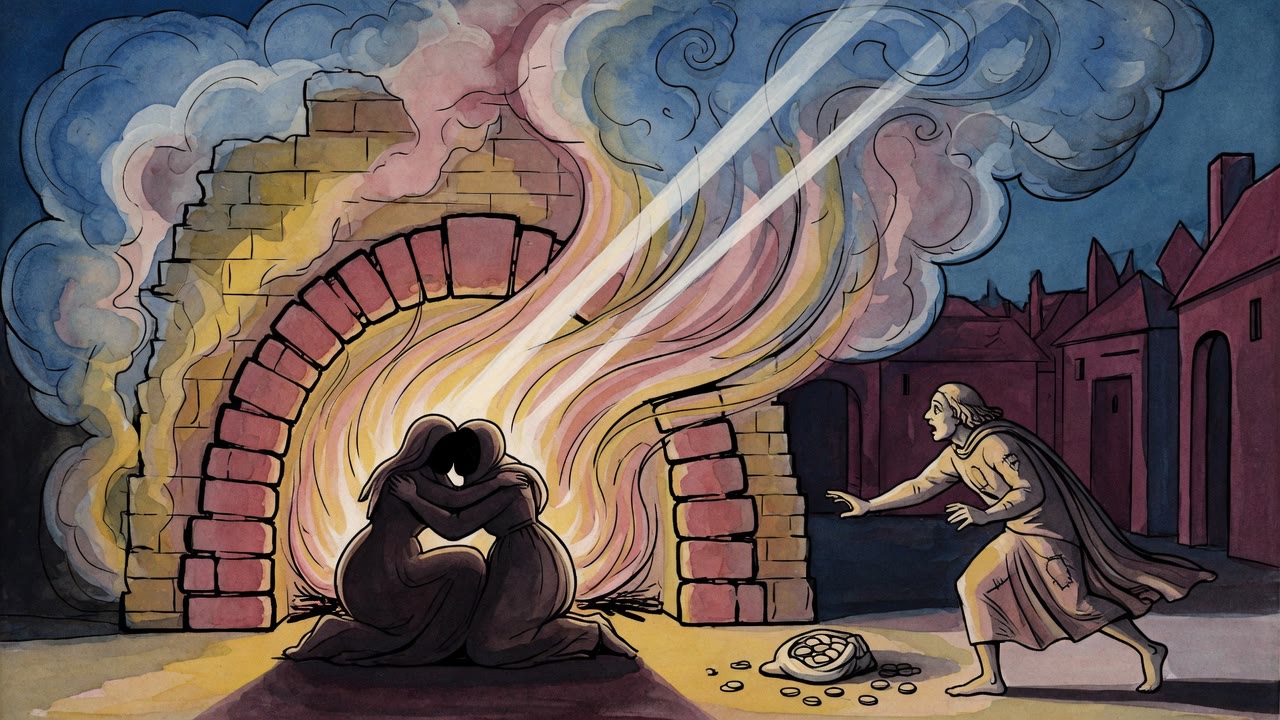
His goats, the rabbis said, were so fortunate that when wolves came down on the flock, the goats killed the wolves. The image is almost comic until you feel the fear of a night raid. Then it is a shield with hooves. Predators found prey that refused the script.

A beggar who took even a mite from Job's hand never needed to beg again. The coin carried a future. That is how the old tellers spoke of him, long before Polish towns put the same hope into a found penny.

Servants moved through his yards with the confidence of people who worked under a roof that did not close. Guests left heavier than they came. The luck was not a charm worn on a string. It was a pattern of open hands.

A Penny in Kraków

In the towns of Poland, Jewish neighbors and their Gentile neighbors both knew a small superstition: a penny found at dawn, or received as the first sale of the day, or pressed into a palm by a beggar, could carry luck beyond its metal. A farmer might spit lightly on the coin and hide it for months as a pledge.

Grandmothers who had never read Job in Hebrew still whispered that Job's luck walked the world. The wealthy patriarch's open hand had become a coin in a coat pocket. Small theologies live a long time.

A child finding copper in the mud heard a name from Uz without knowing Uz. That is how stories travel when books are scarce and winters are long. The sage's Job and the grandmother's Job shook hands over a penny.

The Debt God Forgets

Another chamber of midrash speaks of lending. "If you lend money to My people, to the poor who is with you, you shall not be as a creditor to him; you shall not impose interest upon him." The sages bind this to a cosmic ledger. Everyone owes God. God pardons. "Do not remember for us our former iniquities."

Picture a borrower who finally admits the debt, only to hear the lender say the debt was already released. That is how the Master of the Universe often treats repentance. When the wicked turns and does justice and charity, the old transgressions are not remembered against him. Ezekiel's promise sits inside Shemot Rabbah's chain: live, and the former evils will not be tallied as a permanent brand.

Job's open hand is the human mirror of that release. He gives without turning the poor into a permanent debtor. Luck, in the folk reading, is mercy that keeps moving after the gift. Interest would nail the poor to the past. Free lending and free gifts open a future.

When Luck Breaks

The Book of Job will not let the lucky man stay lucky. The ash heap is real. The friends are wrong in their neat math. But the folk memory refuses to erase the first Job, the one whose goats won and whose coins healed begging.

Both truths can sit in one tradition: a man can be righteous and crushed, and a man can also be a fountain of small rescues that outlive him in story. The penny in the pocket is not a denial of suffering. It is a stubborn claim that generosity still changes weather for someone even after the giver sits in dust.

People who only remember the trials forget why the Accuser needed permission to touch him. People who only remember the luck forget the ash. The full name of Job holds both rooms.

What Leaves the Hand

Lend without interest. Give without chaining the receiver. Forgive the way you hope to be forgiven. The midrash and the folk tale meet there. Job's name becomes a way to say that a gift can carry more than its weight, and that the poor who stand "with you" are not strangers to the ledger God keeps and then, in mercy, closes.

A wolf meets a goat that will not die quietly. A beggar meets a coin that ends the road of shame. A sinner meets a pardon that refuses to keep rehearsing the old debt. Different scales, same motion: release.

In a Polish market at first light, a seller who took a lucky first coin into a pocket was not performing a lecture on Job. He was touching an old hope with cold fingers. That the hope still carried Job's name means the open hand outlived the ash heap in folk speech, even when the full book was only half known.

Shemot Rabbah's lender who must not act as a harsh creditor stands in the same family of gestures. Debt can be real without becoming a lifelong collar. God models the release. People are asked to copy the motion in silver and grain.

When luck breaks, as it did for Job, the folk story does not throw away the earlier generosity. It treats generosity as a truth that can be attacked and still remain true. Wolves can win on some nights. Goats can still be remembered as fighters. Both nights belong to the same man.


← All myths

From the tradition

Sources

2 sources

The texts behind this telling. Some cards carry a translation of the source; others are our own retelling of it, and each card says which. Every card links out to the original.

Folk tradition (Tanna d'vei Eliyahu)Hebraic Literature (1901)

Retold in our words. Read the original at the link below.Project Gutenberg eBook #14368, Hebraic Literature · PD-US-pre-1929

Jewish folk belief about small coins ran deep in the towns of Poland. Among both Jewish and Gentile neighbors a superstition held that a penny found at the right moment, stumbled upon in the street at dawn, received as the first sale of the day, placed in your hand by a beggar, carried luck that had nothing to do with its giver. A farmer who caught a lucky coin would spit on it lightly, stow it away in a safe corner, and keep it for months as a pledge of fortune.

The tradition, as rabbinic storytellers retold it, traced the whole idea back to Job. Job, the sages said, was the luckiest man who ever lived before his trials. His very goats were so fortunate that when wolves came down on the flock, the goats killed the wolves. And a beggar who received even a mite from Job's hand never needed to beg again from anyone, the coin carried its own future in it.

So Polish Jewish grandmothers, who had never read the Book of Job in Hebrew, would pocket a stray penny and whisper that Job's luck still walked the world. Small theologies live a long time. The rabbis passed down a wealthy patriarch's open hand, and centuries later it turned up as a coin in a coat pocket in Kraków.

The reference point runs back to "Genesis According to the Talmud", a reminder that even a folk tip about spitting on a penny has a line of rabbis behind it.

Full source
Shemot Rabbah 31:1Shemot Rabbah

Retold in our words. Read the original at the link below.The Sefaria Midrash Rabbah, 2022 · CC-BY

More importantly, there's a way out.

The verse in Exodus (22:24) says, "If you lend money to My people, to the poor who is with you, you shall not be as a creditor to him; you shall not impose interest upon him.” But what does lending money have to do with our cosmic debt?

Shemot Rabbah, a collection of rabbinic interpretations on the Book of Exodus, explores this very idea. It starts by quoting Psalms (112:5): “It is good for a man to be gracious and to lend, conducting his affairs with justice.” The connection? We ALL owe a debt to God. Every single one of us. But God, being merciful and gracious, pardons our transgressions. "Do not remember for us our former iniquities," we plead in (Psalms 79:8).

Think of it like this: imagine you borrowed money from a friend and then totally forgot about it. Later, you approach your friend and say, "I know I owe you." What if your friend replied, "Why did you even bring it up? I'd already forgotten all about it!"

That, Shemot Rabbah suggests, is how the Master of the Universe often treats us. We sin. God sees that we aren’t always perfect. And yet, God absolves us, one sin at a time. When we finally do repent, when we acknowledge our debt. God essentially says, "Do not remember former matters" (Isaiah 43:18). It's already forgiven.

But the story doesn't end there. What happens when we truly turn our lives around? Can we really wipe the slate clean? Absolutely. Ezekiel (33:19) assures us: "And when the wicked one repents his wickedness, and performs justice and acts of charity, he will live; all the transgressions that he performed will not be remembered for him." Not remembered.

Shemot Rabbah then connects this idea back to the original verse about lending money. Just as God acts mercifully toward us, forgiving our debts, we too should act mercifully toward the poor. “You shall not be as a creditor to him,” Exodus commands. Don't strip them bare. Don’t make them stand naked before you. Be compassionate, just as God is compassionate. Don't take everything they have.

Because, the text suggests, if we show mercy, we will receive mercy. "It will be when he cries to Me, I will hear, as I am gracious" (Exodus 22:26). David echoes this sentiment in Psalms: “They cry out and the Lord hears them” (Psalms 34:18).

So, what’s the takeaway? We all carry a debt. But through repentance, through acts of kindness, and through emulating God’s own merciful nature, we can find absolution. We can transform our past transgressions into future merits. We can live a life not defined by our debts, but by our capacity for compassion. And isn't that a comforting thought?

Full source