Elijah Caught Rav Kahana Falling From the Roof
The noblewoman wanted more than baskets. Rav Kahana asked for a moment to prepare himself, then climbed the stairs she had not meant him to use.
Table of Contents
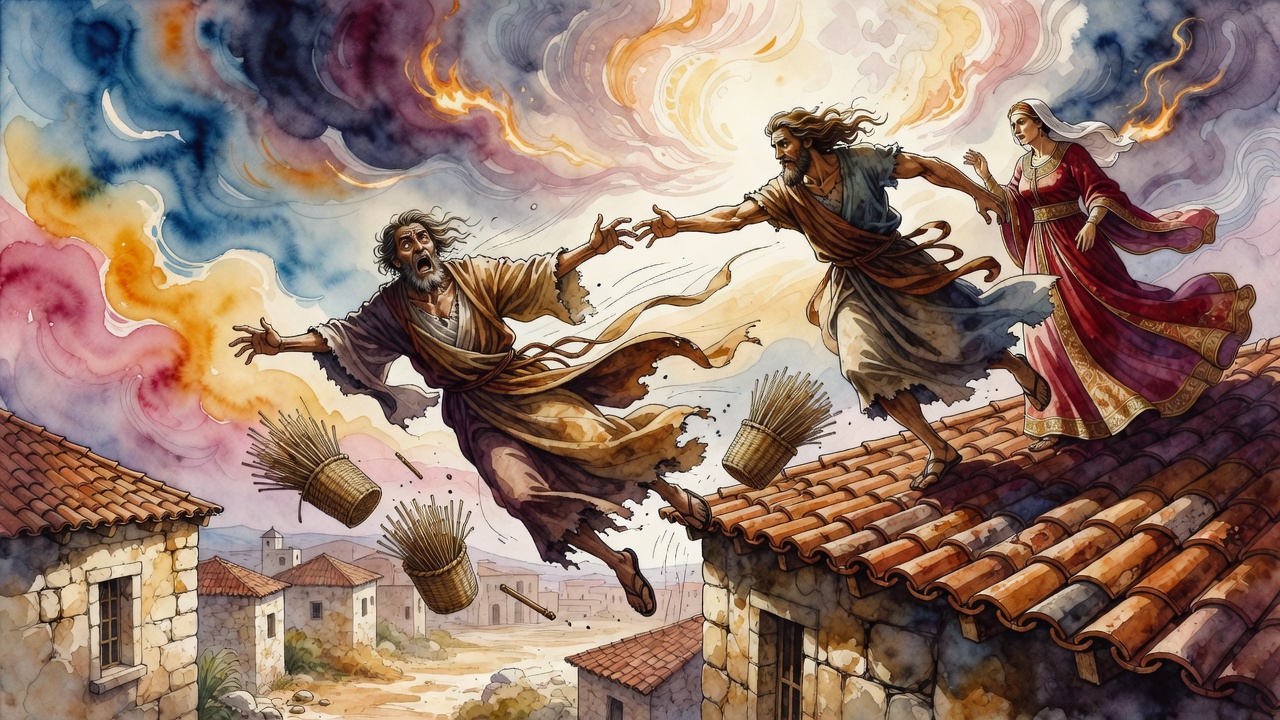
Rav Kahana carried his livelihood on his arm. Reed baskets, the kind women bought for bread and wool, swung from his elbow as he went door to door through the lanes of Babylonia. He was a scholar. He could untangle a knotted page of law. Law did not feed him. The man who knew the tractates walked the streets like any peddler, calling his wares at thresholds where servants barely looked up.
 Click for full size
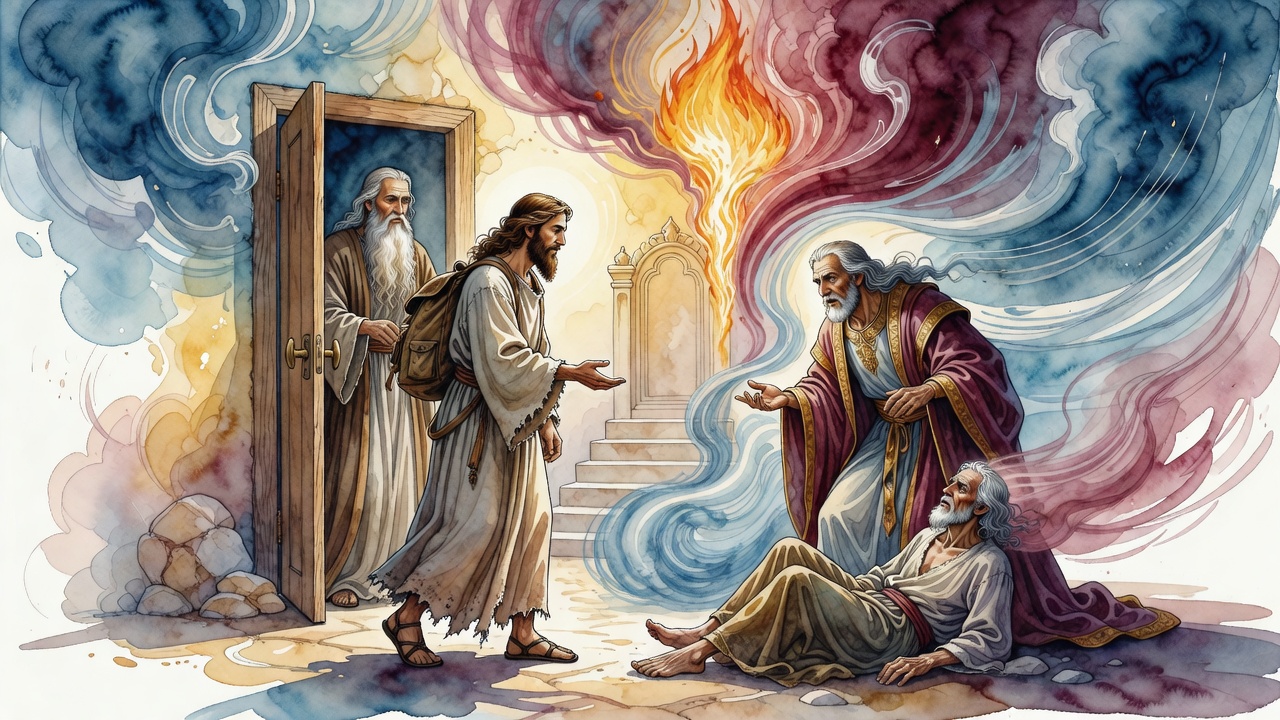
One door opened wider than the others. A noblewoman stood inside, her house deep and cool behind her, and she waved him in as though he were already expected.
The Door That Closed Behind Him
She had no interest in baskets. He understood that before she said it, in the way she let the door swing shut, in the silence that followed. The room held no exit he could take without passing her. She named what she wanted plainly.
Rav Kahana did not argue theology. He did not lecture her. He asked for a moment. "Let me go and prepare myself," he said, and his voice was steady enough that she believed him. He would return, he promised. He needed only to step away first.
She let him go. He climbed.
He Stepped Off the Roof
Up the stairs, onto the flat roof, into the open air over the city. Below him the street ran small and far. Behind him the woman waited for a man who would never come back down those stairs. He walked to the edge.
He did not pray a long prayer. He did not weep where anyone could see. A man too poor to refuse the world had found the one refusal still left to him, and it cost everything he had. He stepped off the roof.
The ground rushed up to meet a falling sage.
Four Hundred Miles
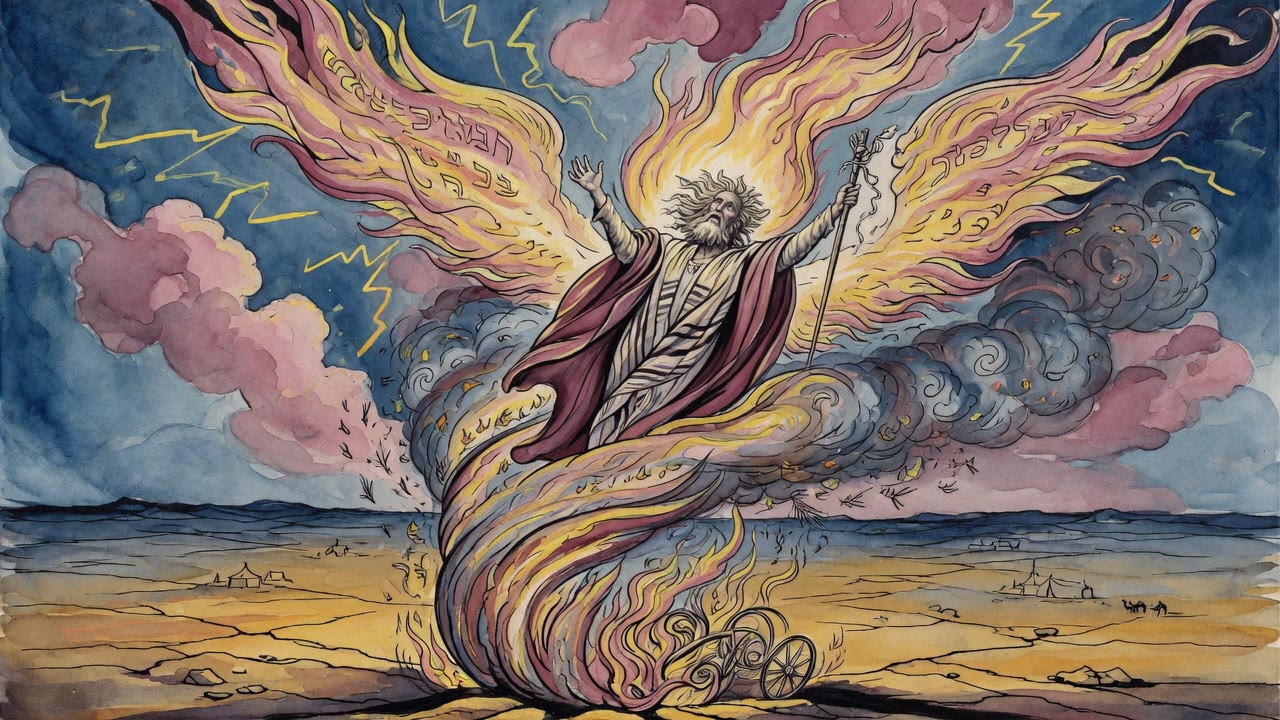
It did not reach him. Between the roof and the stones, in the space where a body should have broken, hands closed around him and held. Elijah had come. The prophet who never tasted death, who moves through the world wherever a Jew is about to be lost, had crossed four hundred miles in the time it takes a man to fall the height of a house, and he caught Rav Kahana in the air.
He set him down on his feet, unharmed, breathing, alive. Then he let the sage feel the weight of what he had nearly done.
"You have put me to the trouble of four hundred miles," Elijah said. The rescue had been real, and so was the rebuke folded inside it. The death had not been required of him. Heaven had not asked it. A man does not get to throw away a life that was never his to discard, not even to keep himself clean.
A Vessel of Denarii
Rav Kahana stood ashamed before the prophet. He did not pretend the leap had been holiness. He told the truth of it. It was poverty, he said. Poverty had closed every other door until the roof looked like the only way out. He had not wanted the woman. He had wanted to live, and being poor had made even that feel like a sin he could not afford.
Elijah did not answer with a verse. He reached into his garment.
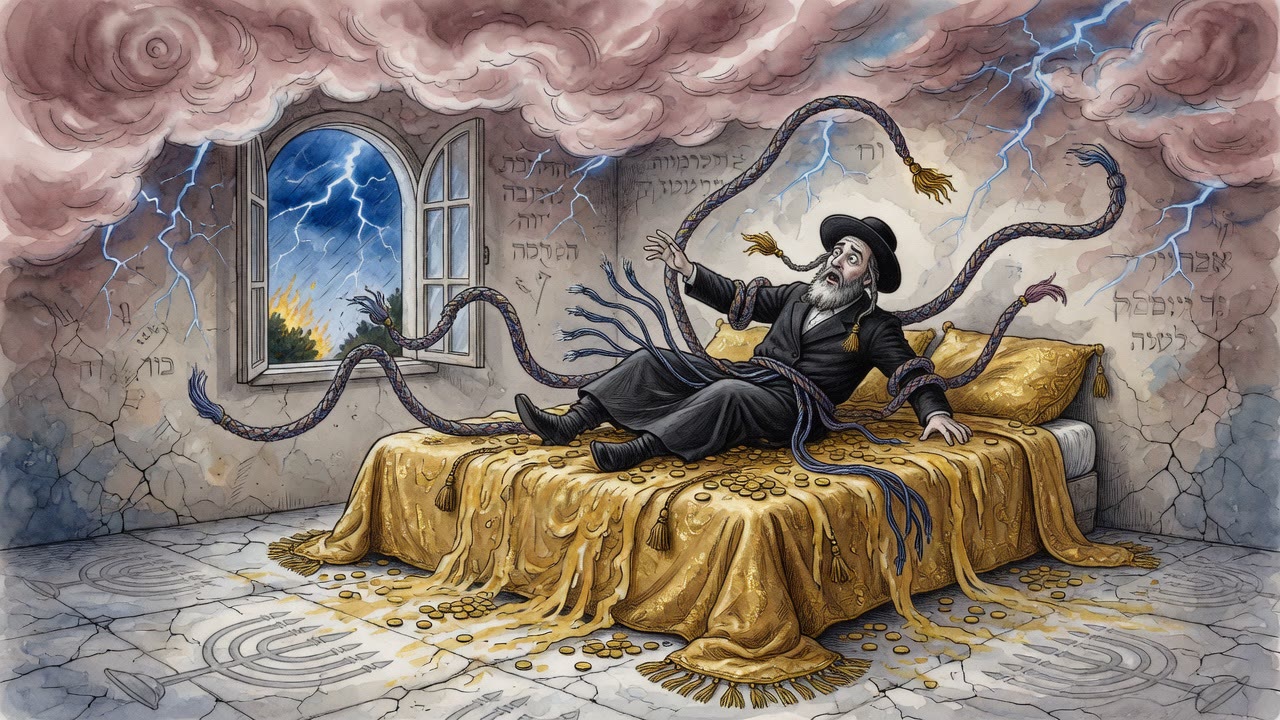
Out came a vessel heavy with gold, denar upon denar, more coin than the basket-peddler had handled in years of doors. The prophet pressed it into the sage's hands. The hunger that had stood behind the temptation, the lack that had made the rooftop reasonable, that was the enemy Elijah came to kill. He killed it with money. Then he was gone, the way he always goes, leaving a full purse where a moment before there had been a falling man.
Leaves from the Garden
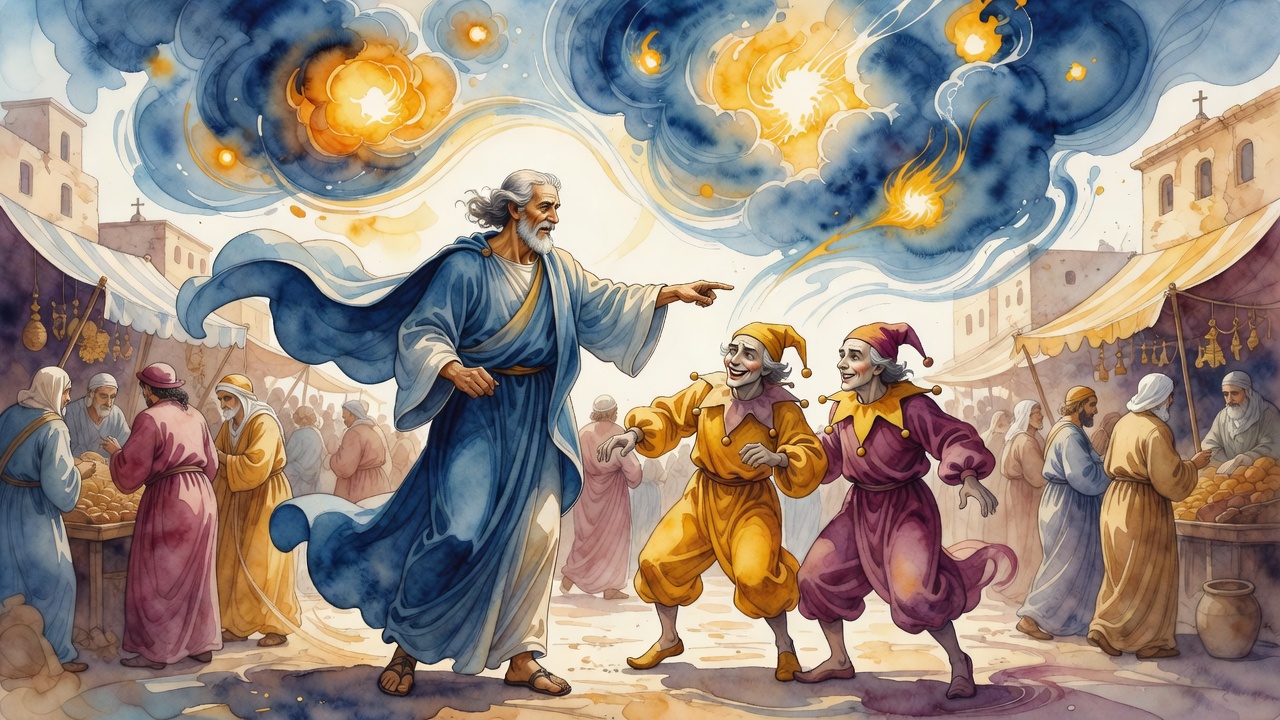
This was not the only time the prophet answered a starving scholar with his hands instead of his mouth. Rabba bar Abbahu once confessed to Elijah the same wound Rav Kahana carried, that poverty left him no quiet hours for the study he loved. Elijah did not tell him to be patient. He took him by the arm and led him into Gan Eden itself, the Garden, and told him to spread his cloak and fill it with leaves.
Rabba gathered them, leaves of paradise heaped in his garment, until a voice rolled through the Garden and asked who dared spend his portion of the world to come while he still walked the earth. Frightened, Rabba flung the leaves away. The cloak had drunk the scent of them. He sold that perfumed garment for twelve thousand denarii, a fortune that freed him to study the rest of his days.
Two scholars, two ruins, the same prophet. Neither got a sermon. One got a purse caught from the air, the other a cloak that smelled of Eden, and both walked back into their lives with the trap of their poverty sprung open behind them.
← All myths