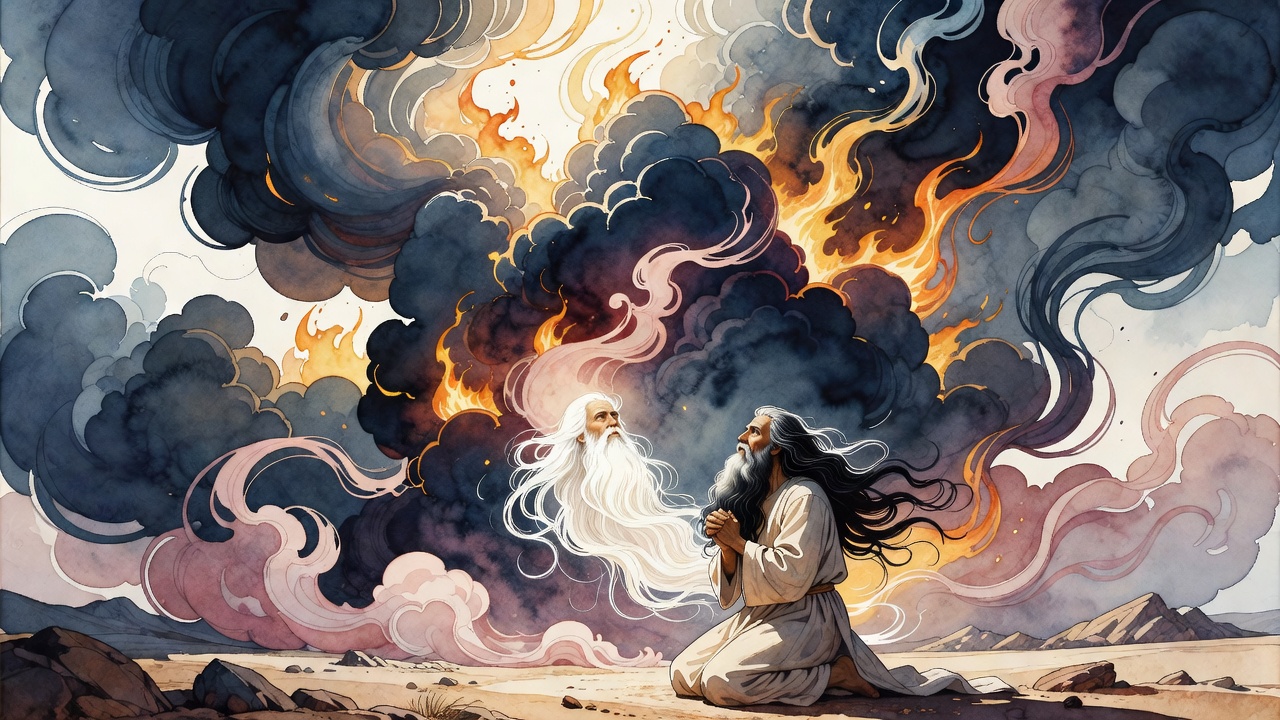
Elijah Points to Two Jesters as Heirs of the World to Come
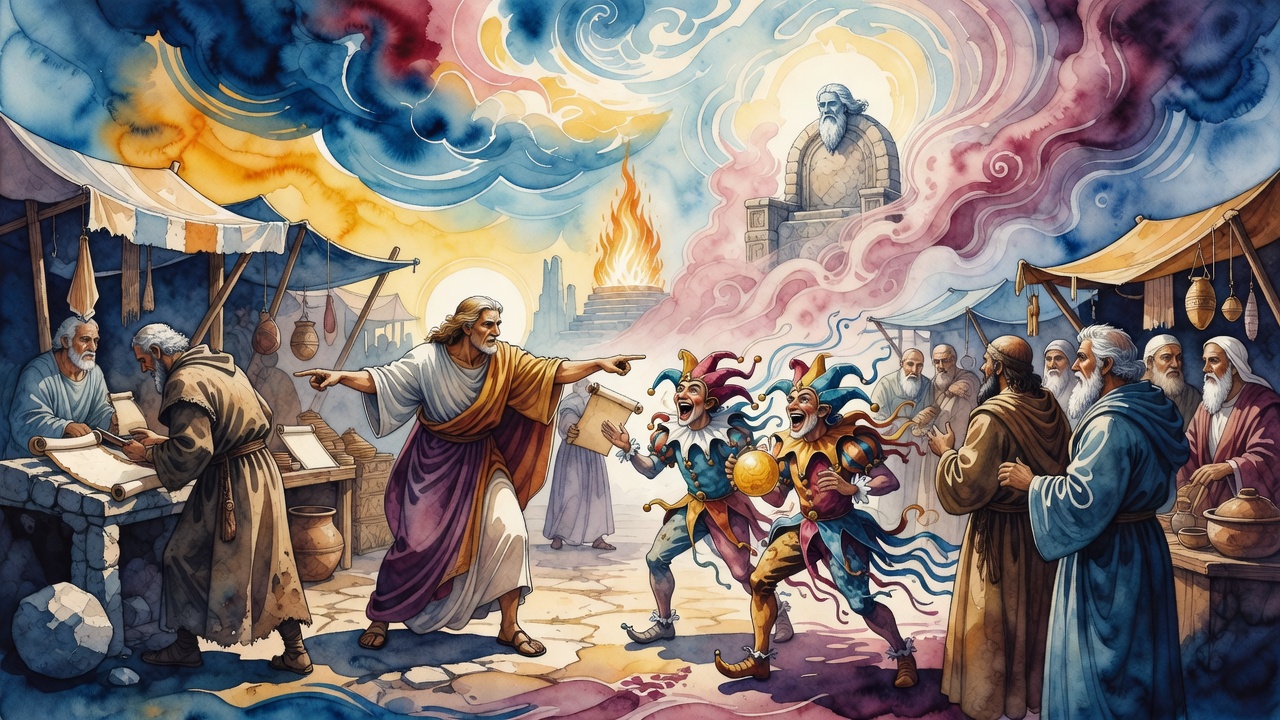
A rabbi begged Elijah to show him who in the loud market had earned Paradise. The prophet pointed at two clowns, and holiness turned over.
Table of Contents
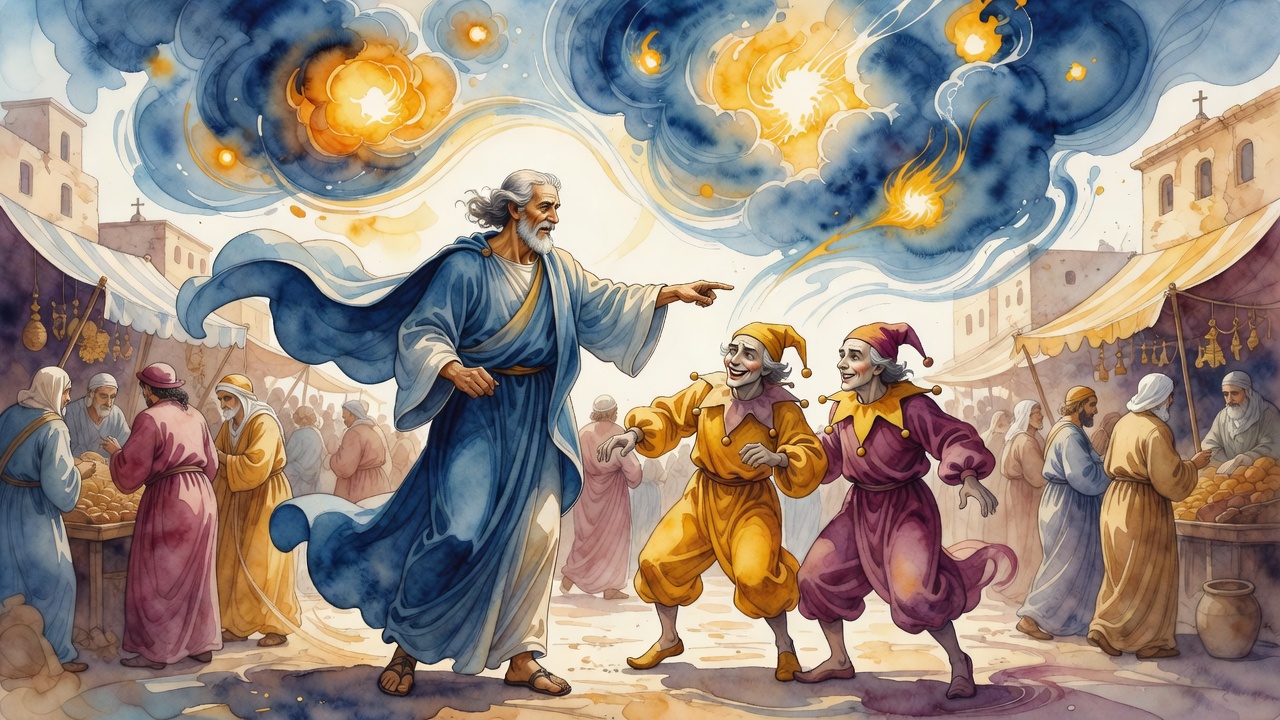
The market at Be Lapat roared the way every market roars. Donkeys balked under sacks of barley, a copper-smith hammered a bowl he would not sell, two women argued over the weight of a fish, and a beggar held out his hand to a crowd that stepped around him like water around a stone. Through all of it walked a man no one greeted, because no one could see who he was.
 Click for full size
Rabbi Beroka of Khuzistan saw him. He always did. Wherever the rabbi went, the prophet Elijah went too, robed as a traveler, and the two of them would talk in the gap between the stalls while the world shoved past, deaf to them both.
The Question He Had Carried for Years
Beroka had a question he had been afraid to ask, the kind a man saves until he is sure the answer will not break him. He asked it now, in the middle of the shouting.
"Is there anyone in this market," he said, "who is a son of the World to Come?"
Elijah looked across the heads of the crowd, slow, the way a shepherd counts a flock at dusk. The rabbi waited. He expected the prophet's finger to lift toward the study house at the edge of the square, where the scholars bent over the law. He expected one of the men who fasted, who wore their piety the way other men wore good cloaks.
"No," Elijah said.
The word landed harder than any sermon. All these people, and not one of them. Beroka stood there with the fish-sellers screaming and the dust rising and felt the floor of his certainty tilt.
Two Men in Bright Clothes
Then the crowd shifted, and two strangers came into the square. They wore loud colors, the dress of men who make their living being looked at. They were laughing before anything funny had happened, as if the joke were already there in the morning and they had only to point at it.
Elijah lifted his hand. "Those two," he said. "They are sons of the World to Come."
Beroka stared. The two men were jesters. Clowns. The sort hired for a feast to keep a room from turning sour, the sort no one introduces to a teacher. They had no rank in any academy. They could not have argued a point of law if their lives hung on it. And the prophet who woke the Patriarchs each dawn, who carried prayers up past the firmament, had just named them ahead of every learned man in the city.
The rabbi went after them. He caught their bright sleeves before they could vanish back into the noise, and he asked the only thing worth asking.
"What do you do?"
The Trade That Buys Paradise
The jesters traded a glance, as men do who have been asked this before and have never been believed. One of them answered.
"We are merry men," he said. "When we see a person whose heart is heavy, we cheer him until the heaviness lifts. And when we see two people who have fallen out, who quarrel and will not look at each other, we work at them with jokes until they make peace."
That was all. No fasting. No vigils. No secret name murmured over a lamp. Two men who walked into rooms full of grief and walked out leaving the grief smaller, who stood between enemies and tickled them back toward each other until the war went out of their faces.
Beroka loosened his grip on their sleeves. The whole shape of holiness he had carried into the market that morning lay rearranged on the ground at his feet. He had come looking for the heirs of heaven among the men who studied how to live rightly, and Elijah had pointed instead at the men who simply went around lightening the unbearable weight other people carried.
The Prophet Who Worked the Streets
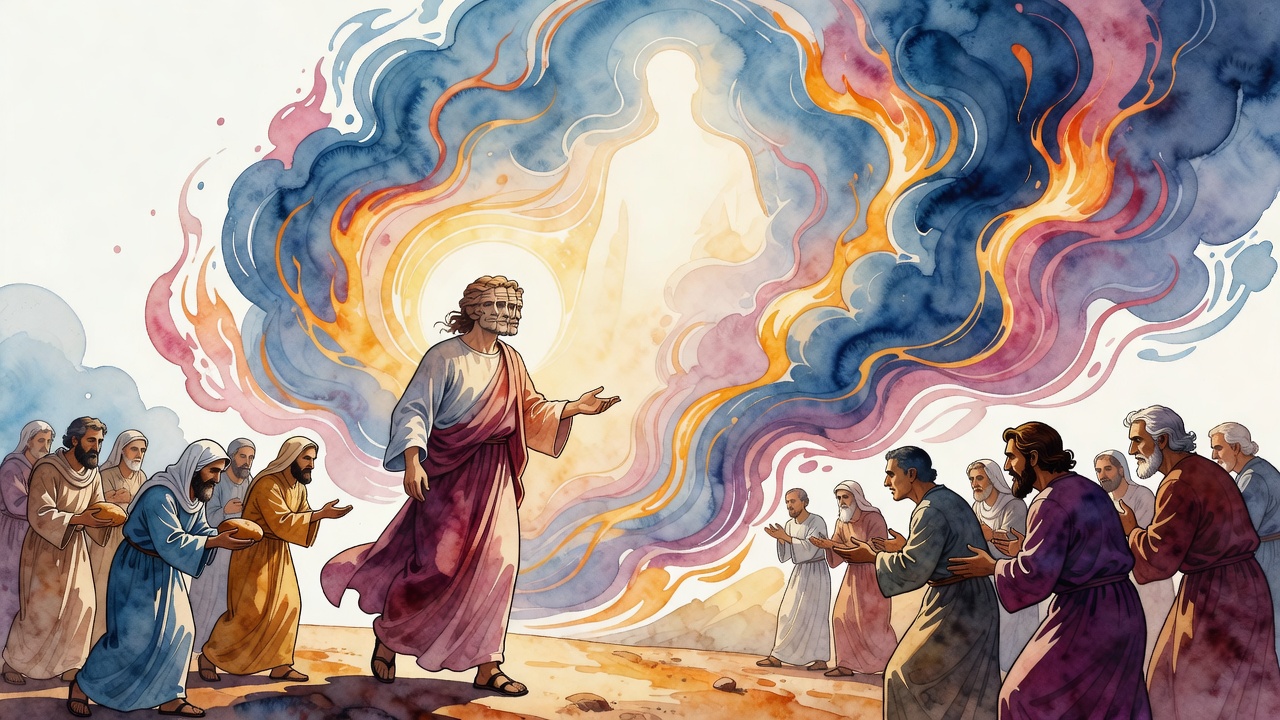
It fit the prophet who had said it. Elijah never stayed on his mountain. He came down into exactly this kind of dust, and he came in disguise, because the people he meant to save would have behaved differently if they had known a prophet was watching.
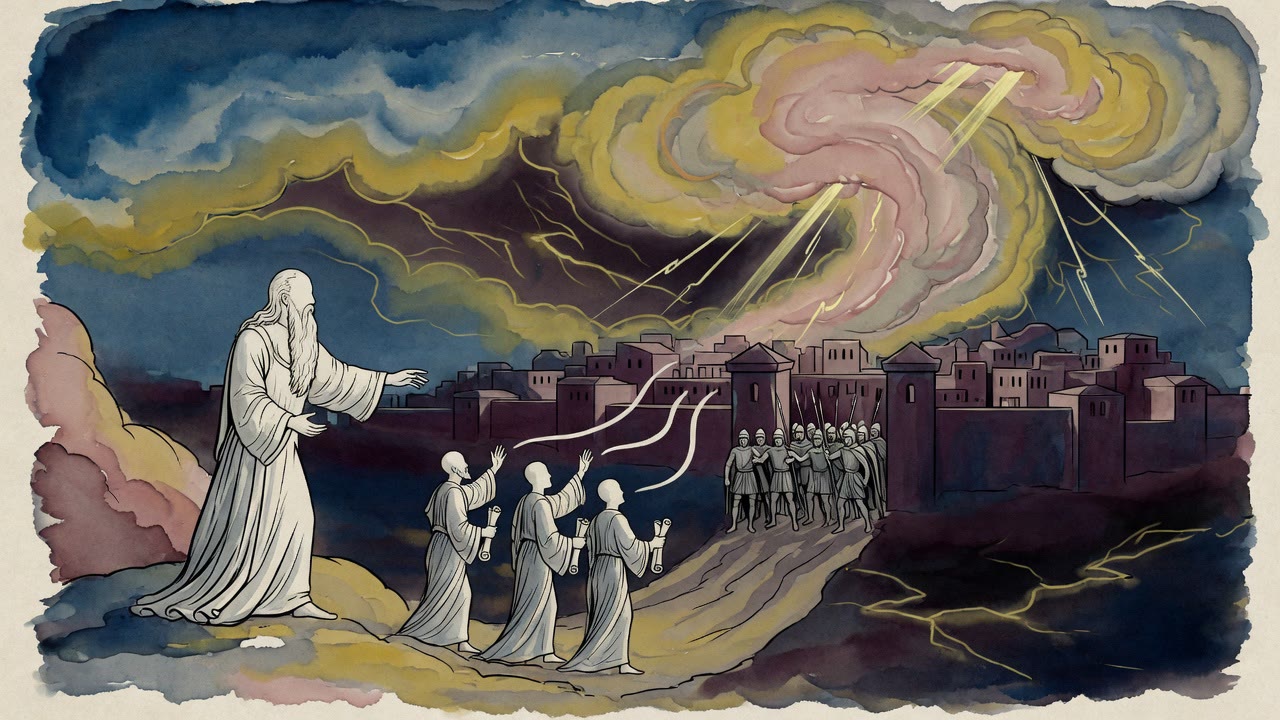
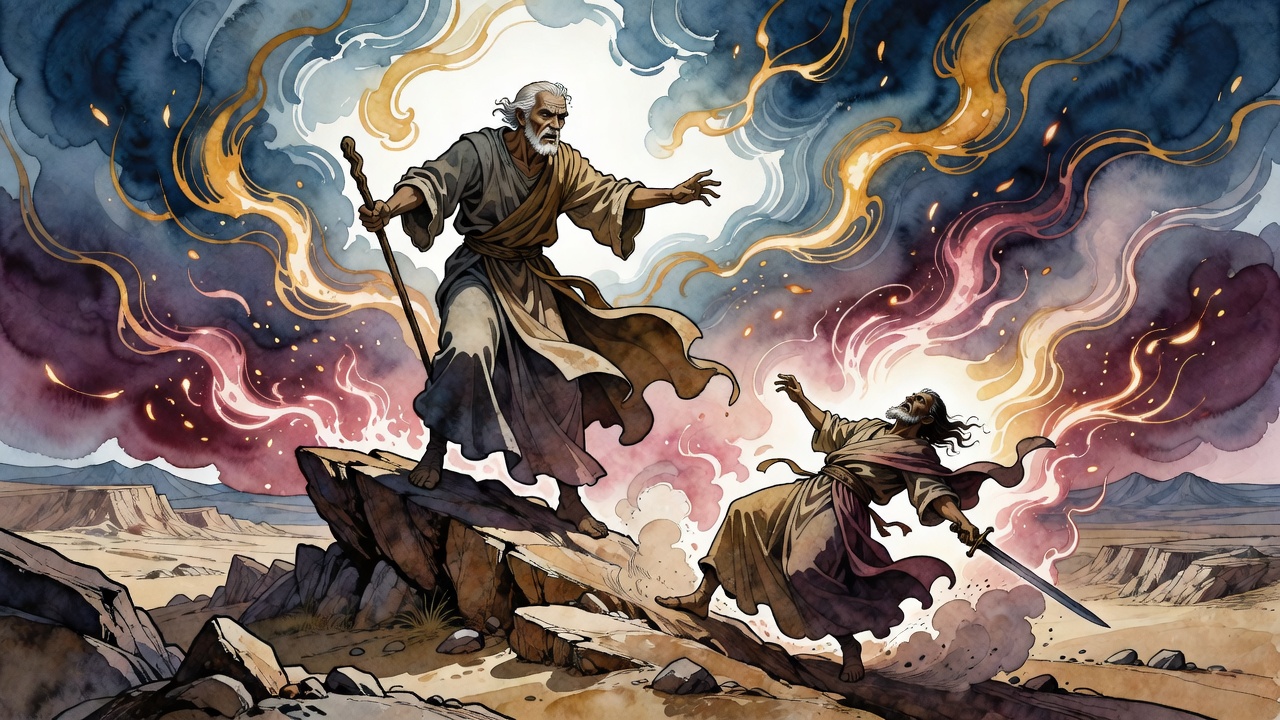
He had walked into a Persian court dressed as a Persian to swear false-sounding truth on behalf of a rabbi an informer wanted dead, and the man went free. He had come to a teacher chased by Roman bailiffs and thrown a scandalous arm around him in the road, so the soldiers, certain no rabbi would keep such company, walked straight past their quarry. He robed himself as a beggar, a merchant, a harlot, whatever the moment required, and the moment almost never required fire. It required a man in the street who would do the strange, low, humbling thing that pulled a person back from the edge.
So of course he loved the jesters. They were doing his work without his name. They could not raise the dead. But they could walk into the room where a man sat crushed and breathing in shallow gasps, and they could make him laugh, and a laughing man is not a dead one.
What Beroka Carried Out of the Market
The two clowns went back to work. Somewhere a heavy heart was waiting for them, somewhere two neighbors stood at a wall they had built between their houses, and the merry men were already grinning at the joke that would bring it down.
Beroka stood in the roar a while longer. The scholars were still bent over their books at the edge of the square, and their bent backs held the law steady, the same law it had been an hour ago. But the prophet had counted the flock, and his finger had come to rest on two men in bright clothes whose only learning was how to make a broken person whole enough to smile. The rabbi walked home through the same market he had entered, and it did not look the same, because he kept watching faces now, the heavy ones and the quarreling ones, wondering who in the crowd was quietly buying Paradise with nothing but laughter.
← All myths