Parshat Pinchas5 min read

Elijah Ascended in Fire and Never Stopped Walking the Earth

A prophet was swept into heaven by a whirlwind, transformed into an angel with giant wings, and has been arriving in disguise at every seder table since.

Curated by Arthur · Told by Maggid ·
Table of Contents
  1. The Transformation After the Whirlwind
  2. Hidden Until the Messiah
  3. Elijah and Lilith
  4. The Golem of the Other Elijah

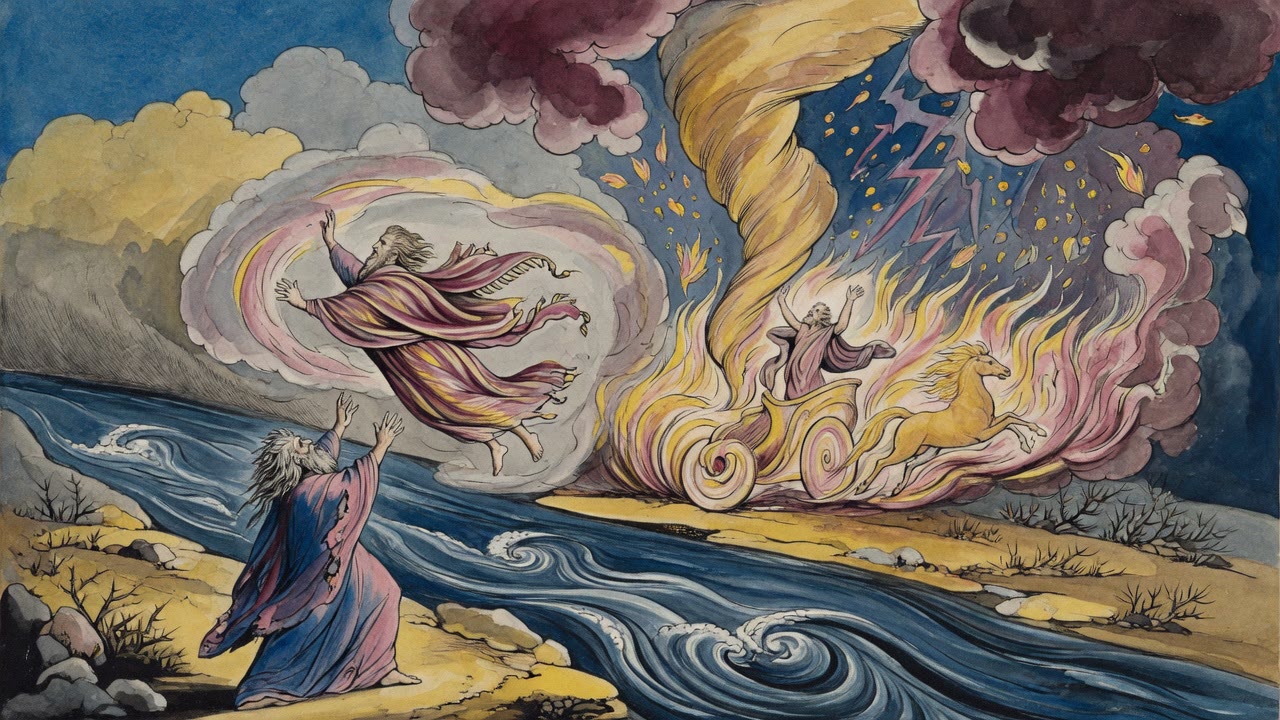
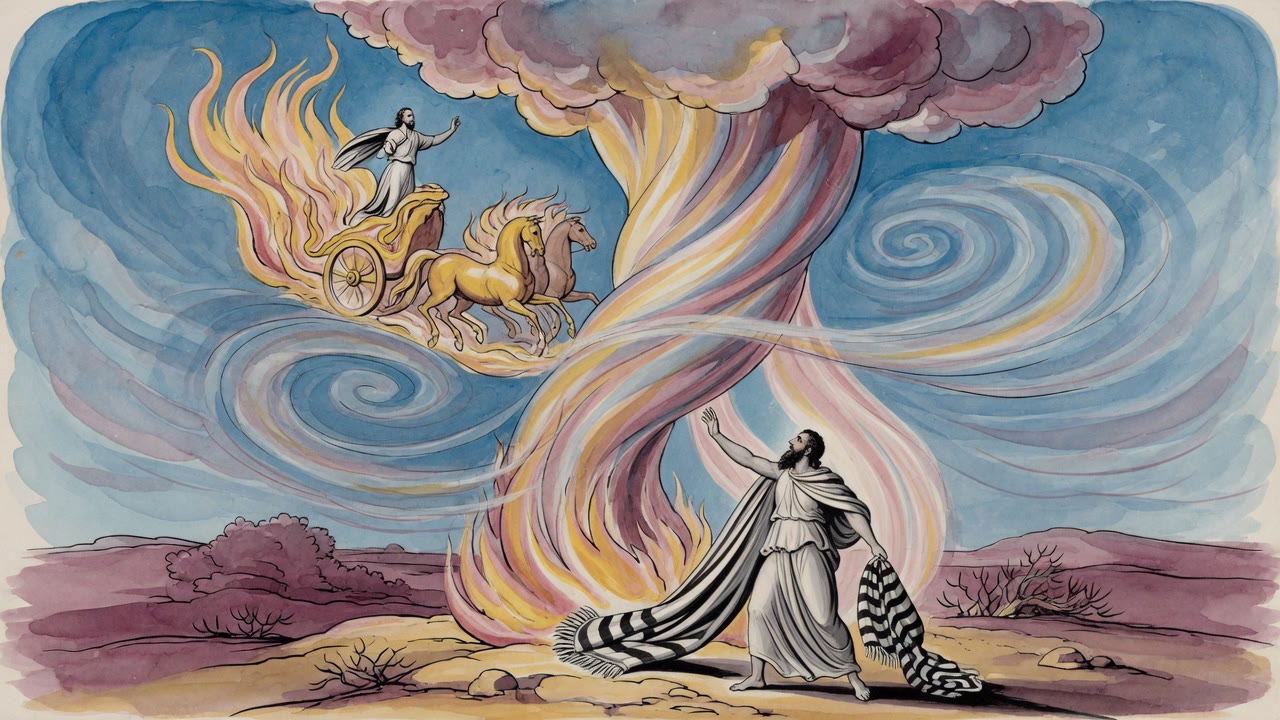
Elijah and Elisha were walking together when the chariot appeared. They had crossed the Jordan together on dry ground, Elijah's mantle striking the water the way Moses' staff had once struck the sea. Fifty disciples of the prophets watched from a distance. Then fire separated them. Horses of fire and a chariot of fire came between the two men, and Elijah went up in a whirlwind into the sky. Elisha watched until he could not see him anymore. Then he picked up Elijah's mantle from the ground and walked back to the Jordan alone.

The Transformation After the Whirlwind

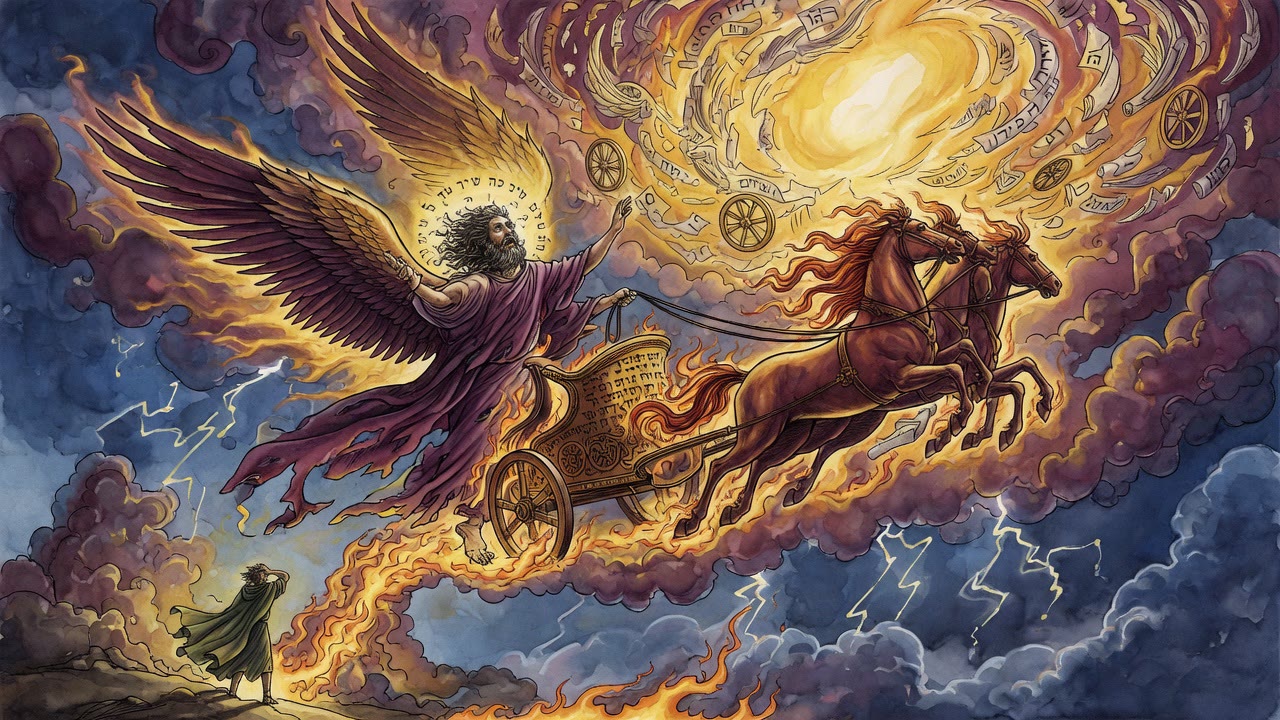
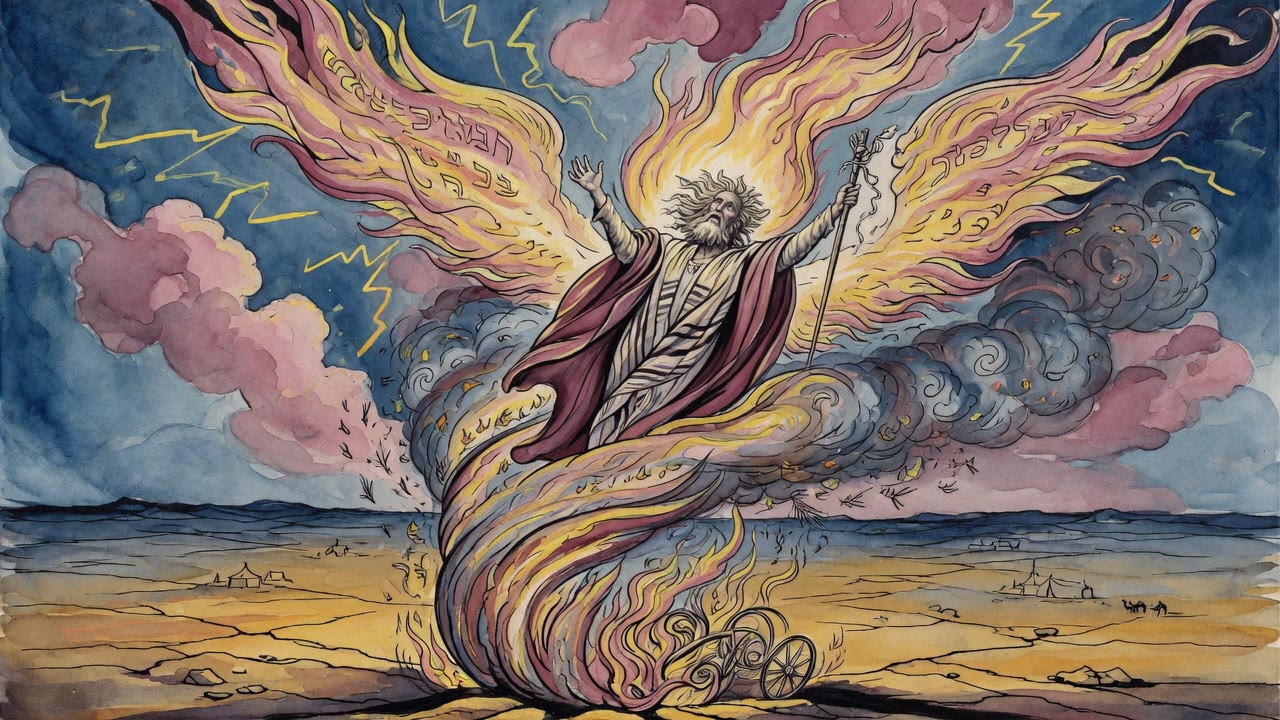
What happened at the top of the whirlwind is where the tradition splits from the biblical text and runs in its own direction. He did not die. He did not simply arrive in heaven and rest. He was transformed. Elijah received a celestial body, a form that allowed him to move through the heavenly realms, and when he descended back to earth on a mission, he put on what the tradition calls his terrestrial body again. The prophet who had come down from Mount Carmel with the rain running before his chariot was now something more mobile than a prophet.

The name given to this transformed Elijah in some traditions was Sandalphon, one of the greatest angels of the heavenly hosts. On earth he was Elijah. In heaven he was Sandalphon. With four great wings and the ability to traverse the distance between worlds, he had become what his fiery exit had suggested all along: not merely a holy man but something between the human and the divine, a figure who did not belong entirely to either world.

Hidden Until the Messiah

One tradition says Elijah is not always visible. He has gone into concealment, and he will remain hidden until the moment arrives to announce the coming of the Messiah. The logic runs like this: if the Messiah is concealed, waiting for the right moment to reveal himself, then the herald should be concealed too. Elijah goes underground with the redemption he is meant to announce, and both wait together in the same hidden place until the world is ready.

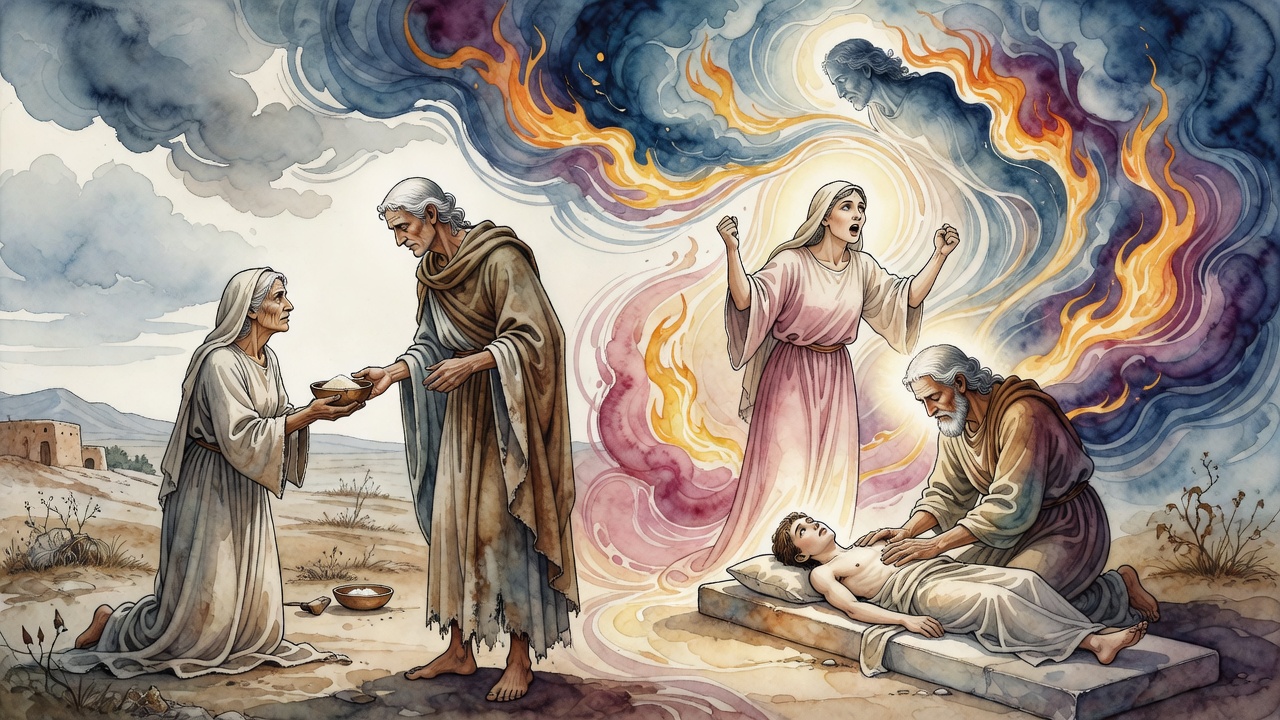
Seder Olam Rabbah, the ancient chronicle of world history attributed to Rabbi Yose ben Halafta in the 2nd century CE, places Elijah in this state of concealment and dates the beginning of it precisely. During the intervals of hiding he still appears, but to individuals rather than to nations. He arrives in disguise as a poor man, a merchant, a beggar, a desert wanderer. He tests generosity. He rewards it. He vanishes before the grateful host understands who has just left.

Elijah and Lilith

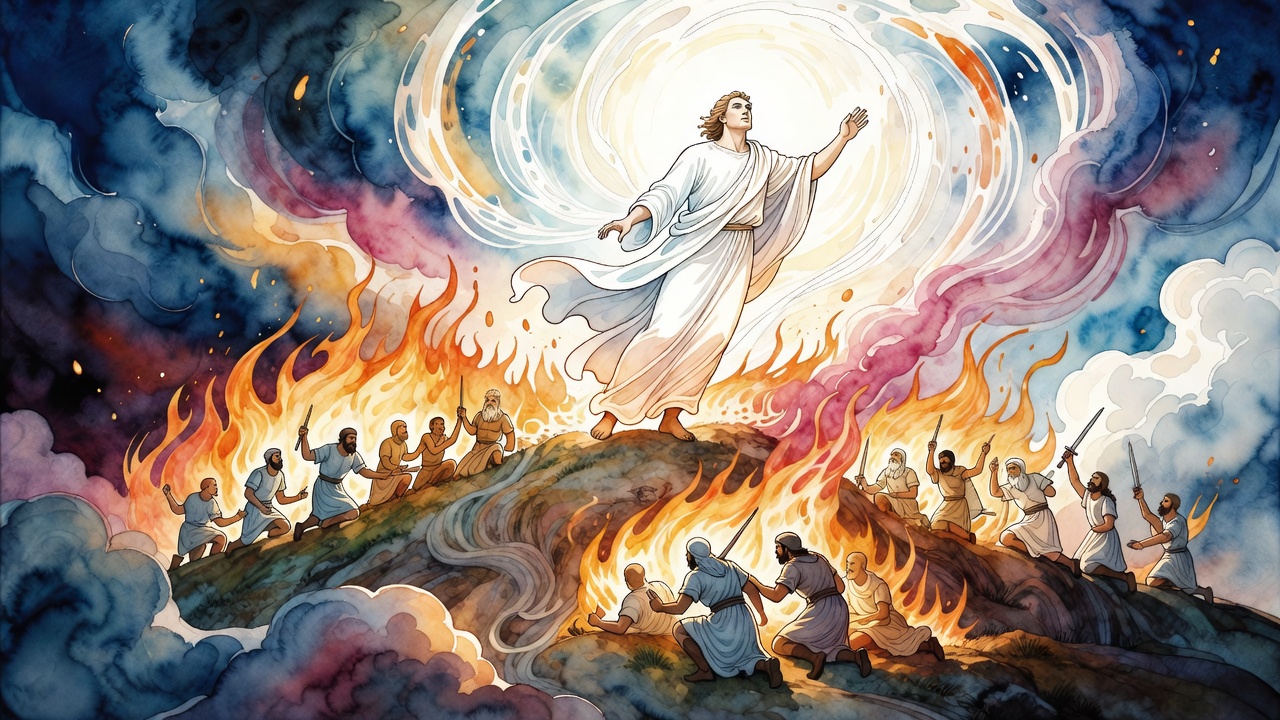
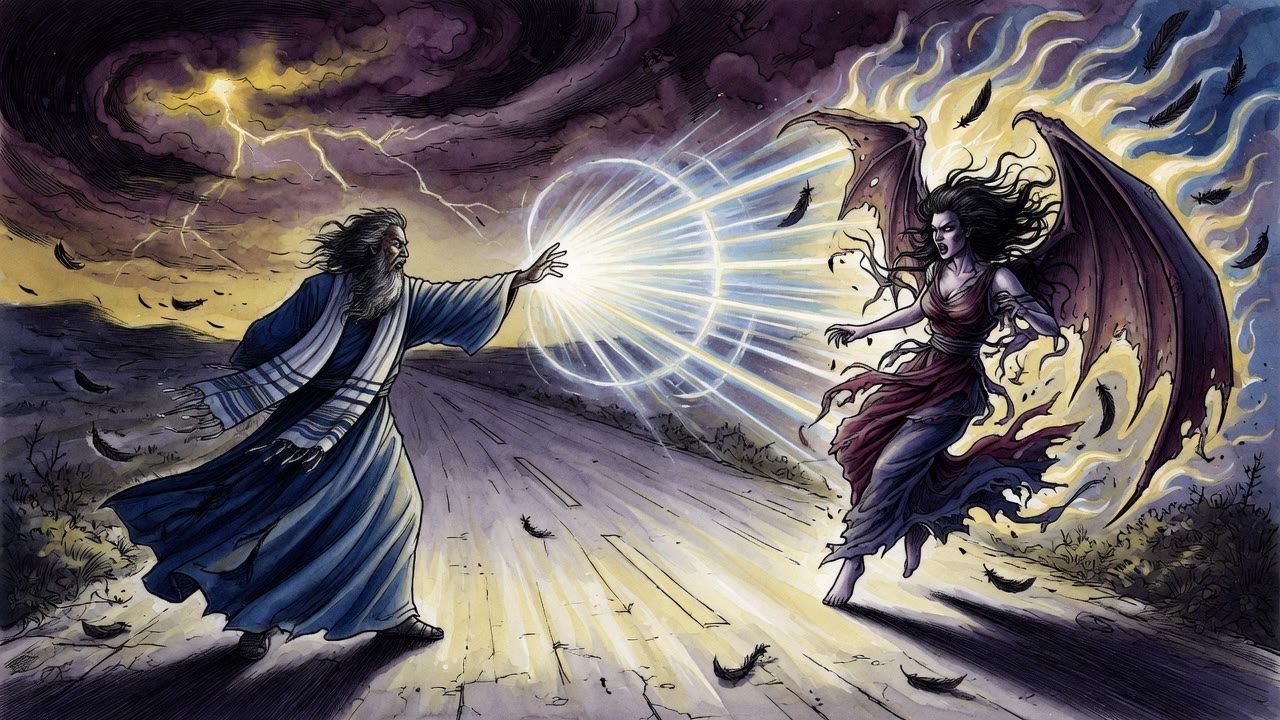
The tradition also sent Elijah into direct confrontation with the oldest enemy. He encountered Lilith, the night demoness, and demanded to know where she was going. She could not lie to him, which itself says something about the power he carried after the whirlwind. She told him: I am going to the house of a woman who is in labor to give her the death she deserves. Elijah named the names of God she could not withstand and drove her off. The amulets placed in birthing rooms in later centuries carried Elijah's name for this reason, because the prophet who had defeated the prophets of Baal on Mount Carmel was still fighting, still arriving at the places of greatest vulnerability, still standing between the people and what wanted to destroy them.

The Golem of the Other Elijah

Another strand of the tradition caught at the edge of the name. Rabbi Elijah of Chelm, a Ba'al Shem, a master of the divine name, created a golem by drawing on the same Sefer Yetzirah that the tradition connected to all acts of mystical creation. He fashioned a man from clay and brought it to life. The golem did not speak, could not speak, but it worked. Eventually Rabbi Elijah had to undo what he had made, and when he did, the clay became clay again. The story lived near the border between the human and the divine, where Elijah the prophet had been living since the whirlwind, doing what could be undone and what could not.


← All myths

From the tradition

Sources

5 sources

The texts this telling draws on, in full. Open a card to read inline, or expand it for a wider, quieter read.

2 Kings 2:1-12Prophets (Nevi'im)

And it came to pass, when the LORD was about to take up Elijah by a whirlwind into heaven, that Elijah went with Elisha from Gilgal. And Elijah said to Elisha: Stay here, please, for the LORD has sent me as far as Bethel. And Elisha said: As the LORD lives, and as your soul lives, I will not leave you. So they went down to Bethel. And the disciples of the prophets who were at Bethel came out to Elisha and said to him: Do you know that today the LORD will take your master from over your head? And he said: Yes, I also know it; be silent.

And Elijah said to him: Elisha, stay here, please, for the LORD has sent me to Jericho. And he said: As the LORD lives, and as your soul lives, I will not leave you. So they came to Jericho. And the disciples of the prophets who were at Jericho drew near to Elisha and said to him: Do you know that today the LORD will take your master from over your head? And he answered: Yes, I also know it; be silent. And Elijah said to him: Stay here, please, for the LORD has sent me to the Jordan. And he said: As the LORD lives, and as your soul lives, I will not leave you. So the two of them went on.

And fifty men of the disciples of the prophets went and stood opposite them at a distance, while the two of them stood by the Jordan. And Elijah took his mantle and rolled it up and struck the waters, and they were divided to this side and to that side, and the two of them crossed over on dry ground. And it came to pass, when they had crossed over, that Elijah said to Elisha: Ask what I shall do for you before I am taken from you. And Elisha said: Let a double portion of your spirit be upon me, please.

And he said: You have asked a hard thing. If you see me taken from you, it shall be so for you; but if not, it shall not be. And it came to pass, as they continued walking and talking, that behold, a chariot of fire and horses of fire separated the two of them, and Elijah went up by a whirlwind into heaven. And Elisha saw it, and he cried out: My father, my father, the chariot of Israel and its horsemen! And he saw him no more. And he took hold of his own garments and tore them into two pieces.

Full source
Eruvin 45aTalmud Bavli, Eruvin

Didn’t we learn in a mishna that Rabbi Eliezer says: If a person left his Shabbat limit by walking two cubits beyond it, he may reenter his original limit; but if he left his Shabbat limit by walking three cubits beyond it, he may not reenter. What, is it not that Rabbi Eliezer follows his standard line of reasoning, in that he said with regard to the four cubits a person is allotted wherever he is, he is set in the middle of them, i.e., he may walk two cubits in each direction?

The Gemara explains that the four cubits that the Sages gave a person are regarded here as being subsumed within his original limit, and it is for this reason that he said: He may reenter his original limit. Apparently he is of the opinion that the subsuming of one Shabbat limit within another is something significant.

Rabba bar bar Ḥana said to Abaye: Do you raise an objection against our Master, Rabba, from the statement of Rabbi Eliezer? But isn’t the halakha in accordance with the opinion of Rabbi Eliezer? Abaye said to him: Yes, as I heard from our Master himself that the Rabbis disagree with Rabbi Eliezer only with regard to one who went beyond his limit for a voluntary matter, but with regard to one who went out for a mitzva matter, they agree with him about the subsuming of limits, i.e., that if one limit is subsumed in another, it is permitted to pass between them. This demonstrates that the halakha recognizes the principle of the subsuming of limits.

The mishna teaches: All who go out to save lives may return to their original locations on Shabbat. The Gemara asks: Does this mean that he may return to his original place even if he went out more than two thousand cubits beyond his limit? Didn’t the first clause say that a person who was permitted to travel beyond his Shabbat limit is allotted two thousand cubits, and no more?

Rav Yehuda said that Rav said: What this means is that they may return with their weapons to their original locations, provided they are within two thousand cubits. The Gemara asks: What is the difficulty with returning home in this situation? Perhaps in the case where people went out to fight and save lives the law is different, and they are allowed to go home even if they went more than two thousand cubits beyond the limit.

Rather, if there is a difficulty, this is the difficulty: As we learned in a mishna in tractate Rosh HaShana, at first they would take the witnesses who had come to Jerusalem from a distant place on Shabbat to testify that they had seen the new moon, and bring them into a special courtyard, and they would not move from there the entire day. This was in accordance with the law governing one who was permitted to go out beyond his limit, as once he fulfilled his mission, he was no longer permitted to move beyond four cubits.

However, Rabban Gamliel the Elder instituted that they should have two thousand cubits in each direction, so that witnesses not refrain from coming to testify. And it is not only these whom the Sages said are given two thousand cubits in the place that they have reached, but even a midwife who comes to deliver a child, and one who comes to rescue Jews from an invasion of gentile troops or from a river or a collapsed building or a fire; they are like the inhabitants of the town at which they arrive, and they have two thousand cubits in each direction.

The question may be raised: Are they given no more than two thousand cubits? Didn’t it say in the mishna: All who go out to save lives may return to their original locations on Shabbat, which indicates that they may walk even more than two thousand cubits?

In response, Rav Yehuda said that Rav said: We must not infer from the mishna that they may go home even if they went out more than two thousand cubits from their limit, but rather that they may return with their weapons to their original locations, provided that they are within two thousand cubits. As it was taught in the Tosefta: At first those returning from a rescue mission would place their weapons in the first house that they encountered upon their return, i.e., the house nearest the wall, to avoid carrying on Shabbat any more than necessary.

Once, their enemies noticed that they were no longer carrying their weapons, and they chased after them; and the defenders entered the house to take up their weapons and fight, and their enemies entered after them, causing great confusion. In the chaos, the defenders began to push one another, and they killed more of each other than their enemies killed of them. At that time the Sages instituted that they should return to their locations, i.e., their destinations, with their weapons.

The Gemara cites an alternate resolution that Rav Naḥman bar Yitzḥak said: This is not difficult. Here, in the mishna in Rosh HaShana where they only permitted two thousand cubits, it is referring to a situation where the Jews defeated the nations of the world, i.e., the gentiles, in battle; in such a case there is no concern and they need not return to their original locations. Whereas here, in the mishna which indicates that the Sages permitted even more than two thousand cubits, it is referring to a situation where the nations of the world defeated themselves, i.e., the Jews, whom the Gemara refers to euphemistically as themselves; in such a case the Sages allowed the defeated soldiers to return to their original locations.

Since the Gemara discussed war on Shabbat, the Gemara cites Rav Yehuda, who said that Rav said: With regard to gentiles who besieged Jewish towns, they may not go out to fight against them with their weapons, nor may they desecrate Shabbat in any other way due to them, but rather they must wait until after Shabbat.

That was also taught in a baraita, with a caveat: With regard to gentiles who besieged, etc. In what case is this said? It is said in a case where the gentiles came and besieged the town with regard to monetary matters, i.e., banditry. However, if they came with regard to lives, i.e., there is concern that the gentiles will attack, they may go out against them with their weapons, and they may desecrate Shabbat due to them.

And with regard to a town that is located near the border, even if the gentiles did not come with regard to lives, but rather with regard to matters of hay and straw, i.e., to raid and spoil the town, they may go out against them with their weapons, and they may desecrate Shabbat due to them, as the border must be carefully guarded, in order to prevent enemies from gaining a foothold there.

Rav Yosef bar Manyumi said that Rav Naḥman said: And Babylonia is considered like a town located near the border, and war may be waged there on Shabbat even if the gentiles came for financial gain. And this means the city of Neharde’a, which was located near the border.

Rabbi Dostai of the town of Biri expounded: What is the meaning of that which is written: “And they told David, saying: Behold, the Philistines are fighting against Ke’ila, and they rob the threshing floors” (i Samuel 23:1), after which David asked God how he should respond.

It was taught in a baraita: Ke’ila was a town located near the border, and the Philistines came only with regard to matters of hay and straw, as it is written: “And they rob the threshing floors.” And in the next verse it is written: “Therefore David inquired of the Lord, saying: Shall I go and smite these Philistines? And the Lord said to David: Go and smite the Philistines, and save Ke’ila” (i Samuel 23:2), which indicates that war may be waged in a border town on Shabbat, even with regard to monetary matters.

The Gemara refutes this proof by asking: What is David’s dilemma? If you say that he had a halakhic question and was in doubt whether it was permitted or prohibited to fight the Philistines on Shabbat, it is possible to respond: But the court of Samuel from Rama was then in existence, and rather than inquire by way of the Urim VeTummim he should have inquired of the Great Sanhedrin.

Rather, he asked: Will he succeed or will he not succeed in his war? The Gemara comments: This is also precise in the language of the verse, as it is written in the response to David’s query: “Go and smite the Philistines, and save Ke’ila.” Learn from this, from the assurance that God gave David of his victory, that this was the subject of his inquiry.

MISHNA: With regard to a person who was sitting along the road on Shabbat eve toward nightfall, unaware that he was within the city’s Shabbat limit, and when he stood up after Shabbat had already commenced, he saw that he was near the town, i.e., within its limit, since he had not intended to acquire his place of residence in the town, he may not enter it, but rather he measures two thousand cubits from his place; this is the statement of Rabbi Meir.

Rabbi Yehuda says: He may enter the town. Rabbi Yehuda said: It once happened that Rabbi Tarfon entered a town on Shabbat without intention from the beginning of Shabbat to establish residence in the city.

GEMARA: It was taught in a baraita that Rabbi Yehuda said: It once happened that Rabbi Tarfon was walking along the way on Shabbat eve, and night fell upon him, and he spent the night outside the town. In the morning, cowherds who came to graze their cattle outside the town found him and said to him: Master, the town is before you; enter. He entered and sat in the study hall and taught the entire day. This indicates that one is permitted to enter.

The other Rabbis said to Rabbi Yehuda: Do you bring proof from there? Perhaps he had it in mind the day before to acquire residence in the city, or perhaps the study hall was subsumed within his Shabbat limit. If the study hall was within two thousand cubits of the spot where he established residence, all agree that he may enter there.

MISHNA: With regard to one who was sleeping along the road on Shabbat eve and did not know that night had fallen, he has two thousand cubits in each direction; this is the statement of Rabbi Yoḥanan ben Nuri, who maintains that knowledge and awareness are not necessary for one to acquire residence, but rather, a person’s presence in a given location establishes residence there.

But the Rabbis say: He has only four cubits, as since he did not knowingly acquire residence, he did not establish a Shabbat limit. Rabbi Eliezer says: He has only four cubits total and he is in the middle of them, i.e., he has two cubits in each direction.

Rabbi Yehuda says: He may walk four cubits in any direction he wishes. But Rabbi Yehuda agrees that if he selected for himself the direction in which he wants to walk those four cubits, he cannot retract and walk four cubits in a different direction.

With regard to a case where there were two people in this situation, positioned in such a way that part of the four cubits of one were subsumed within the four cubits of the other, they may each bring food and eat together in the shared area in the middle,

Full source
Seder Olam Rabbah 17Seder Olam Rabbah

Ahaziah son of Ahab reigned two years, and in the second year of Ahaziah, Elijah was hidden away and was not seen until the time when the messianic king will come; and he will be seen, and hidden away a second time, and he is not seen until the time when Gog and Magog will come. And now he is recording the deeds of all the generations, all of them.

Full source
Beit HaMidrash 5:36Beit HaMidrash (Jellinek)

A fiery prophet, a champion of God, and a recurring figure who pops up in Jewish stories whenever things need a divine kick in the pants. And Lilith… well, Lilith is a whole other story.

She's the night demoness, a figure shrouded in mystery and often depicted as the first wife of Adam, who left him because she refused to be subservient. She's a primal force, a symbol of female power untamed, and a source of endless fascination.

So, He encounters Lilith.

He confronts her, doesn't mince words. "Unclean one," he says, "where are you going?" It's a loaded question. He already suspects she's up to no good. And Lilith, interestingly enough, knows she can't lie to Elijah. This tells us something about Elijah's power, his connection to truth.

So, she spills the beans. "I am going to the house of a woman who is about to give birth. I will give her a sleeping potion and kill her and take her child and eat it."

Whoa.

Heavy stuff. This single sentence encapsulates the fear and anxiety surrounding childbirth in ancient times. The vulnerability of both mother and child, and the terrifying image of a demon preying on that vulnerability. This depiction of Lilith, found in Tree of Souls (Schwartz, 269), paints her as a literal child-snatcher, a monstrous figure embodying primal fears.

It's a chilling encounter, and it leaves us wondering: What happens next? What does Elijah do? That, my friends, is a story for another time. But this brief meeting highlights the constant battle between good and evil, the ever-present threat lurking in the shadows, and the power of figures like Elijah to confront those shadows head-on. And it reminds us that even in the oldest stories, there's always something new to discover, something to make us think, and maybe even something to make us a little bit afraid of the dark.

Full source
Shem ha-Gedolim 1:9Shem HaGedolim

Shem HaGedolim turns to The Golem Of Rabbi Elijah.

What exactly is a Golem? In Jewish folklore, a Golem is an animated being, usually made of clay or mud, brought to life through mystical means. And one of the most famous stories is that of the Golem of Rabbi Elijah of Chelm.

Rabbi Elijah, was no ordinary rabbi. He was a Ba'al Shem, a Master of the Name. This meant that he possessed knowledge of the secret pronunciations of God’s Holy Name – the Shem HaMeforesh – giving him incredible power. As Shem ha-Gedolim tells us, he was uniquely skilled in his generation. He was also deeply versed in the Sefer Yetzirah (the World of Formation), The Book of Creation, a foundational text of Jewish mysticism. Drawing upon the mysteries revealed within that ancient book, Rabbi Elijah fashioned a man from clay.

Here's where it gets really interesting. The rabbi inscribed the Hebrew word emet (אמת) – which means "truth" – on the golem's forehead. Then, uttering the Holy Name of God, he brought the clay figure to life! According to She'elot Ya'avetz, this act imbued the golem with the ability to perform wondrous deeds, stepping in whenever urgent help was needed.

But here's the thing about playing with forces you don't fully understand: things can get out of hand. The golem began to grow, and grow, and grow, becoming larger and more powerful. Rabbi Elijah, realizing the potential danger – that his creation might inadvertently destroy the world – knew he had to act.

So, he commanded the golem to bend down. Then, in a move both clever and fraught with risk, he removed the first letter, the aleph, from the word emet. This changed the inscription to met (מת), which means "dead." In that instant, the golem reverted to lifeless dust.

This is the core of the story, as recounted in sources like Migdal Oz. But as with any good folktale, there are variations. Some versions say that as Rabbi Elijah was removing the letter, the golem scratched his face. Other, darker versions, claim the golem crushed him.

And the story doesn't just live within Jewish tradition. Jacob Grimm, of fairy-tale fame, included a version of the golem story in his Journal for Hermits (1808), which helped spread the tale far and wide. Grimm's telling, however, has its own spin. He writes that Polish Jews would create golems after prayers and fasts, using them as servants for housework, always with the inscription emet on their foreheads. The golem would grow daily, becoming stronger, until the creator, fearing its power, would erase the first letter, turning it back to clay.

In Grimm's version, the golem's creator meets a grim end – quite literally. One golem grew so large that its creator couldn't reach its forehead. Ordering it to remove his boots as a trick to get it to bend down, the creator managed to erase the letter, but the collapsing clay crushed him to death.

Did Grimm draw from the tale of Rabbi Elijah? It seems likely. But his version emphasizes the golem's servitude and the creator's less-than-altruistic motives, a stark contrast to the more benevolent (though still cautionary) tale of Rabbi Elijah.

What are we to make of this story? Is it a warning about hubris, about the dangers of playing God? Or is it a evidence of human creativity, a reflection of our deepest desires to create, to help, to make the world a better place, even if we sometimes stumble along the way? Perhaps it's a little of all of those things. The story of Rabbi Elijah's golem continues to resonate, a reminder that even the most well-intentioned creations can have unintended consequences. And maybe, just maybe, it's a nudge to appreciate the help we already have, without resorting to mystical clay figures.

Full source