Gershon Left the Lectern Before the Rain Broke
In dry Jerusalem, Rabbi Gershon felt the prayer open under his tongue, left the lectern, and chose delayed rain over a pride that could drown him.
Table of Contents
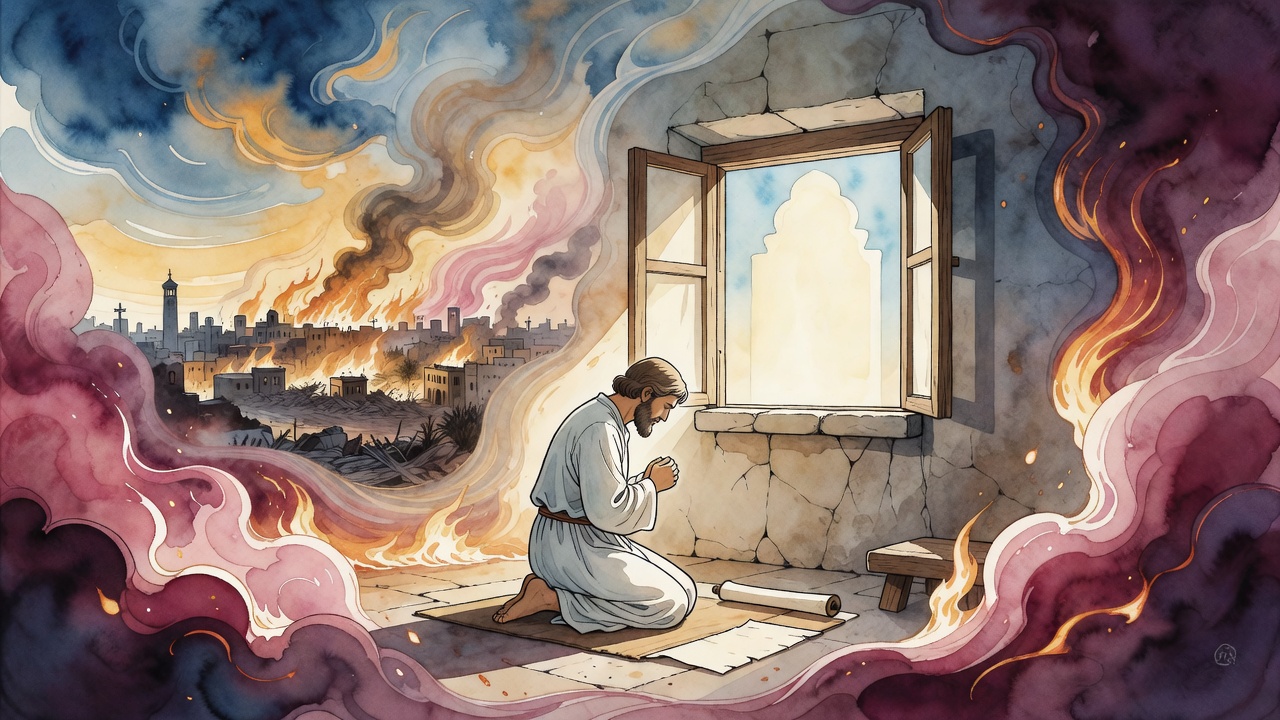
Rabbi Gershon woke with a raw throat and a notebook of words he had repeated until the letters blurred. Jerusalem had gone dry. The cisterns were low. Dust lay on the synagogue steps like a second skin. Women counted jars with their eyes before they counted prayers. Men argued over who still had a full barrel and who was lying.
 Click for full size
Rabbi Shalom from the West had called a fast and packed the people into one house of prayer. The custom there was cruel in its precision. The prayer leader had to rebuke the city from Gemara, Midrash, and verse without changing a syllable. A slip would shame him in front of heaven and the whole congregation. Gershon knew the rule. He had watched other men break on it.
All night he drilled the wording by a thin lamp. He mouthed the rebukes until his tongue tasted metal. By first light his voice was ash. He tried a single line out loud and heard only scrape. He sent his son Rabbi Leib with a message: he could not lead. The gathering broke apart. Men returned to the corners where they usually prayed, muttering that the day was already lost, that the fast would end with the same empty sky.
The Voice Came Back Mid-Service
During the service, Rabbi Shalom heard Gershon's voice return, not gradually, but whole. Rabbi Shalom stopped the replacement leader with a raised hand and pointed Gershon toward the lectern for the repetition and the selichot.
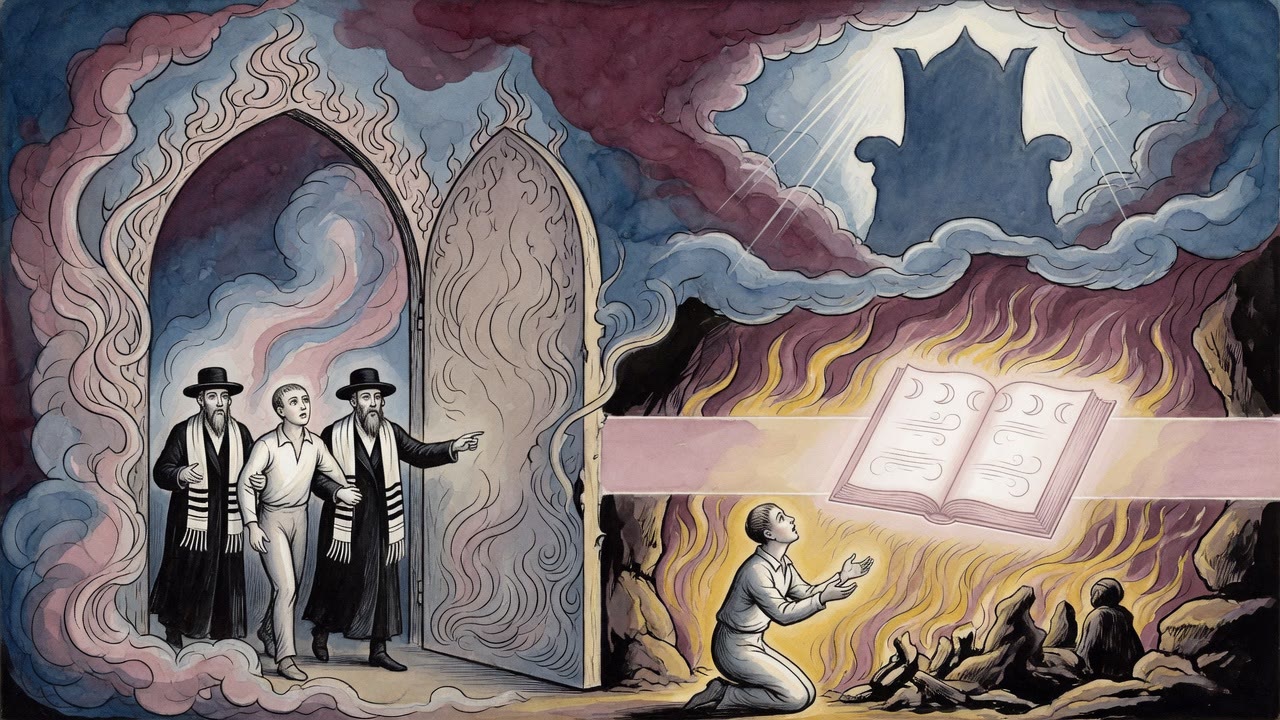
Gershon walked forward. The first lines left his mouth clean. The second wave rose easier still. He felt the prayer open the way a locked gate answers the right key. Words that had been dead chalk at dawn now carried weight. Faces in the room turned. Someone near the back began to cry without sound.
Then he stepped away.
His son caught his sleeve hard enough to twist the cloth. "Why did you stop?"
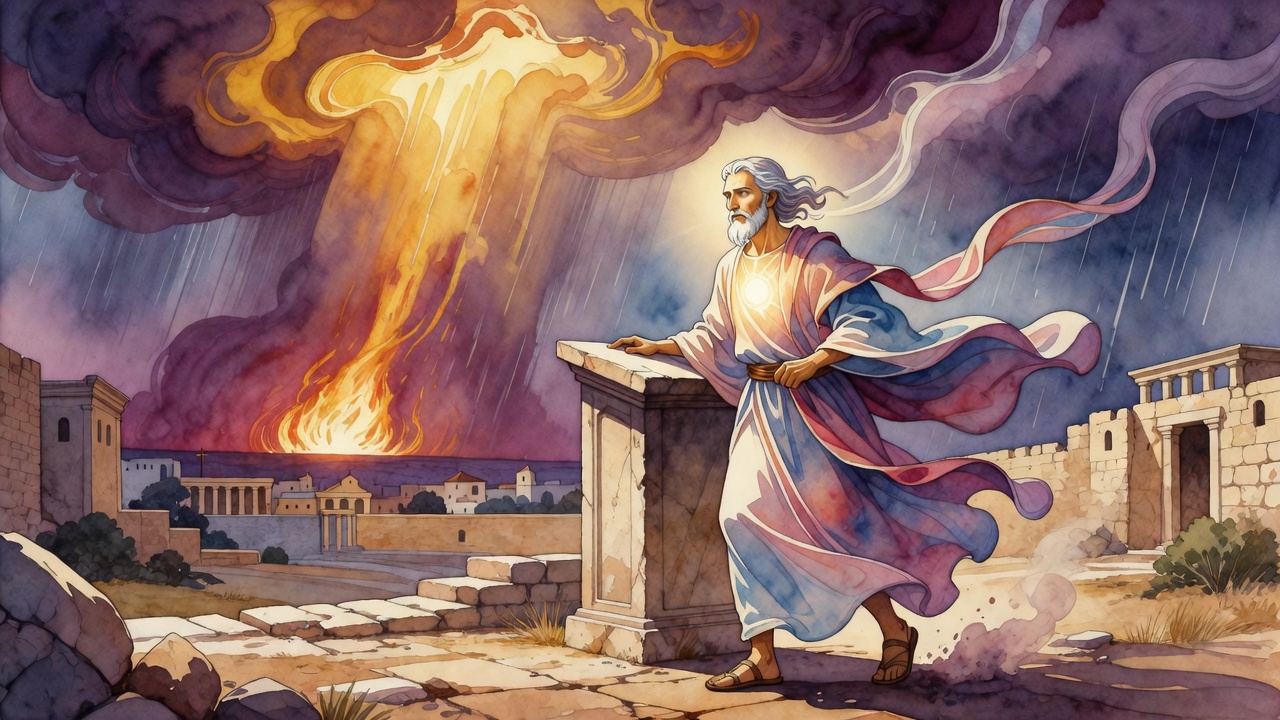
Gershon answered without looking at the windows. He had felt rain gathering, not as weather yet, but as a pressure behind the words, a thickness in the air above the ark. If he kept going, water would fall at once on Jerusalem's stones. And with that gift would come a pride so sharp it could cut the soul that had asked for mercy. He chose delay. Better rain in two or three days without that poison than a sky that opened to crown him in front of thirsty men.
The Hidden Danger Was Not the Drought
The city wanted water. Heaven was ready to give it. The danger lived in the space between answered prayer and the heart that claims the answer. Gershon named that danger before it could finish dressing itself as piety. He refused the scene in which the congregation would look at him and say the rain came because his mouth was stronger than theirs.
Pride does not always roar. Sometimes it arrives as a quiet satisfaction after a perfect phrase, a warmth under the ribs that says: see what you opened. Gershon felt that warmth start and cut the thread. He left the lectern while the prayer still worked, which is harder than leaving when the prayer fails.
Outside, the sky stayed hard. Inside, men whispered. A few were angry. A dry throat does not love restraint in another man's mouth. Gershon sat among them like a person who had put down a tool still hot.
When Hiddenness Is Named, Healing Starts
There is a teaching preserved from the circle of the Baal Shem Tov: heartache is often an illness of awareness, not only of circumstance. A soul can suffer because it no longer sees what is happening inside it. Concealment is worse than plain pain, because pain can still teach, while concealment hides even the teaching pain could give.
Gershon's act was that naming. He did not pretend the temptation was holy hunger for the city's good alone. He said, out loud to his son and later in the way the tale was told, that pride stood at the edge of the miracle. Once the hiddenness had a name, it lost full power. The drought outside could wait. The drought inside could not be fed.
The Torah's hard line, "I will surely hide My face" (Deuteronomy 31:18), is not only about exile of nations. It is also about a person who can no longer feel where he stands. Gershon stood in public prayer and still saw himself clearly enough to step back. That clarity is a kind of rain the midrash of the heart rarely credits, because it leaves no puddles on the street.
A man can be the instrument of a miracle and still be the first casualty of it. Gershon treated his own soul as part of the city's need. If pride flooded him, the rain would arrive attached to a new drought no cistern could fix.
Rain Came Without the Crown
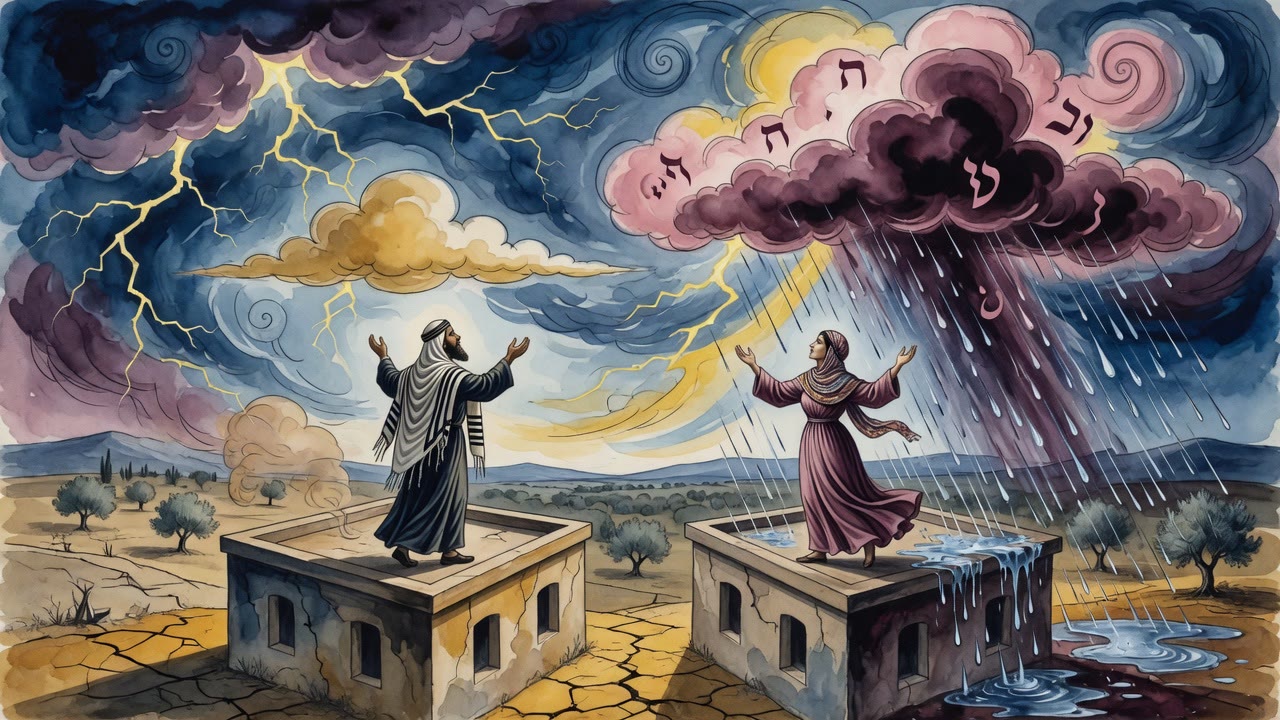
Two or three days later, the rain fell. No one could pin the first drop to a single man's final syllable. The cisterns took water the way a throat takes wine after a long fast. Gershon kept whatever private joy he had for the city, not for his role in it.
Rabbi Shalom had wanted a service that could move heaven. He got one, and then he got a man who knew when to stop moving it. In a dry city, that restraint is its own kind of rain: the kind that does not drown the one who calls it down.
Years later, when the tale traveled north from Jerusalem into the books of the Hasidim, listeners heard two miracles. The smaller one was weather. The larger one was a leader who could feel a prayer open and still refuse to finish it for the sake of his own soul. They told it when students wanted power more than clarity. They told it when a room full of thirsty people made a speaker feel larger than the words.
Gershon's legacy in the tale is not a sky he commanded. It is a lectern he left while the key still turned in the lock.
← All myths