5 min read

Prophets Knocked While Sagron Held the Gate

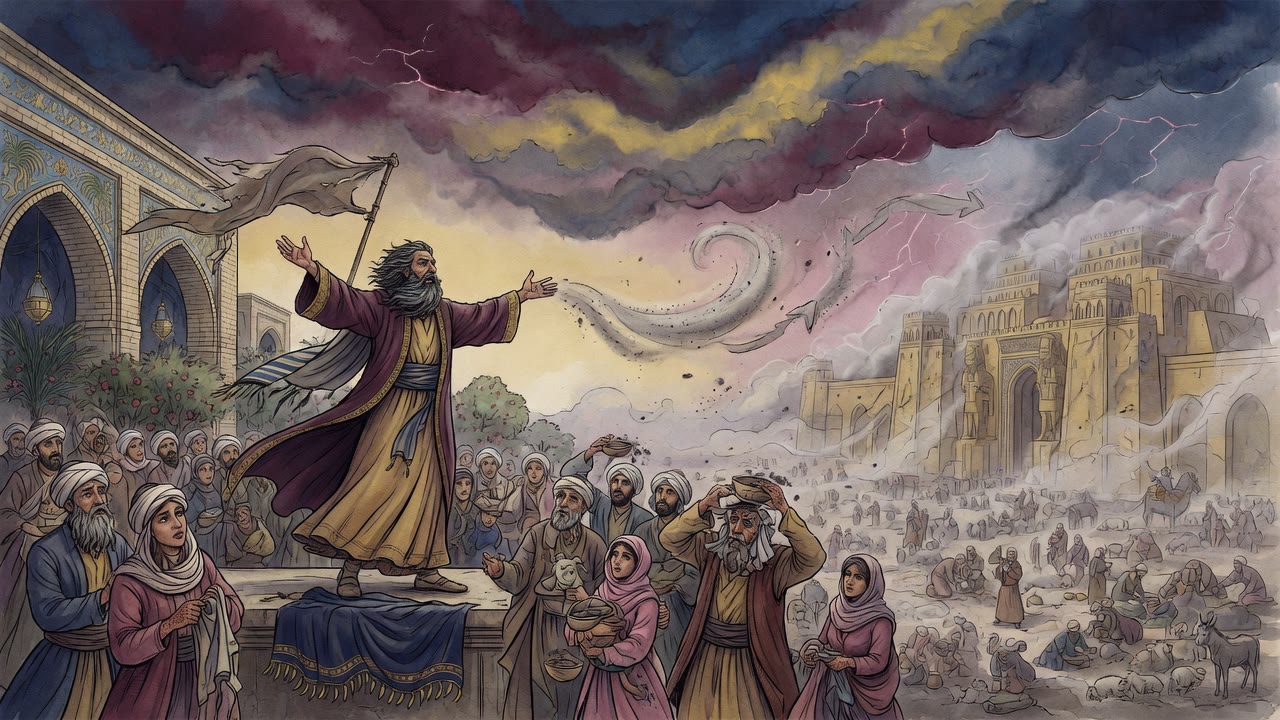
Prophets beat on the closed chamber and cried for open lips. Below, the wicked laughed in a smiling hour, and Israel could not yet thank with a whole heart.

Curated by Arthur · Told by Maggid ·
Table of Contents
  1. Masters of the Feet at the Door
  2. Announcement in the Throne Room
  3. The Smiling Hour of the Wicked
  4. When Even Thanksgiving Chokes
  5. Knock, Smile, and the Held Breath
Prophets Knocked While Sagron Held the Gate Click for full size

Masters of the Feet at the Door

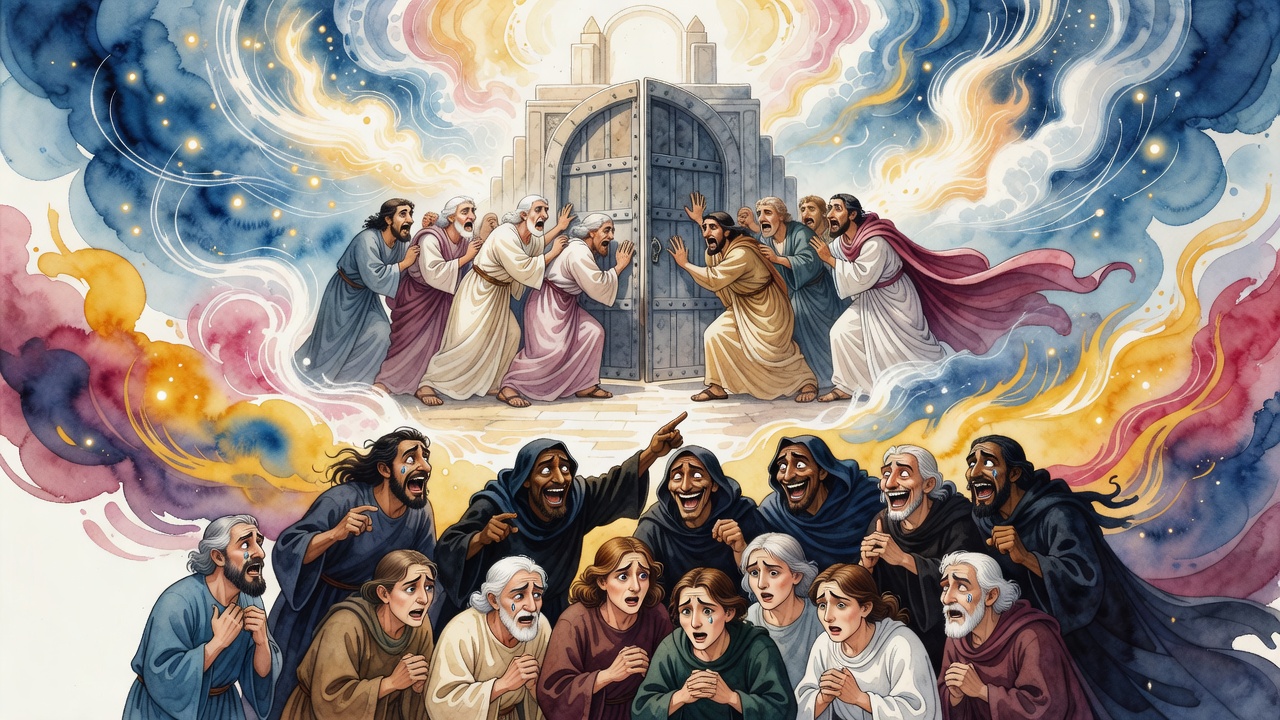
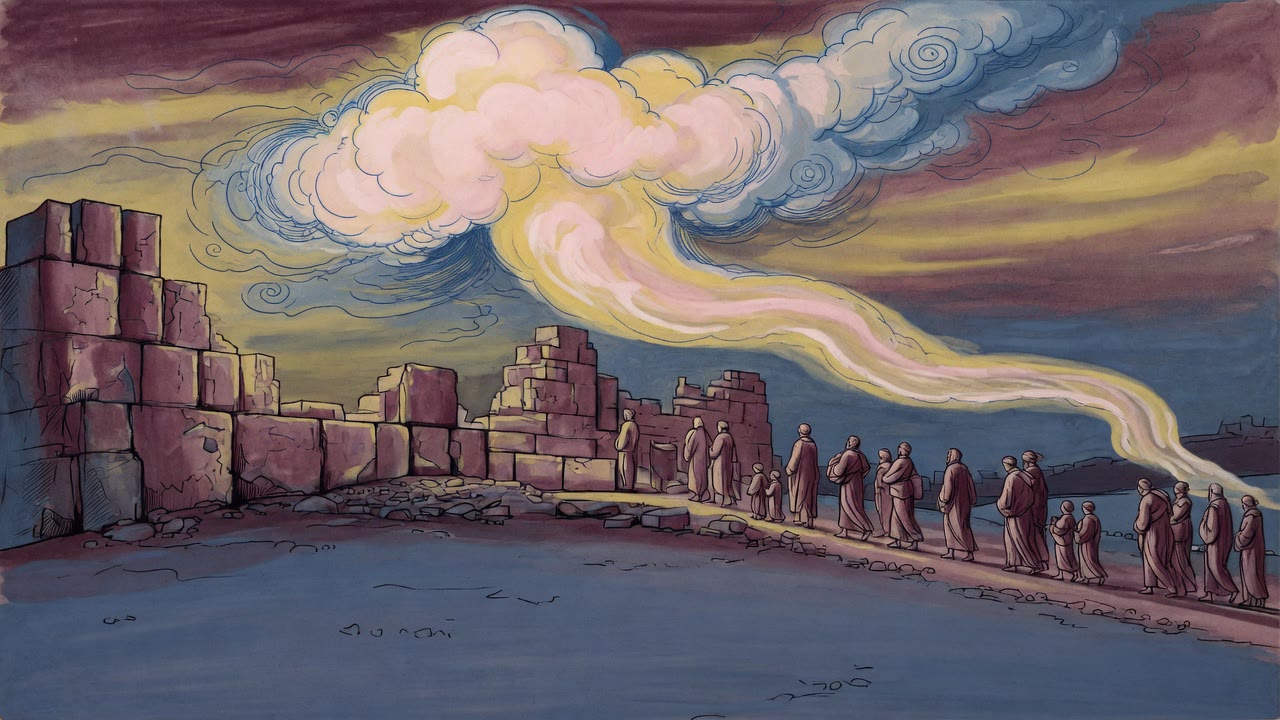
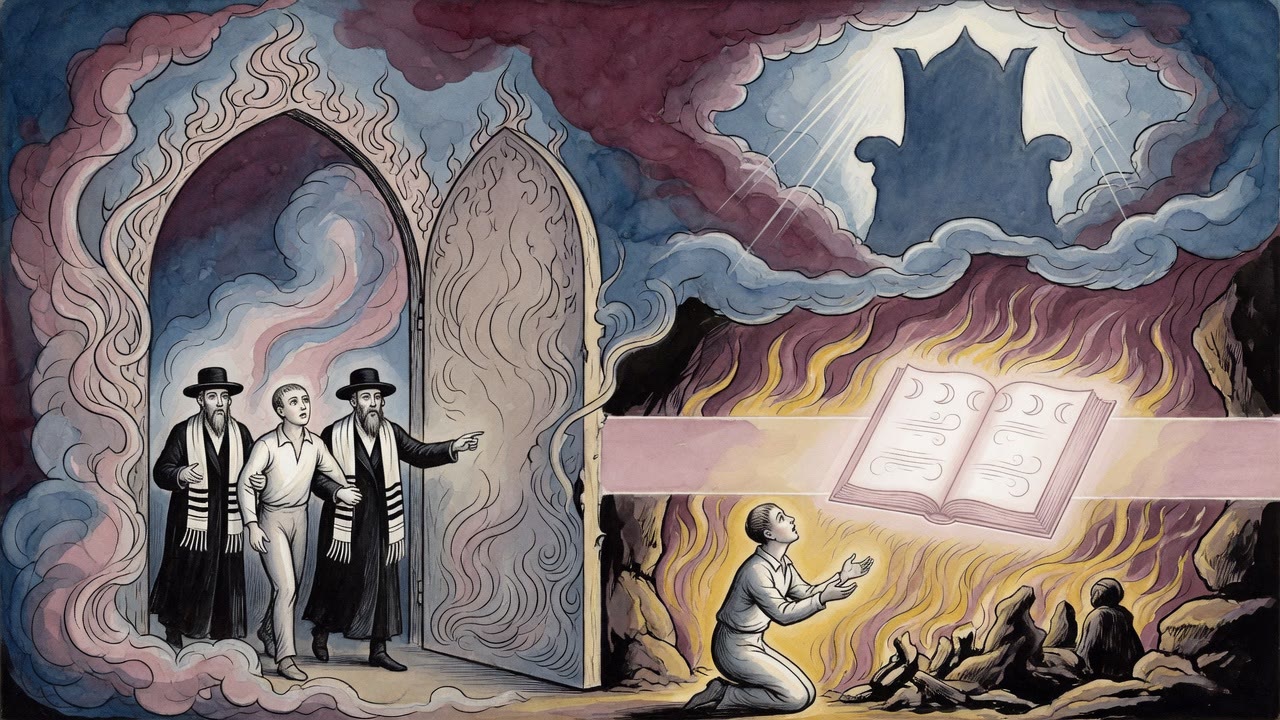
They came on urgent feet. The Tikkunei Zohar names prophets as masters of the feet, bodies that will not stay still while a gate stays shut. They stand before Sagron, the closer of the chamber, the keeper whose name is as the name of his Master, ADNY. They are not touring heaven. They are knocking.

Their cry is borrowed from David and aimed at the lock. "Adonai, open my lips" (Psalm 51:17). They want more than eloquence. They want the chamber opened so truth can pass. Open the gates. Let the emissaries of precept stand in the standing prayer before the King.

Announcement in the Throne Room

Guardians carry the noise inward. "Master of the worlds, behold, the masters of the feet are knocking at the gate." The report does not reduce them to poets. They are named as carriers of commandment, people who stand in the posture of the Amidah (the central standing prayer) even at the threshold of mystery. Access is not flattery. It is service demanding speech.

Sagron's silence is not absence. A closed chamber means prophecy and prayer both know delay. The feet keep moving. The knock keeps time. Somewhere the King hears the announcement and the world below waits for a mouth that can open without lying.

The Smiling Hour of the Wicked

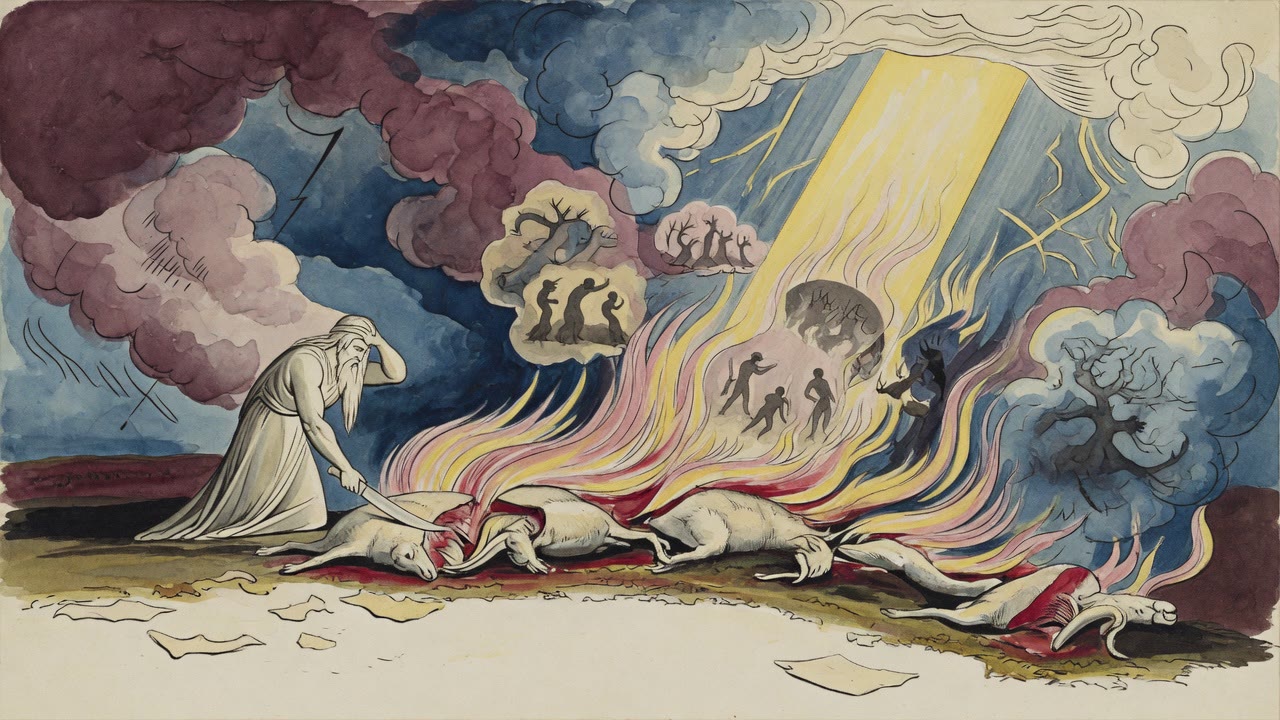
While prophets knock above, another teaching warns the living not to provoke a wicked person for whom the hour is smiling. The Talmud's caution sounds like street wisdom and ends in cosmology. That smile is brief. The destination named for such a life is the depth of Gehinnom (the place of punishment after death). Foolish laughter crackles like thorns under a pot (Ecclesiastes 7:6). Heat without light. Noise without future.

Habakkuk's line about the wicked swallowing the more righteous, yet not the completely righteous, hangs over the scene. Cosmic justice is slow to the eye that only watches markets and palaces. The liver, ancient seat of anger, finally rises. The universe is not permanently amused by cruelty that thrives for a season.

When Even Thanksgiving Chokes

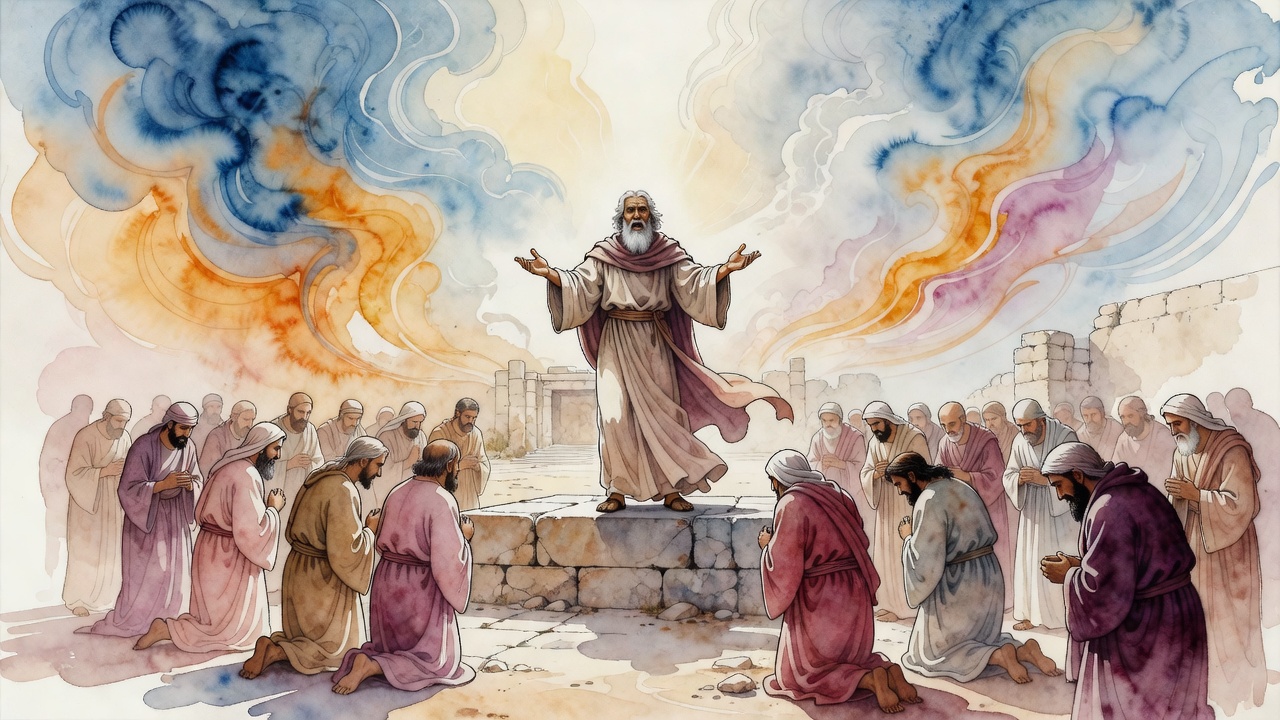
Psalm 138 wants a whole heart of thanks. Midrash Tehillim stages a dialogue that explains why the heart will not open. God urges Israel to proclaim good news to Zion. Israel answers with enemy-fear. "Your enemies were but grass," comes the reply. While they stood, you feared. Now lift your voice.

The pain lingers anyway. Israel asks when reckoning will come. The answer returns deeds upon heads (Obadiah 1:15). As long as oppressors prosper and shove the people from free speech, even the full force of "I will thank You with all my heart" cannot be uttered cleanly. Gratitude is not hypocrisy when it waits for the boot to lift. It is honesty about a throat still under a hand.

Knock, Smile, and the Held Breath

Bind the three scenes. Prophets knock because lips are still closed and the chamber still sealed. The wicked smile because their hour has not yet ended. Israel holds a psalm half-swallowed because enemies still arrange the air. None of these is the last frame.

Sagron will not hold the gate forever against emissaries of precept. The smiling hour is already marked for the depth. The grass of enemies dries. Until then the feet keep moving, the warning stays sharp, and the unfinished thanksgiving waits for a day when Amen and praise can leave the mouth without looking over a shoulder. The chamber's wood still feels the knock. The street still hears the laugh. The psalm still waits for its full breath.

The knock is not polite. Prophets who are called masters of the feet do not stroll. They pace. They strike wood with the same urgency that once struck kings. Sagron's closed chamber does not make them less real. It makes the wait audible.

Meanwhile a wicked man laughs in a market that still rewards him, and a psalm sticks in a throat that still tastes exile. The three clocks run together: heaven's gate, earth's injustice, Israel's unfinished praise. The tradition does not force a cheap harmony. It stacks the scenes until the pressure mounts. Knock. Smile. Held breath. Only one of those can last forever, and it is not the smile.

When the guardians finally announce the masters of the feet, they name them emissaries of precept, not tourists of light. The title matters. Speech demanded at the gate is speech already bound to commandments. Below, the warning not to provoke the smiling wicked is also bound to an end already written. Between knock and laugh, the psalm waits for a day when thanks can be whole because the boot has lifted. The chamber wood keeps the rhythm of their fists. The market keeps the sound of false ease. Somewhere between them a blessing is still unfinished, and that unfinished line is the true plot of the hour.


← All myths

From the tradition

Sources

3 sources

The texts behind this telling. Some cards carry a translation of the source; others are our own retelling of it, and each card says which. Every card links out to the original.

Tikkunei Zohar 65:5Tikkunei Zohar

Retold in our words. Read the original at the link below.Sefaria-hosted English translation · CC-BY

), urgently seeking entry.

These prophets are at the gate, knocking, pleading with Sagron. Who is Sagron? He's the gatekeeper, the one who "closes the chamber." Intriguingly, he’s also called ADNY – usually understood as Adonai, "My Lord," one of the names we use for God. The text emphasizes that his name "is as the name of his Master." We find a similar idea expressed elsewhere; for example, the Babylonian Talmud (Sanhedrin 38b) touches on the relationship between divine messengers and the Divine Name.

These "masters of the feet," these prophets, they're not just idly chatting. They’re crying out, quoting (Psalm 51:17): "ADNY, open my lips!" They're not just asking for personal eloquence, but for the very ability to speak truth, to communicate with the Divine. They’re essentially demanding, "Open the gates of the chamber!"

What happens then?

The guardians of the gate, the next level of celestial bureaucracy, if you will, they go into the King's presence – the King being, of course, the ultimate Authority. They announce: "Master of the worlds! Behold, the masters of the feet are knocking at the gate."

But they don't just identify them as prophets. They call them "emissaries of precept," those who embody and carry out divine commandments. They are also described as standing "in the standing prayer" before God. This "standing prayer" likely refers to the Amidah, the central prayer in Jewish liturgy, recited while standing.

So, what does it all mean?

It's a powerful image of striving for connection, of the prophets' relentless pursuit of communication with the Divine. They are not casually strolling up to the gate; they are knocking, pleading, urgently seeking access. The layered description, "masters of the feet," "emissaries of precept," those who stand in prayer, emphasizes their dedication and their role as intermediaries between the human and the divine.

What gates are we trying to open? What voices are we trying to hear? And what are we willing to do to break through? Perhaps the Tikkunei (spiritual repair) Zohar isn't just telling us a story about prophets. Maybe it's holding a mirror up to our own spiritual journeys.

Full source
Tikkunei Zohar 98:1Tikkunei Zohar

Retold in our words. Read the original at the link below.Sefaria-hosted English translation · CC-BY

Like the universe is playing a cruel joke. Well, Jewish tradition has wrestled with this very question for centuries.

Kohelet, or Ecclesiastes, that famously melancholy book of the Bible, puts it starkly: "…the laughter of the fool…" (Ecc. 7:6). It's a jarring image, this carefree joy in the face of, well, foolishness. What’s going on here?

The Tikkunei (spiritual repair) Zohar, a central text of Kabbalah. Jewish mysticism, explores this apparent paradox. And it directs us to a fascinating passage in the Babylonian Talmud, Berakhot 61b. There, we find a warning: "If you see a wicked person for whom the hour is smiling, do not provoke him."

Why this strange caution? Is it simply about avoiding conflict? It's deeper than that. The Talmud continues (Berakhot 7b), explaining that this wicked person is "destined for the depth of hell." Grim. But crucial to understanding the whole picture.

The prophet Habakkuk (Ḥab. 1:13) adds another layer, with the phrase "..the one more righteous than he, it swallows, but the 'completely righteous-person' it does not swallow." This idea of being "swallowed" hints at a kind of cosmic justice. Or rather, the eventual reckoning that awaits those who stray too far.

So, what’s the connection between the laughter of the fool and the depths of hell? The tradition suggests a fleeting, superficial joy. A fleeting moment of success or happiness does not change the ultimate destination of a wicked person. Their actions have consequences, and ultimately, they will face them.

The Talmud concludes with a rather visceral image: "The liver gets angry and kills" (Berakhot 61b). The liver, in ancient thought, was seen as the seat of anger. This anger, perhaps, is the righteous indignation of the universe itself, finally responding to injustice.: the idea isn't that the wicked are inherently happy. It's that their temporary smiles might be masking a deeper, darker reality. It’s a reminder that appearances can be deceiving, and that true joy isn't about fleeting pleasures, but about living a life of meaning and integrity.

So, the next time you see someone who seems to be getting away with something, remember the laughter of the fool. Remember the depths of hell. And perhaps, most importantly, remember to focus on your own path of righteousness.

Full source
Midrash Tehillim 138:1Midrash Tehillim

Retold in our words. Read the original at the link below.Rabbi Mike Feuer, Jerusalem Anthology · CC-BY

The book of Psalms, Tehillim in Hebrew, is often seen as a direct line to the divine, a collection of heartfelt expressions. But what happens when even those expressions are stifled by suffering? Psalm 138 begins with the powerful declaration, "I will thank you, O Lord, with all my heart..." But Midrash Tehillim, an ancient collection of rabbinic interpretations of the Psalms, takes us on a journey to understand the full weight of those words.

The Midrash (rabbinic interpretive commentary) begins by juxtaposing this verse with a verse from Isaiah: "Grass withers and flowers fade, but the word of our God endures forever." (Isaiah 40:8). What's the connection? Well, the Midrash frames it as a dialogue between God and Israel. God urges them, "Go up and proclaim the good news to Zion!" But Israel is afraid, paralyzed by the presence of their enemies. "We are afraid because of our enemies," they cry.

God's response is both comforting and challenging. "Your enemies were but grass," God reassures them. "As long as they existed, you were afraid of them. But now that they are gone, lift up your voice and do not be afraid."

The pain of the past lingers. Israel yearns for justice, for a reckoning. "When will we be able to avenge ourselves against the wicked?" they ask. The Midrash answers with a stark reminder: "As you have done, it will be done to you; your deeds will return upon your own head." (Obadiah 1:15). This isn't about revenge, but about the cyclical nature of actions and consequences. The Midrash doesn't shy away from the brutal realities of the past, citing the horrific image of children being smashed against rocks (Psalm 137:9) as a consequence for earlier actions.

And here's the crux of the matter. The Midrash suggests that as long as the wicked prosper, as long as they oppress Israel, pushing them around and preventing them from expressing their true feelings – even cursing, if that’s what’s in their hearts – genuine gratitude is impossible. Only when those oppressors are gone, only when the threat is lifted, can the full force of "I will thank you with all my heart" be truly felt and uttered. It's not about offering superficial thanks while seething with resentment. It's about a profound shift in the soul, a release from the shackles of fear and oppression that allows for authentic gratitude to blossom. It’s a gratitude born not just from relief, but from the space finally created to truly connect with the divine. The Zohar, the foundational text of Kabbalah, often speaks of the importance of intention, of kavanah, in prayer. This Midrash emphasizes that idea – true prayer, true gratitude, can only arise from a place of genuine freedom.

Remember the struggle, the fear, and the eventual liberation that allows for heartfelt thanks to finally emerge. And consider: What "grass" needs to wither in your own life before you can truly say, "I will thank you, O Lord, with all my heart?"

Full source