Retold in our words. Read the original at the link below.The Minor Tractates of the Talmud, trans. A. Cohen, Soncino Press (1965) · CC-BY
R. JOSHUA SAID: THE EVIL EYE, THE EVIL INCLINATION, AND THE HATRED OF MANKIND DRIVE A MAN OUT OF THE WORLD.THE EVIL EYE. What does this mean? It teaches that as a man regards his own house, so he should regard the house of his fellow; and as a man would not wish an evil report spread about his wife and children, so he should not wish an evil report spread about his fellow’s wife and children.Another interpretation. What is meant by THE EVIL EYE? It teaches that no man should begrudge the learning of his fellow. The story is told of a man who looked with a grudging eye upon his colleague’s learning that his life was cut short and he departed [prematurely from the world].
THE EVIL INCLINATION. What does this mean? It has been said that the evil inclination is senior to the good inclination by thirteen years,1The evil inclination, it was held, entered the human body even before birth, whereas the good inclination was acquired at the age of thirteen, the age of religious responsibility. for it grows with and accompanies the child from the moment it comes forth from the mother’s womb. If the child begins to profane the Sabbath it2i.e. the evil inclination the child has no sense of wrongdoing. does not deter him; if he is about to take life it does not deter him; if he is about to commit an immoral act it does not deter him. After thirteen years, however, the good inclination is born in him. If then he is about to profane the Sabbath it3i.e. the good inclination. warns him, ‘You fool! Scripture states, Every one that profaneth it shall surely be put to death’.4Ex. 31, 14. If he is about to take life, it warns him, ‘You fool! Scripture states, Whoso sheddeth man’s blood, by man shall his blood be shed’.5Gen. 9, 6. If he is about to commit an immoral act, it warns him, ‘You fool! Scripture states, Both the adulterer and the adulteress shall surely be put to death’.6Lev. 20, 10. When a man’s passions are stirred and he is about to commit an act of lewdness, all his limbs are ready to obey him, because the evil inclination is king over the two hundred and forty-eight limbs of man. On the other hand, when a man is about to perform an act of piety, all his limbs become sluggish,7The Heb. mith‘annin is unusual in this sense, but might be derived from the verb ‘innah, ‘to delay’ (cf. ‘innuï haddin, ‘the delay of justice’, Aboth 5:8). Schechter suggests the reading mith‘aẓẓlin, ‘are slothful’. because the evil inclination which is within him bears sway over the two hundred and forty-eight limbs of his body, whereas the good inclination is like one who is confined in prison, as it is stated, For out of prison he came forth to be king,8Eccl. 4, 14. which verse has been interpreted as referring to the good inclination.9Cf. Midrash Rabbah, Ecclesiastes, ad loc. (Sonc. ed. p. 123).Others interpret this verse as referring to the righteous Joseph. When that wicked woman10Potiphar’s wife (Gen. 39, 7ff). came [to tempt him] she afflicted him with her words, saying, ‘I will have you imprisoned’; and he replied, ‘The Lord looseth the prisoners’.11Ps. 146, 7. She said, ‘I will have your eyes plucked out’; and he replied, ‘The Lord openeth the eyes of the blind’.12ibid. 8. She said, ‘I will bend your stature’; and he replied, ‘The Lord raiseth up them that are bowed down’.13ibid. She said, ‘I will accuse you of sin’;14lit. ‘I will make you wicked’. and he replied, ‘The Lord loveth the righteous’.15ibid. She said, ‘I will make you a stranger’;16The word in the text ’armai, ‘a heathen’, makes no sense. The translation follows the version quoted by the Baalë Tosafoth on Gen. 39, 12. Joseph is threatened with banishment. and he replied, ‘The Lord preserveth the strangers’.17ibid. 9. Finally he said, ‘How then can I do this great wickedness’.18Gen. 39, 9.Marvel not at the [virtue of the] righteous Joseph, for consider the case of R. Zadok, the greatest man of his generation. When he was taken captive, a certain matron acquired him [as a slave] and sent in a beautiful maid-servant to him. As soon as he saw her, he turned his eyes to the wall so as not to look upon her, and sat absorbed in study the whole night long. In the morning the girl went and complained to her mistress, saying, ‘I would rather die than be given to that man!’ [The matron] sent for him and asked, ‘Why did you not treat this woman as men usually act?’ He replied, ‘What else could I do, seeing that I belong to the High-priestly line? I am from a noble family and said to myself, “[I must refrain] lest I cohabit with her and increase the number of illegitimate children in Israel” ’. On hearing his words, she ordered [his release] and set him free with great honour.Do not marvel at [the virtue of] R. Zadok, for consider the case of R. ‘Aḳiba who was greater than he. When R. ‘Aḳiba came to a certain land,19MS. E. reads ‘to Rome’. a malicious accusation was laid against him before the Ruler. The latter sent in two beautiful women to him who had bathed, anointed and adorned themselves like brides for their grooms. They importuned him throughout the night, each saying, ‘Turn to me’. He sat between them, spat [in disgust], and turned to neither of them. They went and complained to the Ruler, saying, ‘We would rather die than be given to that man!’ He sent for him and asked, ‘Why did you not treat these women as men usually act towards women? Are they not beautiful? Are they not human like yourself? Did not He Who created you create them?’ He answered, ‘I could not do otherwise; their odour seemed to me like the odour of carrion, torn beasts and creeping things’.Do not marvel at [the virtue of] R. ‘Aḳiba, for consider the case of R. Eliezer the Great who was more distinguished than he. R. Eliezer brought up his sister’s daughter, and for thirteen years she [slept] with him in one bed until she reached puberty. Then he said to her, ‘Go and get married’. She replied, ‘Am I not your maid, [even contented] to be a servant to wash the feet of your disciples?’20By this expression she implied her desire to marry him. The parallel passage in j.Yeb. XIII, 2, 13C reads, ‘I am your handmaid to wash the feet of my master’s slaves’. He said to her, ‘My daughter, I am now an old man; go and marry a young man of your own age’. She replied, ‘Have I not already told you that I am your maid, [even contented] to be a servant to wash the feet of your disciples?’ When he heard her words, he obtained her consent to a betrothal and married her.
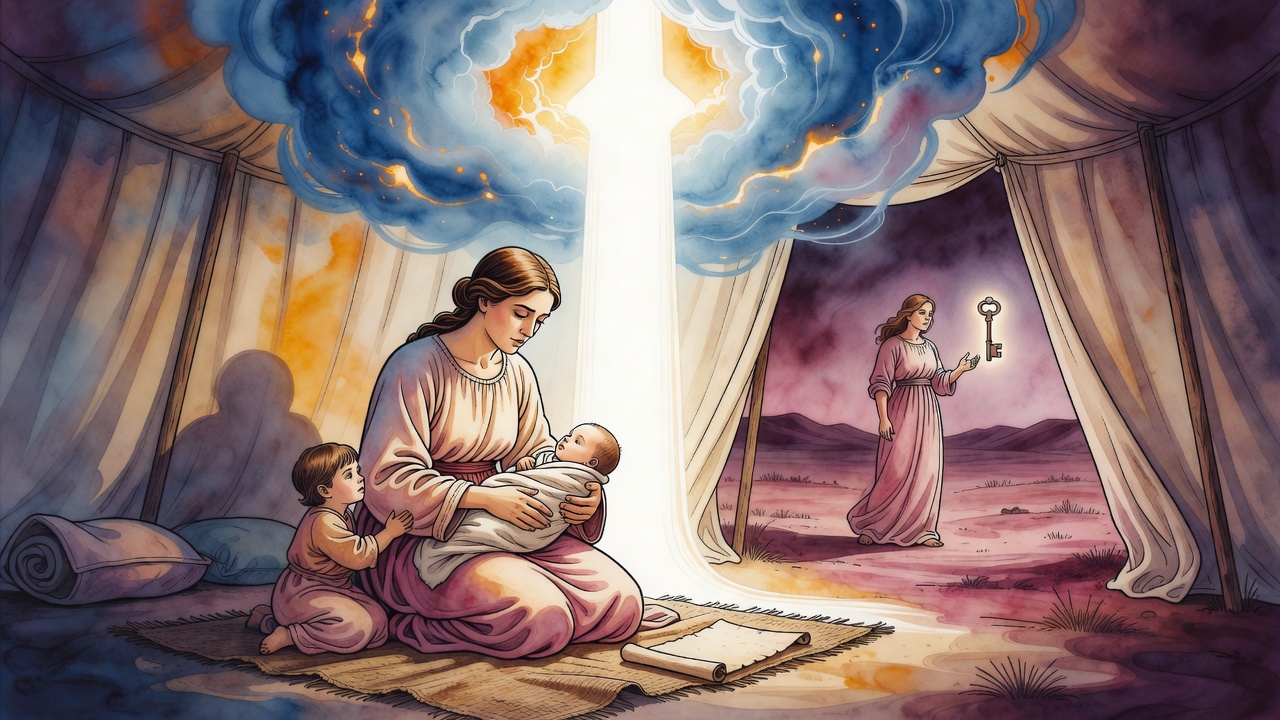
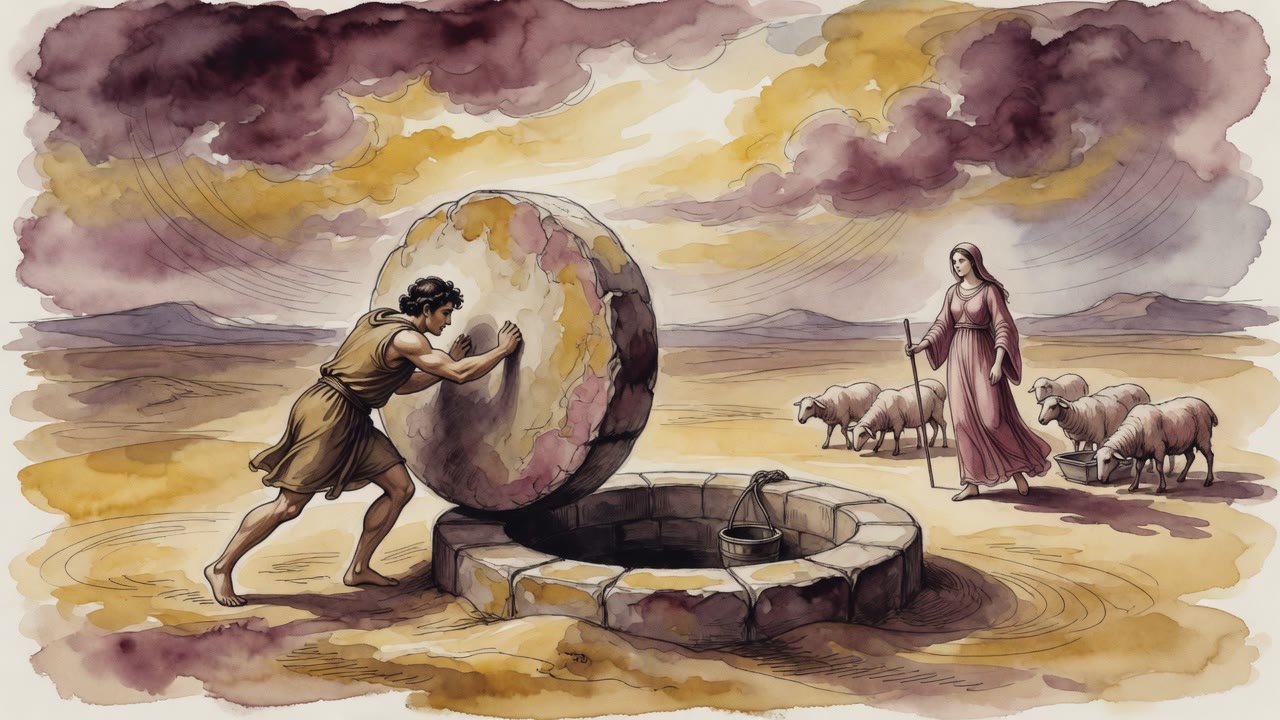
R. Reuben b. Iẓtroboli said: How can a man keep far away from the evil inclination which is within his body? For the first drop which a man injects into a woman is the evil inclination.21i.e. the first seed, the result of man’s passion, creates the evil inclination in the unborn child. The evil inclination dwells at the entrances of the heart, as it is stated, Sin coucheth at the door.22Gen. 4, 7. Cf. Ber. 61a (Sonc. ed. p. 384). It already speaks to the human being while he is an infant in the cot, saying, ‘That man seeks to kill you’, and [in consequence the infant] is ready to pluck out his hair.23The aggressive tendencies in a child are accordingly explained as incitement by the evil inclination, the latter creating the fear that persons wish to do him harm. When an infant lies in his cot and places his hand upon a snake or a scorpion so that he is bitten, this was caused by none other than the evil inclination which is within his body. Or when he lays his hand on glowing coals and is burnt, this was caused by none other than the evil inclination which is within his body, since the evil inclination it is that drives him headlong [to destruction]. Observe, however, a kid or lamb: when it sees a well it turns back, since there is no evil inclination in a beast [to lead it into harm].R. Simeon b. Eleazar said: I will explain it to you by a parable. To what is the evil inclination like? [25a] To a piece of iron which is cast into the fire. As long as it is in the fire one can make of it whatever vessel he wishes. So it is with the evil inclination: there is no other remedy for it but the study of the Torah which is likened to fire;24Cf. Jer. 23, 29, homiletically explained as teaching that by a man’s devotion to Torah, God will cause the enemy (i.e. the evil inclination) to be at peace with him and cease assailing him. as it is stated, If thine enemy be hungry, give him bread to eat, and if he be thirsty, give him water to drink; for thou wilt heap coals of fire upon his head, and the Lord will reward thee.25Prov. 25, 21f. Read not will reward [yeshallem] thee but ‘will make him at peace [yashlim] with thee.’R. Judah the Prince said: I will explain it to you by a parable. To what is the evil inclination like? To the case of two men who entered an inn and one of them was arrested on a charge of robbery. When asked, ‘Who was with you [as an accomplice]?’ he could reply, ‘There was no one with me’; but he says to himself, ‘Since I am to be executed, let my fellow be executed along with me’. In the same way the evil inclination speaks, ‘Since I am doomed in the world to come, I will drag the entire body with me to destruction’.R. Simeon b. Yoḥai said: By this reasoning Israel will never see Gehinnom (the place of spiritual purification after death). This may be explained by a parable. To what is the matter like? To a mortal king who had a field of poor quality. Certain men came and leased it at a rental of ten kors of wheat annually. They manured it, hoed it, watered it and weeded it; but they could only make it yield one kor of wheat during the year. The king asked them for an explanation and they replied, ‘Our sovereign lord! You know that the field which you leased to us originally yielded nothing to you; now after manuring it, weeding it and watering it, we made it yield us no more than one kor of wheat’. In like manner Israel will in the future plead with the Holy One, blessed be He, ‘Lord of the universe! Thou knowest that it is the evil inclination that incites us, as it is stated, For He knoweth our impulse’.26Ps. 103, 14. E.V. our frame, the Heb. being the same as for ‘inclination, impulse’.
THE HATRED OF MANKIND. What does this mean? It teaches that a man should not adopt the rule: Love the Sages and hate the disciples, or Love the disciples and hate the ‘Am ha’areẓ. Let his rule be: Love them all, and hate [only] heretics, apostates, seducers and informers. So said David, Do not I hate them, O Lord, that hate Thee? And do not I strive with those that rise up against thee? I hate them with utmost hatred; I count them mine enemies.27ibid. CXXXIX, 21f. But does not Scripture declare, Thou shalt love thy neighbour as thyself: I am the Lord?28Lev. 19, 18. And why? Because I created him. If he acts as thy people should act,29Cf. Ex. 22, 27, Thou shalt not … curse a ruler of thy people, and B.Ḳ. 94b (Sonc. ed. p. 549). then you must love him, but if not, then you must not love him. R. Simeon b. Eleazar said: With a great oath30So according to the MSS.; V reads ‘in a great hour’ which makes no sense. was this command said, Thou shalt love thy neighbour as thyself. I the Lord have created him31Is. 45, 8. E.V. created it. if you love him, I am trustworthy to give you a good reward; but if you do not, I am a Judge to punish you.32On this passage, cf. Finkelstein, op. cit. pp. 47-52.

 Click for full size