5 min read

Jacob Stacked Twelve Stones That Became One Pillow

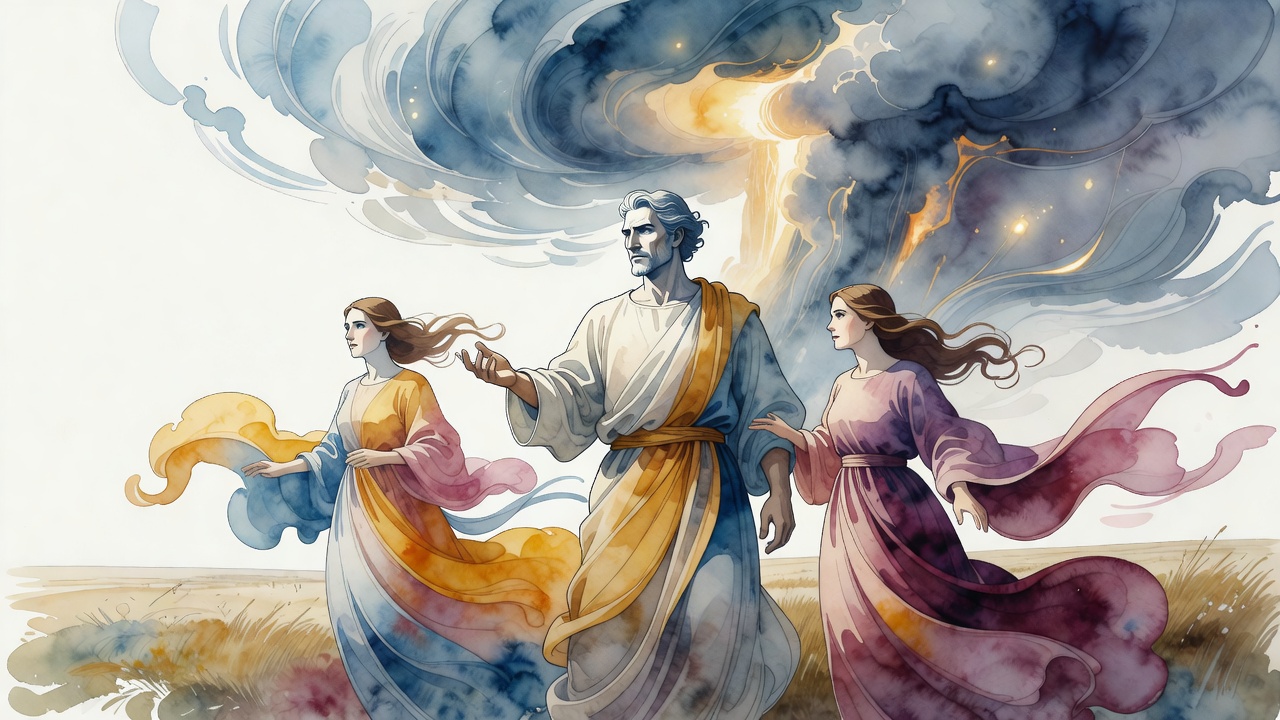
Jacob had not lain down to sleep in fourteen years. On the road out of Beersheba he stacked twelve stones under his head and put a condition on them.

Curated by Arthur · Told by Maggid ·
Table of Contents
  1. Fourteen Years Without Lying Down
  2. He Would Not Sleep Until the Stones Answered
  3. Leah Named Her Sons Like Verdicts
  4. The Priest at the Threshing Floor
  5. God Blessed Him With the Words for Mourners
Jacob Stacked Twelve Stones That Became One Pillow Click for full size

Fourteen Years Without Lying Down

Jacob lay down at Bethel, and it was the first time in fourteen years.

He had spent them hidden in the house of Ever, studying, and in all that time he never stretched out to sleep. He sat up through the nights and recited. Fifteen songs of ascent, one after the other, and some say the whole book of Psalms before morning.

Now he was on a road with nothing on him, running from a brother who had promised to kill him, and the sun had gone down on him in open country. He looked at the ground and started picking up stones.

He Would Not Sleep Until the Stones Answered

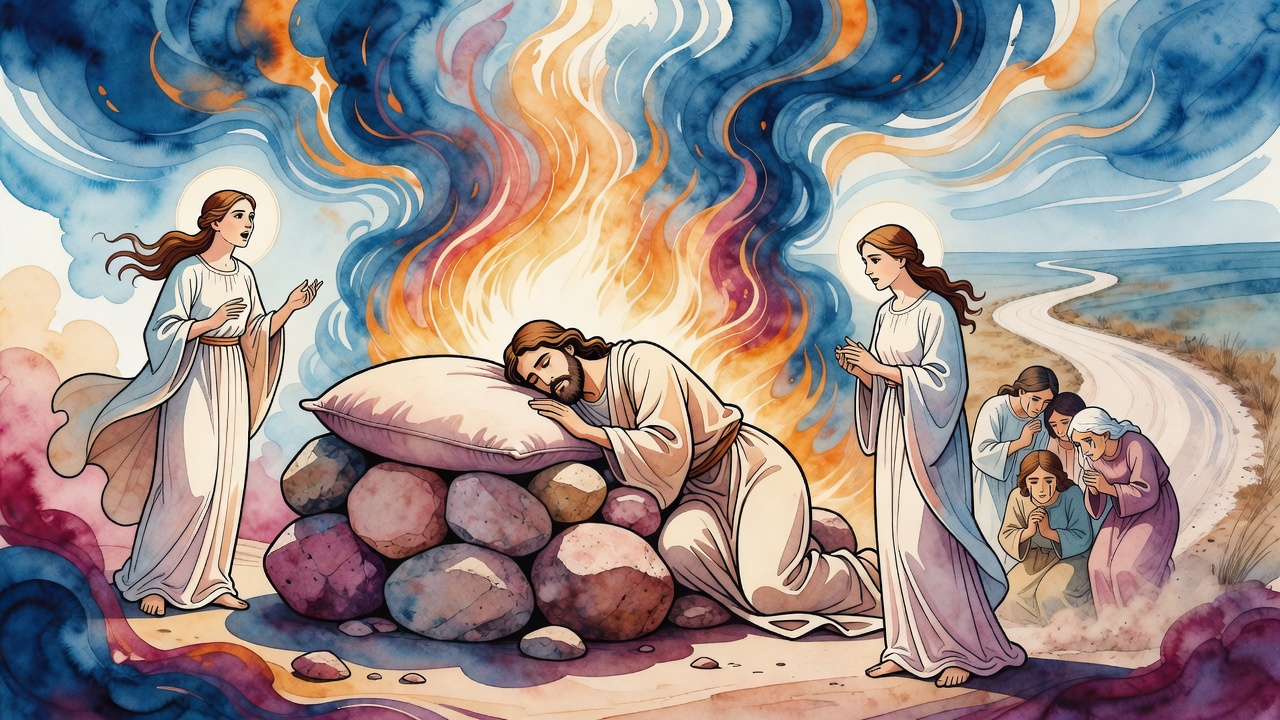
Twelve of them. He stacked them under his head and put a condition on them, the way a man talks to God when he is too tired to be careful.

Abraham never produced twelve tribes. Isaac never produced twelve tribes. "If these twelve join with one another, I will know that I am going to produce twelve tribes."

There was an uglier fear underneath the first one. His grandfather had produced waste along with the good, Ishmael first and then the sons of Keturah. His father had produced Esau and every chieftain who came out of Esau. Jacob had been running from that waste for three days and it was his own family. If the stones came together, nothing like that would come out of him.

Other travelers on that road had a plainer reason for arranging stones around their heads. Rabbi Yosei bar Zimra said Jacob built his into a gutter around his skull because of the animals.

The stones joined. Where God only passes through, mountains melt and valleys split open like wax; in a place where He shows Himself, stone does not stay stone. The twelve became one. Under his head it went soft as a bed, soft as a feather pillow, and he slept.

Leah Named Her Sons Like Verdicts

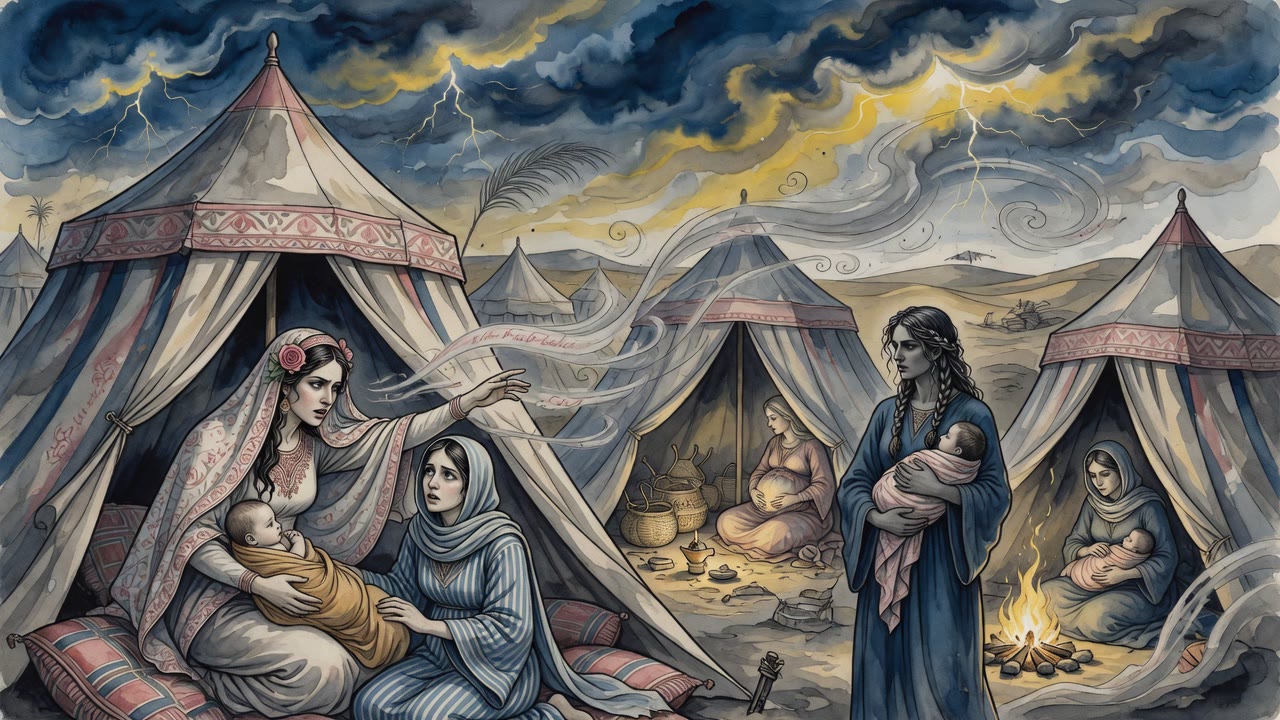
In Laban's house, Leah bore sons and named them out loud, and every name was a report on her marriage.

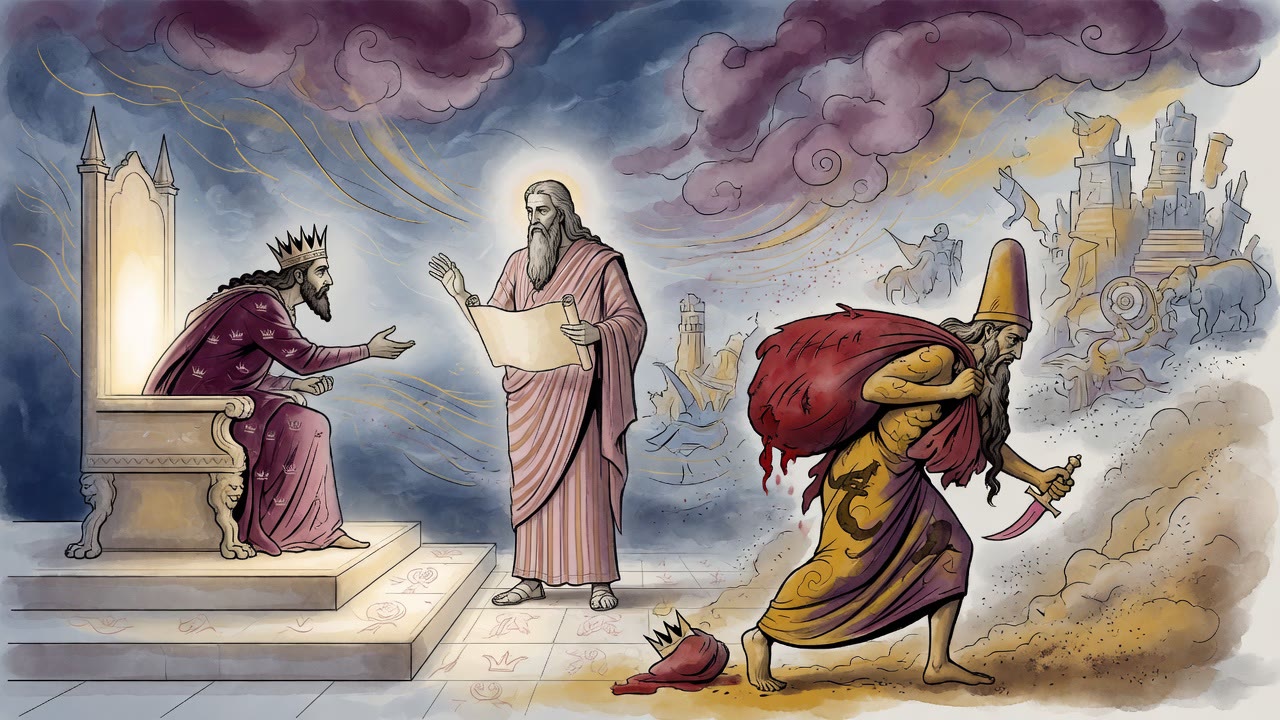
"Because the Lord heard that I am hated, He gave me this one too." She called him Simeon (Genesis 29:33). The hearing ran further than she meant it to. Out of that son would come Zimri son of Salu, who would walk a Midianite woman past Moses and the whole weeping assembly, and the man who put a spear through that scene would come out of Levi, and his name would be Pinhas. A mother's relief at being heard carried a wound and its healer in one breath.

The next boy she named for company. "This time my husband will accompany me, since I have borne him three sons." Levi (Genesis 29:34). Rabbi Yudan said that child would end up doing the accompanying for everyone: Levi is the tribe that walks the children to their Father in heaven.

The Priest at the Threshing Floor

The fourth son she named differently. "This time I will thank the Lord." Judah (Genesis 29:35). Then she stopped bearing for a while, as though the room had finally gone quiet.

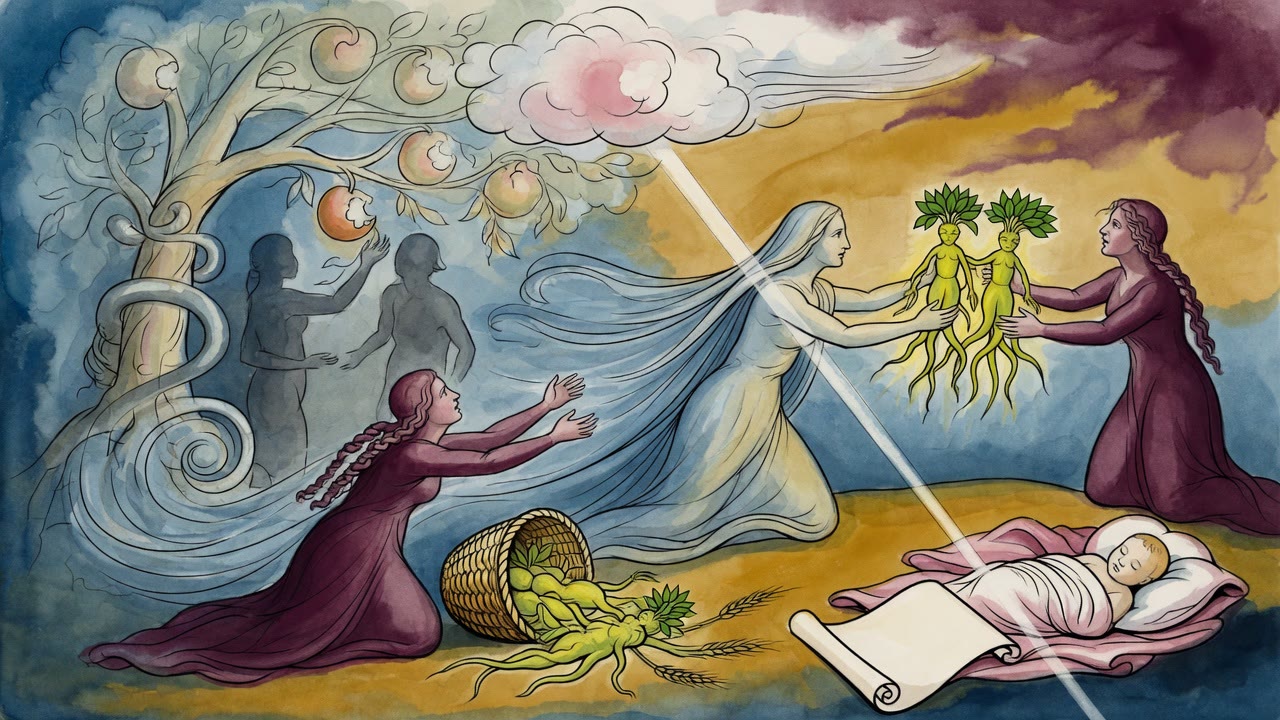
Rabbi Berekhya told it with a priest in it. A priest comes down to the threshing floor at harvest. One man hands him a full measure of tithe, a kor of grain, and the priest takes it and says nothing. Another man hands him a fistful of ordinary produce that he owes to nobody, and the priest thanks him warmly. The first man is insulted. "I gave you a kor. He gave you a handful. You thank him?"

"You gave me from my portion," the priest said. "He gave me from his own."

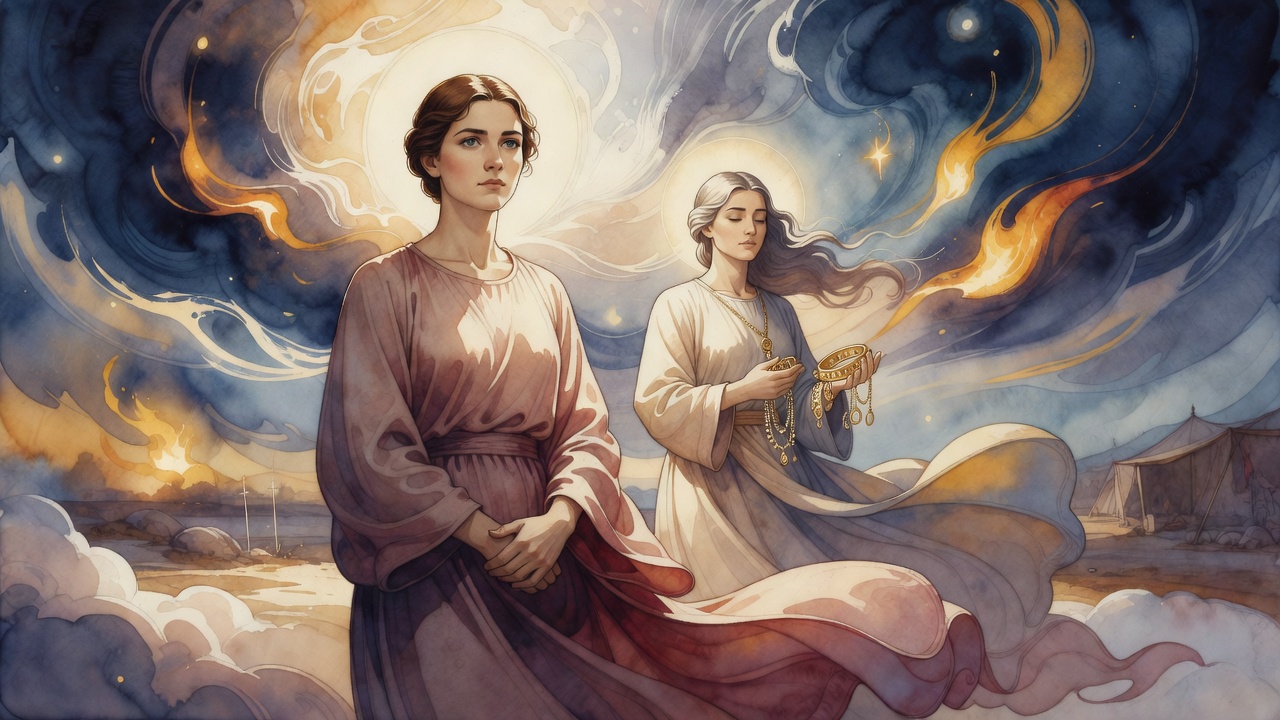
Four wives, twelve sons expected, three apiece. Leah had counted her share and reached the end of it with her third. The fourth was not her portion at all. It came out of somebody else's, and she put the thanks in the boy's name so it could not be taken back.

God Blessed Him With the Words for Mourners

Jacob came back into Canaan a rich man with a limp and a second name, and God appeared to him again (Genesis 35:9).

Rabbi Berekhya heard a door closing in that word again. I will not attach My name to anybody else. Abraham, Isaac, and Jacob, and there is no fourth name on the list. Rabbi Yudan heard a promise instead, that there would be another appearance still to come.

And He blessed him. Rabbi Asi said in the name of Rabbi Yochanan that the blessing was the one spoken over mourners. Rebecca had died while her son was away.

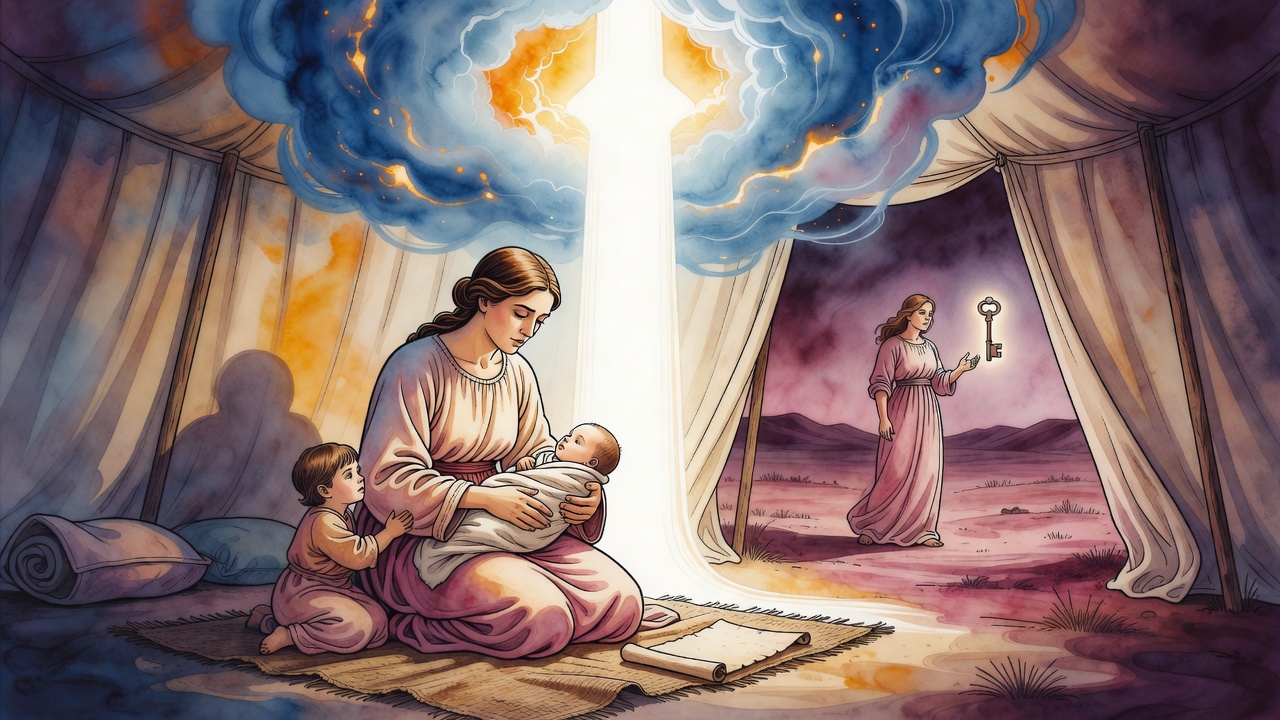
The boy who put stones under his head to ask whether his line would hold came home to a full house and an empty one. A house full of sons, and no mother left to show them to. What God said to him at Bethel that day was what people say to a man whose dead is still fresh.


← All myths
From the tradition

Sources

3 sources

The texts behind this telling. Some cards carry a translation of the source; others are our own retelling of it, and each card says which. Every card links out to the original.

Bereshit Rabbah 68:11Bereshit Rabbah

Retold in our words. Read the original at the link below.The Sefaria Midrash Rabbah, 2022 · CC-BY

As (Genesis 28:11) tells us, "He took from the stones of the place..." but what did he do with those stones? That's where the Rabbis pick up the story and run with it in Bereshit Rabbah 68.

The Rabbis, in their inimitable way, find layers of meaning in those simple words. We get three different interpretations. Rabbi Yehuda suggests that Jacob took twelve stones. Why twelve? Because, Rabbi Yehuda explains, Jacob hoped to father the twelve tribes of Israel. He essentially tested the stones: If these twelve stones join together, then I will father twelve tribes. And when they did, he knew.

Rabbi Nehemya offers a different take: maybe it was only three stones. Abraham, Isaac, and Jacob, if these three stones join together, Jacob reasoned, then God will designate His name upon me, just as He did on my forefathers. And when the three stones joined, Jacob knew he was part of that sacred lineage.

The Rabbis, well, they suggest maybe the minimum number of "stones" is two. Jacob, ever aware of his lineage and the potential for things to go awry, thought: Abraham had Ishmael, Isaac had Esau. If these two stones join together, I will know that waste will not emerge from me. I will know my children will continue the covenant.

So, which is it? Twelve stones, three stones, or two? Perhaps the number isn't the point. Maybe it's about Jacob's deep desire to connect with his destiny, to create a lasting legacy.

But wait, there's more! Rabbi Levi and Rabbi Elazar, citing Rabbi Yosei bar Zimra, offer a much more practical explanation: He made them in the shape of a roof gutter and placed it beneath his head because he feared the beasts! A simple pillow, born of necessity.

Then, Rabbi Berekhya and Rabbi Levi, in the name of Rabbi Ḥama bar Ḥanina, paint a vivid picture. Remember (Micah 1:3-4)? "For, behold, the Lord emerges from His place.. the mountains will melt under Him..." Even where God only passes through, valleys burst like wax! So, imagine a place where God actually reveals Himself! The stones melt and are joined together, not through some magical force, but through the sheer power of the Divine presence.

Rabbi Berekhya adds that those stones became like a bed and a feather pillow under him. A sign of comfort, of divine blessing. And what blossomed from that place? As (Song of Songs 1:17) says, "The beams of our houses are cedars.. the righteous men and women that emerged from him."

The text also contrasts Jacob's weariness at that moment with his dedication to Torah study. Rabbi Yehuda and Rabbi Nehemya point out that while he rested here, he didn't rest during the fourteen years he spent hidden in the house of Ever, or the twenty years he toiled in Laban's house.

So, what did he do during those sleepless nights? Rabbi Yehoshua ben Levi suggests he recited the fifteen Songs of Ascent in Psalms (Psalms 120-134). "A song of ascents, by David. If the Lord had not been with us, let Israel now say" (Psalms 124:1) – Israel the elder, meaning Jacob himself. Rabbi Shmuel bar Naḥman goes even further: Jacob recited the entire Book of Psalms! "Yet You are holy, enthroned in the praises of Israel" (Psalms 22:4) – again, referring to Jacob.

Jacob, alone in the desert, using stones as a pillow, yet connected to his past, his future, and to God. It’s a powerful image. What "stones" are you using as a pillow? What dreams are you nurturing in your own moments of rest and reflection? And how are you connecting to the Divine in the midst of your journey? Maybe, just maybe, the answers are closer than you think.

Full source
Bereshit Rabbah 71:4Bereshit Rabbah

Retold in our words. Read the original at the link below.The Sefaria Midrash Rabbah, 2022 · CC-BY

They're often far more than just labels; they're prophecies, reflections of emotions, and even glimpses into the future.

Remember the story? Leah, unloved by her husband Jacob, finds solace in bearing him children. With each birth, she hopes to win his affection. The Torah tells us, "She conceived again, and bore a son, and said: Because the Lord heard that I am hated, He gave me this as well. She called his name Simeon” (Genesis 29:33).

Bereshit Rabbah sees more than just a statement of Leah’s feelings. The name Simeon (Shimon in Hebrew) is linked to the word shama, meaning "heard." Because God "heard" Leah's pain, He granted her a son. However, the rabbis, in their incredible interpretive way, see a darker destiny woven into this name. They suggest that this Simeon is "destined to produce an enemy." This enemy? Zimri ben Salu, who we encounter later in the Book of Numbers (25:14) and who causes quite a stir. And who will heal the wound caused by Zimri? None other than Pinhas, a descendant of Levi. Pretty powerful stuff. Taking a name and spinning it into a prophecy that spans generations.

Next comes Levi. Leah conceives again and says, "Now, this time, my husband will accompany [yillaveh] me, as I have borne him three sons; therefore, he called his name Levi” (Genesis 29:34). Rabbi Yudan offers a beautiful interpretation: this Levi is destined to "accompany the children to their Father in Heaven." A lovely thought – Levi and his descendants, the Levites, playing a crucial role in connecting the people to God. The text adds that "everywhere that al ken [therefore] is stated, it is a large population," hinting at the numerous descendants of Levi.

Finally, we arrive at Judah. "She conceived again, and bore a son, she said: This time I will thank [odeh] the Lord. Therefore, she called his name Judah [Yehuda], and she ceased bearing” (Genesis 29:35). Rabbi Berekhya, quoting Rabbi Levi, shares a parable to explain Leah’s gratitude. One person gives him a kor (a large measurement, about 250 liters) of tithe, but shows no gratitude. Another gives him just a handful of produce, but offers sincere thanks. The priest appreciates the smaller gift more because it was given freely and with gratitude.

The matriarchs believed they would each have three sons. When Leah bore a fourth, she felt an overwhelming sense of gratitude. This time, she would truly "thank" (odeh) the Lord, hence the name Judah (Yehuda).

The rabbis of Bereshit Rabbah saw the Torah not just as a historical record, but as a living text, rich with layers of meaning. They found prophecies, connections, and moral lessons within the very names of these biblical figures.

Full source
Bereshit Rabbah 82:3Bereshit Rabbah

Retold in our words. Read the original at the link below.The Sefaria Midrash Rabbah, 2022 · CC-BY

Bereshit Rabbah turns to Rachel's Tomb and the Prophecy of Jacob's Family.

The text in Bereshit Rabbah 82: God appeared…again.” That little word "again" is loaded with meaning.

Rabbi Yosei bar Ḥanina dives right in. "Again – as it was initially." He suggests that just like the first time God appeared to Jacob – when he was told to return to Canaan, remember (Genesis 31:11)? – it was through an angel. So too, this second appearance is mediated by an angelic being. even the most profound spiritual experiences can sometimes feel like echoes of what came before.

Rabbi Berekhya offers a different, bolder interpretation. He imagines God saying, "I will not associate My name with any person again; only with you and not with another, as it is stated: 'I appeared to Abraham, to Isaac, and to Jacob' (Exodus 6:3), and there is no other with them." It's an exclusive club! God is cementing Jacob’s unique place in the lineage. A powerful, intimate connection.

Then Rabbi Yudan chimes in with a simpler, but no less profound, idea. "Again – I will appear to you another time." It’s a promise, a reassurance of continued divine presence. God isn't a one-hit wonder.

But the story doesn't end there. The text continues, "And He blessed him." But with what blessing? What do you give a patriarch who seemingly has everything?

Rabbi Asi, quoting Rabbi Yoḥanan, gives us a surprising answer: "He blessed him with the blessing of the mourners." Wait, what? A blessing of mourning? But remember, Jacob’s mother, Rebecca, had recently died (as we saw in Bereshit Rabba 81:5). Perhaps this Divine encounter wasn’t just about reaffirmation; it was also about comfort, about acknowledging the pain and loss that are an inevitable part of life. This wasn't just a generic blessing of wealth or power. It was a deeply personal and empathetic gesture. It was God acknowledging Jacob's grief and offering solace in his time of sorrow.

Maybe it's that even in our most profound moments, even when we feel like we're walking in the footsteps of our ancestors, God meets us where we are. In our joy, in our sorrow, and yes, even in our grief. The "again" in life doesn't have to be a source of frustration. It can also be a reminder of God’s constant, unwavering presence. And sometimes, the greatest blessing is simply knowing that we are not alone in our pain.

Full source