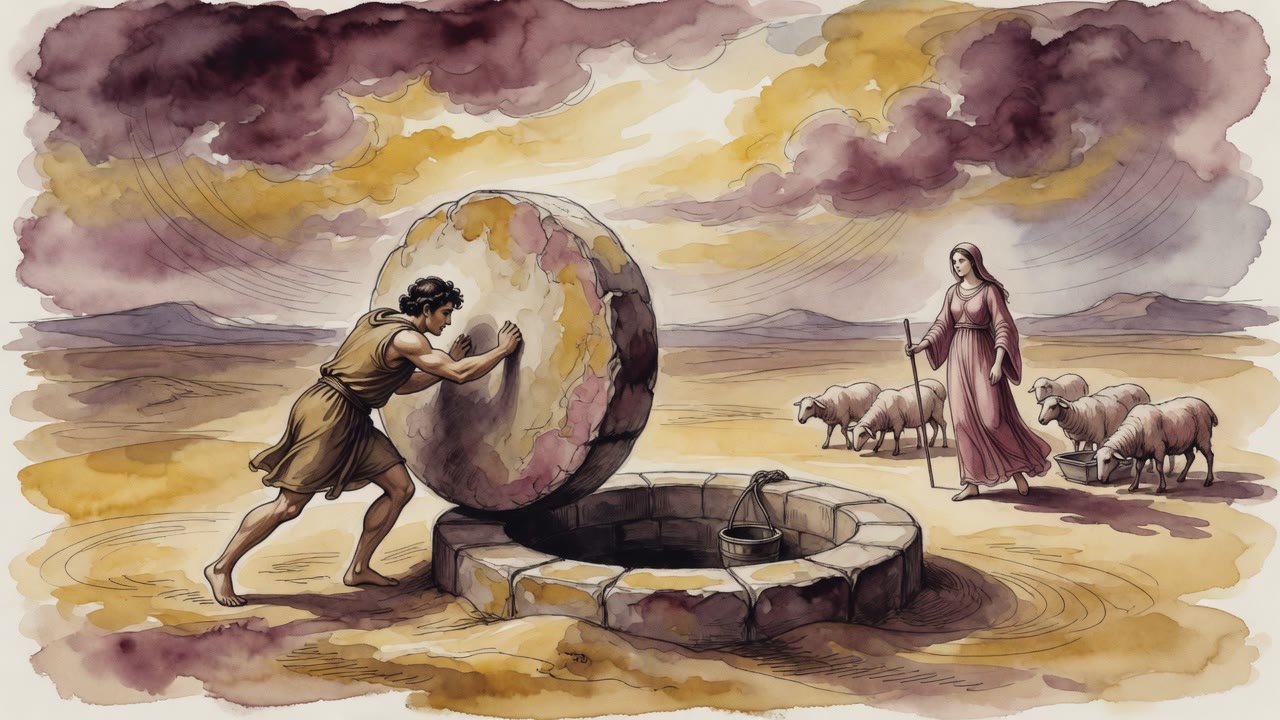
Jacob Called His Wives Out to the Open Field
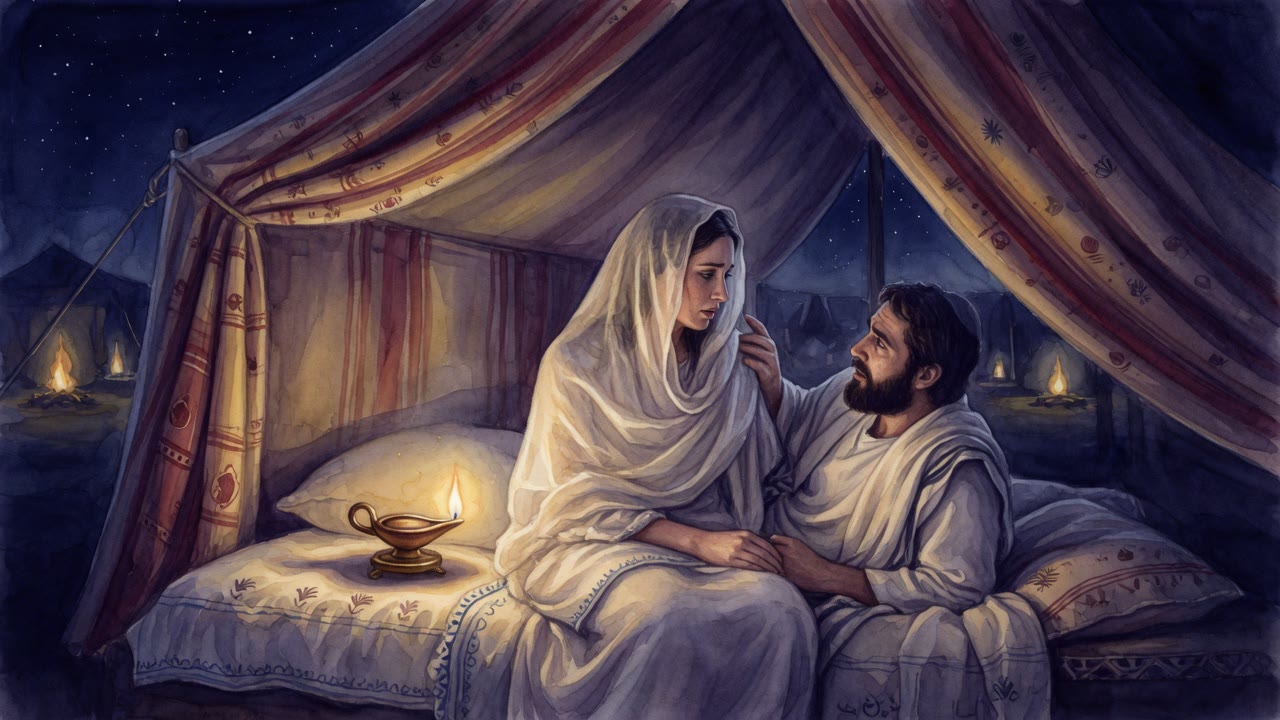
Jacob will not plan flight inside Laban's walls. He calls Rachel and Leah into open wind and shows them a face turned cold.
Table of Contents
 Click for full size
Words the House Must Not Hear
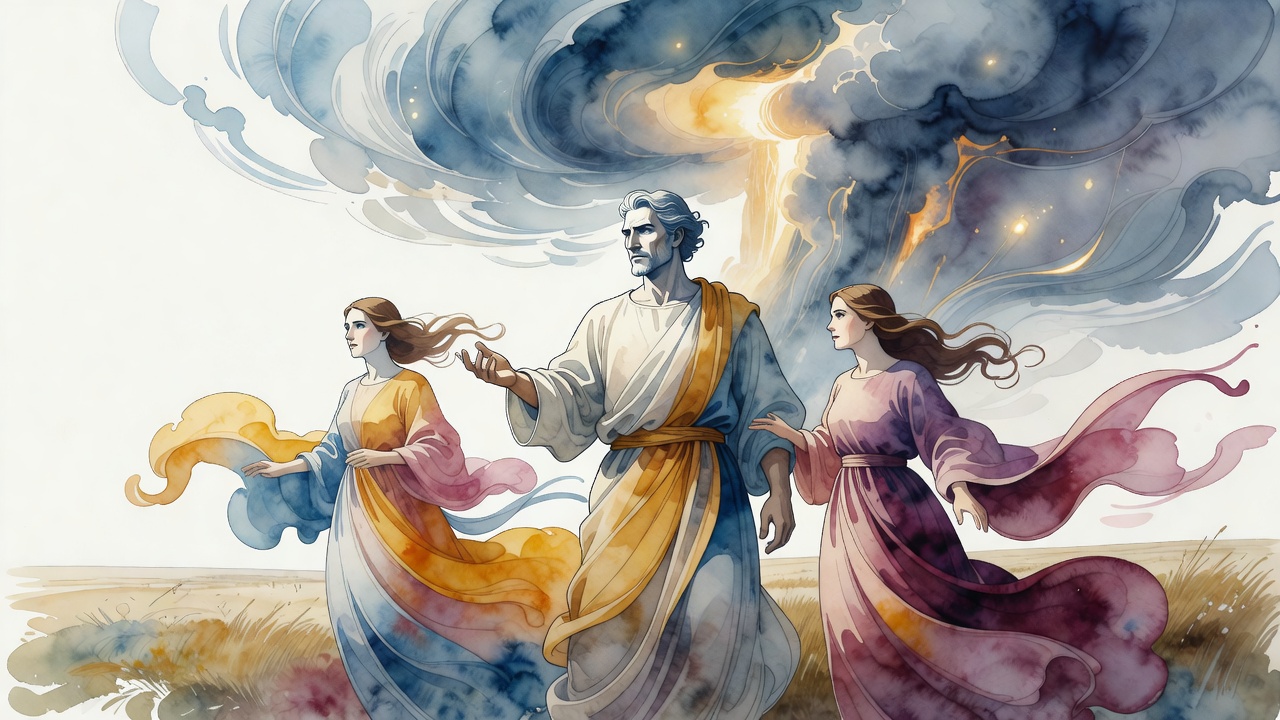
Jacob did not break the news of his departure inside the house. He sent for Rachel and Leah and called them out to the open field, where wind carries words away and no hidden ear can catch them.
The rabbis admired that instinct so much they praised even foreigners who, they said, take counsel only in open places. Walls have listeners. Courtyards have cousins. A field has sky, and sky does not report to Laban.
Jacob's face had already learned what his mouth was about to say. He had heard Laban's sons mutter that he had stripped their father. He had seen Laban's face turn against him, for a man's heart, the rabbis note, changes his face for good or ill. The smile that once bought seven years of labor had gone hard.
Rachel and Leah walked out into grass that still held the night's damp. They knew their father's house better than Jacob did, every listening post, every servant who traded secrets for favor. When Jacob chose the field, they understood. This was not romance. This was strategy spoken where strategy could survive.
The Man Who Increased Exceedingly
When the weaker animals bred, Jacob held his rods back, and the sages debate which animals these were, but agree on the outcome. The man increased exceedingly. The midrash hears in that doubled word a breach of abundance flung open, a foretaste of the World to Come.
The numbers turn dizzying. One sage counts Jacob's herds in the millions. Others tally his guard dogs at six hundred thousand or twice that, reconciling the figures by assigning one or two dogs to each flock. The shepherd who arrived with a staff now commanded wealth on a scale that curdled the mood of the house he served.
Prosperity is not always a blessing when it sits in a relative's yard. Laban had learned by cold calculation that the LORD had blessed him for Jacob's sake. Once Jacob's own flocks thickened, the same calculation turned into accusation. Blessing without control looks like theft to a man who measures life by ledgers.
Jacob did not apologize for thriving. He showed his wives the arithmetic of their own lives. Their father had treated them as strangers in the inheritance. Their wages had been eaten. The flocks that now pressed around them in the open air were not stolen goods. They were the residue of changed terms, leftover animals forced into abundance by a God who had already decided Laban would not keep what he tried to cheat away.
Heaven Already Moving the Rams
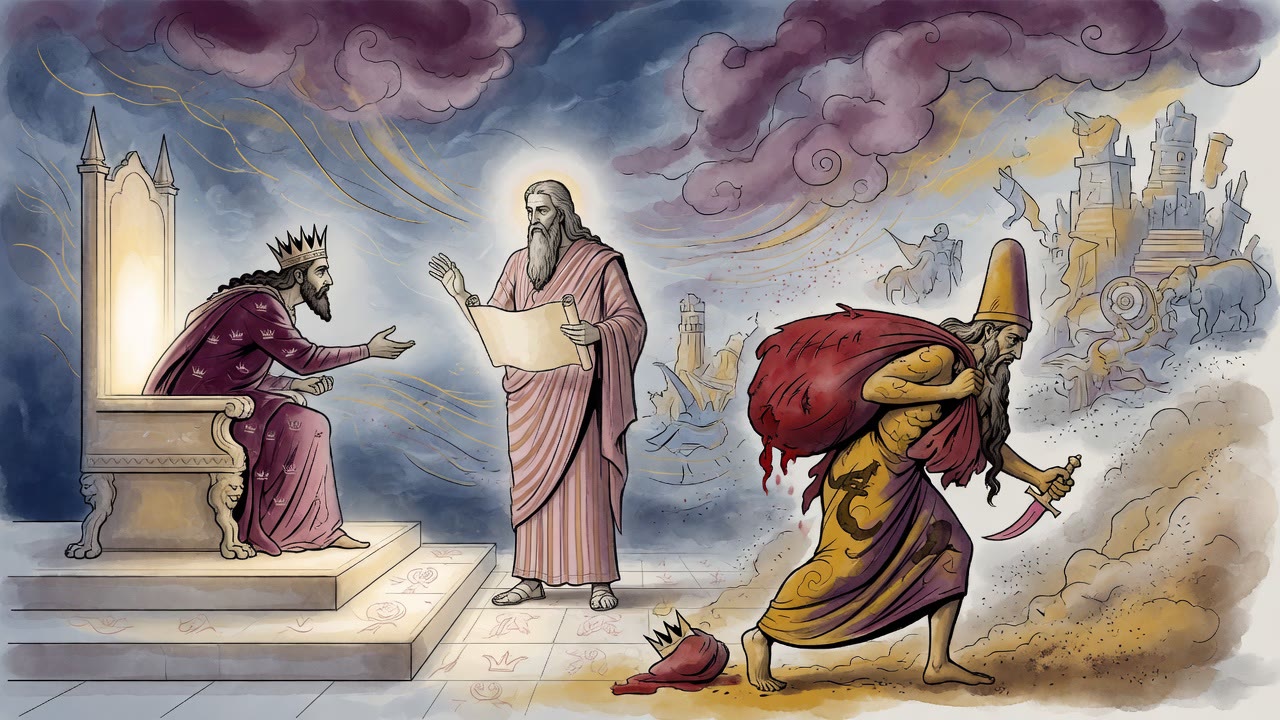
Behind the quarrel, the midrash sees the hand of God already at work. When the angel told Jacob in a dream that the speckled flocks would be his, the verb was not past but ongoing. The Holy One foresaw exactly what Laban was scheming and shaped events in advance, so that the rams seemed to climb the ridges of their own accord. Heaven was rescuing what was nearly lost.
Into the cold moment of Laban's changed face, God spoke. Your father-in-law no longer smiles on you, so why linger? Return to the land of your fathers, and I will be with you. The sages dwell on the phrase "the land of the living," insisting it cannot mean some rich and easy country abroad. It is the land whose dead will rise first in the days of the Messiah.
Wealth gathered outside the land, God tells Jacob, is not truly counted as blessing. Only on the soil of his fathers, where his parents and the Holy One Himself await him, will the promise come fully to rest.
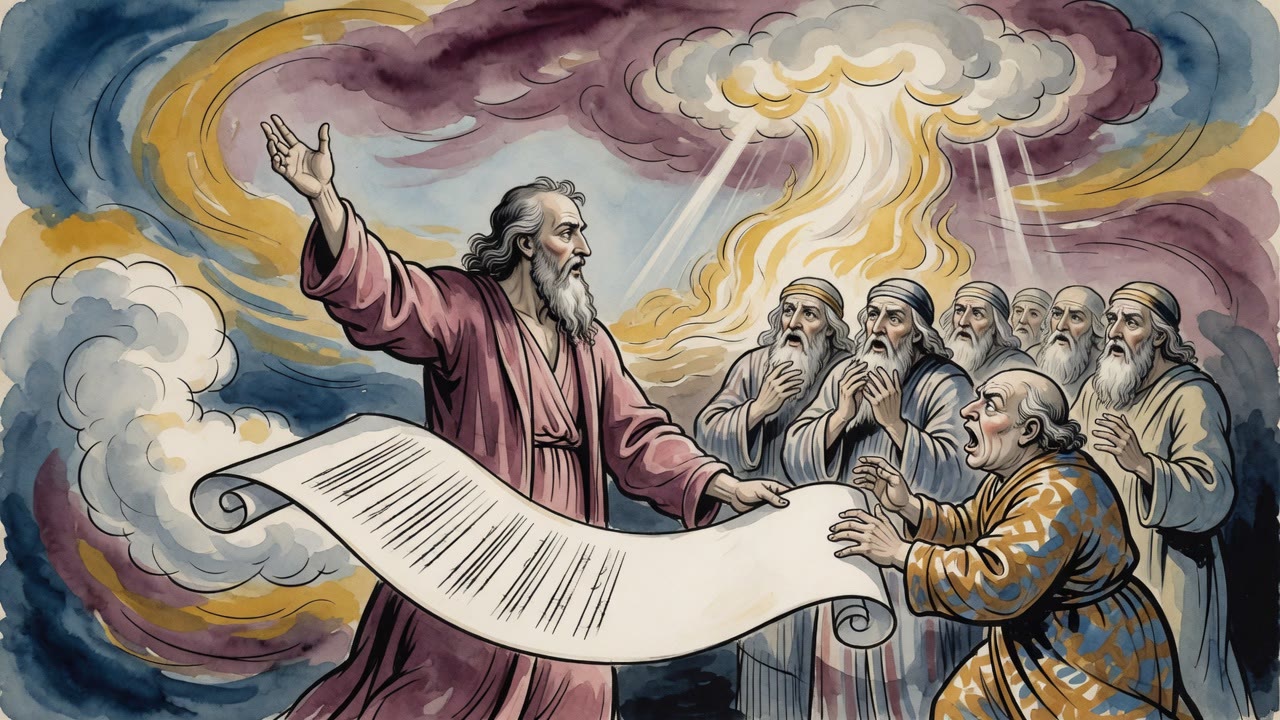
The field became a courtroom without walls. Jacob spoke of the angel and the dream. He spoke of rods and rams. He spoke of a face that no longer smiled. The women answered not as ornaments but as heirs who had been denied. Their agreement made the departure possible. Without them, flight would have been half a plan.
Rachel Speaks, and a Curse Waits
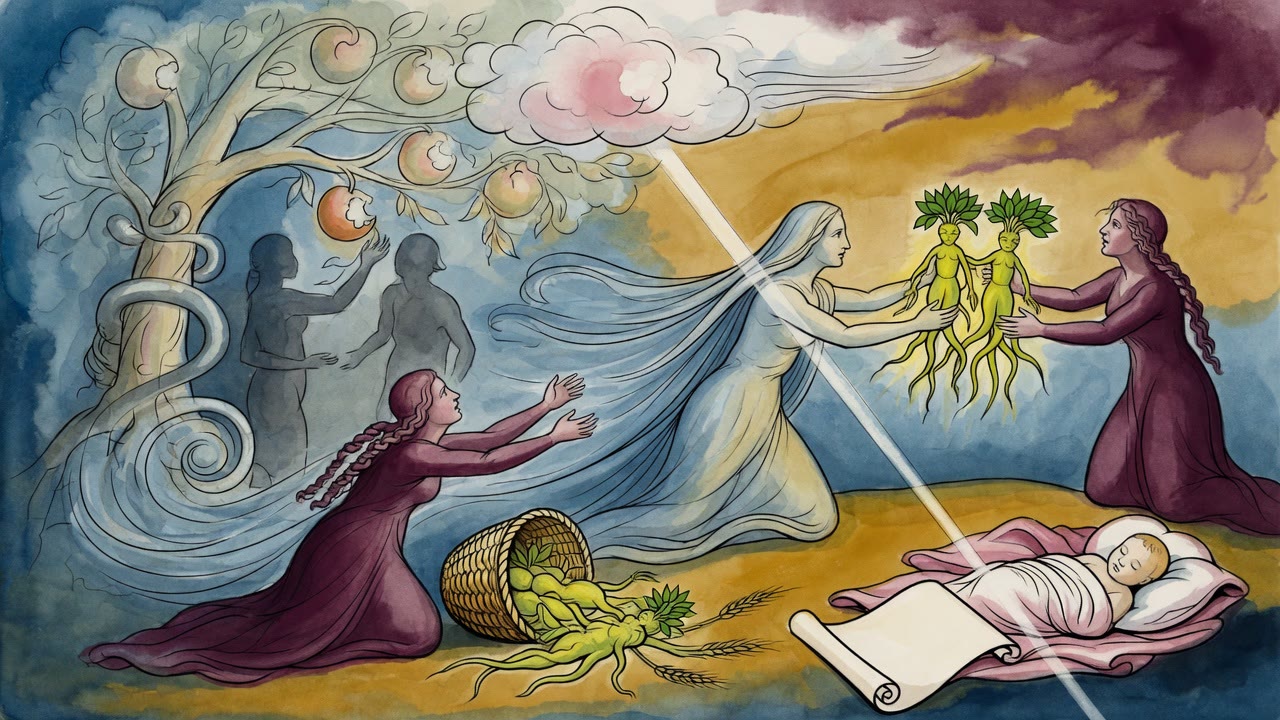
In the field the wives answered. Rachel and Leah agreed the house had eaten their inheritance. Then comes a harder thread the midrash will not leave buried. Why did Rachel die before her sister? Rabbi Yehuda blamed her for speaking ahead of her elder. Rabbi Yose disagreed: when a man calls Rachel, Simeon does not answer. She died, he said, only because Jacob unknowingly cursed whoever held Laban's idols, never dreaming it was his beloved wife.
A word loosed by a ruler can wound like a stray arrow. Rachel did hold the teraphim. She stole her father's idols not from greed but to pry idolatry out of his house. When Laban tore through the tents searching, he found only jugs where the gods had been, for Heaven hid the truth to spare her shame. Her grandsons, the tribes, hung their heads to hear the old man whining over his stolen gods.
The field conversation ended. Camels rose. Children were lifted. The open air that had kept the plan safe now carried the first dust of flight. Jacob left with abundance that still felt provisional, because the only land that would make it count lay west of the river and east of his fear of Esau.
Behind them Laban's house still stood, full of teraphim and ledgers and sons who muttered. Ahead of them waited a road, a pursuit, a covenant heap, and a brother with four hundred men. The open field had done its work. The words that mattered had been spoken where no hidden ear could sell them.
← All myths