Jacob Counted Ten Wage Changes in Laban's House
Laban tore through four tents looking for his household gods. Rachel sat on the camel saddle and told him she could not rise.
Table of Contents
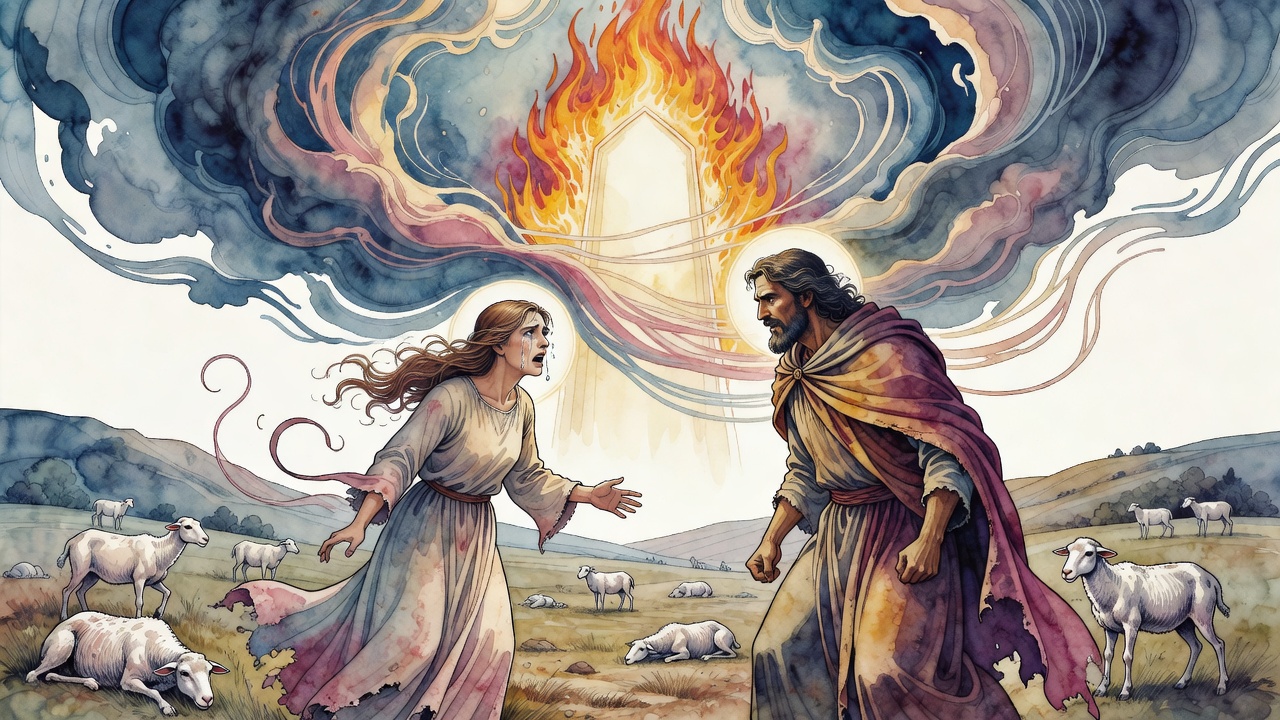
Jacob was out with the flock when he noticed that Laban's sons had stopped looking him in the face. He has taken everything our father had, they were saying, and made himself heavy on it.
 Click for full size
He had been in that house twenty years. He knew exactly how heavy.
Ten Times Laban Changed the Wage
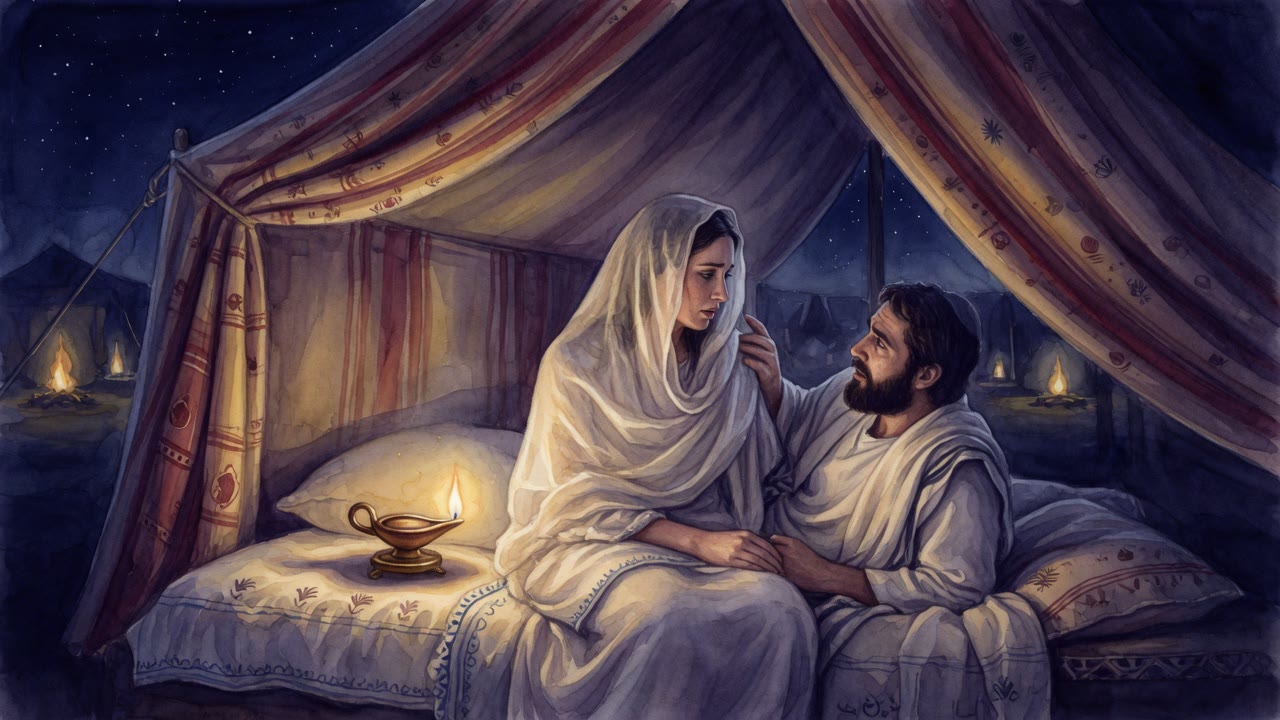
Seven years he worked for Rachel, and they went by like a few days because of what he wanted at the end of them. Then came the wedding feast, the dark, the veil, and a morning when he rolled over and it was Leah.
"It is not done in our country," Laban told him, "to give the younger before the firstborn." Seven more years, then.
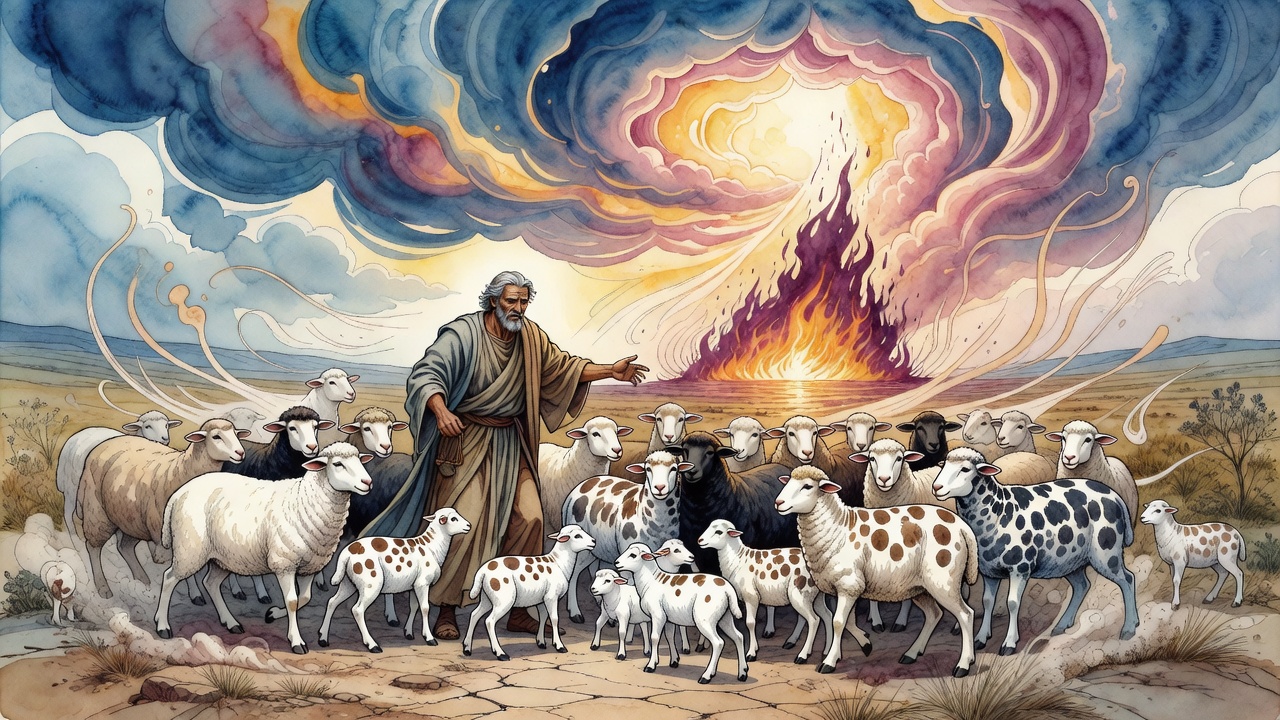
Six after that for the flock. Laban would name the wage and the animals would refuse it. Speckled ones are yours, Laban said, and the whole flock dropped speckled lambs. Streaked ones are yours, he said, and every ewe bore streaked. He rewrote the terms ten separate times, and ten times the newborns came out on Jacob's side of the line.
Jacob peeled white stripes into rods of poplar and hazel and set them in the drinking troughs where the strong animals bred. In a dream he saw the rams that mounted the flock, and every one of them was streaked and spotted and speckled, and a voice told him it had seen everything Laban was doing to him.
Four Tents and a Camel Saddle
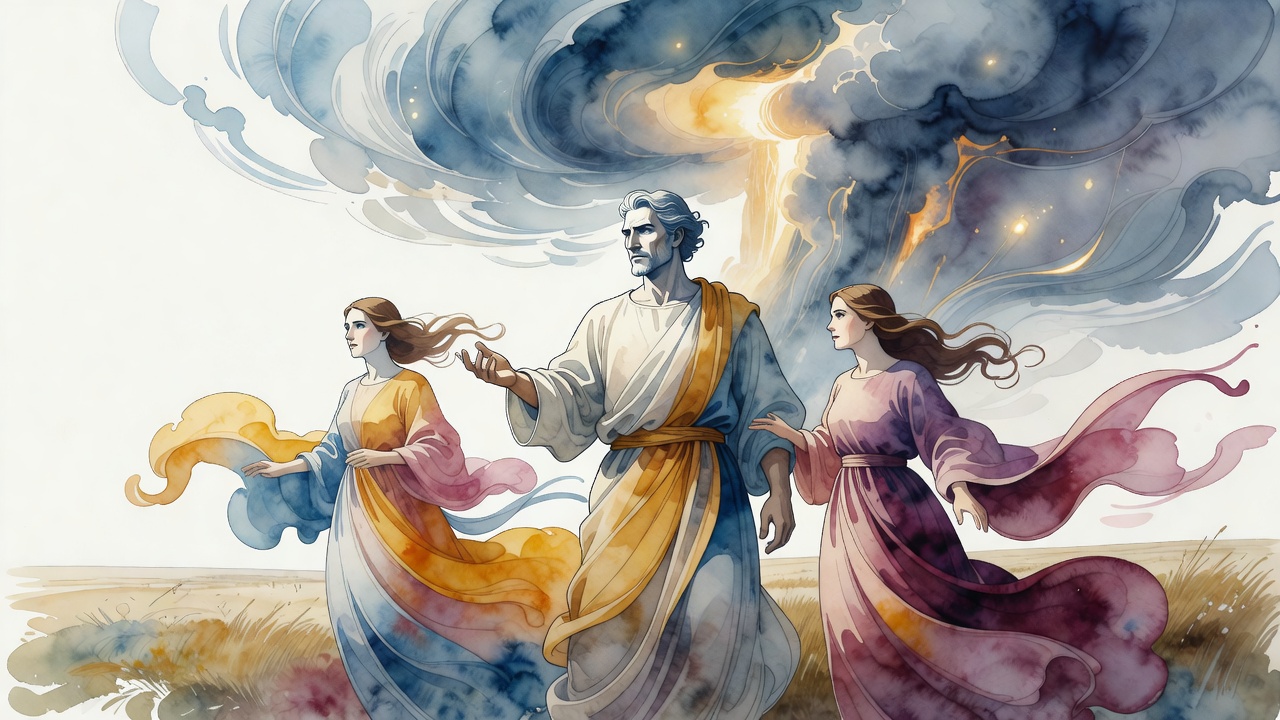
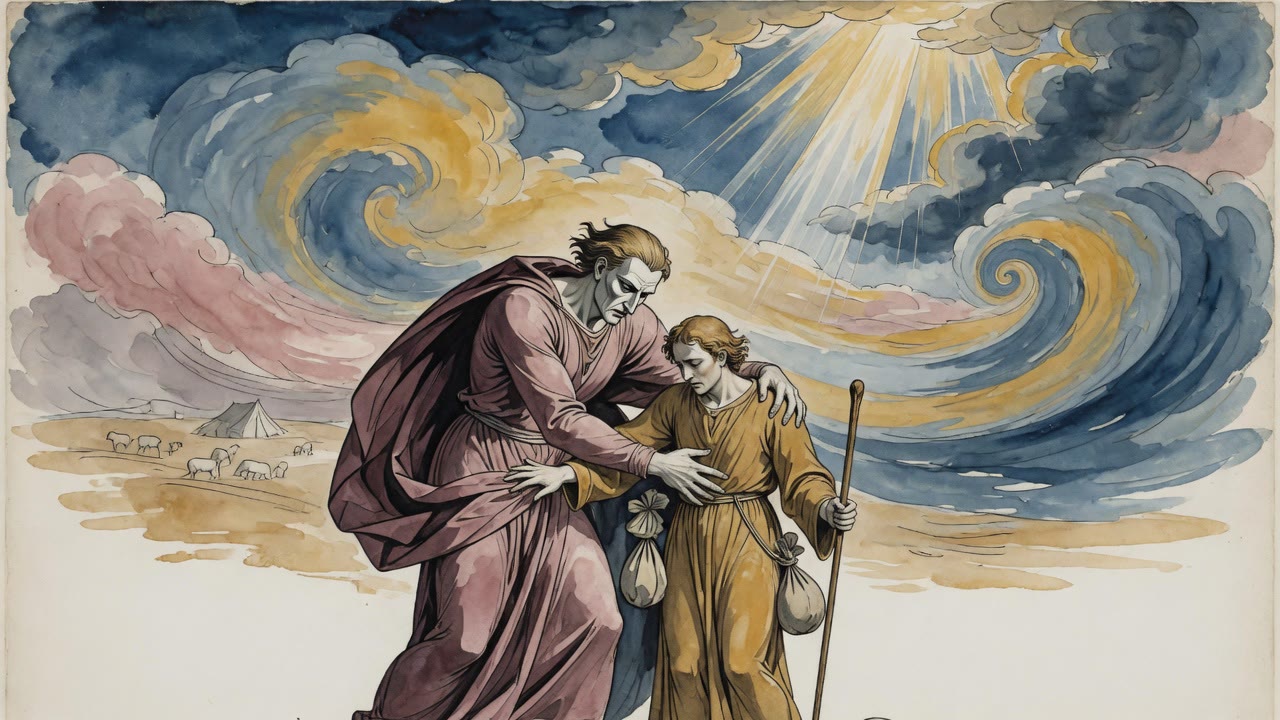
Laban went off to shear his sheep. Jacob loaded the camels, put the wives and the children on them, and drove his herds out toward Gilead without saying goodbye. Rachel went back into her father's rooms first and took his household gods.
Laban chased them seven days. On the last night God came to him in a dream with one sentence: say nothing to Jacob, good or bad.
He caught them in the hill country anyway and went straight into the tents. Jacob's tent. Leah's tent. Both maidservants' tents. Nothing. Then Rachel's, where his daughter sat on the camel saddle with the gods stuffed inside it under her.
"Do not be angry that I cannot get up in front of my lord," she said. "The way of women is on me."
He searched the whole tent around her and found nothing.
Twenty Years Counted Out Loud
That broke Jacob open in front of everybody, kinsmen from both households standing in a ring on the hillside.
"What is my crime? What did I do, that you came after me on fire like this? You have felt through everything I own. Put it here, in front of your people and mine, and let them judge between us."
Then he stopped shouting and started counting, and the counting was worse.
"Twenty years. Your ewes and your she-goats never lost a lamb. I never ate one ram out of your flock. Whatever a beast tore, I never brought you the carcass to write off. I paid for it myself, and you took it out of my hand whether it went missing by day or by night. The heat ate me through the daylight and the frost ate me after dark and sleep went out of my eyes. Fourteen years for your two daughters. Six for your animals. And ten times you changed my wages."
"If the God of my father had not been with me, you would be sending me home empty right now. He saw it. That is why He spoke to you last night."
Rav Nachman Warned the Man on Top
Laban had one answer, and he gave it standing in the road with nothing in his hands.
"The daughters are my daughters. The children are my children. The flocks are my flocks. Everything you are looking at is mine." He said it to a man who was walking away with all of it.
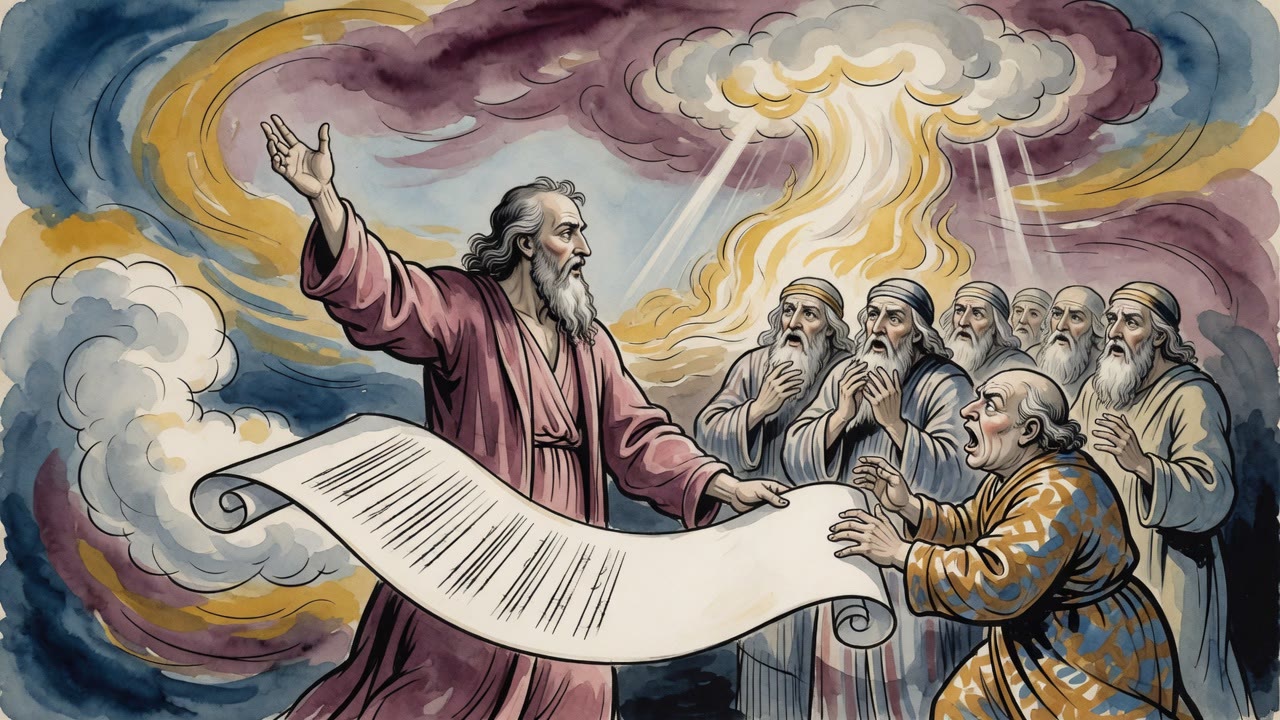
Later, in a study house, Rav Nachman turned over a single word in the law about lending to the poor, the promise that God blesses a man because of the loan he makes. Because of. In that phrase he heard a wheel, and behind the wheel a warning spoken to whoever is on top at the moment.
"I am the one who made him poor and you rich," the warning ran. "Do not push Me into turning it and making you him."
Rabbi Shila pointed at another word in the same law, where the poor man is not called a poor man at all but your brother. "The two of you are level," he said. "Do not make Me prove it."
Jacob had stood on the low side of that wheel for twenty years while a man who called him son rewrote the terms whenever the lambs came out wrong. The blessing found him anyway, out in open country, in the heat and the frost, among ewes. It never once came from the house.
The Heap They Ate On
They made a covenant on the hillside instead of a war. Jacob stood a stone upright and told his kinsmen to pile more stones around it, and they built a heap and ate a meal on top of it.
Laban named the heap in Aramaic. Jacob named the same heap in Hebrew. Neither would use the other's word for it, and the two names sat on one pile of rocks and meant the identical thing: the heap is the witness.
"This heap is a boundary," Laban said. "I do not pass it going toward you. You do not pass it coming toward me."
In the morning he kissed his daughters and his grandchildren, blessed them, and walked back the way he had come. Behind him the flocks moved south, streaked and speckled and spotted, every one of them counted. Laban went home with his own words in his mouth and nothing in his hands.
← All myths