Parshat Vayetzei5 min read

Leah Answered Jacob in Rachel's Voice the Whole Wedding Night

The rabbis said Jacob spent his wedding night calling out for Rachel. Leah answered every time. Her reason broke him in half by morning.

Curated by Arthur · Told by Maggid ·
Table of Contents
  1. The Feast and the Veil
  2. The Candles and the Dark
  3. A Voice Answering in the Dark
  4. What Leah Did to Keep What She Had

The Feast and the Veil

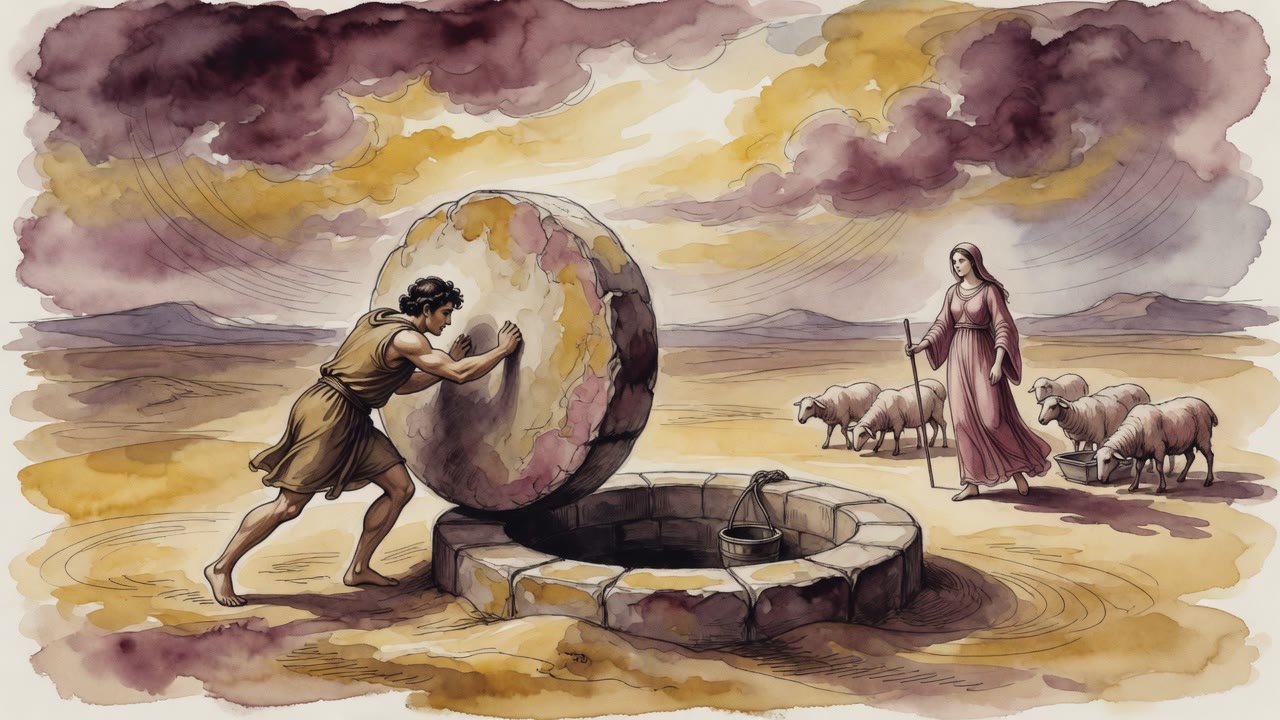
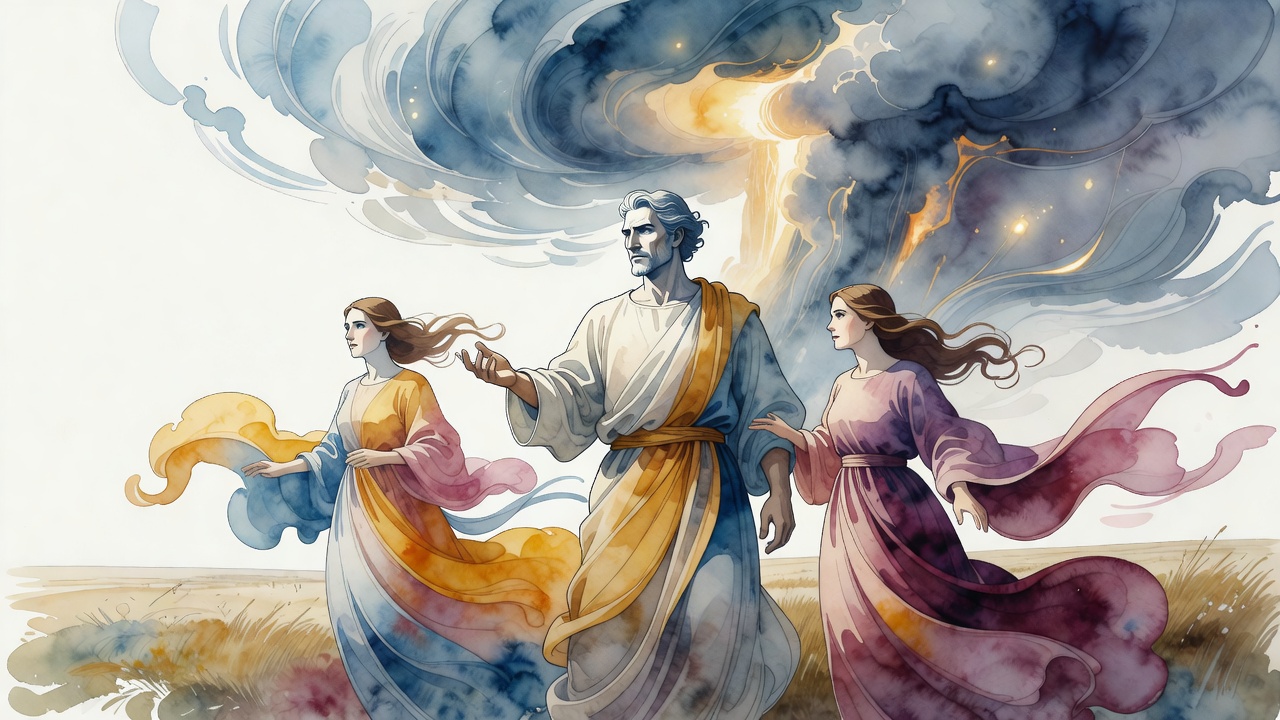
Jacob had worked seven years for the right to marry the woman he had met at a well outside Haran. The Torah says the seven years felt like a few days because of his love. Laban threw the feast. The wine came. The guests filled the tent. The bride was led in wearing a veil, the way brides were led in.

Jacob had been specific about the terms. He had learned early that Laban counted differently than other men, so he had named Rachel outright when he made the agreement: not Leah, not another daughter, Rachel, the one he had met at the well. He said it in front of witnesses. He had been very careful.

Laban brought him Leah.

The Candles and the Dark

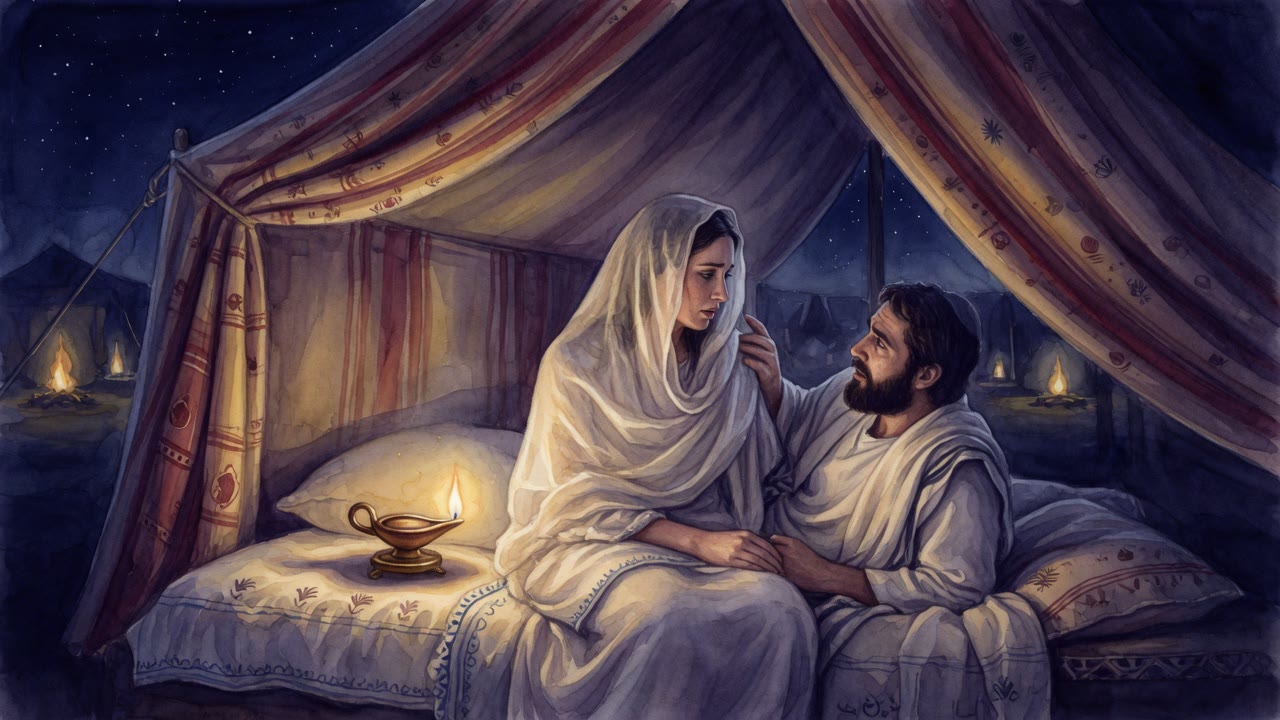
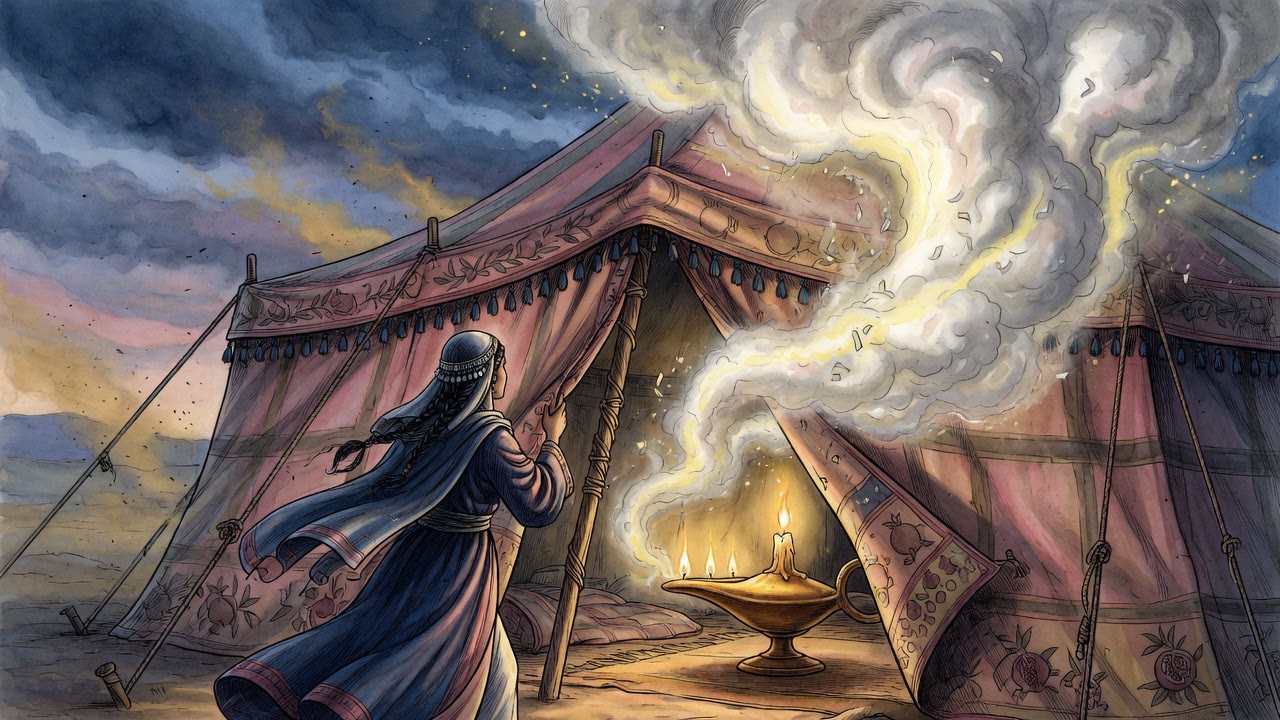
The guests knew. The tradition preserved by Ginzberg records that Laban's wedding guests blew out every candle in the bridal chamber as Leah was led inside. When Jacob asked why, they told him they were being respectful of the couple's privacy. The people of Haran were more modest than the people of Canaan, they said. In Canaan they left candles burning. Here they did not.

Jacob believed them. He believed them because he was a man in love and because the alternative required him to believe that his father-in-law had swapped one daughter for the other under a veil on a wedding night, which was a thing a man would not believe without evidence, in the dark, with the wine still in his blood.

So the room was dark.

And in the dark, Jacob called out for Rachel.

A Voice Answering in the Dark

The old tradition says he called her name every time. Not once and then silence. All night. He would speak and a voice would answer and he would believe it was the voice of the woman he had loved for seven years. In the morning there was enough light to see a face.

The Talmud and the midrashim that Ginzberg assembled hold a detail about what Leah knew in that room. She had been dressed in her sister's clothes. She had been led in under Rachel's veil. She had agreed, somehow, to the arrangement her father had made. And she had a choice to make that was going to define the rest of her life.

When Jacob called Rachel's name in the dark and a voice answered, that voice was Leah's.

In the morning, when Jacob confronted her, her answer is what broke him: "my father calls me Leah," she said, meaning the hidden one. She had agreed to be hidden in her sister's name for a night because this was the only way anyone would ever choose her. She had done what she had been told to do by the man who controlled whether she was married or unmarried, honored or sent back, given to a husband or left to grow old in her father's house as the daughter nobody wanted.

What Leah Did to Keep What She Had

Ginzberg's synthesis records the additional pressure Leah operated under. When Jacob made it clear he was going to work another seven years for Rachel and that his real life was going to be organized around Rachel, Leah started calculating. She knew Jacob was thinking about the road back to Canaan. She knew her father would not want to lose the daughters who had given him leverage over Jacob's labor. She worried that if she did not produce sons, Laban would eventually keep her behind, separate her from Jacob, find her a different husband from outside the faith.

She bore sons. She named them with names that faced Jacob and called to him across the domestic distance between his tent and hers. Reuben: see, a son. Shimon: God heard my suffering. Levi: now he will be joined to me. Judah: this time I will praise God.

The rabbis who read these names heard not celebration but positioning. Every name was Leah still answering in the dark, still offering Jacob something he had not asked for but which, by the logic of the family God was building, he was going to need.


← All myths

From the tradition

Sources

8 sources

The texts this telling draws on, in full. Open a card to read inline, or expand it for a wider, quieter read.

Legends of the Jews 6:127Legends of the Jews

Legends of the Jews turns to The Wedding Guests Blew Out the Candles So Jacob Got Leah.

The familiar story centers on Jacob. He worked for his uncle Laban for seven years, all for the chance to marry the beautiful Rachel. He was head-over-heels in love. But Laban, well, he had other plans.

The wedding arrives, the celebrations are in full swing.. and then comes the moment for Jacob to finally be with his beloved Rachel. The guests, according to Legends of the Jews, put out all the candles as Rachel was led into the bridal chamber. Imagine the darkness! Jacob was understandably confused. "Thinkest thou," they said, "we have as little sense of decency as thy countrymen?" They basically implied that they were just being respectful of their privacy. Jacob, bless his heart, bought it.

It wasn't until the morning light crept in that Jacob realized the woman beside him wasn't Rachel at all. It was her older sister, Leah! Can you even fathom the shock and betrayal? The rage?

He confronted Leah, furious. "O thou deceiver, daughter of a deceiver, why didst thou answer me when I called Rachel's name?" He was livid that she had impersonated her sister.

But Leah, she had a comeback ready, a real zinger that cuts right to the heart of the matter. "Is there a teacher without a pupil?" she asked, according to Legends of the Jews. "I but profited by thy instruction. When thy father called thee Esau, didst thou not say, Here am I?"

Mic drop. Think about the layers here. Jacob, who himself had deceived his own father Isaac years before to steal his brother Esau's blessing, was now on the receiving end of a similar deception. He impersonated his brother, and now Leah impersonated her sister. As we find in Midrash Rabbah, there's a powerful echo of his own actions.

Leah's response is more than just a clever retort. It's a mirror reflecting Jacob's past back at him. It forces him to confront his own history of deception. It’s a harsh lesson about karma, about reaping what you sow. The midrash (rabbinic interpretive commentary), those ancient rabbinic interpretations of scripture, are so good at revealing those kinds of moral complexities.

So, what do we take away from this story? Maybe it's a reminder that our actions have consequences, that what goes around comes around. Or perhaps it’s a deeper reflection on the complexities of family, love, and the sometimes-twisted paths we take to get what we think we want. It’s a wild story, a complex moral lesson, and a reminder that sometimes, the trickster gets tricked.

Full source
Bereshit Rabbah 72:5Bereshit Rabbah

The ancient rabbis certainly did.It illuminates the complex relationship between Leah, Jacob, and the birth of the tribes of Israel.

In this, Midrash, a rabbinic interpretation, Leah prevented Jacob from washing his feet. Why? Because after his labor in the fields, she didn't want him going to his tent with Rachel to clean up. Then she insisted, "You will consort with me." A bit forward, no?

Rabbi Abahu offers a compelling perspective. He suggests that God saw that Leah’s intention was purely for the sake of Heaven – to bring forth more tribes of Israel. That’s why, the Torah tells us, "God heeded Leah" (Genesis 30:17). It wasn’t just about personal desire, but about fulfilling a divine purpose.

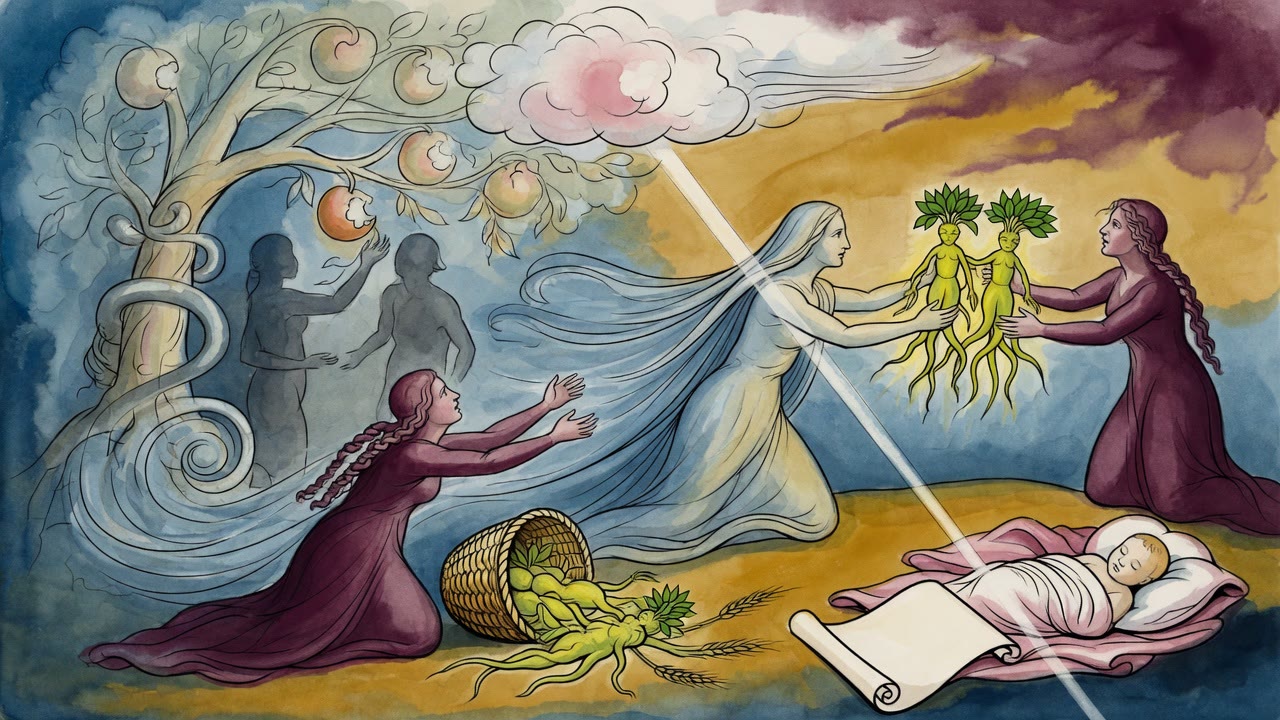
Let’s These weren't just any ordinary plant. Rabbi Levi points out how pleasing the mediation of mandrakes was to God! Because through them, two great tribes – Issachar and Zebulun – were produced. Issachar dedicates himself to Torah study, while Zebulun ventures out to sea, providing for Issachar's needs, allowing Torah to flourish in Israel. "The mandrakes emitted fragrance" (Song of Songs 7:14). Bereshit Rabbah interprets this as meaning they emitted a pleasant fragrance before the Lord.

Leah then declares, "God has given me my reward [sekhari], because I gave my maidservant to my husband. She called his name Issachar" (Genesis 30:18). The name Issachar itself is connected to the word "reward." But the story doesn't end there.

Issachar, though the ninth tribe chronologically, brought his offering second to the king. As we read in (Numbers 7:18), “On the second day, Netanel ben Tzuar, prince of Issachar, presented his offering.” Why this honor? Because, the text explains, he was a Torah scholar. "From the children of Issachar, possessors of understanding of the times" (I (Chronicles 12:3)3). Rabbi Tanhuma elaborates, defining "of the times" as understanding the propitious time for everything, including the intercalation of years and months, adding leap years to the calendar to keep the festivals in their proper seasons.

The passage goes on to emphasize Issachar's wisdom and authority. "Their leaders were two hundred, and all their brethren at their command" (I (Chronicles 12:3)3). Issachar produced two hundred heads of the Sanhedrin, the ancient Jewish court, and their rulings were considered as authoritative as laws transmitted to Moses at Sinai!

But where did Issachar get this prominence? From Zebulun, who supported him financially through commerce. "Zebulun will dwell at the shore of seas" (Genesis 49:13). That’s why, when Moses blessed the tribes, he placed Zebulun's blessing before Issachar's: “Rejoice, Zebulun, in your departure, and, Issachar, in your tents” (Deuteronomy 33:18). Zebulun rejoices in his business travels, knowing that Issachar is diligently studying Torah. Some even say there is a reward [yesh sakhar] in the tents of Zebulun, because of their support.

What can we take away from this interplay of interpretation? It's a reminder that seemingly small acts, like Leah’s determination or Zebulun’s support, can have profound consequences. It highlights the value of both action and contemplation, of worldly pursuits and spiritual dedication, and how they can intertwine to create something truly significant. It makes you wonder, what "mandrakes" are present in our own lives, and how are we using them to create a fragrant offering to the world?

Full source
Legends of the Jews 6:145Legends of the Jews

The story of how she found a way forward, a way to reclaim her dignity, is a powerful one.

Remember Jacob, the son of Isaac? He was tricked into marrying Leah, even though he loved her sister Rachel. But Leah, despite being the "less favored" wife, yearned to secure her place in Jacob’s life and in the future of their family.

She realized Jacob was thinking of returning to his homeland. And she knew her father, Laban, wouldn’t want to let his daughters go – especially if they had children to bring with them. As Ginzberg retells it in Legends of the Jews, Leah worried that if she remained childless, Laban would keep her behind, even remarry her to someone outside of the faith. Imagine the shame!

So, what did Leah do? She had a son. Another son, actually. She’d already borne Jacob several children. But this time, it was different. As the text says, "By bearing a son, she had escaped another disgrace." With each child, Leah solidified her position, securing her place in Jacob’s future and, more importantly, in the unfolding story of the Jewish people.

But there's more to it than just that. Leah named this son Zebulun. She understood the significance of names. Names held power. Names told stories. And in her naming, she wove in a hope for the future.

Leah says, "As my son hath removed my reproach, so Joshua, his descendant, will roll away a reproach from the Israelites, when he circumcises them beyond Jordan."

Now, that's a mouthful. Let's unpack it. The "reproach" Leah speaks of refers to her own perceived shame as the less-loved wife. But she connects this personal feeling to a much larger, national narrative. She sees a parallel between her son removing her personal disgrace and a future event where Joshua, a descendant of Zebulun, will circumcise the Israelites as they enter the Promised Land.

Why is this circumcision so important? Well, according to Jewish tradition, circumcision is the ultimate sign of the covenant between God and the Jewish people. It’s a physical reminder of their commitment. And by linking her son's birth to this future act of covenant renewal, Leah elevates the significance of her personal triumph, connecting it to the destiny of an entire nation.

It's a powerful reminder that even in our most personal struggles, we can find echoes of larger narratives, of hopes and dreams that resonate far beyond ourselves. Leah’s story reminds us that even when we feel trapped, we have the power to shape our own destinies and contribute to something greater than ourselves. So, what "reproach" are you carrying, and how can you transform it into something meaningful, something that connects you to the larger story of humanity?

Full source
Asarah Perakim LeRamchal 6:1Asarah Perakim LeRamchal

I know. It sounds a little… unexpected. But stick with me.

The Ramchal isn't talking about anything literal, of course. He’s using metaphor, a powerful tool in Kabbalah for understanding the unseen forces at play in the universe. He tells us that the abundance stems from the union of the Small Face (Zair Anpin) with the Female. Now, Zair Anpin is a Kabbalistic term for one of the partzufim (a divine configuration) (the divine configurations), or divine configurations, representing the masculine principle. The Female, in this context, represents the feminine principle, often associated with the Shekhinah, the divine presence in the world.

Think of it like this: masculine and feminine energies, in their divine forms, are constantly interacting, creating, and generating the flow of blessings that sustain us.

The Ramchal then breaks these divine couplings down into five specific types, each representing a different aspect of this generative process. He presents these pairings as:

1. Israel and Rachel 2. Jacob and Rachel 3. Israel and Leah 4. Jacob and Leah (from the chest and above) 5. Jacob and Leah (from the chest and below)

Now, you might be thinking, "Okay, I recognize those names..but what’s with the double pairings?"

Good question! The key here is understanding the symbolism of Jacob, Leah, and Rachel in Jewish tradition. Jacob, of course, is the patriarch, representing the Jewish people. Leah and Rachel, his wives, embody different aspects of the feminine. Rachel is often associated with beauty, love, and the future redemption, while Leah embodies fruitfulness, stability, and the present reality. And “Israel” is the name given to Jacob after he wrestled with the angel, representing a higher spiritual state.

So, what are we to make of these five matings? It’s a complex idea. Each pairing signifies a different flow of divine energy and a different aspect of the relationship between the divine and the human. The pairings of "Israel" (the elevated Jacob) suggest a more direct connection to the divine source, while the pairings of "Jacob" with Leah and Rachel represent the ways in which that divine energy manifests in our everyday world, both in its ideal (Rachel) and its practical (Leah) forms. The distinction between "chest and above" and "chest and below" for the Jacob and Leah pairing is particularly esoteric, hinting at different levels of connection and influence.

The Ramchal is teaching us that the abundance we experience isn't random. It's the result of a dynamic, interconnected system of divine relationships. It’s a reminder that even in the seemingly mundane aspects of our lives, we are participating in a cosmic dance of creation and blessing. And when we are conscious of that connection, perhaps, we can become more effective vessels for that abundance, channeling it for good in the world.

Full source
Legends of the Jews 6:272Legends of the Jews

After seemingly settling things with his brother Esau, Jacob was soon to discover that the past isn't always ready to stay buried.

Jacob, still grieving the loss of his beloved Leah, is surrounded by his sons. The sons of Leah are deep in mourning, while the sons from his other wives try to offer some comfort. They’re all gathered together, a family united in sorrow. But this moment of grief is about to be shattered.

Suddenly, a massive army appears – 4,000 strong, clad in iron and brass, armed to the teeth with bucklers, bows, and swords. It’s Esau, back with a vengeance. According to Ginzberg’s retelling, they surround the very citadel where Jacob and his family are gathered, completely unsuspecting. Can you picture it? Two hundred servants, children, all seeking solace, with no idea they're about to be attacked.

This teaching paints a vivid picture: "They surrounded the citadel wherein Jacob and his sons dwelt at that time with their servants and children and households..and they sat there unconcerned, none entertained a suspicion that an assault upon them was meditated by any man."

When Jacob realizes what’s happening – that Esau is actually attacking, shooting arrows into their refuge – he tries to reason with his brother. He climbs onto the wall of the citadel, attempting to appeal to Esau’s sense of family, of brotherhood. He asks, "Is this the consolation which thou hast come to bring me, to comfort me for my wife, who hath been taken by death?"

He reminds Esau of the oaths he swore to their parents, oaths of peace and kinship. "Is this in accordance with the oath thou didst swear twice unto thy father and thy mother before they died? Thou hast violated thy oath, and in the hour when thou didst swear unto thy father, thou wast judged." (Legends of the Jews). He's desperately trying to remind Esau of their shared history, of their family bond.

But Esau is having none of it. His response is brutal, rejecting any notion of eternal brotherhood. "Neither the children of men nor the beasts of the field swear an oath to keep it unto all eternity, but on every day they devise evil against one another, when it is directed against an enemy, or when they seek to slay an adversary." It's a cold, calculated statement, suggesting that oaths are meaningless when dealing with an enemy.

And then comes the chilling ultimatum: "If the boar will change his skin and make his bristles as soft as wool, or if he can cause horns to sprout forth on his head like the horns of a stag or a ram, then shall I observe the tie of brotherhood with thee." In other words, only when the impossible happens will Esau consider Jacob his brother.

Esau's words reveal a deep-seated resentment and a complete rejection of the familial bond. This wasn't just a political dispute; it was a deeply personal conflict fueled by years of animosity. The question is, what do you do when reconciliation seems utterly impossible? How do you face an enemy who refuses to see you as anything but an adversary? That's the challenge Jacob now faced, trapped between grief and a war he didn't want.

Full source
Pirkei DeRabbi Eliezer 36:1Pirkei DeRabbi Eliezer

This ancient text, a treasure trove of Jewish legend and lore, offers a fascinating glimpse into the lives of our ancestors.

Here, the verse from (Proverbs 4:12), "When thou goest, thy steps shall not be straitened; and if thou runnest, thou shalt not stumble," is brought to life through the story of Jacob and Laban.

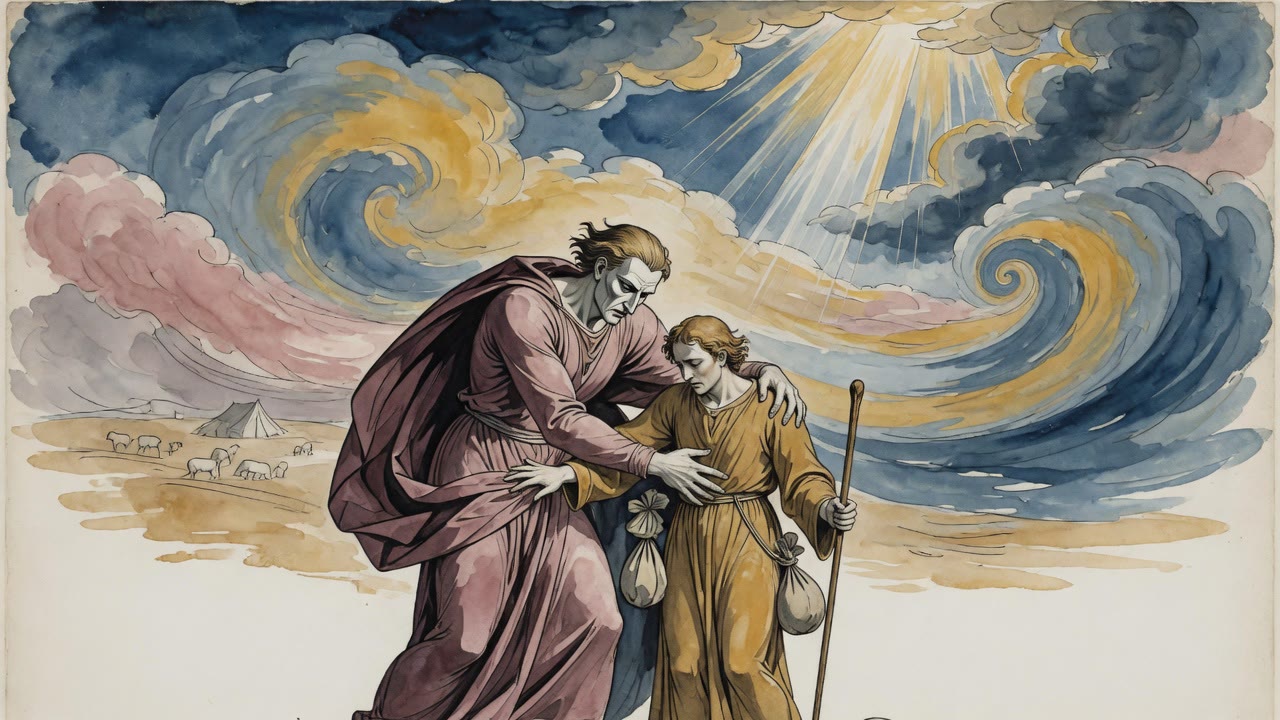
The familiar version gives us the tale: Jacob, fleeing the wrath of his brother Esau, finds himself in the household of his uncle Laban. He works for years, tricked and manipulated, until finally, he decides he's had enough. He gathers his family, his flocks, and slips away in the dead of night.

Laban isn't one to let things go. He pursues Jacob, hot on his heels. That feeling of being chased? Jacob knew it well.

So, what does this verse from Proverbs have to do with it? Pirkei DeRabbi Eliezer connects the promise of unhindered steps and a stumble-free run directly to Jacob's escape. Even though he was running from Laban, even though he was in a precarious situation, the verse promises that his path would be clear, that he wouldn't fall.

It's a powerful image, isn't it? Imagine Jacob, leading his family through the wilderness, constantly looking over his shoulder, yet somehow, miraculously, finding his way. That assurance that even in flight, even when pursued, one’s steps are guided.

It makes you wonder: is this a literal promise, or a metaphorical one? Perhaps it's both. Maybe it's about having the inner strength and faith to keep moving forward, even when the odds are stacked against you. It’s about knowing that even when you're running, you’re not running blind.

The story of Jacob and Laban is full of trickery, hardship, and family drama, but it also offers a message of hope: that even in the midst of our struggles, we can find the strength to keep going, to keep running, and to not stumble along the way.

And maybe, just maybe, that's a lesson we can all take to heart.

Full source
Yalkut Shimoni on Torah 125:3Yalkut Shimoni on Torah

"I will serve you seven years for Rachel your younger daughter" (Genesis 29:18). He said: Because the people of your place are deceivers, I will clarify my acquisition. "Rachel," and not Leah; "your daughter," so that you not bring another from the market and call her name Rachel; "the younger," so that you not switch their names one for the other. And even if you put the wicked man through magic tricks, you will not succeed.

"And Jacob said to Laban, Give me my wife" (Genesis 29:21). Rav Eibo said: Even a licentious man does not speak in this manner, and would a modest man like Jacob speak this way? Rather, thus he said: The Holy One, blessed be He, decreed that I am to establish twelve tribes, and now I am eighty-four years old; if I do not establish them now, when shall I establish them? Therefore Scripture had to say, "Give me my wife, that I may go in to her."

"And Laban gathered all the people of the place and made a feast" (Genesis 29:22). He said to them: You know that we were pressed for water, and once this righteous man came, the waters were blessed. They said to him: And what benefit is it to you? He said to them: If you wish, I will deceive him, and I will give him this Leah, while he loves this Rachel greatly, and he will work with you another seven years. They said to him: Do what is good in your eyes. He said to them: Give me pledges that not one of you will reveal me. And they gave him pledges. He went and brought wine and oil and meats. Why was he called Laban the Aramean? Because he deceived [from the same root as 'cheat'] the people of his place. All that day they were praising him, and when evening came, he said to them, "What now?" They said to him, "You performed kindness in your merit; we too will perform kindness with you." They were singing before him and saying, "This is Leah, this is Leah." In the evening the young men came and the lamp was dripping. He said to them, "What is this?" They said to him, "Do you suppose we are despised like you?" All that night he kept calling her, "Rachel, Rachel," and she answered him. In the morning, "behold, it was Leah" (Genesis 29:25). He said to her, "You deceiver, daughter of a deceiver! Was I not calling 'Rachel' in the night, and you answered me?" She said to him, "Is there a teacher without pupils? Was it not so that your father called you 'Esau,' and you answered him?"

"Fulfill the week of this one, and we will give you the other also" (Genesis 29:27). From here we learn that one does not mingle one rejoicing with another rejoicing.

"Laban took his two handmaids and gave them to his two daughters" (Genesis 29:24, 29). And were they his handmaids? Were they not his daughters? Rather, by the custom of the land, a man's daughters from his concubines are called handmaids, as it is said, "And Laban gave to Rachel his daughter."

Full source
Jasher 31Book of Jasher

The chapter opens with Jacob finishing his seven years of service to Laban, all for the hand of Rachel. The wedding day arrives, a feast is prepared, and everyone gathers to celebrate. But then, under the cover of darkness, Laban swaps Rachel for her older sister, Leah. Can you imagine waking up the next morning and realizing you married the wrong person?

Jacob is understandably furious. "What is this that thou hast done unto me?" he demands of Laban, as we read in the Book of Jasher. Laban, slick as ever, claims it’s their custom not to give the younger daughter before the elder. He offers Jacob another deal: serve another seven years, and he can have Rachel, too. Jacob agrees, working even more years for the woman he truly loves. We see here echoes of the ancient Near Eastern marriage customs, where the father had considerable power in arranging marriages.

So, Jacob ends up with two wives, and let's just say things get complicated. Laban provides each daughter with a handmaid, Zilpah for Leah and Bilhah for Rachel. As we learn in Jasher, these handmaids also bear Jacob children, leading to a rather. crowded family dynamic. Leah bears four sons: Reuben, Simeon, Levi, and Judah. Rachel, initially barren, envies her sister. the verse says, Rachel prays for a child so that her husband will not cast her off, highlighting the weight placed on women's fertility in that era. Eventually, God answers Rachel's prayers, and she gives birth to Joseph.

Meanwhile, back home, Jacob's mother, Rebecca, sends messengers urging him to return to Canaan. According to Jasher, Rebecca has heard that Esau is planning to attack Jacob, and she sends seventy two men to meet Jacob and see with their counsel what he will do. After fourteen long years, Jacob is ready to leave Laban. He asks for his wives and children, but Laban, ever the manipulator, convinces him to stay longer in exchange for wages.

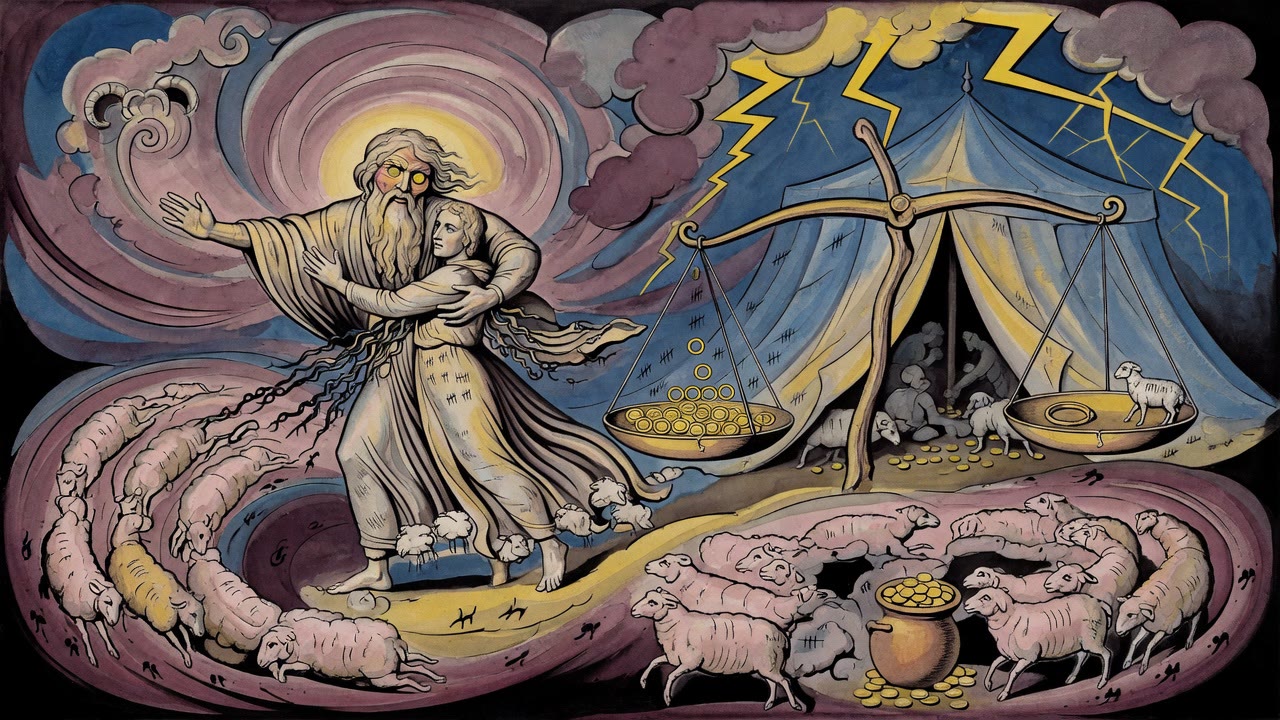
Jacob proposes a clever plan: he'll take all the speckled and spotted lambs and brown sheep from Laban's flock as his wages. Laban agrees, thinking he's getting the better end of the deal. But Jacob, through some skillful animal husbandry (or perhaps divine intervention), manages to increase his own flocks exponentially. The Book of Jasher specifically mentions that Jacob served Laban six years longer and that he had two hundred drove of cattle of beautiful appearance.

This newfound wealth breeds envy among Laban's sons, and Jacob realizes his welcome is wearing thin. God then appears to Jacob and commands him to return to the land of his birth. So, Jacob gathers his family and possessions and flees. He knows that Laban will not like this decision, so he secretly takes his family away.

But Rachel, in a move that will have serious consequences, steals her father's teraphim (images), household idols used for divination. The Jasher spends considerable time describing them, explaining how they were made and used to predict the future. the verse says, Rachel stole the images to keep Laban from discovering where Jacob had gone.

Laban, upon discovering Jacob's departure and the missing idols, is furious. He gathers his kinsmen and pursues Jacob, eventually catching up with him in Mount Gilead. Accusations fly, and Jacob, unaware of Rachel's theft, declares that whoever has stolen the idols should die.

They eventually make a covenant, setting up a heap of stones as a testimony between them. Jasher tells us that Laban called the place Gilead, to remember their covenant. They offer sacrifices, share a meal, and Laban finally bids his daughters farewell and returns home.

But the drama doesn't end there. Laban sends messengers to Esau, Jacob's estranged brother, painting Jacob as a deceitful thief who has stolen his wealth and fled. Esau, fueled by old hatred and the desire for revenge, gathers an army of four hundred men and sets out to confront Jacob.

The chapter ends with Rebecca's messengers reaching Jacob, warning him of Esau's approach. Jacob, now caught between Laban's anger and Esau's wrath, is in a desperate situation. He knows he must think and act quickly to protect his family.

So, what are we left with? A tangled web of deceit, sibling rivalry, stolen idols, and a family on the run. It's a reminder that even in the lives of our ancestors, things were never simple. The Book of Jasher, through this chapter, paints a vivid picture of a family struggling with its past, its present, and the uncertain future that lies ahead. What choices will Jacob make? And what price will they pay? We'll have to keep reading to find out.

Full source