5 min read

Jacob Guarded Laban's Flock Through Frost and Sang the Psalms

Twenty years under Laban leave Jacob burned by drought and bitten by frost. He absorbs every loss and sings through sleepless nights.

Curated by Arthur · Told by Maggid ·
Table of Contents
  1. Heat by Day, Frost by Night
  2. The Leftover Flock
  3. Not So Much as a Borrowed Fork
  4. Work Beloved More Than Merit
Jacob Guarded Laban's Flock Through Frost and Sang the Psalms Click for full size

Heat by Day, Frost by Night

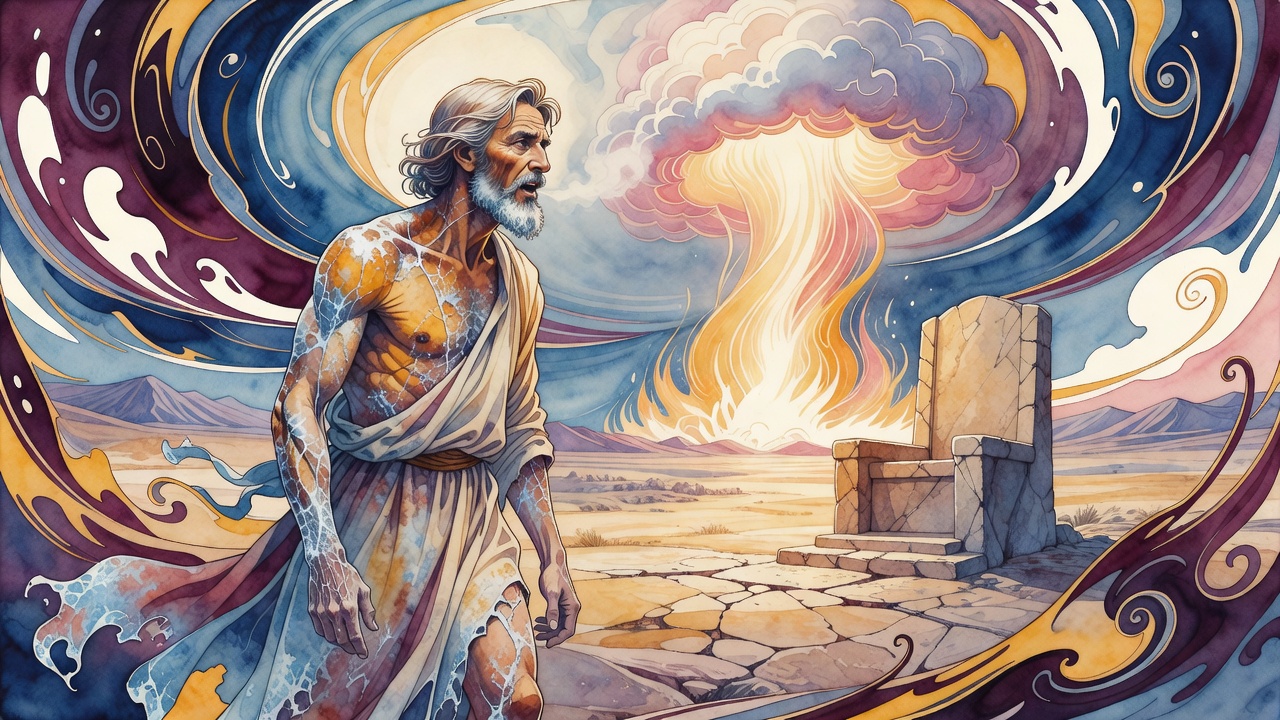
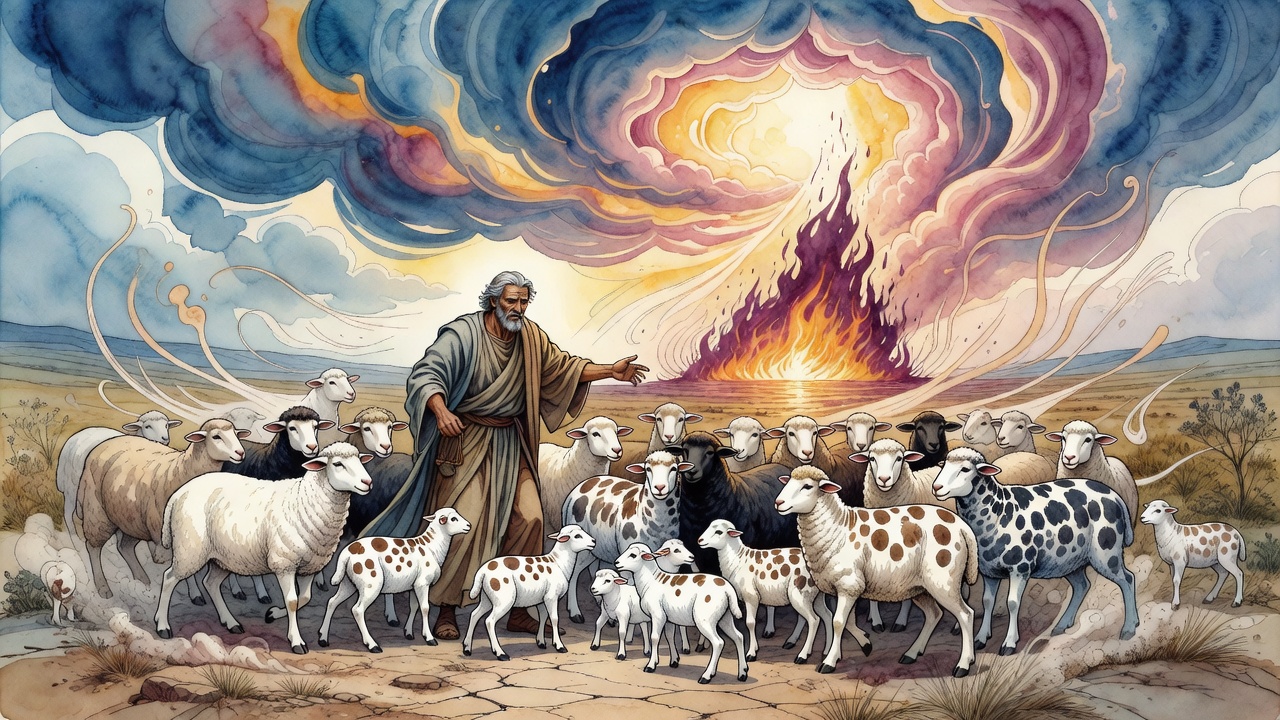
Jacob stood watch over another man's sheep until the skin of his face cracked. Drought scorched him all day. Frost gnawed him all night. Sleep went from his eyes the way water leaves a cracked jar.

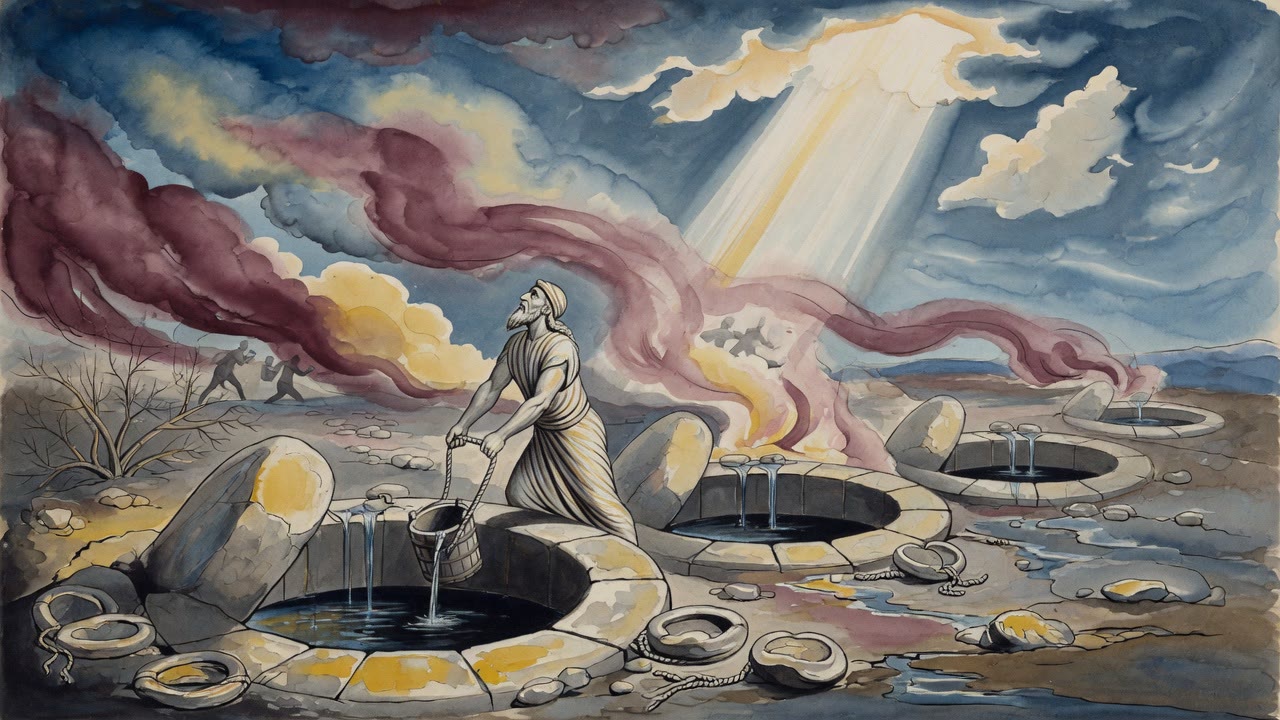
Ordinary shepherds, the sages note, are not judged as harshly as he judged himself. When a beast slipped into a river, Rabba ruled a paid watchman innocent if he had watched as anyone would. Jacob watched past that measure. He guarded Laban's flock the way a city's own appointed sentries guard the town walls after dark.

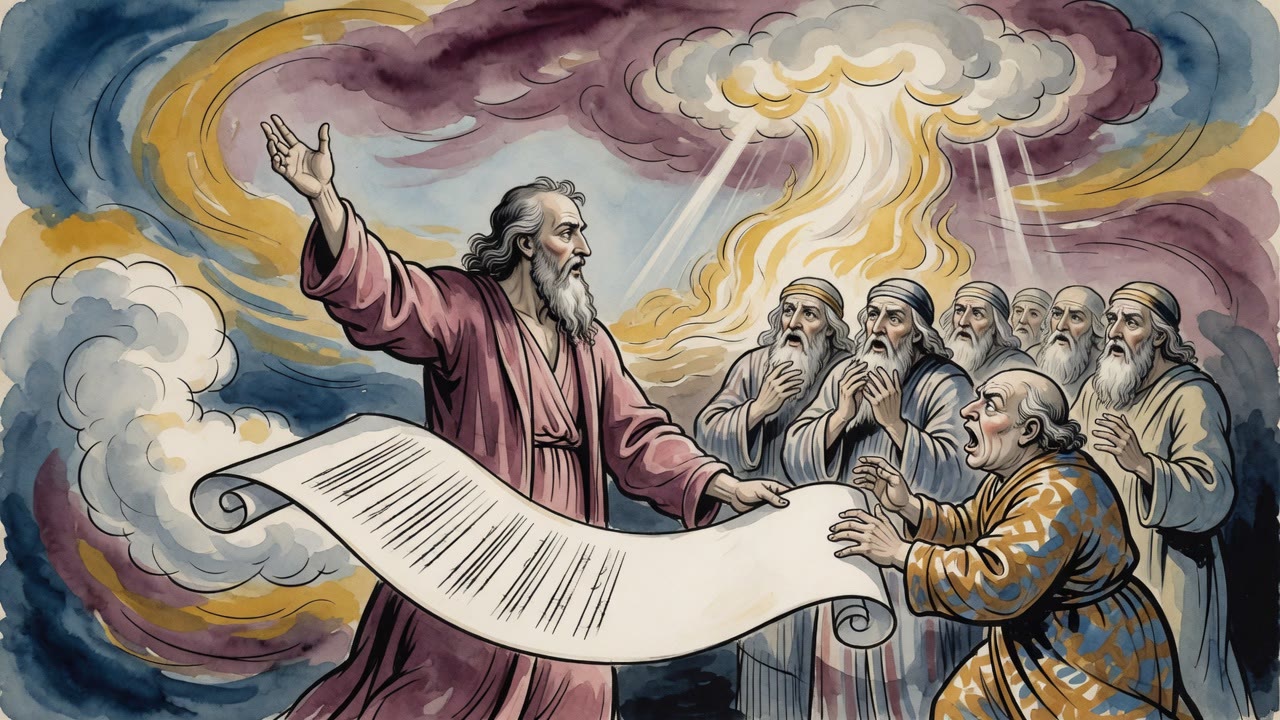
What did he do through all those sleepless nights? He recited the Psalms. Rabbi Yehoshua ben Levi says he sang the fifteen Songs of Ascents. Rabbi Shmuel bar Nachman says the whole Book of Psalms, for Scripture calls God enthroned upon the praises of Israel, and Israel is Jacob himself, singing while frost settled on his cloak.

The flock did not care about psalms. Lions did not pause for melody. Jacob sang anyway, not as decoration but as a way to keep his mind from freezing along with his hands. A hired man can do the minimum and sleep. Jacob refused the minimum. He treated Laban's animals as if the Holy One were auditing every missing lamb.

The Leftover Flock

Laban told him, I have learned by divination that the LORD has blessed me for your sake. The midrash hears a colder word beneath the piety: I tested, I examined, I watched the numbers. Laban knew his wealth had swollen because Jacob lived in his house.

When Laban asked him to name his wages, Jacob answered from pressure. When shall I also provide for my own house? Reuben needs him. Simeon needs him. A father with children cannot keep building another man's estate forever.

Laban kept changing the deal. Ten reversals, or a hundred, depending on how the rabbis count the phrase "ten counts." The flock he left Jacob was the remainder: bad animals, barren animals, sickly animals. Jacob was handed leftovers and forced to make a future from them. He said his righteousness would answer for him tomorrow, and Rabbi Yehuda bar Simon answered with Proverbs: do not boast of tomorrow. The next chapter turns the word bitter. Tomorrow, Dinah goes out and is afflicted.

The word tomorrow sits in Jacob's mouth like a coin he thinks he owns. The midrash flips it. Boast of righteousness as if the next day were already safe, and the next day may arrive carrying a daughter into danger. Jacob's integrity in the fields was real. His confidence about the calendar of mercy was not.

Not So Much as a Borrowed Fork

When Jacob finally turned on Laban, his anger erupted only as words. The midrash is careful. The strictness of the fathers is better than the meekness of the sons, it says, and what looks like a furious quarrel was a torrent of measured reckoning.

A son-in-law who lives twenty years under another man's roof surely borrows a knife, a tool, a needle now and then. Jacob insisted Laban could ransack everything and find not so much as a borrowed fork unaccounted for. Compare that to David, who in pleading his innocence to Jonathan still raised the specter of bloodshed. Jacob's restraint ran cleaner.

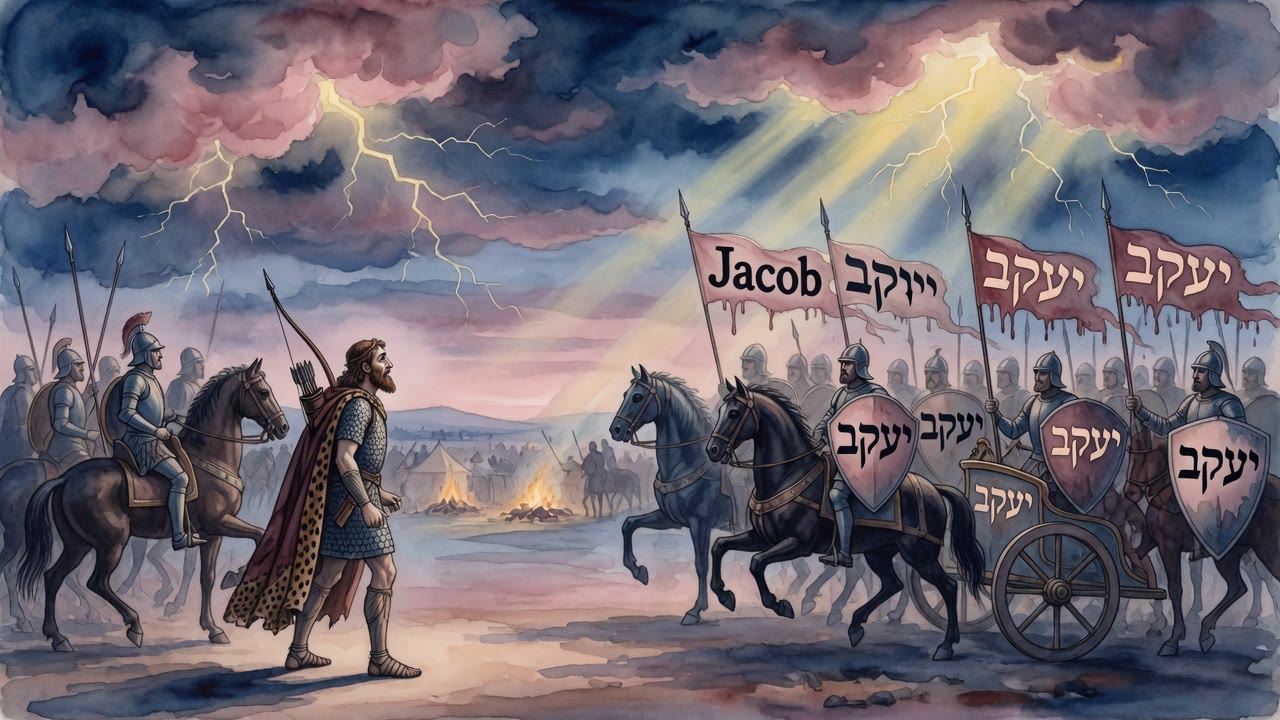
He had been the most scrupulous of shepherds, absorbing every loss himself, even when Heaven had decreed that a lion devour part of the flock daily. No other shepherd could have done better, yet Laban branded him a thief by day and by night. The accusation stuck to Jacob's skin like the frost, false and freezing.

Twenty years of perfect accounting did not protect him from a father-in-law who needed a thief to explain his own shrinking share. Laban's house had grown fat on Jacob's labor, then turned thin with envy when Jacob finally took wages in spotted wool. Honesty does not always buy a soft exit. Sometimes it only buys a clean conscience when the exit is hard.

Work Beloved More Than Merit

When Jacob credits the God of his father for survival, the rabbis weigh two saving powers. The merit of his ancestors rescued his property. His own honest labor rescued lives. Work, they conclude, is even more beloved than inherited merit.

The passage closes with a startling weight. The study of Torah is greater even than honoring one's father and mother. The proof: during the long years Jacob sat learning in the house of Eber and failed to honor his parents, Heaven never held it against him. The years in the field with Laban were the ones that counted, the years of sweat and psalms and unpaid integrity.

When Laban named their stone-heap in Aramaic, Rabbi Shmuel warns never to scorn that language, for God grants it honor in the Torah, the Prophets, and the Writings alike. Even the speech of the chase and the covenant heap becomes holy when justice is spoken into it.

Jacob left the frost behind him, but he took the night songs with him. A man who has sung through twenty years of another man's flock does not forget how to keep watch.

He left with speckled animals and a mouth full of truth. The frost marks would fade. The habit of night watching would not. Somewhere ahead waited Esau, and another kind of sleeplessness. Jacob had already practiced staying awake when staying awake was the only form of faith left.


← All myths
From the tradition

Sources

3 sources

The texts behind this telling. Some cards carry a translation of the source; others are our own retelling of it, and each card says which. Every card links out to the original.

Yalkut Shimoni on Torah 130:15Yalkut Shimoni on Torah

Translation of the source text.Torat Emet (Yalkut Shimoni) · CC-BY-NC

"By day the drought consumed me" (Genesis 31:40). There was a shepherd who was tending animals on the bank of the Papa river; one of them slipped and fell into the river. He came before Rabba, who acquitted him, saying: what could he have done? He guarded as people guard. Here too he is exempt. He said to him: yes. They raised an objection: until when is a paid watchman obligated to guard? Such as "by day the drought consumed me and the frost by night, and my sleep fled from my eyes" (Genesis 31:40). [There it speaks] of municipal watchmen -- but was our father Jacob a municipal watchman? Rather, this is what he said to Laban: I guarded for you with extra guarding, like municipal watchmen.

"By day the drought consumed me and the frost by night, and my sleep fled from my eyes." What would he say [in his sleeplessness]? Rabbi Yehoshua ben Levi said: the fifteen Songs of Ascents in the Book of Psalms. What is the reason? As it says (Psalms 124:1), "Had it not been for the LORD who was for us, let Israel now say" -- Israel the elder [Jacob]. Rabbi Shmuel bar Nachman said: the entire Book of Psalms. What is the reason? As it says (Psalms 22:4), "And You are holy, enthroned upon the praises of Israel" -- Israel the elder.

(Genesis 31:42) "Had it not been for the God of my father, the God of Abraham." Wherever "had it not been" is said, it is by the merit of the fathers. But it is written (Genesis 43:10) "had we not delayed"? Their whole standing was only by the merit of the fathers; for without the merit of the fathers they would not have come up from there in peace. Some take it otherwise: wherever "had it not been" is said it comes by the merit of the fathers, except for this one. He said: this one too is by the merit of the fathers, by the merit of the sanctity of the Name, by the merit of Torah (Psalms 119:92) "had not Your Torah been my delight," by the merit of faith, as it says "had I not believed to see the goodness of the LORD" (Psalms 27:13).

"And the labor of my hands God saw" (Genesis 31:42). Labor is more beloved than the merit of the fathers, for the merit of the fathers saved property and labor saved lives. The merit of the fathers saved property: "had it not been for the God of my father... surely now you would have sent me away empty." And labor saved lives: "my affliction and the labor of my hands."

(Genesis 31:43) "And Laban answered and said to Jacob, The daughters are my daughters." Rabbi Reuben said: they were all his daughters -- "the daughters are my daughters," that is two; "and my daughters," that is four.

(Genesis 31:45-46) "And Jacob took a stone." Rabbi Yochanan said: like the great rock of Tiberias. "And Jacob said to his brothers" -- he had one brother, and would that he were buried! Rather, these were his sons, and he called them brothers, since they were as righteous and mighty as himself. Rabbi Yudan said: when a man wears his father's garment, he is like him.

(Genesis 31:47) "And Laban called it Yegar Sahaduta." Rabbi Shmuel bar Nachman said: let the Aramaic tongue not be light in your eyes, for in the Torah, the Prophets, and the Writings the Holy One, blessed be He, allots it honor. In the Torah: "And Laban called it Yegar Sahaduta." In the Prophets (Jeremiah 10:11): "Thus shall you say to them: the gods that did not make the heavens and the earth." In the Writings (Daniel 2:4): "And the Chaldeans spoke to the king in Aramaic, O king, live forever."

(Genesis 31:49) "And Mizpah, of which he said, May the LORD watch [yitzef] between me and you." It is not written "when we are hidden," but "that we shall be hidden" -- until now we could see one another.

Full source
Yalkut Shimoni on Torah 130:13Yalkut Shimoni on Torah

Translation of the source text.Torat Emet (Yalkut Shimoni) · CC-BY-NC

Rav Safra said: from where do the Persians call a menstruant woman "isolated"? From here: "the way of women is upon me" (Genesis 31:35).

(Genesis 31:36-37) "And Jacob was angry and quarreled with Laban." The strictness of the fathers is better than the meekness of the sons. From where do we learn the strictness of the fathers? "And Jacob was angry and quarreled with Laban." Do you suppose there were blows and wounds there? There were only words of appeasement. Jacob appeases his father-in-law: "now that you have felt through all my goods" -- a son-in-law dwelling in his father-in-law's house, is it possible he never benefited from a single vessel, an object, a knife? But here, "you have felt through all my goods" -- even a single needle, even a single fork. And not the meekness of the sons, learned from David: (1 Samuel 20:1) "And David fled from Naioth in Ramah and came and said before Jonathan, What have I done, what is my iniquity, what is my sin before your father, that he seeks my life?" -- he mentions bloodshed in his appeasement.

(Genesis 31:38-41) "I did not bring you a torn animal" -- one that had been killed. "I bore the loss of it" -- I would be the sinner against the lion, for so the Holy One, blessed be He, decreed upon his flock, that the lion should eat five of them each day. And lest you say that another shepherd would have saved it, Scripture teaches (compare Isaiah 31:4) "as the lion and the young lion growl over their prey." "Stolen by day and stolen by night" -- they called me a thief of the day and a thief of the night. "These twenty years I have been in your house": the study of Torah is greater than honoring father and mother, for all those years that Jacob was in the house of Eber he was not punished for them.

Full source
Yalkut Shimoni on Torah 130:7Yalkut Shimoni on Torah

Translation of the source text.Torat Emet (Yalkut Shimoni) · CC-BY-NC

"I have divined" (Genesis 30:27): I have tested and examined, "and the LORD has blessed me for your sake." "And he said, Specify your wages" (Genesis 30:28): specify a fixed sum plainly. "For the little that you had before me" (Genesis 30:30): "little" is said here, and "little" is said there: "and he sojourned there with few people" (Deuteronomy 26:5). Just as there it means seventy souls, so here it means seventy.

"When shall I also provide for my own house?" (Genesis 30:30): Reuben needs me; Simeon needs me. "And my righteousness shall answer for me tomorrow" (Genesis 30:33). Rabbi Yehuda bar Simon says: "Do not boast of tomorrow" (Proverbs 27:1). You said, "my righteousness shall answer for me tomorrow"; tomorrow your daughter goes out and is afflicted, as it is said, "And Dinah the daughter of Leah went out" (Genesis 34:1). The midrash hears a wordplay between "shall answer/testify" and "is afflicted."

"And Laban said, Behold, would that it be according to your word" (Genesis 30:34): every condition that Laban made with Jacob our father, he would reverse retroactively ten times, as it is said, "hen lo," the midrash's wording of the verse. And the rabbis say: a hundred times, as it is said, "and you have changed my wages ten times" (Genesis 31:41), for a "count" is not fewer than ten. "And Jacob fed the rest of Laban's flock" (Genesis 30:36): it is written "the remaining one"; some of them were bad, some barren, some sickly.

Full source