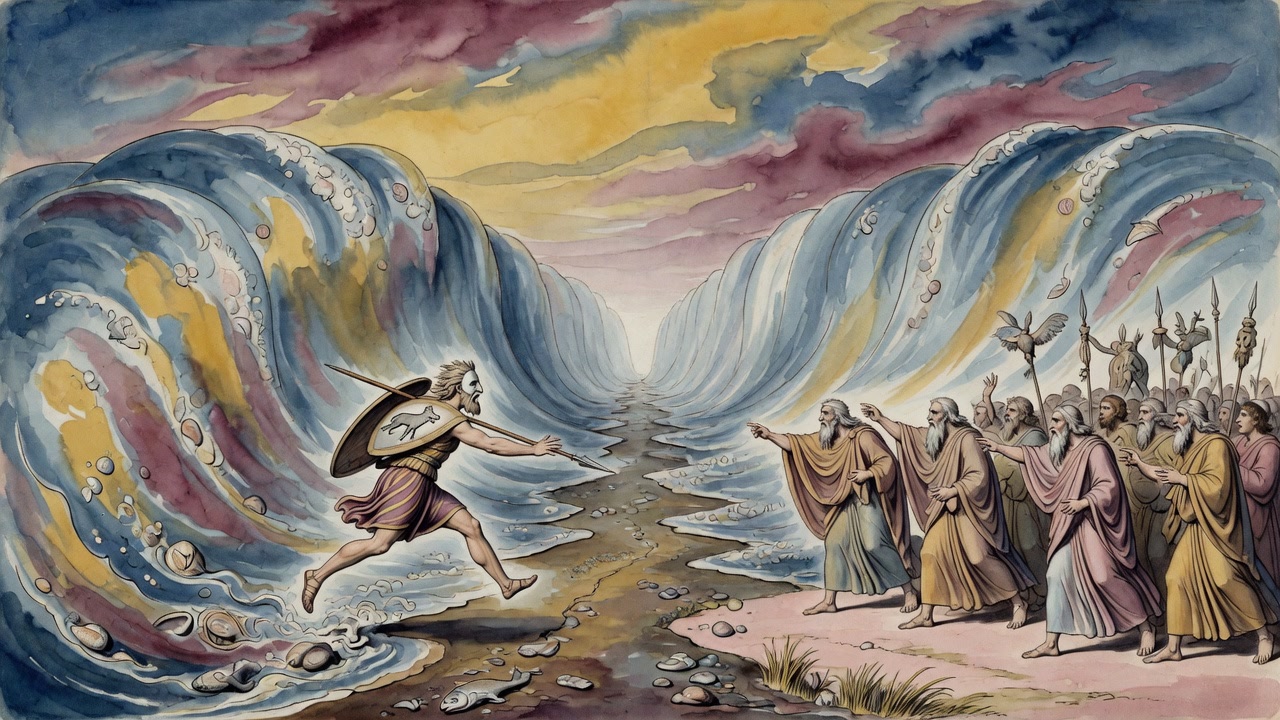
Joseph Asked Benjamin the Names of His Ten Sons
The Egyptian governor made small talk with the youngest brother. How many sons do you have? Ten. And what are they called?
Table of Contents
 Click for full size
Small Talk in the Governor's Room
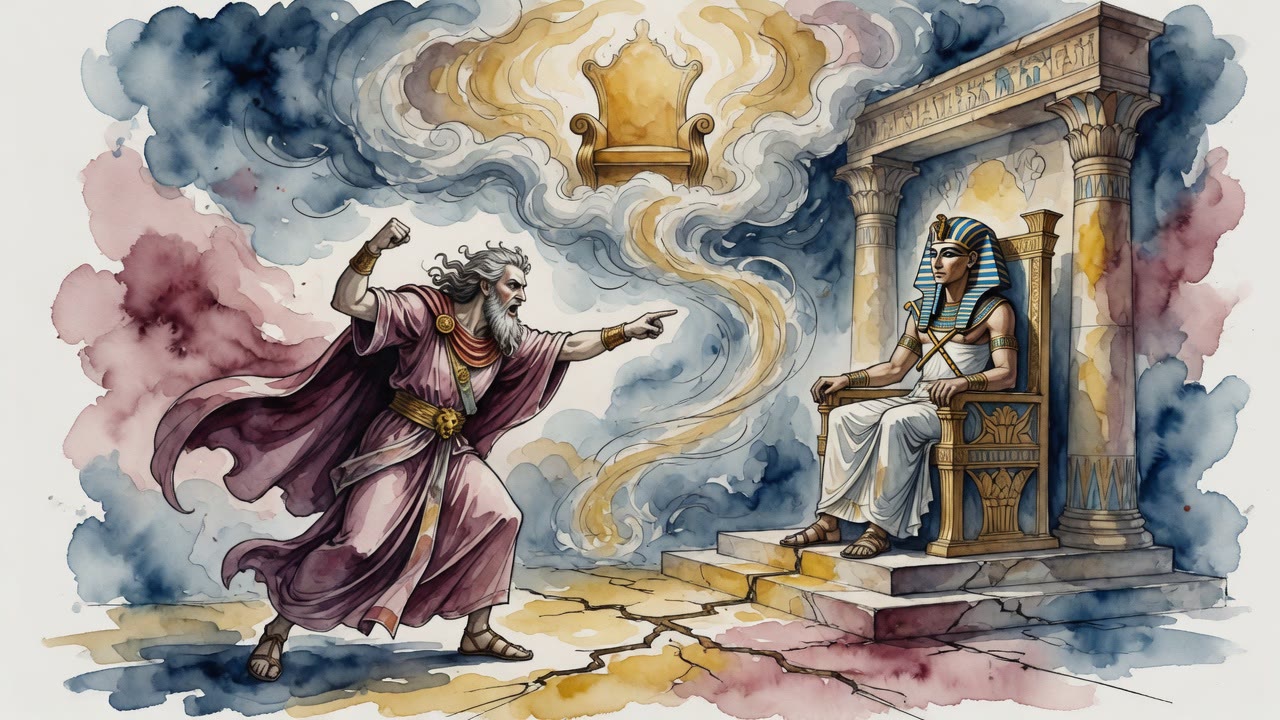
The Egyptian stood next to him and made conversation, the way an official does with a foreigner he has decided to be gracious to.
"Do you have sons?"
"Yes."
"How many?"
"Ten."
"What are their names?"
Benjamin did not know he was talking to Joseph. He knew he was the youngest of eleven surviving brothers, that the twelfth had gone missing on a road in Canaan a lifetime ago, and that his father had never stopped. He answered the question honestly, and the honest answer was that every one of his sons was named after the same man.
Ten Names for One Brother
"I had a brother," Benjamin said. "His deeds were fine and pleasant, and he was taken from me, and I gave my children names out of what happened to him."
Then he went through them, one at a time, in front of the man asking.
Bela, because he was swallowed up out of my hands. Bekher, because he was my firstborn brother. Ashbel, because he was taken captive from me. Gera, because he is living in a foreign country. Naaman, because his deeds were pleasant and his ways were pleasant. Ehi, because he was my full brother, my mother's other son, the only one. Rosh, because he was the head over me and the head of all the brothers.
Mupim, because he was fine in every respect, and because the rulings that Shem and Ever handed down to Jacob, Jacob handed to him, mouth to mouth.
Hupim, because he never saw my wedding canopy and I never saw his.
Ard, because he was like a rose. And because when they brought my father the coat and told him a wild animal had eaten him, my father said he would go down to the grave mourning.
Ten names. The man he had named them for was standing an arm's length away in a linen collar, listening to his own funeral being read out by a brother who had gone on grieving him for twenty-two years.
The Goblet on the Table
Joseph said nothing.
He had already run the test. He had planted the silver goblet in Benjamin's sack himself, sent the steward after them, brought them back into the room as thieves, and watched to see whether these were still the men who had sold a brother.
They were not. Judah stepped forward and offered his own body for Benjamin's, and that was when Joseph gave up. He cleared the Egyptians out of the room and said the sentence in Hebrew and the brothers could not answer him.
Rachel's One More Son
The boy in the middle of it had been prayed for by name before he existed. When Rachel finally bore a son she called him Joseph and said, "May the Lord add me another son," and the sages counted her tongue among the choice silver of the righteous, because she got what she asked for and it killed her. Benjamin was born on the road. She named him son of my sorrow with the last breath she had, and Jacob changed it on the spot to son of the right hand.
Jacob was a hundred years old that day. Benjamin was thirty when the family went down into Egypt, and the two numbers together make the hundred and thirty that the tribe's prince later weighed out in silver at the Tabernacle, a dish for a mother and a bowl for a goblet, offered in the order they happened.
The Tribe That Held the Sleeping Things
Generations later a psalm calls three tribes by name and asks God to wake up: rouse Your might before Ephraim and Benjamin and Manasseh, and come and save us. Joseph's two sons stand on either side. The brother they were named around stands between them, exactly where he stood in the governor's room.
The rabbis counted five things asleep in the world, and the psalm is trying to wake all five: the might of God, the rainbow, the sword, the arm, and the jealousy. None of them is gone. Every one of them is lying down.
Benjamin's portion of the land got the Temple built on it. Two kings came out of his tribe, and two redeemers, Mordecai and Esther. Benjamin was given five times as much food at Joseph's table and five changes of clothing when the brothers were sent home, and the last man of that tribe to be counted this way walked out of a Persian palace in five royal garments, in blue and white, wearing a great gold crown, with the decree against his people already reversed.
← All myths