Esau Sold the Coming World for Red Lentils
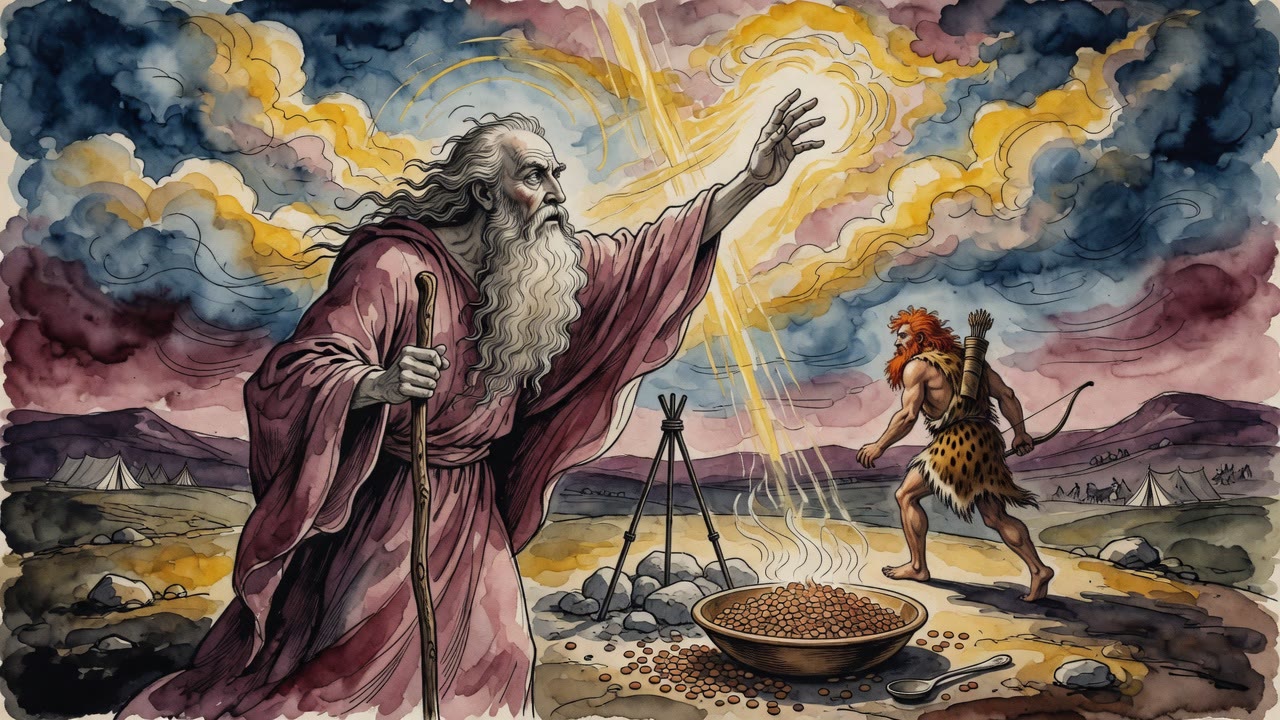
He came in from the field empty. Steam rose off a red bowl. He priced the world to come at a meal he could taste now.
Table of Contents
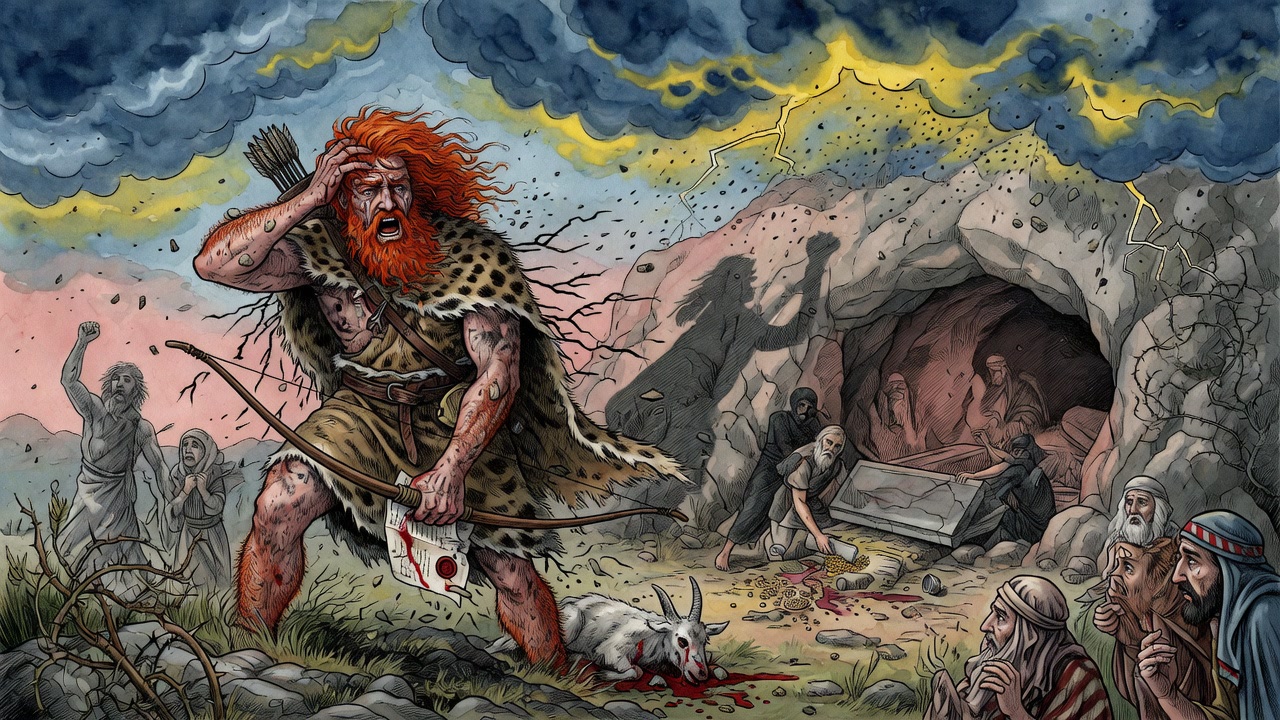
Esau came through the tent flap with blood under his nails and an empty bag. The day's hunt had failed. His stomach ran the argument before his mouth did.
 Click for full size
Inside, steam lifted off a pot the color of the field at dusk. Jacob stood over it with a ladle, quiet as a man who had spent the morning with words instead of traps.
Two Roads From One Tent
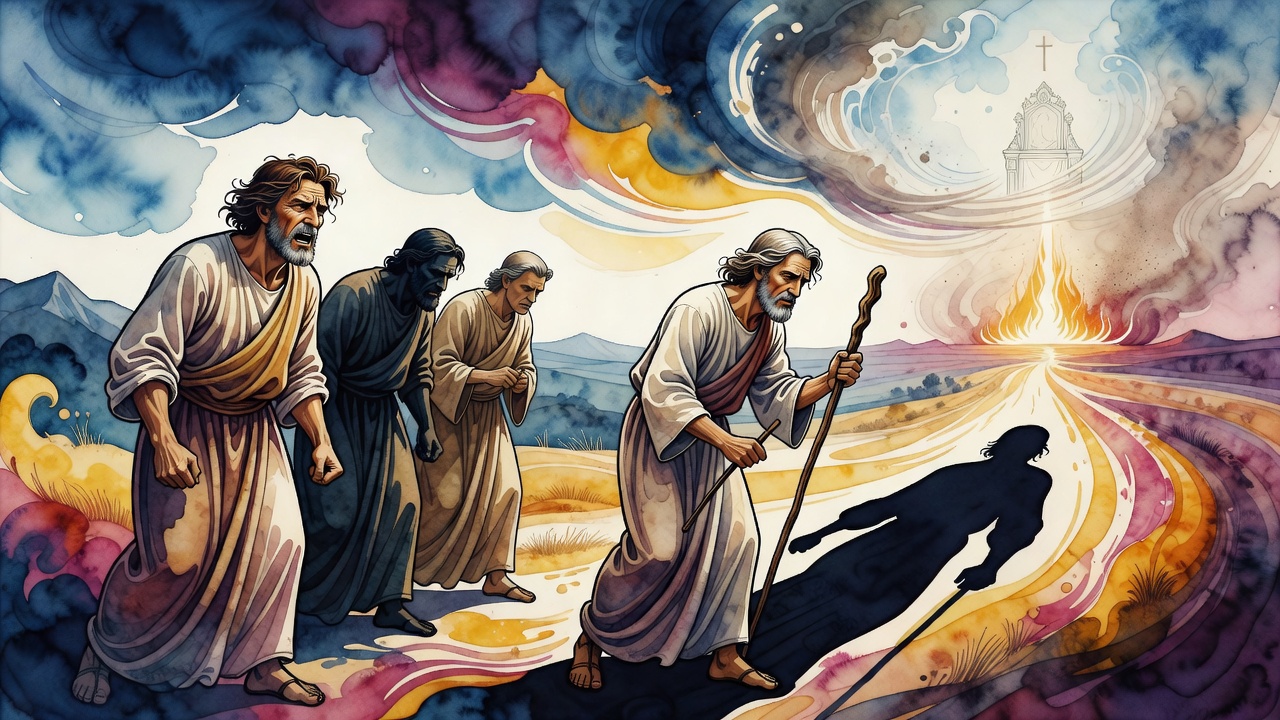
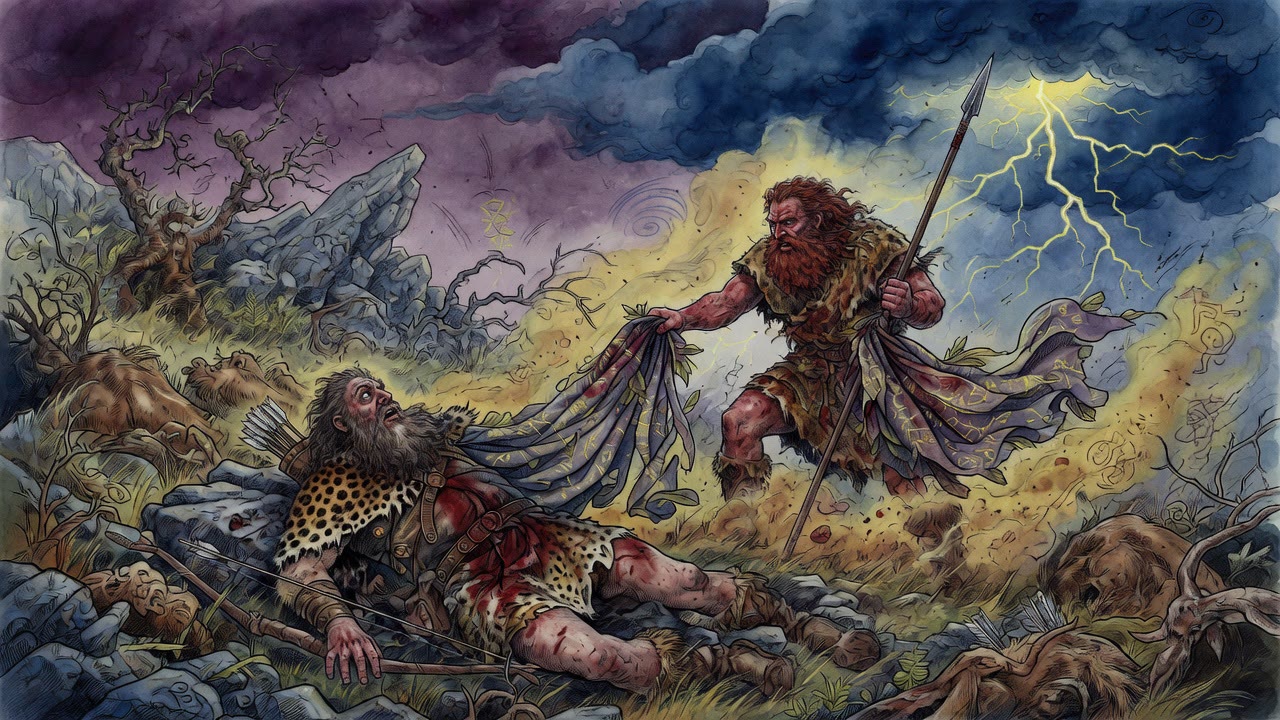
Esau had grown into the field with a hunter's patience for blood. He went out to catch birds and beasts, to kill lives as Nimrod had killed, a lineage of violence wearing a son's face (Genesis 25:27). His hands smelled of iron and fur. His stories at the door were always about what fell.
Jacob walked another road. He was peaceful in his words, a minister in the instruction-house of Eber, seeking teaching before the Lord. Eber's name sits inside the word Ivri, Hebrew. Jacob did not only study. He served the chain of instruction that ran from the world after the Flood toward the covenant still forming. Ink and memory were his field.
Rebecca watched both and kept her own counsel. Isaac loved the scent of the hunt more than he knew.
The Bowl and the Shrug
Esau dropped onto a stool. "Pour," he said. Jacob did not pour yet.
The birthright sat between them thicker than stew. It carried the firstborn's nearness to the altar, the family's edge against Heaven, a stake in olam ha-ba (עולם הבא), the world to come. Jacob wanted that stake. Esau wanted the bowl.
"Behold, I am going to die," Esau said, "and in another world I shall have no life. What then to me is the birthright, or the portion in the world of which you speak?" (Genesis 25:32).
He did not only trade from hunger. He traded from unbelief. He looked at a portion he could not taste and priced it at a bowl of red lentils. Jacob bought the whisper of eternity that clings to the one who stands between a household and God.
Esau wiped his mouth, stood, and went out again as if he had sold a worn pair of sandals. The pot cooled. The deal did not. Somewhere in the house a ladle hung and dripped, a small clock counting what had just been spent.
A Name Spoken in a Dark Room
Years later Jacob stood before blind Isaac in borrowed gear and said the hard sentence: "I am Esau thy firstborn" (Genesis 27:19). Goat skins itched on his arms. The room smelled of food and fear.
The son of the covenant spoke a false name under the weight of a mother's plan and a purchased right. Isaac breathed him in and smelled, not goats only, but the incense of a sanctuary not yet built, the fragrance of a field the Lord would choose for His dwelling.
Blessing left the father's mouth toward a future Temple while the present tent held a lie and a stew's long consequence. Somewhere outside, Esau still believed the future was a story other people told to feel important.
Esau's cry at the door came too late for the words already spoken. The man who sold the coming world discovered that the present world also keeps accounts. Tears do not reverse a sale sealed with a shrug.
What the House of Study Bought
In Eber's rooms Jacob had learned that words can be peaceful and still change the map of a family. In the field Esau had learned that a full stomach is an argument. The lentils were never only food. They were a verdict on whether tomorrow's world is real enough to cost today's hunger.
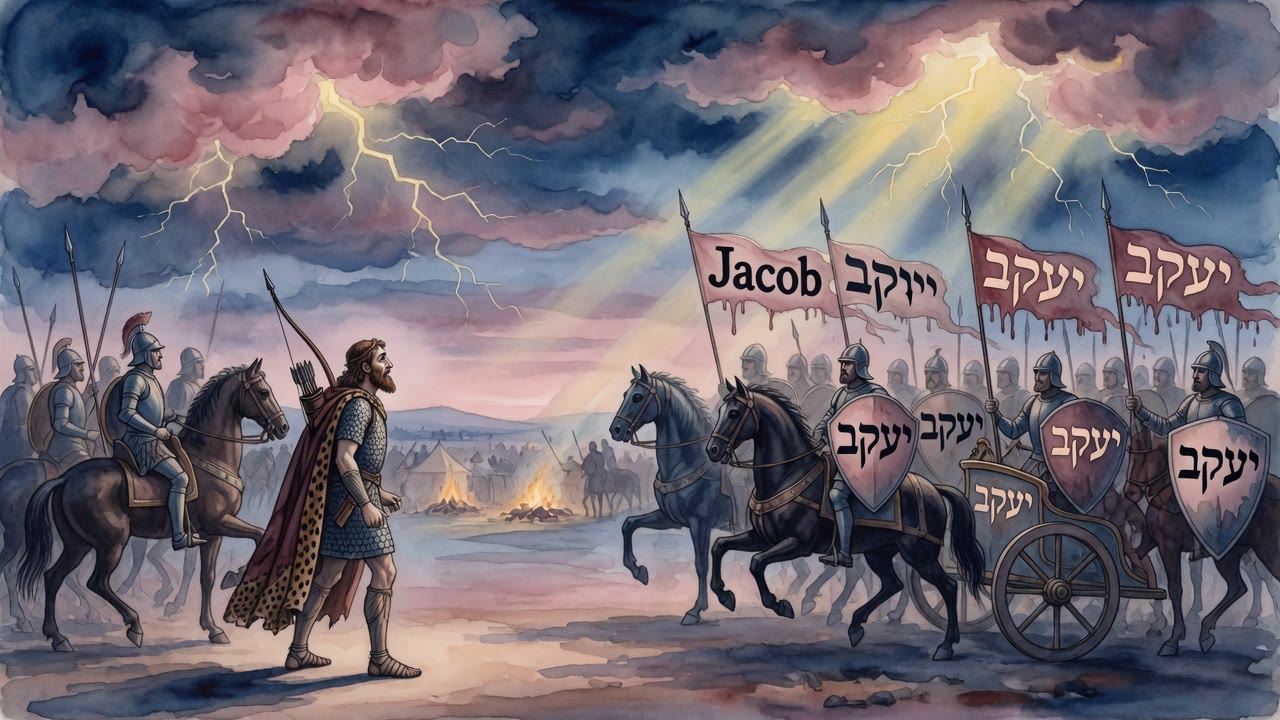
Jacob would pay for the syllables in Isaac's tent for decades. Laban would switch brides. Sons would stain a coat. At the Jabbok a new name would arrive after a night of striving. The purchase at the pot and the name in the dark room braided into one hard education. The covenant is larger than any single act, and no act inside it is free.
After the Bowl
Hunters still come in asking what a birthright is worth. Students still sit where Eber's heirs taught. Between them the red stew keeps steaming, a cheap meal that cost a man a world he claimed not to want, until the day he wanted it with his whole throat and found the door already closed.
Esau married out and built his own line. Jacob limped into mornings with a new name and old debts. The lentils were long digested. The shrug remained in the blood.
Jacob scraped the last red film from the bowl and set it down. Esau's boots were already in the yard again. Between the pot and the door lay a sale no court would reverse, sealed with a shrug that tasted of salt and lentils.
← All myths