Parshat Vayetzei5 min read

Jacob Fled While Laban Sheared His Flocks

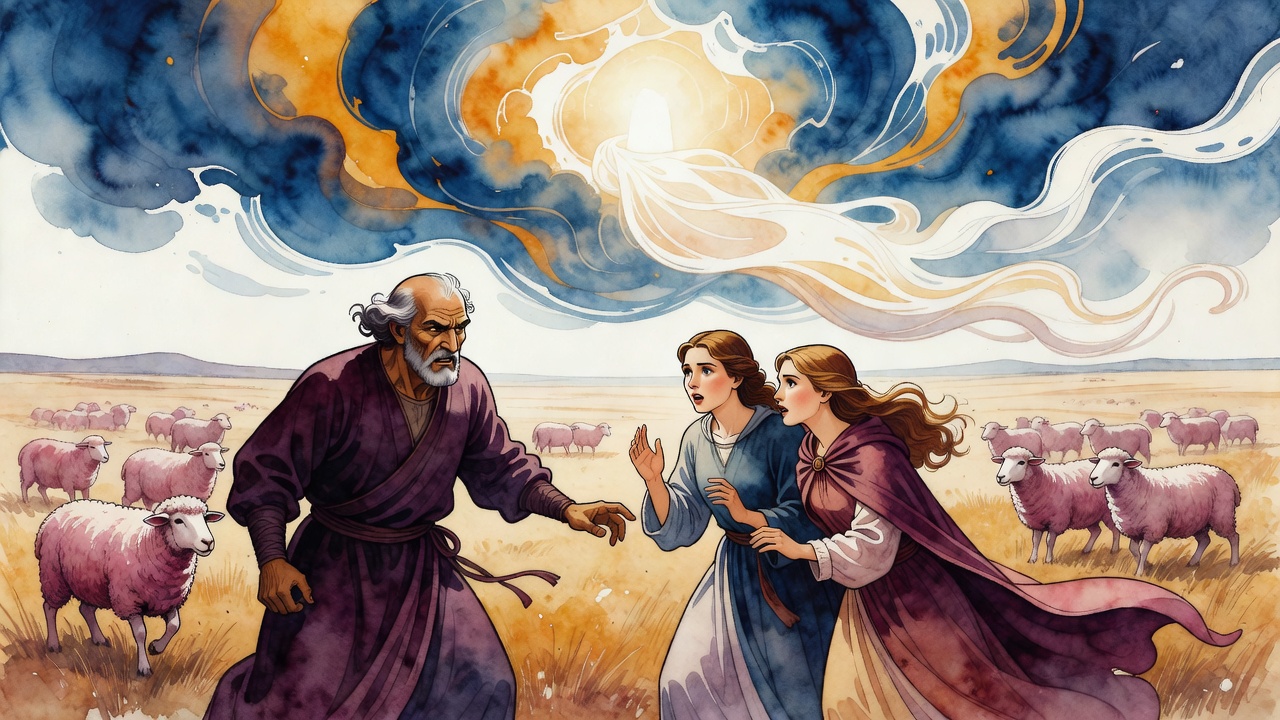
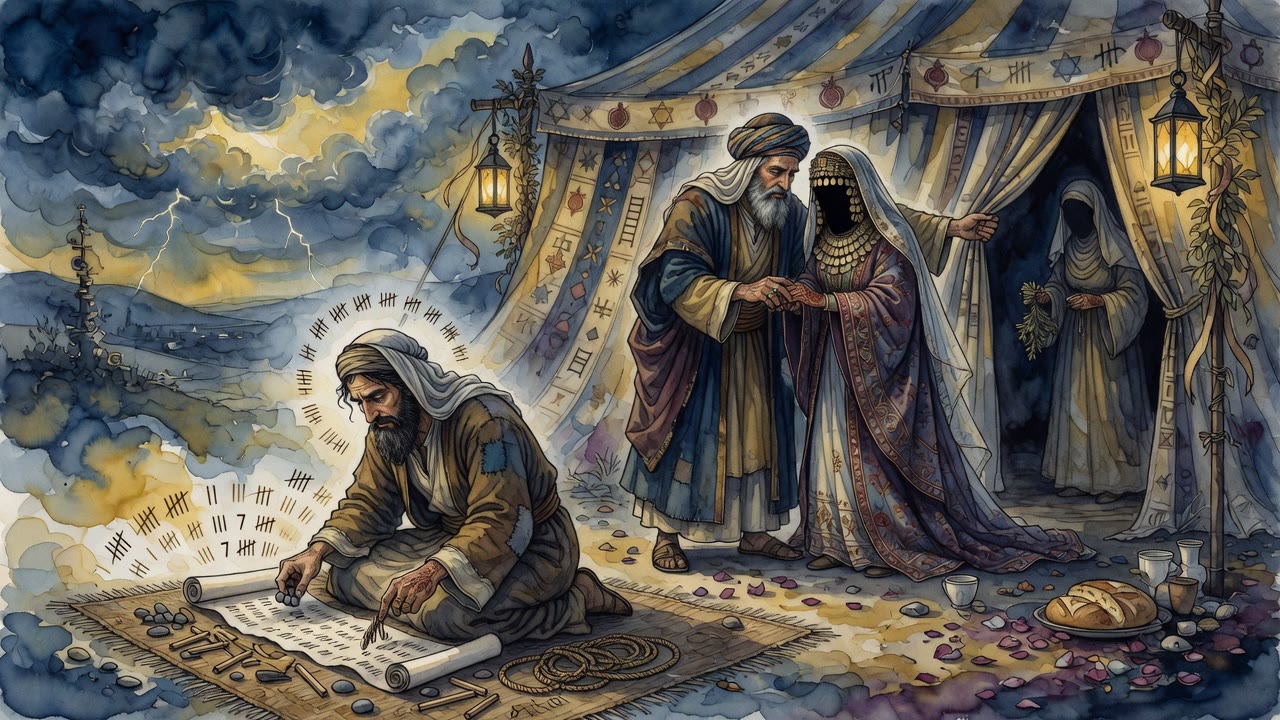
While Laban counted wool, Jacob told Leah and Rachel of God's dream. They rose with him, crossed the river, and left the house of wages behind.

Curated by Arthur · Told by Maggid ·
Table of Contents
  1. Wool and a Window
  2. Kind Words in a Hard House
  3. Leah at the Donkey's Bray
  4. Names That Map a People
  5. The River Behind Them
Jacob Fled While Laban Sheared His Flocks Click for full size

Wool and a Window

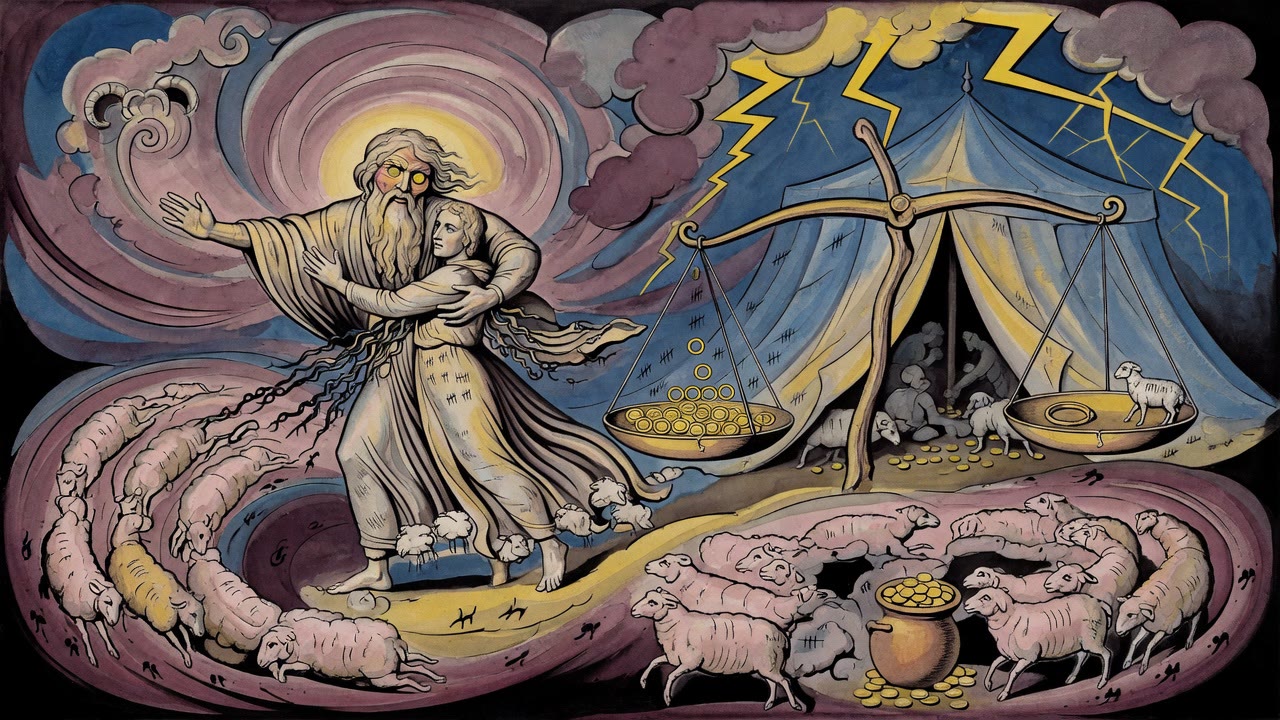
Laban went to shear his sheep. The work was a festival of hands and knives and counting, the kind of gathering that holds a household in place with noise and wine and the soft mountain of fleece. Neighbors came. Servants ran. The house of the trickster turned its eyes to wool. Jacob read the empty space that attention left behind. Twenty years of wages changed mid-promise, switched wives under a veil, speckled flocks bred against a cheat's rules, had taught him the weather of his father-in-law's house. The shearers' noise was his opening, a door made of other men's busyness.
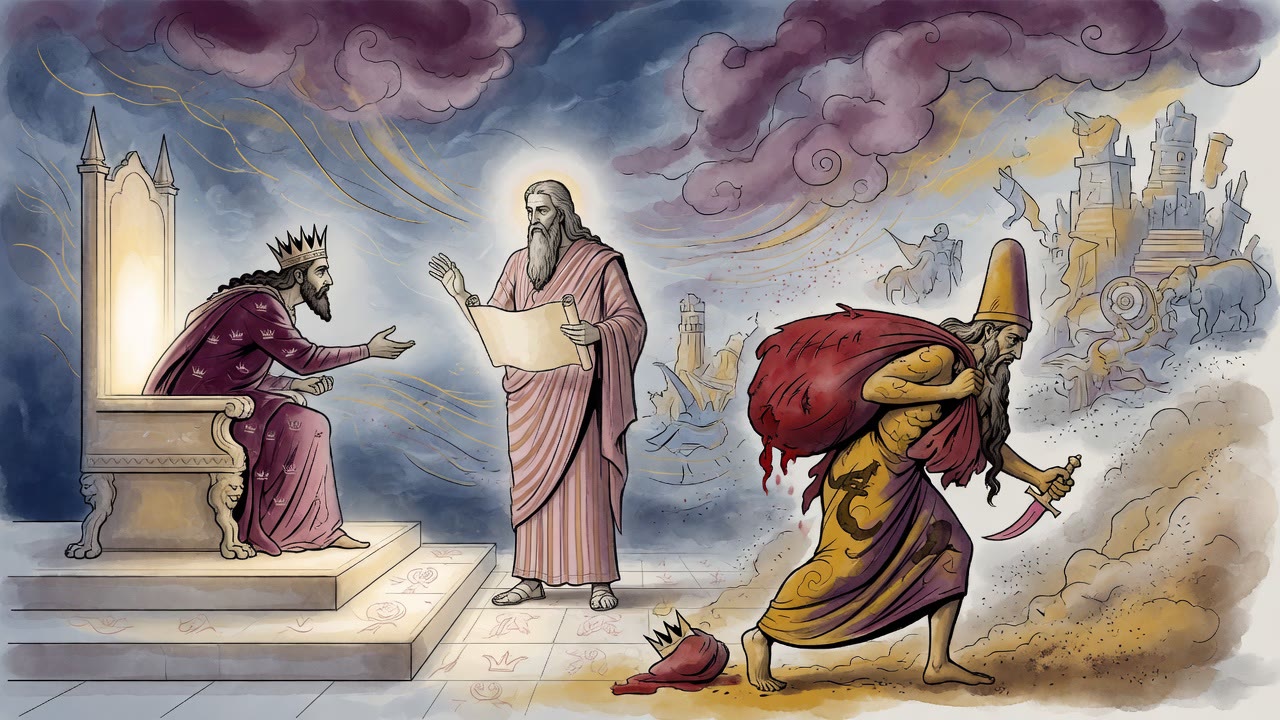
He did not run first like a thief in pure panic. He spoke first like a man binding a household to a command from above.

Kind Words in a Hard House

He called Leah and Rachel and spoke kindly. The text marks the tone because kindness in Laban's compound was rare enough to record. No barked order. No accusation that would start a war of rooms. He told them the dream in which God commanded him to return to his father's house, the God who had seen Laban's face change toward him. In that world a dream was not private weather. It was a rope thrown from heaven onto a man's shoulders.

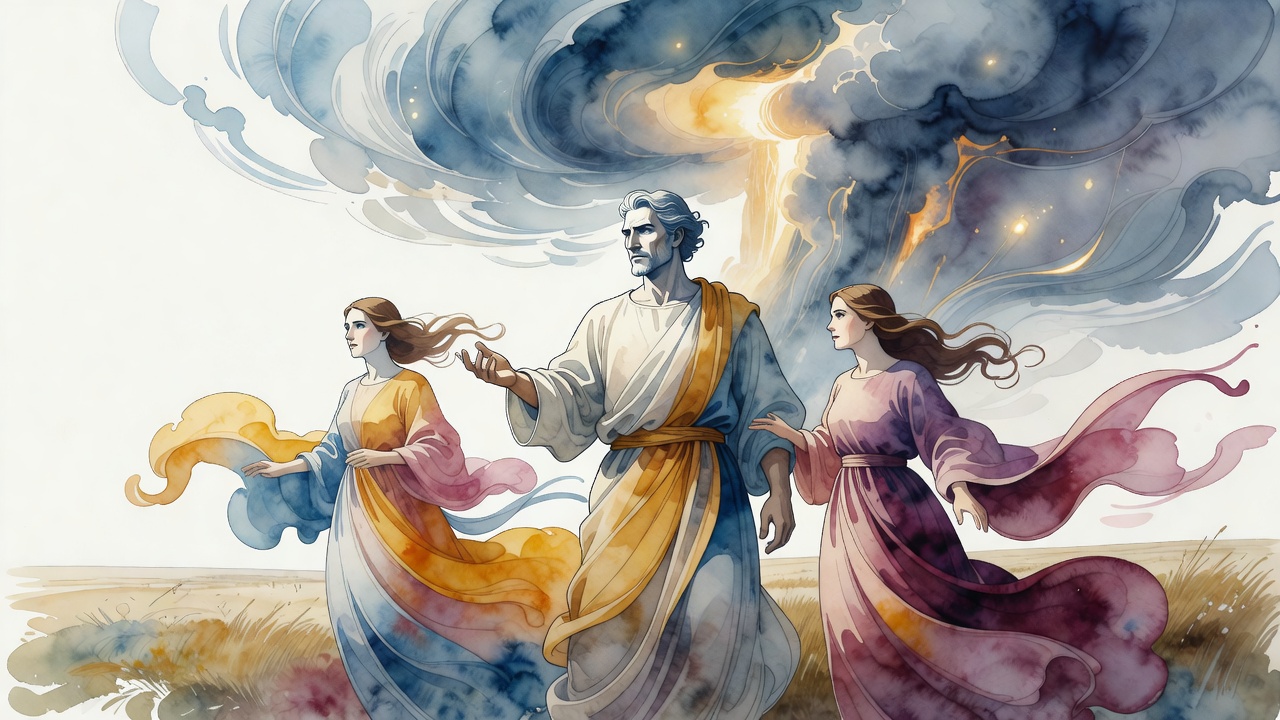
Their answer came without bargain or delay. "To every place whither thou goest we will go with thee." The sisters who had competed for his nights, trading mandrakes and names and the ache of being unloved or over-loved, now closed ranks for his road. Jacob blessed the God of Isaac his father and the God of Abraham his father's father, stacking the names like stones of a boundary. Then he set wives and children on mounts, took his goods, crossed the river, and made for the land of Gilead while Laban's hands were still full of wool.

Leah at the Donkey's Bray

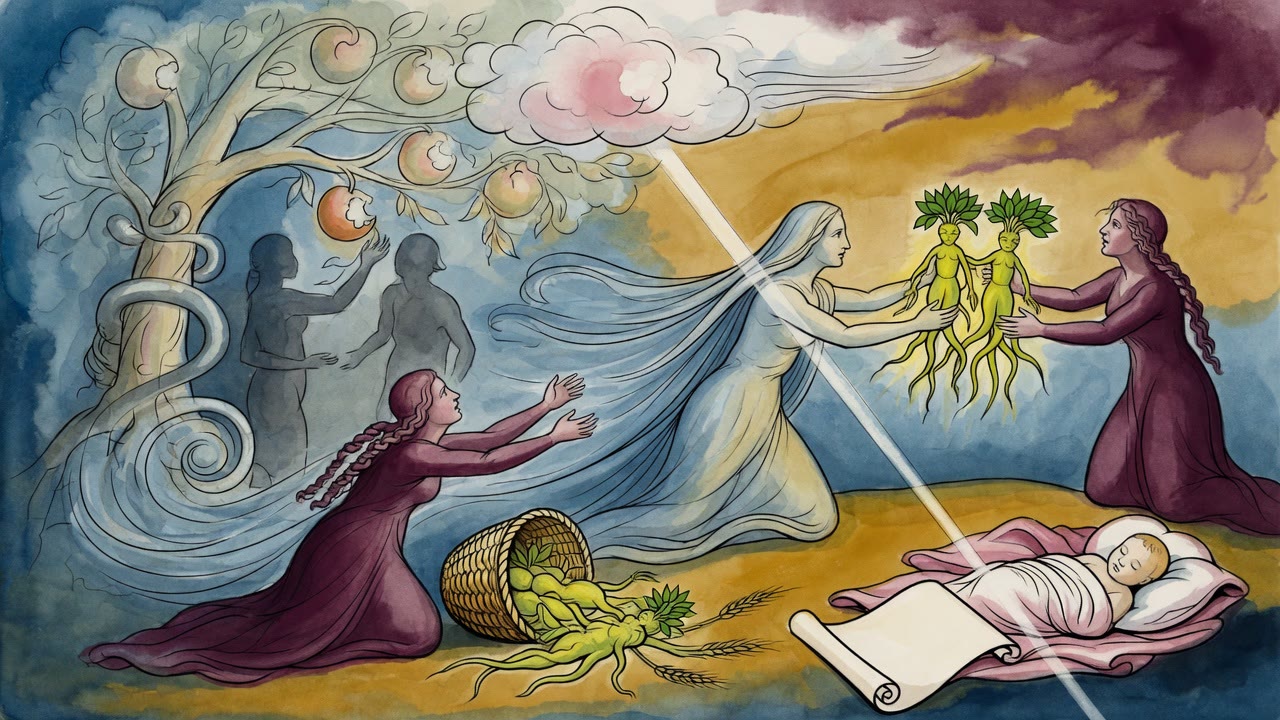
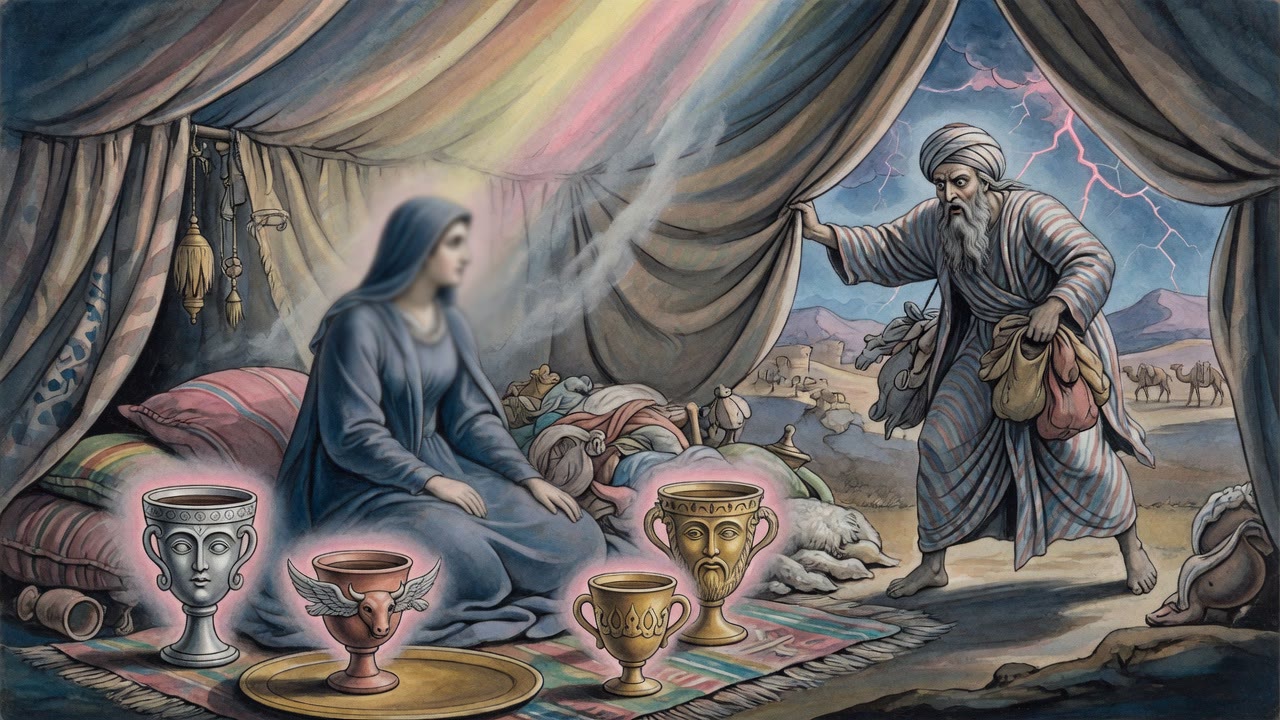
The flight rode on years already thick with another kind of urgency, nights when destiny used a tired man's body as its road. Once Jacob had come home from Laban's fields after working until dark, as a day laborer's law demands, zeal for the flock outlasting his own comfort. Leah heard the bray of his donkey, that rough herald of return, and ran out before he could wash his feet. She pressed him toward her tent with a need that looked like demand and was, in heaven's reading, pure. He refused, worn down to bone. God compelled him to enter, for Leah's motive was not conquest for its own sake but the building of Israel through sons.

She had acquired dudaim, mandrakes of the field, and through that bargain with Rachel and God's opening of the womb she bore more children into a crooked uncle's economy. The house of Laban was never only wages and speckled sheep. It was a workshop where tribes were being hammered into shape under a roof that did not deserve them.

Names That Map a People

Issachar she named as reward, and tradition sets his seed to the labor of Torah, tents of study paid for by another's haul. Zebulun she named as dwelling-place, and his seed would trade the sea roads and pour profit into Issachar's long days with the scroll. "Now will my husband dwell with me," she said, "seeing that I have borne him six sons." She wanted Jacob's settled presence, a man at her hearth without the constant pull of the other tent. Heaven used her wanting to fund a partnership of learning and commerce that would outlast Laban's contracts and outlive the idols he would one day chase.

When the flight came, those sons rode with the flocks Jacob had bred in the face of Laban's changing wages, animals that carried miracle in their markings. The shearers counted wool by weight. Jacob counted the God of his fathers and the women who would cross a river on a dream's word without asking for a second sign.

The River Behind Them

Laban would pursue with kinsmen and heat, and stones would be piled later for a witness that neither should pass to harm the other. The fear of Esau still waited on the far side of the years, a brother with four hundred men and an old cry in his throat. None of that canceled the clean line of this night: a man who heard leave, wives who answered that they would go, children who would carry names like Issachar and Zebulun into a land Laban never owned and could not price.

The sheep-shearing went on without them for a while, laughter and knives and the soft mountain of fleece. The house of the trickster woke to missing people, missing gods of the hearth, and a trail toward Gilead. Jacob moved under a blessing older than any contract Laban could draft on a stick or a promise. Kind speech began the escape. Loyalty finished the packing. The river took the rest, and the wool stayed in the cheater's hands while the covenant walked away on four-footed wealth and the backs of camels.


← All myths
From the tradition

Sources

2 sources

The texts behind this telling. Some cards carry a translation of the source; others are our own retelling of it, and each card says which. Every card links out to the original.

Book of Jubilees 29:5Book of Jubilees

Retold in our words. Read the original at the link below.Sefaria Community Translation · CC-BY

Laban, his father-in-law, is off shearing sheep – a detail that might seem trivial, but remember, in those days, that was a big deal, a whole event. And Jacob? He senses a shift. He knows it's time to move on.

So, what does he do? He calls Leah and Rachel, his wives, to him. He speaks to them "kindly," the text emphasizes. It's not a demand, not an order. It's a heartfelt conversation. He shares with them the dream he had, a dream where He – meaning God – told him to return to his father's house.

Dreams, were incredibly important. They were considered a direct line to the Divine. As we find in numerous places, including the stories retold in Ginzberg's Legends of the Jews, dreams often carried divine messages, warnings, and guidance.

Their response? It’s simple, powerful, and speaks volumes about their bond. "To every place whither thou goest we will go with thee." No hesitation, no questions. Just unwavering loyalty and love. Can you imagine that kind of devotion?

Jacob, overwhelmed with gratitude, blesses "the God of Isaac his father, and the God of Abraham his father's father." He's acknowledging the generations of faith that have come before him, the covenant that binds him to his ancestors and to God. It's a beautiful moment of connection and recognition.

Then, the wheels are literally set in motion. Jacob "arose and mounted his wives and his children, and took all his possessions and crossed the river, and came to the land of Gilead." It’s a brisk, almost cinematic ending to the chapter. A whole family, their belongings, their dreams, all heading towards a new destiny.

It's a reminder that sometimes, the greatest journeys begin with a simple conversation, a shared dream, and the unwavering support of those we love. And perhaps, a gentle nudge from something bigger than ourselves.

Full source
Legends of the Jews 6:142Legends of the Jews

Retold in our words. Read the original at the link below.The Legends of the Jews by Louis Ginzberg (1909) · Public Domain

Take the tale of Jacob and Leah, for instance. It’s more than just a family drama; it’s a glimpse into destiny, divine intervention, and the very essence of Jewish values.

Jacob, returning home exhausted from the fields. He was working for Laban, remember, and he was a diligent worker, even after his wedding. The text says he observed the law obliging a day laborer to work until darkness sets in, and his zeal for Laban was immense.

Leah. She hears the braying of Jacob's donkey, a sound that signaled his arrival, and she rushes out to meet him. But Before he can even wash his feet, she insists he come into her tent.

Hold on, you might be thinking. What's the rush? Well, Jacob initially refused! He was tired. But then, something extraordinary happens. God Himself compels him to enter. Why? Because, the story tells us, God knew Leah's motives were pure and selfless.

What were these motives, exactly? This is where the story takes an even deeper turn. Leah had acquired dudaim (some translations say mandrakes), and they secured two more sons for her: Issachar and Zebulon.

The names themselves are laden with meaning. Issachar, according to the story, becomes the father of the tribe dedicated to the study of Torah. His name, Issachar, means "reward," hinting at the merit earned through Torah study.

And then there’s Zebulon. The descendants of Zebulon were traders and merchants, but here’s the beautiful part: they used their profits to support their brethren of Issachar, enabling them to continue their Torah studies. Leah called him Zebulon, meaning "dwelling-place," because she knew the sons of Zebulon would have a goodly dwelling place in the Holy Land.

The text says she declared, "Now will my husband dwell with me, seeing that I have borne him six sons." She saw the birth of Zebulon as a turning point, a moment when Jacob would finally feel settled with her.

The idea of one tribe supporting another, one focused on the spiritual, the other on the material, but both intertwined, both essential to the well-being of the Jewish people. It speaks to the interconnectedness of different roles and responsibilities within a community, and how each one, when pursued with the right intentions, contributes to a greater whole.

So, the next time you read this story, remember it's not just about Jacob and Leah. It's about destiny, divine purpose, and the enduring values of Torah study and communal support, woven together in the fabric of our tradition.

Full source