Laban's Face Turned Against Jacob in the Field
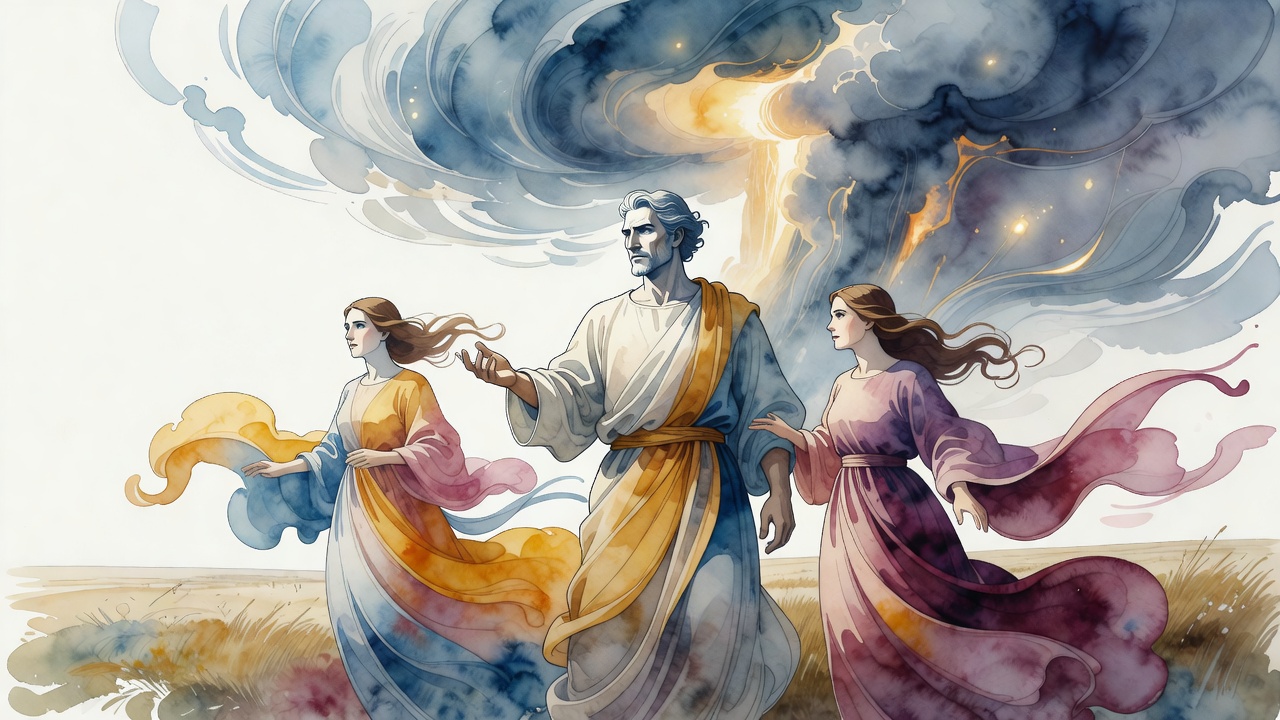
Jacob called Rachel and Leah into the field, not the tent. Their father's eyes had gone flat whenever the flocks came up.
Table of Contents
 Click for full size
He Called Them into the Field
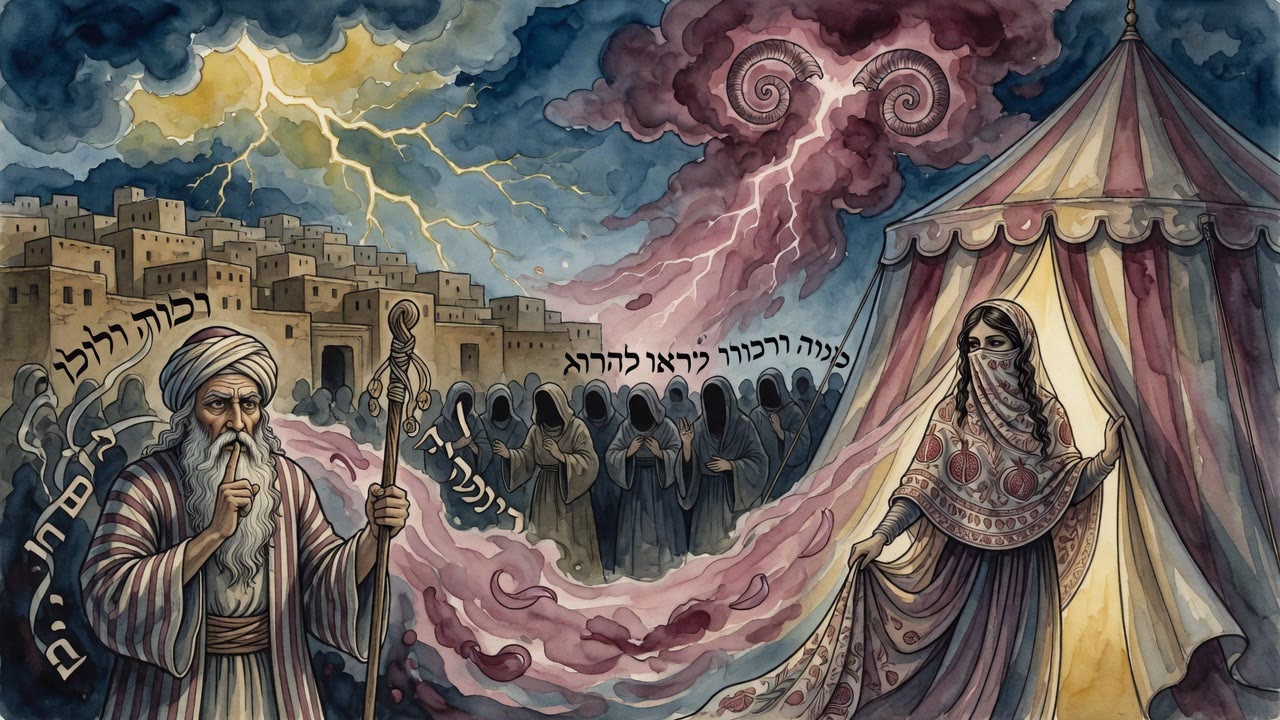
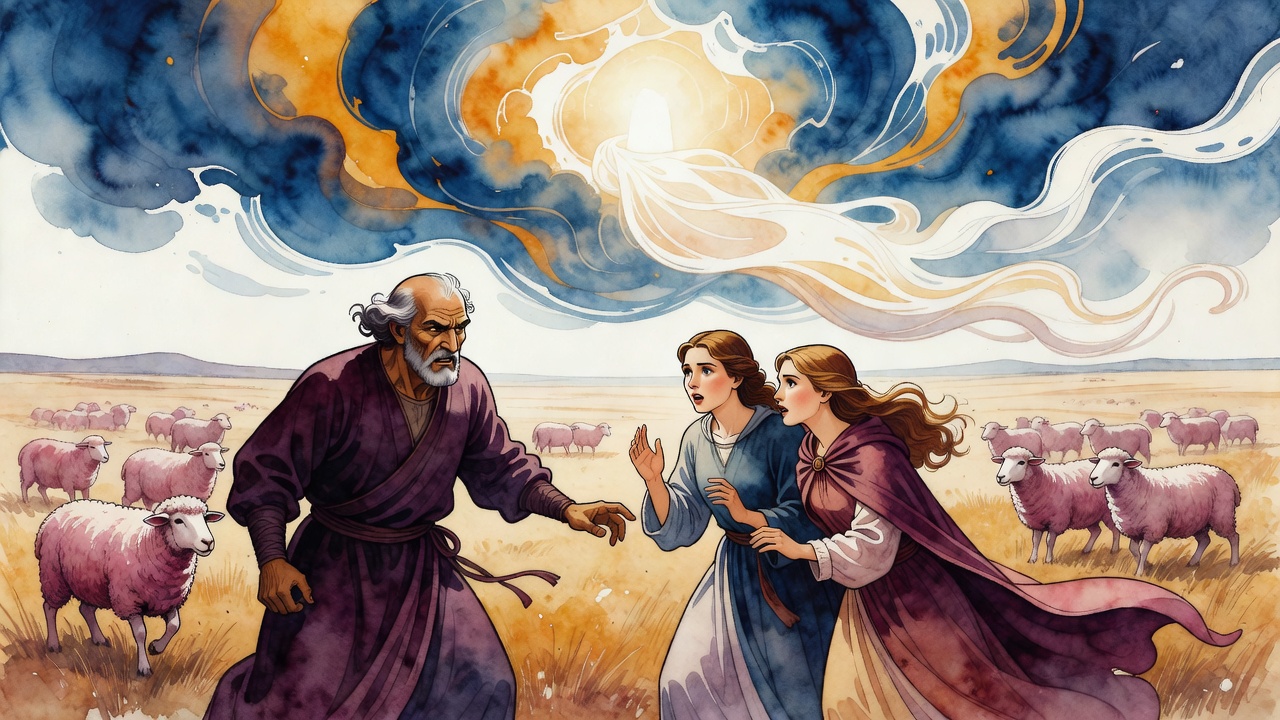
Jacob sent word out to the pasture for Rachel and Leah to come to him in the field. Not to the tent. The field, where wind takes a sentence away instead of carrying it back to the house.
He did not soften it.
"I consider the looks of your father, and behold, they are not peaceful with me as yesterday and as before it."
He had been reading that face for twenty years. He knew what it did at a wedding and what it did over a wage dispute. Lately the greeting had gone short and the eyes had gone flat, and the flat look arrived whenever the flocks came into the conversation.
Then, in the same breath, the rest of it. "But the God of my father has been to my aid."
They stood in open grass with the smell of sheep on them. Cousins were not in the next tent. Hired men were not passing a doorway with water. The field was the only room in Haran that did not have ears in the walls.
The Flocks Were Already Thin
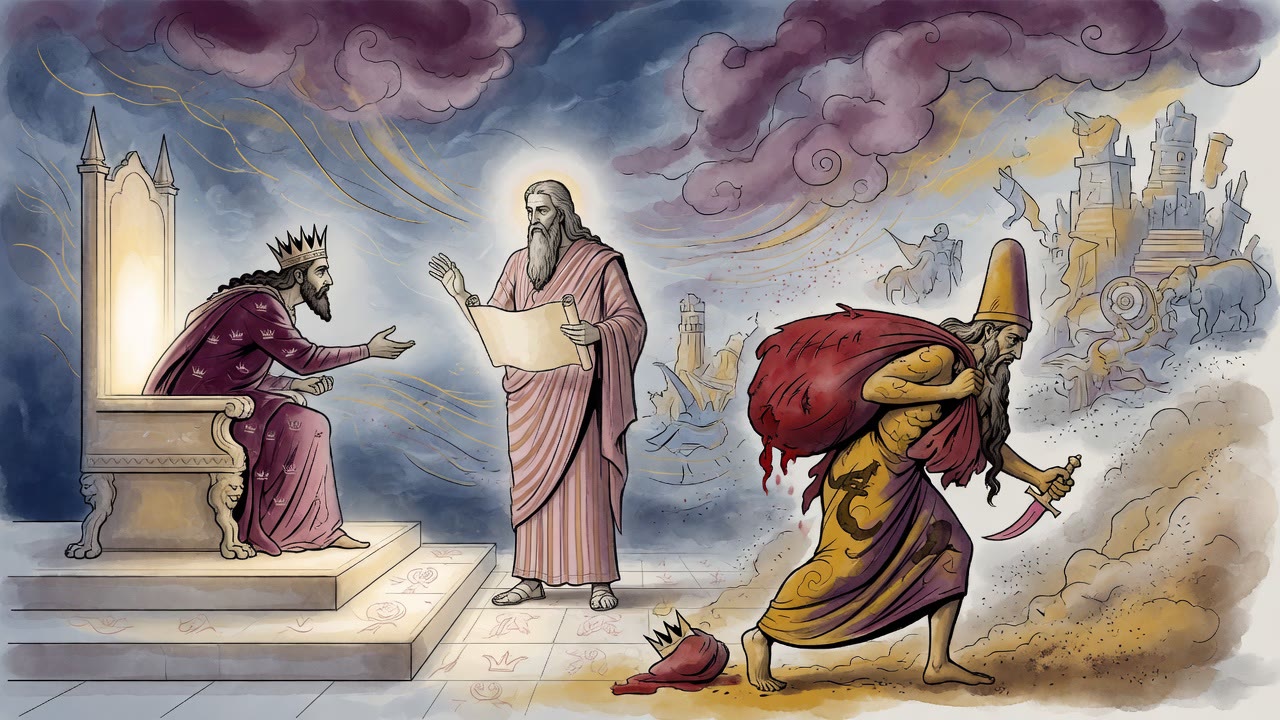
Long before any of this, before Jacob ever came over the ridge into Haran with a staff and a brother behind him who wanted him dead, the Holy One had sent a plague through Laban's flocks. It went through the pens and left a remnant. The animals Jacob was handed to tend were the ones that were left, the survivors of that killing.
The pastures had been emptied on purpose. Whatever grew back would grow back under one man's hands, and nobody would be able to file the increase under good rain or clever management.
It worked. The flocks came back fat. Laban said so out loud, that the Lord had blessed him on account of Jacob's foot. He named the blessing while he still liked the man who carried it.
There is a foot that lays a house waste and a foot that carries blessing across a threshold. Laban had the second kind come through his gate. He counted full pens every evening. He slept well. Then he began to watch the increase the way a man watches a purse that is not entirely his.
Ten Changes of Wage
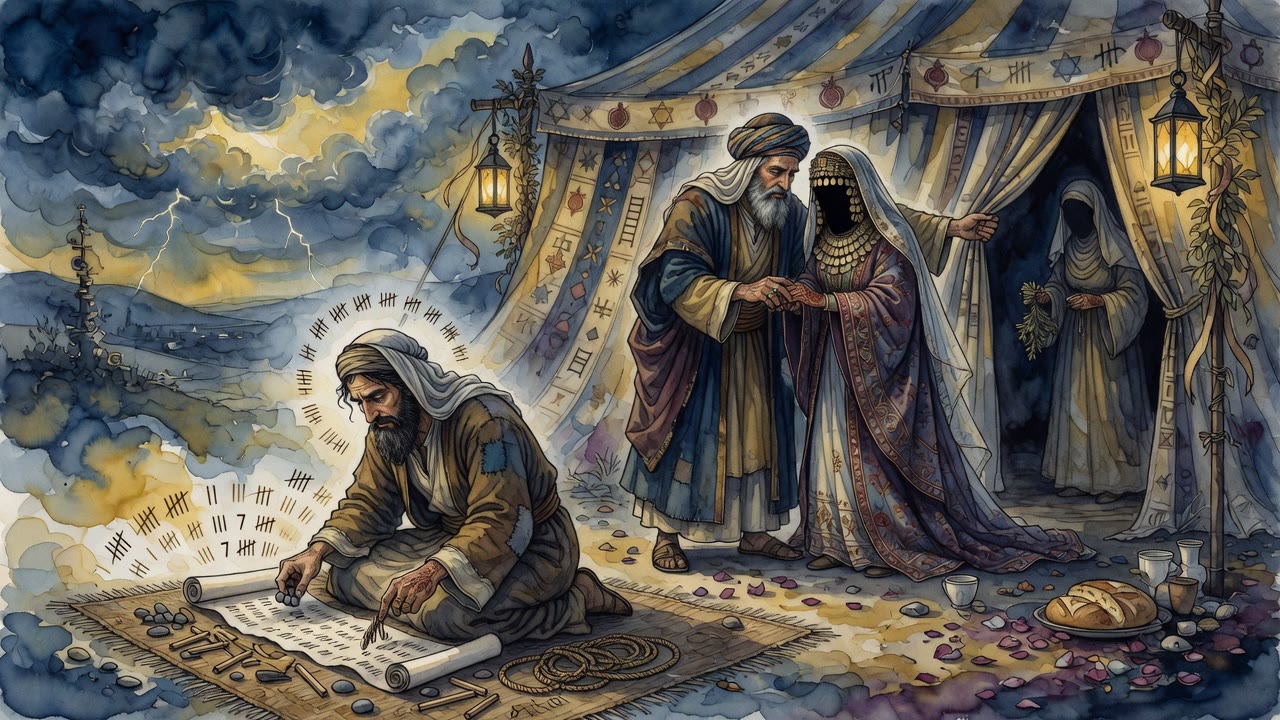
Laban changed the wages ten times. Speckled one season. Striped the next. Whatever color was winning in the pens, that color stopped being Jacob's by morning. The agreement lasted as long as it favored the house.
Jacob kept tending. He slept in the open with the heat by day and the frost by night. He lost animals to his own account and did not bring Laban the torn ones as proof. The flocks thickened anyway. Heaven had already decided whose foot the increase would follow.
The face changed as the pens filled. A rich man is kind while he is still becoming rich. Once the count is high enough, kindness starts to look like a leak. Laban's greeting shortened. His eyes flattened. Jacob read it the way a shepherd reads weather.
What Leaving Would Cost
Rachel and Leah knew the face he was describing. It had smiled at their weddings. It had also sold them, one after the other, for seven years apiece of another man's labor. They did not need a speech to recognize a turn they had already seen at the table.
Staying meant raising children under a gaze that had already gone hard. Leaving meant sisters they would not see again, a grave they would not visit, and a father's house they would not enter as daughters anymore.
Neither of them argued with him about whether the face had changed. They had seen it too. They weighed their father against their husband in the grass, the pens they had grown up beside against a road to a country neither of them had seen.
Leah wiped her hands on her skirt. Rachel looked back once toward the tents, then did not look again. The field held the decision because the house would not have let it live.
The Foot About to Walk Out
Jacob had arrived in Haran as a fugitive with nothing to his name and had become the reason his father-in-law counted a full pen every evening. Now the arithmetic was turning against him. A man whose presence makes another man rich is safe only as long as the rich man remembers why.
Behind them, over the ridge, Laban's animals went on grazing. Every one of them descended from a remnant that had survived a plague nobody in that house remembered any more. The remnant had become a nation of sheep under Jacob's foot. The foot was about to leave.
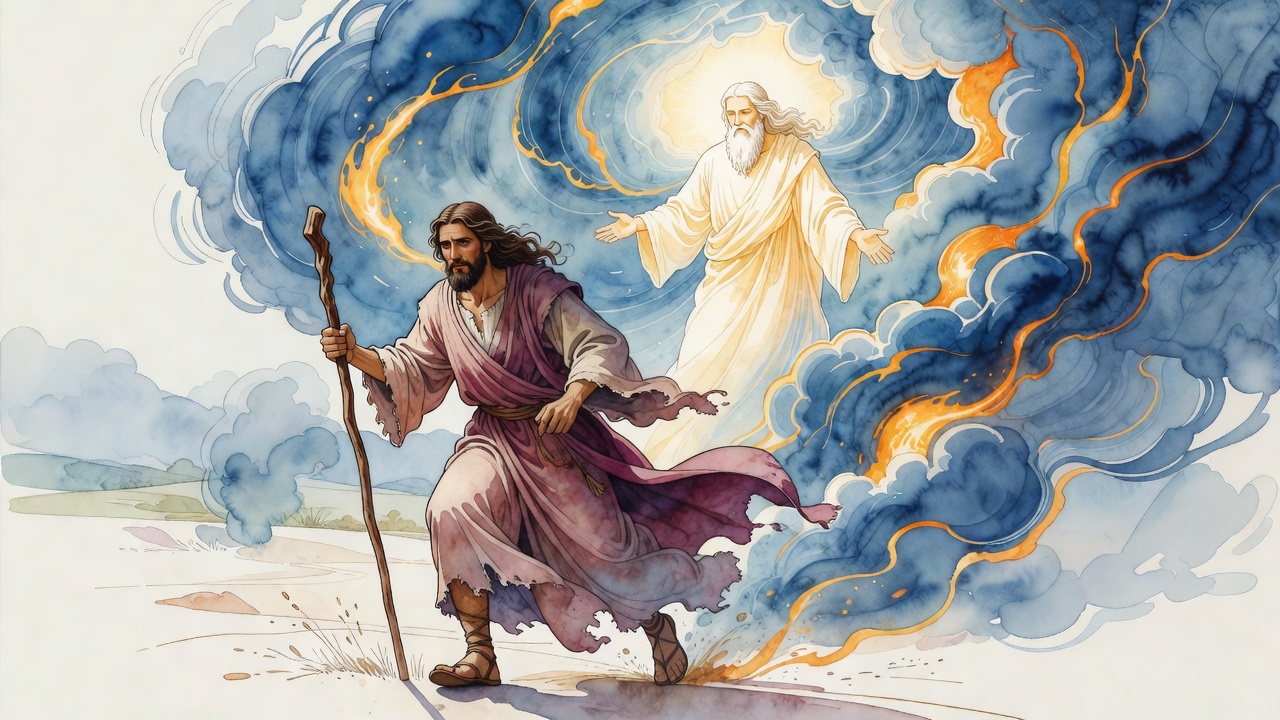
He turned toward the road with his wives beside him. The wind took the last of the sentence and scattered it over the grass. The house had thrived because a certain foot crossed its threshold. It was about to find out what happens when the foot walks back out.
← All myths