Parshat Vayetzei5 min read

Leah Gave Rachel a Son Before Dinah Was Born

Leah's prayer kept Rachel from being diminished among the mothers. Targum Pseudo-Jonathan turns Dinah and Joseph into children exchanged by mercy.

Curated by Arthur · Told by Maggid ·
Table of Contents
  1. The Prayer Inside the Womb
  2. The Children Were Exchanged
  3. Dinah Carried the Price of Mercy
  4. The Tribe Count Was Written by Women

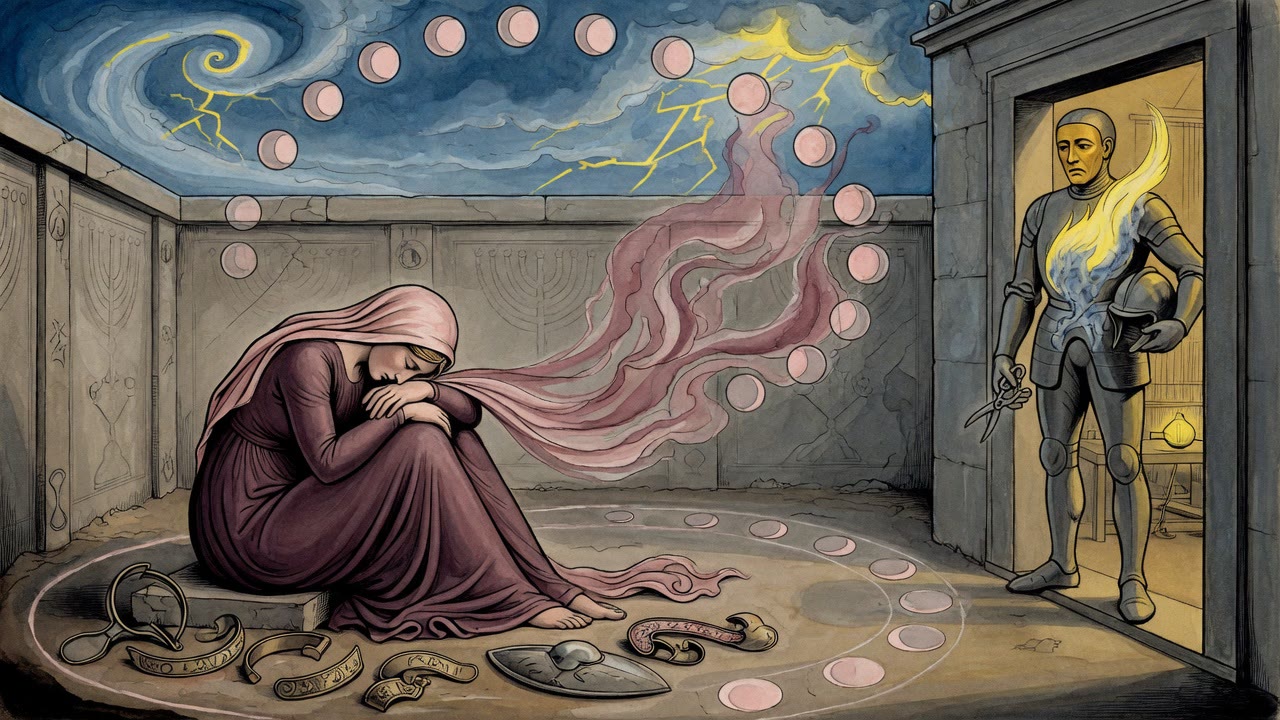
Leah counted the sons and saw what another boy would do to her sister.

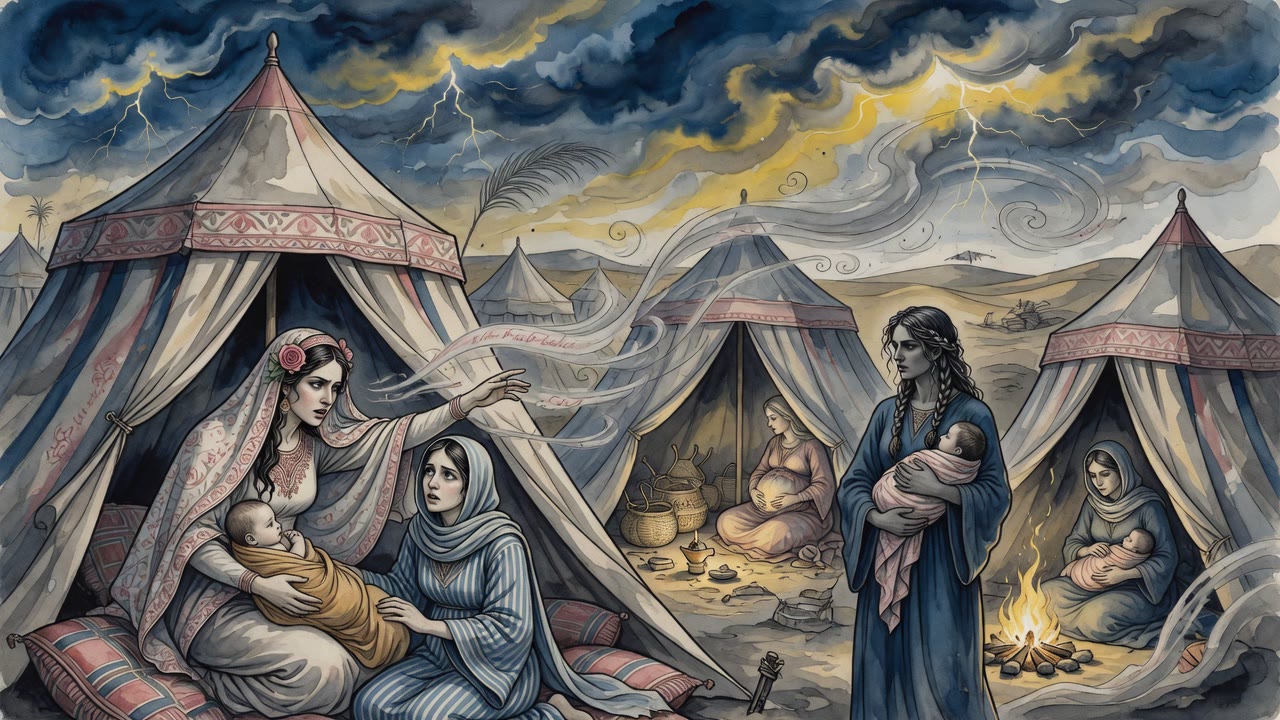
She already had six. The handmaids had two each. The house of Jacob was filling by rivalry, hope, night bargains, mandrakes, pain, and prayer. Rachel still waited with an empty ache where her children should have been. If Leah bore a seventh son, then half the tribes would come from Leah alone, and Rachel would stand below even the handmaids in the count.

The Prayer Inside the Womb

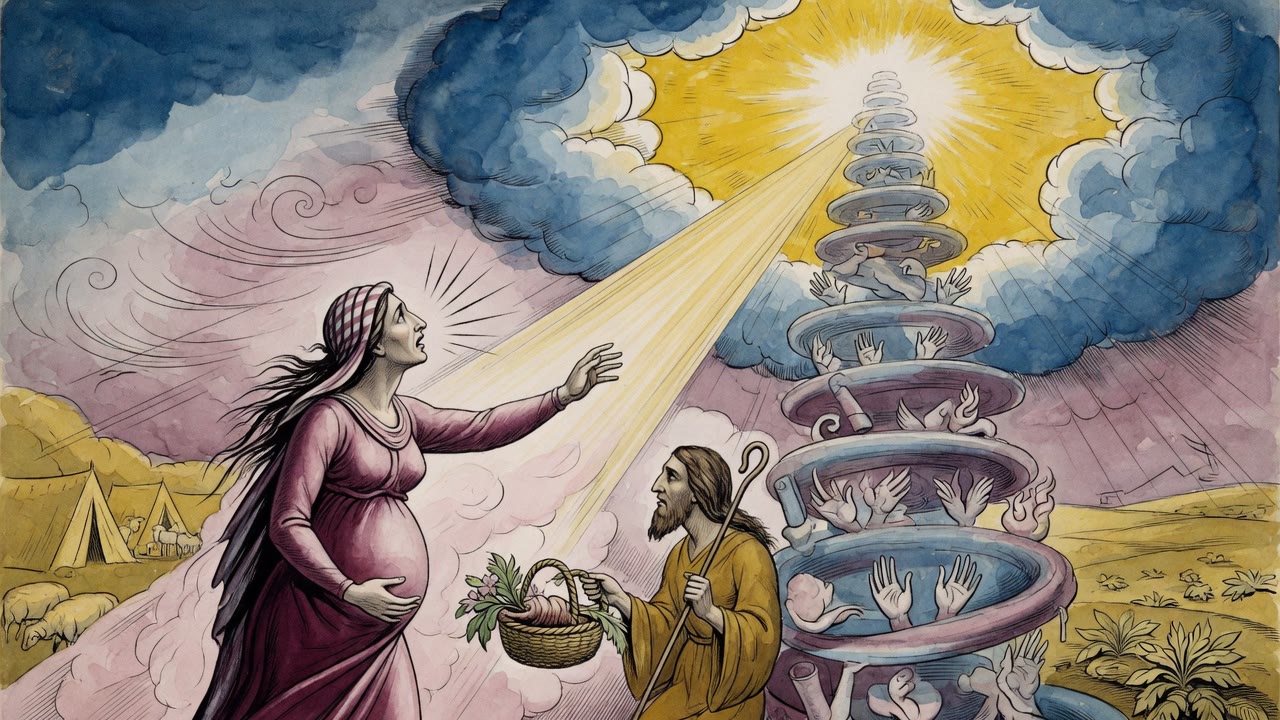
Genesis says quietly, "Afterward she bore a daughter, and called her name Dinah" (Genesis 30:21). Bereshit Rabbah hears a storm behind the quiet line. The sages ask whether a prayer can change the child already forming in the womb. One teaching says a prayer for a male child after pregnancy has advanced is vain. Rabbi Yehuda ben Pazi refuses to close the matter so tightly. God is like a potter, he says, able to reshape clay even on the wheel (Jeremiah 18:6).

Then comes the astonishing claim. Dinah's primary formation was male. Rachel's prayer, "May the Lord add another son for me" (Genesis 30:24), changed the unborn child into a daughter. The matriarchs, according to Rabbi Hanina ben Pazi, gathered and said: enough sons from us; remember Rachel again. The word "enough," dayenu, echoes in Dinah's name.

The birth of Dinah is therefore not an incidental daughter after a list of sons. It is the mark left by prayer inside the structure of the tribes.

The Children Were Exchanged

Targum Pseudo-Jonathan makes the miracle even sharper. Leah's womb held a male child. Rachel's held a female child. Leah prayed that judgment before God should preserve Rachel's dignity, so that Rachel would bear two tribes just as each handmaid had borne two. Heaven heard her.

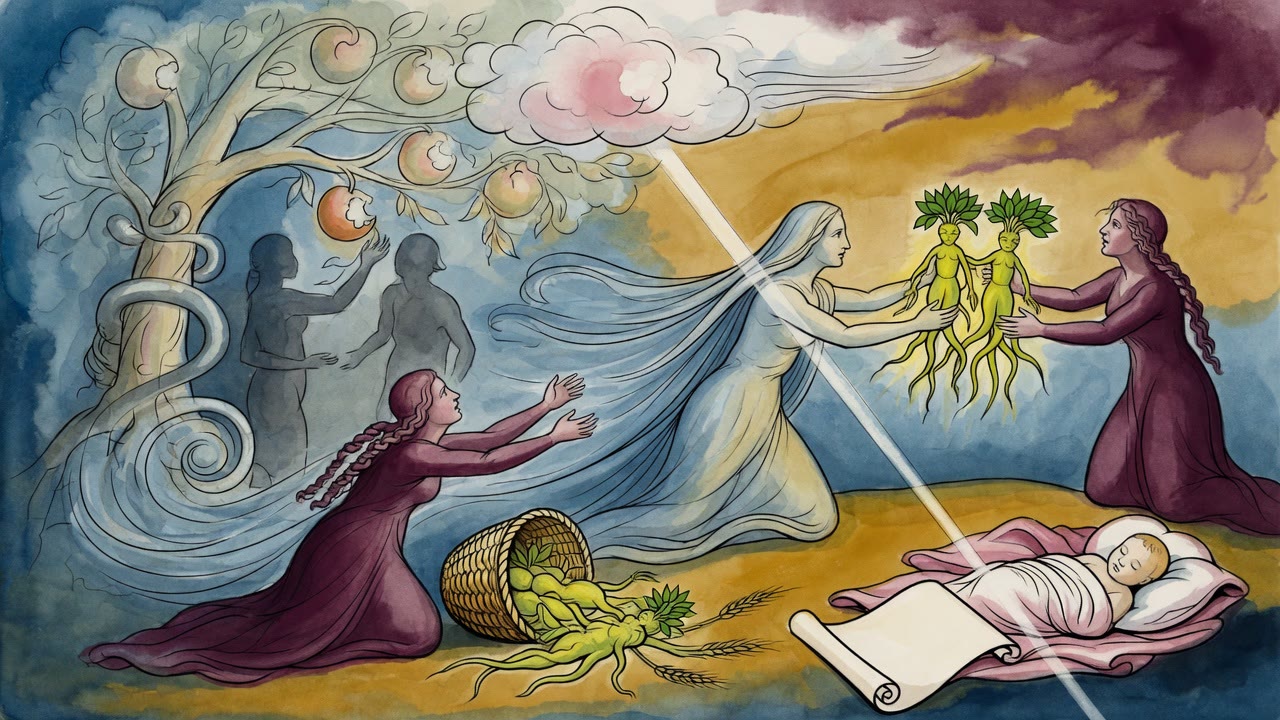
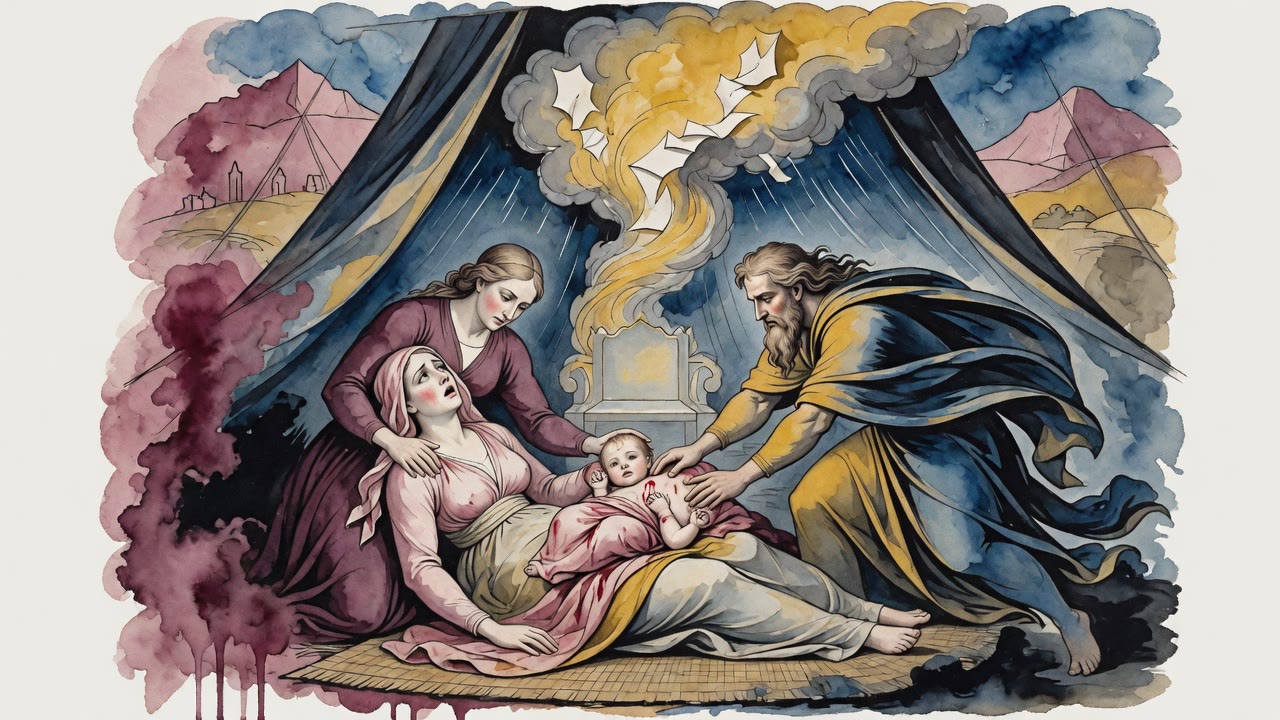
The infants were changed in their wombs. Joseph was given to Rachel. Dinah was given to Leah. The future viceroy of Egypt, the son who would feed the world and save Jacob's house from famine, moved into Rachel's womb because Leah prayed for her sister's portion. Dinah entered Leah's womb because mercy required a cost.

This is one of the most daring images of matriarchal generosity in the tradition. Leah, the less-loved wife, does not use one more son to crush Rachel completely. She asks that Rachel not be reduced below the handmaids. The prayer of the rival becomes the condition of Rachel's motherhood.

Dinah Carried the Price of Mercy

But the story does not leave Dinah in the safe light of the birth room. Bereshit Rabbah later returns to her when Genesis says Dinah went out to see the daughters of the land (Genesis 34:1). The midrash reads the going out with dread because what follows is Shechem's violence, the brothers' vengeance, and a city swallowed by blood.

That later tragedy does not erase the mercy of her beginning. It makes the mercy ache. Dinah is not a spare child, not the accidental daughter left after the sons have been counted. She exists because the mothers prayed over the shape of Israel. Her life carries the dignity Leah preserved for Rachel and the vulnerability that would later expose Jacob's house to fury.

The midrashic imagination can hold both. A child can be born from compassion and still suffer. A prayer can save one sister's honor and still open a road no one would have chosen.

The Tribe Count Was Written by Women

The twelve tribes look, from a distance, like a list of male names. Reuben, Simeon, Levi, Judah, and the rest. But these sources place the hidden authorship inside the mothers. Leah's count, Rachel's cry, the handmaids' sons, the exchanged children, the daughter whose name contains "enough." The tribal map is not only Jacob's virility or destiny. It is the hidden labor of women who counted one another into the future.

Leah's greatness here is not that she stopped wanting. She wanted love. She wanted recognition. She wanted sons because sons were the language of security in that house. Her greatness is that she could still see Rachel's humiliation and pray against her own advantage.

Joseph's birth carries Leah's prayer inside it. Dinah's birth carries Rachel's hope and Leah's restraint. The house of Israel begins not with clean arithmetic, but with a woman deciding that her sister's dignity mattered more than one more point in the old rivalry.


← All myths

From the tradition

Sources

6 sources

The texts this telling draws on, in full. Open a card to read inline, or expand it for a wider, quieter read.

Bereshit Rabbah 72:6Bereshit Rabbah

Bereshit Rabbah turns to Leah, Zebulun at the Dawn of Creation.

Bereshit Rabbah, that incredible collection of rabbinic interpretations of Genesis, takes this a little further. It interprets Leah's words – “God has granted me a fine gift” – as being like a field. A field that, "as long as you fertilize it and hoe it, it produces produce." It’s a beautiful, earthy metaphor.

The story doesn't end there. "Then she bore a daughter, and she called her name Dina” (Genesis 30:21).

The text then brings in a baraita, a teaching from outside the core Mishnah (the earliest code of rabbinic law) collection, to discuss a fascinating point of Jewish law and belief. It asks: what if a pregnant person prays for a male child? Is that a worthwhile prayer? The baraita suggests it's a "vain prayer."

But hold on! The school of Rabbi Yanai qualifies this, saying that this only applies after the woman is already "sitting on the travailing chair" – meaning, when she’s actively in labor.

Then Rabbi Yehuda ben Pazi comes along and throws another twist into the mix! He says, even during labor, things can change! He uses the prophet Jeremiah (18:6) as proof: “House of Israel, can I not do to you like this potter? [The utterance of the Lord]. Behold, like the clay in the hand of the potter, so you are in My hand, house of Israel.” Just as a potter can break and reshape a vessel, so too can God alter the course of events, even at the very last moment.

But here’s where it gets even wilder. Rabbi Yehuda ben Pazi is challenged: If that’s the case, then how do we understand the verse that says, “Then she bore a daughter”? It sounds like it was a daughter, plain and simple.

His response? Get ready for this: "Its primary creation was male, but due to Rachel’s prayer: “May the Lord add another son for me” (Genesis 30:24) – it became a female!"

Wow. for a second. According to this interpretation, Dina was originally intended to be male! It was Rachel's heartfelt prayer – “May the Lord add another son for me," (notice it doesn’t say “other sons,” but specifically “another son”) that changed the very nature of the unborn child. Rachel was saying, according to Rabbi Hanina ben Pazi: ‘He is destined to produce one more; if only it will be from me.’

Rabbi Hanina continues that all the matriarchs gathered and said: ‘We have enough [dayenu] males. Remember this one again.’ (The Hebrew word dayenu, meaning “enough”, shares letters with Dina’s name and is used to allude to this idea.)

So, what does all this mean? Well, on one level, it's a evidence of the power of prayer, particularly a mother's prayer. It's also a reminder of the fluidity of life, the idea that even the most seemingly fixed outcomes can be altered by divine intervention.

But perhaps, on a deeper level, it's about the delicate balance of male and female, the recognition that both are essential, and that sometimes, a shift in one direction necessitates a correction in the other. It suggests that even in the womb, these forces are at play, shaping not just individuals, but the very destiny of a people. And it shows us how much depth and meaning can be found in even the smallest details of the Torah, when we take the time to explore them.

Full source
Targum Pseudo-Jonathan on Genesis 30:21Targum Pseudo-Jonathan on Genesis

The Targum Pseudo-Jonathan on (Genesis 30:21) preserves one of the most startling moments in the entire tribal genealogy.

Originally, says the Aramaic tradition, the baby in Leah's womb was to be a seventh son. Leah had already had six sons and knew how the count worked: twelve tribes distributed among four mothers, six from her and two from each of the handmaids would already leave Rachel with only two. Another son in Leah's womb would push Rachel down to one, or even none.

So Leah prayed. Judgment is from before the Lord, that there shall be from me a half of the tribes; but from Rahel my sister shall go forth two tribes, even as they shall proceed (in like manner) from each of the handmaids.

She asked Heaven to preserve dignity for her sister. She did not want Rachel to be reduced to the status of a handmaid. Her prayer was for Rachel to keep the full portion of a primary wife.

The Targum continues: And the prayer of Leah was heard before the Lord; and the infants were changed in their wombs; and Joseph was given to the womb of Rahel, and Dinah to the womb of Leah.

A miraculous swap. The male fetus passed from Leah to Rachel, and the female fetus passed from Rachel to Leah. Leah bore a daughter, Dinah, instead of a seventh son. Rachel would bear Joseph, the tribe that would save Egypt from famine and the nation from extinction.

This is a stunning picture of matriarchal generosity. Leah, who had struggled her whole life against being the less-loved sister, prayed for Rachel's dignity and received a daughter in return. Rachel received the son who would be viceroy of Egypt. Heaven rearranged wombs in response to the prayer of a rival.

The takeaway: the greatest prayers in Jewish history are often prayers for other people. Leah prayed for Rachel, and the whole future of the tribes shifted.

Full source
Bereshit Rabbah 80:2Bereshit Rabbah

That’s a feeling that echoes through the story of Dinah in the Book of Genesis, and it explodes with dramatic force in the rabbinic interpretations.

Dinah, daughter of Leah, ventures out. It A young woman wanting to see the world. But according to Bereshit Rabbah, specifically section 80, that act sets off a chain of events that leaves us confronting questions of justice, revenge, and collective responsibility.

The verse from Hosea (6:9) that opens this section is stark: "Like troops of robbers waylay a man, a company of priests murders its way to Shekhem, for they have formulated a plot." A powerful, unsettling image, isn't it? The Rabbis of the Midrash (rabbinic interpretive commentary) aren’t pulling any punches here. They're using this vivid comparison to paint a picture of what Simeon and Levi did in response to the rape of their sister, Dinah.

The text asks, is the comparison to "a company of priests" surprising? After all, priests are supposed to be holy. Shouldn’t they be paragons of virtue? The Midrash answers by pointing out that priests come together at the threshing floor to claim their due portion. Similarly, Simeon and Levi gathered in Shekhem to take what they believed was their due: vengeance. The Rabbis aren't necessarily condoning their actions. But they're trying to understand the mindset, the sense of righteous indignation that fueled such a violent response. Was it justified? The text implies that the brothers felt it was: “Murders its way to Shekhem” – it was proper for Simeon and Levi to have killed in Shekhem."

But why?

Because, as the brothers themselves exclaimed, "Shall he render our sister a harlot?” In other words, “Are we going to stand by and let our family be treated with such disrespect?" It’s a question of honor, of maintaining their dignity in the face of a terrible transgression.

And then comes the kicker. The Midrash lays the blame, at least in part, at Dinah’s feet: "Who caused it? 'Dinah, daughter of Leah…went out.'"

Ouch.

Now, before we jump to conclusions, let's remember this isn't about victim-blaming. It's about exploring the complexities of cause and effect. The Rabbis are asking us to consider how even seemingly small choices can have enormous repercussions. This idea of personal responsibility rippling outwards is something that resonates deeply within Jewish thought.

The Rabbis aren't letting Simeon and Levi off the hook for their violent actions, nor are they completely excusing Shekhem's crime. Instead, they're creating a multi-layered narrative, forcing us to confront uncomfortable truths about human nature and the cyclical nature of violence. It's a story that continues to challenge us, thousands of years later, to examine our own actions and their potential consequences. What do you think?

Full source
Yalkut Shimoni on Torah 130:1Yalkut Shimoni on Torah

"And Leah said, God has endowed me with a good endowment; now my husband will dwell with me" (Genesis 30:20). This field, as long as you fertilize it and hoe it, it produces. "And afterward she bore a daughter" (Genesis 30:21). There we have learned: if a man's wife is pregnant and he says, "May it be Your will that my wife bear a male," this is a vain prayer. Rabbi Yannai said: this applies when she is sitting on the birthstool. This teaching - Rabbi Yehudah ben Pazi said: even when she is sitting on the birthstool the child can still change, as it is written, "Can I not do with you, house of Israel, as this potter? Behold, like clay in the hand of the potter" (Jeremiah 18:6).

They objected: but is it not written, "And afterward she bore a daughter"? He said to him: the essence of Dinah's creation was originally male, and through the prayer of Rachel, who said, "May the LORD add to me another son" (Genesis 30:24), it became female. The matriarchs were prophetesses. It does not say "other sons" but "another son." Rachel said: one more son is destined to arise; would that he come from me. All the matriarchs gathered and said: enough males among us; let this one too be remembered favorably for Rachel.

And does prayer not avail? But it is written, "And afterward she bore a daughter." What is "afterward"? After Leah judged the matter within herself. She said before Him: Master of the universe, twelve tribes are destined to come from Jacob; six have come from me and four from the handmaids. If this one is male, my sister will not be even like one of the handmaids. Immediately the male was turned into a female, as it is said, "And she called her name Dinah." One resolves this: miraculous deeds are not invoked as proof. And if you prefer, say: Leah's act was within the first forty days. As it is taught: in the first three days a man should pray that the seed not spoil; from three to forty days he should pray that it be male; from forty days to three months he should pray that it not be malformed; from three to six months that it not be a stillbirth; from six to nine months that it come forth in peace. And does prayer avail? Did not Rabbi Yitzchak say: what is written, "If a woman conceives and bears a male" (Leviticus 12:2) - if the woman emits seed first she bears a male, if the man emits first she bears a female? Here we deal with a case where both emitted together.

Full source
Midrash Aggadah, Genesis 30:21Midrash Aggadah

"And afterward she bore a daughter" (Genesis 30:21). Leah was fit to bear seven sons. She said: "Twelve tribes are destined to come forth from Jacob, and I have already borne six, and the two maidservants four, behold, ten. And if I still bear the seventh, it will turn out that my sister will not be even like one of the maidservants." She prayed for mercy that the fetus in her womb be turned into a daughter, and the Holy One, blessed be He, consented and did according to her words. Therefore it is written, "And afterward she bore a daughter", that the son was turned into a daughter.

Full source
Midrash Tanchuma Buber, Vayishlach 18:1Midrash Tanchuma Buber, Vayishlach

"And Dinah the daughter of Leah went out" (Genesis 34:1). Rabbi Hiyya bar Abba said: A male is always ascribed to the woman, and a female to the man. Then why is this one ascribed to her mother? Because the essence of her conception was male. Rather, at the time when Leah had borne six, and Bilhah two, and Zilpah two, behold, ten, Leah had conceived a male. At that moment she prayed on behalf of Rachel, and within her womb it became female. Therefore she is ascribed to her mother: "And Dinah the daughter of Leah went out."

Full source