5 min read

God Gave the Unloved Leah Sons First and Then Opened Rachel's Womb

Leah, unloved in Jacob's tent, received sons first from the God who lifts the fallen, while Rachel waited on the one key no angel holds, the key of the womb.

Curated by Arthur · Told by Maggid ·
Table of Contents
  1. The Tent Where Love Was Uneven
  2. Rachel's Closed Door
  3. Keys Lent, Keys Kept
  4. Two Sisters, One Measure
  5. What the House Learns
God Gave the Unloved Leah Sons First and Then Opened Rachel's Womb Click for full size

The Tent Where Love Was Uneven

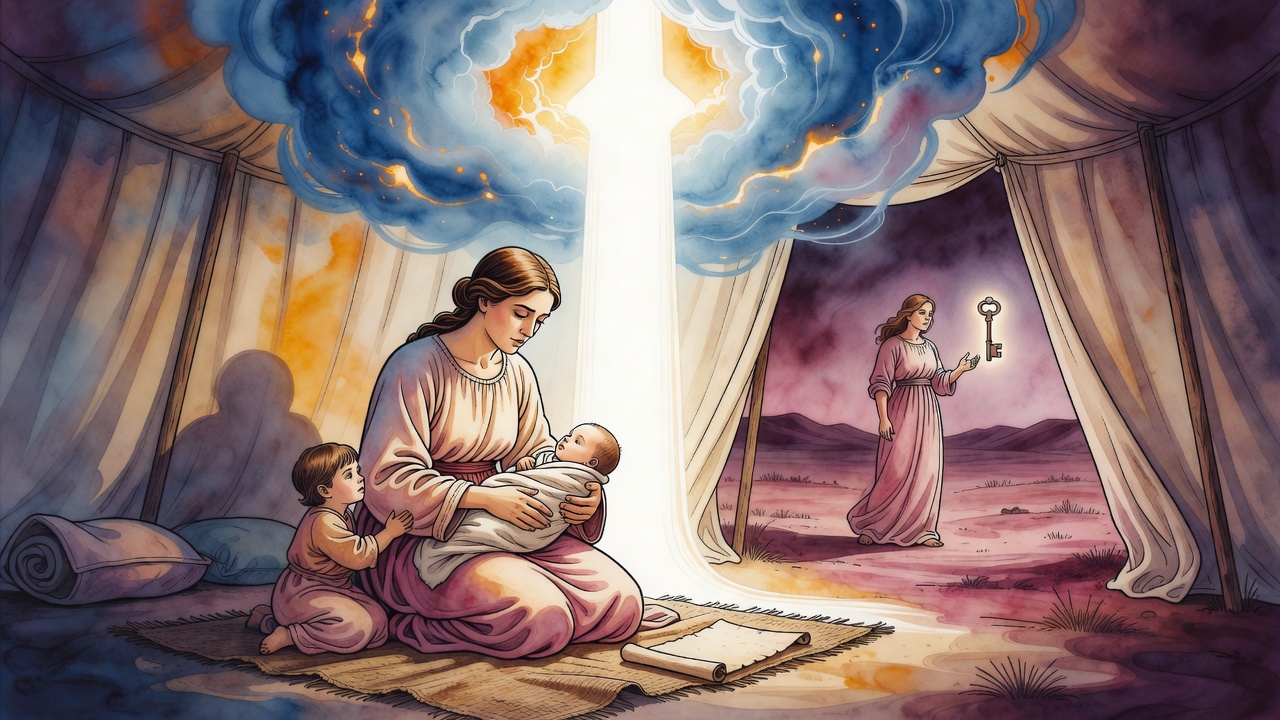
Leah woke each morning in a marriage that had never chosen her. Jacob's eyes still went to the other tent. The household moved around that fact like furniture placed to hide a crack in the floor. Scripture does not hide the wound: the LORD saw that Leah was hated. In that seeing, Heaven measured differently from flesh and blood. A man clings to a wealthy friend and flees him when poverty comes. The Holy One, blessed be He, reaches for the one whose hand has sunk.

How shall I make her beloved before her husband? Heaven asked itself, in the midrash's bold speech. I will lift her up and give her children first. The bowed-down He raises. The workers of iniquity fall and cannot rise; the righteous who fall are upheld. Leah's first sons were not a prize for charm. They were a hand under a woman the house had set aside, and each name she gave was a small court case argued in the hearing of the One who had seen her first.

Rachel's Closed Door

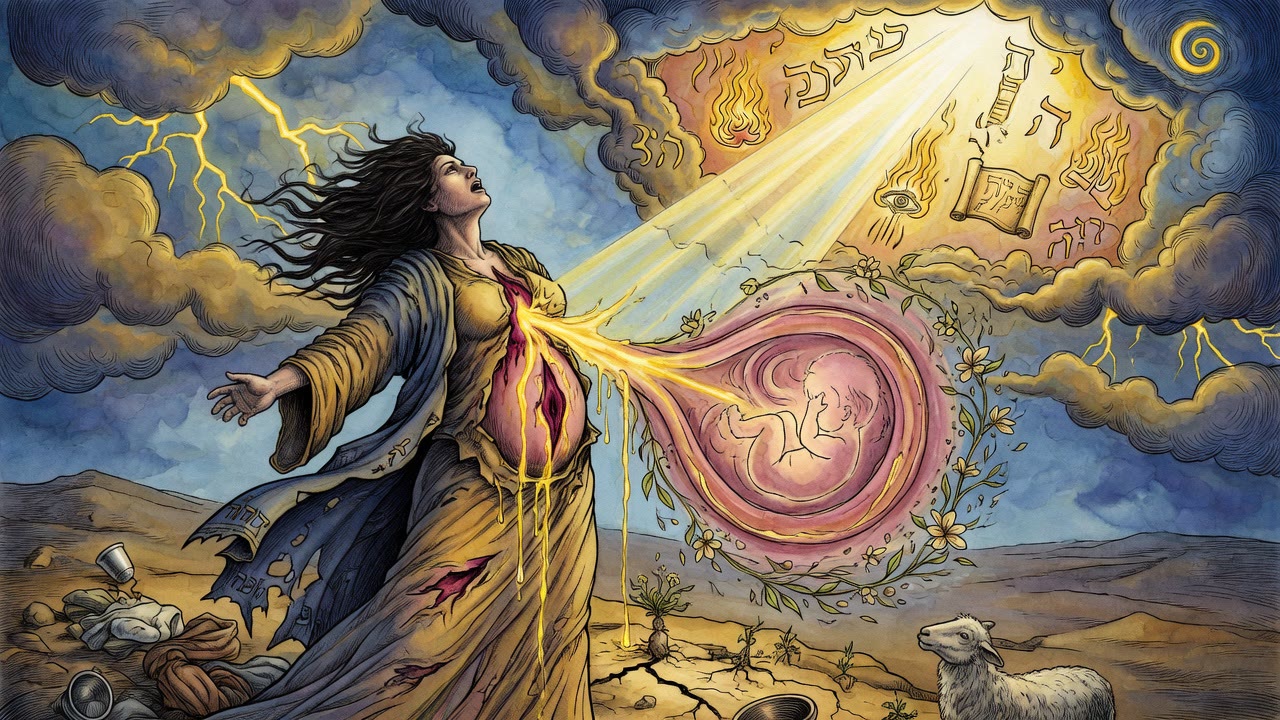
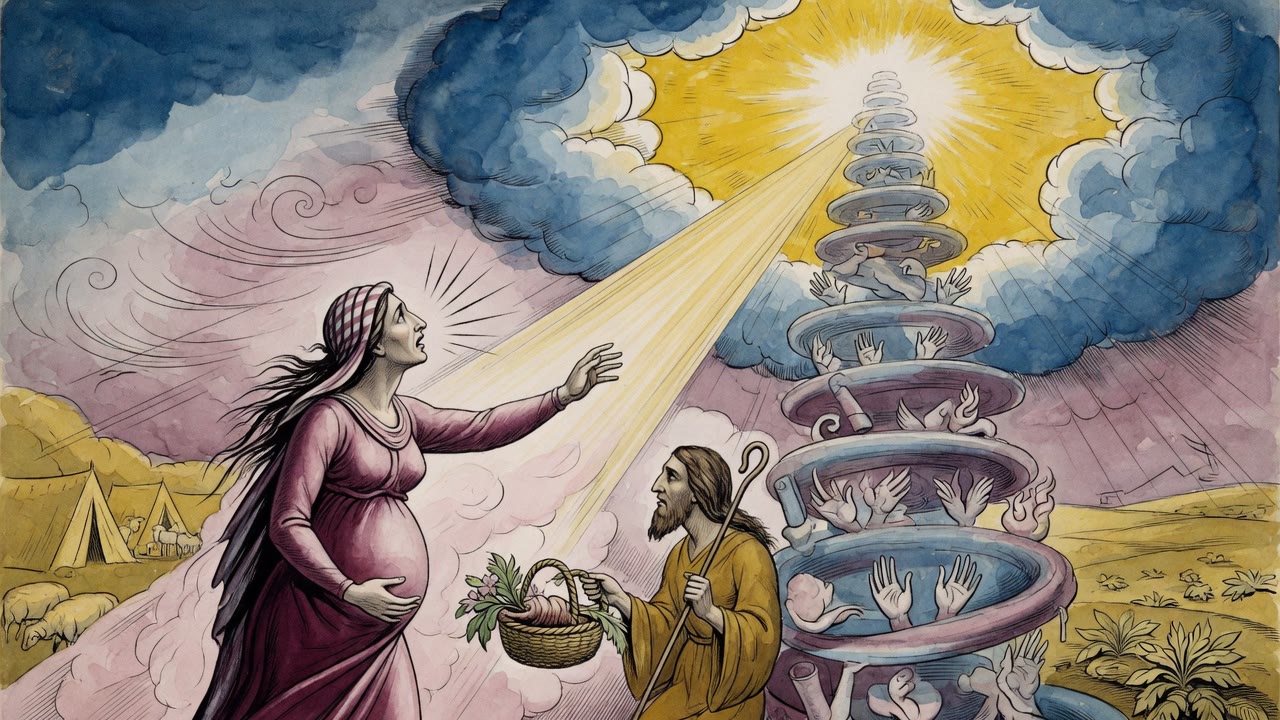
Rachel, loved and barren, watched the cradle fill in the other tent. Love did not open her body. Beauty did not turn the lock. She carried the ache the midrash will not sentimentalize, the kind that makes even a favored wife feel poor. When Scripture later says God remembered Rachel and opened her womb, it is not a soft aside. It is a claim about who holds the key when human preference has already spent its power.

Rabbi Yochanan taught that four keys rest in the hand of the Holy One alone, surrendered to no creature: the key of rain, the key of sustenance, the key of the grave, and the key of the barren womb. Flesh can squeeze a sponge and water runs; open the hand and it stops. Heaven works the other way. When God withholds, the skies shut. When God opens, the bounty pours without asking permission of the household ranking.

Keys Lent, Keys Kept

In their hours of need, God lent those keys to the righteous and still kept the mastery. To Elijah went the key of rain, sealing the sky at his word until the land learned thirst. To Noah went the key of sustenance, gathering food for every living thing before the waters rose. To Ezekiel went the key of the grave, calling dry bones to stand in a valley of silence. To Elisha went the key of the barren womb, promising a son to the Shunammite who had asked for nothing.

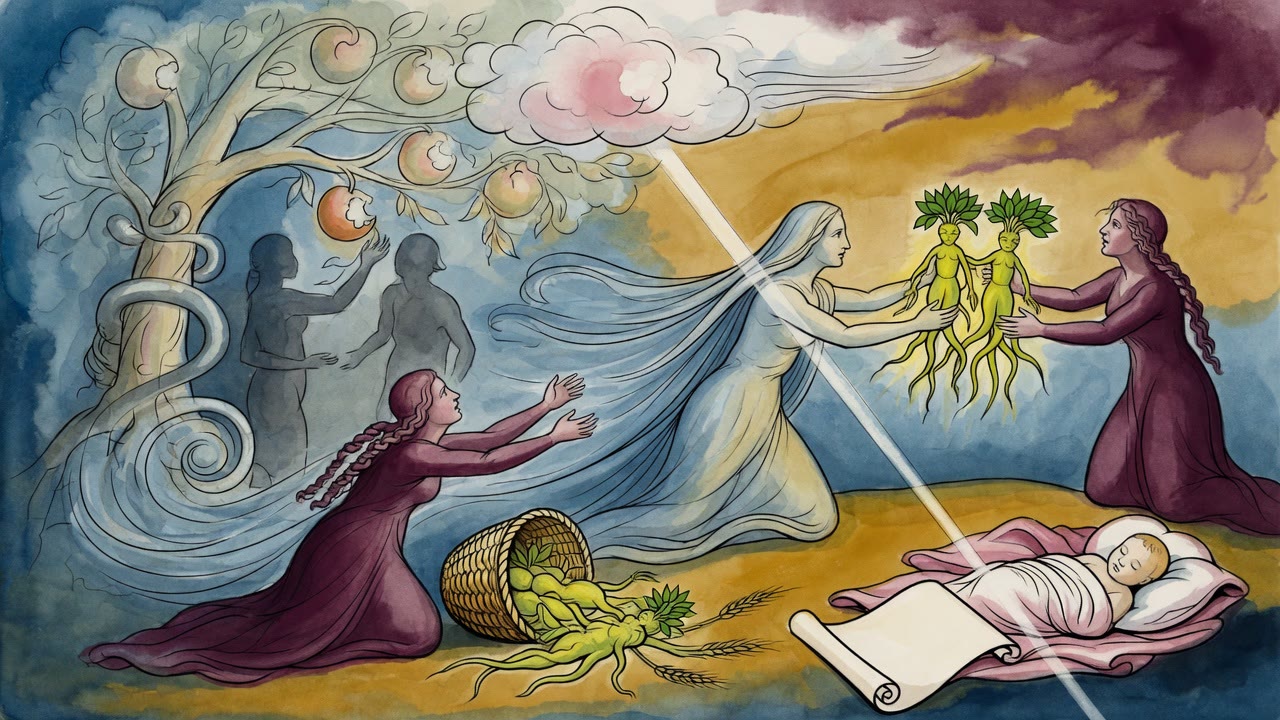
Lent is not surrendered. When Rachel's hour came, no angel turned the lock for her as a private favor of the household. The Holy One remembered her and opened what only He opens. The barren are unlocked by no hand but His, not by a husband's love, not by a sister's surplus, not by a bargain over mandrakes in the field.

Two Sisters, One Measure

Leah's children first. Rachel's opening later. The same God stands in both tents. One woman is lifted because she was unloved. The other is opened because love alone could not do what only the fourth key does. Jacob's preference does not write the registry of Heaven. Hate does not get the last word, and favored love does not get the first miracle on demand. The midrash holds both mercies without forcing them into a single cheap moral.

Rabbi Berekhyah heard the same mercy in Azubah, "the forsaken one," homely and abandoned until sons made her lovely in the eyes that had turned away. The pattern is not romance. It is justice that notices the fallen chair at the table and refuses to let the room pretend the chair was never there.

What the House Learns

Years on, the sons of both women will carry the names of Israel into camps and kingdoms. The midrash wants the beginning held carefully. Leah's first births are Heaven answering a hate it saw. Rachel's long wait is Heaven refusing to outsource the womb's key. Between them the household learns that no human ranking of wives can rank God's mercy, and no closed door is safer than the hand that holds four keys.

Wait, then, without seizing. Lift, when you can, the one the room has set aside. And when a closed door opens, do not credit the charm of the beloved alone. Credit the hand that holds four keys and will not permanently give them away, even when it briefly lends them to prophets who still answer to the Owner.

On nights when the camp was quiet, Leah counted breaths of small children and Rachel counted empty hours. Both women prayed. Both women waited. Heaven's answer did not erase the pain of either schedule. It only refused to let hate be the last author of the family tree, and refused to let favor be the only key that turned.


← All myths
From the tradition

Sources

2 sources

The texts behind this telling. Some cards carry a translation of the source; others are our own retelling of it, and each card says which. Every card links out to the original.

Midrash Tanchuma Buber, Vayetzei 16:1Midrash Tanchuma Buber, Vayetzei

Translation of the source text.Midrash Tanchuma (Buber), Public Domain, on Sefaria · CC-BY-SA

(Genesis 30:22:) "And God remembered Rachel etc., and He opened her womb." Let our master teach us: What is the law concerning whether a person may wipe off a table on the Sabbath with a sponge? Thus have our Rabbis taught (Shabbat 21:3): "A sponge, if it has a leather handle to grip, one may wipe with it; but if not, one may not wipe with it." For if it does not have leather sewn onto it, when he comes to wipe [on the Sabbath] the water enters and he presses down and the water comes out, and he is found to be squeezing on the Sabbath. Therefore, if it has a leather handle to grip, one may wipe with it; [but if not, one may not wipe with it], so that he will not press and the water come out.

Come and see the works of the Holy One, blessed be He, that they are not like the works of flesh and blood. Flesh and blood: when one presses on a sponge the water comes down; he opens his hand and the water does not come down. But the Holy One, blessed be He, is not so. If He presses, the water does not come down, as it is said (Job 12:15): "Behold, He withholds the waters and they dry up." And it is written (Deuteronomy 11:17): "And He shuts up the heavens so that there is no rain." But if He opens, they come down, as it is said (Deuteronomy 28:12): "The Lord will open for you etc."

Rabbi Yochanan said: Four keys are in the hand of the Holy One, blessed be He, and He did not hand them over to any creature in the world. And these are they: the key of rains, the key of sustenance, the key of graves, and the key of barren women. Yet when they were needed, the Holy One, blessed be He, handed them over to the righteous. The key of rains He handed over to Elijah, as it is said (1 Kings 17:1): "As the Lord lives, there shall not be dew or rain these years, except by my word." The key of sustenance He handed over to Noah, as it is said (Genesis 6:21): "And you, take for yourself from all food that is eaten." The key of graves He handed over to Ezekiel, as it is said (Ezekiel 37:3): "And say to them: O dry bones." The key of barren women He handed over to Elisha, as it is said (2 Kings 4:16): "At this season, when the time comes round, you shall embrace a son."

And from where do we know that He did not hand them over to any creature in the world, but rather He Himself opens them? The key of rains, as it is said (Deuteronomy 28:12): "The Lord will open for you." The key of sustenance, as it is said (Psalms 145:16): "You open Your hand." The key of graves, as it is said (Ezekiel 37:12): "Behold, I will open your graves." And the key of barren women, from where? From what is written on the matter (Genesis 30:22): "And God remembered Rachel, and He opened her womb."

Full source
Midrash Tanchuma Buber, Vayetzei 10:1Midrash Tanchuma Buber, Vayetzei

Translation of the source text.Midrash Tanchuma (Buber), Public Domain, on Sefaria · CC-BY-SA

(Gen. 29:31:) "And the LORD saw that Leah was hated." This is what Scripture says (Ps. 145:14): "The LORD upholds all who fall, and raises up all who are bowed down." (It does not say "all who stand," but "all who are bowed down," and even the wicked He raises up.) R. Hiyya said: The measure of the Holy One, blessed be He, is not like the measure of flesh and blood. The measure of flesh and blood is this: a man has a wealthy friend, and he clings to him and longs for him; but once his hand has sunk and he has become poor, the friend mocks him. The Holy One, blessed be He, however, is not so. As soon as He sees a man whose hand has sunk, He gives him a hand and raises him up, as it is said, "The LORD upholds all who fall." It does not say "all who stand," but "all who fall." "And raises up all who are bowed down." You might say that He raises up even the wicked, should they come to fall, no, as it is said (Ps. 6:13 [12]): "There the workers of iniquity have fallen; they are thrust down and cannot rise." Once they have fallen, they have no standing. Why? Because it is said (Ps. 35:5): "Like chaff before the wind, and the angel of the LORD thrusting them." But the righteous, "the LORD upholds." When the Holy One, blessed be He, saw that Leah was hated, He said: How shall I make her beloved before her husband? Behold, I will raise her up and give her children first, so that she will be beloved before her husband. Therefore, "And the LORD saw that Leah was hated." And so it says (1 Chron. 2:18): "And Caleb the son of Hezron begot children of Azubah his wife, and of Jerioth; and these were her sons: Jesher, and Shobab, and Ardon." R. Berekhyah said: She was his wife. And why was she called Azubah? Because she was forsaken (azuvah) and ugly. The Holy One, blessed be He, said: Behold, I will give her children so that she will become comely through them, as it is said, "And these were her sons: Jesher, and Shobab, and Ardon." Therefore it is said, "The LORD upholds all who fall, and raises up all who are bowed down."

Full source