6 min read

Rachel Demanded Sons or Counted Herself Among the Dead

Jacob would not pray for his wife. The sister with every reason to gloat asked heaven to turn her own unborn son into a daughter instead.

Curated by Arthur · Told by Maggid ·
Table of Contents
  1. Give Me Children or I Am a Dead Woman
  2. Heaven Called His Answer Wind
  3. Pray for Me the Way Your Father Prayed
  4. Leah Counted the Tribes and Found Her Sister Short
  5. The Daughter Who Was Meant to Be a Son
  6. Someone to Blame for the Broken Jar
Rachel Demanded Sons or Counted Herself Among the Dead Click for full size

Give Me Children or I Am a Dead Woman

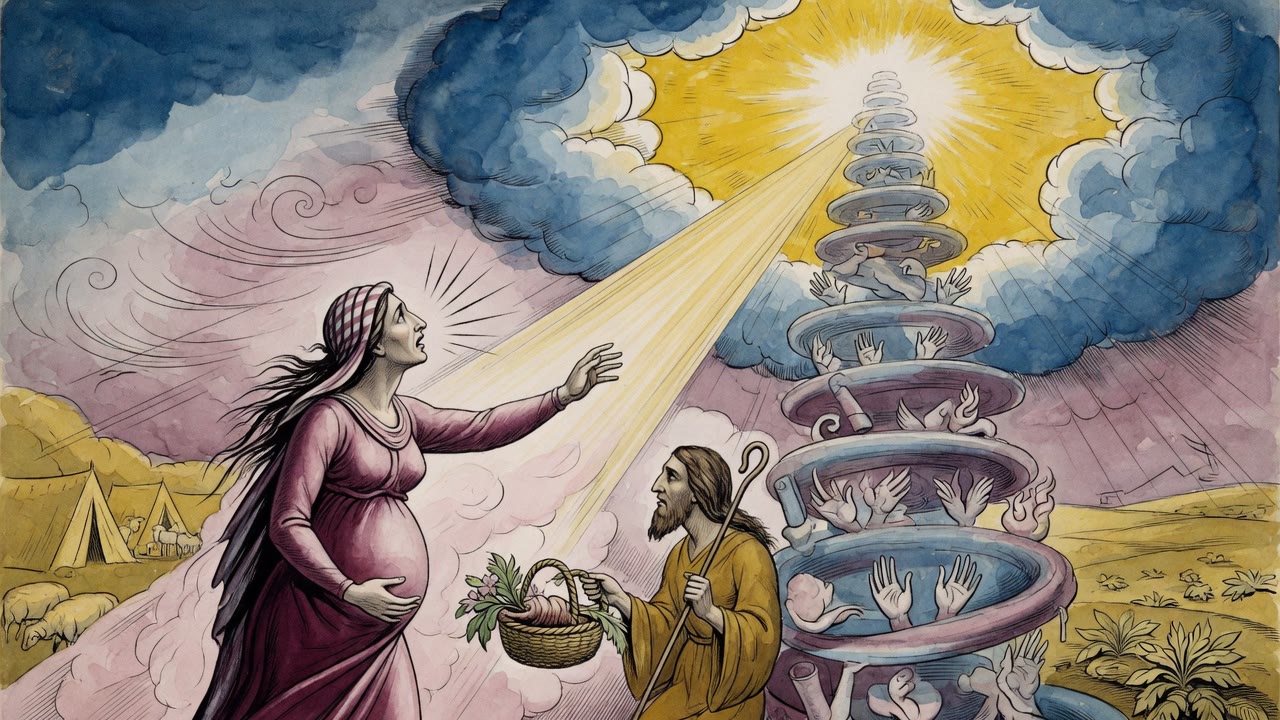
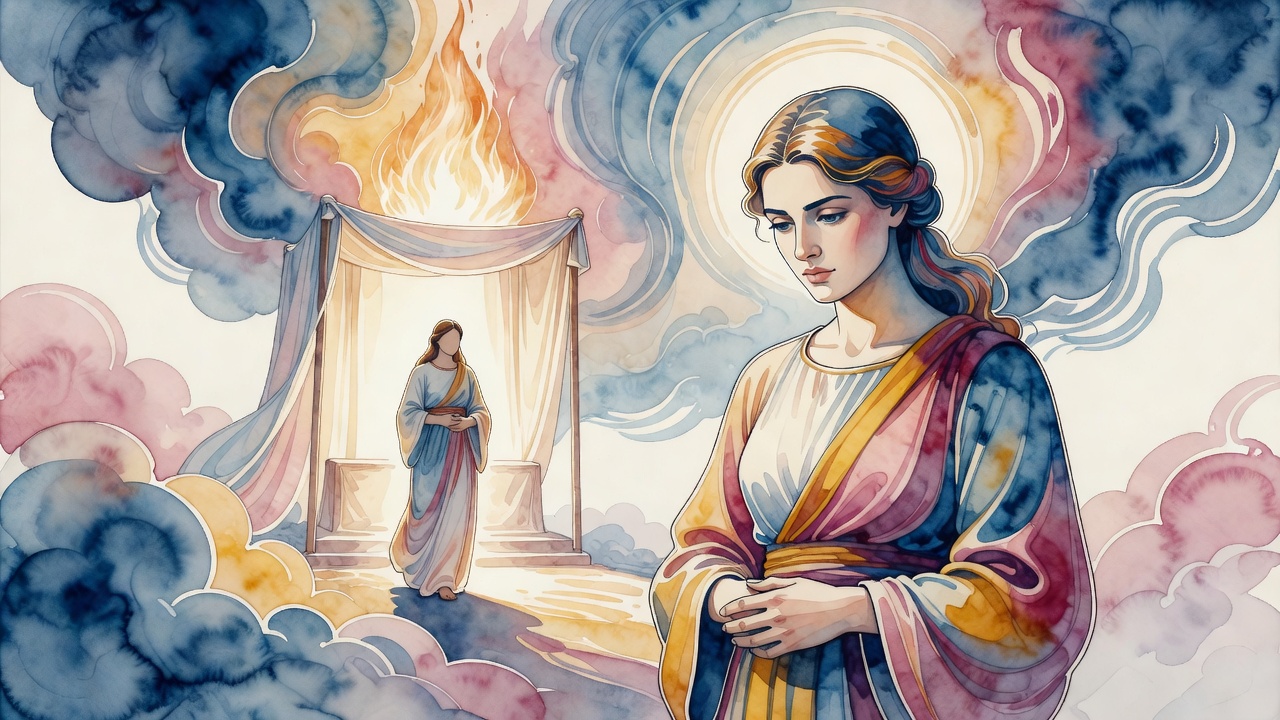
Rachel came in from the yard, where her sister's sons were fighting over a stick, and stood in front of her husband with nothing in her arms. "Give me children," she said, "or I am a dead woman."

She was not reaching for a phrase. The Sages held that a person without children is counted among the dead, and they proved it from Hannah at Shiloh, who said that until God gave her a son she had been one of the dead, and that once He gave her a son she was numbered with the living. Rachel had run the same arithmetic on herself. She did not like the column she was in.

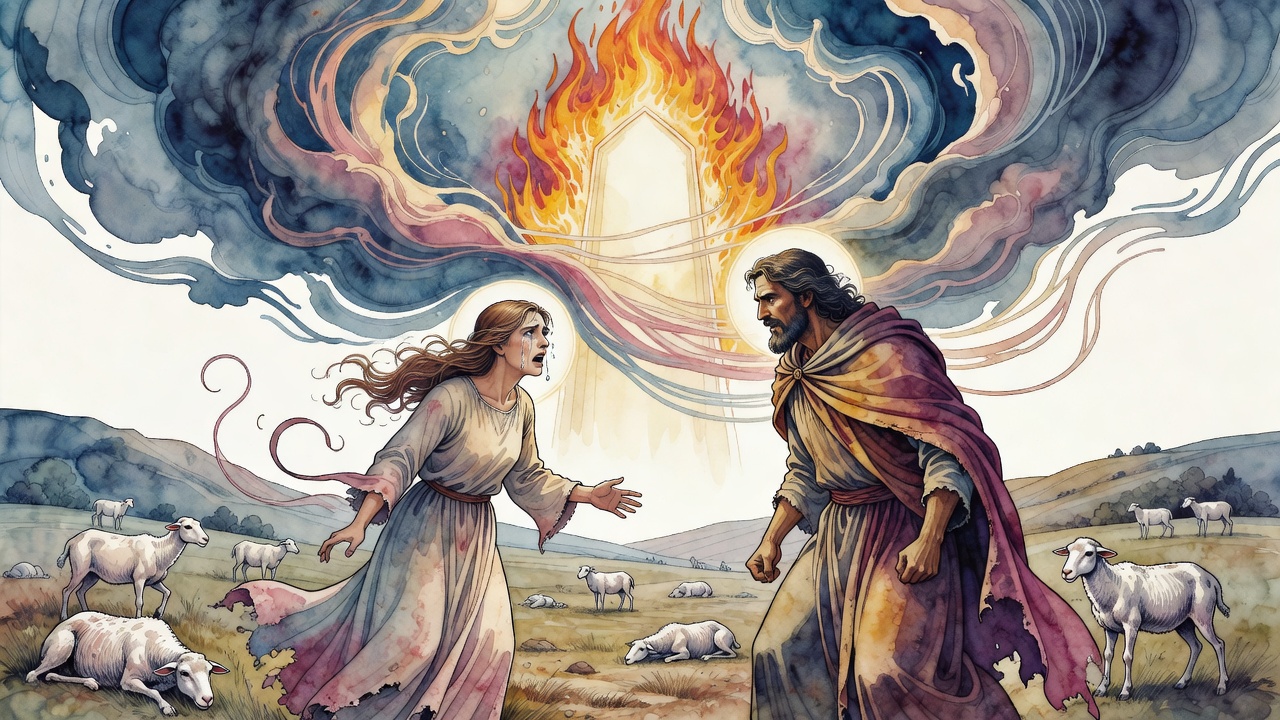
Jacob's anger went up like dry brush. "Am I in the place of God, who has withheld the fruit of the womb from you?"

Heaven Called His Answer Wind

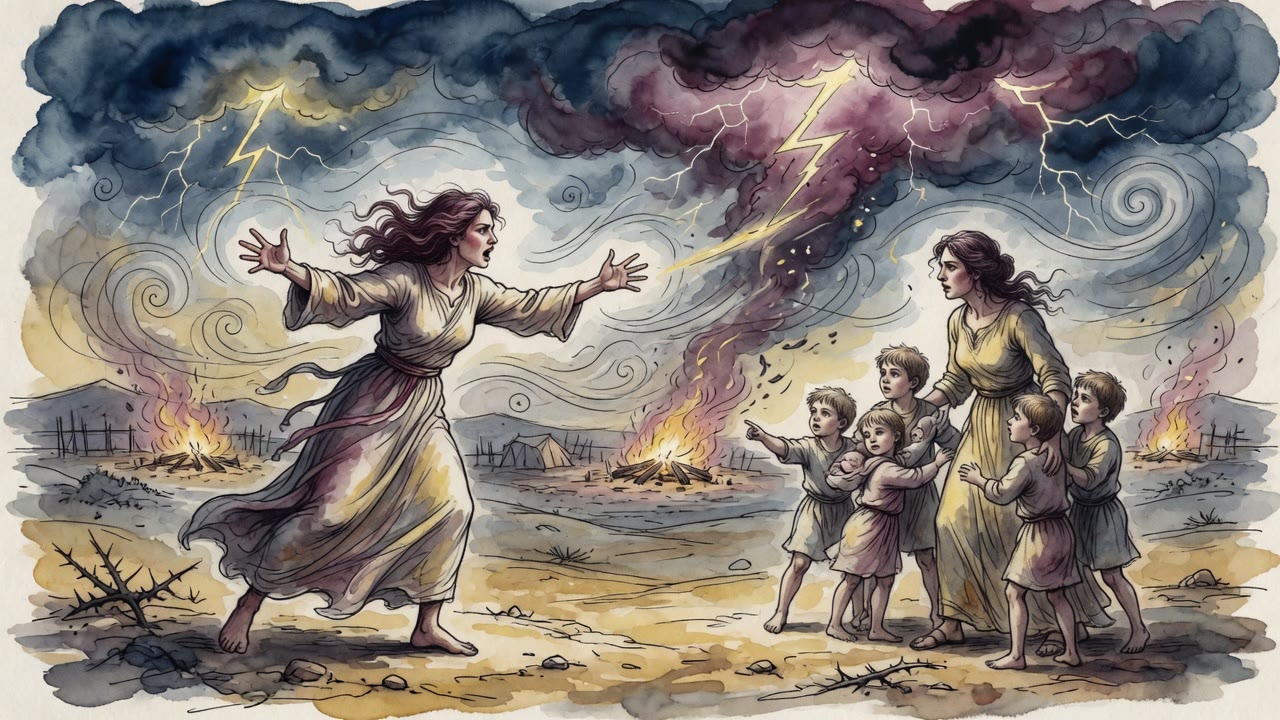
The sentence was correct and it was worthless, and heaven said so out loud. A voice answered him with a line out of Job. Should a wise man answer with windy knowledge? The rebuke was not aimed at his theology. It was aimed at a husband who had heard his wife call herself a corpse and had chosen to explain the rules to her.

Then God spoke over Jacob's head, to someone Jacob could not see. By your life, He said, in the same words you have just used, your own son will stand and say it to your children.

Decades later, in Egypt, with his brothers face down on the floor and their father newly buried, Joseph opened his mouth and the sentence came out exactly as Jacob had thrown it, and in his mouth it meant mercy instead of refusal.

Rachel heard none of that. She was still standing in the doorway with her hands empty.

Pray for Me the Way Your Father Prayed

"Isaac did this for your mother," she said. "He stood and prayed for Rebekah, the two of them facing each other across the same silence. Do that. And Abraham, did he not do it for Sarah?"

"Sarah," Jacob said, "brought a rival into her own house."

Rachel heard the price and paid it on the spot. "Then take my maid Bilhah."

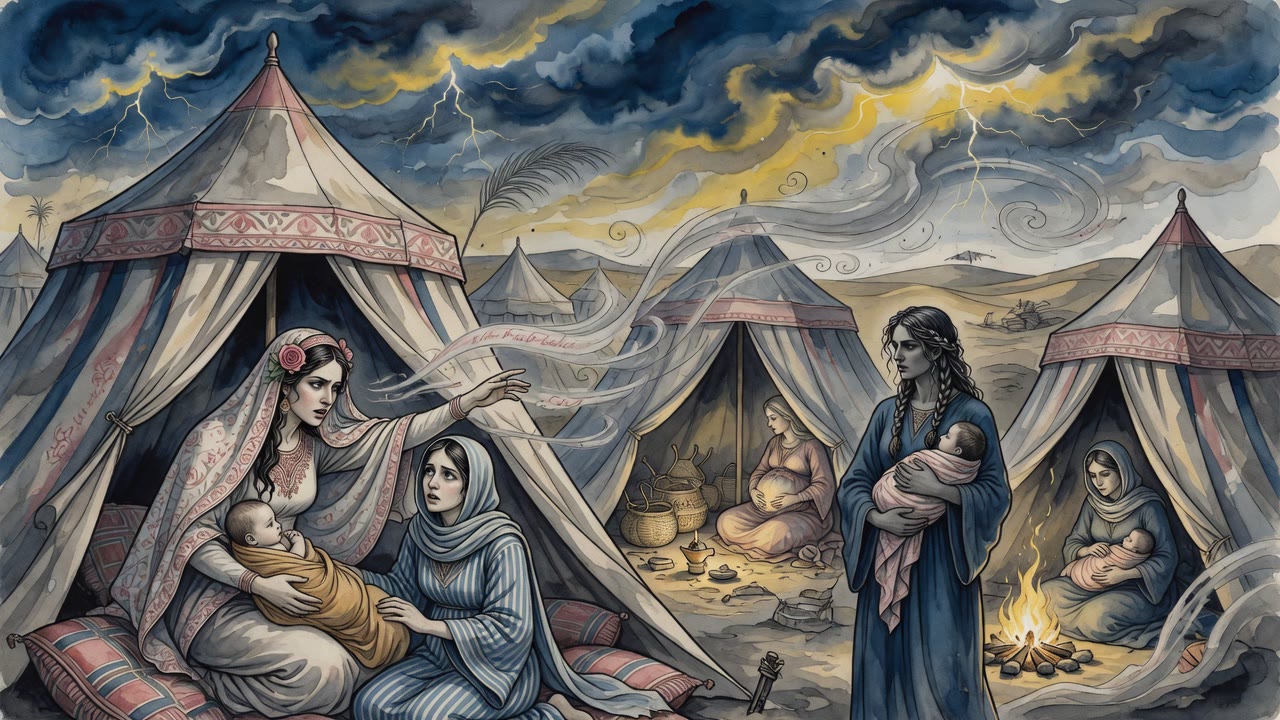
He never prayed. He took the maid, and Bilhah conceived immediately, which was an answer and a wound in the same hour. When the boy was born on Rachel's knees she named him Dan, God has judged me, and she meant both halves of the verdict. Judged me and convicted me, because my own body still gives nothing. Judged me and acquitted me, because a son of my household is breathing in this tent.

A second boy came, and she called him Naphtali, from the word for wrestlings, because the wedding canopy had been hers. Every Wednesday she had been dressed and ornamented to go in, and every Wednesday Leah went in instead. Wrestlings with my sister, she said, and I have prevailed. She was naming children the way other people set stones on a boundary line.

Leah Counted the Tribes and Found Her Sister Short

In the other tent, Leah was doing arithmetic of her own. God had settled it with Jacob that twelve tribes would come from him. She had borne six sons. The two maids had borne four. That made ten, and she was carrying the eleventh, and the child in her was a boy.

Which left one place. Leah could see the whole shape of it from where she sat, and she could see her sister standing in a doorway with borrowed sons and no place left in the count.

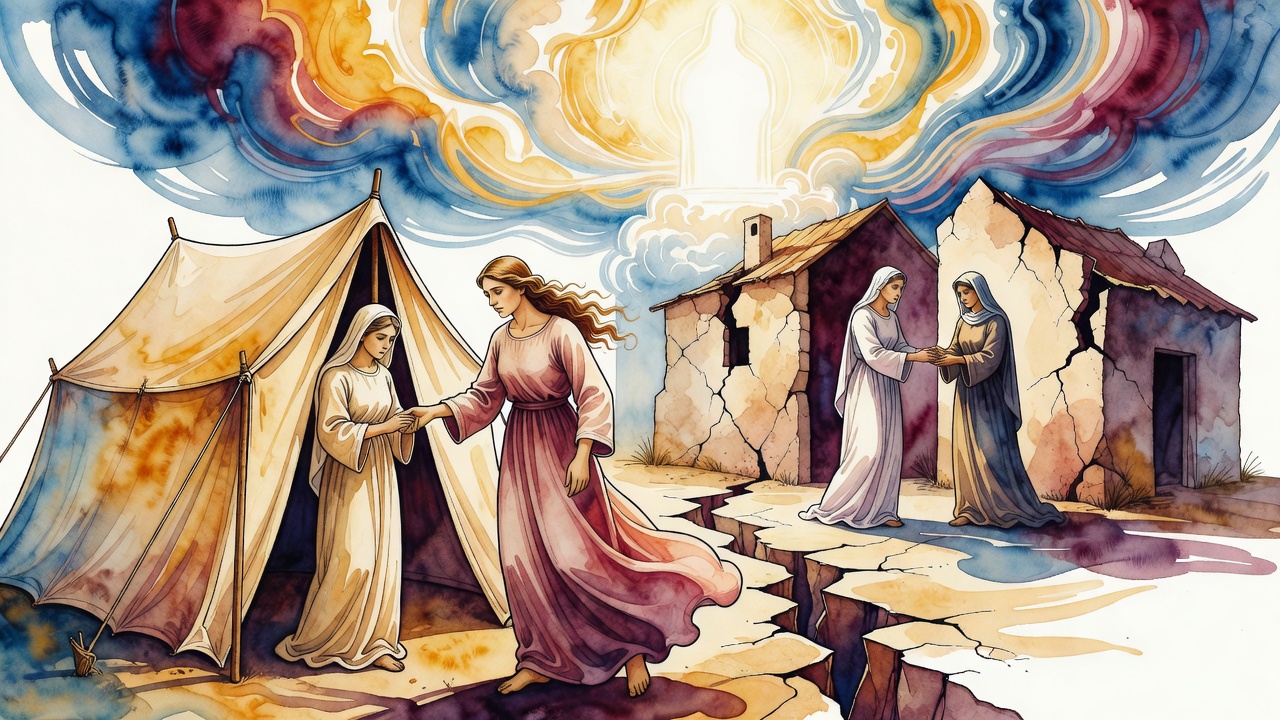
So Leah, who had taken Rachel's canopy and Rachel's night and Rachel's husband, began to beg for mercy on Rachel's behalf. Let what is in my womb be a girl, she prayed, and do not keep my sister from bearing a son.

The Daughter Who Was Meant to Be a Son

By your life, God answered her, you had pity on your sister. What is in your womb will be a daughter, and she will be remembered for it.

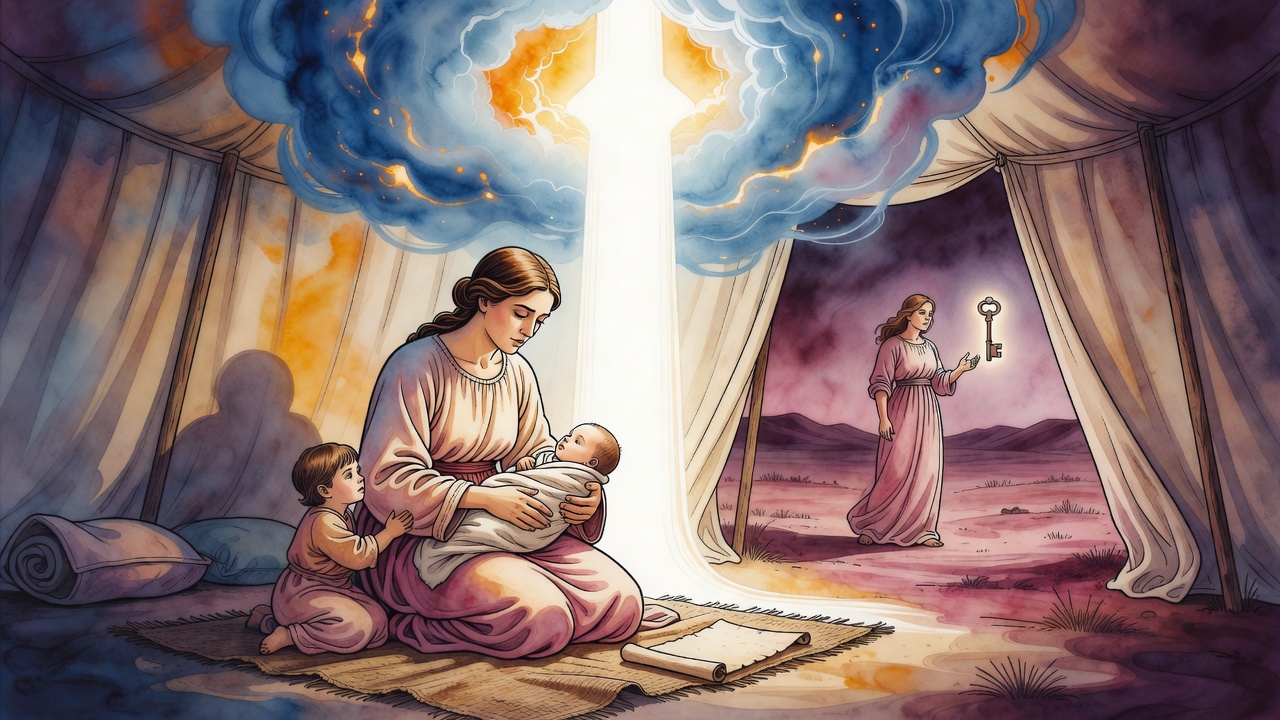
The child was born a girl. Leah called her Dinah, from judgment, because her mother had judged herself out of one more son so that Rachel could have one.

And God remembered Rachel. She conceived, and the birth matched the conception. As there had been no pain in the one, there was no pain in the other. She held a boy who had come out of her own body, and the sentence she had passed on herself in the doorway was struck from the record.

Someone to Blame for the Broken Jar

What she said when she saw him was that God had gathered up her disgrace. She meant it exactly. In a house with no children, disgrace lives in the corners. A jar slips and shatters on the floor and there is no one in the room to fault but the woman standing over the pieces. Now there was a boy, and the boy could be blamed, and being blamed for a broken jar is what belonging looks like from the inside.

Long after, when she was asked by what merit heaven had finally opened her, Rachel did not name her own weeping. She said that many had been with her. Jacob had prayed. Leah had prayed. The woman who had every reason to want her empty had asked for her instead, and that was the ransom that bought her peace.


← All myths
From the tradition

Sources

2 sources

The texts behind this telling. Some cards carry a translation of the source; others are our own retelling of it, and each card says which. Every card links out to the original.

Midrash Tanchuma Buber, Vayetzei 19:1Midrash Tanchuma Buber, Vayetzei

Translation of the source text.Midrash Tanchuma (Buber), Public Domain, on Sefaria · CC-BY-SA

[Another interpretation of (Genesis 30:22): "And God remembered Rachel."] What is written above on this matter? "And Rachel saw that she had borne Jacob no children [and she said to Jacob: Give me children, and if not, I am a dead woman]" (Genesis 30:1). Our Rabbis said: From here you learn that everyone who has no children is considered as dead, as it is written concerning Hannah: "The Lord brings death and gives life" (1 Samuel 2:6). Rather, thus said Hannah: Until He gave me a son I was among the dead; now that He has given me a son I am counted among the living. Rachel said to Jacob: "Give me children, and if not, I am a dead woman. And Jacob's anger was kindled against Rachel" (Genesis 30:1-2). And the Holy Spirit says: "Should a wise man answer with windy knowledge?" (Job 15:2). Jacob said to Rachel: Am I the deputy of the Holy One, blessed be He? "Am I in the place of God?" (Genesis 30:2). The Holy One, blessed be He, said to him: By your life, with the very language in which you said, "Am I in the place of God?", with that same language her son will stand and say to your sons: "Am I in the place of God?" (Genesis 50:19).

She said to him: Did not your father Isaac do so for your mother Rebekah, were not the two of them standing and praying, one opposite the other, as it is said, "And Isaac entreated the Lord opposite his wife" (Genesis 25:21)? You too, pray for me to the Lord. And did not your grandfather Abraham do thus for Sarah? He said to her: Sarah brought a rival-wife into her house. She said to him: If so, "Here is my maidservant Bilhah, go in to her" (Genesis 30:3). He did not do so, but once she had given him her maidservant, immediately she conceived and gave birth. "And Rachel said: God has judged me" (Genesis 30:6), He has judged me and condemned me, He has judged me and acquitted me. He has judged me and condemned me, in that He did not give me a son; He has judged me and acquitted me, in that He gave my maidservant a son. "And she called his name Dan" (Genesis 30:6).

She conceived and gave birth to Naphtali (Genesis 30:8). (The explanation is the term "nymphe," for in the cities of the sea-coast they call a bride "nymphe.") "The wrestlings (naphtulei) were mine", the wedding canopy was mine, for every fourth day she was adorned to enter, and Leah entered. Therefore, "the wrestlings were mine," yet my sister entered; "with my sister, and I have also prevailed. And she called his name Naphtali" (Genesis 30:8). Why Naphtali? Because from their territory they crown the Torah, of which it is written, "and sweeter than honey and the drippings (nofet) of the comb" (Psalms 19:11).

When Leah saw that she had borne six sons, she said: Thus did the Holy One, blessed be He, stipulate with Jacob, that he would raise up twelve tribes; and behold, I have borne six sons, and the two maidservants four, behold, ten. And Leah was pregnant. Our Rabbis said: She was pregnant with a male. Leah said: Behold, I am pregnant, and my sister Rachel has not given birth. What did Leah do? She began to plead for mercy on behalf of her sister Rachel. She said: Let Him make what is within her womb female, and let not my sister Rachel be prevented from bearing a son. The Holy One, blessed be He, said to her: By your life, you had compassion on your sister; behold, I will make what is within your womb female, and remember her thereby. "And afterward she bore a daughter and called her name Dinah" (Genesis 30:21). What is Dinah? That she judged (dayyenah) herself away from bearing a son, so that Rachel would bear a son, for thus it is written afterward: "And God remembered Rachel… and she conceived and bore a son" (Genesis 30:22-23). What is "and she conceived and bore"? It likens her giving birth to her conceiving: just as her conceiving was without pain, so too her giving birth was without pain. "And she said: God has gathered up my disgrace" (Genesis 30:23). What is "gathered up"? Rather, since a woman does not give birth, disgrace is present within her house. How so? When she breaks a vessel in her house, on whom can she lay it? Once she gives birth, she lays it on her child. Therefore she said: "God has gathered up my disgrace."

Full source
Midrash Tanchuma Buber, Vayetzei 17:2Midrash Tanchuma Buber, Vayetzei

Translation of the source text.Midrash Tanchuma (Buber), Public Domain, on Sefaria · CC-BY-SA

Another interpretation (of Psalms 55:19): "He has redeemed my soul in peace." The verse speaks of Rachel. Rachel said: "He has redeemed my soul in peace", by what merit did the Holy One, blessed be He, give me sons? Because "they were with me in great number" (Psalms 55:19), through Jacob and Leah praying for me. Therefore it is said (Genesis 30:22): "And God remembered Rachel."

Full source