Rachel Gave Leah the Signs and Kept Silence
Rachel hears Leah led to her wedding canopy and keeps the secret signs silent. Heaven later opens her womb for that mercy.
Table of Contents
 Click for full size
The Night the Signs Stayed in Her Mouth
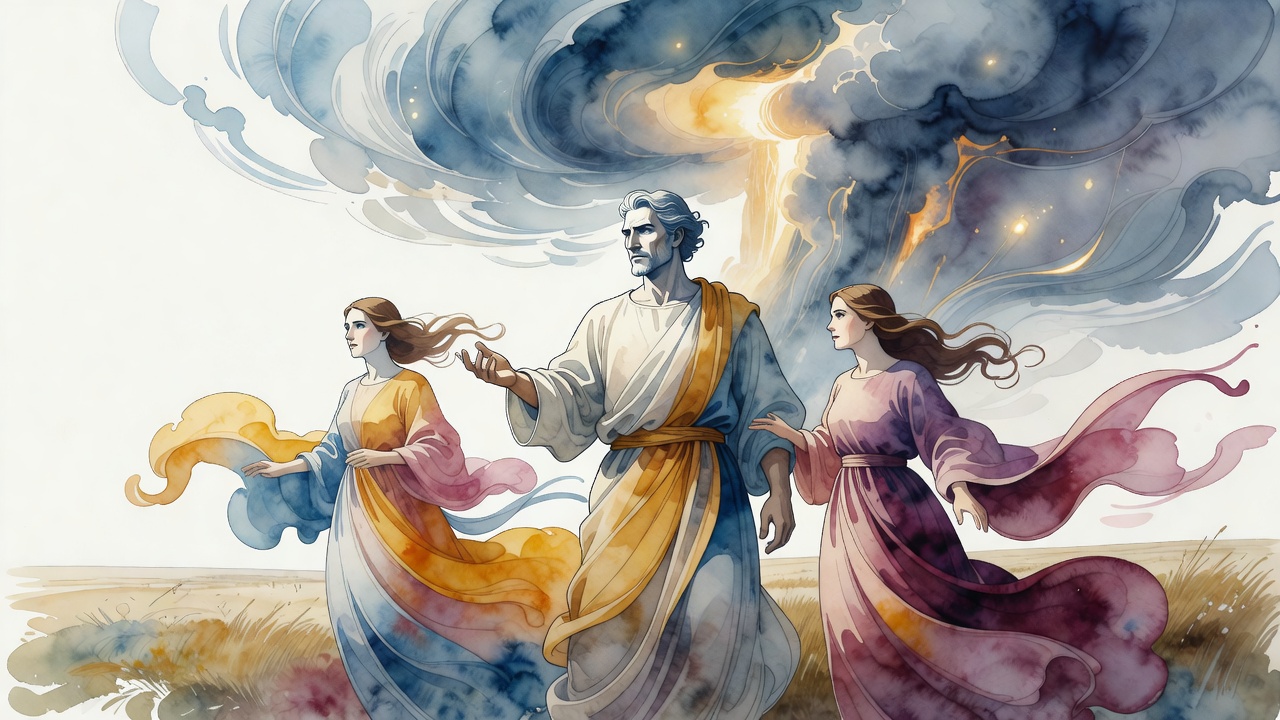
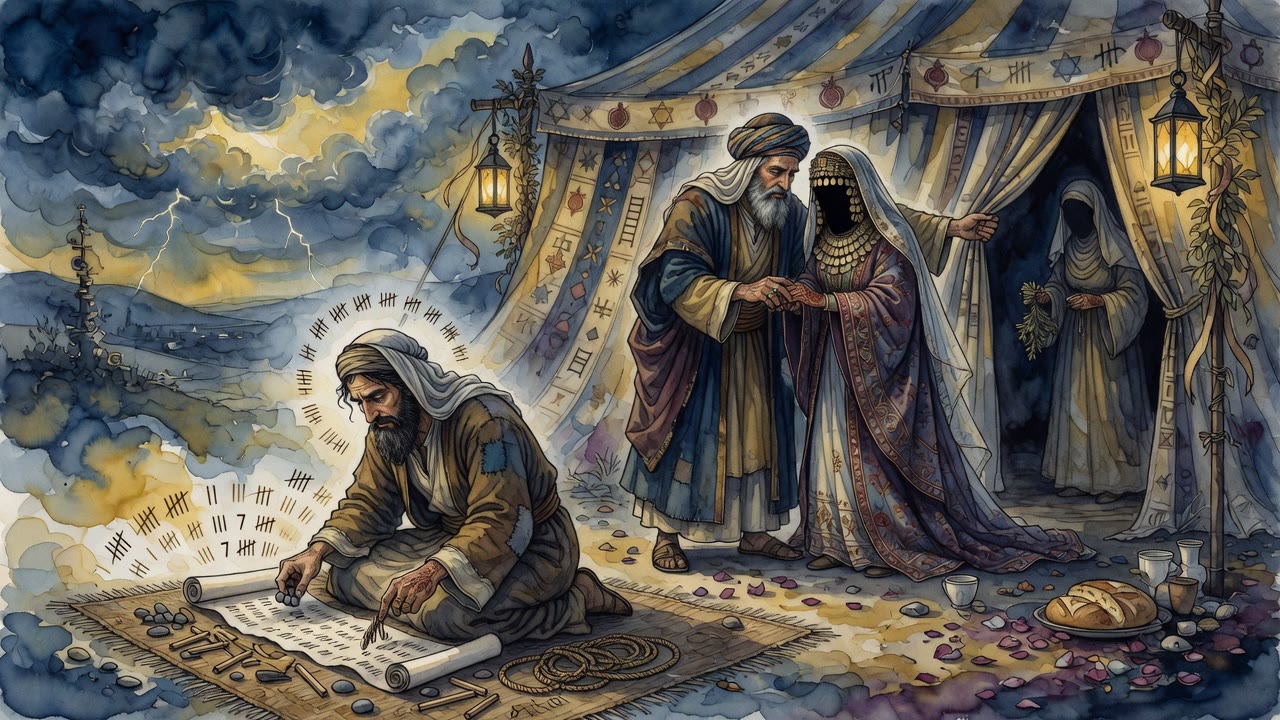
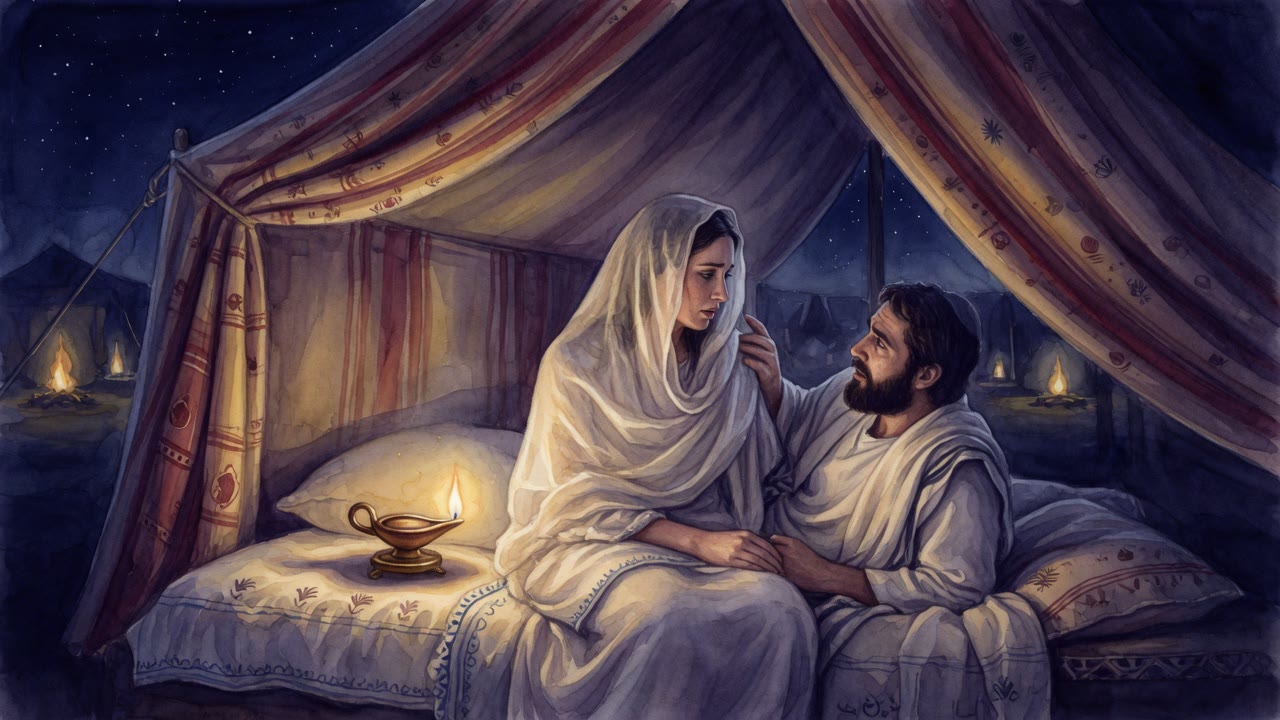
Rachel heard the footsteps that should have been her own. Oil smoke and wedding spice drifted through the tent flaps. Outside, servants led Leah toward the canopy where Jacob waited, still believing the face under the veil was the face he had served seven years to marry.
Rachel held the private signs Jacob had taught her, the marks a bride uses so a groom knows he has not been cheated. She could have spoken one of them into the dark and stopped the whole fraud. Laban's swap would have cracked open. Leah would have been dragged back into shame. Jacob would have turned and found the woman he wanted.
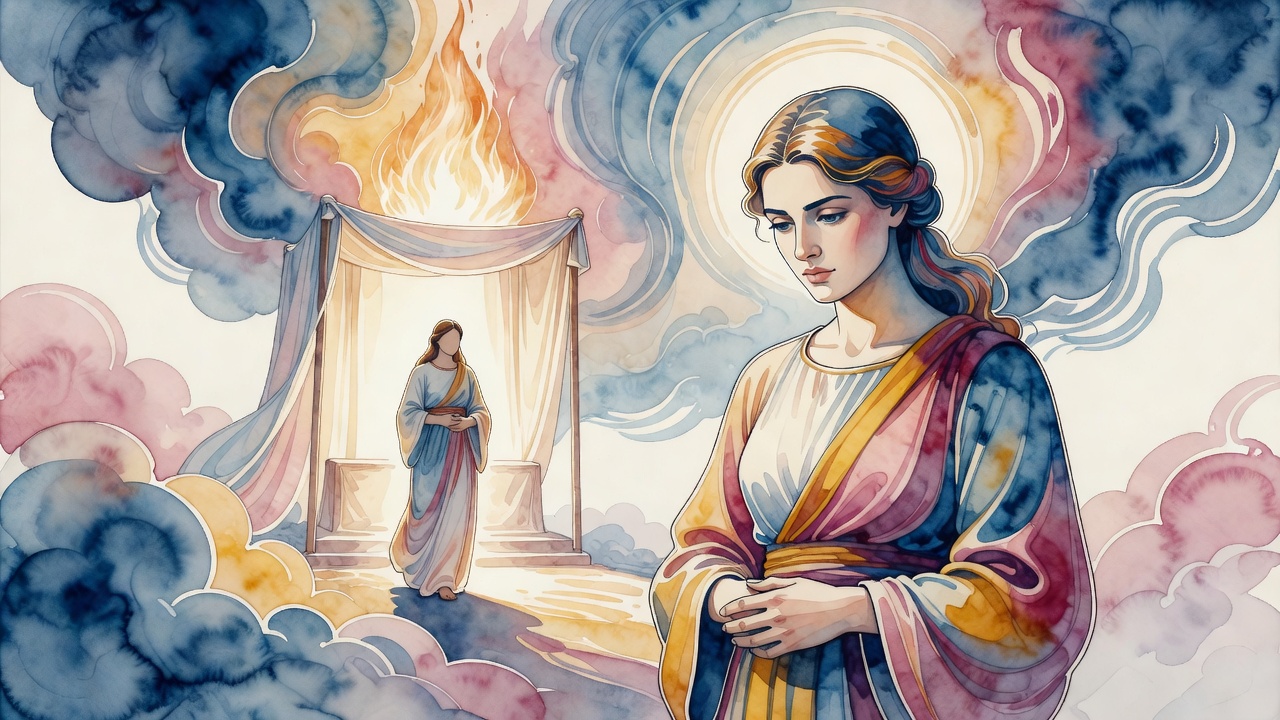
She closed her mouth. The midrash will not let that choice stay soft. On the night meant to be her wedding, she saw her sister led in her place and kept silent to spare Leah public disgrace. That silence, not only her later prayers, is what heaven would remember when the time came to open her womb.
The house filled with celebration that did not belong to her. Rachel lay awake counting the hours until morning light would force the truth into Jacob's eyes, and still she did not call out.
Laban had planned the swap carefully, but the midrash cares less about his cleverness than about Rachel's refusal to weaponize knowledge. She could have made herself the center of the scandal and walked out with Jacob still hers. She chose a sister's face over her own rights. That choice would sit inside her bones for years, heavier than any bridal jewelry she never wore that night.
Anger Instead of Comfort
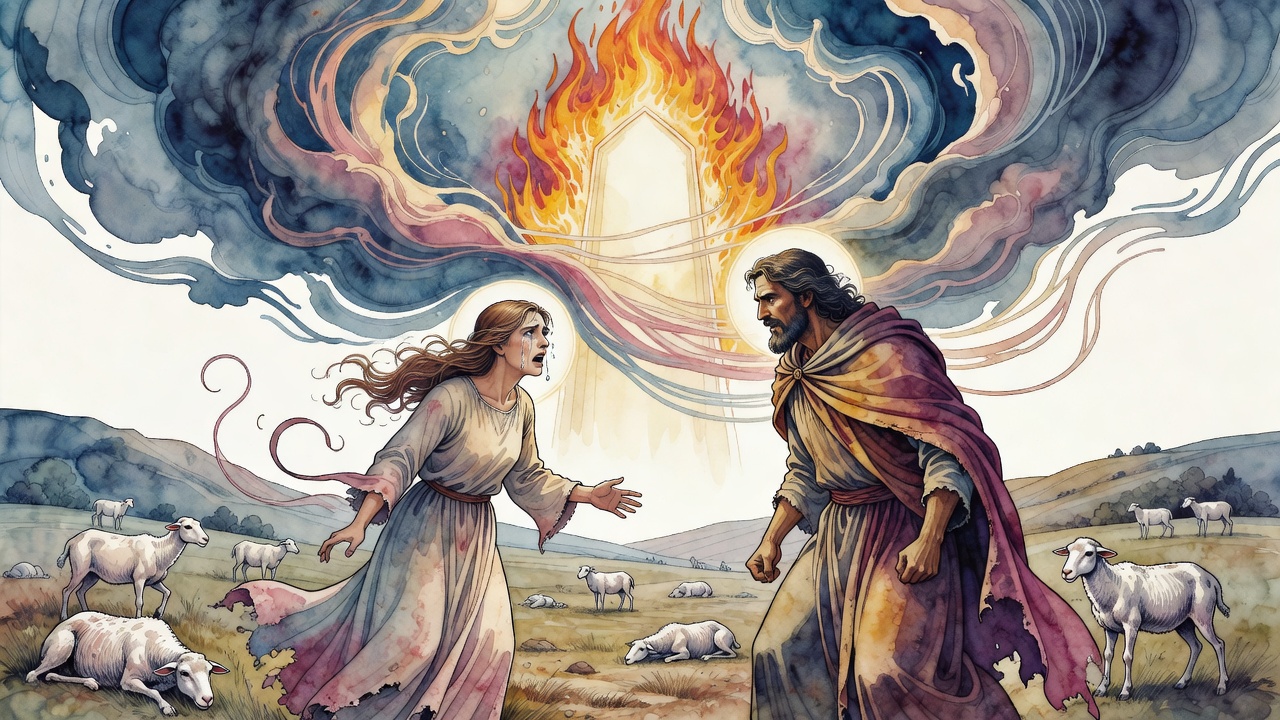
Years later the same body that had refused to shame a sister broke under another grief. Children filled Leah's arms. Rachel's stayed empty. She came to Jacob not with clever speech but with a raw demand. Give me children, or I die.
Jacob's anger rose where comfort should have sat. He filled his mouth with windy words, the kind the book of Job rebukes in a man who answers pain with weather instead of help. Abraham, when Sarah suffered, had listened to her voice. Jacob shouted. God Himself, the midrash says, answered him with a question sharp enough to scar: is this how you speak to the brokenhearted?
The quarrel that followed was not holy theater. It was a marriage under pressure. Jacob said God had withheld children from Rachel, not from him. She fired back: did your father not pray with all his strength for your barren mother? He pointed to the sons already born through Leah. She pressed harder and named Abraham, who had pleaded for Sarah. Finally she did what Sarah had done and brought her maid Bilhah into the marriage so that a child might come through another woman's body if not through her own.
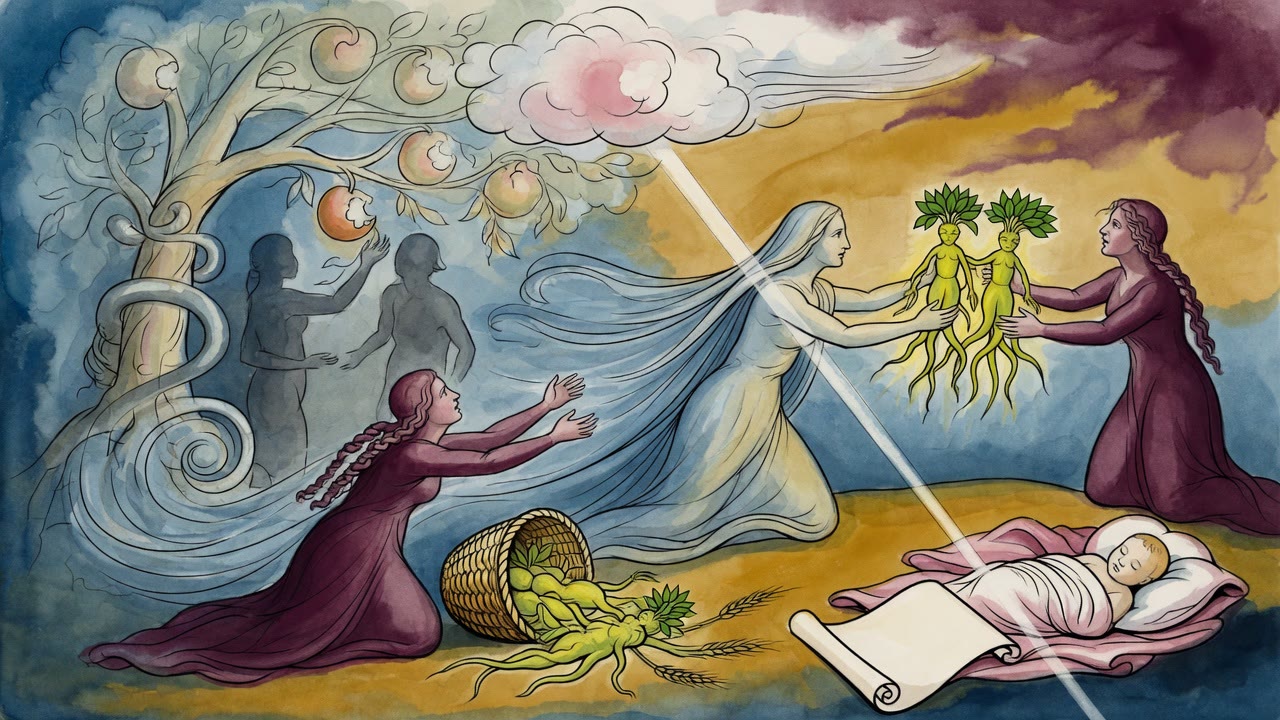
When Bilhah bore a son, Rachel said God had judged her. The judgment cut both ways. It had found her wanting in her barrenness, and now it found her worthy with a son. She named him Dan.
Even the name carried a courtroom. Judgment had walked through her tent twice, first as barrenness, then as a child born through another woman's labor. Rachel held Dan and felt both verdicts at once. The silence of the wedding night and the noise of this quarrel were not opposites. They were two sides of a woman who would pay any cost to keep a house from collapsing, then demand heaven pay her back when the cost became too large to bear alone.
Twistings That Were Not Hers Alone
Another birth brought another name. Naphtali, from a word that means twisting and wrestling. The plain reading makes the struggle a contest between sisters. The quieter reading reaches further back.
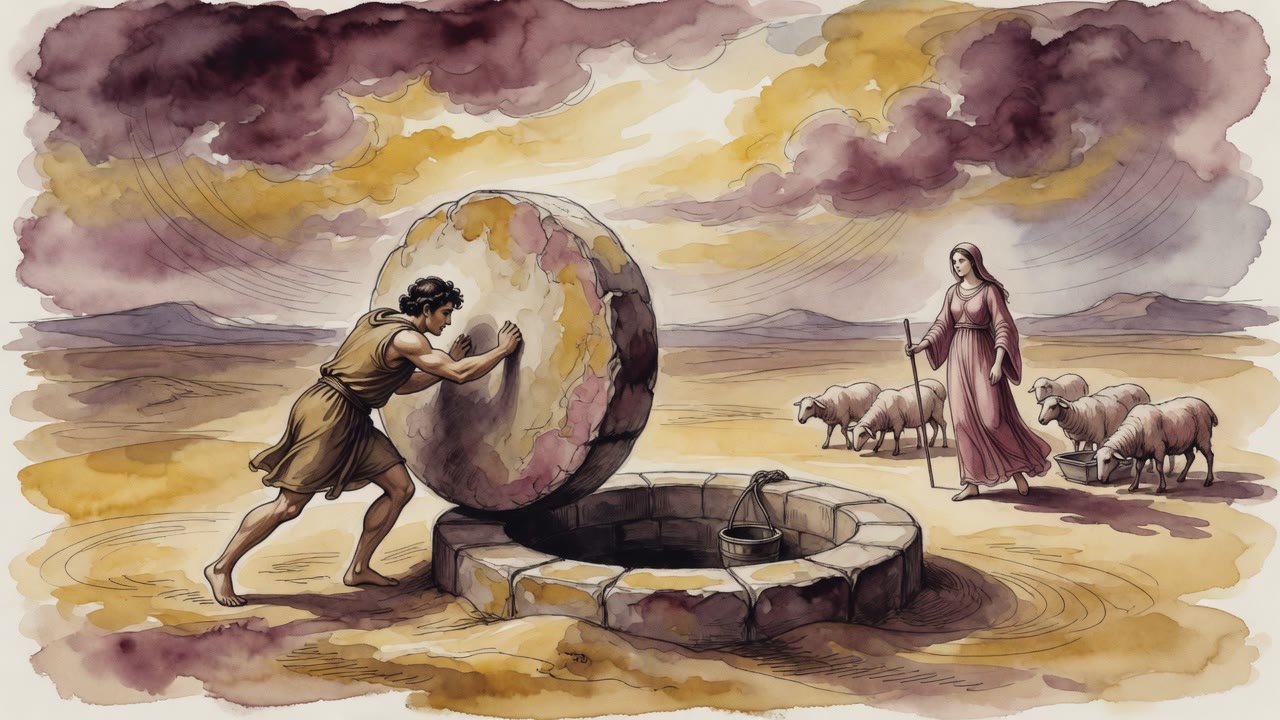
The twistings, Rachel says in that midrashic voice, were not of my own making. Did Jacob ever come to Laban's house except for my sake? Trace the whole tangled story to its root and you find Rachel at the well. Jacob crossed into Haran, served seven years, and stayed because of her. Every turn that followed, the swapped wedding, the rivalry, the long years of labor, unwound from that first meeting.
So when she speaks of wrestling, she is not only naming her quarrel with Leah. She is naming her place at the center of a destiny she did not fully choose. She did not scheme her way into the covenant. She was the reason Jacob came at all, and the name Naphtali carries that truth into the next generation.
Rachel at the well had not asked to become the hinge of every later twist. Jacob arrived thirsty, saw her, and the whole future of the tribes leaned on that meeting. When she later spoke of wrestling, she was naming a life shaped by other people's vows, Laban's greed, Leah's tears, Jacob's love, and a God who kept accounts in a ledger she could not see.
What Heaven Counted
When Scripture later says God remembered Rachel, the sages refuse to let the line float as vague kindness. Kindness is Abraham. Faithfulness is Jacob. The house of Israel points to Jacob the elder and to the one wife the verse calls his true household, Rachel. The other children are listed as sons of Leah or sons of the handmaids. Only Rachel is named the wife of Jacob.
What did He remember? Not prayer alone, though she prayed until her throat went dry. He remembered the wedding night when she could have exposed Laban and kept Jacob for herself, and chose silence so the world might still be built, even from her sister's house.
The midrash adds a second fear that had haunted her. She had dreaded being handed over to wicked Esau, and her later words, that God had gathered up her disgrace, carry that relief as well. With Joseph born, Jacob senses the moment has shifted. He came to Laban to build the tribes. The tribes are in his hand. Rachel is in his hand. The one destined to break Esau has entered the world.
Rachel's silence was not weakness. It was a cost paid in the dark, and heaven kept the receipt until the day a child finally cried in her tent.
← All myths