Parshat Vayetzei5 min read

Leah's Wound Opened the Womb That God Saw

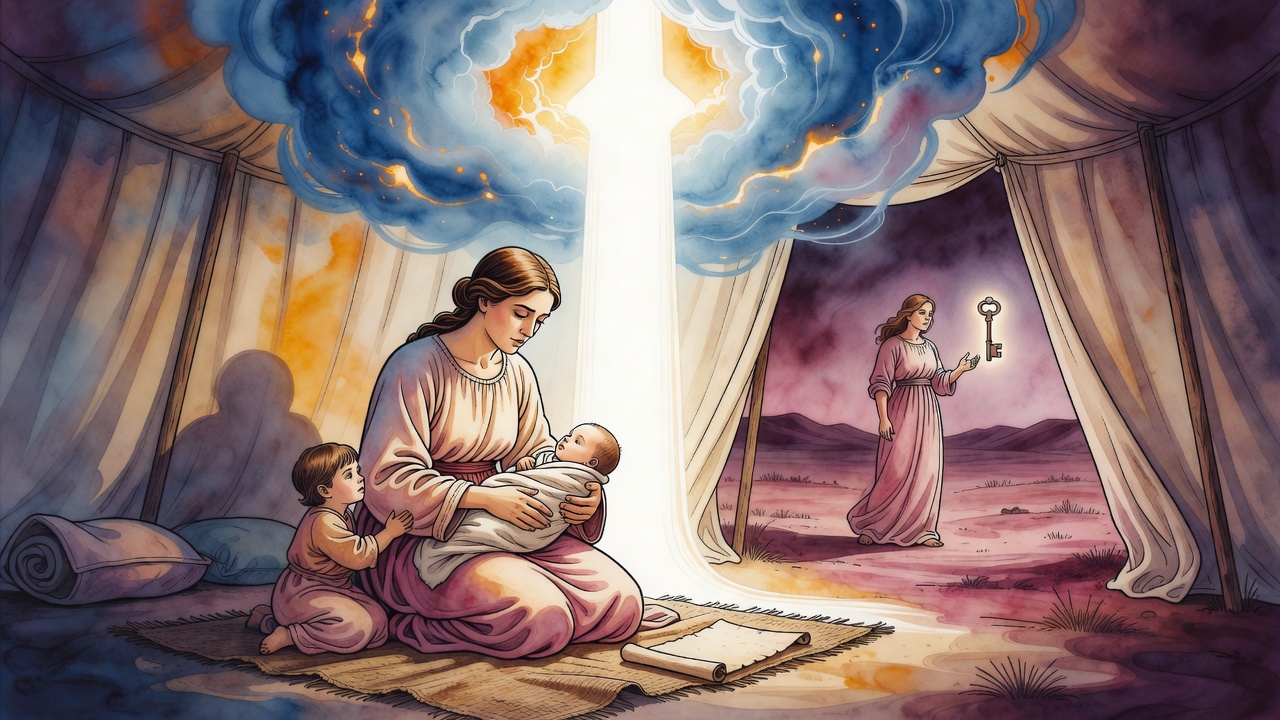
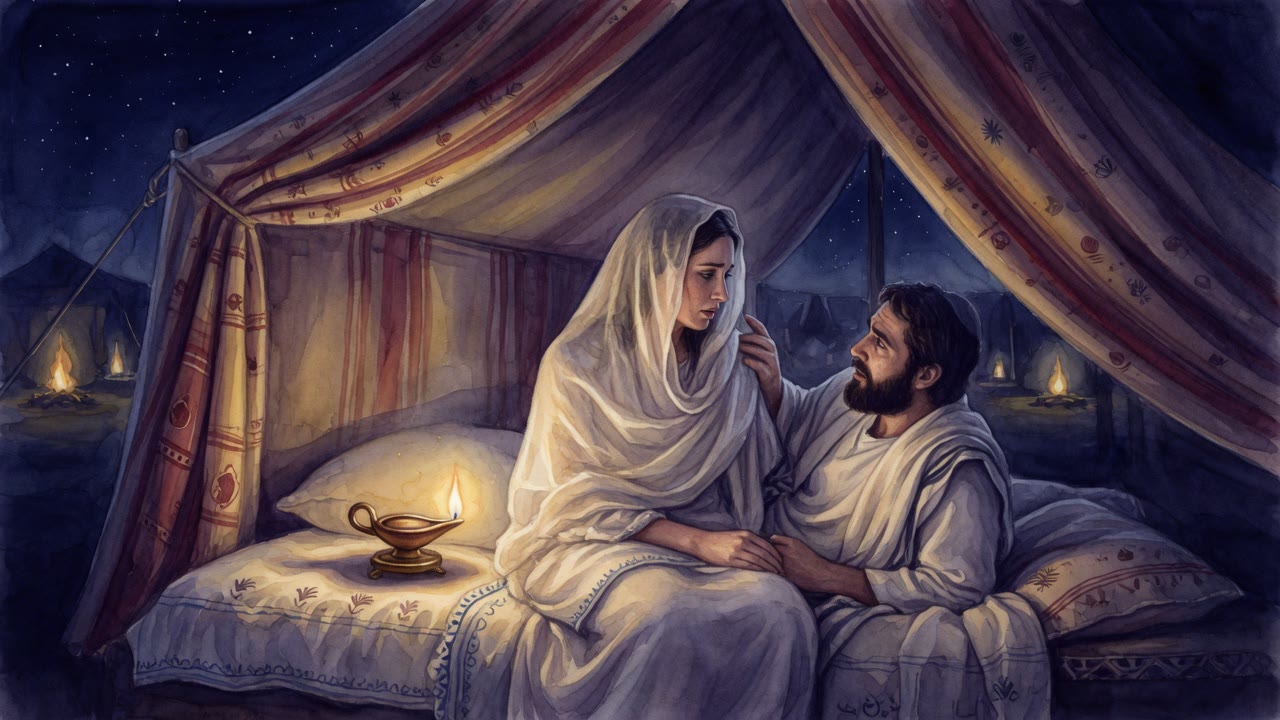
Jacob woke beside Leah and accused her of deceit. She answered with his own history, and God saw the wife bowed down in pain.

Curated by Arthur · Told by Maggid ·
Table of Contents
  1. Morning Found the Wrong Bride
  2. God Saw the Bowed Woman
  3. The Children Became Her Rising
  4. One Righteous Life Can Hold a House

Morning put Leah's face where Jacob expected Rachel's.
The room changed before anyone moved. Seven years of labor had ended in the wrong name, the wrong sister, the wrong truth beside him. Jacob turned on Leah with the accusation that came easiest: daughter of the deceiver, why did you trick me?

Morning Found the Wrong Bride

Midrash Tanchuma Buber preserves Leah's answer without softening it. She did not collapse. She did not plead. She held Jacob's own history in front of him. When your blind father asked whether you were Esau, did you not say, "I am"? Why is my deception strange to you?

The words struck the place Jacob could not defend. He had come to Laban's house carrying a blessing won through disguise. Now disguise had met him in the marriage bed. Leah's rebuke did not make the night less painful. It made it truthful.

Truth did not make her beloved. That is the ache in the source. Leah can answer rightly and still remain unwanted. A correct rebuke cannot force a heart open. Morning leaves her exposed in a house built around another woman's name.

God Saw the Bowed Woman

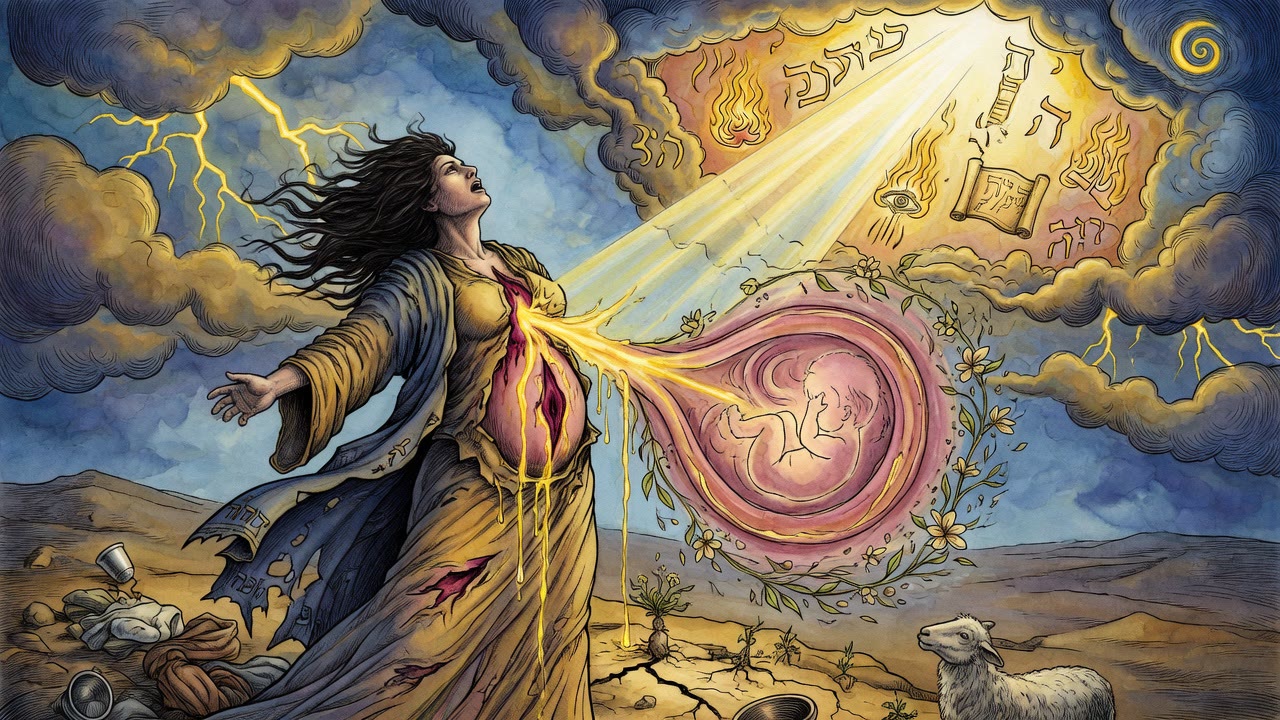
The Torah says God saw that Leah was hated, and He opened her womb (Genesis 29:31). Aggadat Bereshit lingers over the seeing. Human power loves the elevated and abandons the diminished. God looks the other way, toward the bent back, the lowered face, the one whose pain has become invisible to the people in the room.

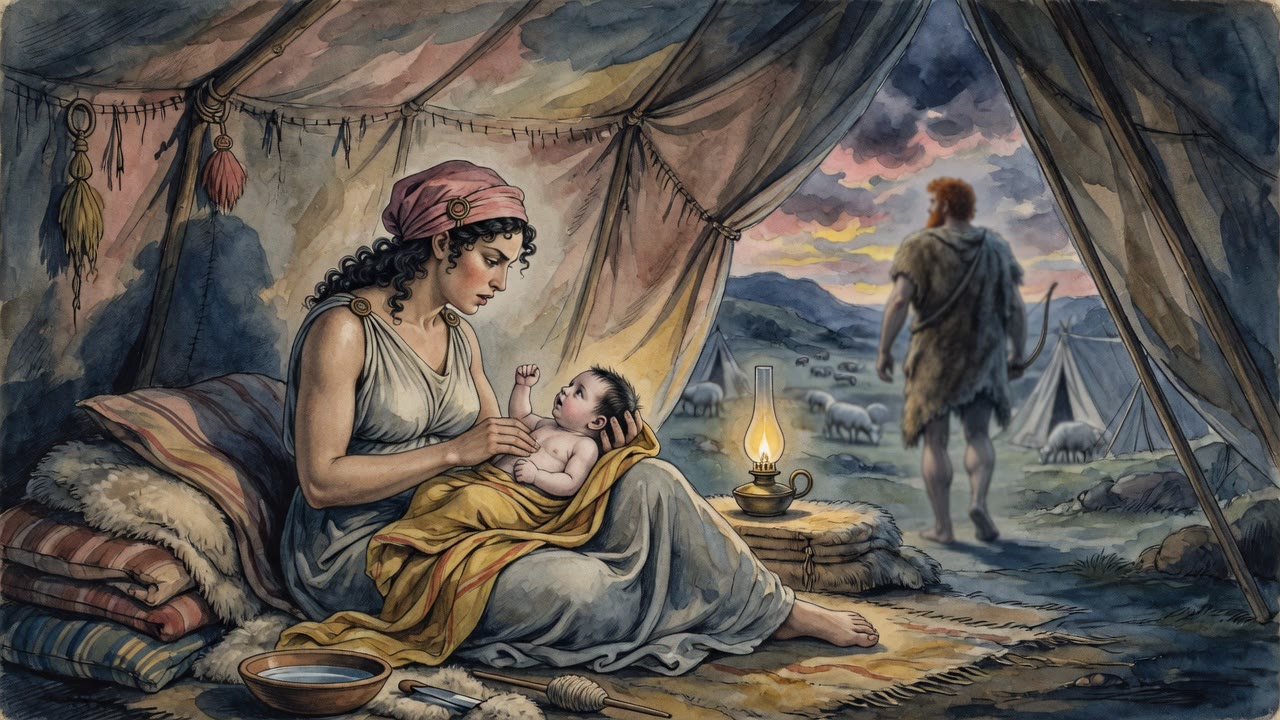
Leah was not loved as Rachel was loved. That imbalance did not vanish. God answered it with children. Reuben, Simeon, Levi, Judah. Each birth gave Leah a name to speak into a house where she had been treated as mistake and wound.

Her first son's name reaches toward sight. Her second reaches toward hearing. Leah keeps hoping each child will change Jacob's face when he looks at her. The names are prayers spoken over cradles.

The Children Became Her Rising

Children did not make Jacob's first love transfer by force. The midrash is more honest than that. Leah's sons became God's lifting of a woman bowed down. Psalm 145 says the Lord upholds all who fall and raises all who are bent. Leah's body became the place where that verse entered family history.

Her pain also became Israel's architecture. Levi would carry priesthood. Judah would carry kingship. The wife nobody wanted became mother of the lines that would hold altar and throne.

That reversal is not sentimental. It is structural. The places where Israel will later seek forgiveness and rule are rooted in the woman whose own house did not know how to honor her.

One Righteous Life Can Hold a House

Aggadat Bereshit 49 says God searches a generation for one righteous person who can hold back judgment. The hidden tzaddik may stand in a city no one can save, a house no one understands, a family that mistakes pain for inconvenience.

Leah stands close to that mystery. She is not glamorous in the story. She is not chosen first. She is wounded, sharp, fertile, and seen by God. The house of Jacob is built through the woman Jacob could not love properly.

Hidden righteousness is often hidden because the room has decided not to look. God looks anyway. The womb opens where human regard has closed.

God did not wait for the family to correct the imbalance. He opened the womb while the wound was still open.

By the time Judah is born, Leah has stopped begging only for Jacob's attachment and begins to praise. The wound has not vanished. It has learned another language.

The midrash does not pretend that being seen by God is the same as being properly loved by Jacob. Leah still has to live in that house. She still names sons from inside longing. Divine seeing does not make human failure harmless.

But it changes the direction of history. The dismissed woman becomes necessary. The bowed woman becomes a pillar. Her sons carry Israel because God saw what the household missed.

Every birth turns the first morning inside out. Jacob had awakened to the wife he did not choose. Israel would awaken, generation after generation, to gifts carried by her children.

The unloved wife becomes impossible to remove from the future.

Her sons make that impossible.

The future says so.

What began as humiliation becomes lineage, altar, and crown.


← All myths

From the tradition

Sources

6 sources

The texts this telling draws on, in full. Open a card to read inline, or expand it for a wider, quieter read.

Aggadat Bereshit 49Aggadat Bereshit

When God looks down at a wicked generation, the rabbis said, He searches for one righteous person to carry the weight of atonement for all the rest. This is the reading Aggadat Bereshit makes of (Ecclesiastes 7:28): "One man among a thousand I have found." God finds, in every generation, the person who will stand in the gap.

Jerusalem was full of wickedness when the prophet Jeremiah received his commission: "Roam the streets of Jerusalem, look around and take note; search her squares and see if you can find a man, one who acts justly and seeks truth, that I might forgive her" (Jeremiah 5:1). The righteous one who could be found would redeem the city. The one who could not be found left the city to its consequences. This is the doctrine of the hidden tzaddik, the unseen righteous person who holds a community together without anyone knowing it.

The man from Ramathaim, Elkanah, father of Samuel, is the figure the midrash points to in this passage. He was among the thousand who did not qualify. But from his house came one who did: Samuel, whom Hannah prayed into existence. The chain from barren woman to prophet to national judge runs through the divine search for one righteous person. God was not looking for a perfect city. He was looking for one person. He found Hannah's prayer, which found Samuel, which found a nation.

Full source
Aggadat Bereshit 48Aggadat Bereshit

Leah was hated. Or unloved, depending on the translation, but the Hebrew is harsh. And God saw it (Genesis 29:31). The psalm that frames it is equally clear: "The Lord upholds all who fall and raises up all who are bowed down" (Psalm 145:14).

The midrash draws a contrast with how wealthy humans operate. A powerful person loves someone when they are prosperous and abandons them when they lower their hand to the poor. The powerful are attracted to the elevated and repelled by the diminished. God works in reverse: when He sees someone bowing down, lowering their hand, He extends His hand and lifts them up. Leah's unloved state was the precise condition that attracted divine attention.

The rabbis were making a point about how God distributes blessing. Rachel was the beloved wife. And she was barren for years. Leah was the unloved one. And she bore six sons. The apparent unfairness resolves, for the rabbis, into a divine compensation: God balances what humans leave unbalanced. He sees what humans fail to see. He honors what humans dishonor. And from Leah's dishonored womb came Judah, from whom came David, from whom came the messianic line, the most consequential womb in the story of Israel, belonging to the wife nobody wanted.

Full source
Midrash Tanchuma Buber, Vayetzei 11:1Midrash Tanchuma Buber, Vayetzei

Another interpretation of (Genesis 29:31): "And the LORD saw that Leah was hated." Not because she was hateful in her husband's sight, but because she reproved him that Jacob had served seven years for Rachel. For his mother had said to him (Genesis 27:44), "And you shall dwell with him a few days," yet he dwelt there seven years.

"And Jacob said to Laban: Give me my wife," etc., "and it came to pass in the evening, that he took Leah his daughter," etc. (Genesis 29:21-22). All the night she made herself out to be like Rachel. When he rose in the morning, behold, it was Leah (Genesis 29:25). He said to her: "Daughter of the deceiver, why have you deceived me?" She said to him: "And you, why did you deceive your father, when he said to you, 'Are you this my son Esau?' and you said to him, 'I am Esau your firstborn' (Genesis 27:19)? And now you say, 'Why have you deceived me?' And did not your father say, 'Your brother came with deceit' (Genesis 27:35)?"

And on account of these matters with which she reproved him, he began to hate her. The Holy One, blessed be He, said: "There is no healing for this one except through sons, and then her husband will yearn for her." Therefore, "And the LORD saw that Leah was hated, and He opened her womb." And David praises (Psalms 146:7): "Who executes judgment for the oppressed."

Full source
Targum Pseudo-Jonathan on Genesis 29:31Targum Pseudo-Jonathan on Genesis

The Torah says the Lord saw that Leah was hated and opened her womb, and Rachel was barren (Genesis 29:31). The Targum Pseudo-Jonathan softens and sharpens the verse in the same breath.

It was revealed before the Lord that Leah was not loved in the sight of Jakob. The Aramaic avoids saying Leah was hated, which would be brutal on Jacob. Instead it says he did not love her the way he loved Rachel. She was the wife he had not chosen.

God, seeing that imbalance, said in His Word that sons should be given her, and that Rahel should be barren.

This is extraordinary theology. Heaven is not neutral toward the wife who is loved less. Heaven actively compensates her. The woman whose husband does not burn for her gets something even more precious: children, one after another, until she becomes the mother of half the tribes of Israel.

The Targum is telling us that God redistributes emotional wealth in marriage. Rachel had Jacob's heart. Leah had Jacob's sons. Neither sister had everything. But the one whose pain was hidden, the one who wept alone in the tent while her husband's face was turned elsewhere, was the one whose womb was opened.

Leah would bear six of the twelve tribes, plus the daughter Dinah. From her line would come the priesthood (through Levi) and the monarchy (through Judah and David) and ultimately the messiah. The unloved wife becomes the spine of the nation.

The takeaway: the hidden hurts of a marriage are not hidden from God. He pays attention, and He balances accounts, often in ways that are more lasting than the affection that was withheld.

Full source
Bereshit Rabbah 71:1Bereshit Rabbah

The verse in question is (Genesis 29:31): “The Lord saw that Leah was unloved, and He opened her womb, and Rachel was barren.” Seems straightforward. But Rabbi Binyamin links this to (Psalm 69:34): “For the Lord hears the impoverished and does not despise His prisoners.” And that’s where things get interesting.

Rabbi Binyamin points out a problem. He says the beginning and end of (Psalm 69:34) don't quite match up. It would make more sense if the verse just said, "For the Lord hears the impoverished and does not despise the prisoners," or "For the Lord hears His impoverished and His prisoners." So, what's going on?

He explains that "the impoverished" (dal, ani, and evyon in Hebrew) actually refers to Israel. Rabbi Yoḥanan, another sage, taught that whenever you see those terms used in the Bible, it's often a reference to the people of Israel. Israel has often been in a state of hardship and need throughout its history.

Okay, so if the "impoverished" are Israel, who are the "prisoners"? According to Rabbi Binyamin, these are the barren women. He paints a poignant picture of them, confined to their homes, feeling forlorn and forgotten. They are, in a sense, prisoners of their own circumstances, longing for a child.

But here’s the glimmer of hope: “When the Holy One, blessed be He, remembers them with children, they stand erect.” It’s a powerful image, isn’t it? Of a woman, bowed down by sorrow and societal pressure, finally able to stand tall, filled with joy and purpose.

And this brings us back to Leah. The Torah tells us that she was "unloved." Imagine the pain of knowing your husband favored your sister. Leah, in her own way, was also a prisoner, trapped in a marriage where she felt unwanted.

But, as Genesis says, "The Lord saw that Leah was unloved… and He opened her womb." The Bereshit Rabbah uses this to illustrate the point: When God remembers, things change. Leah, the unloved one, becomes the mother of six sons and a daughter – including Judah, from whom the Davidic line, and ultimately, the Messiah, will descend.

So, what’s the takeaway? Maybe it’s this: Even when we feel forgotten, imprisoned by our circumstances, God sees us. As we find in Midrash Rabbah, God hears the cries of those who feel impoverished and alone. And just like with Leah, He has the power to turn sorrow into joy, and to help us stand tall once more.

Full source
Yalkut Shimoni on Torah 125:5Yalkut Shimoni on Torah

"And the LORD saw that Leah was hated" (Genesis 29:31). Rabbi Shmuel bar Nachman opened: "For the LORD listens to the needy, and His prisoners He does not despise" (Psalms 69:34). Rabbi Binyamin bar Yefet said: The end of this verse does not match its beginning, nor its beginning its end; it should have said, "For the LORD listens to the needy, and prisoners He does not despise." Rather, "the LORD listens to the needy" refers to Israel, for Rabbi Yochanan said: wherever it says poor, low, oppressed, afflicted, and needy, Scripture speaks of Israel. "And His prisoners He does not despise" refers to the barren women, who are imprisoned within their houses, and once the Holy One, blessed be He, remembers them with children, they are lifted up. Know this, for behold Leah was hated in the house, and once she was remembered [with children] she was lifted up.

"And the LORD saw that Leah was hated." That she had done as the hated one does, for she had been destined to marry the hated one [Esau], for such were the conditions, that the elder marry the elder and the younger the younger. And everyone reviled her: seafarers reviled her, travelers reviled her. They would say, "This Leah, her hidden side is not like her revealed side; she seems righteous but is not, for if she were righteous she would not have deceived her sister." When our father Jacob saw the deeds, that Leah had deceived her sister, he resolved to divorce her. But once the Holy One, blessed be He, remembered her, he said, "Shall I divorce the mother of these?" And in the end he acknowledged the matter, as it is written, "And Israel bowed himself upon the head of the bed" (Genesis 47:31). Who was at the head of Jacob's bed? Was it not Leah?

"And Rachel was barren" (Genesis 29:31). She was the mainstay of the house. The majority of those reclining were of Leah's, yet even so they make Rachel the mainstay; "and Rachel was barren," the mainstay of the house. Because matters depend on Rachel, therefore Israel are called by her name, "Rachel weeping for her children" (Jeremiah 31:14). And not by her own name but by the name of her son, as it is written, "Perhaps the LORD of hosts will be gracious to the remnant of Joseph." And not by the name of her son but by the name of her grandson, "Is Ephraim a precious son to Me?" (Jeremiah 31:19).

Full source