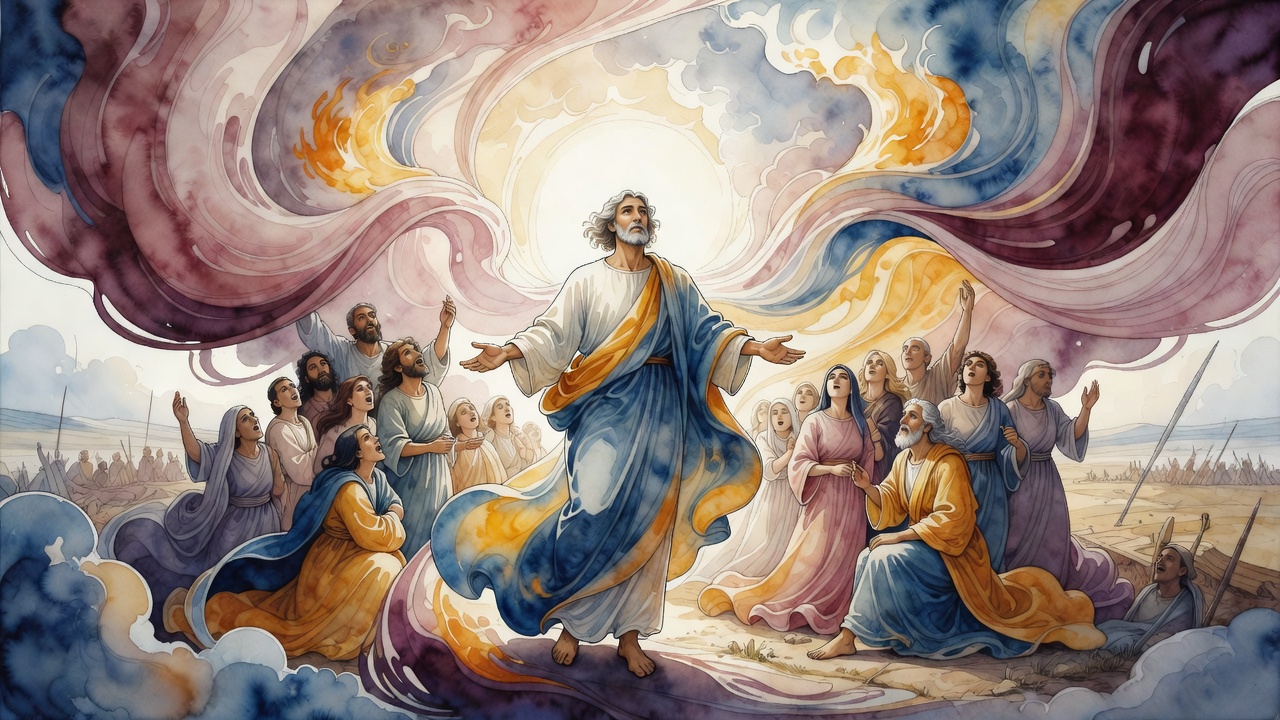
The Matrona Learned Creation From Her Banquet
A Roman noblewoman tries to trap Rabbi Yose on the six days of creation. He answers from her kitchen, course by course.
Table of Contents
In Tzippori a Roman noblewoman walked straight up to Rabbi Yose ben Halafta with a question sharpened to cut. "In how many days did the Holy One create His world?" She expected confusion, or a long hedge that would make the Torah look clumsy before Roman ears trained on philosophy and ridicule.
 Click for full size
He did not hedge. "He did it on the first day," he said.
She pressed, smiling the way people smile when they think they have cornered a smaller mind. "How do you teach me that?"
Courses From One Kitchen
"Have you never made a banquet?" he asked. She had, and the question itself already felt like a trap turning around. "How many courses?" She listed them, proud of the count. "Did you set all of them before the guests at once?" She laughed. Of course not. She cooked everything together in the heat of one morning's work, then brought the dishes out course by course so the room could receive them without chaos.
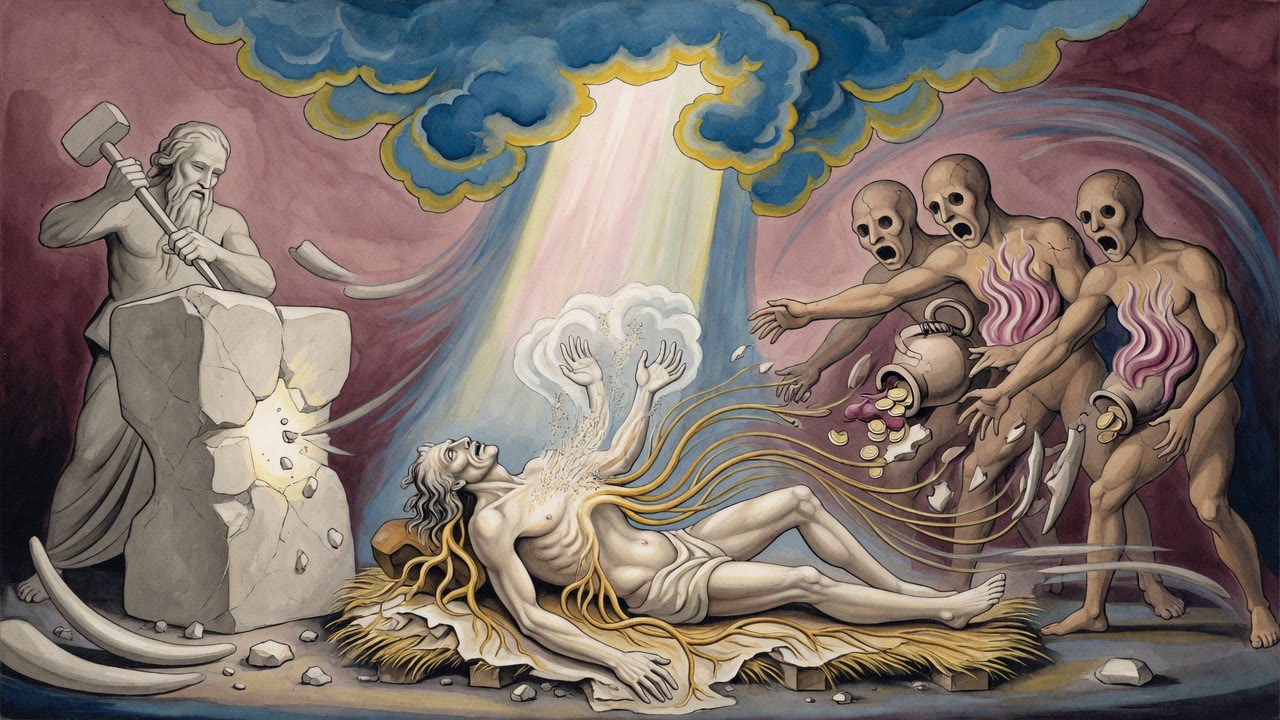
That was his answer. God prepared the whole of creation in one act, then unfolded it across six days so a finite world could absorb what infinity had already finished. Jeremiah's line, "He is the One who forms the all" (Jeremiah 10:16), held every later moment inside the first. Days, nights, plants, fish, humans: one kitchen, many courses, mercy in the pacing.
She had come with metaphysics. He sent her home with the memory of her own steam and timing.
One Verb, Not They
When heretics came to Rabbi Simlai asking how many gods made the world, he pointed at grammar the way a smith points at a seam. Deuteronomy speaks of the day He created man, not the day they created. A verse that seems to offer plural majesty ends with a singular verb: "whenever we call upon Him." Read each line to its end, and the Creator stands alone. The plural form of the divine name is a feature of Hebrew majesty, not a headcount of deities waiting in committee.
At Sinai the same fight returns in another doorway. No one may say two powers gave the Torah or two powers made the world. Genesis says "He created." Sinai says "God spoke." One voice stands behind cosmos and commandment. The human mouth cannot fully carry that voice. "God has spoken once; twice have I heard this." One utterance arrives already doubled in the listener, like fire that burns and lights at once. When God calls Moses, Aaron, and Miriam to the Tent, the text says, "Come out, you three," and the sages hear three names held in one sound. A human caller must speak in turn. The divine voice does not.
Light Before the Walls
Rabbi Yehudah pictured a king who lit lamps on a dark plot before he laid foundations, so light came first and the builders could see where to dig. Rabbi Nechemyah pictured the opposite: walls first, lamps after, adornment for a finished house. Either way the world rose by speech, not sweat. "By the word of the LORD the heavens were made."
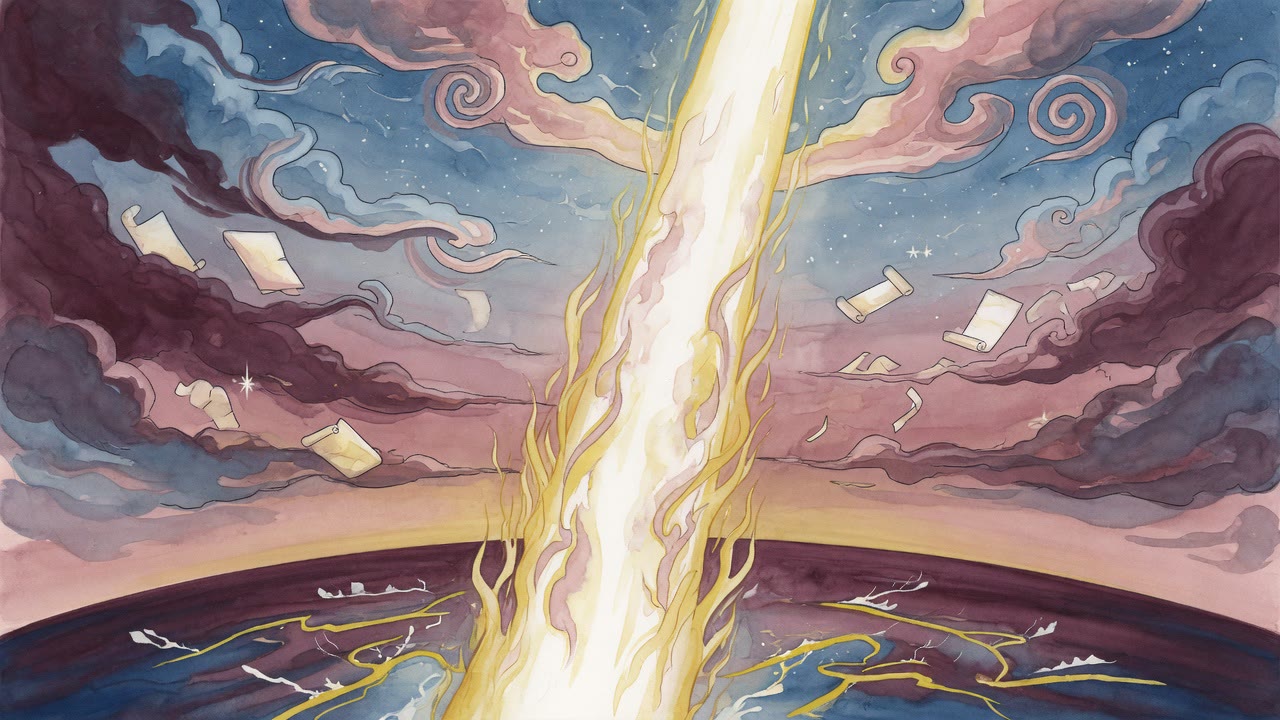
When a sage asked where the first light came from, the answer arrived in a whisper. God wrapped Himself in a white garment, and radiance ran from one end of the world to the other. Even an open verse, "He wraps Himself in light as in a garment," was passed softly from teacher to student. Some truths about creation are spoken low even when Scripture says them aloud. Rabbi Simon counted the word light five times and matched each to a book of the Torah, from Genesis to Deuteronomy. Practice followed the order of the verse: do not bless a lamp on Saturday night until you have used its glow. First see, then thank.
What the Matrona Took Home
She had come to embarrass a Jew in the marketplace of ideas Romans preferred. She left with her own banquet rearranged into theology. Roman kitchens already knew what her mouth had tried to deny: preparation can be complete before serving begins. Time is how guests receive what the cook already finished. The six days were not six exhausted shifts of a laborer who needed rest because the work was too hard. They were courses carried from a kitchen that had already done the impossible all at once.
Rabbi Yose did not need a scroll in his hand for that turn. He needed her memory of heat, timing, and the pride of a table well run. The Holy One, in his telling, is the host who could have set everything down at once and chose sequence so the world would not choke on its own beginning.
Unity Under Every Question
Matrona, heretic, and student of light ask different questions and meet the same refusal of a divided throne. One God forms the all. One God speaks the words. One light is counted five ways and still remains one gift. The banquet metaphor is not a joke for children. It is the only image large enough to hold a complete creation served slowly enough for creatures to live inside it.
When she walked away through Tzippori's streets, the smell of other people's cooking rose from courtyards. Every pot was a small argument against her earlier certainty. Somewhere a cook was finishing many dishes in one fire. Somewhere a world was still arriving course by course from a first day that already held them all.
← All myths