The Mother Who Begged to Wash Her Son's Feet
Rabbi Ishmael's mother fights to wash his feet and drink the water, while Dama returns a slipper after a public slap.
Table of Contents
 Click for full size
The Basin Was Already Full
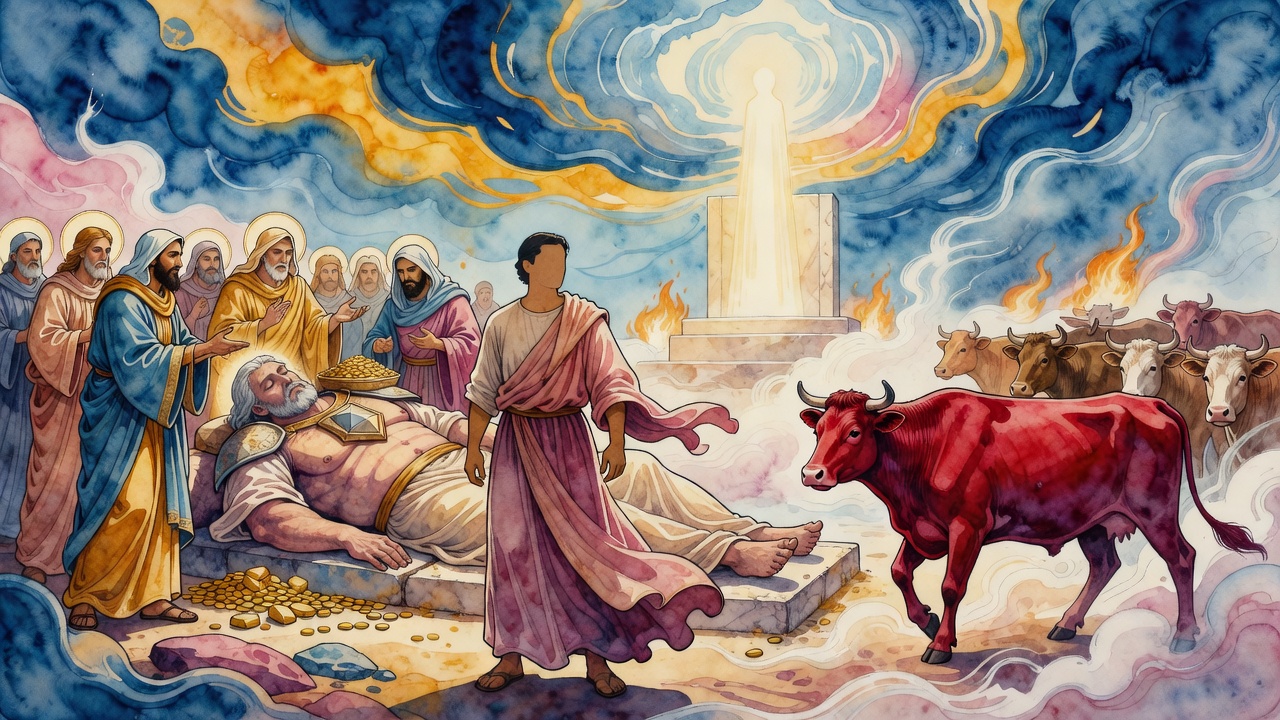
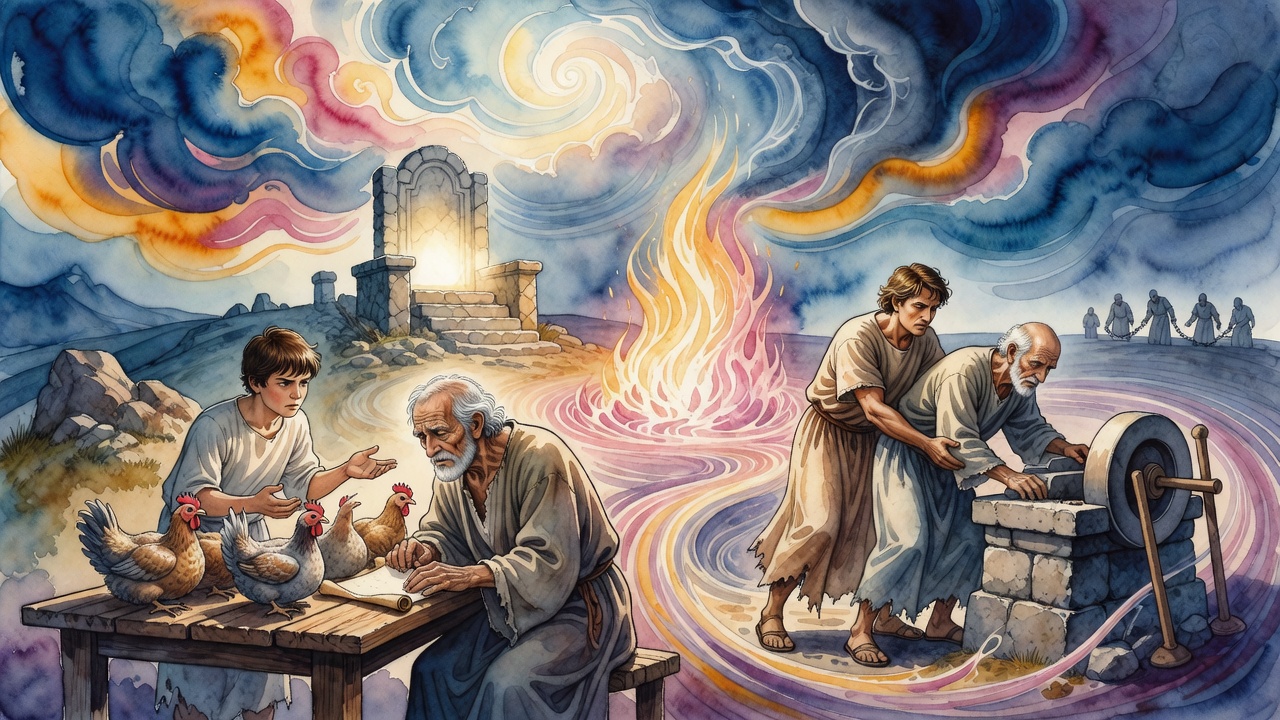
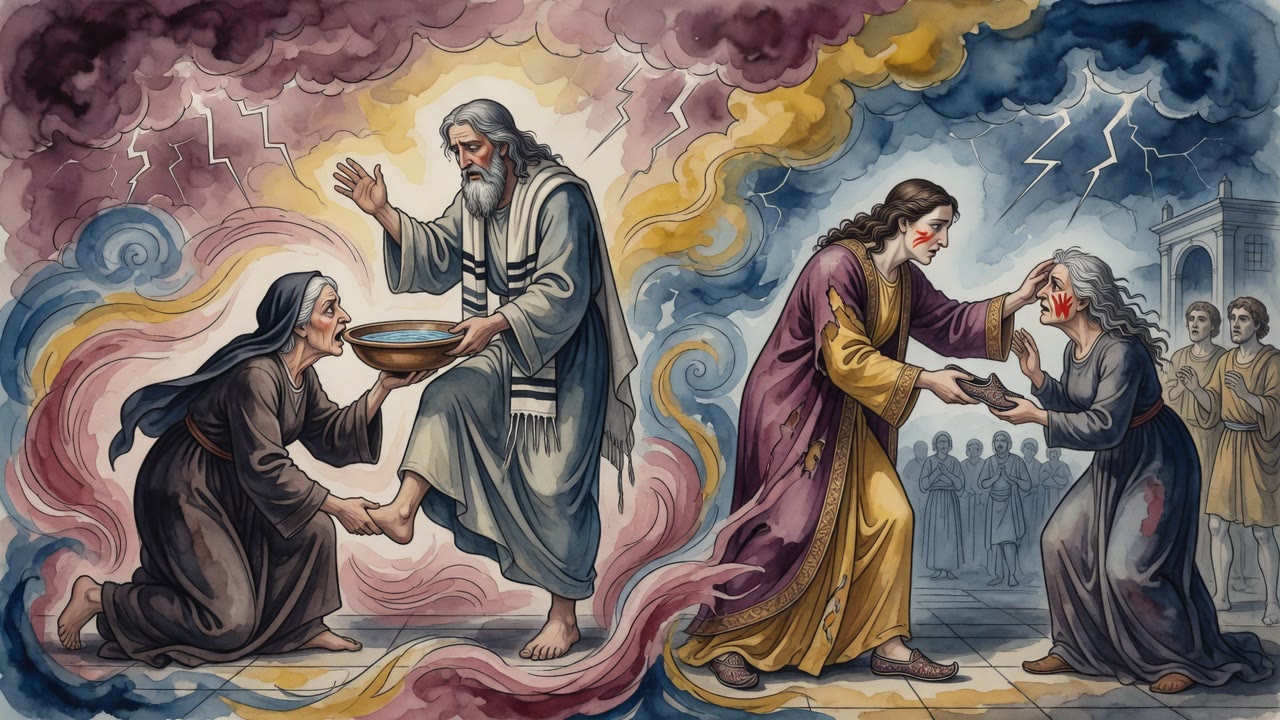
She had it waiting by the door. Rabbi Ishmael came in off the road and before he could sit down his mother was on the floor with his feet in her hands, working the dust out from between his toes as though the dirt of the road were something she had been trusted with. He let her do it, because she had washed his feet since he was small and nothing in the law forbids a mother to wash her son.
Then she lifted the basin toward her mouth.
The water came up as far as her chin and stopped there, because he had said her name. Not the way a sage says anything. The way a man says it when he has just understood what has been going on in his own house. She was not thirsty and she was not poor. She wanted to take into her body something that had touched his, some residue of holiness left in the water by the feet of a teacher of Israel, and she had worked out that this was the way to get at it.
"Mother, stop. This is not right." And because she was still holding the basin, he forbade her the water outright, in the voice he used on a ruling.
She Took the Case to the Sages
She was not embarrassed, and that was the part he could not get past. Shame would have been easier to answer, since a woman who is ashamed can be reassured, but she looked at him the way a person looks at someone who has taken something away from her, which he had. Serving him was the best hour in her day.
So she went out and brought a complaint against her own son in front of the other sages. "I want to honor my son, and he will not let me."
Now they had a case nobody in the room wanted. The commandment says honor your father and your mother, and here was a mother being stopped from honoring, by the very son the commandment exists to bind. Rule for her, and a sage spends the rest of his life watching his mother drink the water off his feet. Rule for him, and a woman is sent home from a court and told that the one thing she had to give was not going to be accepted.
Her Honor Is His Obligation
They ruled for him, and the reason came to four words. Her honor is his obligation.
The duty does not only run upward. It runs back down as well, so a child who allows a parent to make herself small has failed the commandment as surely as one who raises a hand, since what the law is guarding is the parent's standing, and the standing does not stop being the thing guarded when the parent is the one attacking it. She had wanted to be his servant. He needed her to go on being his mother, and the ruling took his side against her wish, which left nobody comfortable.
She went home honored and empty-handed.
A Slap Among the Nobles
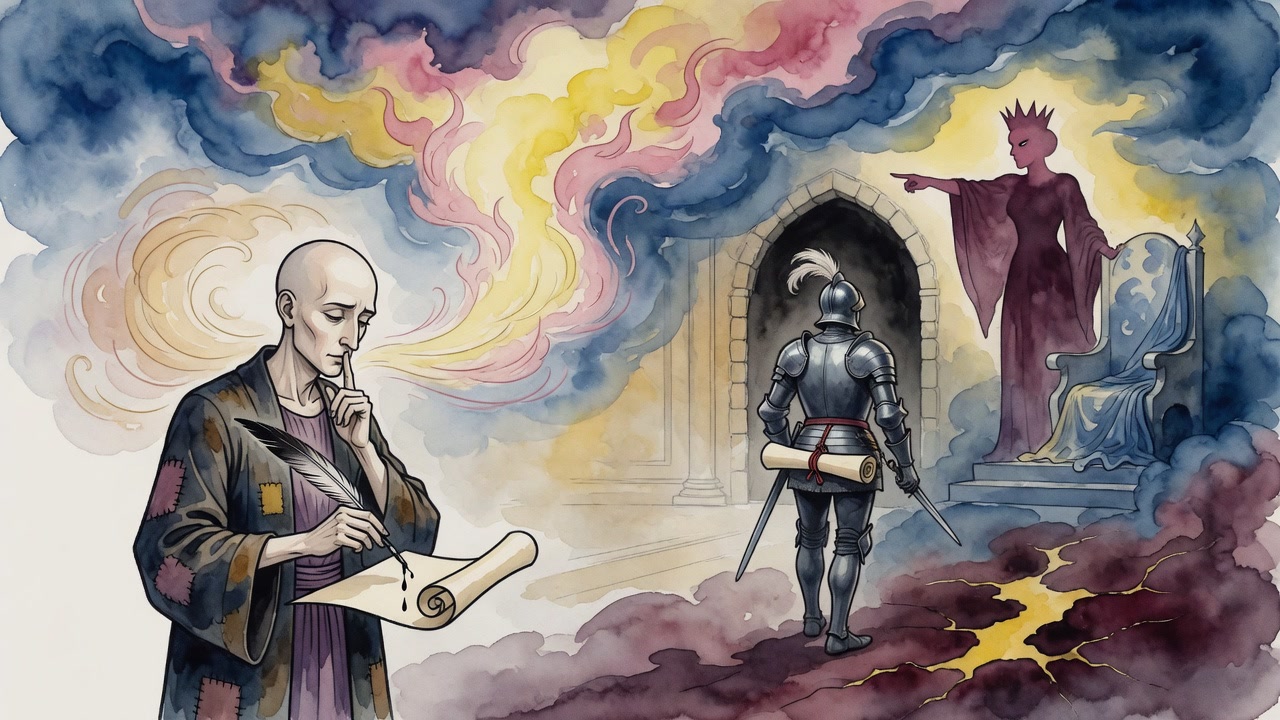
In another city there was a man who had never been given the commandment at all. Dama ben Netina sat among the nobles of the place, dressed for the company, business open on the table in front of him. His mother was a difficult woman, given to storms that arrived without weather. She came through the door and hit him across the face in front of all of them, hard enough that a golden slipper came off her own foot.
He did not stand up, though every man at that table was watching to see whether he would. He did not raise his voice, and he did not let anything into his face for the room to read. He bent down, picked the slipper off the floor, and handed it back to her so she would not have to walk out barefoot. Nobody there would have blamed him for one sharp word. He gave her the shoe.
One mother wanted to kneel and one wanted to strike, and each of them was stopped from making a son smaller than the commandment: one by a refused basin, the other by a returned slipper.
The Chair Nobody Sat In
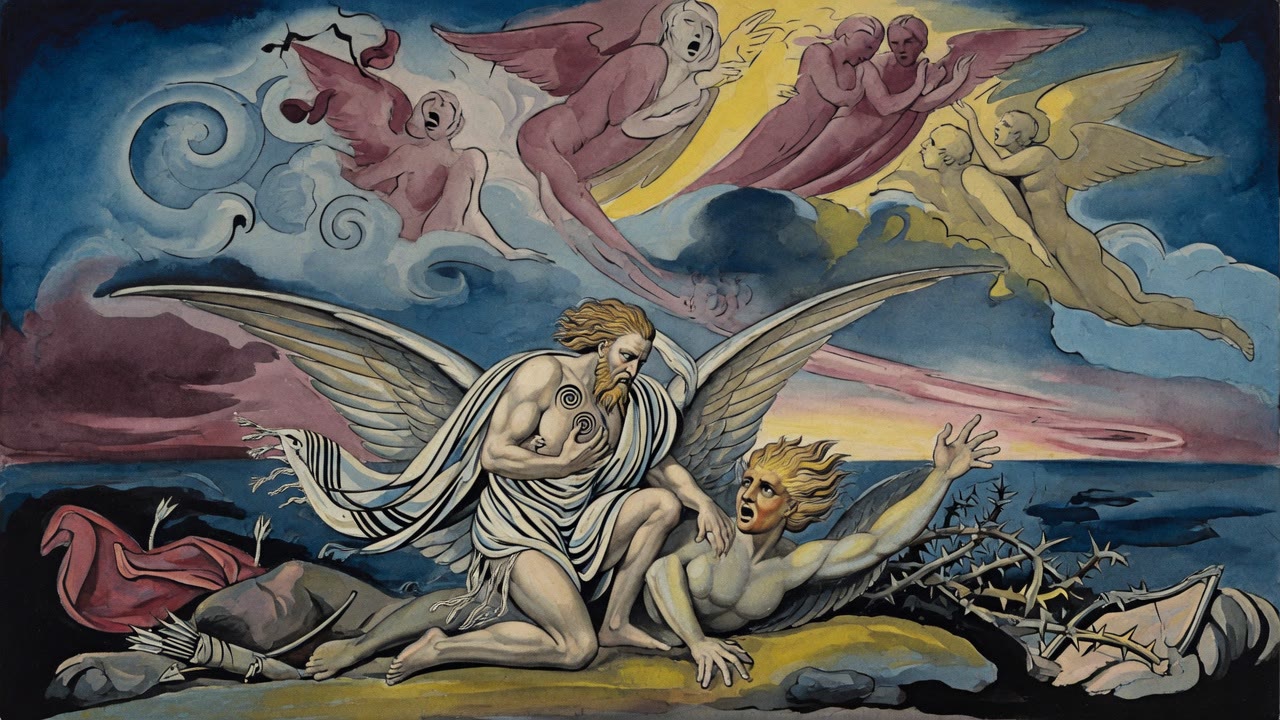
Then his father died, and since the head of the house was gone the seat at the head of it was his. He did not take it.
Not once. Not at a meal, not when the house was empty and the whole city was somewhere else, not in the years afterward when there was no living man left with a claim on it. The chair stayed against the wall where the old man had left it and went on being his father's chair, in a household that had never been commanded to honor anybody, which is exactly why the sages reached for it whenever they wanted to press a Jewish son: here is a gentile who was never told.
The chair stayed where it was. No one carried it out of the room and no one sat in it, for as long as there was wood in it.
← All myths