5 min read

The Feast With a Sneer Went Straight to Gehinnom

One son served fattened chickens and called his father a dog. Another put his father at the mill to spare him the king's labor gangs.

Curated by Arthur · Told by Maggid ·
Table of Contents
  1. Two Sons Before the Court
  2. Chickens and a Dog's Name
  3. The Millstone Bargain
  4. Rabbi Hananya's Puzzle
  5. What Honor Actually Costs
The Feast With a Sneer Went Straight to Gehinnom Click for full size

Two Sons Before the Court

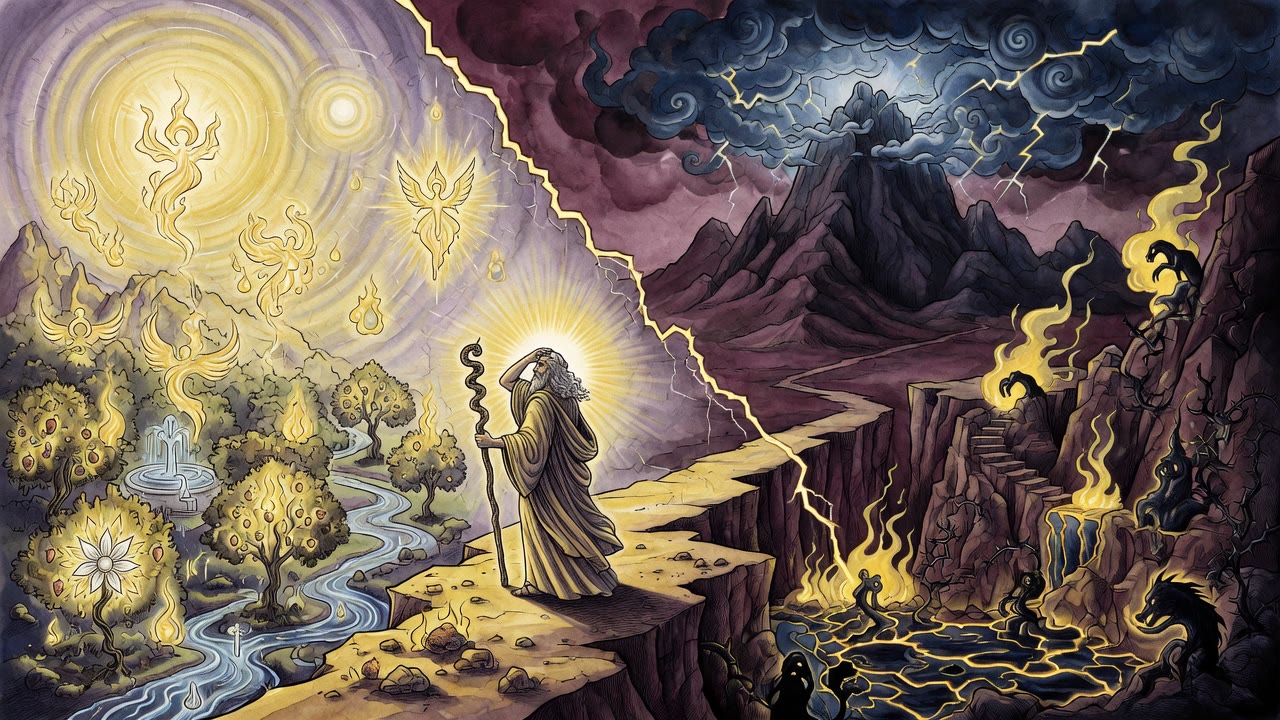
Two men stood before the heavenly court with the same commandment in their mouths: honor your father. Both had fed an old man. Both expected the ledger to open in their favor. Angels did not ask how many courses had been served. They asked what the old faces had looked like while chewing. One door led to Paradise. The other to Gehinnom, the place of purification after death. The food on the table did not decide which door opened. The voice at the table did.

Chickens and a Dog's Name

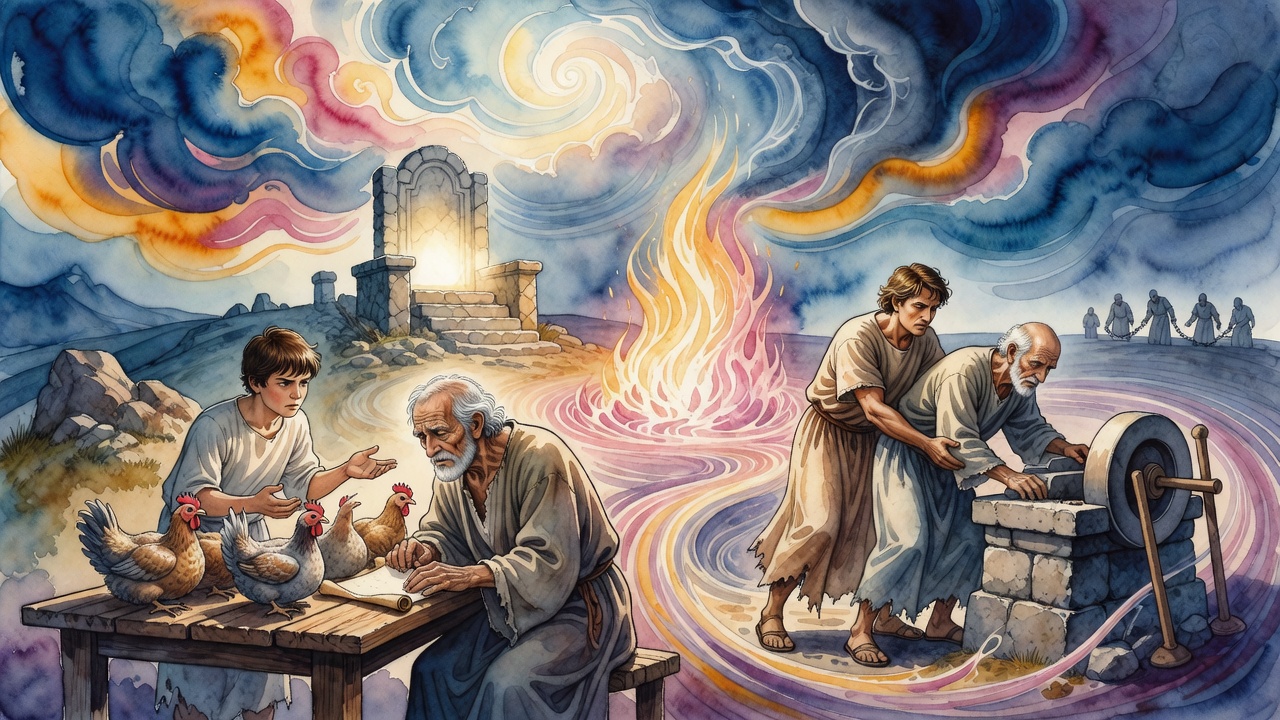
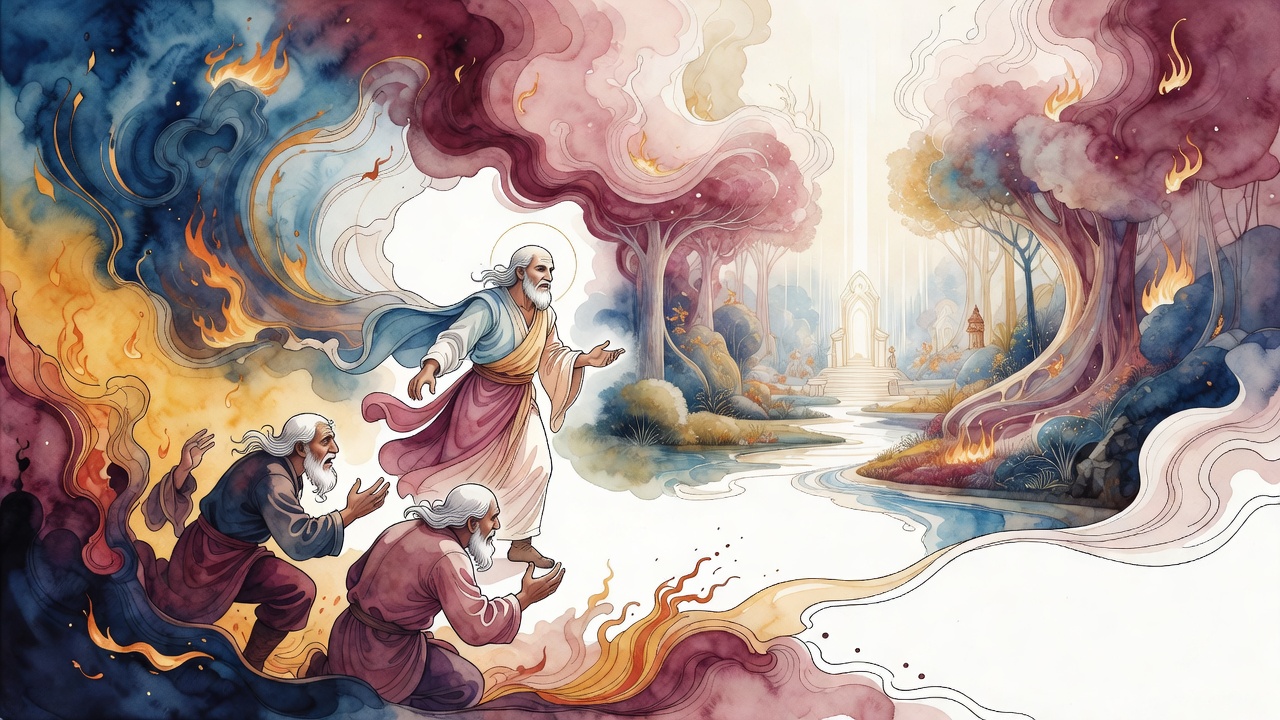
The first son set fattened chickens before his father, meat that glistened, wine that caught the lamp, bread still warm enough to fog a plate. Every dish looked like devotion from the doorway. Neighbors would have praised him. The father, grateful and a little afraid of the abundance, finally asked a plain question. Where does all this fine food come from?

The son's answer stripped the feast bare. Shut up, old man, and eat. What do you care? Eat the way a dog eats when scraps are thrown. The words landed harder than any empty plate could have. The father swallowed meat and insult together, eyes on the table, hands suddenly unsure where to rest. In heaven the chicken counted for nothing. The sneer counted for everything. That son went to Gehinnom (the realm of judgment after death) with the taste of luxury still on his record and contempt still ringing in the air like a cracked bell.

At that table the servants learned to move quietly, because a raised voice over chicken was common as salt. Guests praised the menu and never heard the dog's name spoken when the door was shut. Heaven, the stories insist, hears the shut room as clearly as the open feast.

The Millstone Bargain

The second son lived at a grinding mill, dust in his lungs, shoulders burning by night, the same thin stew night after night. His father shared the hard bread and the hard room without complaint, because complaint would not turn the stone. When the king's officers came to drag laborers into the royal works, where overseers broke men for sport, the son did not hide behind fine words. He put his father at the home mill and took the royal yoke himself.

Better you grind here, Father, where I can watch over you, than in the king's camp where they will show you no mercy. The work he left his father was ugly. The work he took was worse. The old man's hands still ached. The old man's dignity did not. Heaven read the exchange as love wearing work clothes. That son went to Paradise with mill dust still imagined on his sleeves.

In the mill the stone never stopped its low complaint. Flour dust whitened the father's beard until he looked already half ghost, half worker. The son, bent under the king's load on a distant road, thought of that white beard and kept walking. Contempt would have been easier than this trade. He chose the harder mercy and did not advertise it.

Rabbi Hananya's Puzzle

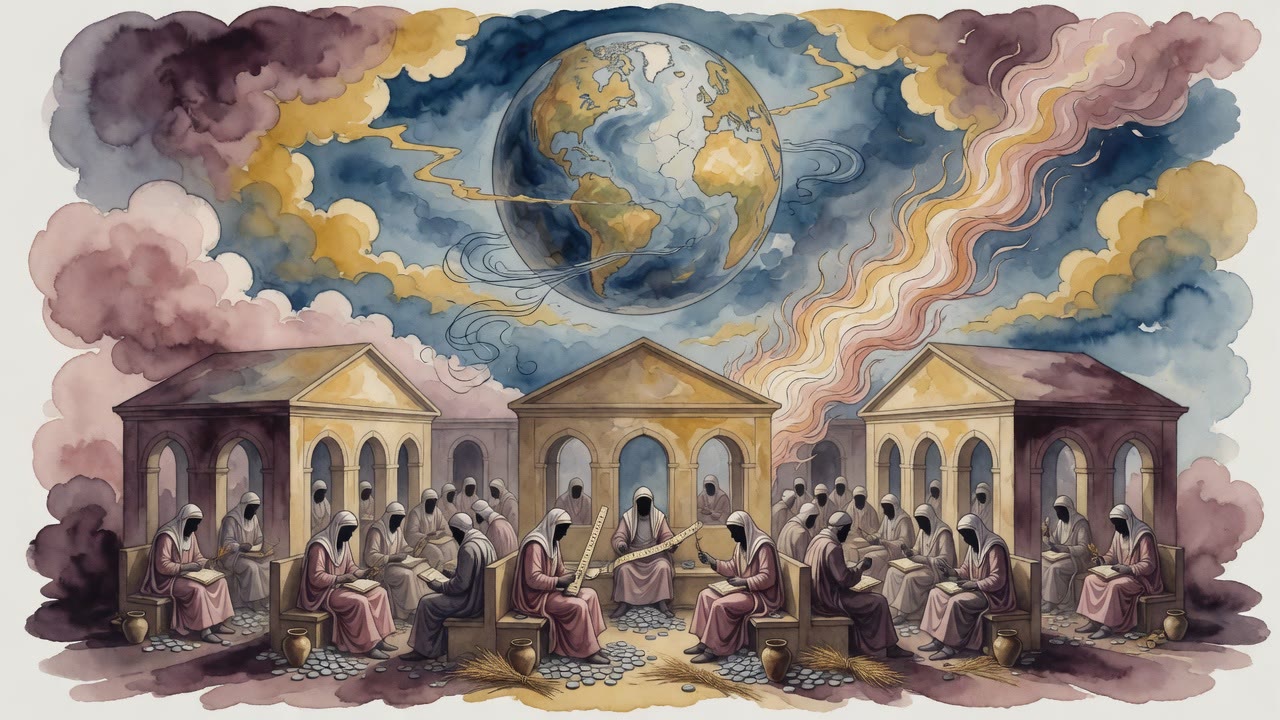
Rabbi Hananya had already named the riddle for his students before the two stories walked into the room. Some feed their parents badly and inherit Paradise. Some feed their parents well and inherit Gehinnom. The students protested the arithmetic. Surely the quality of care determined the reward. Surely a fattened bird outweighed a millstone. The rabbi waited until the protest spent itself, then set the scenes side by side like two plates on one table.

God does not weigh the meal like a merchant counting cuts. He weighs the intention like a judge who has sat at every table in Israel. A golden plate served with a sneer is lighter than a crust offered with protection. The father who eats plain food from a devoted son is better fed than the father who feasts under a son's contempt. The mitzvah (a commandment) lives in the motive or it does not live at all.

What Honor Actually Costs

Honor is not a grocery list. It is the refusal to make an old face small. The millstone son burdened his father's body and shielded his father's life. The chicken son nourished a body and poisoned a spirit. One commandment, two outcomes, no mystery once the tone of voice is entered into evidence. Anyone can buy meat when times are good. Fewer can keep dignity in the room while the meat is carved.

The heavenly court, in these paired tales, listens for that dignity before it counts the courses. A dog's name spoken over a feast can bankrupt a lifetime of public piety. A dangerous shift taken in a father's place can fill a thin ledger until it overflows. The students of Hananya left the session quieter than they entered it, each hearing his own table manners from a higher ceiling.


← All myths

From the tradition

Sources

3 sources

The texts behind this telling. Some cards carry a translation of the source; others are our own retelling of it, and each card says which. Every card links out to the original.

Exempla of the Rabbis, No. 192Exempla of the Rabbis (Gaster, 1924)

Retold in our words. Read the original at the link below.The Exempla of the Rabbis, Moses Gaster (1924) · Public Domain

Rabbi Hananya made a statement that puzzled his students: "Some people feed their parents badly and yet inherit Paradise. Others feed their parents well and yet inherit Gehinnom (the place of spiritual purification after death)." How could this be? Surely the quality of care determined the reward?

The answer, as the Talmud explains, lies not in the food but in the heart behind it. A man who serves his father the finest meats and wines, but does so grudgingly, with resentment in his voice and contempt in his eyes, that man feeds his father well and earns Gehinnom. The food nourishes the body while the attitude poisons the soul.

Another man puts his father to work grinding at a millstone, hard, exhausting labor. But he does it to spare his father from something worse: conscription into the king's forced labor gangs, where the work is brutal and the overseers are cruel. "Better you grind here at home, Father, where I can watch over you, than in the king's camp where they will show you no mercy." This man feeds his father badly, with humble food and difficult work. But inherits Paradise, because every hardship he imposed was an act of protection.

God does not weigh the meal. He weighs the intention. A golden plate served with a sneer is worth less than a crust of bread offered with love. The father who eats plain food from a devoted son is better fed than the father who feasts at the table of a resentful one.

This teaching became a foundation of Jewish ethics: the mitzvah is in the motive. You can perform every commandment perfectly and still miss the point entirely if your heart is not in it.

Full source
Exempla of the Rabbis, No. 193Exempla of the Rabbis (Gaster, 1924)

Retold in our words. Read the original at the link below.The Exempla of the Rabbis, Moses Gaster (1924) · Public Domain

Two men stand before the heavenly court. Both honored their fathers. Both are judged. One goes to Paradise. The other to Gehinnom (the place of spiritual purification after death). The Jerusalem Talmud (Peah 1:1) tells their stories side by side, and the contrast is devastating.

The first man fed his father fattened chickens. Every meal was sumptuous, every dish prepared with care. But one day the old man asked a simple question: "My son, where does all this fine food come from?" The son snapped: "Shut up, old man, and eat. What do you care? Just eat, the way a dog eats when you throw it scraps." He went to Gehinnom.

The second man worked grinding millstones, backbreaking labor that left him exhausted every night. His father lived with him, eating the same simple food, sharing the same hard life. When the king's officers came to conscript laborers for the royal works, the son said: "Father, you take my place here at the mill. I will go serve the king in your place." He took the dangerous, grueling royal service upon himself so his father would be spared. He went to Paradise.

The sages asked: how can the man who feeds his father chickens go to Gehinnom, while the man who puts his father to work at a millstone goes to Paradise? The answer reshaped how all of Israel understood the commandment to honor parents.

Honor is not measured in calories. It is measured in dignity. The first man fed his father's body while destroying his spirit. The second man burdened his father's body while protecting his life. God sees through the food to the heart. And the heart that serves with love, even if it serves a humble meal, outweighs the heart that serves a feast with contempt.

Full source
Exempla of the Rabbis, No. 193Exempla of the Rabbis (Gaster, 1924)

Retold in our words. Read the original at the link below.The Exempla of the Rabbis, Moses Gaster (1924) · Public Domain

The Talmud (Jerusalem Talmud, Peah 1:1) presents two contrasting stories that illustrate a paradox: a person who treats their parents well can still end up in Gehinnom (the place of spiritual purification after death), while a person who treats their parents badly can end up in paradise. Everything depends on the intention behind the act.

A man fed his father fattened chickens, the finest food available. One day the father asked: "My son, where do you get such food?" The son replied with contempt: "Shut up, old man, and eat, just as a dog shuts up and eats." This man fed his father well and inherited Gehinnom, because the food was served with resentment. The body was nourished; the soul was poisoned.

Another man worked grinding millstones, one of the most exhausting forms of labor. His father received a summons to serve in the king's forced labor gang. The son said: "Father, take my place here at the millstones, and I will go serve the king in your place." The son did not feed his father fine food. He gave him hard labor. But he took the harder, more dangerous labor upon himself. And this act of sacrifice, this willingness to suffer so his father would not, earned him paradise.

The lesson was unmistakable: God does not measure the size of the gift. He measures the size of the heart. A chicken served with love is better than a feast served with contempt. A millstone offered in sacrifice is worth more than gold offered in resentment. Honor your parents not with your wallet but with your will.

Full source