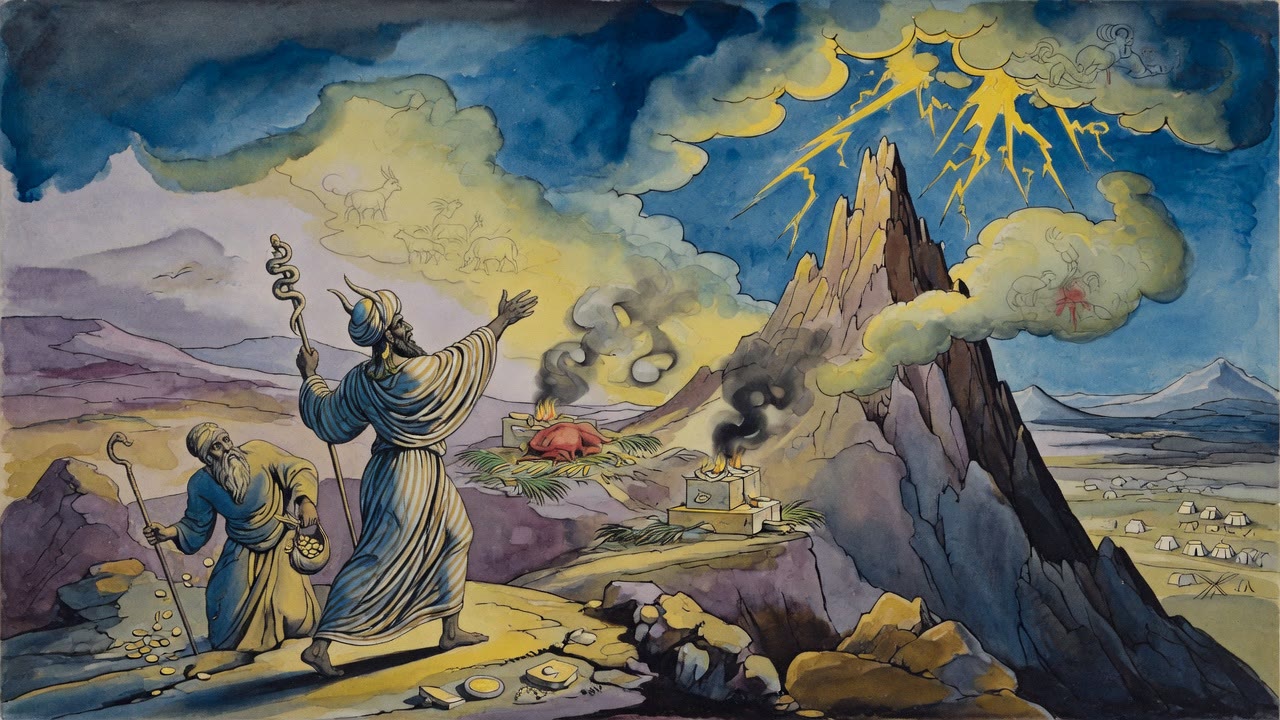
Ham Saw His Father Uncovered and the Curse Outran His Sons
Two of Esau's tears ran down his face. The third stayed in his eye and never fell, and Heaven paid him in this world for honoring Isaac.
Table of Contents
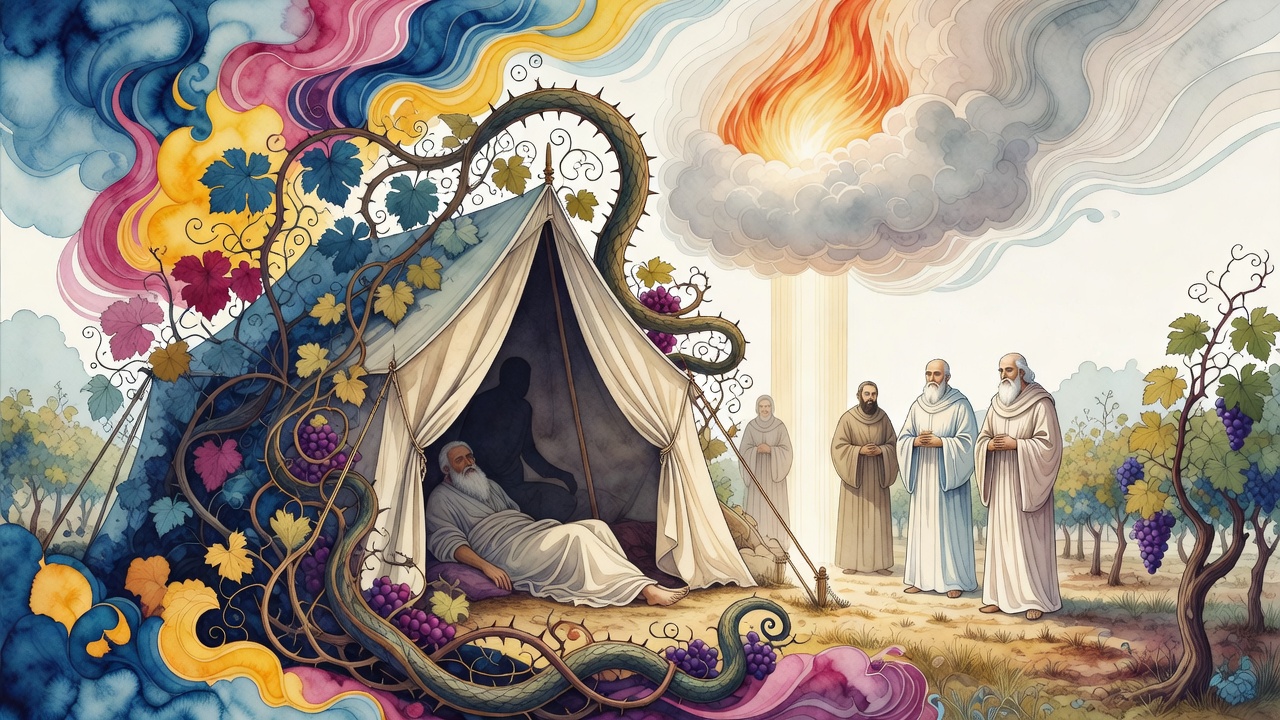
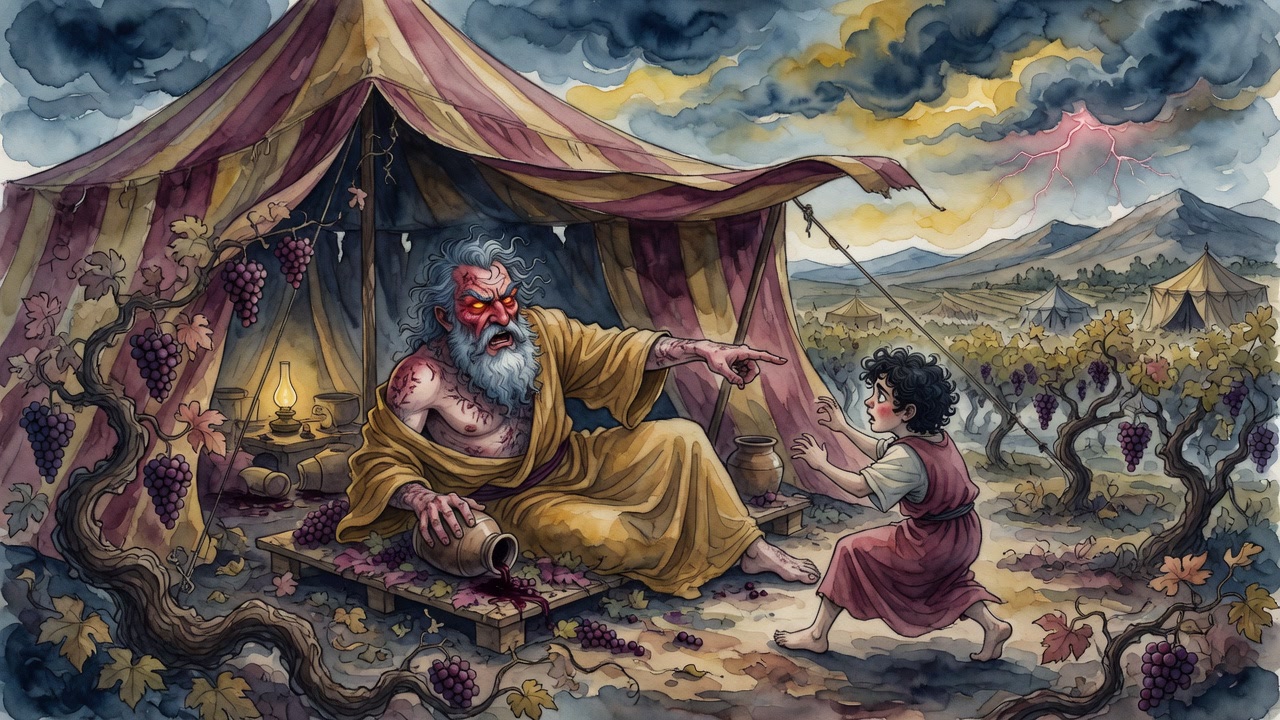
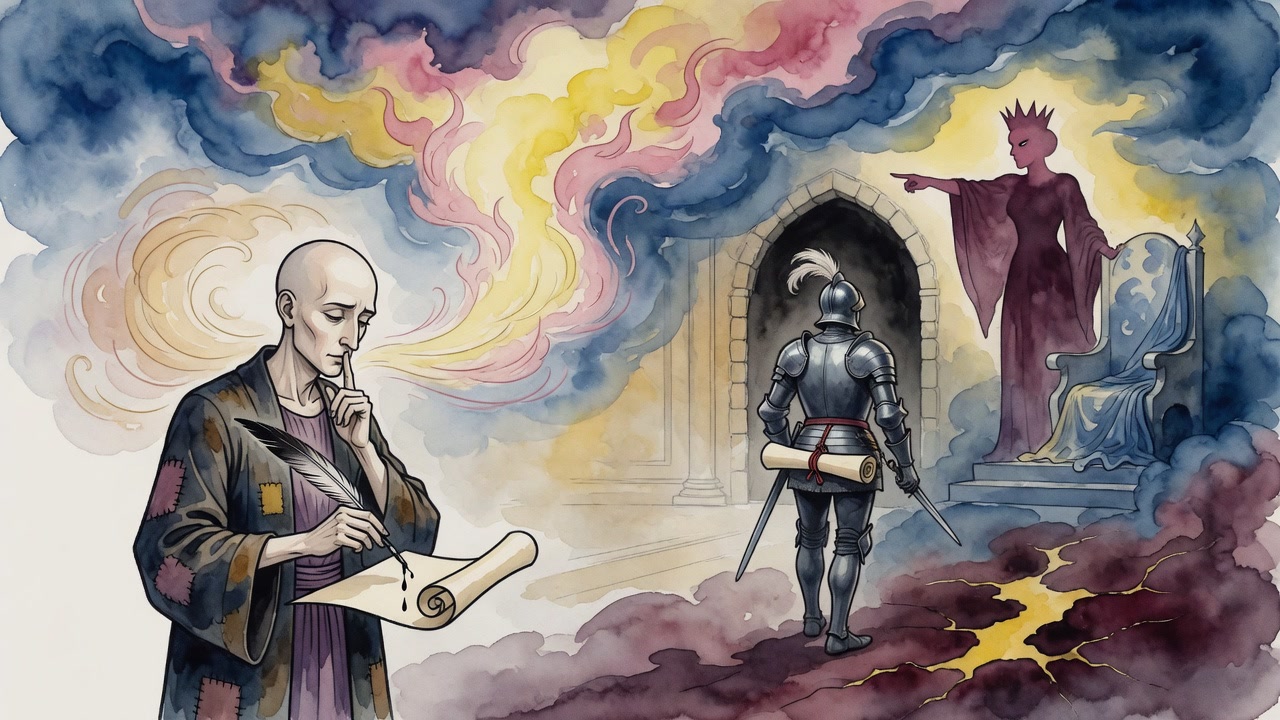
The tent flap lifted. Ham saw his father uncovered, an old man who had planted a vineyard, drunk what it gave him, and fallen asleep inside his own tent. Nobody in the world had ever seen Noah like that.
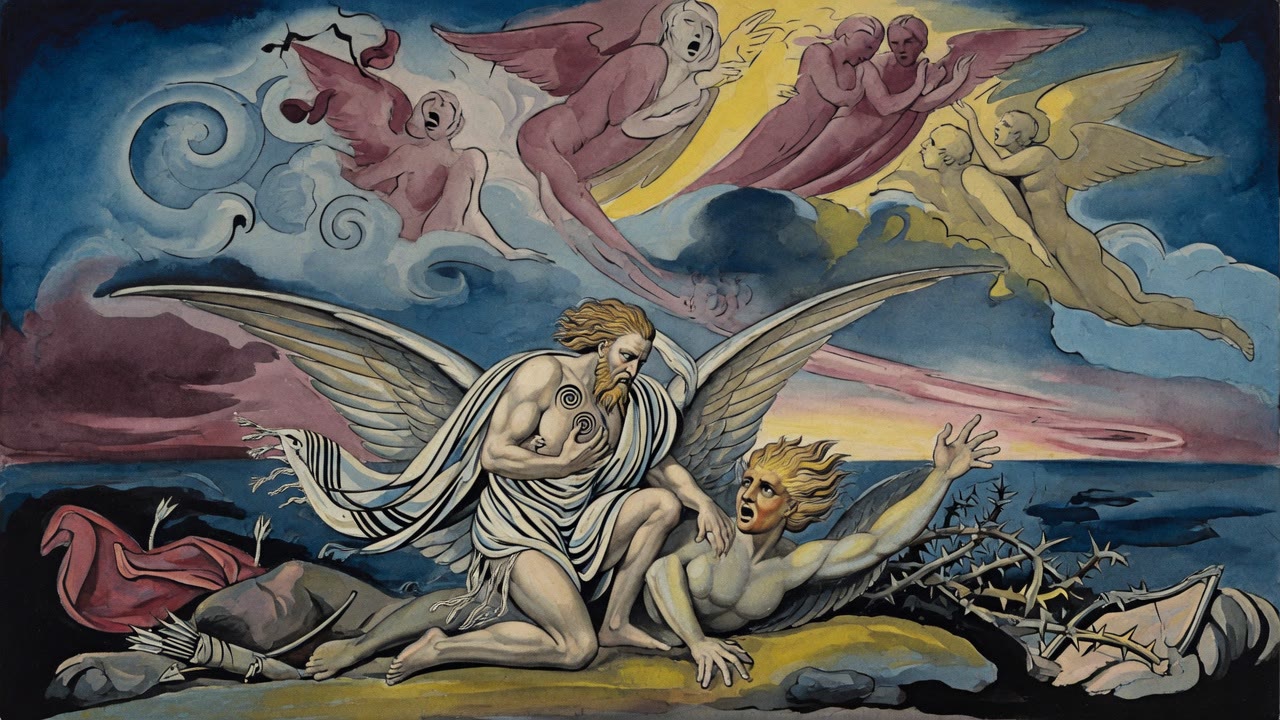 Click for full size
Ham did not cover him. He walked out and made it a thing to be said out loud.
The Brothers Who Walked Backward
His two brothers took a garment between them. They walked backward into the tent so their eyes stayed on the door, and they let the cloth down over him without looking at the skin the wine had left bare. They did not ask Ham to help. The looking had already been done.
Ham had not cursed his father. He had not raised a voice or a hand. He had looked at an old man who could not cover himself, and then he had gone and told it. For that glance, though no curse left his mouth, Ham and everyone descended from him were shut out until the end of the whole world. The curse outran his sons and kept going past them.
The brothers knew the louder crime. A man who curses his father or his mother is put to death, and the command comes twice, in Leviticus and again in Exodus, as though once were not heavy enough. Solomon added the picture. A man who curses his father or his mother, his lamp goes out in the thick of the dark. Not smashed. Not seized. It simply stops burning while he is still standing there, and there is no one left to relight it, because the two people who lit it are the ones he cursed.
If a glance did that, a mouth would do worse.
Esau Carried a Bowl Too Late
Turn the ledger over. The Holy One withholds wages from nobody, righteous or wicked, and the proof He offers is the man the camp likes least.
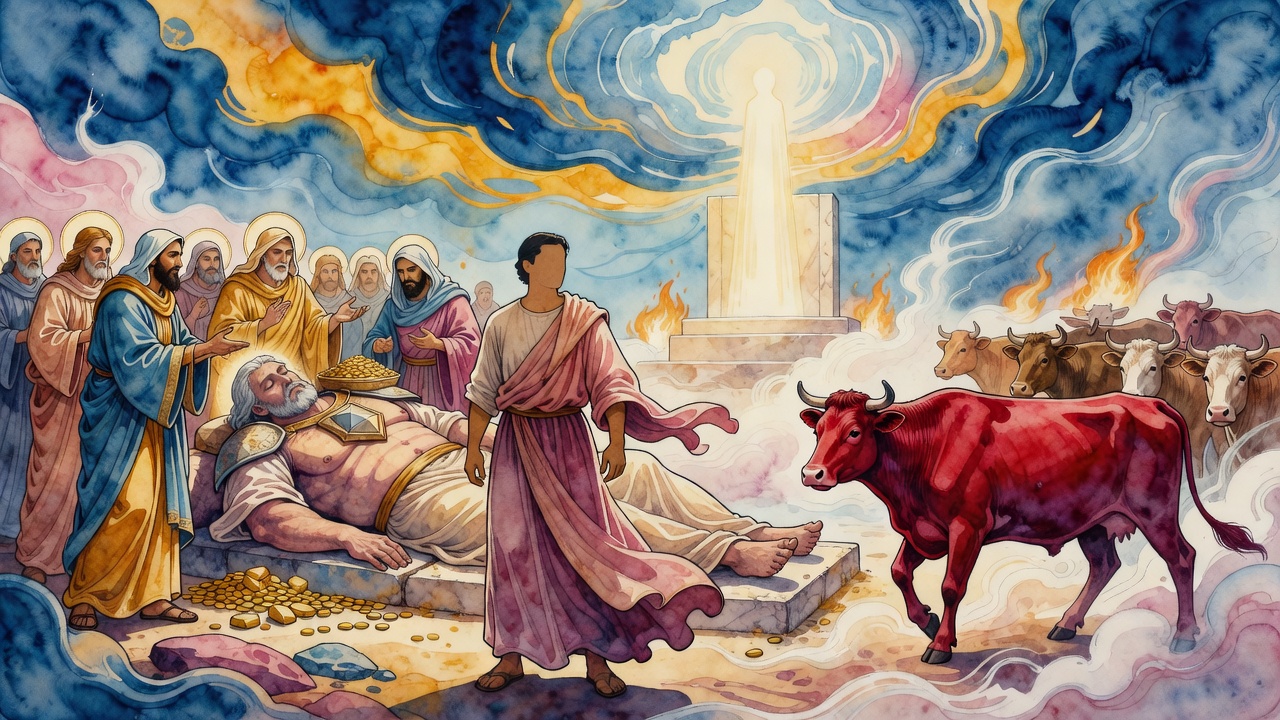
Esau came in from the field with the game his father had asked for. He cooked it the way Isaac liked it. He carried the bowl to the old man's bed and learned that the blessing had gone out the door on his brother's back an hour before.
He lifted up his voice and wept. "Bless me, even me also, O my father," he said, and the cry filled the tent that still smelled of the stew Jacob had already used.
Rabbi Eleazar counted the tears. One came from the right eye. One came from the left. The third caught in his eye and never ran down his face at all.
The Third Tear Never Fell
Heaven priced that weeping exactly. There is a verse about God feeding His people the bread of tears and giving them tears to drink by measure (Psalms 80:6), and the measure written there is not three but a third, shalish (שליש), because there were never three whole tears. Two fell. One stayed.
Esau honored his father. Whatever else he was, he did that, and for it the Holy One handed him a life crowded with land, cattle, chiefs, and cities, all of it paid out in this world where he could hold it. None of it was a pardon. The lamp of the wicked still goes out. There is still no future in it. The account was settled in full before it was closed, because a commandment kept is a commandment kept even when the hands that kept it went on to do everything else they did.
Who ever came to Me first, the Holy One asks in Job, that I should owe him and not pay? Who advanced honor to his father and did not get children from Me for it? Esau got paid. That is the uncomfortable part, and the masters put it in the record on purpose.
Honor Starts at the Top
Rabbi Hiyya found the court's order of business hidden in two verses.
When honor is being handed out, you begin at the top. Moses had a terrible instruction to give on the day Aaron's two sons burned, and he gave it in order: to Aaron, then to Elazar, then to Itamar. The father first. The rank held even inside the disaster. The surviving sons waited while the father heard the law that would keep them from tearing their clothes over the fire.
When disgrace is being handed out, you begin at the bottom. In the garden the Holy One turned first to the serpent, flat on the ground, and cursed it. Then to the woman. Then, last, to Adam. The sentence climbed. It did not descend.
Ham had stood at the top of a household and reached down for the smallest thing in it, an old man's uncovered body, and made a story of it. Esau had stood in a tent with nothing left to gain and still handed his father a bowl of food. Between the two of them the whole law about parents is written, and only one of them ever said a word.
Two tears ran down Esau's face and dried. The third is still in his eye.
← All myths