The Mystic Who Descended to the Divine Chariot
The mikveh water was still cold when the floor stopped being a floor. Seven palaces waited, and the last one would not let him stand.
Table of Contents
He had not eaten in days. The mikveh water was still cold on his skin when he sat until the recitation blurred the room, and the floor no longer felt like a floor. Friends who practiced this work called it descending to the Merkavah (מרכבה), the divine chariot, even though every palace waited above. The body understands sinking better than climbing when the climb is made of fire.
 Click for full size
He sank, because stopping in the room with the water jug would have left him with names he had never dared to spend.
Names at the First Gate
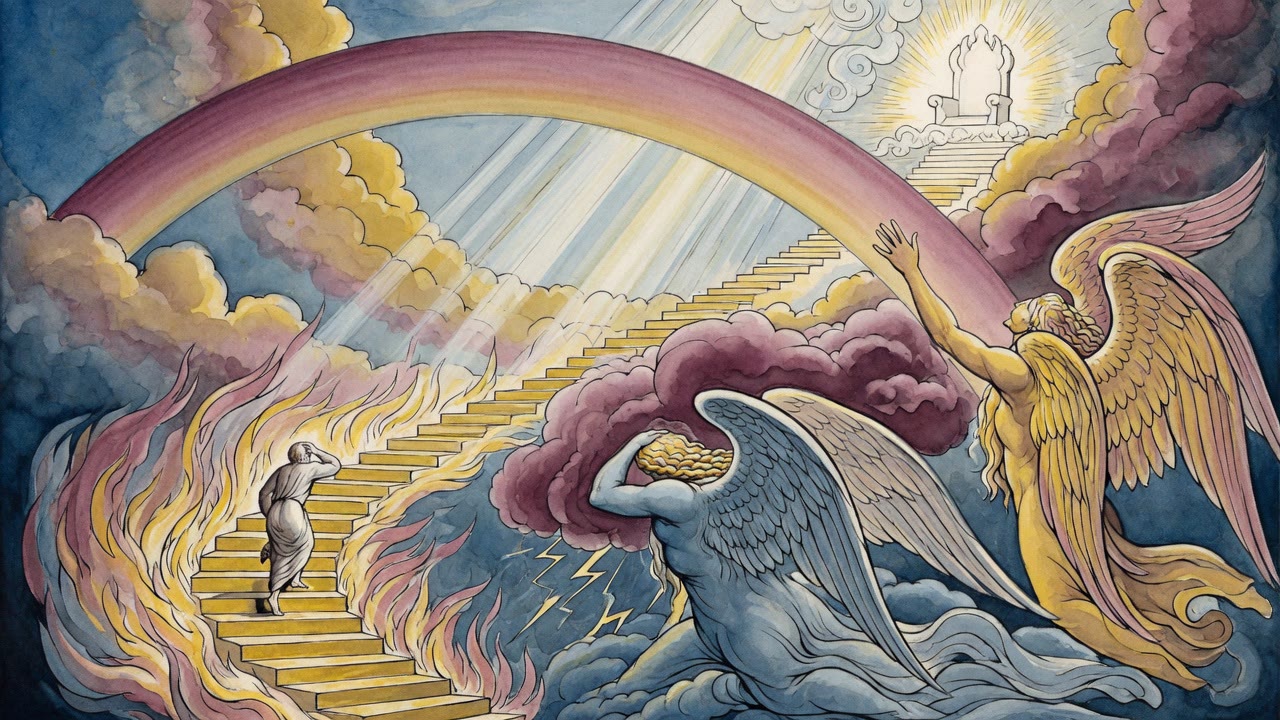
Two angels blocked the first palace, but they did not draw swords. They asked for prayers and divine names the way a guard asks for a seal on a letter. His mouth was dry from fasting, but he spoke anyway, and the names left him like coins counted under pressure, so the angels stepped aside.
The first hekhal opened, almost kind, almost ordinary, which is how the early gates lie. Behind him the world of bread and debt and neighbors thinned. Ahead, the air thickened with light that had weight.
Fire Beside Ice
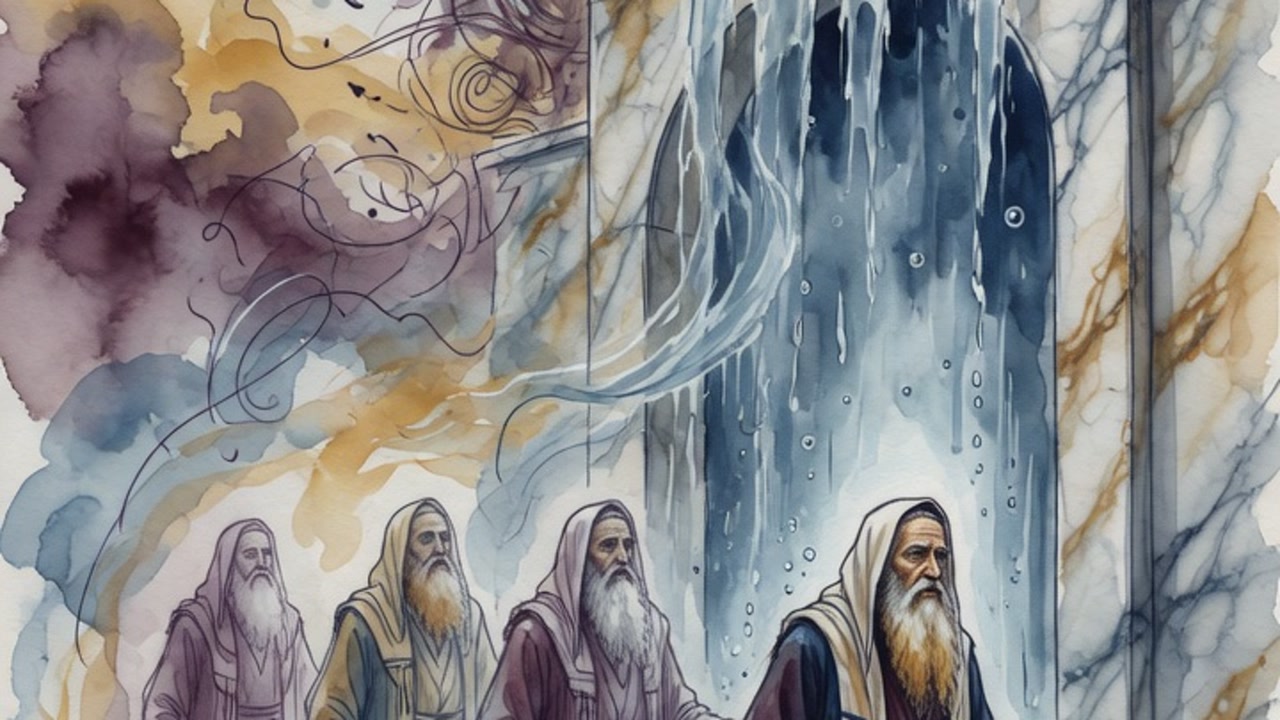
The second palace held both at once. Flame stood next to a sheet of ice and neither canceled the other. Heat licked one side of his face while cold stiffened the other. He walked the seam between them because there was no other path, and his skin argued with itself at every step. God is not bound by the quarrel of elements. The palace made him feel that truth as a blister and a freeze, not as a sentence.
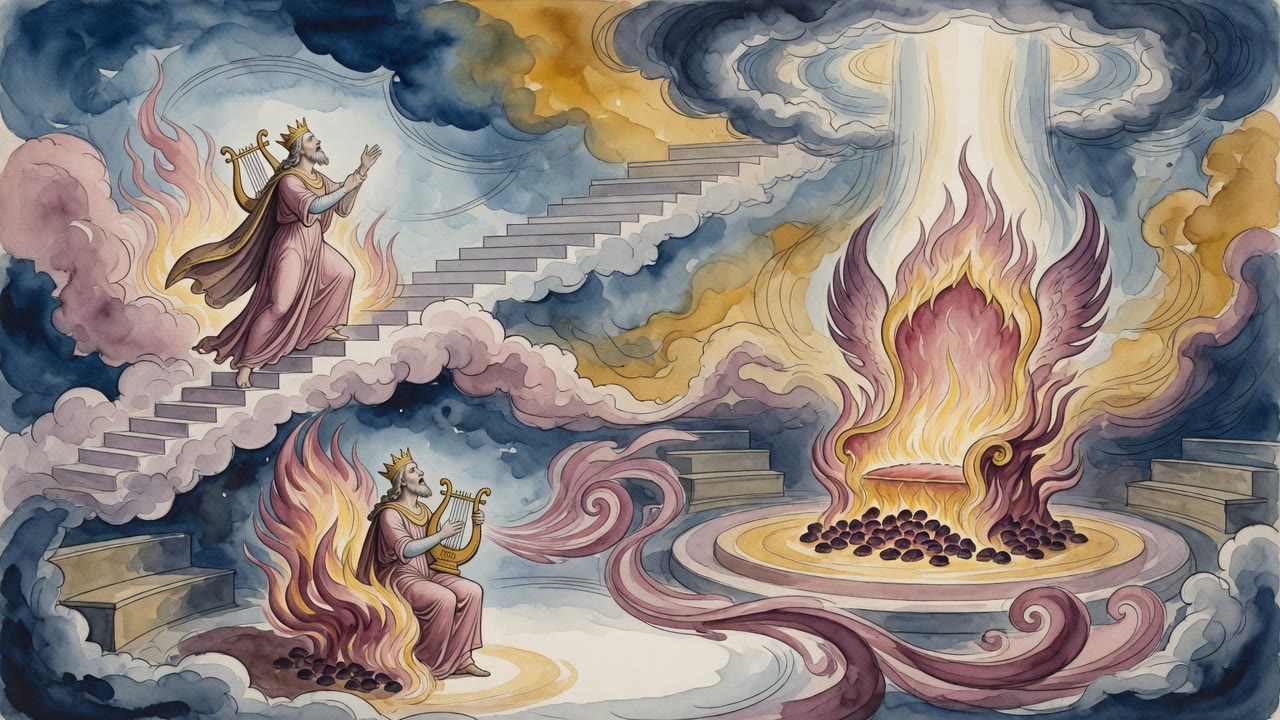
At the third, rivers of fire ran where floors should be, the old stream Daniel saw pouring out before the throne (Daniel 7:10). He had to cross, so he put his foot into brightness that should have ended him. The name he carried like a rope pulled him onto the far bank with his legs shaking hard enough to knock his knees together.
He did not look back, because looking back is for people who still believe the previous gate will stay open.
Halls Measured in Years
The fourth and fifth palaces were too large for a mind built on villages. Corridors ran out into spans the texts measure in thousands of years of walking, so his breath shortened. His eyes tried to find a wall and found only more court, more shimmer, more distance that refused to end.
The guards here did not chat. They tested a wrong name, a falter, a prideful step, and the danger was not embarrassment but being left in a space that has no human scale. He kept the recitation moving through cracked lips. When thought failed, the mouth continued, because the long preparation buys a tongue that can work after the mind has started to scatter.
The sixth gate nearly took him, and he felt his body as a thin thing, a wick, but he passed because stopping would have been a kind of death that leaves no grave.
The Throne Would Not Hold Still
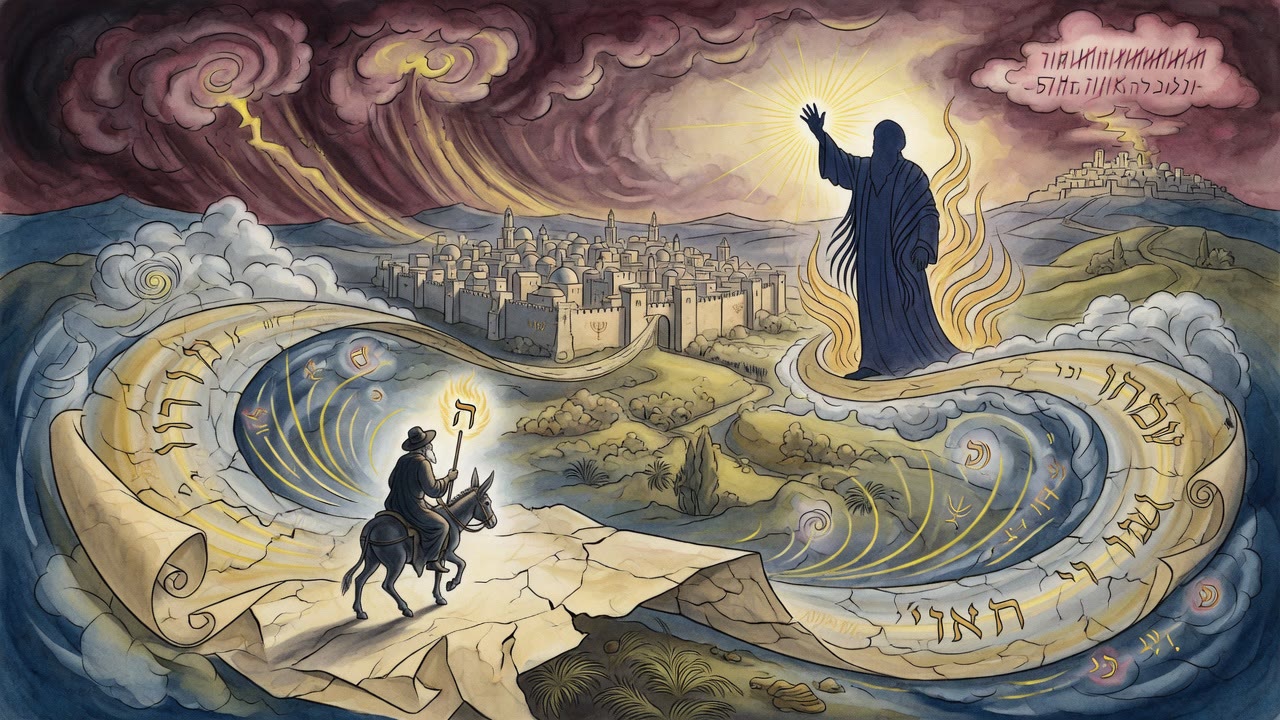
The seventh palace was the throne room. After six gates, after fire-rivers and ice-fire seams and halls measured in ages, he beheld the Kisei HaKavod (כסא הכבוד), the Throne of Glory.
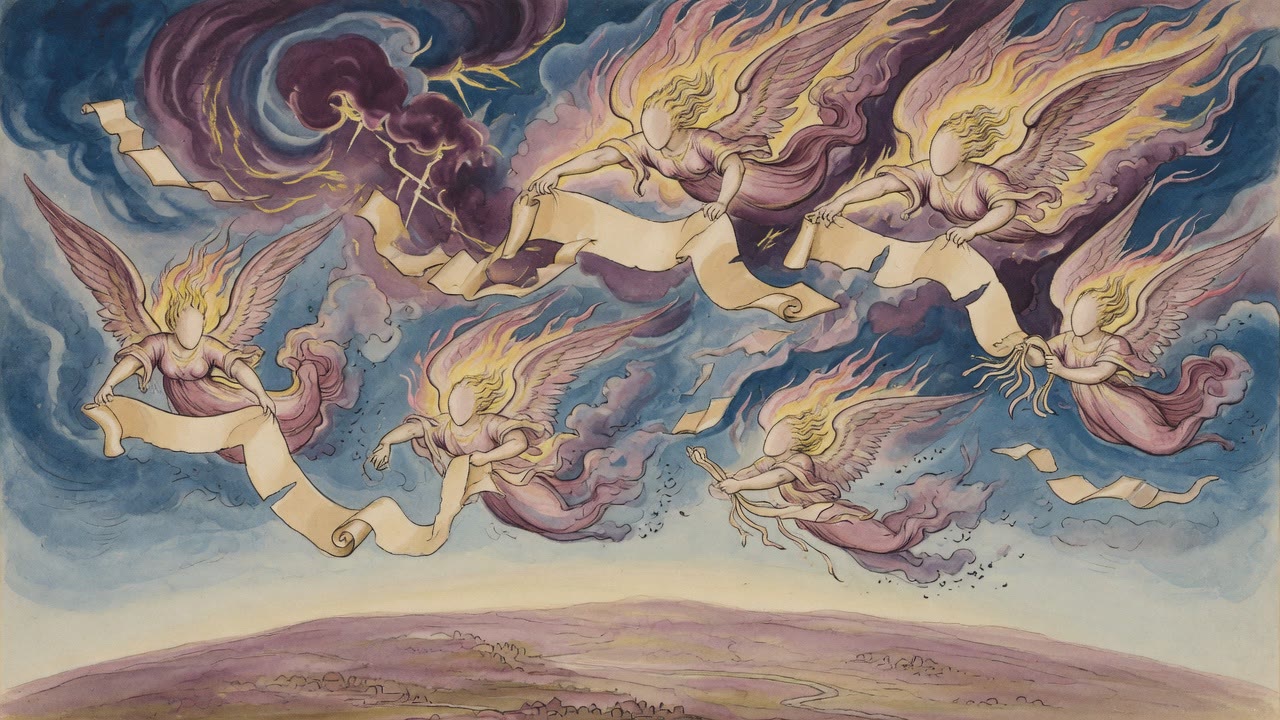
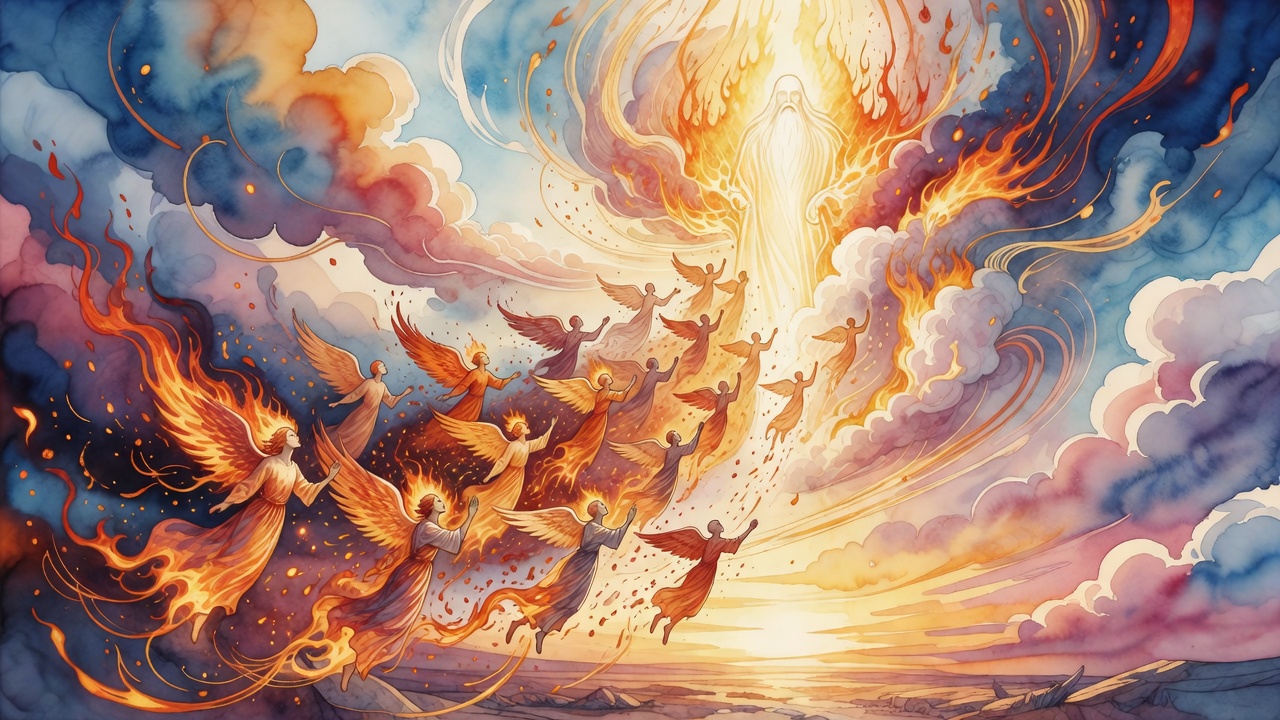
It was not furniture, because it pulsed, and light of seven colors moved through it, each hue answering one of the heavens he had already crossed. Beneath it the holy living creatures bore the weight on their backs, four faces, four wings, eyes beyond counting, every eye fixed on a different corner of creation at once (Ezekiel 1:5-14). The wheel-angels turned under them, rims full of eyes, their spinning a roar like many waters (Ezekiel 1:18, 1:24). Seraphim circled above with six wings each, two to cover the face, two the feet, two for flight (Isaiah 6:2).
He did not inventory them like a scribe. He endured them like weather, until the Kedushah (קדושה) rose from every palace at once. "Holy, holy, holy is the Lord of Hosts; the whole earth is full of His glory" (Isaiah 6:3). The sound hit his chest as a physical blow, so foundations trembled, the rivers of fire below boiled harder, and his bones rattled inside his skin.
At the center: not a face he could sketch later, not a form he could report. The Kavod, the glory, light so fierce that every other light he had ever trusted went dark by comparison. He saw not God but the radiance that stands where description fails, so he wept and fell, because a human being who has come this far is not offered a chair.
No conversation opened, because speech belongs to the hosts. The mystic's mouth is for the names that got him in and the silence that gets him out.
The Long Way Down
He turned, but descent is not reverse tourism. Each palace had to be survived again with a body that had already broken once before the throne. Fire and ice, rivers and guards, and the first gate looking almost kind again, which now felt like a joke told too late.
When the room returned, the real room, the one with a floor and a water jug, he was still shaking. The memory of the Kavod sat behind his eyes the way noon sits behind closed lids. He would carry it for the rest of a human life. He had not been given a message to deliver. He had been given a sight that makes every smaller light look like a shadow wearing a costume.
Outside, ordinary day went on without him. Inside, he breathed as if breathing were a skill he had to relearn under a lower ceiling. The throne would not hold still in memory any more than it had held still in the seventh palace.
← All myths