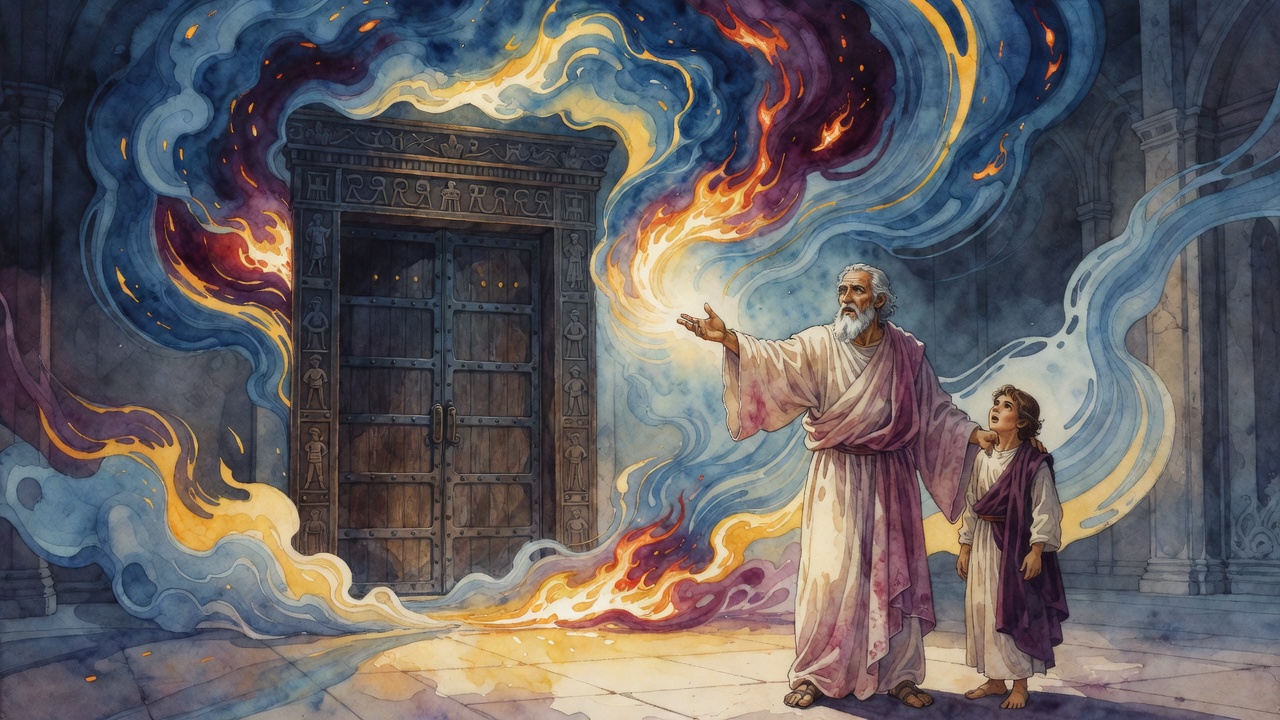
David Sat Opposite the Creator's Throne of Fire
The seat under David was fire forty parasangs high. He sat and sang until Metatron answered, and the fire did not eat him.
Table of Contents
The throne waiting for David was fire.
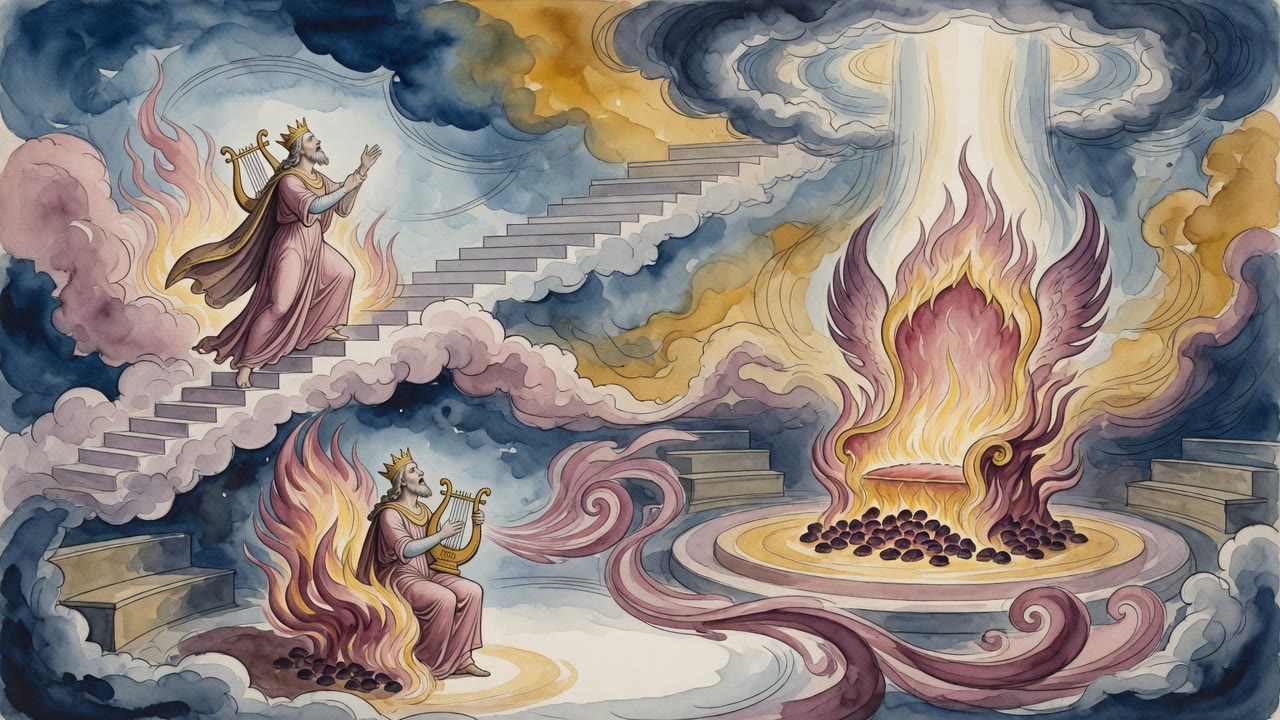 Click for full size
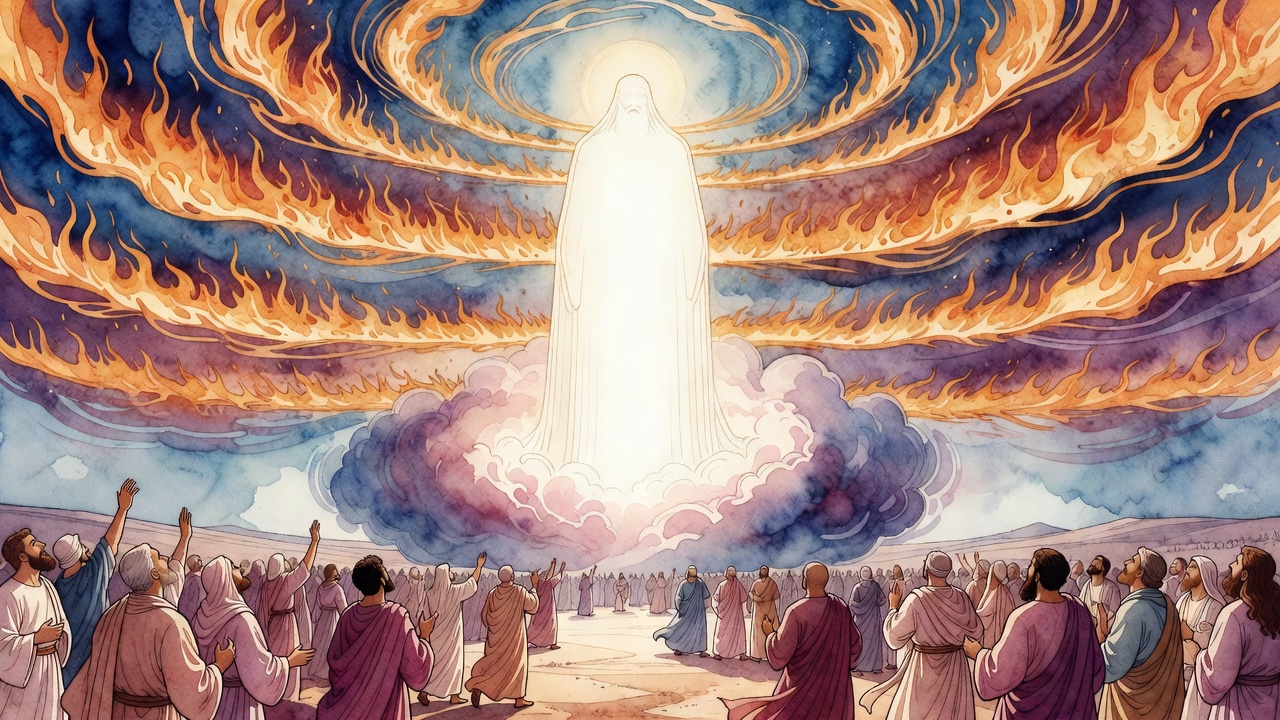
He did not climb with a sword in his hand. He climbed as the sweet singer of Israel, warrior turned student, into the great school that stands in the firmament. The halls above the world opened for a man who had once run from Saul and danced before the ark. The air there was not air. It was heat that listened.
What waited for him was not a modest stool. A throne of fire rose forty parasangs high, and double that in length and breadth. A parasang is miles stacked into a single unit of dread. When David arrived he did not circle. He took his place opposite the throne of the Creator. Opposite. Not beneath in shame. Opposite in appointed song.
The fire under him did not ask permission to be fire. David did not ask for a cooler seat. Heat pressed the backs of his knees. He sat as if the only safe answer to such heat is music that tells the truth at full volume.
Kings Before and Behind
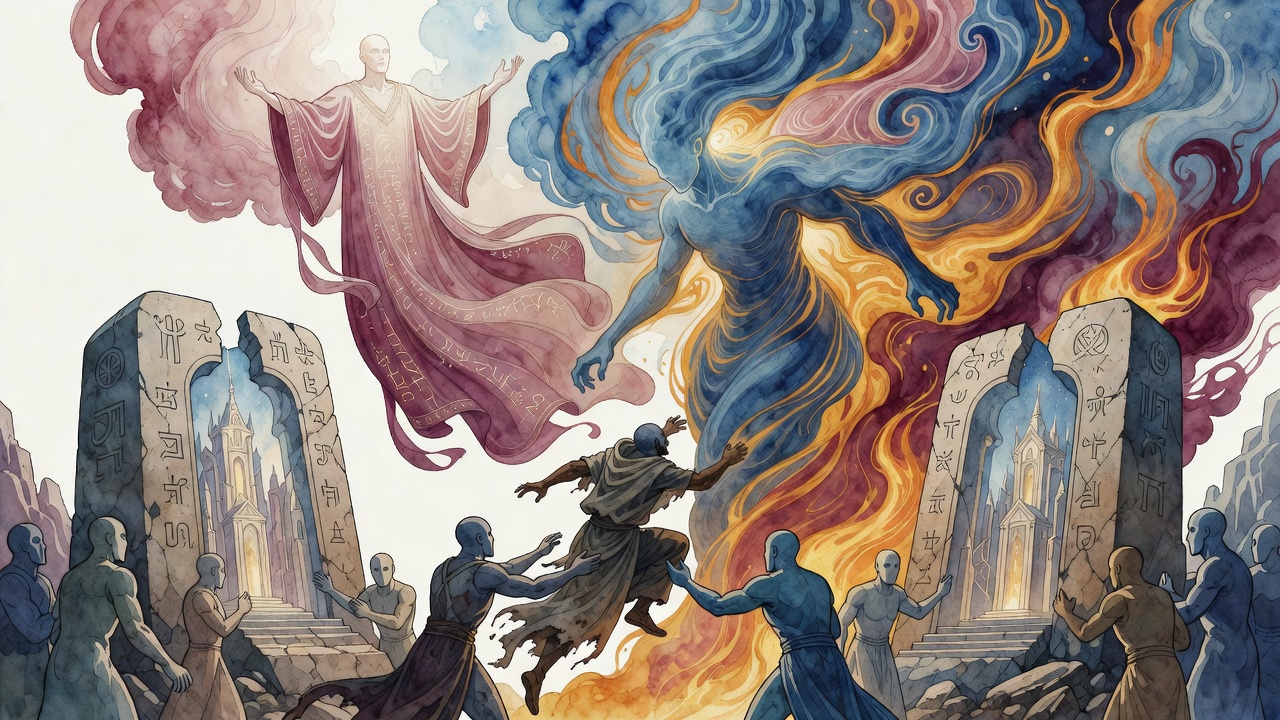
All the kings of the House of David sat before him. All the kings of the House of Israel stood behind him. Dynasty and people found their places around a singer who had been a shepherd, a fugitive, and a king who still knew how to weep in public without losing the thread of a verse.
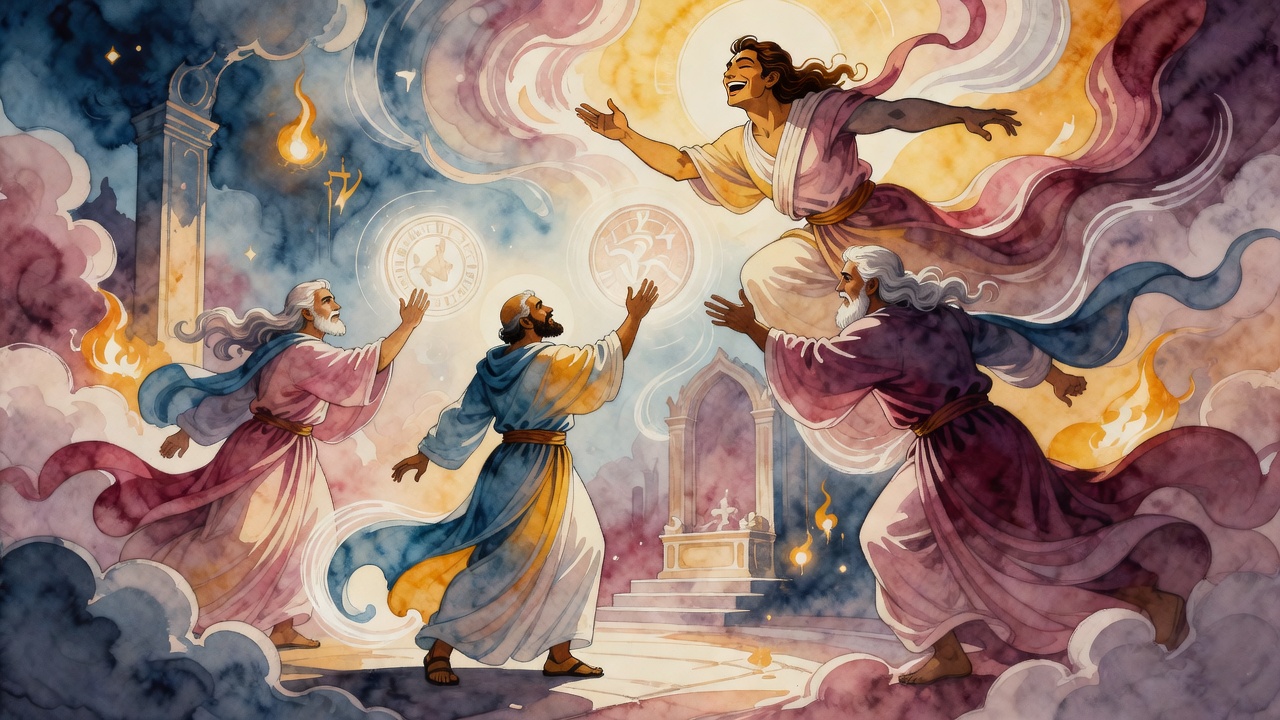
As soon as David settled, he burst into praises unlike anything heard since the world was made. Heaven's school did not assign him a lecture. It gave him a seat and let him do the one thing he could not stop doing on earth. Song was his work. Song became his offering.
Kings who had known war listened like students. Standing and sitting became forms of attention. David sang until praise itself seemed to have a throne, and the fire under him answered by not consuming him.
Holy, Holy, Holy
He opened his mouth. The first line left him: "The Lord shall rule forever; thy God, Zion, to all generations, Hallelujah!"
The five seconds after that line were the test. Heat pressed his ribs. A lesser throat would have closed. His did not.
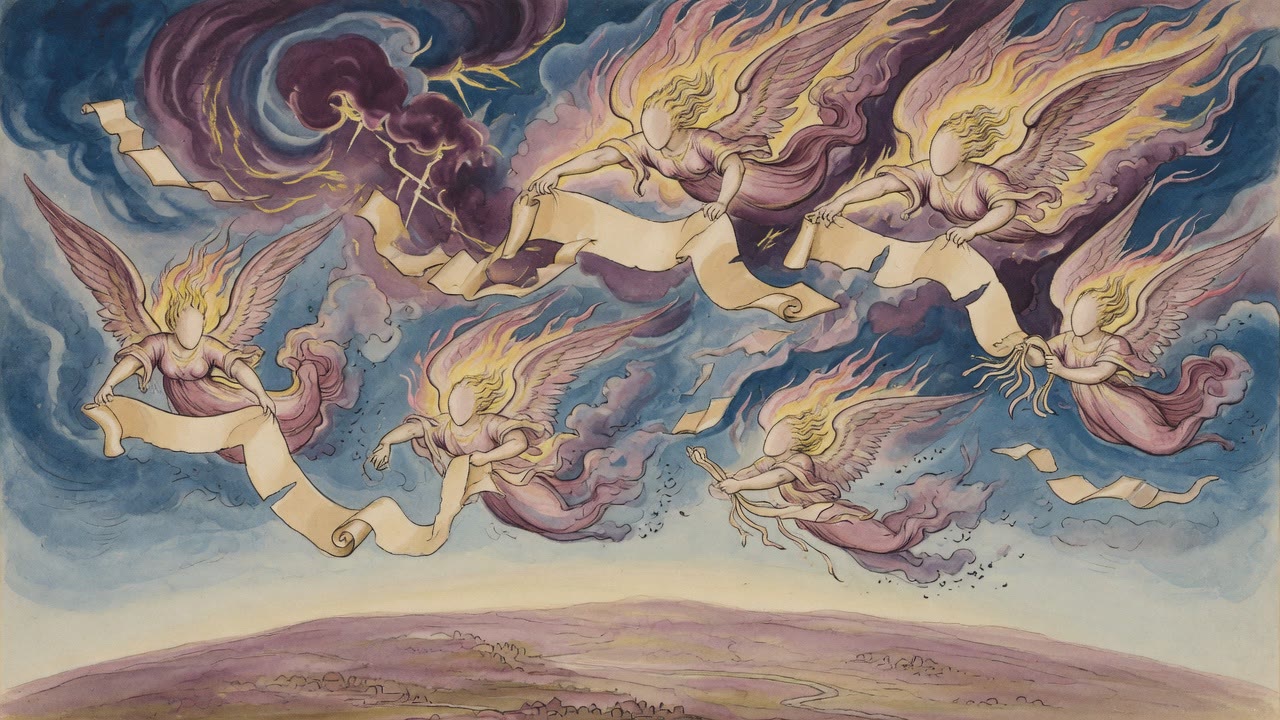
Metatron and all his servants began and said, "Holy, holy, holy is the Lord of Hosts, all the earth is full of His glory" (Isaiah 6:3). The living beasts answered, "Blessed be the glory of the Lord from His place." The firmaments said, "The Lord shall reign forever." The earth said the Lord has been King, is King, shall be King. And all the kings of the House of David said, "The Lord shall be King over all the earth. In that day shall the Lord be one and His name One."
On earth David once soothed a king with a harp. Above he soothed nothing. He answered. The fire under him did not eat the singer, because the song itself was the garment that can stand near heat.
The Crown Began to Sing
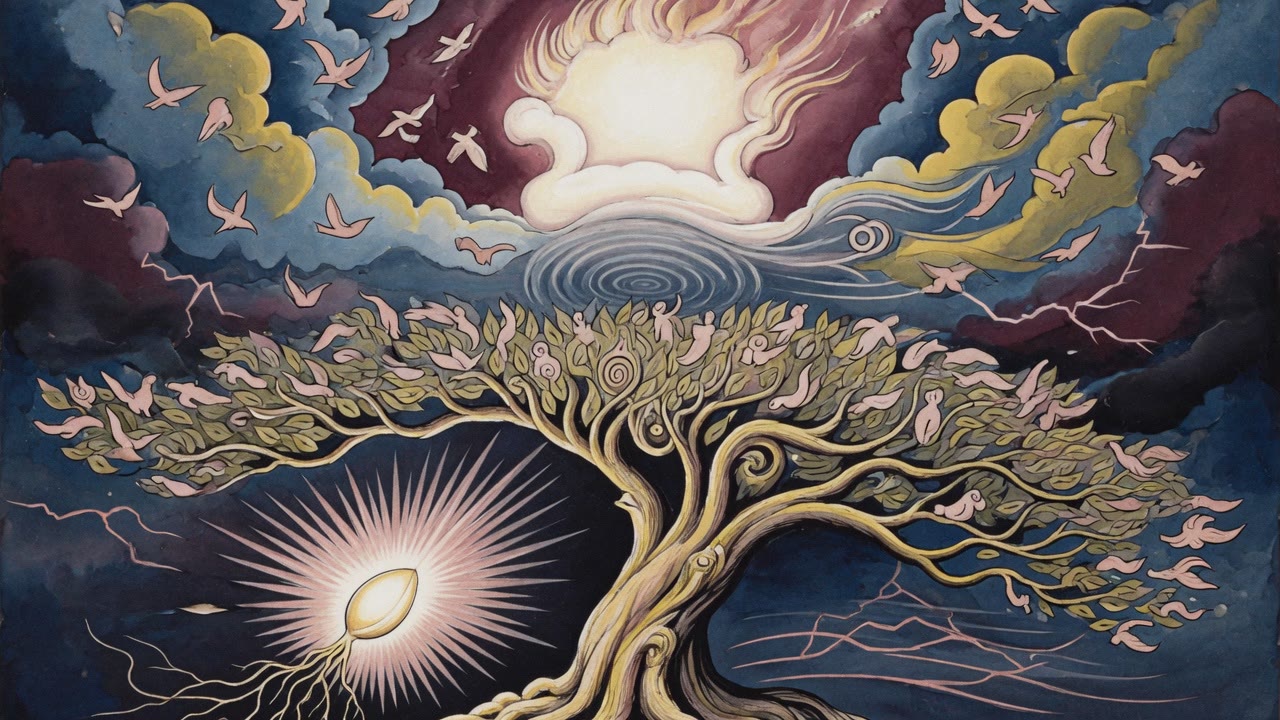
Above measures that break ordinary speech, a crown rests vast beyond human scale, a precious stone set between its points. Rabbi Nathan, student of Rabbi Yishmael, received smaller measures of nose, lips, jaws, and forehead, and even those are not small. The mouth is fire when it speaks. Measurement climbs until language buckles.
Then the counting stopped and the singing started. The language of Song of Songs rose onto the heavenly crown. Beloved. Gold. Doves by streams of water. Spice beds. Lilies. Sapphire. Cedar. Sweetness. What began as measurement became praise, and the seraphim cried holy.
David's throne of fire sat inside that turn. The cosmos is not only counted. It is addressed. A king who wrote psalms on the run found that above, the same work waited in a larger room.
Sparks That Reach Every Creature
Sparks flew from a right eye measured in myriads, and their light reached every creature. The vision that holds shoulder and hand and toe in impossible scale finally collapsed into a span that holds heaven and a hollow that holds the waters. David sang under that light without reciting the arithmetic. The sparks did not wait for scholars. They arrived on faces, on beasts, on the edge of a leaf.
Kings listened. Seraphim answered. The firmament held a school session that does not end as long as a mouth of fire still finds words.
David remains the man who sat opposite and did not go mute. The world below still sings thinner copies of what he opened there, and every thinner copy still carries a spark that remembers the full heat.
← All myths