5 min read

No Angel Among the Myriads Matched His Glory

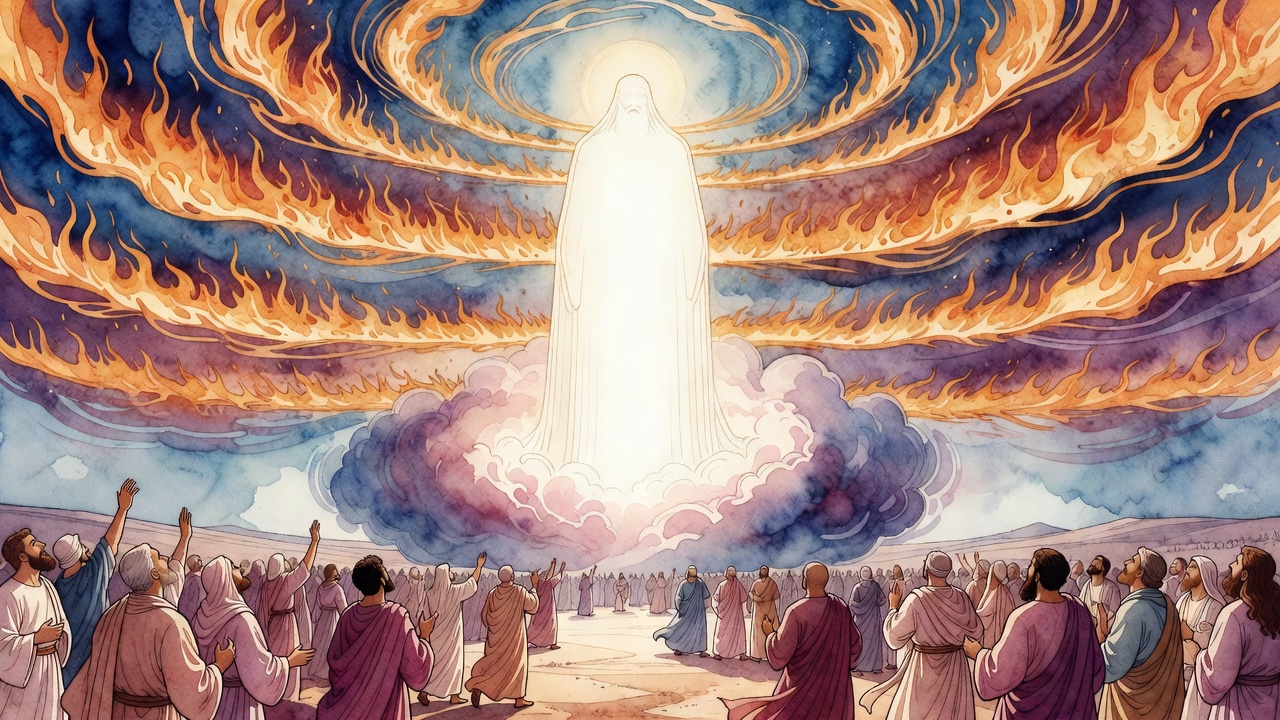
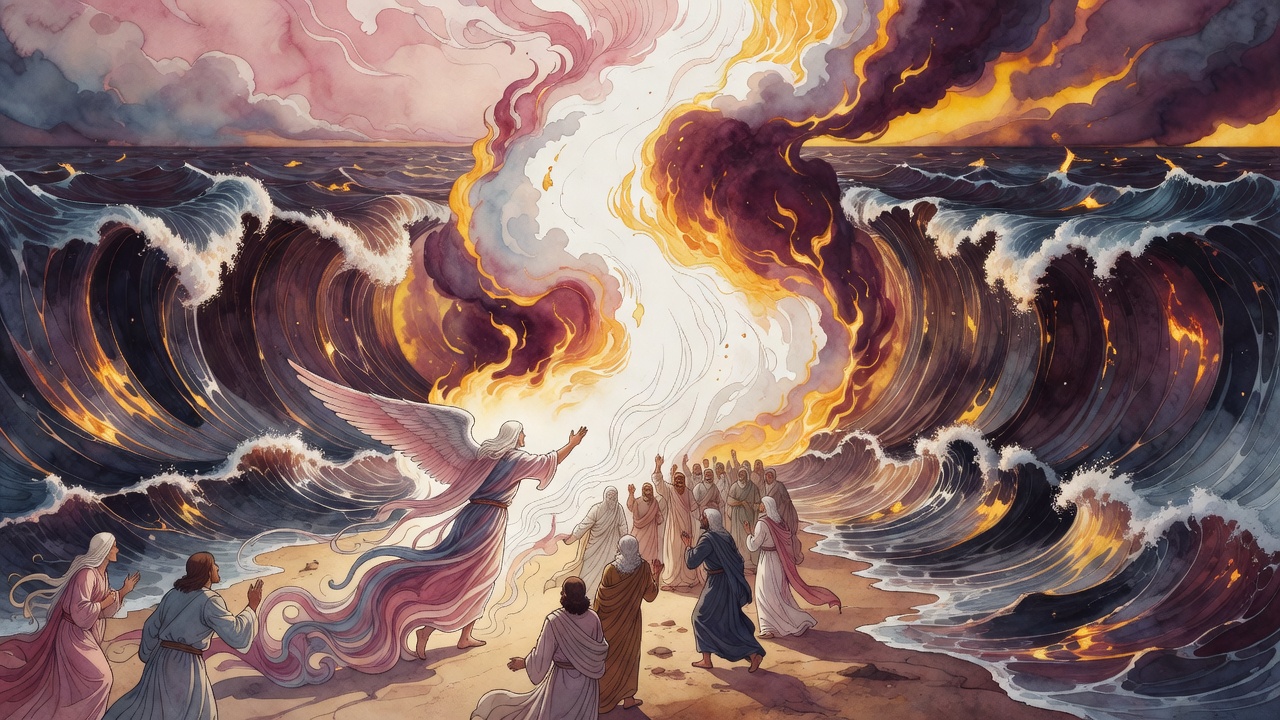
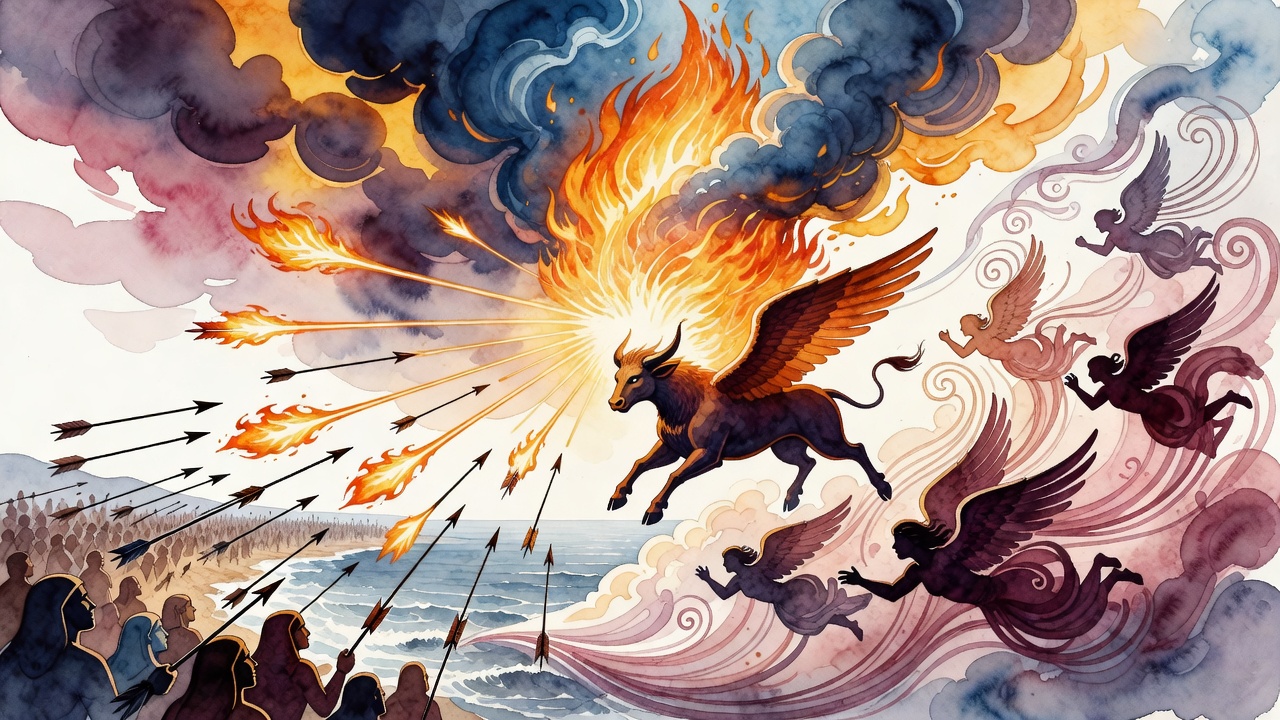
Moses sang of holy myriads and the camp looked up. Fire ranks without number filled the sky. None of them outshone the One who led them.

Curated by Arthur · Told by Maggid ·
Table of Contents
  1. The Song That Looked Sideways
  2. David and the Sea Already Knew
  3. A Face of Flame
  4. One Hundred Twelve Names at the Gate
  5. Alone at the Front of His Own
No Angel Among the Myriads Matched His Glory Click for full size

The Song That Looked Sideways

Moses sang that the Lord came from the holy myriads, and for a breath the camp stopped hearing only its own dust and hunger. The sky filled with ranks of fire and flame, watchers past counting. A mortal king rides out and hopes his retinue makes him look larger. This King rode among armies that could shame any crown, and still no one in those armies matched Him.

Flesh-and-blood royalty fails the comparison test. Call a human king handsome and somewhere in his guard stands a handsomer man. Call him mighty and a stronger arm waits in the ranks.

Not so the Sovereign of the Universe. He goes forth among myriads upon myriads, and among them all there is none like Him.

A soldier shaded his eyes though the sun was already low. He was shading against the idea of so much fire that still refused to crown itself king.

David and the Sea Already Knew

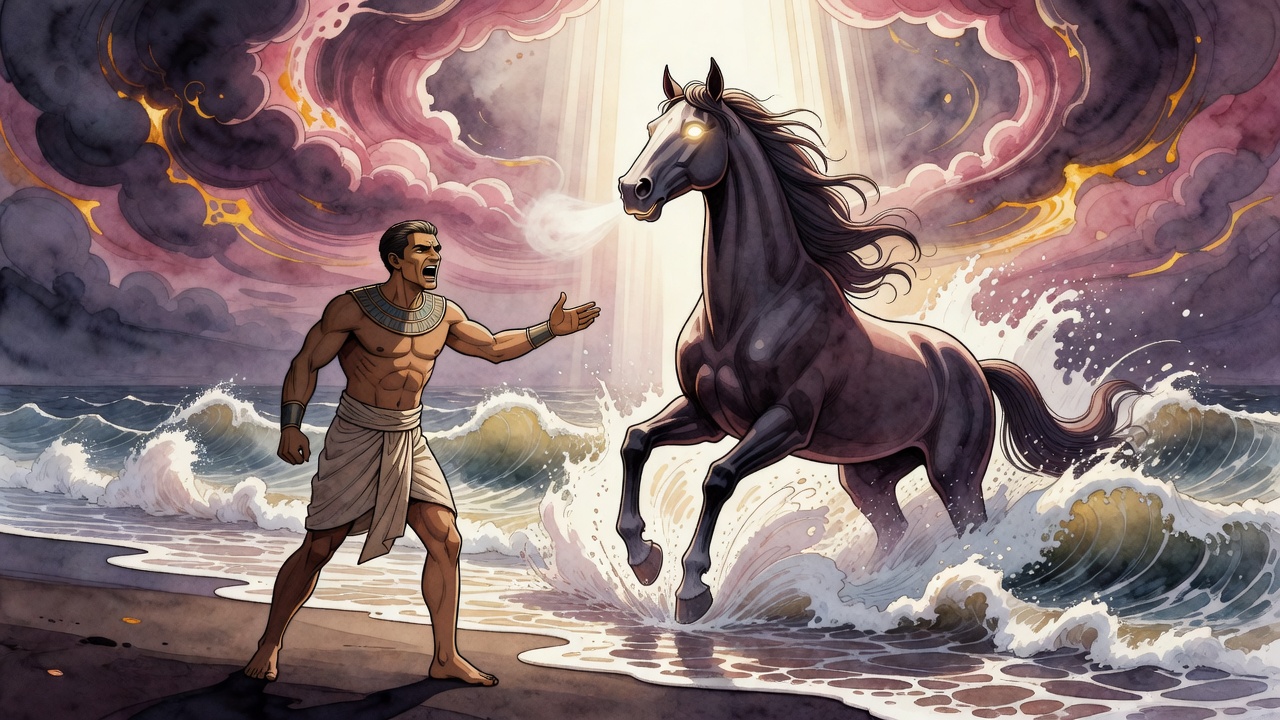
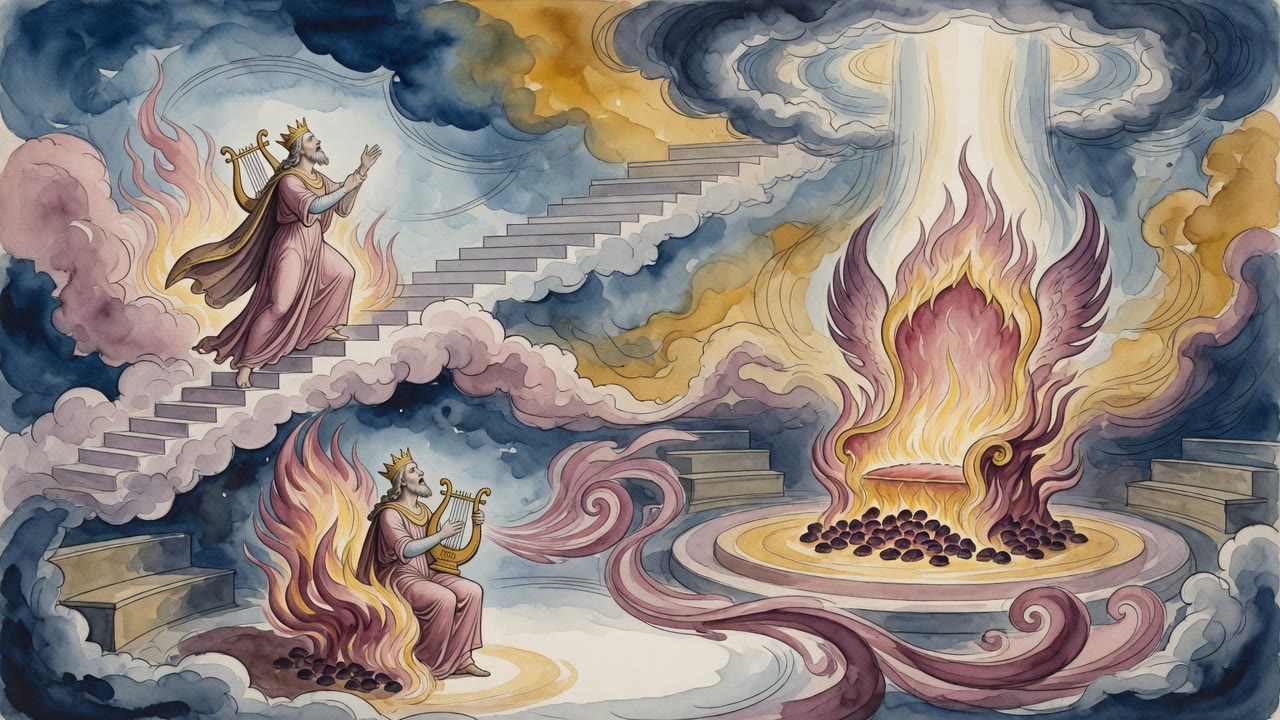
David would sing it later: there is none like You among the gods, O Lord. At the sea, Israel had already shouted the same astonishment. Who is like You among the gods? The question was a refusal to let any shining power stand on the same step.

Angels are not small. That is the point. If the host were weak, the uniqueness of God would be cheap. The midrash needs the host huge so the solitude of the Holy One at the head of His own can hurt the mind in the right way.

A child asked whether the prettiest angel was almost God. An elder said no so fast the child flinched. Almost is a cliff.

Moses let the song finish and did not explain the cliff. Explanation can sand the edge off a truth that should stay sharp enough to cut idolatry.

A Face of Flame

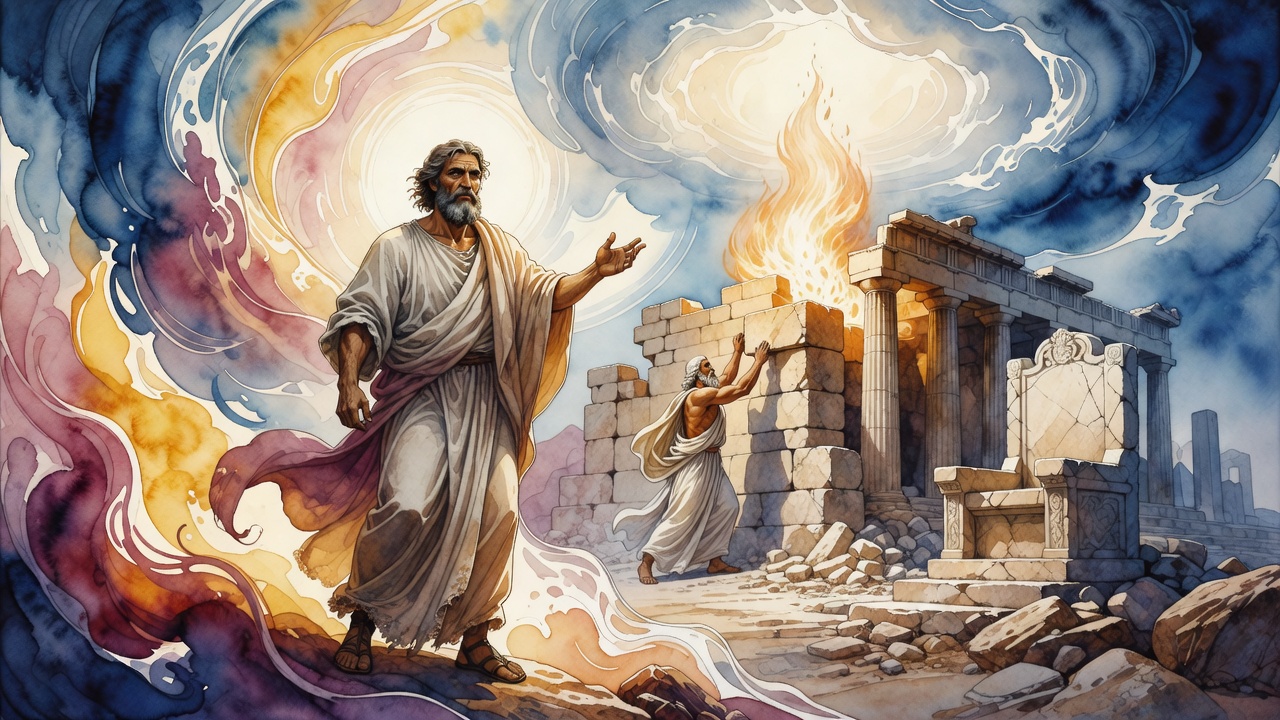
Beauty at that height is not safe. The face of the God of Israel is spoken of as majesty, loveliness, flame. A face of flame. When He sits on the Throne of Glory, the radiance surpasses the beauty of bride and groom on their wedding day, and still the old warning holds: you cannot see My face, for man may not see Me and live (Exodus 33:20).

Moses himself had asked for the Presence and met a mercy that was also a wall. Sometimes the vessel simply pours itself out. A man who glimpses what cannot be held empties like a cup tipped too far.

That is why the myriads can stand in ranks of fire and still not be the Face. They are servants of the heat. They are not the heat's source.

In the camp that night, two men argued over whether an angel's beauty could be painted. A third man said that paint would be a second idol. They fell quiet.

One Hundred Twelve Names at the Gate

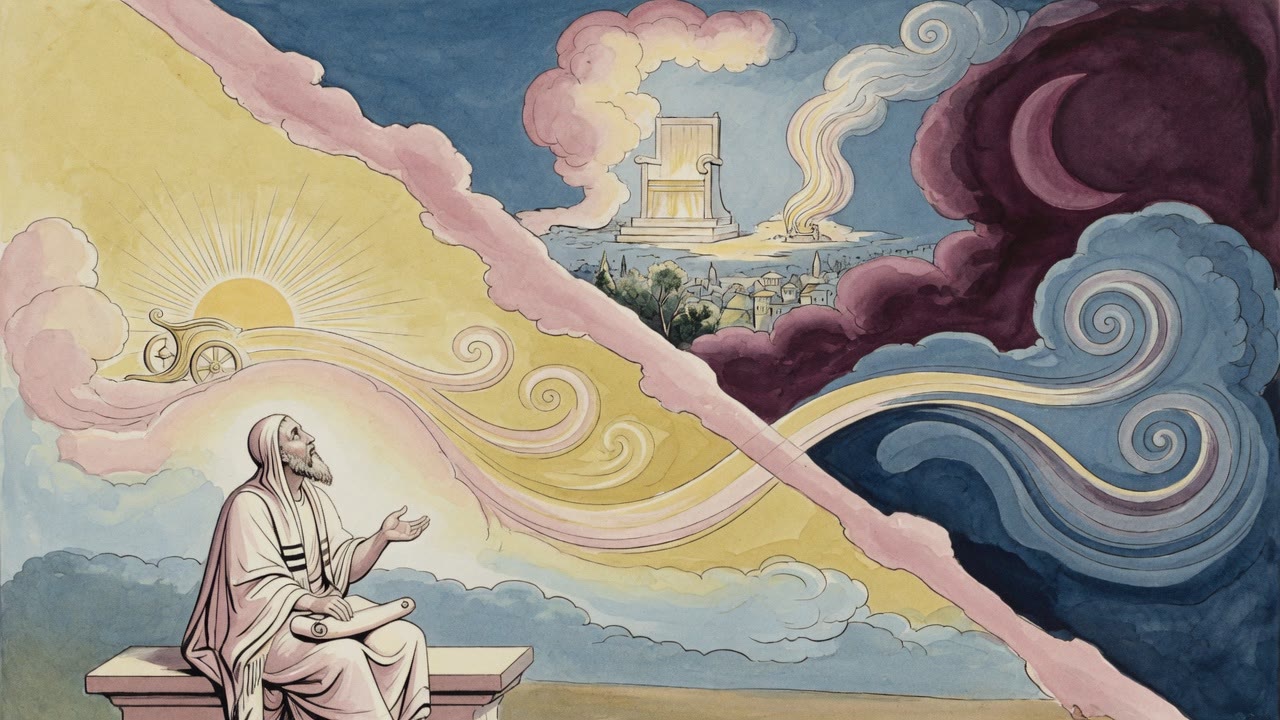
Those who later tried to descend to the Merkabah (the Divine Chariot) learned the danger in procedure. Call Surya, Prince of the Presence, but not casually. Conjure him one hundred twelve times by the power of Totrosi'ai and the chain of names that surround that lordship. Not one hundred eleven. Not one hundred thirteen. Exceed or diminish, and your blood is on your own head.

The precision is a fence around a fire. Even the gatekeeper is not the King. Even the correct count only opens a corridor where a man may still be unmade if he grabs for the Face.

Moses, singing of myriads, did not hand Israel a ladder for tourists. He handed them a map of scale. Huge host. Incomparable Head.

A seeker in a later century would sweat through the count and still not earn a right to stare. Access is not ownership. A door is not a throne.

Alone at the Front of His Own

Night after the song, some still dreamed of wings brighter than the Name. Morning burned the dream off. The camp returned to water and quarrels and the slow walk toward a land that would test them more than visions.

Still the line held. Among the holy myriads, the Holy One stands without peer. No angel outshines Him. No power among the watchful armies rivals Him.

Moses closed his mouth on the last note and let the silence do the rest of the teaching. Dust settled on sandals. A baby cried. Somewhere an angel of no fame kept its post without asking for a hymn.

He wiped his brow and found that fear and duty had left the same salt on the skin.


← All myths
From the tradition

Sources

3 sources

The texts behind this telling. Some cards carry a translation of the source; others are our own retelling of it, and each card says which. Every card links out to the original.

Midrash Tanchuma Buber, V'Zot HaBerachah 3:2Midrash Tanchuma Buber, V'Zot HaBerachah

Translation of the source text.Midrash Tanchuma (Buber), Public Domain, on Sefaria · CC-BY-SA

(Deuteronomy 33:2:) AND HE CAME FROM THE HOLY MYRIADS. This teaches that the Holy One, blessed be He, is great and His name is to be praised among all His host, for His attributes are not like the attribute of flesh and blood. The attribute of flesh and blood: if the king goes forth amid his retinue, he is comely, but among his hosts there are some more comely than he; he is mighty, but among his hosts there are some mightier than he. But the Holy One, blessed be He, among all His myriads there is none like Him, as it is said (Psalms 86:8): "There is none like You among the gods, O LORD." And it says (Exodus 15:11): "Who is like You among the gods, O LORD?"

Full source
Hekhalot Rabbati 8Heikhalot Rabbati

Retold in our words. Read the original at the link below.Sefaria-hosted English translation · CC-BY

The answer, as we find in Jewish tradition, is both breathtakingly beautiful and terrifyingly destructive.

The tradition tells us that the face of the God of Israel is… well, it’s a lot. It's a lovely face, a majestic face, a face of beauty, a face of flame. A face of flame. Imagine the sheer power, the intensity. The Zohar, that foundational text of Jewish mysticism, goes even further, saying that when God sits on His Throne of Glory, His majesty surpasses the beauty of even the most radiant bride and groom on their wedding day.

Here’s the paradox, the twist in the tale: whoever beholds this face, this incredible, awe-inspiring visage, will be instantly torn to pieces. As it says in (Exodus 33:20), "You cannot see My face, for man may not see Me and live."

Why is that? Why is something so beautiful also so dangerous?

The story in Exodus is key. Moses, in his incredible closeness to God, asks to see His Presence. But God responds with that stark warning. This idea, that humans can’t survive a direct encounter with God’s face, becomes a foundation of Jewish thought.

But what kind of destruction are we talking about? Is it literal tearing apart? Well, Hekhalot (the heavenly palaces) Rabbati 8 gives us a clue. It suggests that maybe it's not some heavenly guard attacking you for peeking. Instead, the text offers a metaphor: whoever glimpses God’s beauty will instantly pour themselves out, like a vessel emptying itself. Imagine being so overwhelmed by the divine that you simply cease to be, your individual identity dissolving into the infinite.

Martin Buber, in his work on Moses, suggests an interesting interpretation. If "man may not see Me and live," and God is said to have led the people, maybe "YHVH goes ahead of the people in order to overthrow foes who meet them on the way." God’s face, in this reading, becomes a weapon, a force that clears the path. This might even explain the meaning of (Deuteronomy 4:37), where God is said to have led the people out of Egypt "with His face." God leading with His face. A face so powerful, so radiant, that it vanquishes enemies.

The tradition even tells us that the angels who sing before God are incinerated after singing for only a single day! (You can read more about that in the discussion of "The River of Fire" in the tradition.)

So, what does all this mean? We’re left with this potent image: a God whose beauty is so overwhelming, so complete, that it’s ultimately beyond human comprehension, beyond human endurance. A God whose face is both an invitation and a warning. Perhaps the true wisdom lies not in trying to literally see God's face, but in glimpsing its reflection in the world around us, in the acts of kindness, in the moments of awe, in the relentless pursuit of justice. Maybe that’s the closest we can, and perhaps should, ever get.

Full source
Heikhalot Rabbati 16:5Heikhalot Rabbati

Retold in our words. Read the original at the link below.Sefaria-hosted English translation · CC-BY

It’s not a casual stroll; it's a carefully orchestrated, potentially dangerous undertaking. How do you even begin?

Well, Heikhalot (the heavenly palaces) Rabbati, one of the central texts in this tradition, gives us a glimpse into the process. And it involves a whole lot of focus, precision, and some seriously powerful names.

If you want to descend to the Merkabah (the Divine Chariot), you need to call upon Surya, the Prince of the Presence. Think of Surya as a gatekeeper, a high-ranking angel who can grant you access. But it's not enough to just say hello. You have to conjure him – call him forth with a specific intention and a specific formula.

Here's where it gets intense. You have to invoke him 112 times by the power of Totrosi’ai, who is described as "the Lord." But that's just the beginning. Totrosi’ai isn't just Totrosi’ai. He’s also known by a string of other powerful, almost overwhelming names: Totrosi’ai Zurtak Totrakhiel Tophgar ’Ashrawwili’ai Zebhodiel Zoharariel Tandiel, and Shekhadhozi’ai Dehibhiron, and ’Andiriron the Lord God of Israel.

Try saying that ten times fast!

These aren't just random syllables. In Jewish mystical tradition, names hold immense power. They are vessels of divine energy, keys that can unlock hidden realms. As we find elsewhere in Kabbalistic thought, each name resonates with a specific aspect of God. Each name, when uttered with intention, can create real change in the cosmos.

But here's the kicker: the text emphasizes the absolute precision required. You have to conjure Surya exactly 112 times. Not 111. Not 113. One hundred and twelve. And if you mess up? "If he exceed or diminish his blood is upon his own head." Strong words! It underlines the gravity of what's happening here. This isn't a game. It's a delicate, powerful ritual with real consequences. Your mouth must utter the words correctly, and your fingers must count precisely. Only then, Heikhalot Rabbati tells us, can you descend and "rule in the world of the Merkabah."

What does it mean to "rule in the world of the Merkabah"? That's a question that has occupied mystics and scholars for centuries. Some interpret it as gaining profound spiritual insight, a direct experience of the divine. Others see it as the ability to influence the earthly realm from a higher plane of existence.

Whatever the interpretation, it's clear that the journey to the Merkabah is not for the faint of heart. It requires intense focus, unwavering dedication, and a willingness to confront the awesome power of the divine. And maybe, just maybe, a really good memory for long, complex names.

So, what do you think? And more importantly, would you trust yourself to count to 112 correctly?

Full source