5 min read

David Swore He Would Not Rest Until God Had a House

David vowed not to enter his bed until the Lord had a place. Solomon raised the stones, but the song of dedication still carries David's name.

Curated by Arthur · Told by Maggid ·
Table of Contents
  1. The Fig Tree and the Fruit
  2. Blessing Before the Walls Stand
  3. The Basket With Two Legs
  4. The Voice Inside the Curtain

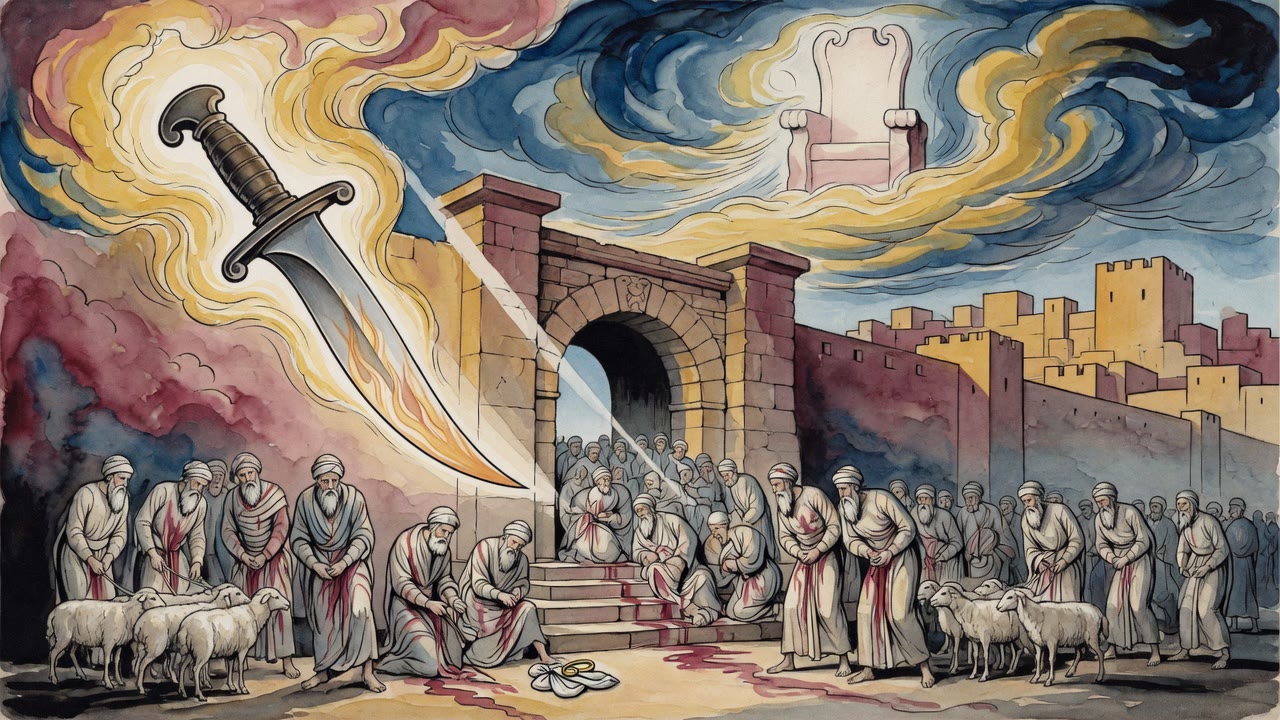
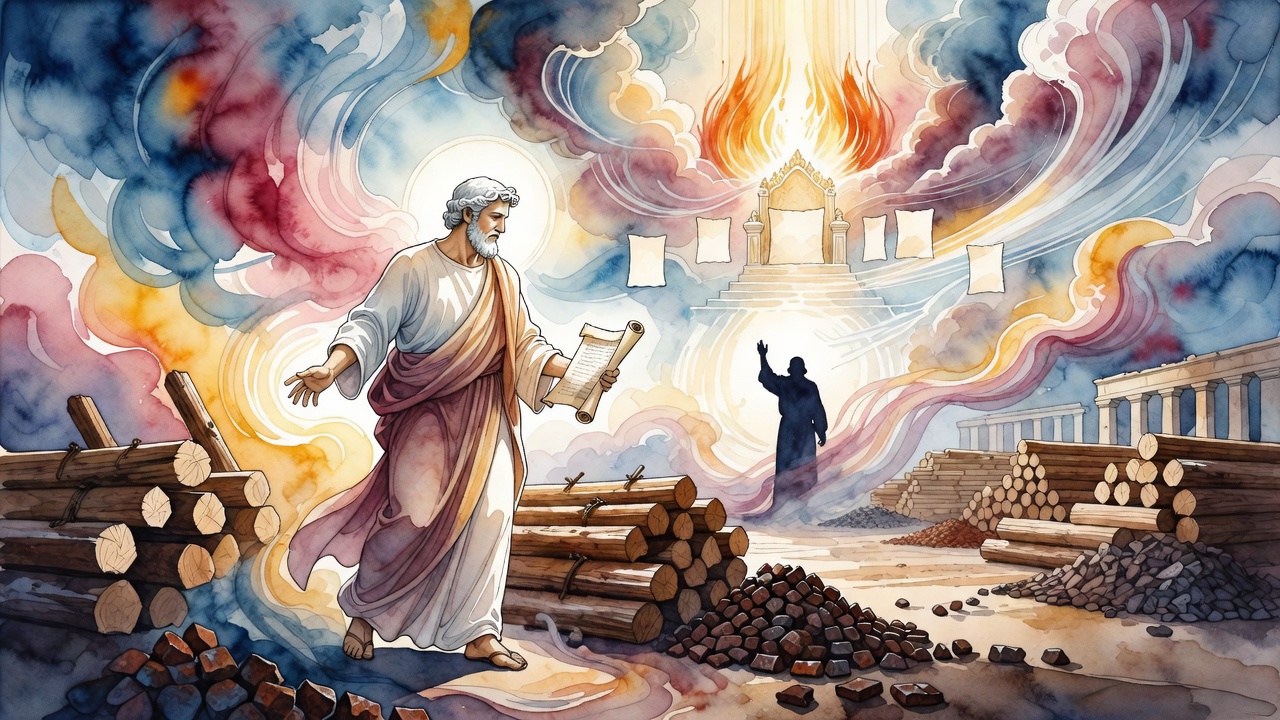
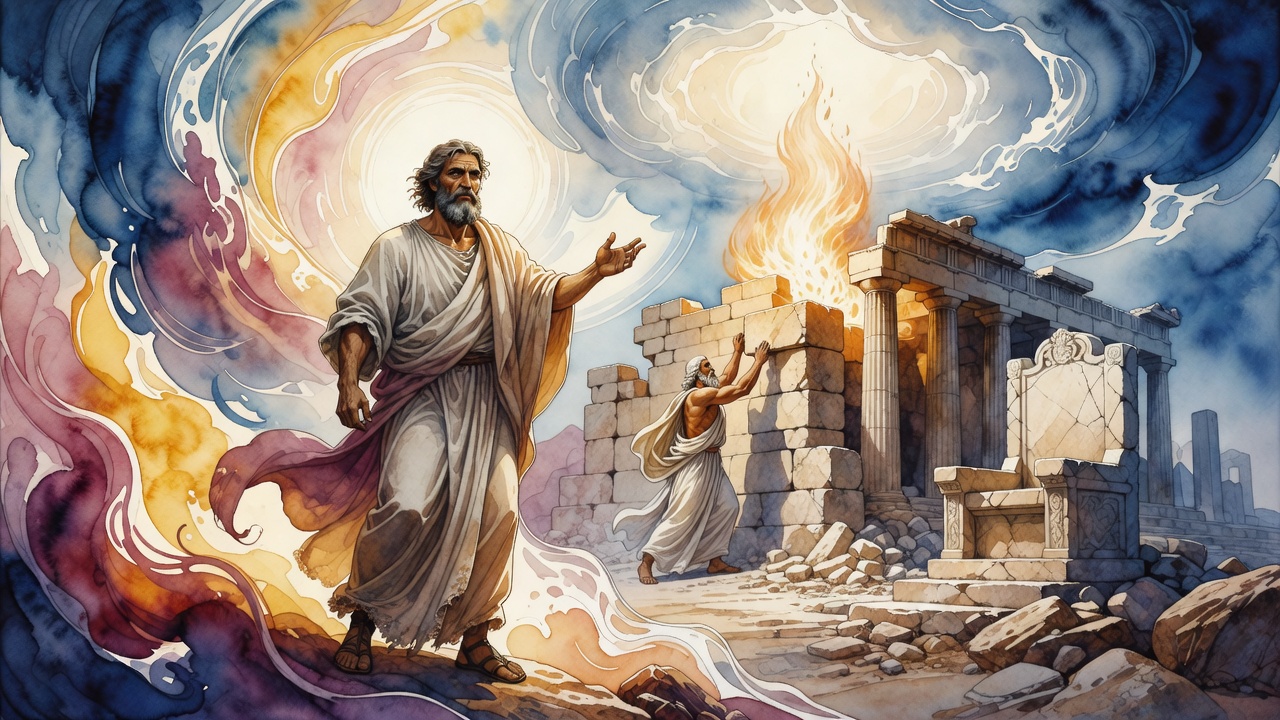
David would not go home. He swore it out loud to the Lord, to the Mighty One of Jacob. No soft bed. No quiet roof of his own. Not until he found a place for God (Psalms 132:1-5). The king who had slept under campaign stars chose a harder restlessness. He would keep watch for a house that did not yet stand.
David Swore He Would Not Rest Until God Had a House Click for full size

Servants saw him rise while the city still held night in its alleys. The vow sat on him like armor he refused to unbuckle.

The Fig Tree and the Fruit

Solomon finished the building. The verse is plain. He completed the house (I Kings 6). Cedar went up. Gold caught light. The dedication songs should have been his alone. But the psalm that opens the song of dedication still says "of David."

Did David dedicate it? Solomon raised the walls. The Holy One did not erase the nights David refused his own shelter. Whoever tends a fig tree eats its fruit. David had tended the longing when there was only dust and a vow. Heaven wrote the house against his name while another man's crews set stone on stone.

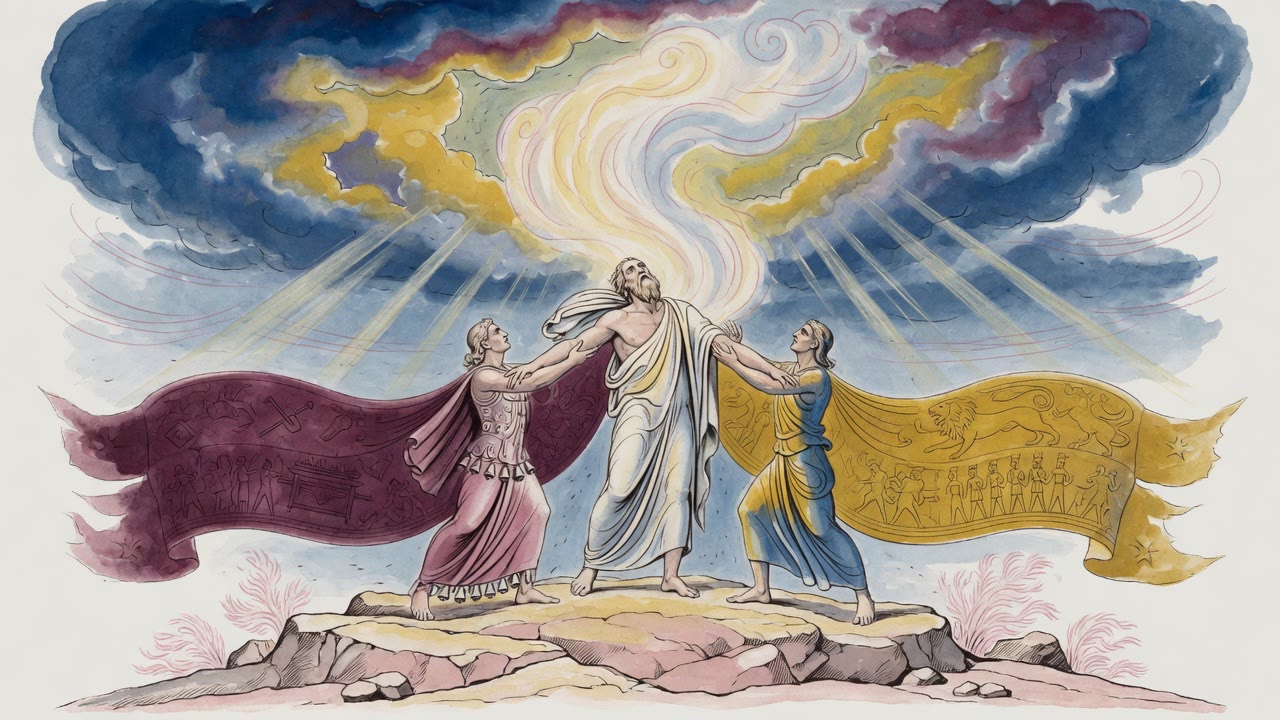
The same logic marked another builder. When Israel spun goat hair and Bezalel cut boards for the wilderness sanctuary, many hands worked. Because Moses devoted his life to each pattern shown on the mountain, the Tabernacle is spoken of as finished on the day Moses finished. The labor of a people. The credit of the one who would not let a single socket drift from the pattern.

Blessing Before the Walls Stand

On Sinai the public wedding of Torah and people had been beautiful and then broken. Tablets shattered at the foot of the mountain after the calf. The evil eye, the tradition says, overpowered the betrothal spectacle. When Israel later built the Tabernacle, God reversed the usual order of kings.

A human king waits for praise, then grants favors. The Holy One put the priestly blessing first. "May the Lord bless you and keep you" (Numbers 6:24) before "on the day that Moses had finished" (Numbers 7:1). A charm against the eye that had once shattered joy. Peace was spoken before the final peg was driven.

David, listening across generations of song, hears God speak peace to His people and will not turn from that sound.

The Basket With Two Legs

From creation until Torah, twenty-six generations stood on kindness alone. The world was a basket with two legs. It could not stand. Torah was strength waiting to arrive. Service was coming. Lovingkindness had carried the early centuries.

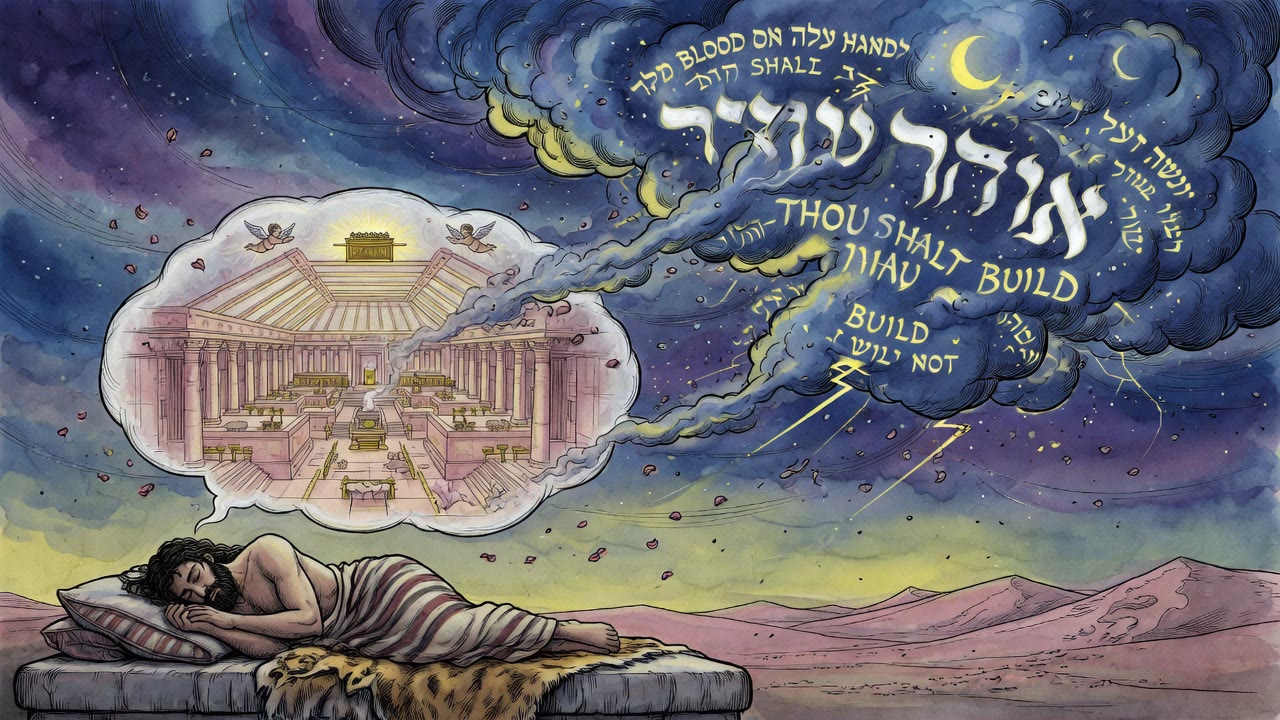
On the day Moses finished erecting the Tabernacle, the tradition hears an extra word in the verse: an et (את), the small Hebrew mark for a verb's object, that pulls creation itself into the scene. The third leg locked. Heaven and earth, which began with that same particle in Genesis, found a base in the wilderness court. The basket stopped rocking.

David's unfinished house and Moses' finished tent answer each other across centuries. One man refuses rest until God has an address on earth. The other drives the last bar home and feels the world set its weight.

The Voice Inside the Curtain

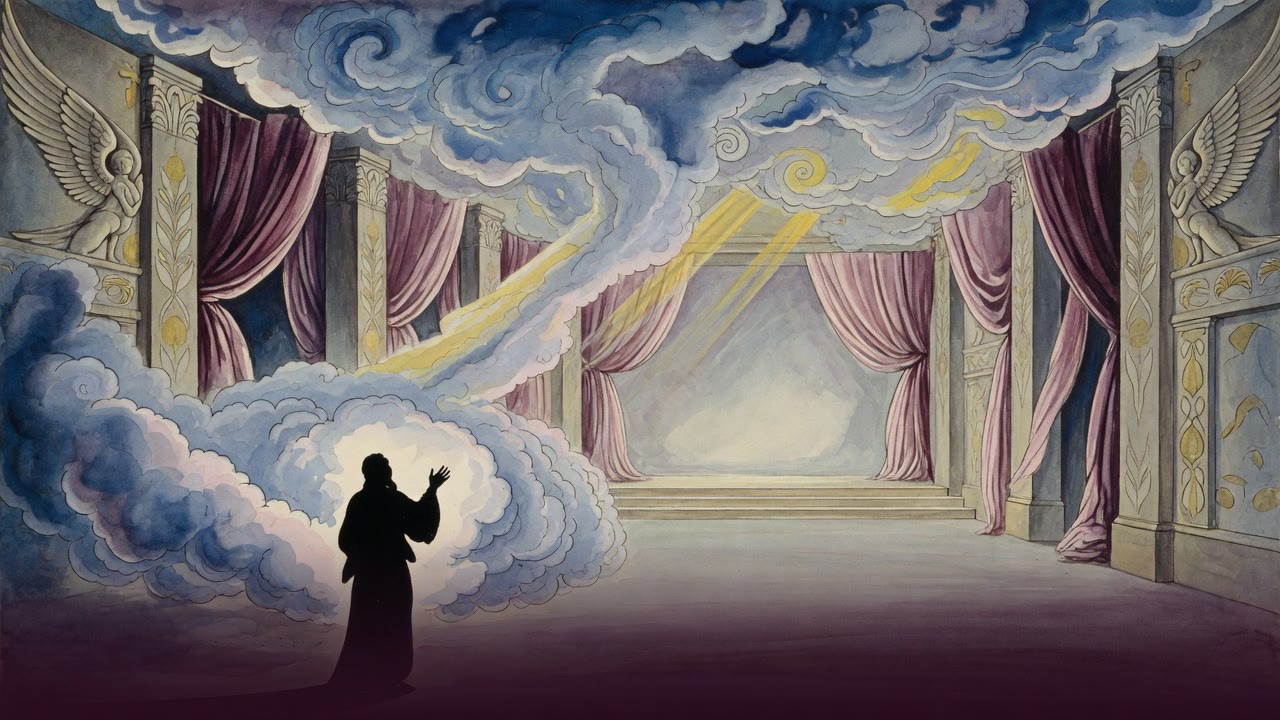
Moses entered on that day and heard a majestic voice, beautiful, praiseworthy. He said what David would later sing. Let me hear what God, the Lord, will speak (Psalms 85:9).

The answer was not thunder for enemies. It was peace toward the children. Nothing in My heart against them. Before the Tabernacle, strife. On the day it stood, a peace concluded. The priestly lifting of the face in Numbers 6:26 and the finished sanctuary of Numbers 7:1 are one motion. God grants peace, then moves into the house Israel made.

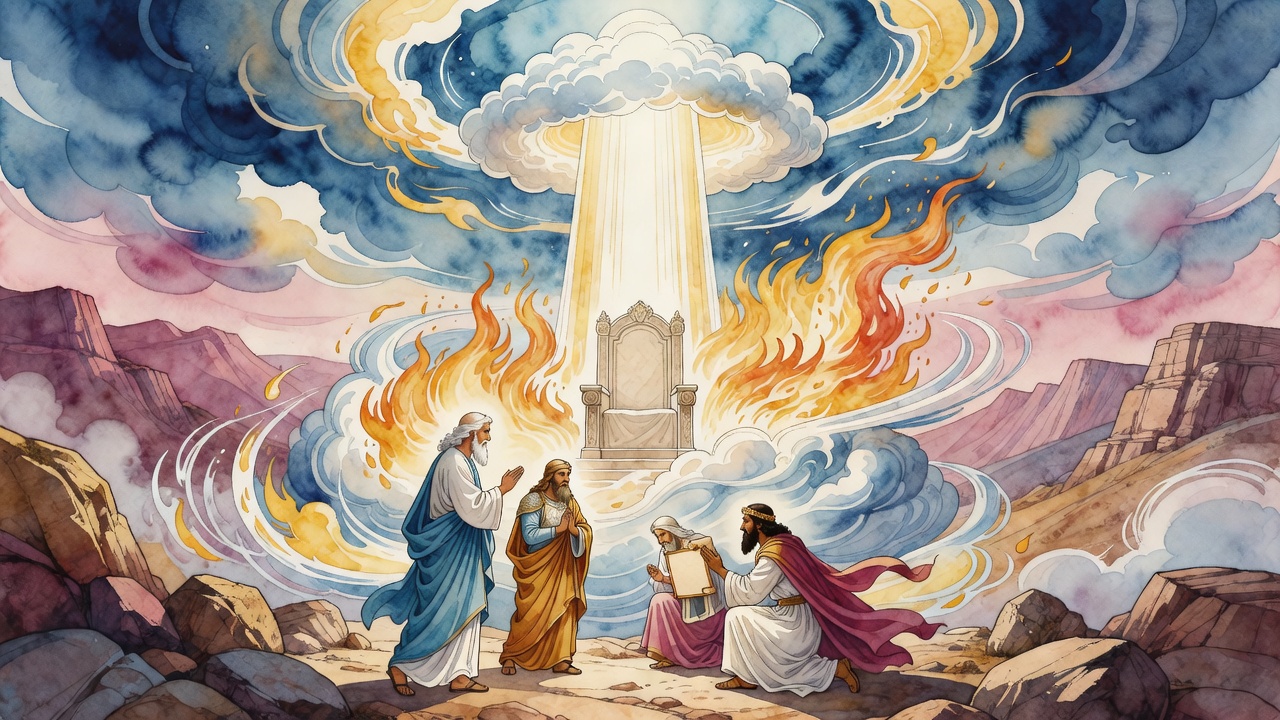
David never slept easy until the longing had a map. He died with the stones still waiting for Solomon's crews. The song of dedication keeps his name anyway. The fig he tended outlived his body. Moses, who finished a lighter house of skins and boards, heard the voice of peace the moment the work closed. Two builders. One refuses rest. One completes the pattern. Heaven remembers both in the same ledger.


← All myths
From the tradition

Sources

4 sources

The texts behind this telling. Some cards carry a translation of the source; others are our own retelling of it, and each card says which. Every card links out to the original.

Midrash Tanchuma, Nasso 13Midrash Tanchuma

Retold in our words. Read the original at the link below.Townsend 1989 translation of Midrash Tanhuma, S. Buber Recension · CC-BY

(Numb. 7:1:) “So it came to pass on the day that Moses had finished.” This text is related (to Prov. 27:18), “The one who tends a fig tree shall eat its fruit.” The Holy One, blessed be He, does not deprive any creature of a reward. It is simply that in the case of anyone who toils and devotes his life to something, the Holy One, blessed be He, does not deprive him of his reward. It is therefore stated (in Prov. 27:18), “The one who tends a fig tree shall eat its fruit.” Do you want to understand? Solomon built the Temple, as stated (in I (Kings 6:1)4), “So Solomon finished building the house.” But because David had devoted his life to the Temple which would be built, as stated (in Ps. 132:1-5), “Lord, remember David and all his hardships. How he swore to the Lord, [vowed to the Mighty One of Jacob]: Surely I will not come into the shelter of my house, […] until I find a place for the Lord,” the Holy One, blessed be He, did not deprive him of his reward. Rather He had it written in his name, as stated (in Ps. 30:1 [introduction]), “A psalm. A song of the dedication of the House of David.” And did David dedicate it? And behold Solomon dedicated it. It is simply that since David devoted his life to it, it is called by his name. Ergo Solomon said it well (in Prov. 27:18), “The one who tends a fig tree shall eat its fruit […].” So also you find in the case of the Tabernacle, when everyone devoted their lives [to it] and made the Tabernacle. All Israel volunteered. The women spun the goat's hair; and similarly (in Exod. 36:8), “Then all the wise-hearted ones among the workers [made the Tabernacle]. And likewise (according to Exod. 36:1), “Then let Bezalel and Oholiab [and all the wise-hearted ones …] do [all that the Lord has commanded].” But because Moses devoted his life to [the Tabernacle], it was called by his name, as stated (in Exod. 25:40), “Observe and make them [by means of] their pattern.” And Moshe went and devoted his life to each and every thing, so that they should make it just as the Holy One, blessed be He, had shown him on the mountain, so that they would not err with it. It is therefore written about each and every thing (in Exod. 39:1, 5, 7, 21, 26, 29, 31, cf. 42), “as the Lord commanded Moses.” And so it says (in vs. 43), “When Moses saw all the work, and behold, they had done it […; then Moses blessed them].” And with what blessing did he bless them? He said to them, “May the Divine Presence dwell in the work of your hands.” The Holy One, blessed be He, said, “Because Moses has devoted his life to the Tabernacle, I will only write about it in his name.” Thus it is stated (in Numb. 7:1), “So it came to pass on the day that Moses had finished.”

Full source
Midrash Tanchuma, Nasso 17Midrash Tanchuma

Retold in our words. Read the original at the link below.Townsend 1989 translation of Midrash Tanhuma, S. Buber Recension · CC-BY

"And it was on the day that Moses had finished" (Numbers 7:1). What is written above the matter? "May the Lord bless you and keep you" (Numbers 6:24). Rabbi Yehoshua of Sakhnin said, "[There is a relevant] parable about a king who had his daughter betrothed and [prepared] the wedding for her, when the evil eye overpowered her. [But] the king stood [in his decision] to marry off his daughter. What did he do? He gave her a charm and said to her, 'This charm should be upon you, so that the evil eye not overpower you.' So [too], when the Holy One, blessed be He, gave Israel the Torah, He made for them a public [ceremony], as it is stated (Exodus 20:15), 'And all the people saw the sounds.' And this was nothing but marriagein (kiddush (the sanctification blessing over wine)), as it is stated (Exodus 19:10), 'And the Lord said to Moshe, "Go to the people and sanctify them (kiddishtam)...."' And [so] the evil eye overpowered them and the tablets were broken, as it is stated (Exodus 32:19), 'As soon as he came near the camp and saw the calf and the dancing, Moshe became enraged; and he hurled the tablets from his hands and shattered them at the foot of the mountain.' Once they came and made the tabernacle for themselves, the Holy One, blessed be He, gave them the blessings first, so that the evil eye not overpower them. Hence it is written, 'May the Lord bless you and keep you,' first; and afterwards, 'And it was on the day that Moses had finished.'" Rabbi Abahu said, "The trait of the Holy One, blessed be He, is not like the trait of flesh and blood. When a king of flesh and blood enters a province, it is after the people of the province praise him and honor him that he gives them satisfaction in the province. But the Holy One, blessed be He, is not like this. Before Israel [completed] the tabernacle, the Holy One, blessed be He, gave them the blessings. As it is stated, [first] 'May the Lord bless you and keep you'; and afterwards, 'And it was on the day that Moses had finished erecting the tabernacle.' Therefore David said (Psalms 85:9), 'Let me hear what God, the Lord, will speak; for He will speak peace to His people, His faithful ones.'"

Full source
Midrash Tanchuma, Nasso 19Midrash Tanchuma

Retold in our words. Read the original at the link below.Townsend 1989 translation of Midrash Tanhuma, S. Buber Recension · CC-BY

"And it was on the day that Moses had finished to erect the tabernacle" (Numbers 7:1). Our rabbis taught (Avot 1:2),"On three things the world stands: On the Torah, on the service and on acts of lovingkindness." You find twenty-six generations from when the world was created until the Torah was given, and the Holy One, blessed be He, supported them out of kindness (since they were not worthy). And corresponding to them, David said, "As Your kindness is great," twenty-six times in the great Hallel (Psalms 136). Rabbi Acha said in the name of Rav Huna, "Moshe also hinted about them to Israel at the [Red] Sea, as he said am zu (this nation, in that zu has a numerical equivalent of thirteen) twice. As it is stated (Exodus 15:13), 'You have led this people that You have redeemed,' and it is written (Exodus 15:16), 'until this nation that You acquired has passed' - these are the twenty-six generations that [arose] from when the world was created until the Torah was given. 'You led them with Your strength (Exodus 15:13) - that is the Torah, which is called strength, as it is stated (Psalms 29:11), 'May the Lord give strength to His people.'" A parable: To what was the world similar at this time? To a basket with two legs, which [hence] could not stand. Once the tabernacle was erected, the world stood and was given a base, as stated, "And it was on the day that Moses had finished to erect the tabernacle (et hamishkan)." "Hamishkan" is not written here, but rather "et hamishkan, [the extra word coming] to include the creation of the world, about which it is written (Genesis 1:1), "et the heavens and the earth."

Full source
Midrash Tanchuma, Nasso 25Midrash Tanchuma

Retold in our words. Read the original at the link below.Townsend 1989 translation of Midrash Tanhuma, S. Buber Recension · CC-BY

(Numb. 7:1:) “So it came to pass on the day that Moses had finished.” R. Judah bar Simon said, “On the day that the Tabernacle was erected, Moses entered and heard a majestic voice, a beautiful voice, a praiseworthy voice. Moses said (in Ps. 85:9), ‘Let me hear what God, the Lord, will speak.’ The Holy One, blessed be He, said to Moses, ‘I am speaking peace towards them; there is nothing in My heart against My children,’ as stated (ibid.), ‘for He will speak peace unto His people and unto His righteous ones; and let them not turn to folly.’ It is also written after this (in vs. 10), ‘Surely His salvation is near for those who fear Him, [for His glory to dwell in our land].’ When? On the day that the Tabernacle was erected.” For R. Joshua the Priest has said in the name of R. Eliezer that before the Tabernacle was erected, there was strife between the Holy One, blessed be He, and Israel; but on the day that the Tabernacle was erected, a peace was concluded, as stated (in vs. 9), “for He will speak peace unto His people and unto His righteous ones; and let them not turn to folly.” R. Simeon b. Laqish said concerning it (the verse), “What [reason] is there for me to learn [this] from the book of Psalms? It is a matter of [record in the] Torah; for even in the place [under consideration] (i.e., in Numb. 7:1), there is nothing at all lacking (which is found in Ps. 85:9–10). What is written above on the matter (in Numb. 6:26)? ‘The Lord lift up His face unto you and grant you peace.’ When? (According to Numb. 7:1) ‘On the day that the Tabernacle was erected.’”

Full source