5 min read

Why David's Hands Could Not Build God's House

David stockpiled cedar and iron and prepared psalms for the Temple courts. Then Nathan said: not you. The reason was more complicated than punishment.

Curated by Arthur · Told by Maggid ·
Table of Contents
  1. The Dream He Prepared For
  2. What the Tradition Said Was the Reason
  3. David Running From His Own Son
  4. Waiting for the Right Season
  5. What the Psalms Were Built For

The Dream He Prepared For

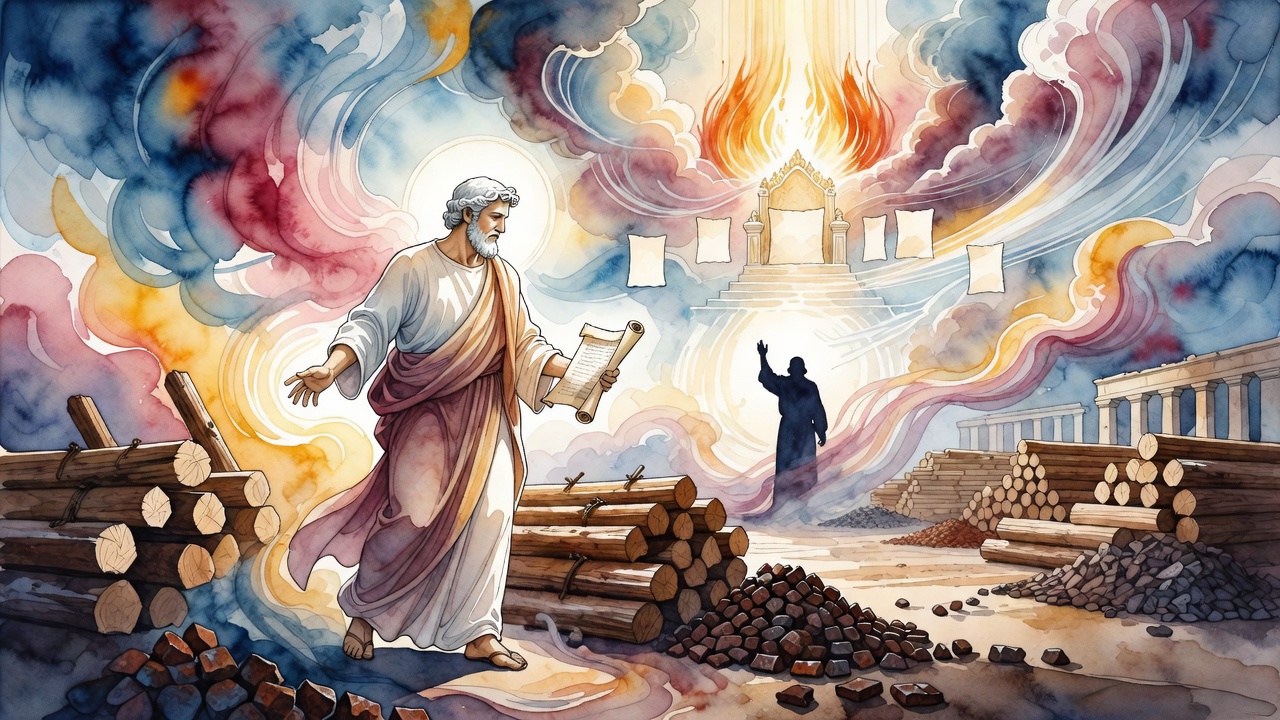
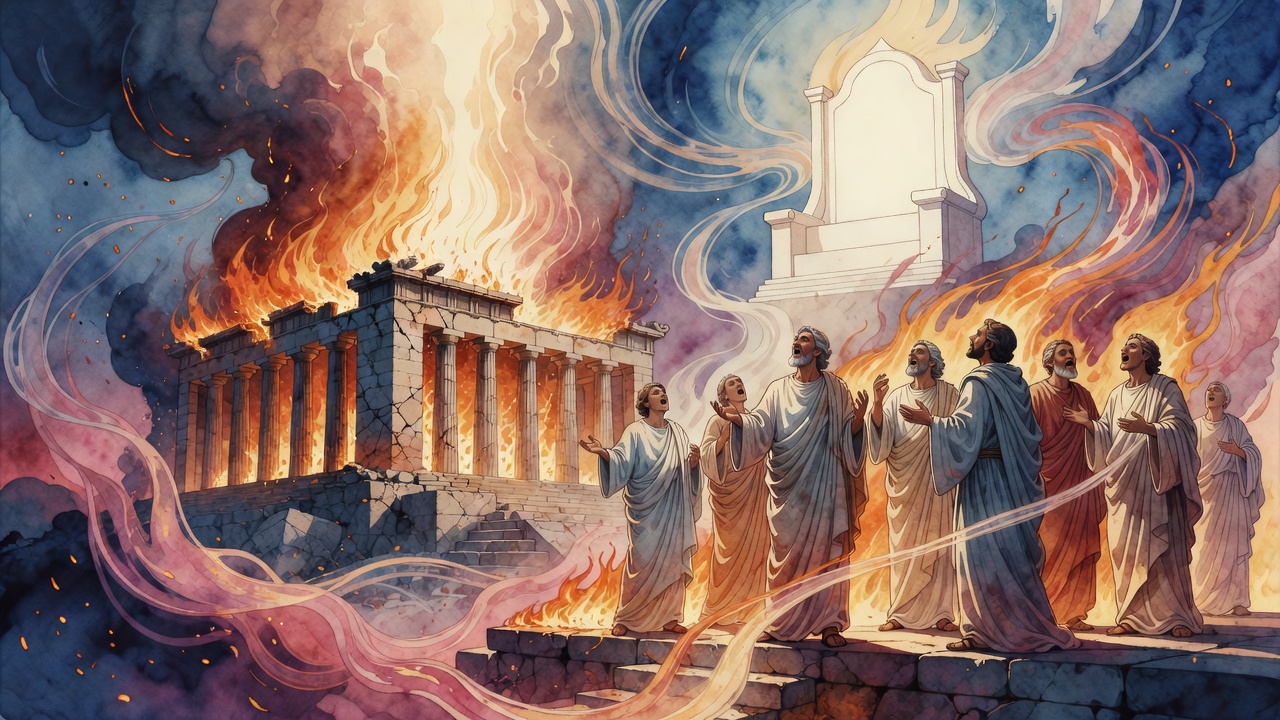
David had spent years preparing for something he was not going to be allowed to do. He had secured the site on Mount Moriah. He had stockpiled cedar from Lebanon and iron for the nails and bronze in quantities beyond measuring. He had organized the Temple musicians and assigned them their psalms. He had designed the whole structure in his mind, and possibly on parchment, with the detail of a man who intended to see it built in his lifetime.

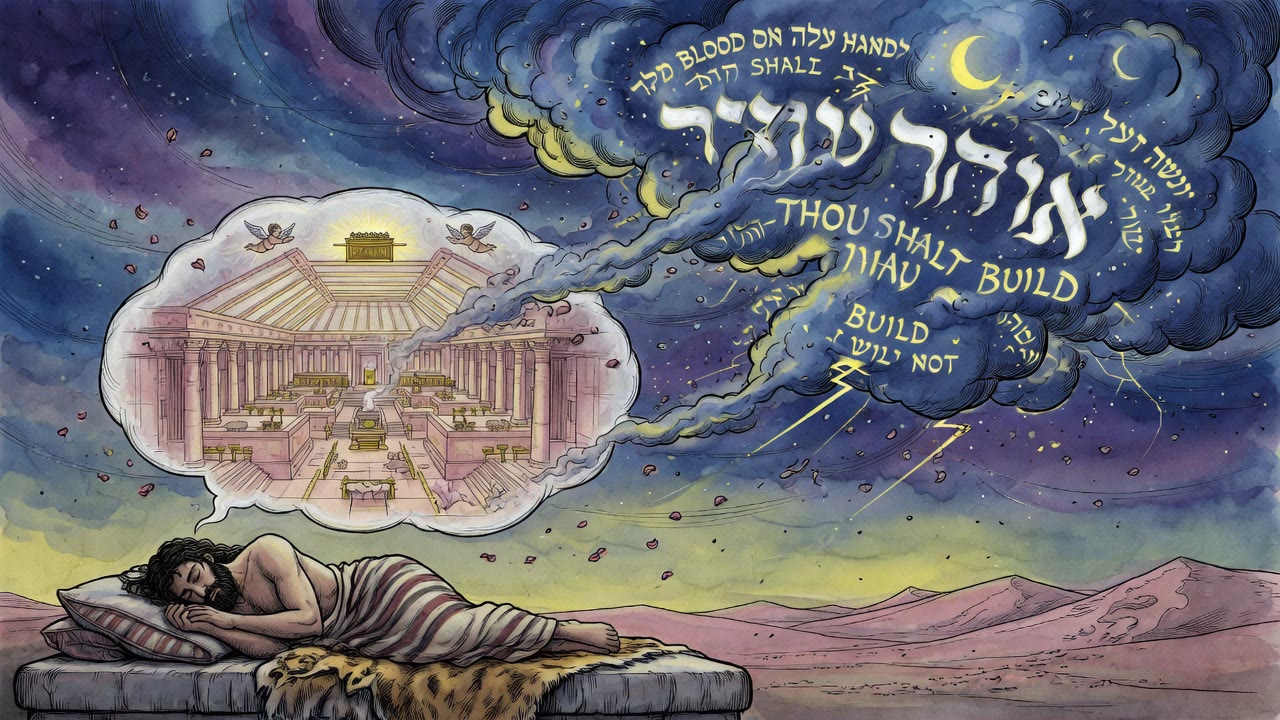
The prophet Nathan came to him, presumably after David had shared the plan, and initially encouraged it. Then Nathan came back the next day with a different message. "You will not build My house."

What the Tradition Said Was the Reason

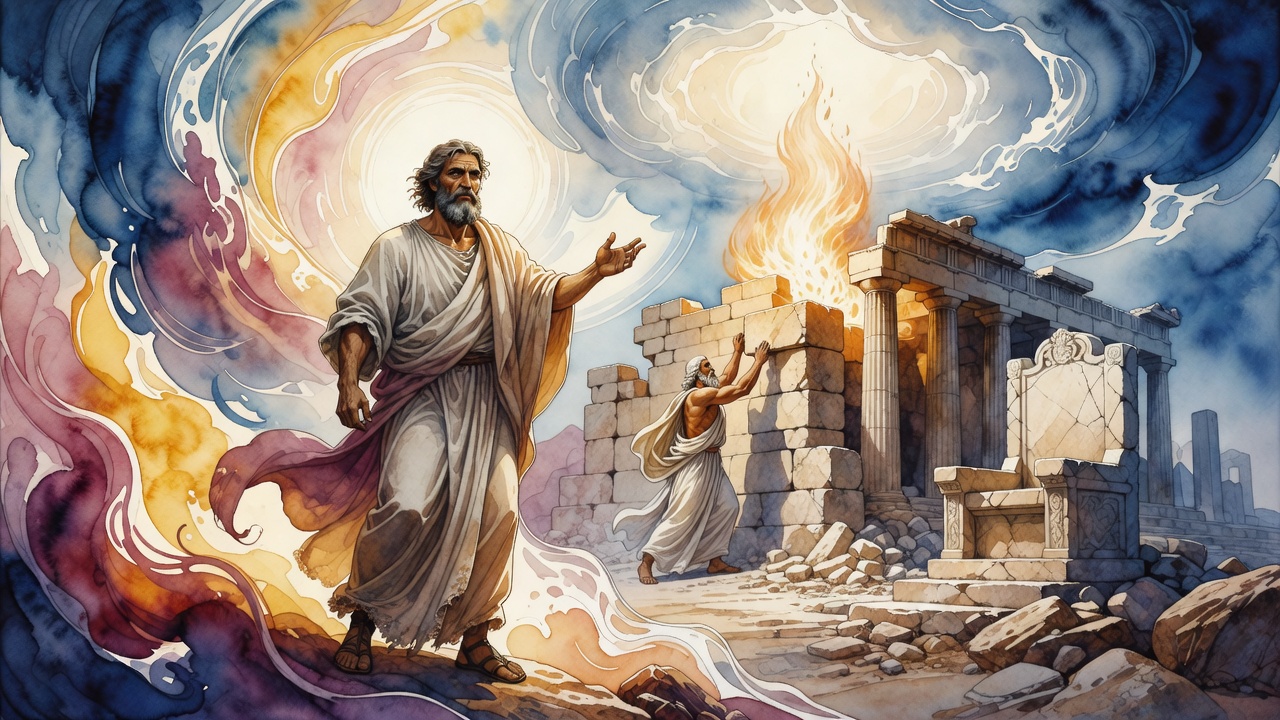
The verse in Chronicles is direct: David had shed too much blood and fought too many wars. God's house had to be built by a man of peace, and Solomon, whose name meant peace, was that man. The rabbis noted that this was not a condemnation. God also told David, in the same passage, that He had been with David everywhere he had gone. The restriction was not punishment. It was fitness for purpose.

Legends of the Jews went further. David had amassed considerable gold through conquest. He had reservations about using conquered gold for God's house. The gold of war, taken by force from defeated enemies, could it really sanctify a sanctuary? David held it back and set it aside separately, a gesture toward the idea that what was used to build the house of God ought to come from a different source than what was used to wage war.

David Running From His Own Son

The lowest point in David's life came when his son Absalom rose against him and David fled Jerusalem on foot, weeping, his head covered. His advisors came with him. Shimei ben Gera, from the house of Saul, walked along the ridge above them throwing rocks and cursing David, telling him he was getting what he deserved. One of David's men offered to kill Shimei immediately. David told him to leave it alone. "Maybe God told Shimei to curse me," David said. "Who am I to say otherwise?"

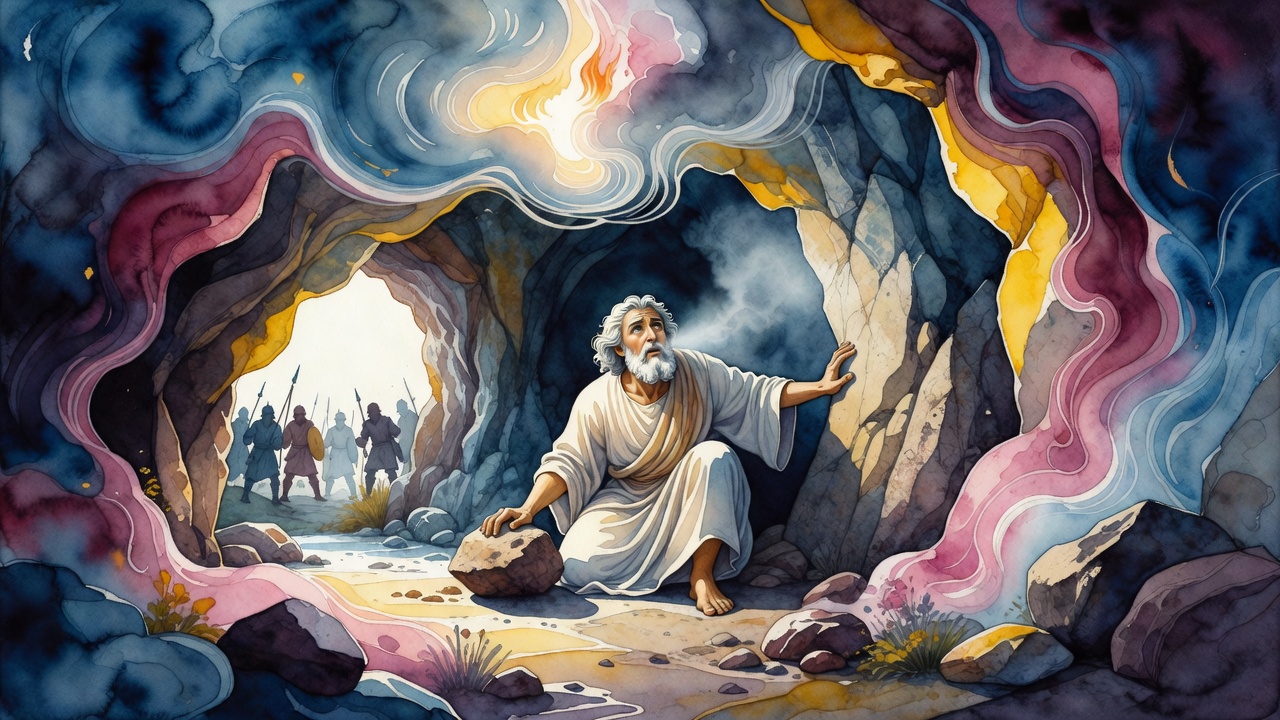
This was the man who had written: "I call to You, O Lord, my rock, do not be deaf to me." It was written either in a cave hiding from Saul, or during the flight from Absalom, or both in some way, the tradition was not precise about timing, only about the condition. A man on the run from his own son, accepting curses from a minor enemy, asking God not to be silent.

Waiting for the Right Season

Midrash Tehillim, the rabbinic commentary on the Psalms, read Psalm 8 and its enigmatic superscription about the Gittith as an agricultural metaphor for the timing of redemption. The winepress. The harvest. The vintage. There was a right season for grapes to be pressed, and pressing them before the season produced nothing useful. David's role in the Temple's story was like the planting. Solomon's was like the harvest. The two roles were not ranked, you could not have the harvest without the planting, but they were different, and the difference required different people.

What the Psalms Were Built For

After David, after Solomon, after the Temple stood and fell and the Psalms continued to be sung without the building they were written for, the question of what David had actually accomplished became more interesting. He had not built the Temple. The Temple had been built and destroyed. The Psalms were still being read.

Midrash Tehillim found in Psalm 119 a verse that applied to David: blessed are those who keep God's testimonies, who seek God with a whole heart. The man who had fled his son weeping, who had accepted curses from Shimei, who had asked God not to be silent, who had stockpiled materials for a house he would never build, the Midrash placed him in the category of those who seek God with a whole heart, and it did not require the Temple to have been built to make that placement accurate.


← All myths

From the tradition

Sources

5 sources

The texts this telling draws on, in full. Open a card to read inline, or expand it for a wider, quieter read.

Legends of the Jews 5:103Legends of the Jews

It's not always the grand gestures, but the quiet intentions humming beneath the surface.

King David, a warrior, a poet, a king... He had a secret reservation about building the Temple. It wasn't that he didn't want to. It was about where the gold would come from.

David had amassed a great deal of gold during his military campaigns. He'd taken it as booty from the temples and shrines of the nations he'd conquered. But the thought of using that gold to build the Beit Hamikdash, the Holy Temple in Jerusalem? It troubled him deeply.

Why? He feared what the vanquished nations might say if the Temple were ever destroyed. Imagine them gloating: "Aha! Our gods were mightier! They took revenge and destroyed the house of the Israelite God!" David couldn't bear the thought of such a desecration, of giving the defeated a reason to mock the divine.

David's concern wasn't just about pride. It was about safeguarding God's reputation, protecting the sanctity of the Temple from even the slightest hint of association with idolatry.

Fortunately, according to Ginzberg's Legends of the Jews, his son, King Solomon, inherited such immense wealth that it wasn't necessary to use David's war spoils for the Temple construction. Solomon's riches were so vast, there was no need to touch the gold David had collected. And so, David's wish, born of deep reverence and foresight, was granted. It’s a small detail, perhaps, but it speaks volumes about the heart of a king and the meticulous care taken to ensure the purity of the Temple. It reminds us that even in the most glorious endeavors, intention matters. Maybe even more than anything else.

Full source
Legends of the Jews 4:51Legends of the Jews

King David, arguably the greatest king of Israel, certainly did.

David, consumed with a desire to honor God, wants to build the Beit Hamikdash, the Holy Temple in Jerusalem. It’s the ultimate act of devotion.

After the prophet Nathan delivers God's message, David is devastated. "Ah," he says, trembling, "verily, God hath found me unworthy to erect His sanctuary." You can almost feel his disappointment. But the reason God gives is even more surprising.

God acknowledges David's intentions, but explains, "Nay, the blood shed by thee I consider as sacrificial blood, but I do not care to have thee build the Temple, because then it would be eternal and indestructible."

Wait, what? An indestructible Temple sounds like a good thing! David certainly thought so. "But that would be excellent," he protests.

But God, seeing the bigger picture, responds: "I foresee that Israel will commit sins. I shall wreak My wrath upon the Temple, and Israel will be saved from annihilation." The Temple, in God's plan, would serve as a kind of… lightning rod. A place where divine wrath could be focused, preventing the complete destruction of the Jewish people. As Ginzberg's Legends of the Jews retells it, it's a staggering idea.

It’s a tough concept, isn't it? That something so holy could be destined for destruction, but also be instrumental in the nation's survival.

And there's a final touch of grace in this divine exchange. God reassures David, telling him, "However, thy good intentions shall receive their due reward. The Temple, though it be built by Solomon, shall be called thine.” Even though David wouldn't physically build it, the Temple would forever be associated with his name, a evidence of his unwavering devotion.

So, what does this all mean? This passage, found in Legends of the Jews, isn't just a historical anecdote. It's a powerful reminder that sometimes, what we perceive as a rejection might actually be a blessing in disguise. It speaks to the complexities of divine planning, where destruction and salvation can be intertwined, and where even unrealized intentions are recognized and rewarded.

It leaves you wondering: what dreams have you had to let go of? And could there be a hidden blessing woven into that disappointment?

Full source
Midrash Tehillim 8:1Midrash Tehillim

Our sages explored this very feeling, using the image of the harvest and the vintage to understand the delicate timing of redemption. It's all there in Midrash Tehillim, a collection of rabbinic teachings on the Book of Psalms.

Psalm 8 opens with the enigmatic phrase "To the conductor over the Gittith." What exactly is the Gittith? The rabbis pondered this, and their interpretations offer profound insights.

One interpretation, drawing from (Joel 4:13), connects the Gittith to the harvest. "Send forth the sickle, for the harvest is ripe." Rabbi Pinchas, citing Rabbi Chelkia, asks: who is being told to send forth the sickle? Some say the angels are speaking to God. Others argue it's God speaking to Israel.

Here's the twist: we don't sing specifically about the harvest or the vintage, but about the Gittith. Why? The harvest, we learn, represents Babylon, likened to a threshing floor in (Jeremiah 51:33). The vintage, on the other hand, symbolizes Media, as (Zechariah 9:13) suggests, "For I have bent Judah as my bow, I have filled the bow with Ephraim." These are potent symbols of nations and historical forces at play.

The Midrash (rabbinic interpretive commentary) continues, illuminating a beautiful concept: redemption can be found in four "languages," or opportunities: the harvest, the vintage, childbirth, and balsam. But these opportunities are fleeting. Miss the opportune moment, and you lose them entirely. The owners themselves derive no benefit. It’s there in (Joel 4:13): "Send forth the sickle, for the harvest is ripe." And (Jeremiah 49:9): "If grape-gatherers came to you." Think of (Micah 5:2), "Therefore will he give them up, until the time that she who travaileth hath brought forth," and Song of Solomon 8:14, "On the mountains of spices."

Imagine a ripe field of grain, ready to be harvested. Wait too long, and the grain falls to the ground, wasted. This sense of urgency, this understanding of timing, is crucial.

The Midrash emphasizes that “everyone sees the Gittith.” It is not hidden. The opportunity for redemption is always present, if we have the eyes to see it. Joel speaks of it in (Joel 4:13): "Send forth the sickle." Isaiah speaks of it in (Isaiah 27:2): "And it shall come to pass in that day, that a vineyard of wine, red and good, shall be planted." Asaph speaks of it in (Psalm 81:1): "For the Gittith." And David, of course, in the very psalm we began with: "To the conductor over the Gittith."

So, what does this mean for us today? Perhaps it's a call to be mindful of the present moment, to recognize the opportunities for growth and redemption that surround us. Are we ready to "send forth the sickle" when the time is. Or will we let the harvest rot in the fields? The choice, it seems, is ours.

Full source
Midrash Tehillim 142:1Midrash Tehillim

This particular midrash (rabbinic interpretive commentary) explores a moment in David's life, a moment of intense vulnerability.

David, the future king of Israel, is on the run from Saul, who's hunting him relentlessly. He finds himself hiding in a cave, a dark, damp, and isolating place. It's in this cave that David utters the words of Psalm 142, a desperate plea for help.

The Midrash Tehillim isn't just interested in the words themselves. It asks, what was David’s state of mind? What did he understand in that moment? The midrash points us to (Proverbs 18:10): "The name of the Lord is a strong tower; the righteous run to it and are safe." It suggests that in times of distress, the righteous turn solely to God. As (Psalm 34:2) says, "I will bless the Lord at all times; His praise shall continually be in my mouth.": When David fled from his own son, Absalom, he sang to God. When he was lost in the wilderness, he spoke only of God. In every trial, he placed his trust in God. And here, in the claustrophobic darkness of the cave, he cries out, "I cry out to You, O Lord; I say, ‘You are my refuge, My portion in the land of the living.’" (Psalm 142:6).

The question the midrash poses is deceptively simple: What does it mean that David had "understanding" (maskil in Hebrew, often used as a title for certain psalms, including this one)?

The answer, according to the midrash, is deeply humbling. In that cave, facing imminent danger from Saul, David realized something crucial. He saw, with absolute clarity, that his wealth, his wisdom, his strength – none of it mattered. None of it could save him. He was utterly alone.

And it was in that aloneness, in that stark awareness of his own powerlessness, that David found his only recourse: prayer. He understood, the midrash tells us, that he had no good except for prayer.

It's a powerful idea, isn't it? That the moment of greatest despair, the moment when we feel most utterly alone, can actually be the moment of greatest clarity. The moment when we realize that all we truly have is our connection to something larger than ourselves.

Think about the times in your own life when you've felt most vulnerable. Did you, like David, find yourself turning to prayer, to a deeper connection with the divine? Did you discover, perhaps, that in letting go of your reliance on your own strength, you found a strength you never knew you possessed?

The Midrash Tehillim offers us a profound lesson: Sometimes, it's in the cave, in the darkest and most isolating moments, that we truly understand. Sometimes, it's when we realize we have nothing else that we discover everything we need. And maybe, just maybe, that's the "understanding of David" that Psalm 142 is trying to convey.

Full source
Midrash Tehillim 119:31Midrash Tehillim

We've all been there. But what if I told you that neglecting Torah study could actually be… well, a missed opportunity of cosmic proportions?

Midrash Tehillim, a collection of homiletic interpretations on the Book of Psalms, tackles this very issue in its commentary on Psalm 119. It's a powerful passage urging us to prioritize learning, even when it feels impossible.

The Midrash (rabbinic interpretive commentary) begins by addressing that familiar excuse: "I didn't know!" It counters with a firm, yet gentle, reminder. The scroll is right there! The wisdom is accessible. As (Isaiah 29:12) puts it, when we hand the book to someone unlearned and ask them to read, they simply reply, "I am not learned." That feeling of inadequacy can be a real barrier, can't it? But David, in (Psalm 119:125), cries out, "I am your servant; give me understanding!" He acknowledges his need for divine guidance.

Then comes the truly provocative part. "Now is the time to do for God; violate your Torah!" Wait, what? Violate the Torah? It sounds like a contradiction, but the Midrash isn't advocating for lawlessness. Instead, it's urging us to prioritize Torah study, even if it means temporarily setting aside other commandments. It's a radical idea, emphasizing the profound importance of engaging with the divine word. The urgency is palpable: "If you see a generation that abandons the Torah and lets go of it, immediately it will be forgotten." The stakes are high! Have you ever put off something important, telling yourself you'll get to it "when you have time?" The Midrash challenges this procrastination. Every moment, it urges, strive to learn. Don’t wait for the perfect moment, because it might never arrive.

David then declares, "I love Your Torah more than all gold and precious stones!" Why this extreme devotion? Because, as the Midrash points out, earthly riches are fleeting. (Ezekiel 7:19) reminds us that on the day of judgment, silver will be thrown into the streets and gold will become abhorrent. They simply cannot save us. (Proverbs 11:4) echoes this sentiment: "Wealth does not profit on the day of wrath."

But the Torah? That’s a different story. Even if judgment leads to death, the Torah you've studied will revive your soul! "The Torah of the Lord is perfect, restoring the soul," it says. It's a promise of enduring value, a lifeline that transcends earthly limitations.

The Midrash then explores the meaning of David's words, "Therefore, I have observed all Your precepts." The Hebrew word "yesharim," meaning "upright," plays a crucial role. When someone asks for enlightenment in Hebrew, they say "ha'er li." So, David isn’t just saying he’s kept the commandments. He’s also saying he has enlightened them for his children, and that he needs God to enlighten him as well. It's a beautiful image of intergenerational learning and a constant seeking of deeper understanding.

And finally, the Midrash concludes with a powerful affirmation: "For with You is the fountain of life; in Your light do we see light." It’s a reminder that Torah study isn't just an intellectual exercise. It’s a connection to the very source of life, a pathway to seeing the world with greater clarity and wisdom.

So, the next time you're tempted to put off learning, remember the words of Midrash Tehillim. Don't wait for the perfect moment. Dive in, even if it means "violating your Torah" in a small way. The rewards, both in this world and the next, are immeasurable. What small step will you take today to connect with that fountain of life?

Full source