The Angels Who Cancel Decrees Before They Reach the Earth
Rabbi Ishmael went up through the palaces to see a face and found weather instead, wrath rising over the earth and angels who cancel what heaven signed.
Table of Contents
Rabbi Ishmael had wanted one thing since he was too young to be trusted with it. He wanted to see the King.
 Click for full size
Not hear about Him. See Him. The men who went up before him came back with warnings instead of descriptions: the stones that look like running water, the doorkeepers who open a man the way a clerk opens a scroll and read out what is inside. Not one of them came back with a face.
The Name of a Crown and the Name of a Seal
What he had instead was a list, and the list came down from Zerubbabel son of Shealtiel.
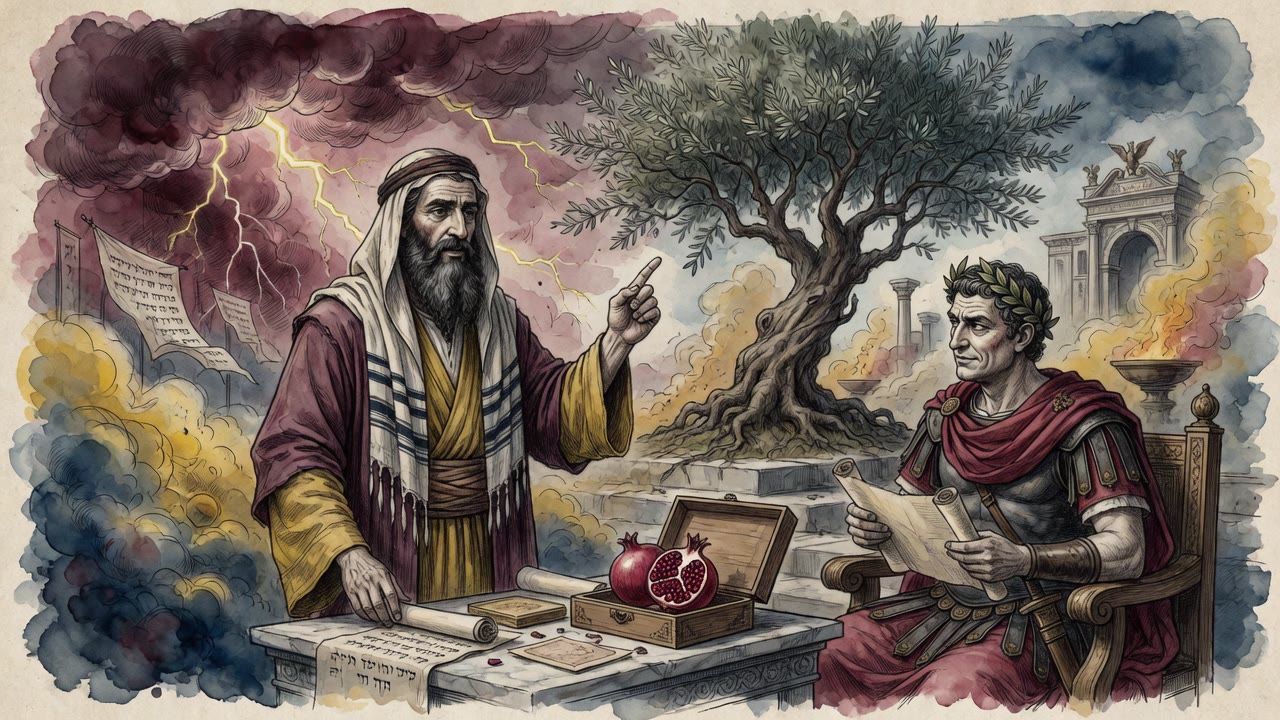
Zerubbabel had put a Temple back on its foundations after Babylon, so when he stood up in a room of men sick with wanting to see the Law with their own hearts, nobody told him to sit. He named the princes of the Law, faster than the scribes could follow. Then he said the name of a crown. Then he said the name of a seal.
One name to wear at the gate. One name to hold up when the gate asked.
He Went Down Into the Chariot
They called the ascent a descent. A man who did this was a yored merkavah (יורד מרכבה), one who goes down into the chariot, and nobody in the study house could say why the language ran backward.
Ishmael fasted until his hands shook, put his head between his knees, and said the names. At every gate two keepers stood, one at the right hand and one at the left, and each wanted the seal first. Ishmael raised it. Their hands came off him.
He stepped through the seventh gate and stopped. The seventh palace was not a room. It was weather.
The Wheels Darkened the Chariot
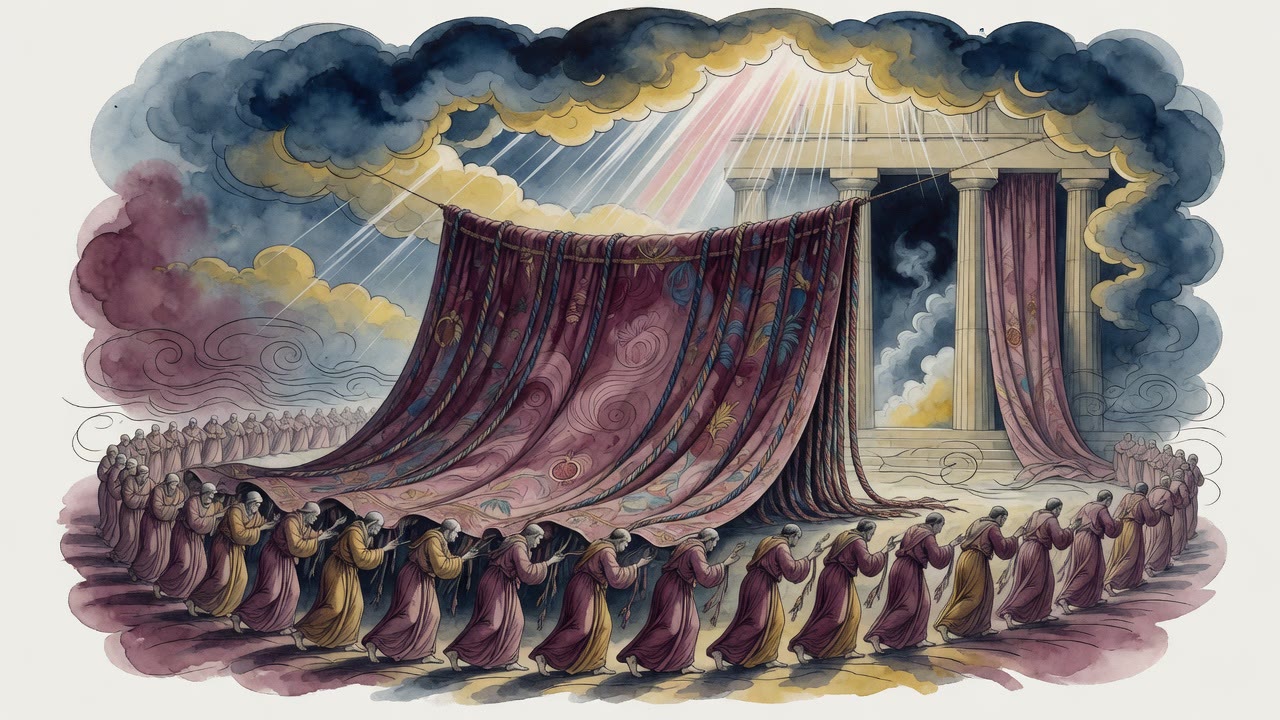
The ophanim (אופנים), the wheels, came around the throne and darkened it. Not dimmed it. Darkened it, the way a storm front pulls the color out of a barley field, and the light off the chariot afterward was harder to stand under.
That was when the front rank began to sing.
They stood closest in, before the loftiness of the majesty of the fearful palace. A moment earlier they had been terrified. Dread, then exultation, then dread again, with no space between where a creature might rest. Ishmael asked them, and his voice came out smaller than he meant. "What ails you, that you are afraid, and there are times when you rejoice? What ails you, that you sing for exultation, and there are times when you are terrified?"
One of them answered without turning his head. "When the ophanim of the power of God darken the chariot, we rejoice with great joy."
The whole rank took up the prophet's words, "Holy, holy, holy is the Lord of Hosts" (Isaiah 6:3), and the floor moved like a drumhead.
A Litany That Ran Out of Words
He tried to say what he was looking at, and he began with titles, because titles were all he had. King true and only, King who lives forever. King who kills and makes alive, King who says and does. King who forms every disease and creates every cure. He kept going because stopping felt like falling, piling on everything he owned, sublime and wonderful, beloved and old, fearful and terrific, high on the perfections of loftiness in the chambers of the palace of loftiness. Nothing stuck.
He got as far as "who sees profundities, beholds mysteries, observes dark matters, and who, in every place is," and the sentence went out of him like breath.
The Sheet Angled Toward the Earth
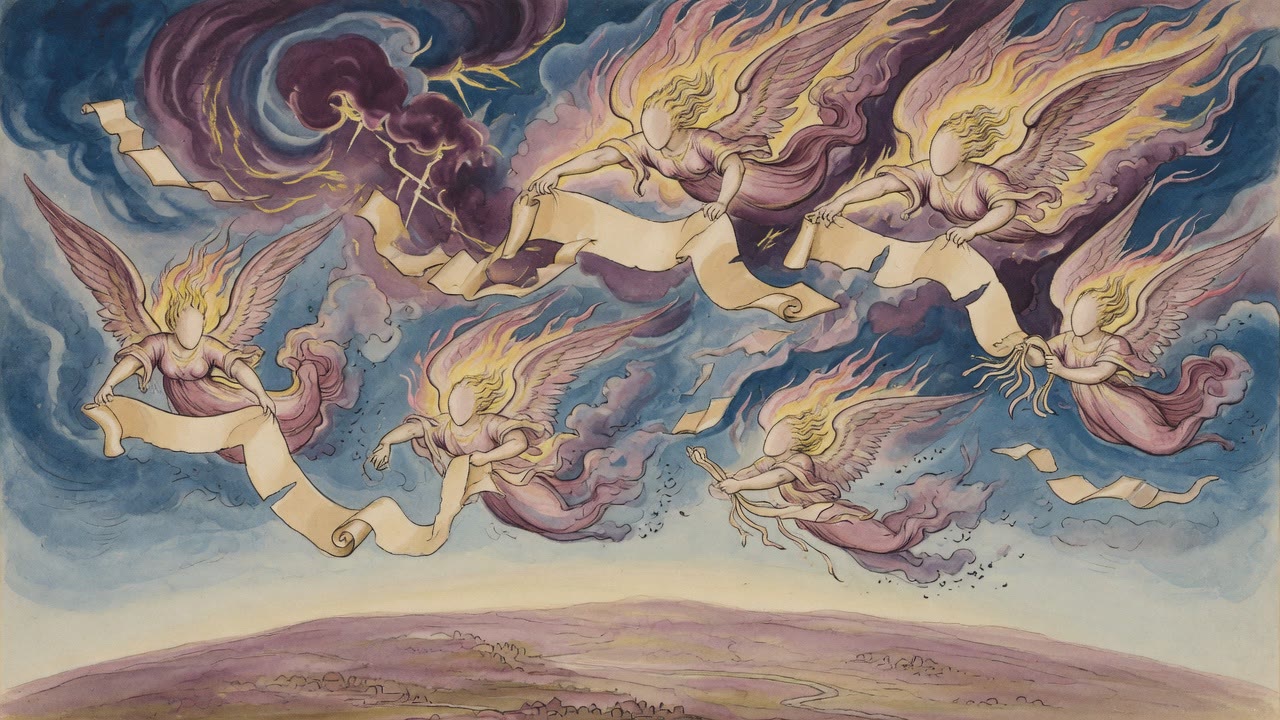
Below the throne, where the fire thinned out, there was traffic. Writing went up and writing came down, and a decree was being drawn while he stood there. The letters were set in a hand that never went back to correct itself, and the sheet was angled downward, toward the roofs of Judea and the children asleep under them.
The wrath came up behind it, rising the way water rises in a cistern, without hurry and without sound. The rank went quiet.
Then the ones nearest the throne stepped out.
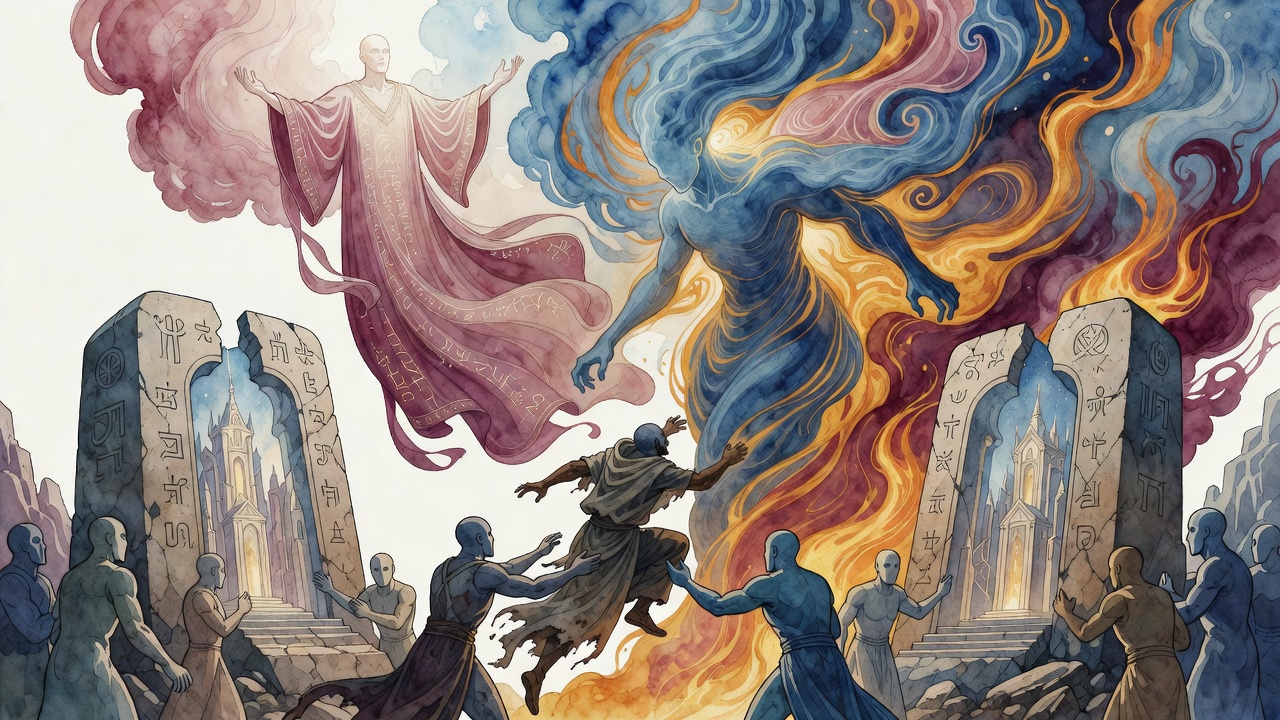
Their whole office is undoing. They cancel decrees. They annul vows. They avert wrath, they quiet jealousy, they cause love to be remembered, they set forth friendship. He had heard that list recited in the study house since he was a boy. He had never once pictured hands.
They had hands. One of them took the sheet while the ink was still wet, and the writing went out of the parchment as though it had never held any. The wrath dropped, going back down the way heat leaves a stone at dusk, and the rank started singing again, and somewhere beneath him a morning that had already been called off was going to happen anyway.
What He Carried Back Down
He came out through the gates in reverse, raising the seal at each one. In the study house they wanted the face.
He gave them the titles instead. Then he told them the part that had actually frightened him, which was not the fire and not the wheels. There is no changing His purpose, no retorting to His word, no delaying His will, and no place to flee from Him, and no secret place to hide from before Him.
He told them last about the sheet with the writing going out of it. One of the young men asked what the decree had said. Ishmael answered that he did not know, and he said it in a way that ended the question. For the rest of his life, whenever he reached "and who, in every place is," he stopped and let the silence carry the rest.
← All myths