6 min read

The Lightning Sword of Kazpiel and the Sixth Palace Gate

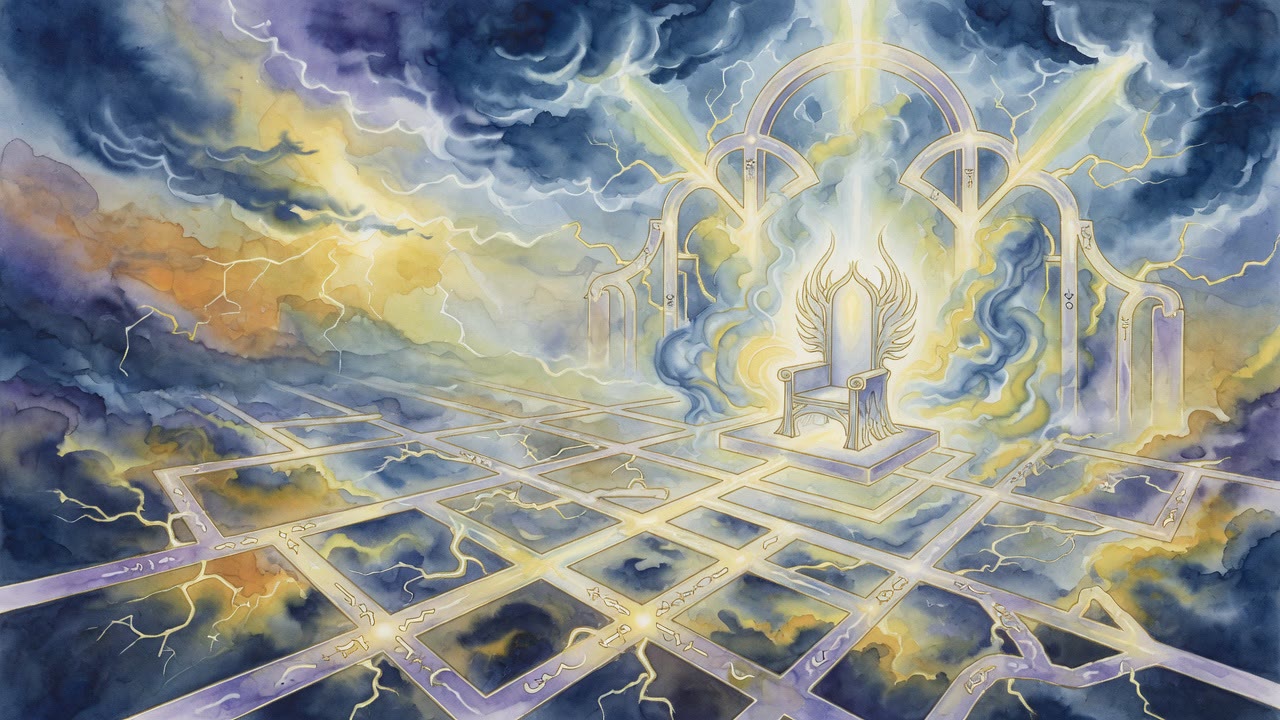
A soul who cleared five heavenly palaces reaches the sixth, where Kazpiel raises a sword of lightning and fiery horses stamp at the gate.

Curated by Arthur · Told by Maggid ·
Table of Contents
  1. The Fifth Gate and the Seals in His Hands
  2. Seized From the Right and the Left
  3. The Horses That Eat Coals of Fire
  4. Kazpiel and the Sword That Cries Pain
  5. Three Seals at the Sixth Threshold
The Lightning Sword of Kazpiel and the Sixth Palace Gate Click for full size

The Fifth Gate and the Seals in His Hands

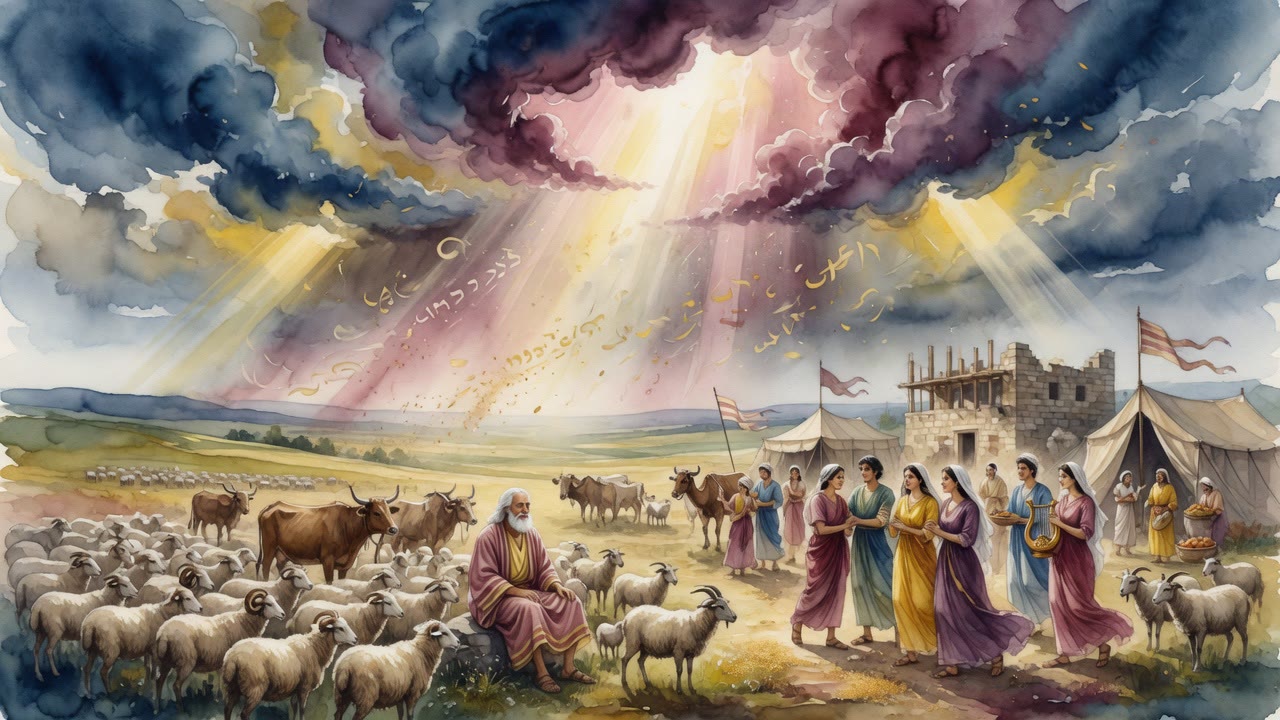
The traveler had climbed through four palaces of blinding light, and his hands would not stop shaking. In the right hand he gripped one seal. In the left, another. He had been taught their owners by name. The seal in the right hand belonged to Zebhoriel, called the Lord. The seal in the left belonged to Margiwiel, the Prince of the Presence. Show the right seal to the beings standing on the right, he had been warned. Show the left seal to the beings on the left. Confuse the two and the climb ends.

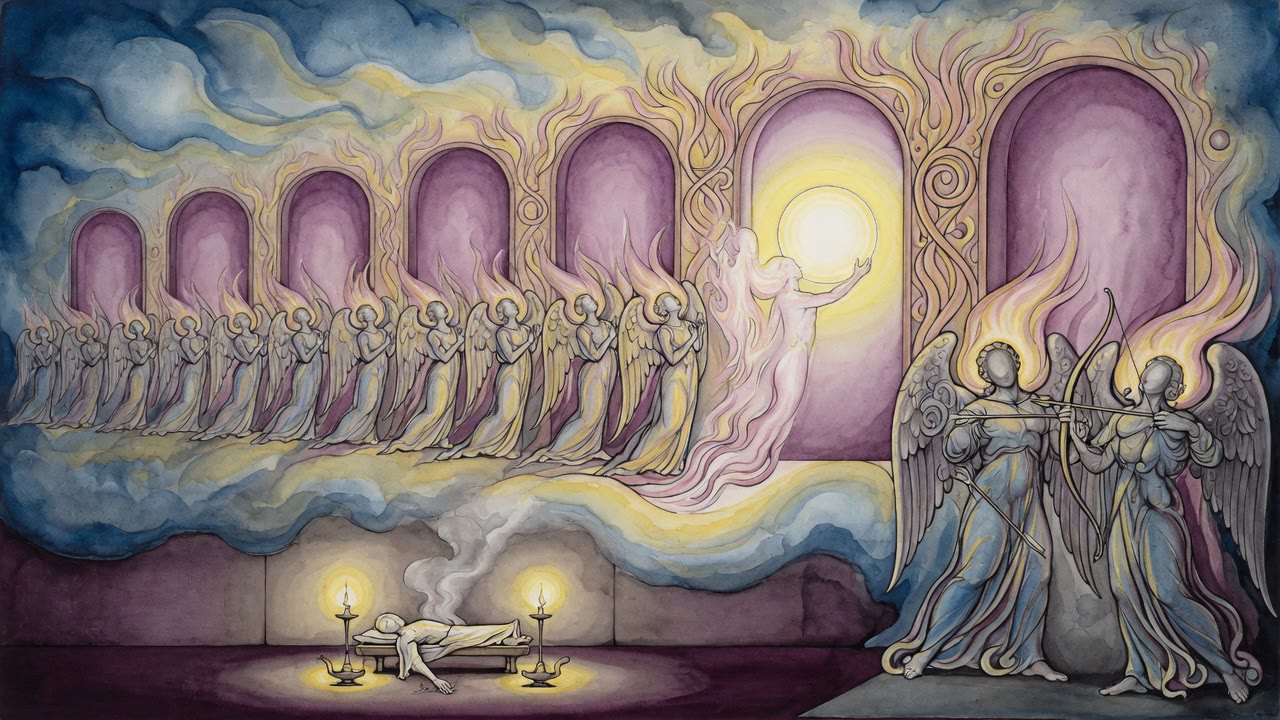
Ahead of him the fifth palace burned white at its threshold, and two figures stood at the lintel, the beam that runs above the door. On the right of that beam stood Tehilael, the prince set over the entrance. On the left stood 'Azriel. Neither moved. Neither blinked. They were the price of the fifth palace, and there was no walking around them.

Seized From the Right and the Left

He lifted the seals.

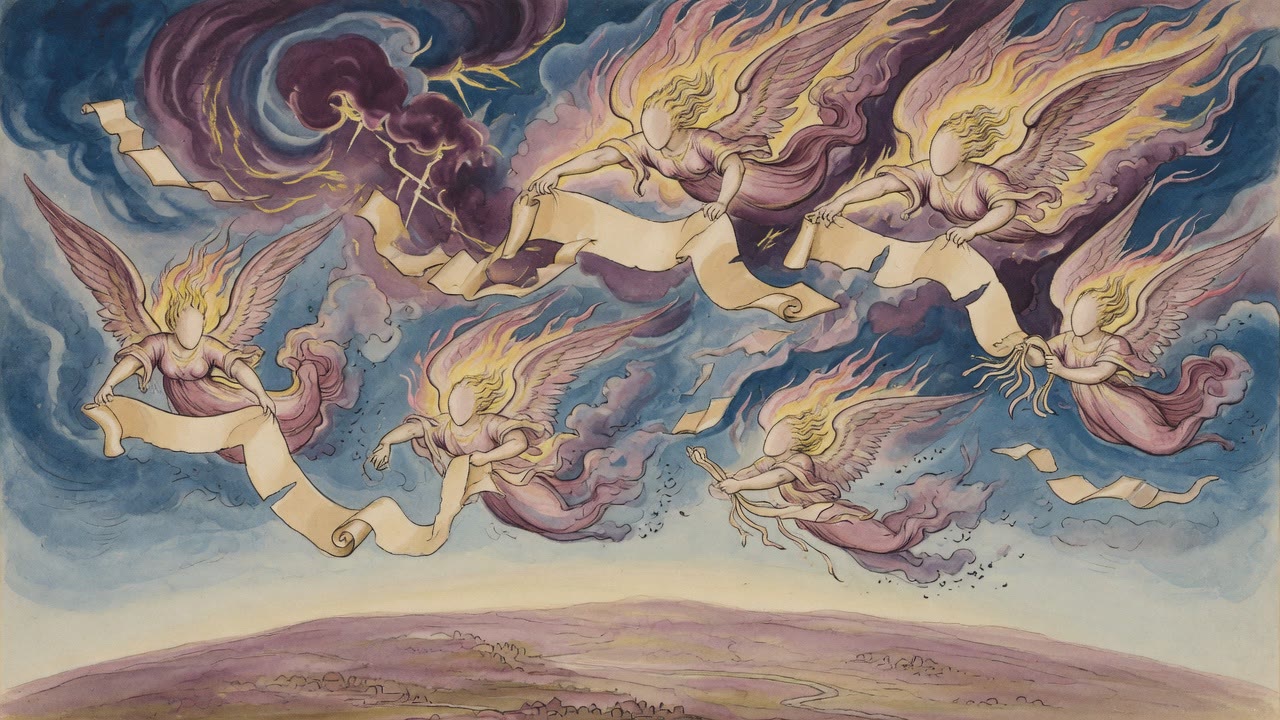
The moment they left his palms, hands closed on him. One being seized him from the right, another from the left, and both lifted him off the burning floor as if he weighed nothing. He did not fight. He had been warned this would happen, warned not to struggle, warned that the grip was escort and not punishment. They carried him across the threshold and set him down before Tehilael and 'Azriel.

Now came the part no seal could do for him. He had to make his peace with the two princes. He had to name himself and his purpose, and tell them why a creature of dust had come this high. So he spoke. Tehilael listened from the right of the lintel. 'Azriel listened from the left. Whatever the traveler said, it held. The two of them let the fifth palace close at his back, and he stood in the corridor before the sixth.

That was where the sound reached him. Not a voice. A stamping.

The Horses That Eat Coals of Fire

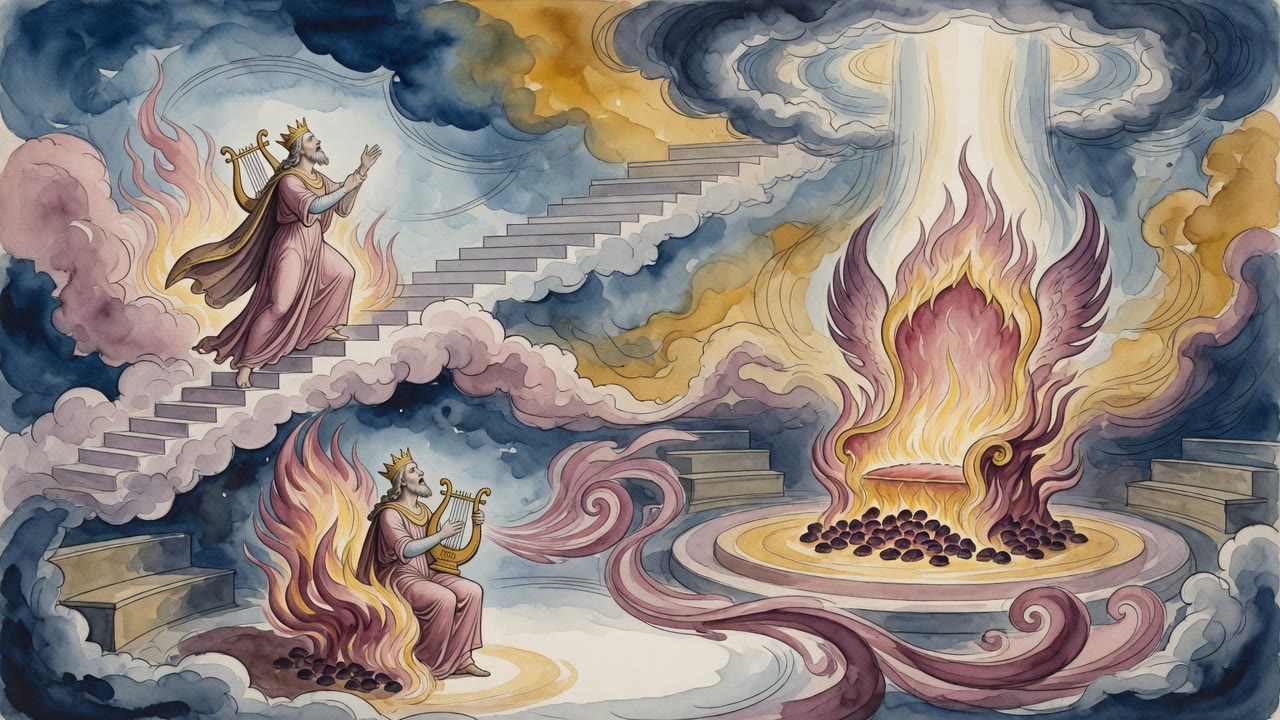
At the gate of the sixth palace stood horses, and they were nothing any stable had ever held. They were heroes of darkness. Horses of the shadow of death, horses of thick darkness, horses of fire and of blood, horses of hail and iron and fog. Their coats were not colors but conditions, each one a way the world could end. Beside them stood mangers, and the mangers were burning. Heaped in the flames lay coals of juniper wood, glowing white, and the horses lowered their heads and ate them.

One mouthful took forty bushels of live coal. The mouth of a single horse could hold three mangers the size of the great gate of Caesarea, the Roman port whose gate no man could span with his arms flung wide. They chewed fire the way a plow-ox chews grass, and they watched the traveler with the patience of things that have never once been hungry and have never once been full.

He walked between them. He had no seal for the horses. There was nothing to raise, nothing to show. He simply walked, and they let the smell of dust and fear pass by, and he came to the door.

Kazpiel and the Sword That Cries Pain

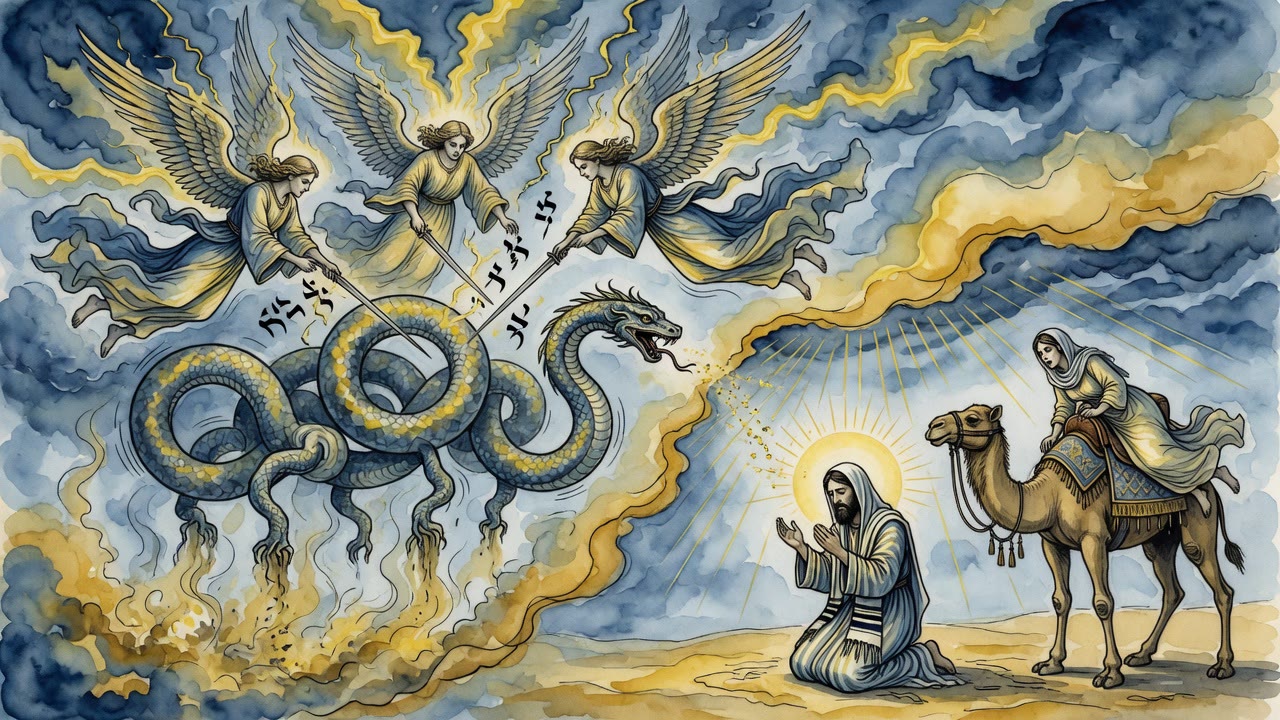
On the right of the lintel of the sixth palace stood Kazpiel, a prince, and in his fist was a sword. The sword was not steel. It threw lightnings. Kazpiel lifted it and shook it against every creature who came to that door unfit to look upon the King and the Throne, and the blade had a voice of its own. When it cut the air it screamed one word. "Pain!" it cried. Only that. The sword named what it would do before it did it.

Kazpiel did not weigh courage. Courage had carried braver men to the third palace and left them as ash at the fourth. He read something underneath it. His lightning sword was a scale, and it weighed the soul standing in front of it, and if the soul came up short the fire found it and the blade cried its one word and the climb ended there against the lintel.

Beside Kazpiel stood a second prince, Dumiel. What Dumiel required, what seal or word or silence, the traveler had not been told. He knew only that two of them held the sixth door, and that the sword on the right was already lit.

Three Seals at the Sixth Threshold

Here the toll doubled. At the fifth gate two seals had opened the way. At the sixth he had to present three, and each seal had its keeper, and each keeper stood ready to turn him back toward the horses if the emblem in his hand came up wrong or trembling or false.

He raised the first seal toward Kazpiel and the lightning blade.

The sword rose. For the length of one breath it hung above him, humming its threat, deciding. He did not run. He held the seal steady and let himself be weighed. Then the lightning drew back into the metal, and the blade went quiet, and Kazpiel lowered it and stepped clear of the right side of the door. Dumiel took the second seal. The third passed to the keeper beyond him. The sixth palace opened by the width of a body.

Behind him the horses went on eating fire. Ahead of him waited the seventh threshold and the last, and the Throne, and the King no traveler had ever reached on courage alone. He stepped through, still shaking, still holding what was left in his hands.


← All myths
From the tradition

Sources

3 sources

The texts behind this telling. Some cards carry a translation of the source; others are our own retelling of it, and each card says which. Every card links out to the original.

Heikhalot Rabbati 20:5Heikhalot Rabbati

Retold in our words. Read the original at the link below.Sefaria-hosted English translation · CC-BY

Standing there, the air crackling with unseen energy. You've made it through five palaces already, each more awe-inspiring and challenging than the last. Now, before you stands the sixth, and it's guarded. Not by just anyone, but by powerful angelic beings.

As you approach, you must present three seals, think of them as cosmic passwords, to the gatekeepers. It’s not as simple as knocking and hoping for the best! These seals are vital for proving your worthiness to proceed further.

Who's the first guardian you encounter? Kazpiel, a prince whose sword isn't just sharp; it emits lightnings! He’s not messing around. The text emphasizes the sheer power radiating from him, saying he “shaketh it against everyone who is not fit to behold the King and his throne.” Ginzberg, in his Legends of the Jews, often describes angels as wielding immense power, and Kazpiel is a prime example. This isn't just about physical strength. It's about spiritual fitness. Kazpiel's sword is a detector, instantly recognizing those who aren't ready for such a profound encounter. And if you're deemed unworthy? Well, let's just say you wouldn't want to be on the receiving end of that lightning. The sword itself even cries out "Pain!", a rather dramatic security measure, wouldn't you agree?

Kazpiel stands by the lintel on the right side of the entrance, a sentinel of immense power. He represents a formidable barrier. But he's not alone.

The text then mentions another being: Dumiel. Unfortunately, the passage abruptly ends there. We don't learn what seals must be shown to Dumiel, or what his specific role is. We are left to wonder about his position, his powers, and how he complements Kazpiel in guarding this sacred space.

What does it all mean? Why such intense security? Perhaps it’s about protecting the divine from those who would misuse its power. Maybe it's a test, a way of ensuring that only those with the purest intentions can reach the ultimate source. Or perhaps it’s a metaphor for the inner work we must do to prepare ourselves for spiritual insight.

The Heikhalot (the heavenly palaces) texts are filled with these kinds of vivid descriptions, inviting us to contemplate the nature of divinity, the challenges of spiritual growth, and the awesome power of the angelic realm. So, the next time you face a challenge, remember Kazpiel and Dumiel, and ask yourself: What seals do I need to present to move forward on my own path?

Full source
Heikhalot Rabbati 18:1Heikhalot Rabbati

Retold in our words. Read the original at the link below.Sefaria-hosted English translation · CC-BY

Let me tell you, some of the old Jewish mystical texts go there – and then some.

A particularly vivid passage from Heikhalot (the heavenly palaces) Rabbati, one of the key works of Heikhalot literature. The Heikhalot texts, which date back to late antiquity, are all about heavenly journeys and ascensions through the various heikhalot – the divine palaces – to witness the glory of God. They're filled with angels, demons, seals, and… well, horses. But not just any horses.

These aren't your gentle steeds from a Sunday afternoon ride. These are the horses of… well, let’s just say they don’t sound friendly.

Heikhalot Rabbati 18 gives us a glimpse of them: "Their horses be heroes of darkness, horses of the shadow of death, horses of thick darkness, horses of fire, horses of blood, horses of hail, horses of iron, horses of fog." Quite the resume. Each epithet adds a layer of dread, painting a picture of mounts that are less creatures and more embodiments of cosmic horror. We’re talking about horses born of darkness, cloaked in shadow, and forged in the very elements of chaos.

And what do these magnificent, terrifying beasts eat? Forget oats and hay. "The horses upon which they ride stand beside mangers of fire full of coals of juniper and eat fiery coals from their mangers, [taking] a measure of forty bushel of coals in one mouthful."

Forty bushels of fiery coals. In ONE mouthful.

Let that sink in for a moment.

The image is just staggering. We're not talking about a little nibble. We're talking about a consumption that defies our understanding of reality. And it gets even more absurd. "And the measure of the [content of the] mouth of such horse is [the content of] three mangers such as the mangers of Caesaraea, and the measure of each manger is the measure of the gate of Caesarea."

So, to break that down: the mouth of one of these horses can hold the equivalent of three mangers the size of the gate of Caesarea. Caesarea, a major port city in Roman Palestine, had some pretty impressive gates, to say the least! Gulp.

What's the purpose of such extravagant imagery? Well, the Heikhalot texts aren't exactly known for their literal interpretations. They use hyperbole, metaphor, and symbolic language to convey the utterly ineffable nature of the divine realm. These horses, in all their terrifying glory, represent the immense power and overwhelming presence of the divine. They are guardians, perhaps, or even aspects of the divine chariot itself, as described in the Book of Ezekiel.

The fiery diet, the gargantuan appetite – it all points to a power that transcends our earthly limitations. It's a way of saying, "You cannot comprehend this with your human mind. This is beyond your experience.": darkness, fire, blood, hail, iron, fog. These aren’t just random adjectives. They represent elemental forces, primal powers that both create and destroy. By associating these forces with the horses, the text suggests that they are integral to the very fabric of the cosmos.

And isn't that what the most powerful religious imagery always does? It takes us to the edge of comprehension, forcing us to confront the limits of our understanding and to glimpse something truly… other.

So, the next time you're struggling to grasp a complex idea or feeling overwhelmed by the sheer scale of the universe, maybe, just maybe, think about those horses of fire, chomping down on their forty bushels of burning coals. It might just give you a new perspective.

Full source
Heikhalot Rabbati 19:4Heikhalot Rabbati

Retold in our words. Read the original at the link below.Sefaria-hosted English translation · CC-BY

Heikhalot Rabbati turns to Story of Tehilael.

So, imagine you're on this spiritual journey, trying to access deeper levels of understanding. You're faced with… seals. Not the cute, flippered kind, but powerful emblems. Specifically, two seals: one belonging to Zebhoriel the Lord, and the other to Margiwiel, the Prince of the Presence.

What are these seals for? Our text instructs you to show the seal of Zebhoriel to those standing on your right and the seal of Margiwiel to those on your left.

Why this matters becomes clear pretty quickly. As soon as you present the seals, you’re immediately seized – one being from the right, and another from the left.

But don’t worry, it’s not a divine mugging. These beings escort you until you are handed over to two more figures: Tehilael and ‘Azriel. The text emphasizes the importance of making your peace with them and warning them about yourself – essentially, introducing yourself and explaining your intentions.

Who are these new players? We learn that Tehilael is the prince in charge of the entrance to the fifth palace. And crucially, he stands on the right side of the lintel – that horizontal beam above the doorway. ‘Azriel, on the other hand, stands on the left side, right there with Tehilael.

Think of it like needing a cosmic visa. Zebhoriel and Margiwiel's seals get you past the initial guardians, but Tehilael and ‘Azriel are the gatekeepers to the next level – in this case, the fifth palace. You need to properly identify yourself and your purpose to them before you can proceed.

What does it all mean? Well, on a literal level, it's a very specific instruction for working through the celestial realms. But on a more metaphorical level, it speaks to the challenges and requirements of spiritual growth. You can’t just waltz into enlightenment. You need the right "credentials," the right approach, and the willingness to engage with the gatekeepers along the way.

The journey isn't passive. You have to actively show the seals, be willing to be "seized," and make your peace with the guardians. It's a reminder that spiritual progress often involves facing challenges, confronting our own limitations, and earning our place at each new threshold.

So, the next time you feel like you're jumping through hoops to reach a goal, remember the seals of Zebhoriel and Margiwiel, and the gatekeepers Tehilael and ‘Azriel. Maybe, just maybe, you're closer to that fifth palace than you think.

Full source