Rabbi Nehunya Named the Door-Keepers of the Seventh Palace
Kneel when the name leaves my mouth, he told them. The great ones of the academy stood, then went down on their faces while the scribes wrote.
Table of Contents
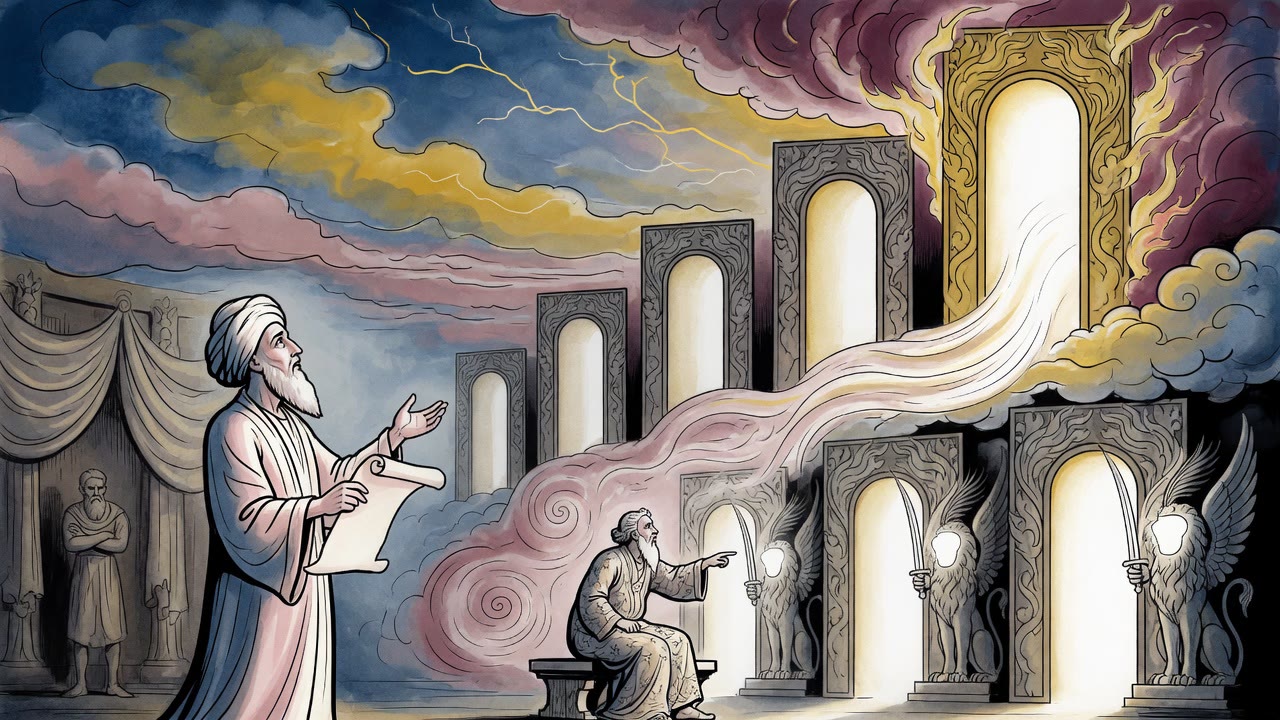
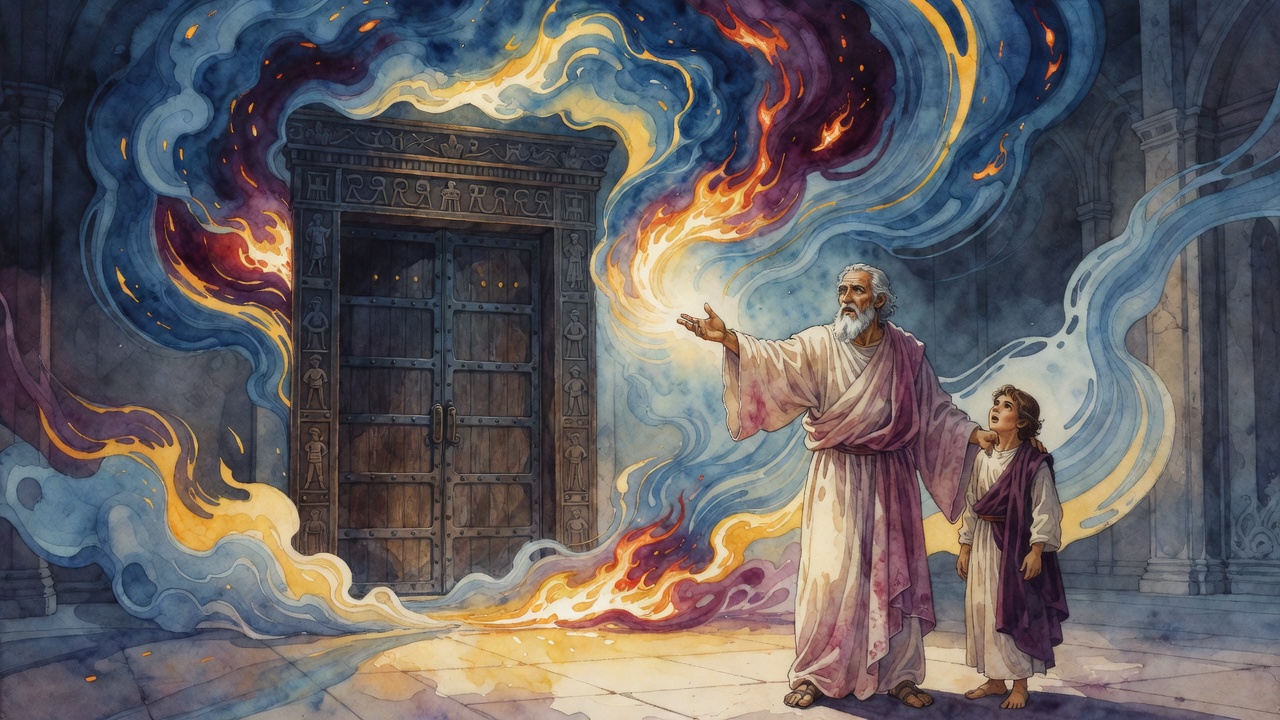
Rabbi Nehunya ben Hakkanah gave Rabbi Ishmael the shape of the place before he gave him anything in it, the way a man describes a house from the outside. Totrosi'ai, the Lord God of Israel of Hosts, sits within seven palaces, one inside another. At the entrance of each palace stand eight door-keepers, four to the right of the lintel and four to the left.
 Click for full size
Ishmael did the arithmetic while his teacher was still talking. Seven thresholds, fifty-six guards, and every one of them with a name, since nothing up there is nameless. Then he noticed what he had not been given.
The Names He Would Not Say
Nehunya sent his answer to the Patriarch rather than deliver it to their faces. Go and tell him this, he said. The door-keepers of the first six palaces may be mentioned by name, all of them, and a man may touch them. The door-keepers of the seventh may not, because a man is terrified by the sound of their names and is not able to touch them, since their name is called according to the name of the King of the world. Consequently I have not stated them.
That should have closed the matter. The refusal came with its reason attached, and the reason was not that the students were unworthy but that a body does what a body does when that sound goes through it.
The message came back with two words in it. State them.
Stand Upon Your Feet
Nehunya did not refuse a second time, and he did not simply give in either. He raised the price.
Come, he told them, and stand upon your feet, and when His name goes forth from my mouth, each one of you kneel and fall upon your face. Bring the scribes.
So they came. All the great ones of the company and all the mighty ones of the academy, men who had spent thirty years being deferred to in that hall, stood in front of Rabbi Nehunya ben Hakkanah on their feet like boys on a first day. Nobody sat. The scribes trimmed their reeds and waited, because somebody had to stay upright when the rest went down, and the writing was the whole reason the terms had been swallowed.
Then there was the pause before the first name.
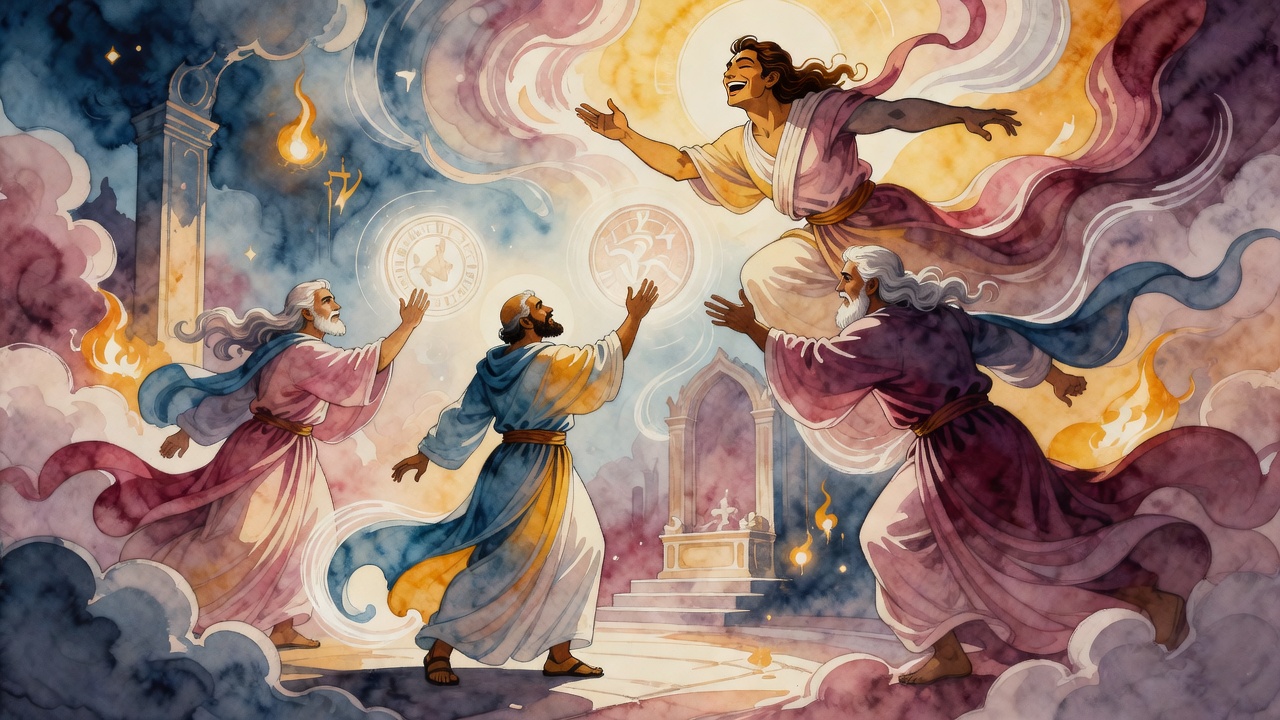
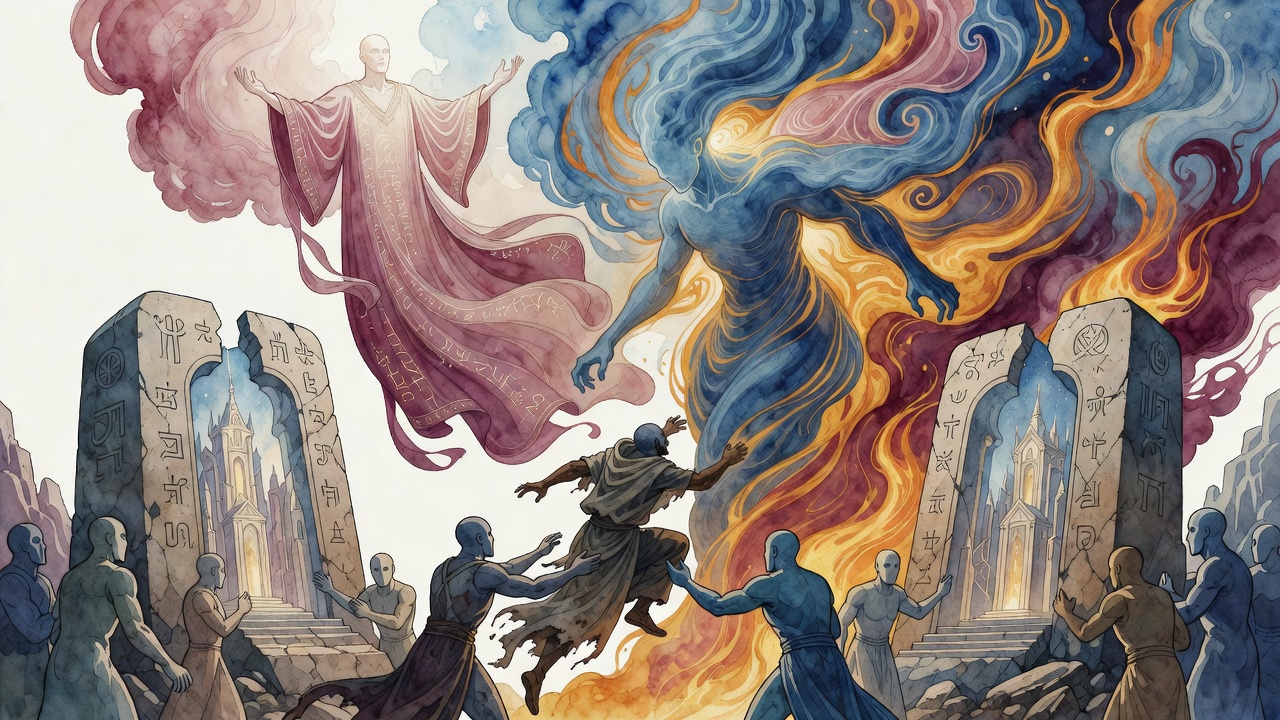
Nehunya's mouth opened, and in the half breath before any sound came out of it every man in that room understood that he had asked for this and could not now unask it. The knees were already going. Some of them were on the floor before the syllable had finished, which meant it was not obedience and it was not reverence either. It was what the sound did to their legs.
He spoke, and they fell upon their faces, and the scribes wrote. Then he spoke again.
What the Scribes Had to Stay Up For
A man cannot write with his forehead on the floor, so the ones holding the reeds took the names standing, one after another, with the whole academy stretched out around their sandals like a field after a storm.
Ink went onto the page in a hand that was not the hand that had trimmed the reed. Whatever a name of that kind does to a man, it does not wait until he has finished his work; it goes into the shape of his letters instead. The greatest heads in the hall stayed down through one lintel and got up and went down again at the next, and the reeds kept moving above them.
The King the Praises Could Not Reach
When the names were done, the praise came up after them, and it came at a different temperature, the way cool water feels on a burn.
King beloved and lovely and clean, exalted beyond all the haughty, clothed in majesty beyond the majestic, lifted up beyond the mighty and upraised beyond the powerful. Splendor of kings and praise of nobles, treasure of the holy and humility of the lowly, pleasant in the mouth of all those that call upon Him and sweet to them that hope in His name. Righteous in all His ways and upright in all His doings, judge of every soul, witness of every transaction, mighty in wisdom and in every secret, lofty in purity and in holiness.
Every title in it was already too small, and the men said it anyway. They could join this part from the floor, because praise does not knock anybody down.
What Was Left on the Page
They got up slowly. The stone had been cold and it had marked their faces, and one of the great ones stayed on his knees longer than the rest, though nobody remarked on it.
The scrolls went out with the scribes. Nehunya had held those names back on the grounds that the sound of them terrifies a man and puts him past touching anything, and he had just been proved right in front of the entire academy, and now the names were in ink, in a hand anyone could read, on a page that does not require a teacher to be standing there. Ishmael carried the count home in his chest: four to the right of the lintel, four to the left, seven courts deep. The seventh door had not opened. Its guards had only been read out loud in a room made of plaster and breath, and the room went down.
← All myths