Rabbi Ishmael Came for the Door-Keepers of the Seventh Palace
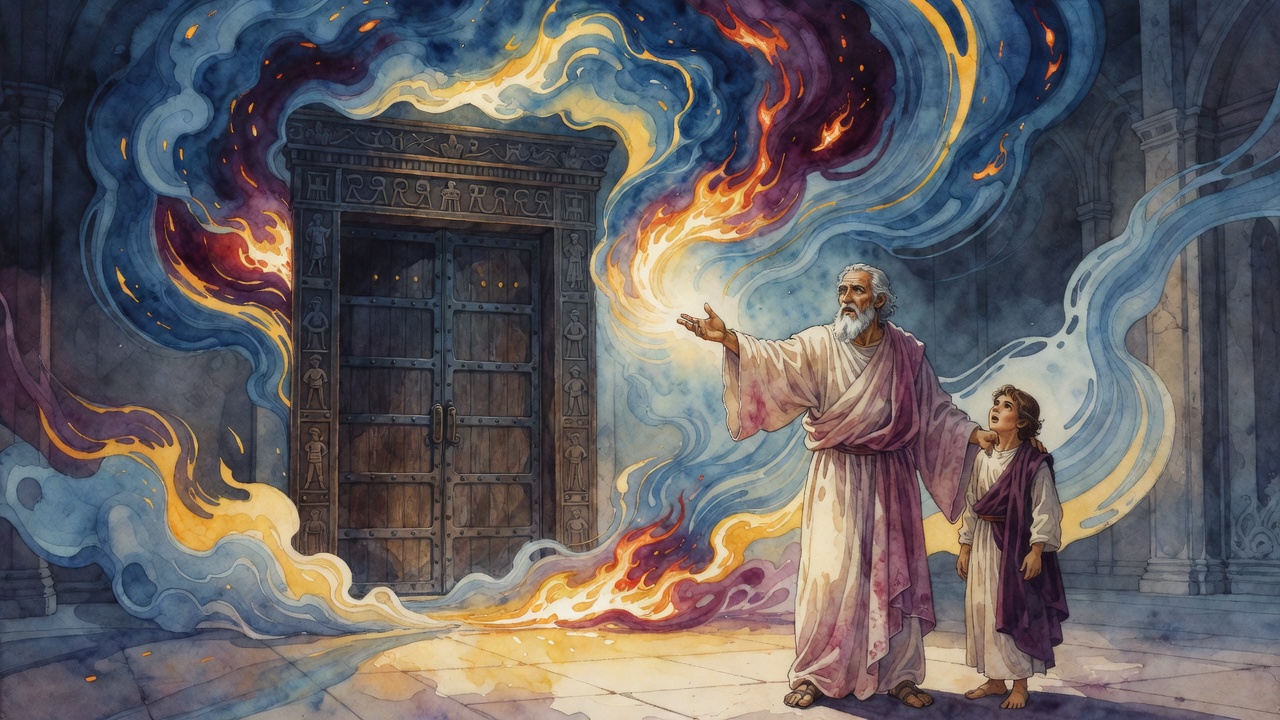
Rabbi Ishmael stood in his teacher's room with a death wish on his tongue. Nehunya did not soothe him. He named the errand instead.
Table of Contents
Rabbi Ishmael came through the doorway already speaking. "The patriarch is angry with me. Why do I live?"
 Click for full size
Rabbi Nehunya ben HaKana did not stand up. He did not soothe him. He looked at the student the way a man looks at a lock he has already named. "Scion of nobles," he said. "What do you think my distinction is among you?"
The Curriculum and the Real Errand
Nehunya listed what he had already poured into him, and he listed it without kindness. Words of the prophets. The Writings. Mishnah. Midrash. Laws. Lore. The forbidden and the permitted, explained until the mouth could carry them. Ishmael stood and took it. The patriarch's anger still sat on his neck like a hand.
Then the cut. "Were it not for the mysteries of the law in which I have initiated some of you, would you have come and appeared before me at all?"
He knew the true errand. "You have only come because of the door-keepers of the seventh palace." Anger at a patriarch was the surface weather. The thirst was for the names and passwords that let a living man pass the guardians of the upper halls. Ordinary shelves were full. The student still knocked for the locked room.
Ishmael did not deny it. His mouth had asked why he lived. His feet had come for a key.
Door-Keepers of the Seventh Palace
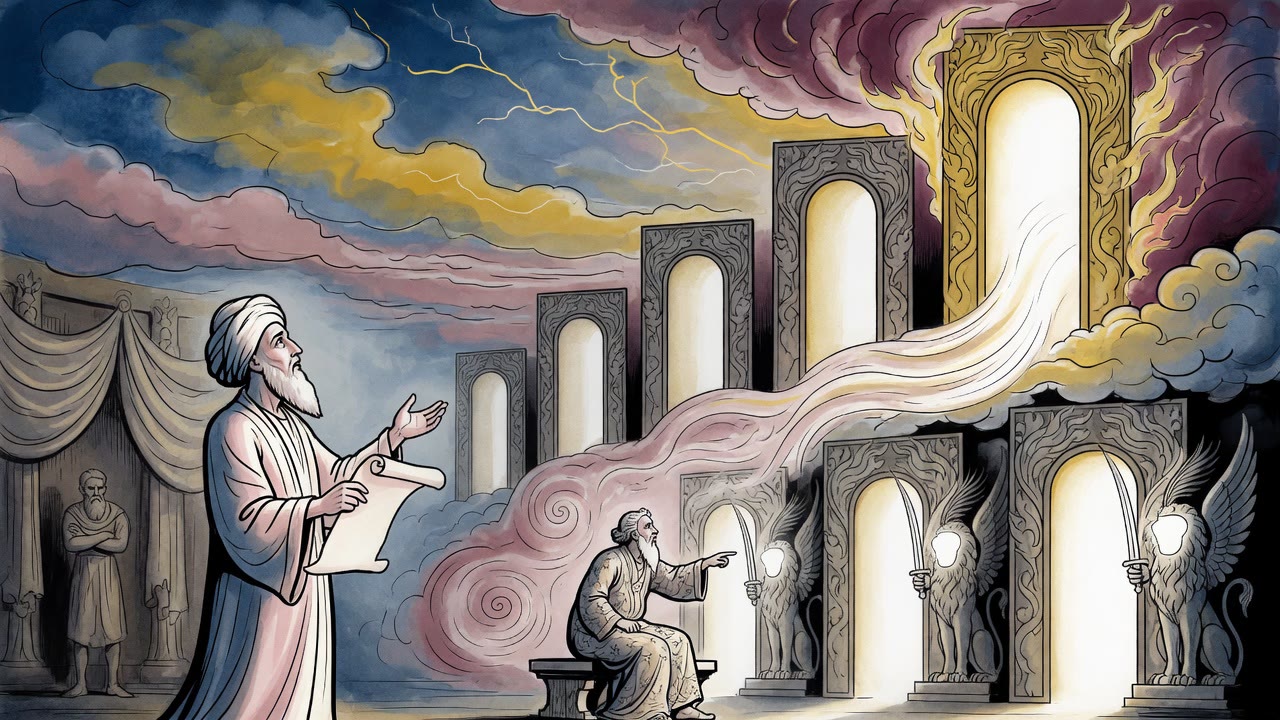
Nehunya did not hand him the names. He described the climb the way a man describes a fire he has already walked through. In the Heikhalot (היכלות), the palaces, the heavens are stacked halls, each with keepers who do not love tourists. Ascent is not a mood. It is procedure, danger, precise speech. A wrong word at a threshold burns. A right word opens a door that does not care who is angry downstairs.
Ishmael's desire for those keepers outweighed even the fear of the angry patriarch. He had recitable tractates and a wound in his standing, and still he wanted the keepers' mouths. Nehunya's rebuke was also a map. Ordinary learning filled the shelves. The palace doors were the reason the student kept returning.
A man can recite tractates and still starve for the threshold that burns. Nehunya let that hunger stand in the room. He did not feed it yet.
Freedom Engraved on Stone
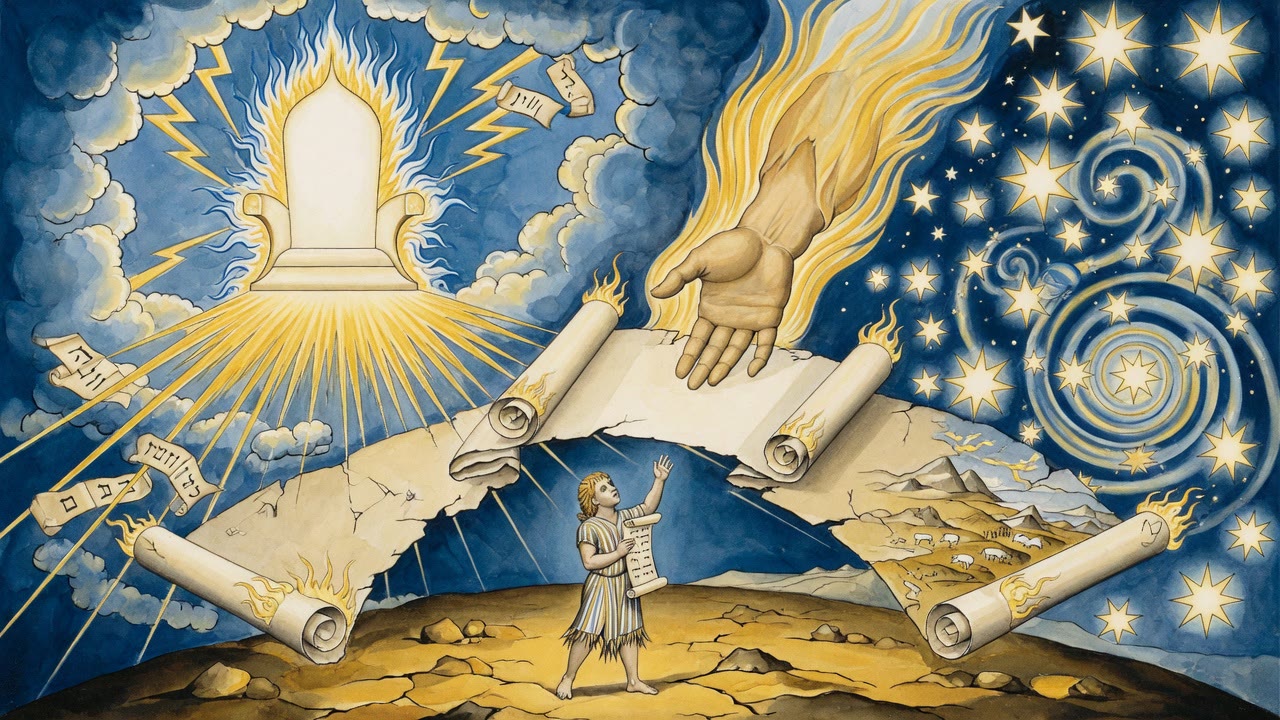
Nehunya reached for a different weight. He spoke of the tablets. Do not read only "engraved" on the stone. Read herut (חרות), freedom, for only one who occupies himself with Torah is free. The letters cut into basalt are not a cage. They are the release from every lesser master, including a patriarch's anger, including the panic that asks why a life is still being spent.
Ishmael seeking palace protocol and Israel receiving graven words were two hungers for the same sovereignty: not chaos, but a law that opens a path no tyrant owns. Soft cheeks do not keep learning. A student must make his face like stone that does not wear away, or the letters slip off him before he ever reaches a door-keeper.
Stone that frees is stranger than soft speech that binds. Nehunya did not offer comfort. He offered a material. "Hold like that," he said, "or do not ask for the seventh hall."
Mighty Ones Who Do Before They Hear
Who are the mighty messengers who fulfill God's word? Nehunya would not let the answer be a winged list. Prophets sent without wings. Israel at Sinai, doing before hearing. And then a quieter figure: the Sabbatical farmer who watches strangers take his fruit and masters his rage.
Nehunya made Ishmael see the field. Fences broken. Trees declared ownerless. A man standing in his own furrows while other hands strip the crop, and the man says nothing, because the year belongs to God and the impulse to shout belongs to him, and he pins the impulse down. Strength is obedience under pressure, not the flash of secret knowledge alone.
The seventh palace will not open for a man who cannot rule his own impulse on the ground. Nehunya's curriculum of law and lore was not a delay tactic. It was ballast for the climb. "Do first," he said. "Hear while doing. Then ask for the door-keepers' names."
He Left With the Map
"Why do I live?" Ishmael had asked under a patriarch's anger. He lived to learn how to stand before keepers who judge more strictly than any earthly noble. He lived to carry both the plain page and the dangerous name. The teacher refused to pretend the visit was only pastoral care.
The door is real. So is the rebuke that asks whether he had come for comfort or for the key. Ishmael left with bruises on his pride and a clearer map of why his heart would not stay downstairs. He did not get the passwords that afternoon. He got the order of operations. Master the year in the field. Hold the face like stone. Then knock.
Behind him the teacher's room went quiet. Ahead of him the seventh palace still had its keepers, and they still did not love tourists. He was still alive, which was no longer a complaint. It was the first requirement.
← All myths