Israel Cried to Abandon a Burden and Was Told to Carry Both
They begged to drop one task while the boards still waited. Heaven told them to carry both. No labor was cut from the list.
Table of Contents
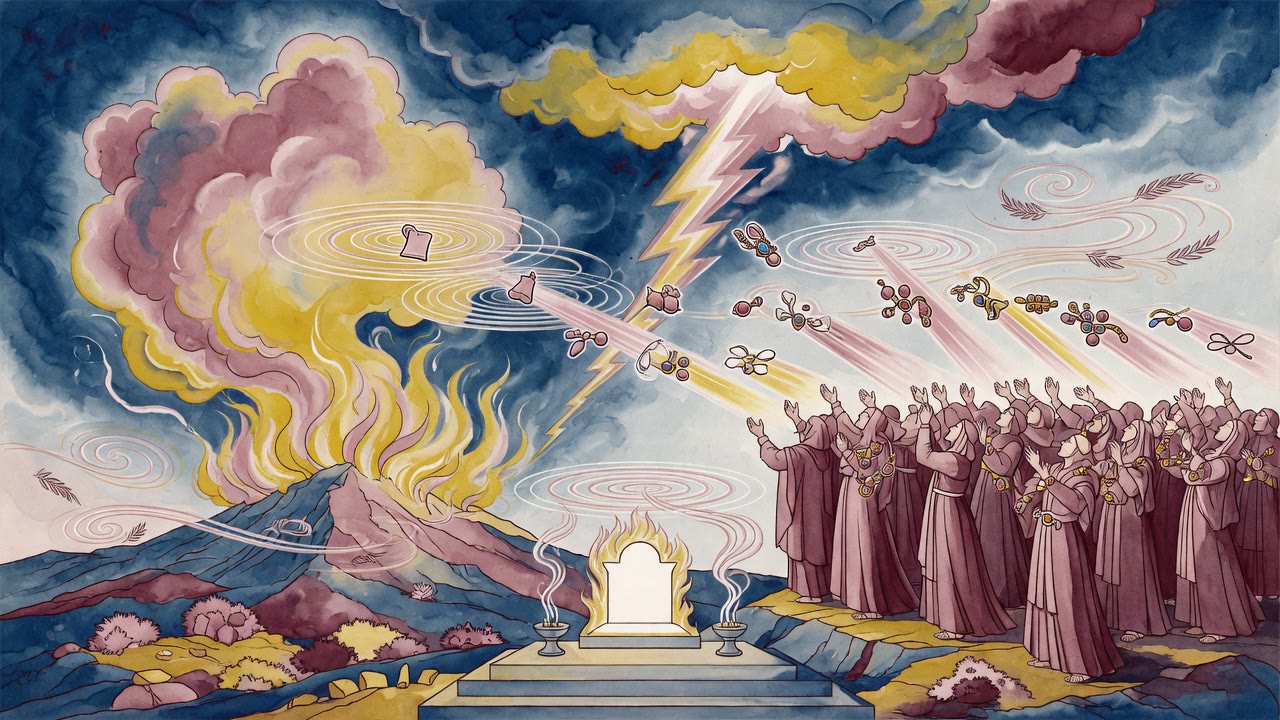
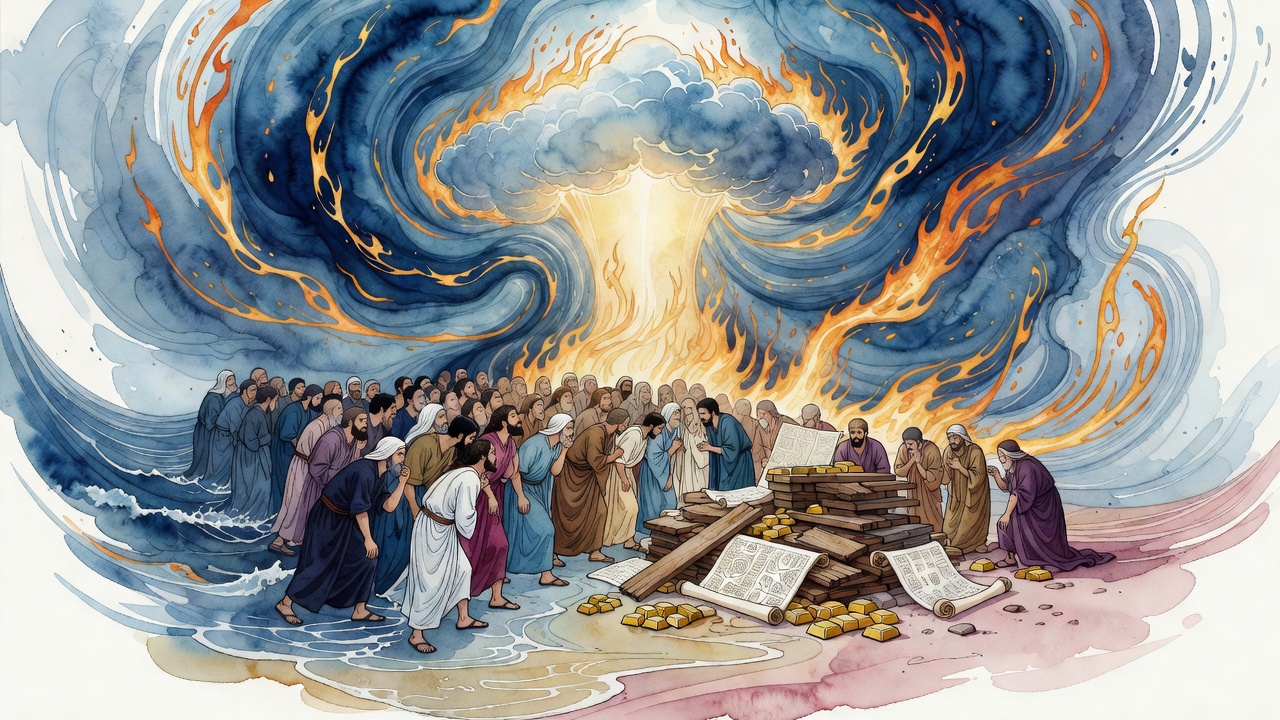
They were still damp from the path through the sea when the list landed. Build a sanctuary. Bring gold and acacia and dyed wool. Learn the Law. Live as a holy people in a desert that did not care about holiness.
 Click for full size
Hands blistered on timber. Eyes burned on letters. They cried from the camp: "You have laid many troublesome tasks upon us. Which shall we hold to and which shall we abandon?"
Heaven told them to carry both. "Build Me a house, and although you build, study the Law."
The Plea of Tired Children
This was not rebellion dressed as piety. It was children with shaking arms. A mother nursing under a half-raised curtain mouthed the plea without sound. The baby slept. The boards did not.
Moses heard the plea in the faces. He did not offer them a smaller list. He offered them order, shifts, chiefs of labor, and the fact that the Giver of the list was also the Giver of breath for the list.
The mishkan (tabernacle) needed craftsmen, not slogans. Boards had to fit. Curtains had to hang true. The lampstand's cups had to take flame without shame. That work alone could eat a life. Torah needed hours that the boards also needed. Memory. Recitation. Argument. Action and study both demanded the same dawn, and neither signed a truce.
Bezalel Worked With Words Nearby
Bezalel's hands moved as if the pattern lived in his bones. Still he sat at night with words. Skill without study would have made a pretty tent for an empty name.
A man dropped his mallet. His neighbor picked up the mallet and the man's abandoned verse and carried both for an hour. When the first man returned, the neighbor gave back only the mallet and kept teaching the verse until sunset.
A woman spinning blue thread muttered both labors under her breath and did not drop either. A boy learning letters after hauling water fell asleep on the alef and woke with the wood-call still in his ears.
Weight That Worked Like Fire
God wanted to bestow merit on Israel, so He increased Torah and commandments. It pleased the Lord for the sake of His righteousness to make the Torah great and glorious (Isaiah 42:21). Merit here was not a ribbon. It was hizdakkekhut, purification. Commandments refine. They work on ovyut, the opacity in a person. A heavy Torah is a tool against inner mud.
In the desert the tool felt like mud of another kind, because the work had no end. The same heat that purifies can feel like punishment in the middle of the forge. They asked which task to abandon because the burden was real. Fake burdens do not make children shout.
A carpenter pressed his palm to a board until the grain printed his skin. Then he stood and recited until his mouth went dry. He did not choose. He stacked the two labors like two stones in one sling.
Completion Arrived as Another Dawn
Heaven wanted a person to complete himself and, by that labor, complete what was created for him. The struggling was merit. Becoming complete was reward. A vessel that can hold good without cracking has to be made, not handed over.
That teaching did not mock the desert cry. It dignified it. A woman at the loom understood before any philosopher did. She finished a curtain and then sat her son with a verse. Completion arrived as another dawn with tools and words waiting in the same tent.
They cried again at noon, when the sun sat on the pegs and the letters swam. Moses walked the rows and did not cancel a commandment. He assigned the next shift instead.
They Did Not Get Half a List
They did not get a memo deleting half the tasks. They got a house of meeting standing in the camp, and a Law that kept speaking after the last board was set. The plea remained honest: children admitting limits. The answer remained the double yoke. Build and learn. Hands and mouth.
Night around the finished curtains. Someone still asked which labor was heavier. No one answered with a number. They answered by showing up again at dawn with tools in one hand and words in the other.
Cloud cover moved over the camp like a slow eyelid. Under it, Israel kept both burdens, and the burdens, slowly, kept Israel.
← All myths